EMPIRE STATE BUILDING
DISHANI CHAVAN 07
4th YR.B.ARCH/A
EMPIRE STATE BUILDING
BUILT:1931, New York STOREY: 102 (Art Deco Skyscraper)
TALL: 1250 FEET
Architect: Shreve Lamb & Harmon
•Architectural designs also rely heavily on vertical elements
that emphasize height, creating the impression that this
modern building is racing towards the sky.
• 2 million square feet of office space, and covers two acres
of land
•It was the most ambitious use
of steel-frame architecture at the
time, a modern demonstration
of the power of industrial
technology
•. The exterior is covered in
limestone and granite, accented
with aluminum for extra luster.
This combination of materials
was very common in Art Deco,
and promoted an aesthetic that
was industrial and modern
•Tallest building in New York
MATERAIAL USED:
60,000 Tons of steel
10 Million Bricks
Marble of Different types
Foundation: 16.7 m below
ground
•The Structure of the tower is braced steel frame with
semi-rigid connections. It remains stiffest of the
tower for its height, due to largely due to heavy
cladding that is designed to stiffen the frame
•Shear Walls: To resist the lateral load
caused by wind and Earthquake
•The Assembly of shear wall is known
as “Coupled Shear Wall”
•Belt Trusses distribute the tensile and
compressive force to the large no of
exterior truss
•Single core system
The system structure of a tall building with a
centre single core (single core) and within short
columns (mullion) which bear the floor with the
core of the building.
•The core of the building except bears the vertical
load is also burdened with a horizontal force due
to the earthquake and wind.
•There are windows on four sides providing
excellent light and views
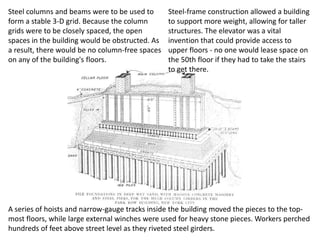
Steel columns and beams were to be used to
form a stable 3-D grid. Because the column
grids were to be closely spaced, the open
spaces in the building would be obstructed. As
a result, there would be no column-free spaces
on any of the building's floors.
Steel-frame construction allowed a building
to support more weight, allowing for taller
structures. The elevator was a vital
invention that could provide access to
upper floors - no one would lease space on
the 50th floor if they had to take the stairs
to get there.
A series of hoists and narrow-gauge tracks inside the building moved the pieces to the top-
most floors, while large external winches were used for heavy stone pieces. Workers perched
hundreds of feet above street level as they riveted steel girders.
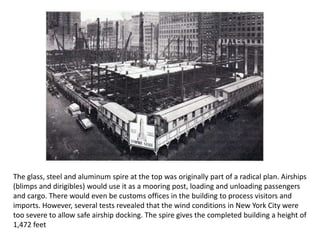
The glass, steel and aluminum spire at the top was originally part of a radical plan. Airships
(blimps and dirigibles) would use it as a mooring post, loading and unloading passengers
and cargo. There would even be customs offices in the building to process visitors and
imports. However, several tests revealed that the wind conditions in New York City were
too severe to allow safe airship docking. The spire gives the completed building a height of
1,472 feet

Empire state building

  • 1.
    EMPIRE STATE BUILDING DISHANICHAVAN 07 4th YR.B.ARCH/A
  • 2.
    EMPIRE STATE BUILDING BUILT:1931,New York STOREY: 102 (Art Deco Skyscraper) TALL: 1250 FEET Architect: Shreve Lamb & Harmon •Architectural designs also rely heavily on vertical elements that emphasize height, creating the impression that this modern building is racing towards the sky. • 2 million square feet of office space, and covers two acres of land •It was the most ambitious use of steel-frame architecture at the time, a modern demonstration of the power of industrial technology •. The exterior is covered in limestone and granite, accented with aluminum for extra luster. This combination of materials was very common in Art Deco, and promoted an aesthetic that was industrial and modern •Tallest building in New York MATERAIAL USED: 60,000 Tons of steel 10 Million Bricks Marble of Different types Foundation: 16.7 m below ground
  • 3.
    •The Structure ofthe tower is braced steel frame with semi-rigid connections. It remains stiffest of the tower for its height, due to largely due to heavy cladding that is designed to stiffen the frame •Shear Walls: To resist the lateral load caused by wind and Earthquake •The Assembly of shear wall is known as “Coupled Shear Wall” •Belt Trusses distribute the tensile and compressive force to the large no of exterior truss •Single core system The system structure of a tall building with a centre single core (single core) and within short columns (mullion) which bear the floor with the core of the building. •The core of the building except bears the vertical load is also burdened with a horizontal force due to the earthquake and wind. •There are windows on four sides providing excellent light and views
  • 4.
    Steel columns andbeams were to be used to form a stable 3-D grid. Because the column grids were to be closely spaced, the open spaces in the building would be obstructed. As a result, there would be no column-free spaces on any of the building's floors. Steel-frame construction allowed a building to support more weight, allowing for taller structures. The elevator was a vital invention that could provide access to upper floors - no one would lease space on the 50th floor if they had to take the stairs to get there. A series of hoists and narrow-gauge tracks inside the building moved the pieces to the top- most floors, while large external winches were used for heavy stone pieces. Workers perched hundreds of feet above street level as they riveted steel girders.
  • 5.
    The glass, steeland aluminum spire at the top was originally part of a radical plan. Airships (blimps and dirigibles) would use it as a mooring post, loading and unloading passengers and cargo. There would even be customs offices in the building to process visitors and imports. However, several tests revealed that the wind conditions in New York City were too severe to allow safe airship docking. The spire gives the completed building a height of 1,472 feet