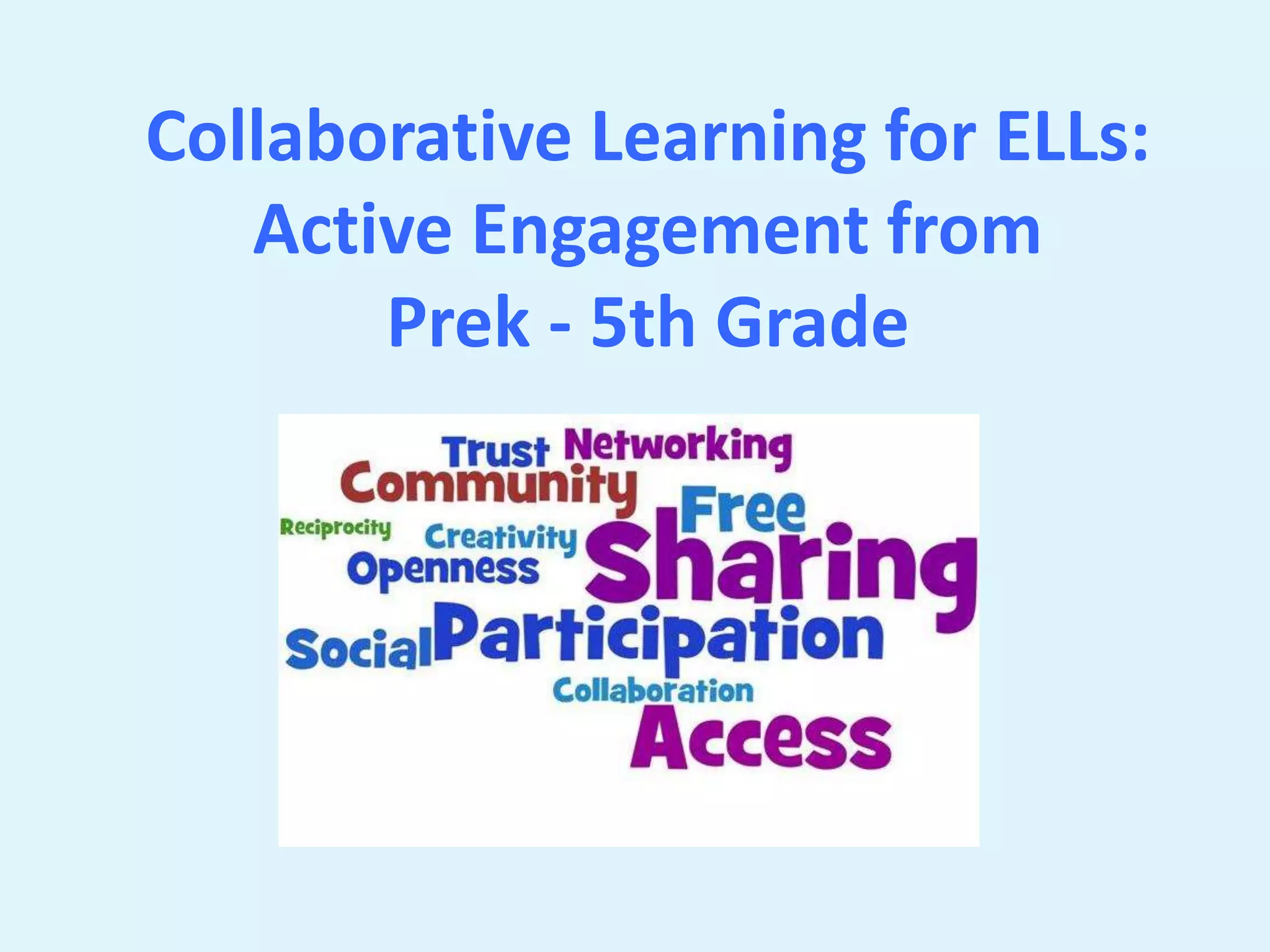
Collaborative Learning for ELLs: 
Active Engagement from 
Prek - 5th Grade
Judie Haynes 
judieh@optonline.net 
www.everythingesl.net 
Karen Nemeth 
Karen@languagecastle.com 
www.languagecastle.com
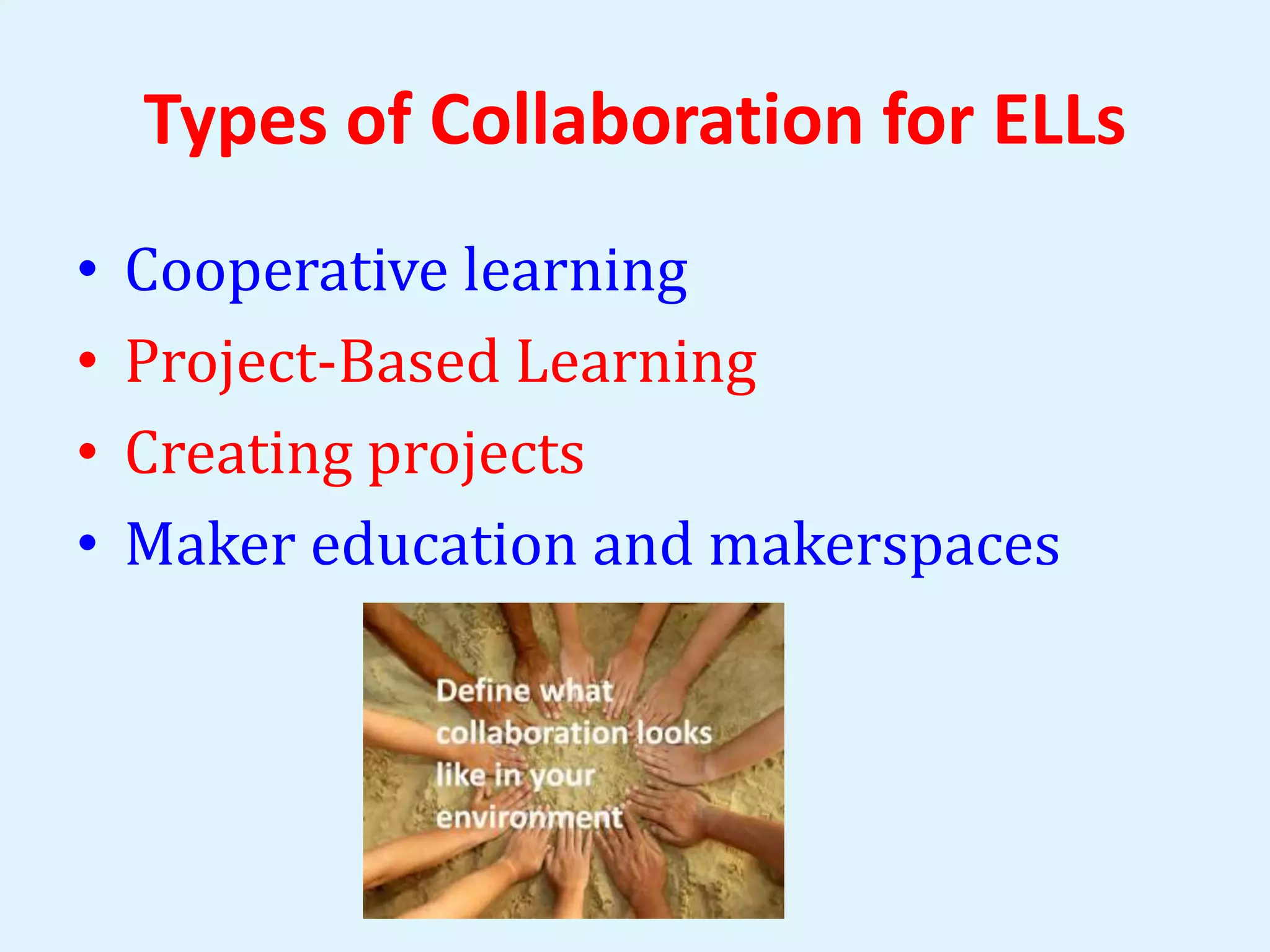
Types of Collaboration for ELLs 
• Cooperative learning 
• Project-Based Learning 
• Creating projects 
• Maker education and makerspaces
Protocols for Collaboration 
Collaborative models can: 
–increase social interaction 
–build oral language skills 
–develop academic language 
–increase students’ self-confidence 
–involve active, hands-on learning
Protocols for Collaboration 
Teachers must: 
–model the language of social 
interaction 
–pre-teach academic language 
–Design activity with each 
student’s needs/abilities in mind
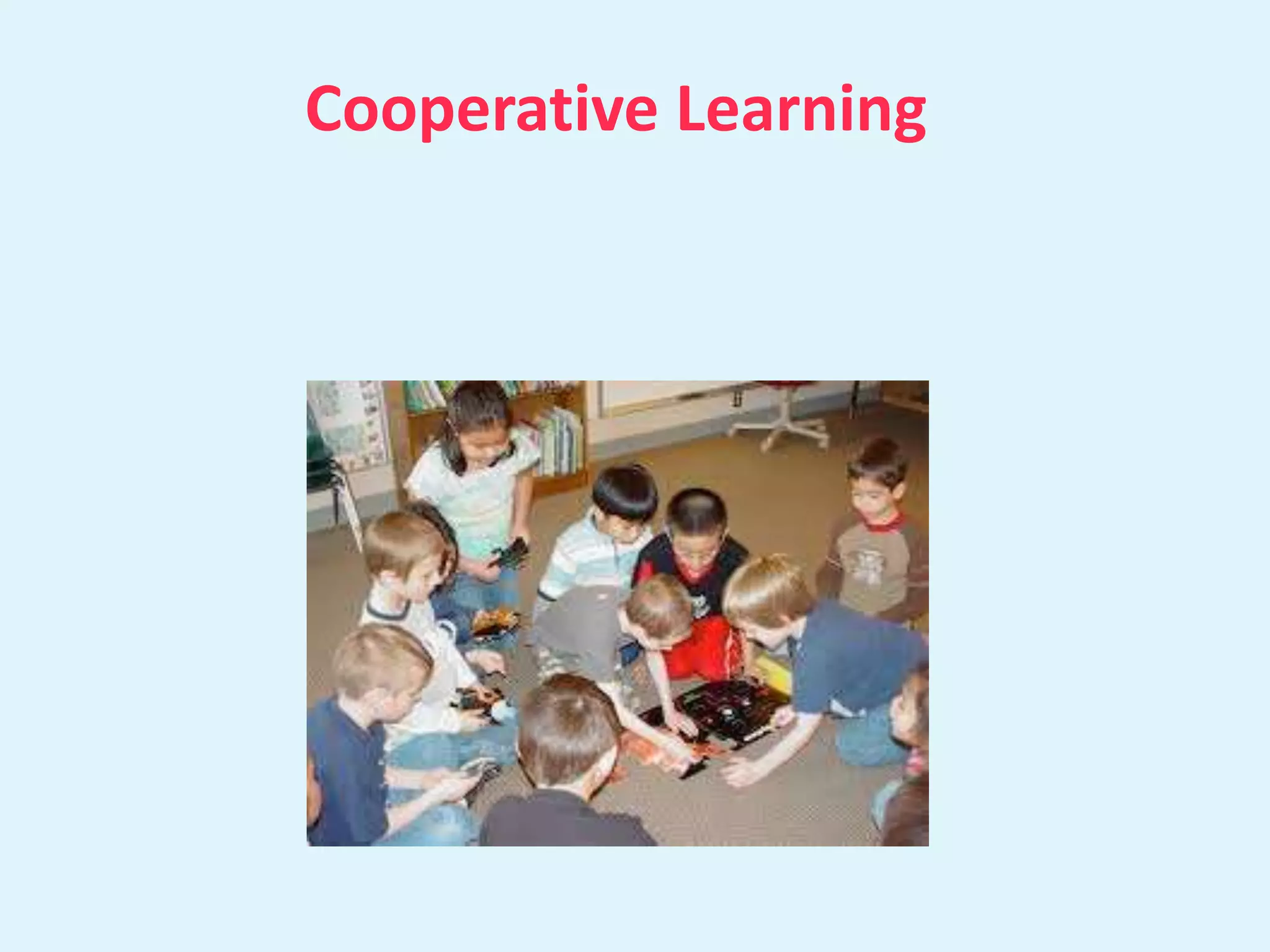
Cooperative Learning
What’s important to know… 
• Lecture-led teaching is least effective for young 
children. 
• Native speakers of English understand 
only 14% of a lecture. 
• ELLs will understand even less. 
• Small group learning is beneficial to ELLs. 
Andrews, J. D.(2003) Teaching format and student style: Their interactive effects 
on learning. Research in Higher Education, Volume 14, Number 2
How ELLs Benefit from Cooperative Learning 
• CL supports use of each student’s learning 
style. 
• Helps each student capitalize on her own 
prior knowledge 
• Many ELLs come from cultures in which 
collaboration is the norm. 
• Young learners of English are usually 
visual/kinesthetic learners – need hands-on.
How ELLs Benefit from Cooperative Learning 
• Young ELLs do best when cooperative 
groups have structured jobs such as 
illustrator, time keeper. 
• ELLs benefit from comprehensible input 
and output. 
• Peers can navigate meaning for ELLs 
• ELLs will produce comprehensible output 
with peers
Introducing Cooperative Learning 
All small group configurations are not created equal. 
What happens when teacher A instructs students to 
“work with a partner to complete a worksheet”? 
• Is the command “work with a partner” a 
guarantee of participation? Will it build social 
skills? How will Teacher A know?
Introducing Cooperative Learning 
• Teacher B structures groups. Every student 
has a role and knows what to do. 
• Structured small learning groups help build 
cooperation and sharing. 
• ELLs benefit from social interaction with 
Classmates in structured, intentionally 
designed activities.
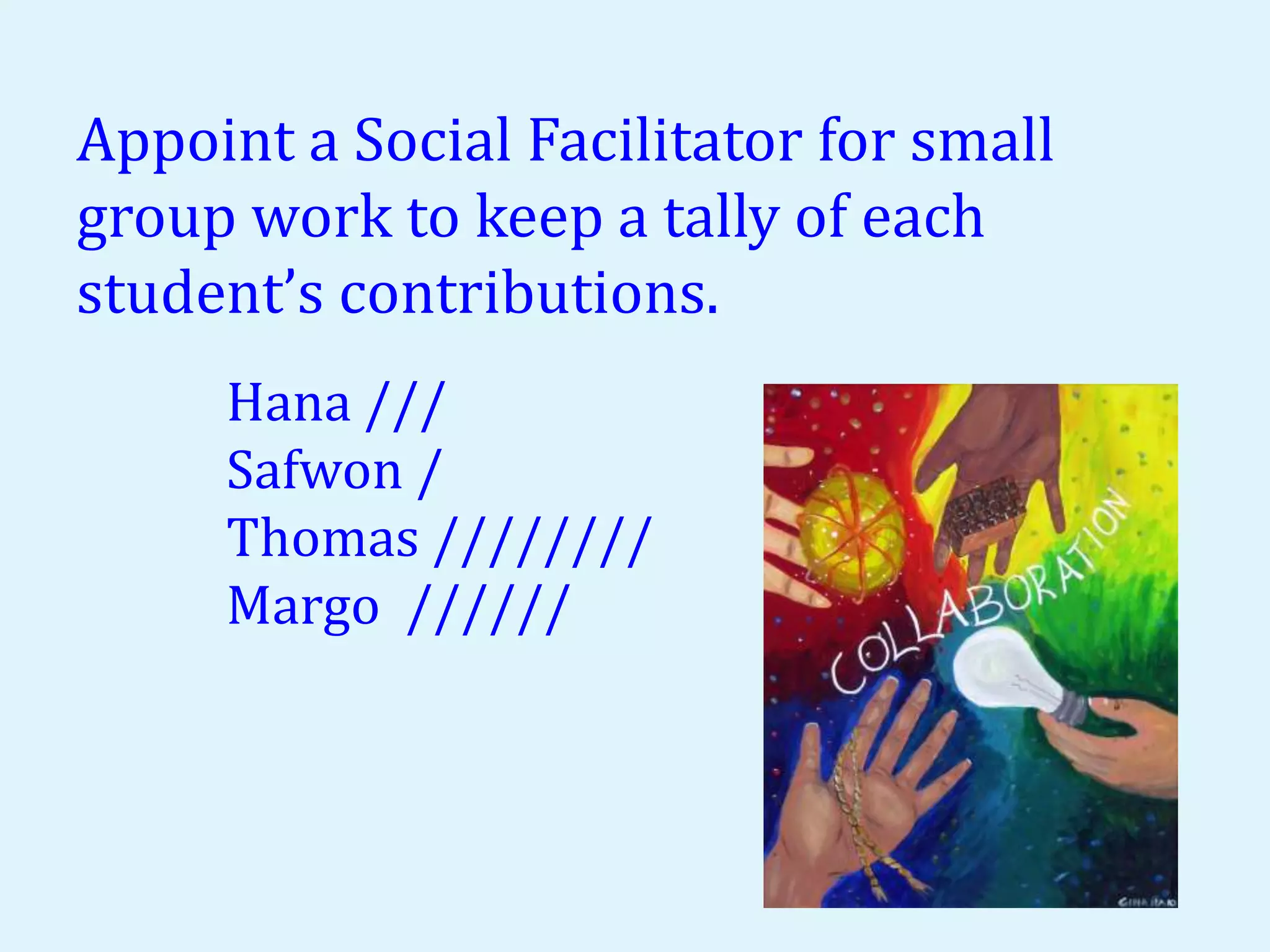
Appoint a Social Facilitator for small 
group work to keep a tally of each 
student’s contributions. 
Hana /// 
Safwon / 
Thomas //////// 
Margo //////
Project-Based Learning
What is Project-Based Learning? 
Project Based Learning is an inquiry-based 
teaching method in which students 
• gain knowledge and skills by working on a 
project for an extended period of time 
• investigate and respond to a complex 
question, problem, or challenge. 
• work toward an assigned goal.
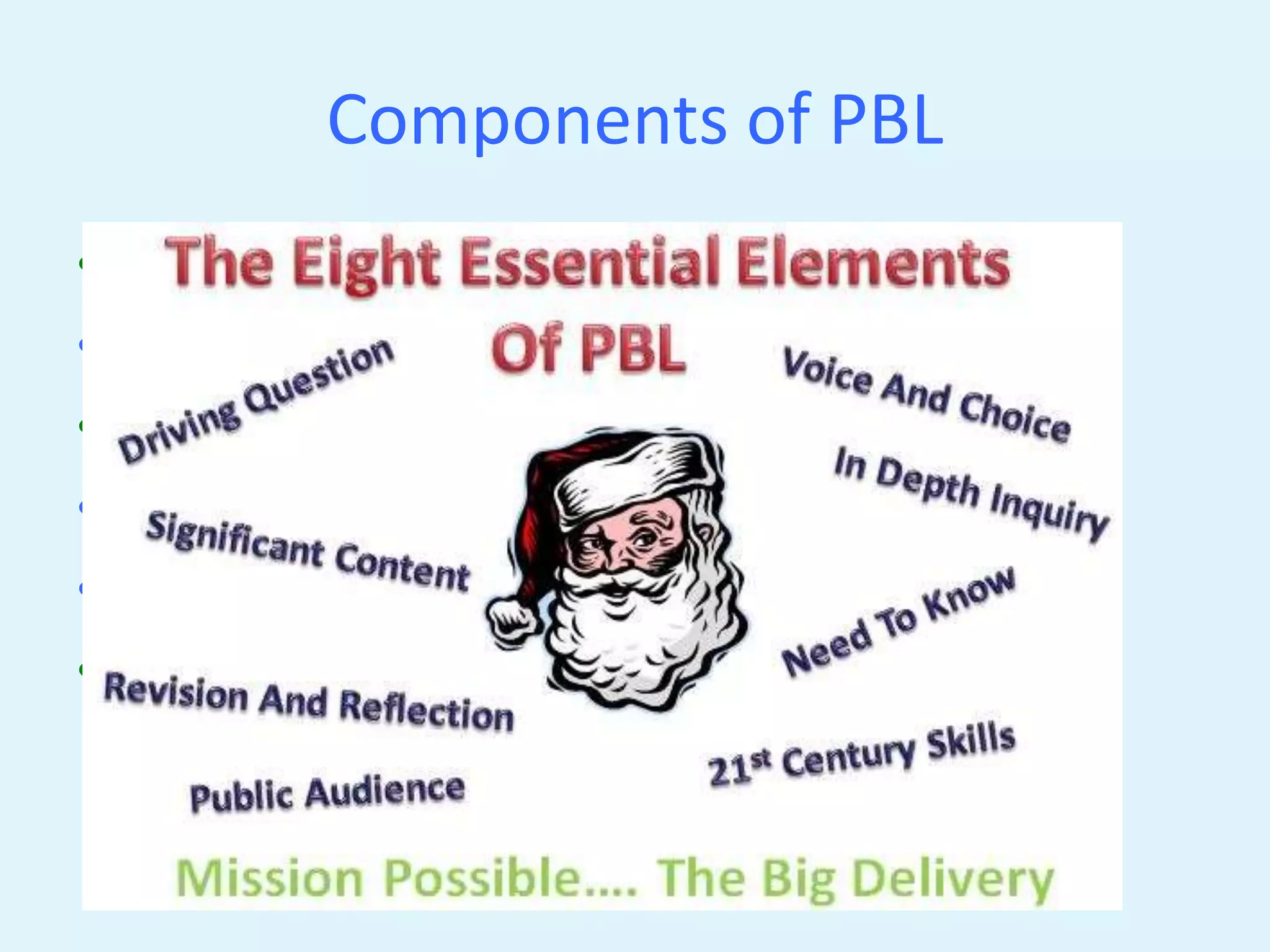
Components of PBL 
• Driving Question 
• Significant Content 
• 21st century competencies 
• In-Depth Inquiry 
• Choice of project 
• Public Audience
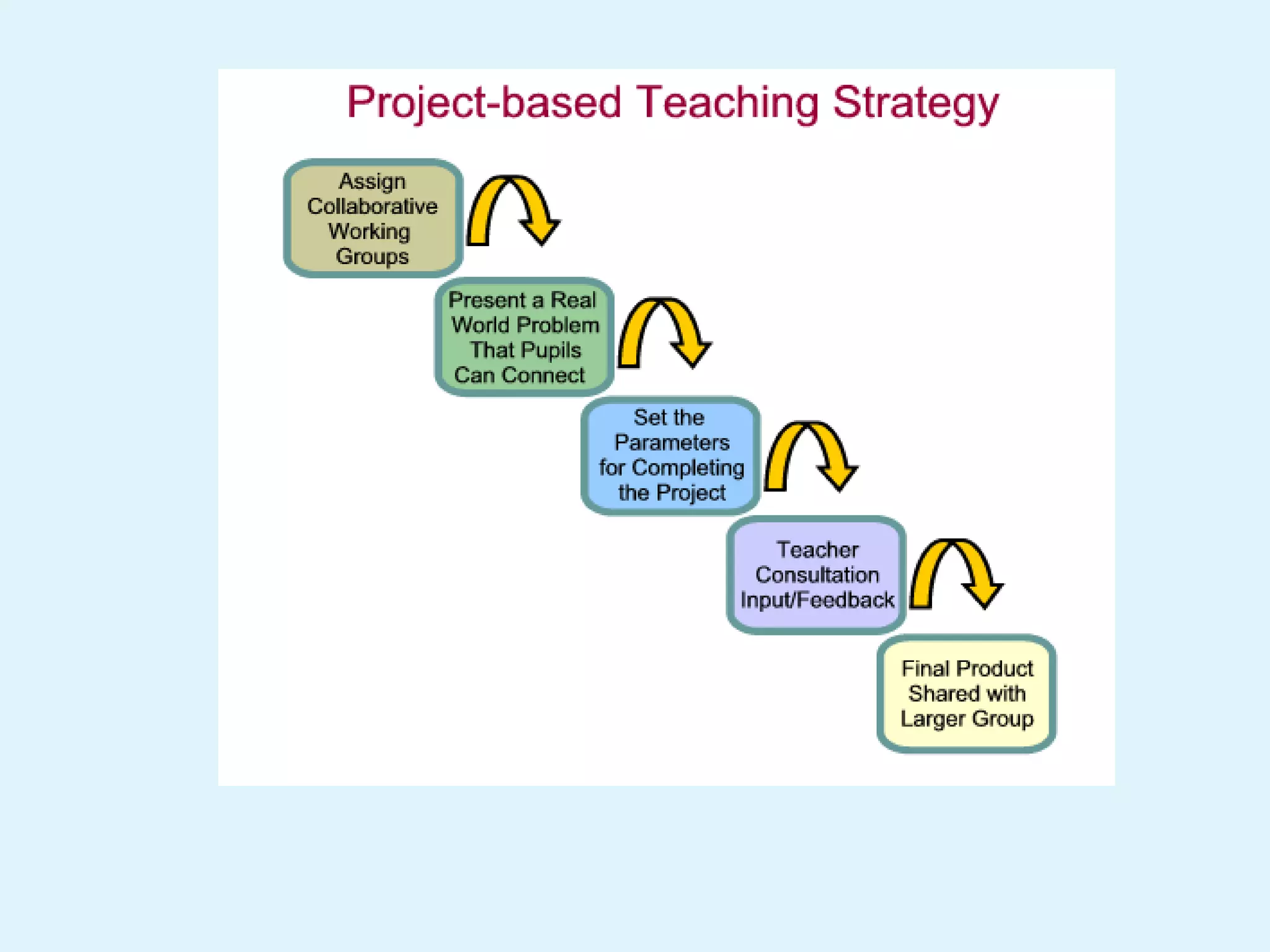
Introduce PBL 
• Students know that collaboration is expected in 
the classroom. 
• Teachers may do team-building activities at the 
beginning of the year and gradually add authentic 
collaboration on challenges and problems. 
• Activities might be around one content area or 
across content areas. 
• ELLs develop speaking and listening skills with 
guidance and support.
Project-Based Learning Resources 
• Collaboration Rubric - - 
http://bie.org/object/document/6_12_collaboration_rubri 
c_non_ccss 
• Resources for PBL from Edutopia - 
http://www.edutopia.org/project-based-learning
Doing Projects vs. Project-based Learning
Developing Language through Projects 
“It is difficult for dual language learners 
(DLLs) to learn a new language unless they 
can engage in social interactions with 
speakers of the language they are trying to 
learn (Tabors 2008). “
Projects 
• Can be done at home without teacher guidance 
• Focus is on product rather than process 
• Students do not choose the project 
• Teacher gives explicit directions for the project 
• Is usually assigned for one particular subject 
area 
• Can be assigned without the benefit of 
collaboration.
Creating Projects 
• Assigning a project is not the same as 
Project-Based Learning 
• Do these traditional projects work in today’s 
classroom? Diaromas, crafts, posters. 
• We need to re-examine these projects and 
tweek them to: 
– build teamwork, 
– foster oral language development 
– build academic language
New Approaches to Projects for ELLs 
• Set ELLs up for success 
• Pick partners and groups so ELLs will have 
students to mentor them 
• Make ELLs responsible for the parts of the project 
that are at their English language level. 
• Choose projects that are relevant to ELLs’ Lives
What is Maker Education? 
• MAKER Education’s mission is to create more 
opportunities for young people to develop 
confidence, creativity, interest in science, 
technology, engineering, math and the arts 
through Making 
• The process is more important than the 
product
Another View of Maker Education 
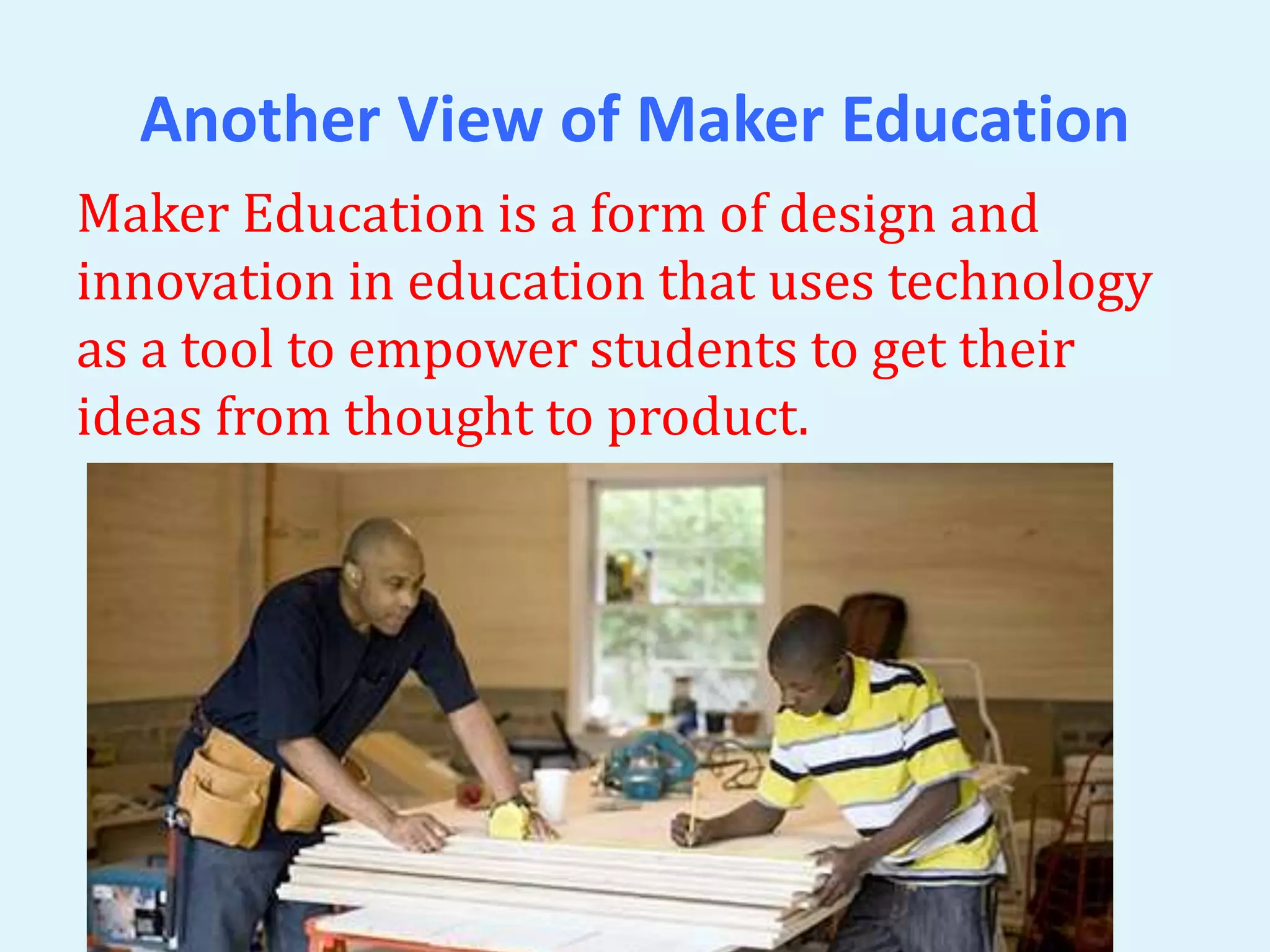
Maker Education is a form of design and 
innovation in education that uses technology 
as a tool to empower students to get their 
ideas from thought to product.
Involving ELLs in Projects 
• "To ensure the dual language learners were 
comfortable and engaged with the project as 
it unfolded, I implemented role-playing 
scenarios and continued to model the 
language by repeating project words and 
phrases. This type of role-playing and use of 
props is a valuable technique to use with 
young children.” (Jones & Shue, Young 
Children 2013)
Preschool Maker Project
Maker Education 
• Advocates of Maker Education feel that the 
“spirit of play and discovery of knowledge is 
missing from much of formal education.” 
The Maker Education Initiative is working to 
make sure kids get more of this informal 
tinkering and tactile exploration 
experiences in school as they grow.
Choosing a Maker Topic 
• Projects for young children are either 
teacher or student-initiated, but… 
• topic must be relevant to all learners & help 
them make connections between prior 
knowledge and new concepts. 
• Plan ahead to scaffold ELLs to make sure 
they are able to talk about their project.
Choosing a Maker Topic 
Choose projects that provide: 
• hands-on learning activities 
• opportunities to work in groups or with a 
partner 
• activities that enhance vocabulary, oral 
language acquisition, and social skills. 
• Focuses on creating, building, making, 
trying, exploring, designing
What are Makerspaces? 
• Makerspaces provide students with the 
space and materials they need to explore 
and extend their problem-solving skills 
through a tactile environment 
• A Makerspace provides physical outlets for 
messy and creative thinking, innovating, and 
creating.
Building a Maker Space
Examples of Maker projects that 
encourage oral language 
• Video production 
• Making puppets for puppet show 
• Projects where students take things apart 
• 3-D printing projects 
• Art, painting, sculpture 
• Sewing projects 
• Projects from scrap materials
Preschool Makers
Quotes 
“When teachers guide DLLs through scripted 
dramatic play—meaning they introduce the 
roles and props needed for the dramatic 
play—they are creating a rich language 
environment (Jones & Shue, 2013).”
Maker Ed for ELLs 
• We need to think of ways that Maker Ed can 
be applied to ELLs. 
• Teachers need to preteach the language 
needed to talk about a project 
• Students need to work in teams with native 
speakers, if possible. 
• Projects should be presented to an 
audience, either in person or online
Tie Language to Maker Project 
• “A child can learn a lot about something by 
making it, but if they can’t EXPRESS what 
they learned and share their project with 
others, the value of the project is lessened. ” 
(Judie Haynes, 2014)
Our TESOL Blog Post 
The Power of Collaboration and Active 
Engagement for ELs 
http://blog.tesol.org/the-power-of-collaboration- 
and-active-engagement-for-els/# 
more-4640
Teacher Discussion 
Discuss with a partner or small group what 
kinds of collaboration you could use in your 
classroom to promote social and academic 
learning.
Judie Haynes 
The Essential Guide for Educating 
Beginning English Learners 
http://www.corwin.com/books/Book237736? 
siteId=corwin-press& 
subject=C00&qsupld=false&q=Judie+ 
Haynes&surfUrl=http%3A%2F%2Fwww.cor 
win.com&pageTitle=productsSearch
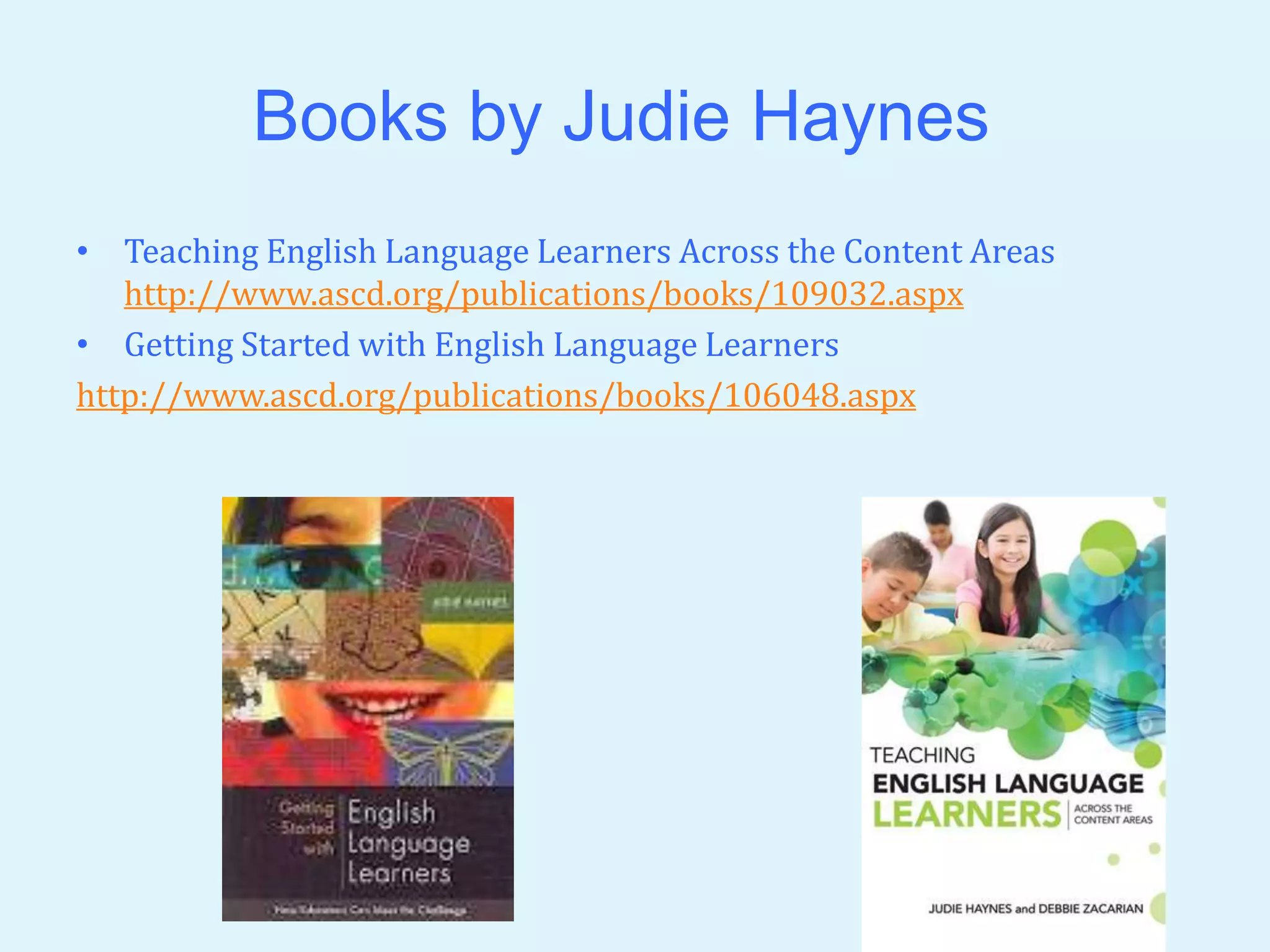
Books by Judie Haynes 
• Teaching English Language Learners Across the Content Areas 
http://www.ascd.org/publications/books/109032.aspx 
• Getting Started with English Language Learners 
http://www.ascd.org/publications/books/106048.aspx
Books by Karen Nemeth 
• From www.gryphonhouse.com
45 Experts http://bit.ly/1jtbasy 
Caslon Publishing – April 2014
Judie Haynes 
judieh@optonline.net 
www.everythingesl.net 
Karen Nemeth 
Karen@languagecastle.com 
www.languagecastle.com

WIDA 2014

  • 1.
    Collaborative Learning forELLs: Active Engagement from Prek - 5th Grade
  • 2.
    Judie Haynes judieh@optonline.net www.everythingesl.net Karen Nemeth Karen@languagecastle.com www.languagecastle.com
  • 3.
    Types of Collaborationfor ELLs • Cooperative learning • Project-Based Learning • Creating projects • Maker education and makerspaces
  • 4.
    Protocols for Collaboration Collaborative models can: –increase social interaction –build oral language skills –develop academic language –increase students’ self-confidence –involve active, hands-on learning
  • 5.
    Protocols for Collaboration Teachers must: –model the language of social interaction –pre-teach academic language –Design activity with each student’s needs/abilities in mind
  • 6.
  • 7.
    What’s important toknow… • Lecture-led teaching is least effective for young children. • Native speakers of English understand only 14% of a lecture. • ELLs will understand even less. • Small group learning is beneficial to ELLs. Andrews, J. D.(2003) Teaching format and student style: Their interactive effects on learning. Research in Higher Education, Volume 14, Number 2
  • 8.
    How ELLs Benefitfrom Cooperative Learning • CL supports use of each student’s learning style. • Helps each student capitalize on her own prior knowledge • Many ELLs come from cultures in which collaboration is the norm. • Young learners of English are usually visual/kinesthetic learners – need hands-on.
  • 9.
    How ELLs Benefitfrom Cooperative Learning • Young ELLs do best when cooperative groups have structured jobs such as illustrator, time keeper. • ELLs benefit from comprehensible input and output. • Peers can navigate meaning for ELLs • ELLs will produce comprehensible output with peers
  • 10.
    Introducing Cooperative Learning All small group configurations are not created equal. What happens when teacher A instructs students to “work with a partner to complete a worksheet”? • Is the command “work with a partner” a guarantee of participation? Will it build social skills? How will Teacher A know?
  • 11.
    Introducing Cooperative Learning • Teacher B structures groups. Every student has a role and knows what to do. • Structured small learning groups help build cooperation and sharing. • ELLs benefit from social interaction with Classmates in structured, intentionally designed activities.
  • 12.
    Appoint a SocialFacilitator for small group work to keep a tally of each student’s contributions. Hana /// Safwon / Thomas //////// Margo //////
  • 13.
  • 14.
    What is Project-BasedLearning? Project Based Learning is an inquiry-based teaching method in which students • gain knowledge and skills by working on a project for an extended period of time • investigate and respond to a complex question, problem, or challenge. • work toward an assigned goal.
  • 15.
    Components of PBL • Driving Question • Significant Content • 21st century competencies • In-Depth Inquiry • Choice of project • Public Audience
  • 17.
    Introduce PBL •Students know that collaboration is expected in the classroom. • Teachers may do team-building activities at the beginning of the year and gradually add authentic collaboration on challenges and problems. • Activities might be around one content area or across content areas. • ELLs develop speaking and listening skills with guidance and support.
  • 18.
    Project-Based Learning Resources • Collaboration Rubric - - http://bie.org/object/document/6_12_collaboration_rubri c_non_ccss • Resources for PBL from Edutopia - http://www.edutopia.org/project-based-learning
  • 19.
    Doing Projects vs.Project-based Learning
  • 21.
    Developing Language throughProjects “It is difficult for dual language learners (DLLs) to learn a new language unless they can engage in social interactions with speakers of the language they are trying to learn (Tabors 2008). “
  • 22.
    Projects • Canbe done at home without teacher guidance • Focus is on product rather than process • Students do not choose the project • Teacher gives explicit directions for the project • Is usually assigned for one particular subject area • Can be assigned without the benefit of collaboration.
  • 23.
    Creating Projects •Assigning a project is not the same as Project-Based Learning • Do these traditional projects work in today’s classroom? Diaromas, crafts, posters. • We need to re-examine these projects and tweek them to: – build teamwork, – foster oral language development – build academic language
  • 24.
    New Approaches toProjects for ELLs • Set ELLs up for success • Pick partners and groups so ELLs will have students to mentor them • Make ELLs responsible for the parts of the project that are at their English language level. • Choose projects that are relevant to ELLs’ Lives
  • 25.
    What is MakerEducation? • MAKER Education’s mission is to create more opportunities for young people to develop confidence, creativity, interest in science, technology, engineering, math and the arts through Making • The process is more important than the product
  • 26.
    Another View ofMaker Education Maker Education is a form of design and innovation in education that uses technology as a tool to empower students to get their ideas from thought to product.
  • 27.
    Involving ELLs inProjects • "To ensure the dual language learners were comfortable and engaged with the project as it unfolded, I implemented role-playing scenarios and continued to model the language by repeating project words and phrases. This type of role-playing and use of props is a valuable technique to use with young children.” (Jones & Shue, Young Children 2013)
  • 28.
  • 29.
    Maker Education •Advocates of Maker Education feel that the “spirit of play and discovery of knowledge is missing from much of formal education.” The Maker Education Initiative is working to make sure kids get more of this informal tinkering and tactile exploration experiences in school as they grow.
  • 30.
    Choosing a MakerTopic • Projects for young children are either teacher or student-initiated, but… • topic must be relevant to all learners & help them make connections between prior knowledge and new concepts. • Plan ahead to scaffold ELLs to make sure they are able to talk about their project.
  • 31.
    Choosing a MakerTopic Choose projects that provide: • hands-on learning activities • opportunities to work in groups or with a partner • activities that enhance vocabulary, oral language acquisition, and social skills. • Focuses on creating, building, making, trying, exploring, designing
  • 32.
    What are Makerspaces? • Makerspaces provide students with the space and materials they need to explore and extend their problem-solving skills through a tactile environment • A Makerspace provides physical outlets for messy and creative thinking, innovating, and creating.
  • 33.
  • 34.
    Examples of Makerprojects that encourage oral language • Video production • Making puppets for puppet show • Projects where students take things apart • 3-D printing projects • Art, painting, sculpture • Sewing projects • Projects from scrap materials
  • 35.
  • 36.
    Quotes “When teachersguide DLLs through scripted dramatic play—meaning they introduce the roles and props needed for the dramatic play—they are creating a rich language environment (Jones & Shue, 2013).”
  • 37.
    Maker Ed forELLs • We need to think of ways that Maker Ed can be applied to ELLs. • Teachers need to preteach the language needed to talk about a project • Students need to work in teams with native speakers, if possible. • Projects should be presented to an audience, either in person or online
  • 38.
    Tie Language toMaker Project • “A child can learn a lot about something by making it, but if they can’t EXPRESS what they learned and share their project with others, the value of the project is lessened. ” (Judie Haynes, 2014)
  • 39.
    Our TESOL BlogPost The Power of Collaboration and Active Engagement for ELs http://blog.tesol.org/the-power-of-collaboration- and-active-engagement-for-els/# more-4640
  • 40.
    Teacher Discussion Discusswith a partner or small group what kinds of collaboration you could use in your classroom to promote social and academic learning.
  • 41.
    Judie Haynes TheEssential Guide for Educating Beginning English Learners http://www.corwin.com/books/Book237736? siteId=corwin-press& subject=C00&qsupld=false&q=Judie+ Haynes&surfUrl=http%3A%2F%2Fwww.cor win.com&pageTitle=productsSearch
  • 42.
    Books by JudieHaynes • Teaching English Language Learners Across the Content Areas http://www.ascd.org/publications/books/109032.aspx • Getting Started with English Language Learners http://www.ascd.org/publications/books/106048.aspx
  • 43.
    Books by KarenNemeth • From www.gryphonhouse.com
  • 44.
    45 Experts http://bit.ly/1jtbasy Caslon Publishing – April 2014
  • 45.
    Judie Haynes judieh@optonline.net www.everythingesl.net Karen Nemeth Karen@languagecastle.com www.languagecastle.com

Editor's Notes

  • #3 Introducing ourselves
  • #4 Cooperative learning – working in a small group to discuss a topic or complete a teacher designated task – 1 class period Project-based learning – Long term task either teacher-directed or created from the interest of students; taught across content areas/ structured process Creating projects, - short project i.e. cooking, sewing, gardening teacher directed Maker education and makerspaces – long term, student generated, exploration & innovation
  • #7 JudieCooperative Learning – Project-based learning
  • #8 JUDIE
  • #11 Judie
  • #12 Judie
  • #16 Driving Question - Project work is focused by an open-ended question that students understand and find intriguing, which captures their task or frames their exploration. Significant Content - At its core, the project is focused on teaching students important knowledge and skills, derived from standards and key concepts at the heart of academic subjects. 21st century competencies - Students build competencies valuable for today’s world, such as problem solving, critical thinking, collaboration, communication, and creativity/innovation, which are explicitly taught and assessed. In-Depth Inquiry - Students are engaged in an extended, rigorous process of asking questions, using resources, and developing answers.
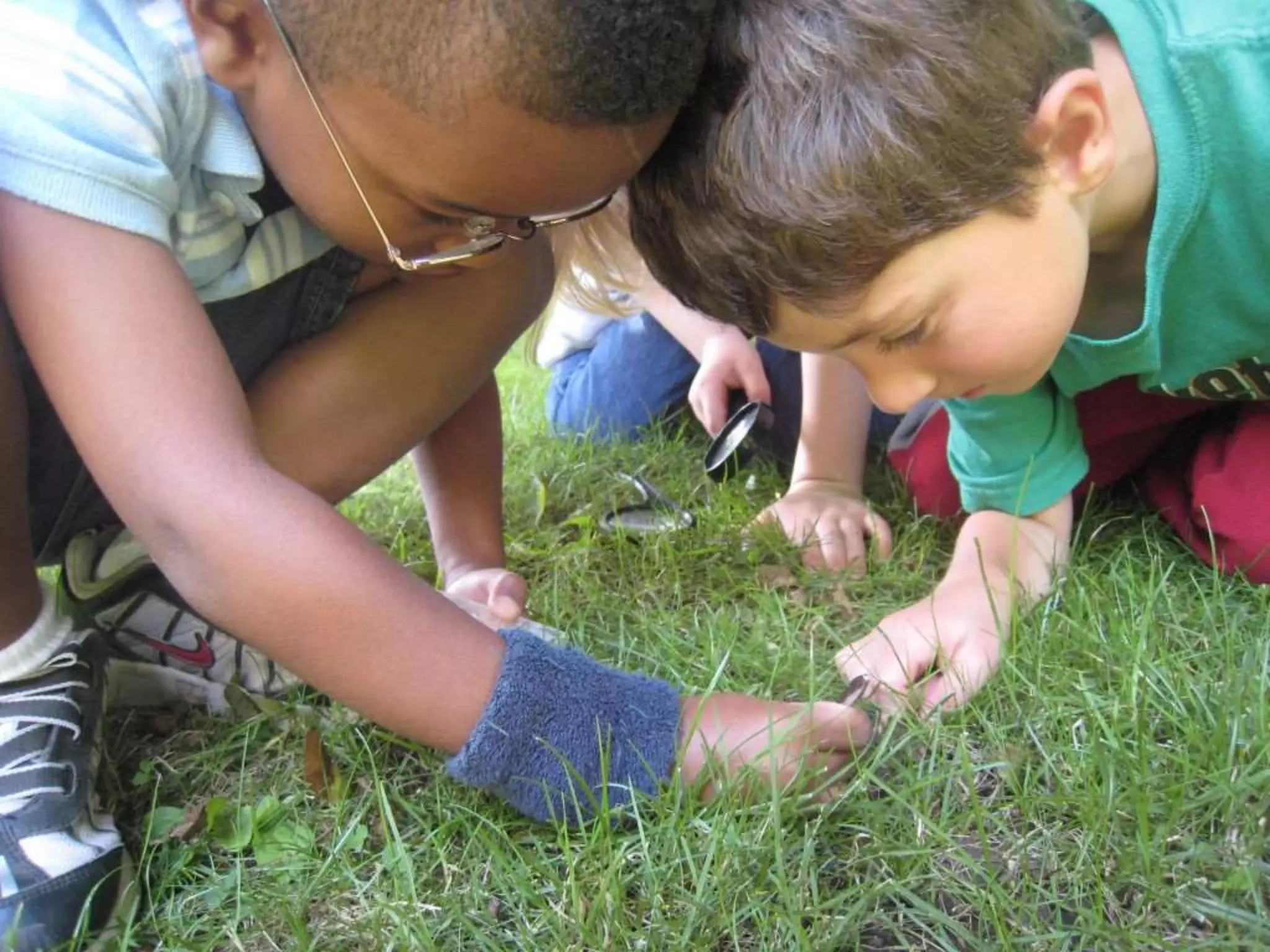
  • #21 What kind of collaborations are happening here? Kids discovering something – and talking about it? With each other? They are connecting what they see here with what they already know. How many vocabulary words would be helpful here? Christian says 6. Do they have to learn everything about science, grass, bugs and dirt right now? Or do they have to really understand just that bug right now? And the process of thinking actively together?
  • #22 This is really true for all learners.
  • #23 Projects represent a range of tasks that can be done at home by groups of studen
  • #24 So instead of tell each child to build their on diaroma on a book that they read – assign as teamwork and give students time to do parts of it in school
  • #25 Tell story of River Dell and the Essential Question
  • #26 Going back to the days when all children had art, cooking and shop in their schools.
  • #35 Take apart old laptops, cameras,
  • #36 Karen talk about cardboard kits.
  • #42 KAREN
  • #43 KAREN
  • #44 KAREN
  • #46 Introducing ourselves