When do people create
portraits?
and Who creates them?
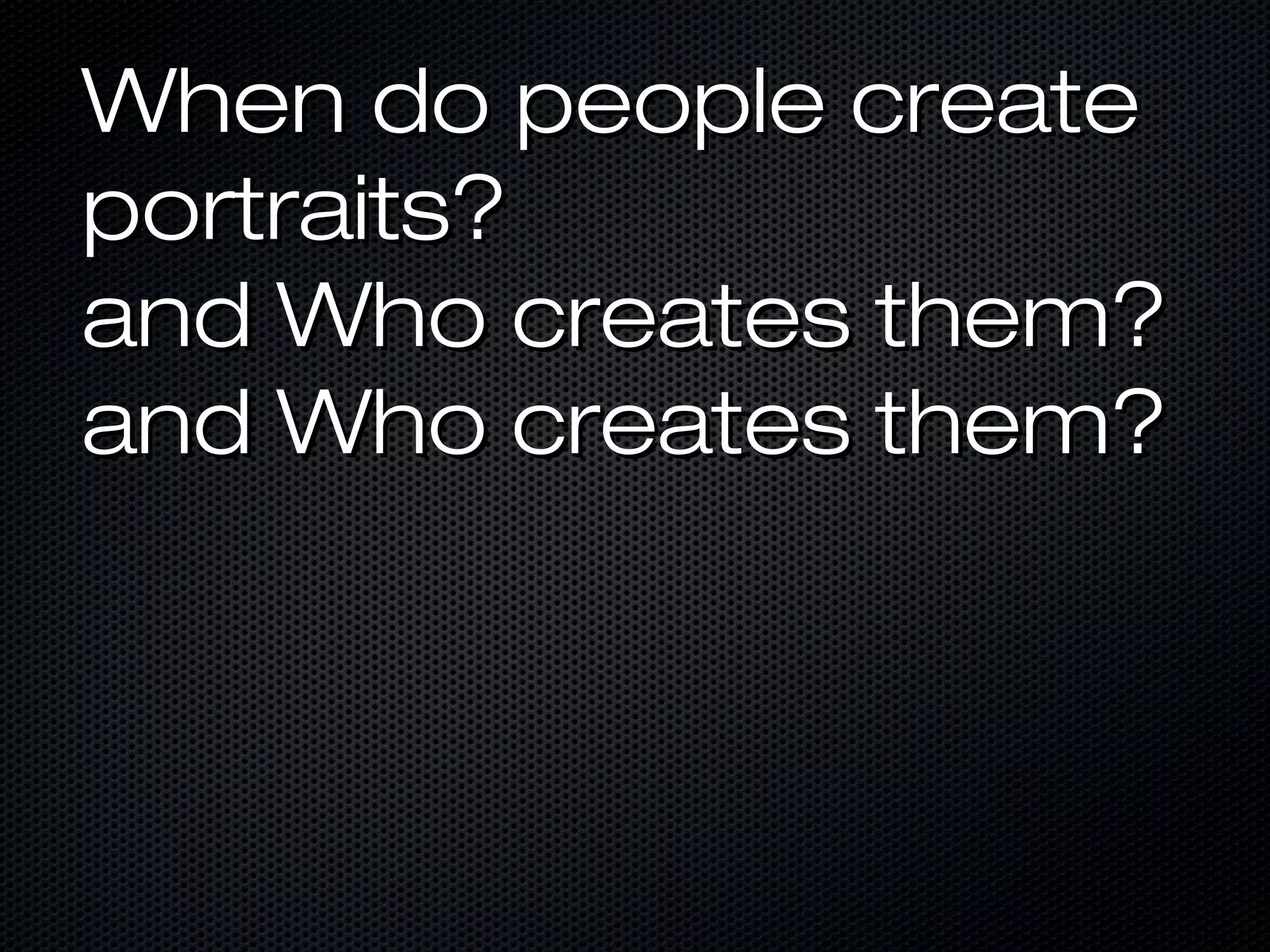
Inanna - Female Head from Uruk, c. 3500 3000 BCE
Inanna is currently located in
Baghdad, Iraq
Inanna is the Sumerian
goddess of love, fertility, and
warfare
Can anyone tell me where
Sumer is located?
Inanna is one of the earliest
examples of portraiture, and is
a perfect example of basing
portraits on gods and
goddesses.
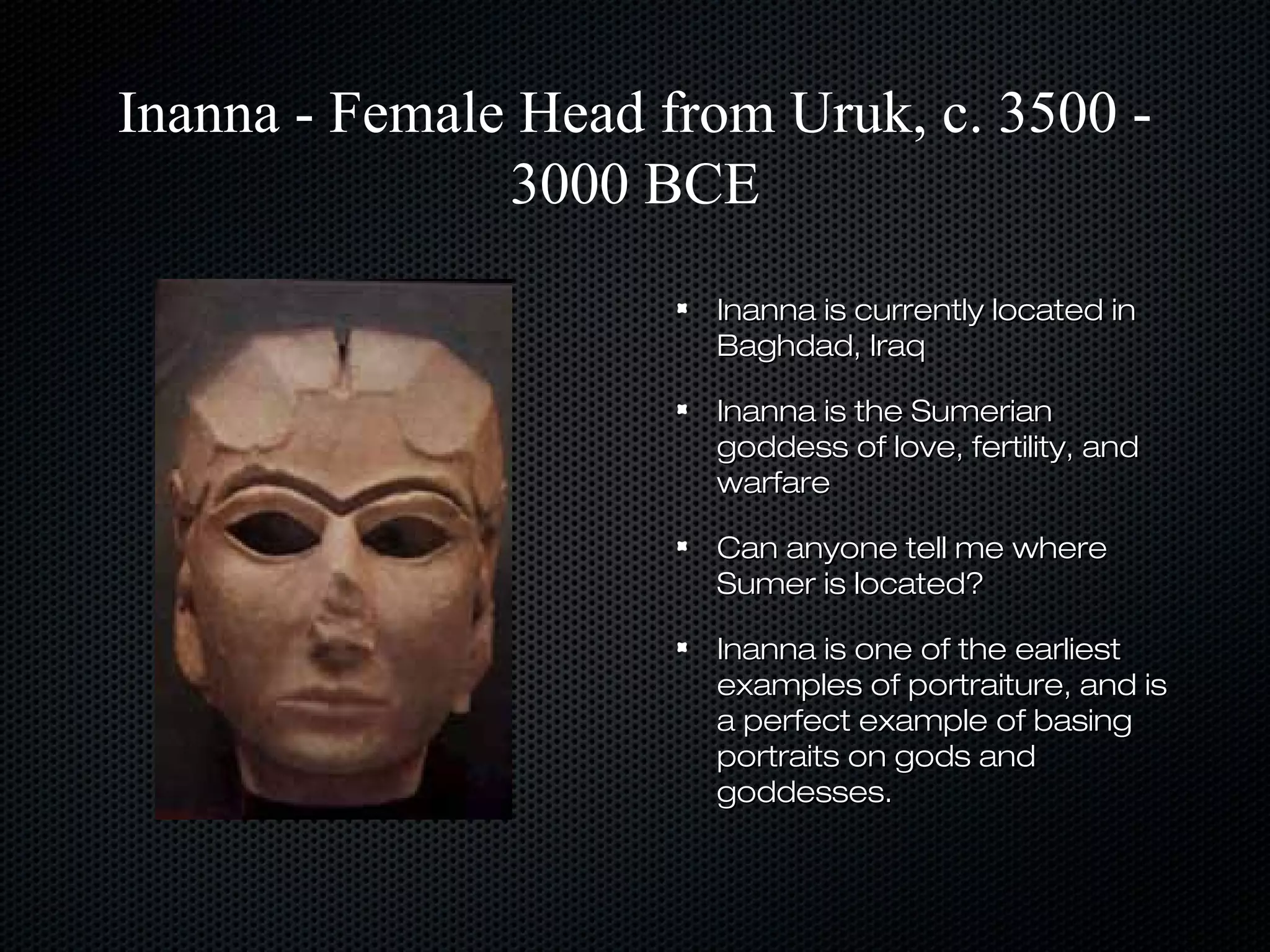
Portrait bust of a man, 1st century BCE
Roman bust
What term was
coined by the
romans?
Romans were some
of the first people to
create portraits of
people who were not
deities.
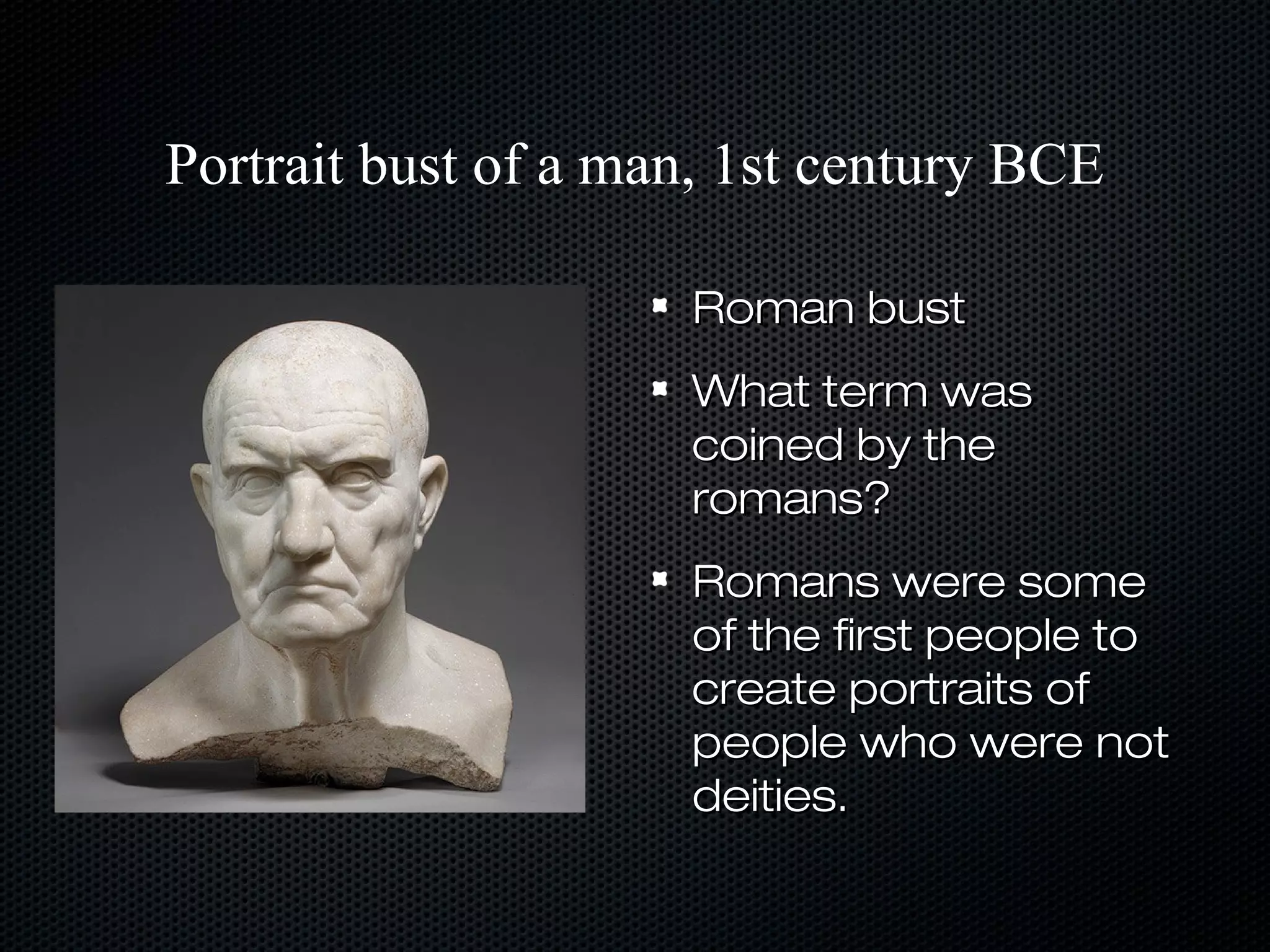
Court portrait of Emperor Shenzong of Song (circa 10671085), Chinese
What are some
differences in this
portrait and portraits
we have looked at
from western
countries?
This portrait is from the
earliest time period of
surviving Chinese
portraits
Portrait painting in
China probably goes
back to 1000BCE
Rembrandt, Portrait of the Artist at His Easel
1660
Rembrandt Van Rijn, Dutch, Is
considered one of the greatest
European portrait painters of all
time
Rembrandt is known for his
highly realistic, well trained style.
Rembrandt is especially known
for his self portraits.
A letter published in 2004 by Margaret S. Livingstone, professor of neurobiology
at Harvard Medical School, suggests that Rembrandt, whose eyes failed to align
correctly, suffered from stereo blindness.[67] This conclusion was made after
studying 36 of Rembrandt's self-portraits. Because he could not form a normal
binocular vision, his brain automatically switched to one eye for many visual tasks.
This disability could have helped him to flatten images he saw, and then put it onto
the two-dimensional canvas. Livingstone theorized that this was an advantage for
the painter: "Art teachers often instruct students to close one eye in order to flatten
what they see. Therefore, stereo blindness might not be a handicap—and might
even be an asset—for some artists."[68]
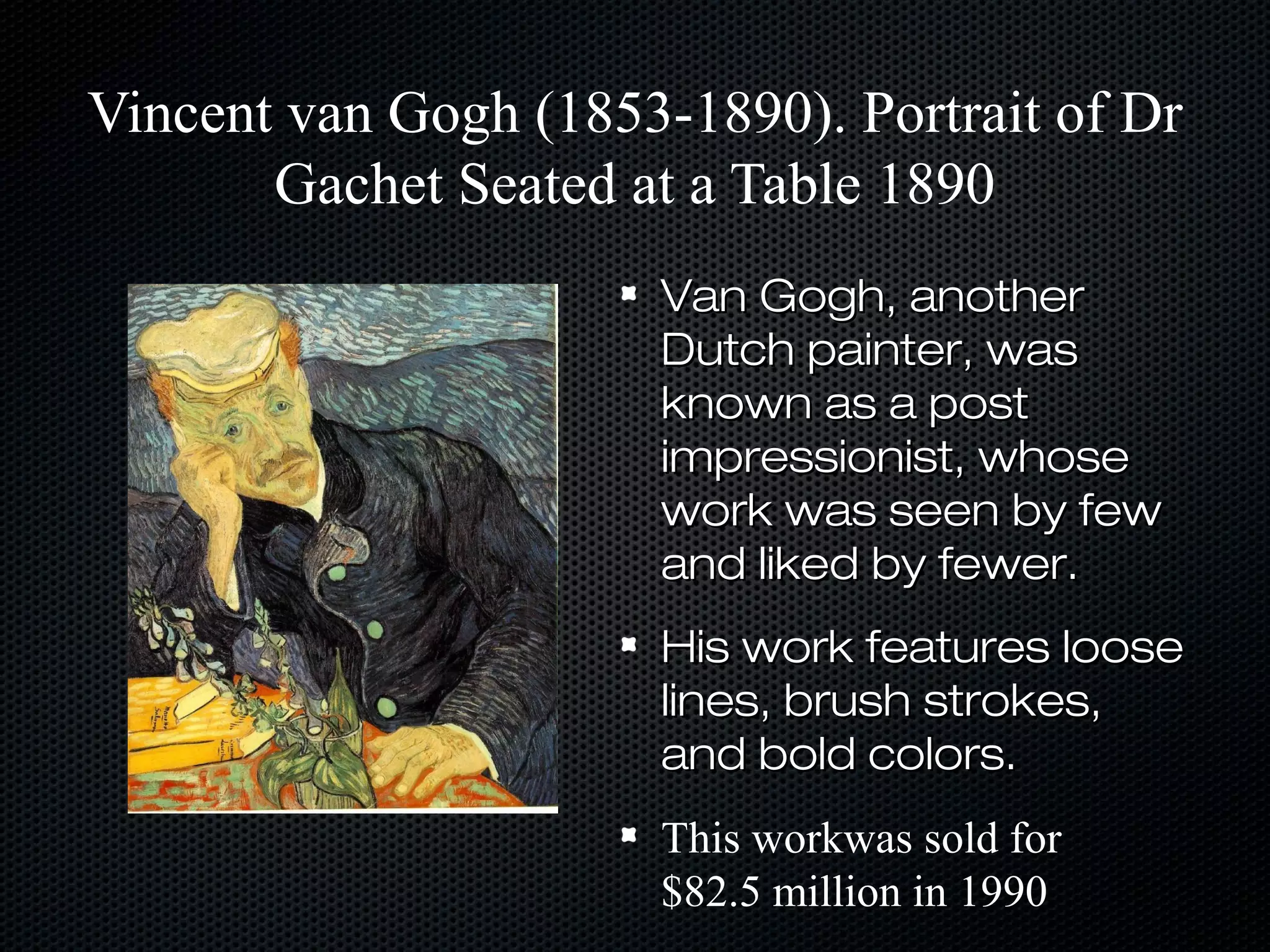
Vincent van Gogh (1853-1890). Portrait of Dr
Gachet Seated at a Table 1890
Van Gogh, another
Dutch painter, was
known as a post
impressionist, whose
work was seen by few
and liked by fewer.
His work features loose
lines, brush strokes,
and bold colors.
This workwas sold for
$82.5 million in 1990
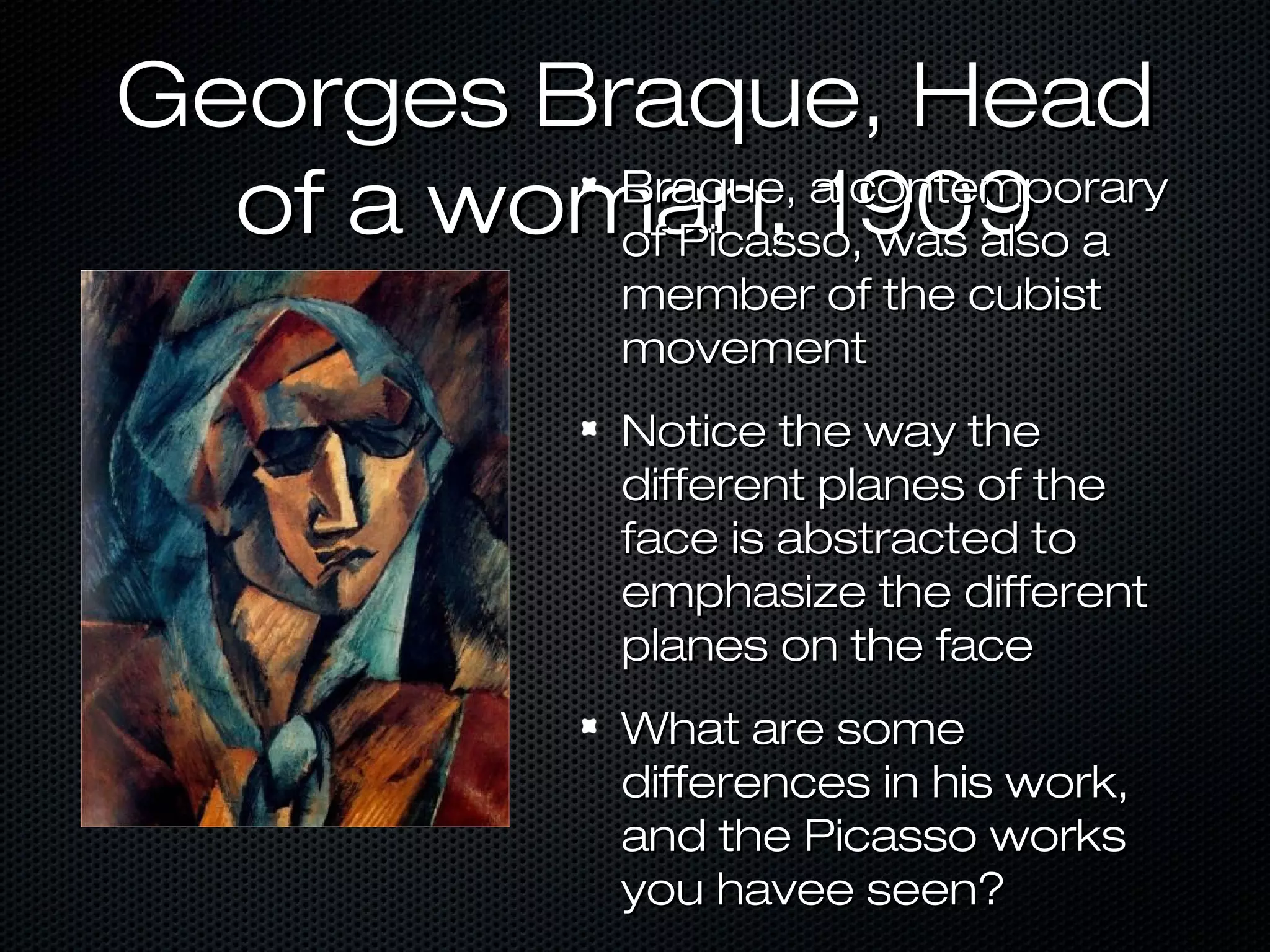
Georges Braque, Head
Braque, a contemporary
of a woman, 1909 a
of Picasso, was also
member of the cubist
movement

Notice the way the
different planes of the
face is abstracted to
emphasize the different
planes on the face
What are some
differences in his work,
and the Picasso works
you havee seen?
What other professions can
you think of who create
portaits?
Author
Biographies
Portrait photographer
family portraits
year books
prom pictures
Film makers
Documentaries
Biographical films
Assignment: Drawing
facial features
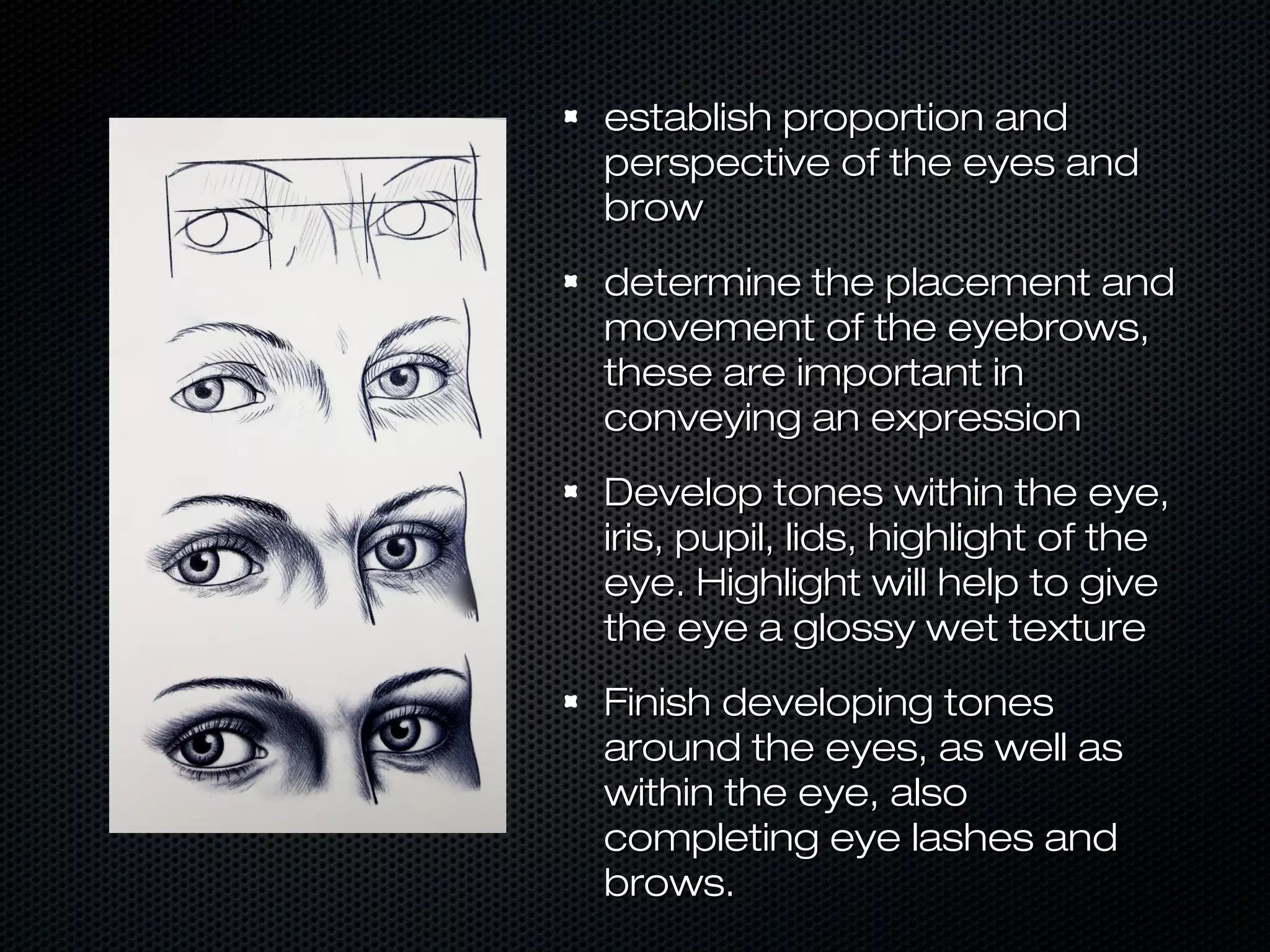
establish proportion and
perspective of the eyes and
brow
determine the placement and
movement of the eyebrows,
these are important in
conveying an expression
Develop tones within the eye,
iris, pupil, lids, highlight of the
eye. Highlight will help to give
the eye a glossy wet texture
Finish developing tones
around the eyes, as well as
within the eye, also
completing eye lashes and
brows.
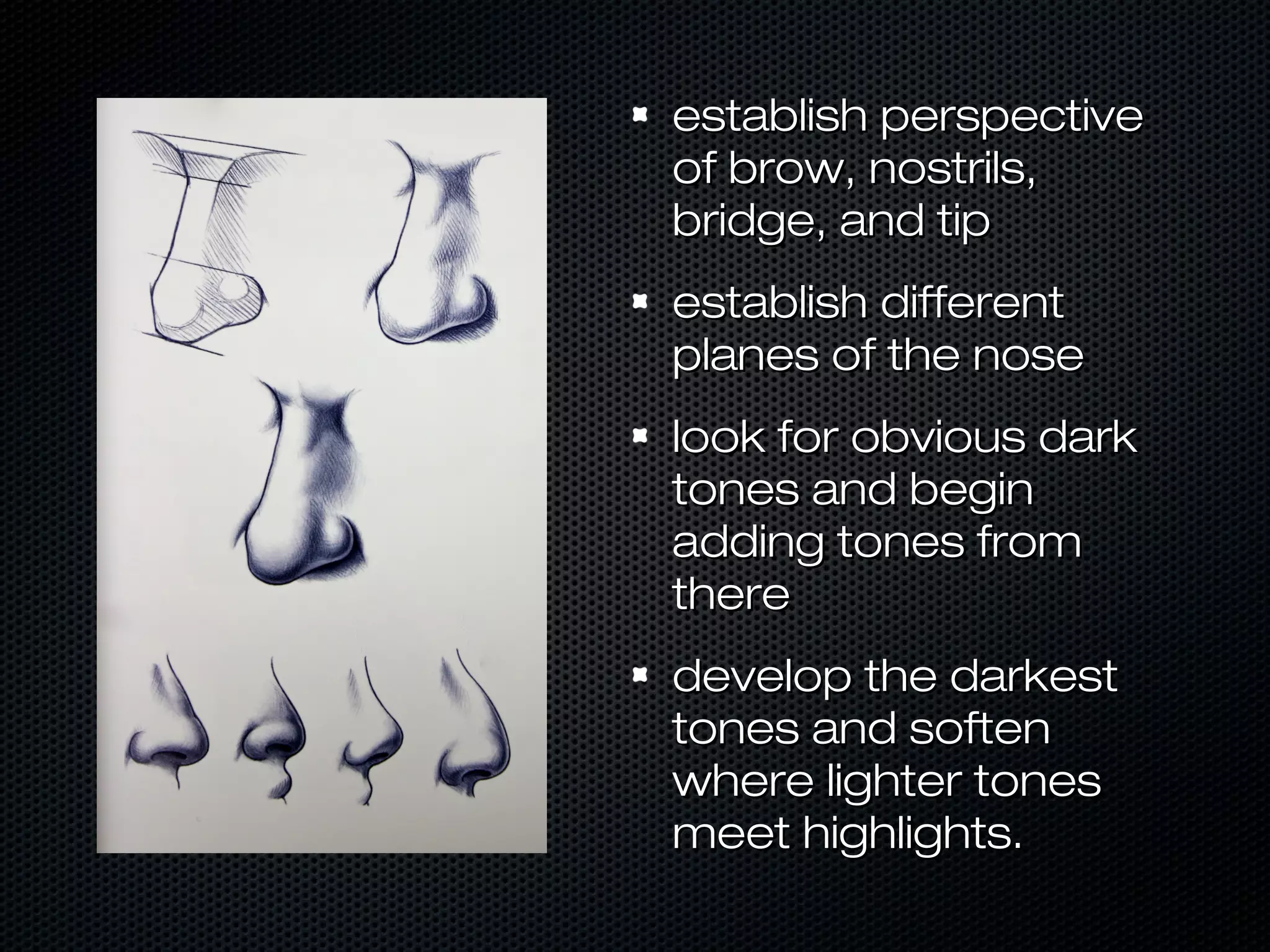
establish perspective
of brow, nostrils,
bridge, and tip
establish different
planes of the nose
look for obvious dark
tones and begin
adding tones from
there
develop the darkest
tones and soften
where lighter tones
meet highlights.
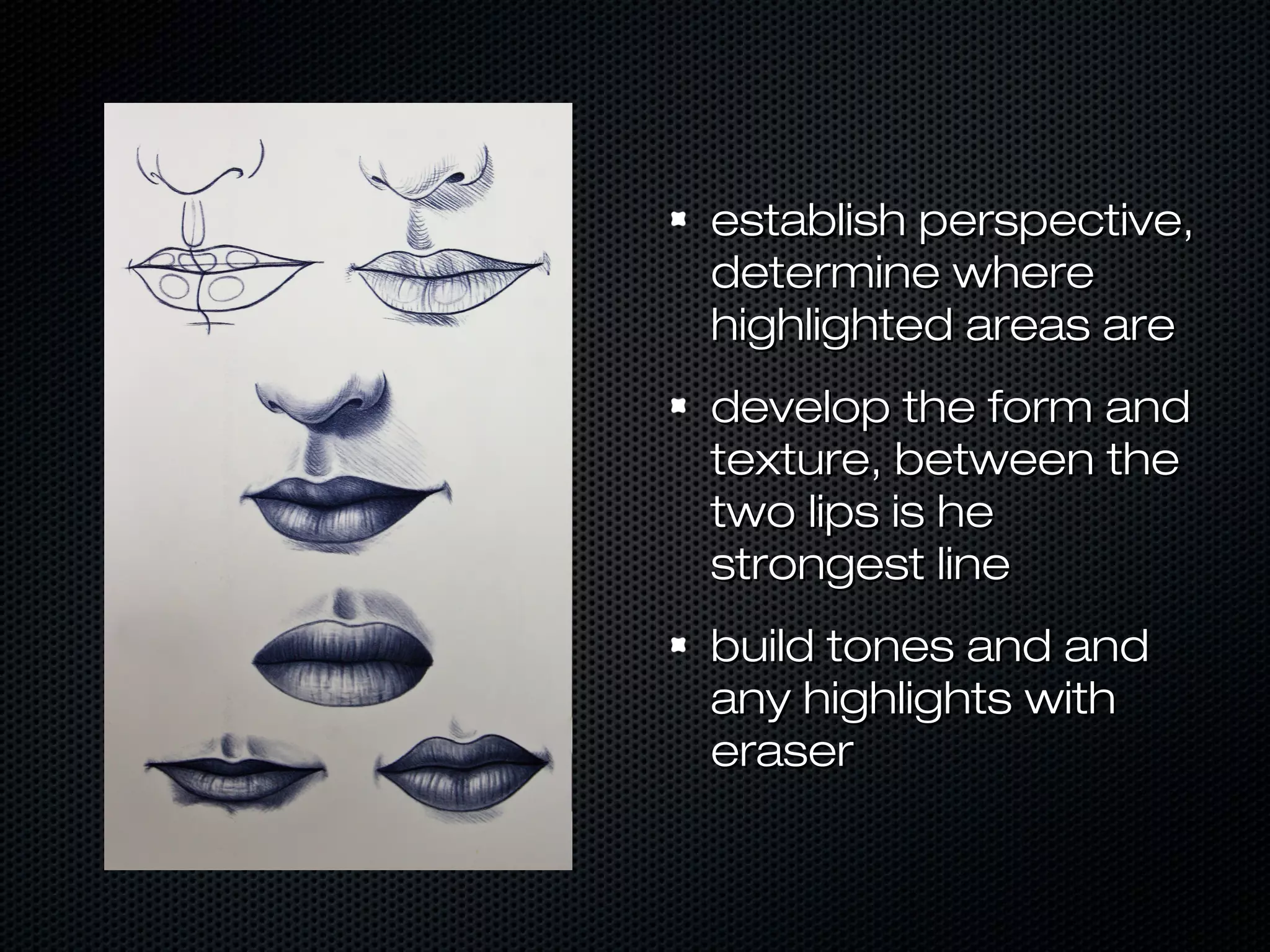
establish perspective,
determine where
highlighted areas are
develop the form and
texture, between the
two lips is he
strongest line
build tones and and
any highlights with
eraser
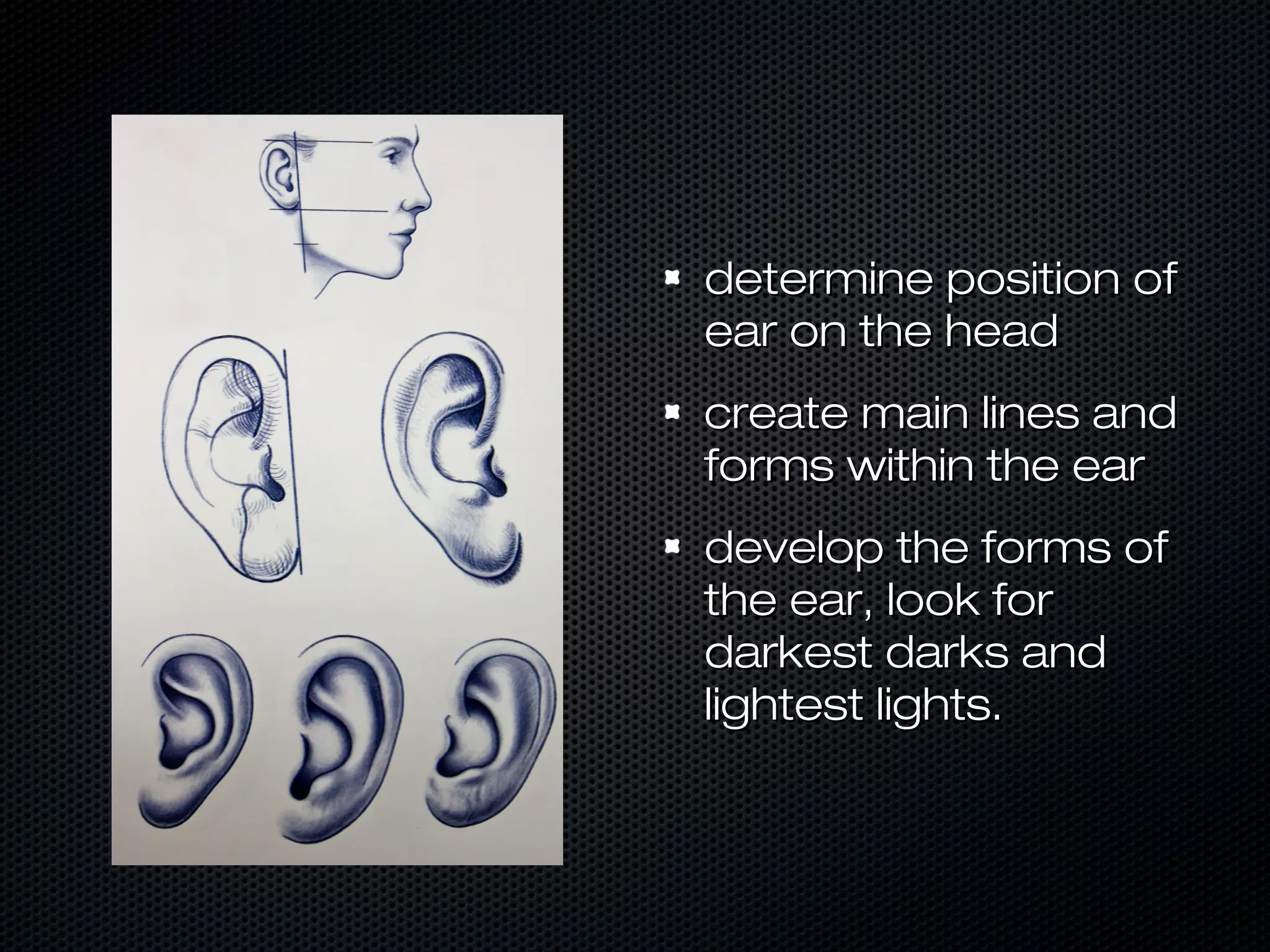
determine position of
ear on the head
create main lines and
forms within the ear
develop the forms of
the ear, look for
darkest darks and
lightest lights.

When Who

  • 1.
    When do peoplecreate portraits? and Who creates them? and Who creates them?
  • 2.
    Inanna - FemaleHead from Uruk, c. 3500 3000 BCE Inanna is currently located in Baghdad, Iraq Inanna is the Sumerian goddess of love, fertility, and warfare Can anyone tell me where Sumer is located? Inanna is one of the earliest examples of portraiture, and is a perfect example of basing portraits on gods and goddesses.
  • 3.
    Portrait bust ofa man, 1st century BCE Roman bust What term was coined by the romans? Romans were some of the first people to create portraits of people who were not deities.
  • 4.
    Court portrait ofEmperor Shenzong of Song (circa 10671085), Chinese What are some differences in this portrait and portraits we have looked at from western countries? This portrait is from the earliest time period of surviving Chinese portraits Portrait painting in China probably goes back to 1000BCE
  • 5.
    Rembrandt, Portrait ofthe Artist at His Easel 1660 Rembrandt Van Rijn, Dutch, Is considered one of the greatest European portrait painters of all time Rembrandt is known for his highly realistic, well trained style. Rembrandt is especially known for his self portraits. A letter published in 2004 by Margaret S. Livingstone, professor of neurobiology at Harvard Medical School, suggests that Rembrandt, whose eyes failed to align correctly, suffered from stereo blindness.[67] This conclusion was made after studying 36 of Rembrandt's self-portraits. Because he could not form a normal binocular vision, his brain automatically switched to one eye for many visual tasks. This disability could have helped him to flatten images he saw, and then put it onto the two-dimensional canvas. Livingstone theorized that this was an advantage for the painter: "Art teachers often instruct students to close one eye in order to flatten what they see. Therefore, stereo blindness might not be a handicap—and might even be an asset—for some artists."[68]
  • 6.
    Vincent van Gogh(1853-1890). Portrait of Dr Gachet Seated at a Table 1890 Van Gogh, another Dutch painter, was known as a post impressionist, whose work was seen by few and liked by fewer. His work features loose lines, brush strokes, and bold colors. This workwas sold for $82.5 million in 1990
  • 7.
    Georges Braque, Head Braque,a contemporary of a woman, 1909 a of Picasso, was also member of the cubist movement Notice the way the different planes of the face is abstracted to emphasize the different planes on the face What are some differences in his work, and the Picasso works you havee seen?
  • 8.
    What other professionscan you think of who create portaits? Author Biographies Portrait photographer family portraits year books prom pictures Film makers Documentaries Biographical films
  • 9.
  • 10.
    establish proportion and perspectiveof the eyes and brow determine the placement and movement of the eyebrows, these are important in conveying an expression Develop tones within the eye, iris, pupil, lids, highlight of the eye. Highlight will help to give the eye a glossy wet texture Finish developing tones around the eyes, as well as within the eye, also completing eye lashes and brows.
  • 11.
    establish perspective of brow,nostrils, bridge, and tip establish different planes of the nose look for obvious dark tones and begin adding tones from there develop the darkest tones and soften where lighter tones meet highlights.
  • 12.
    establish perspective, determine where highlightedareas are develop the form and texture, between the two lips is he strongest line build tones and and any highlights with eraser
  • 13.
    determine position of earon the head create main lines and forms within the ear develop the forms of the ear, look for darkest darks and lightest lights.