Introduction to
Sculpture
A brief history
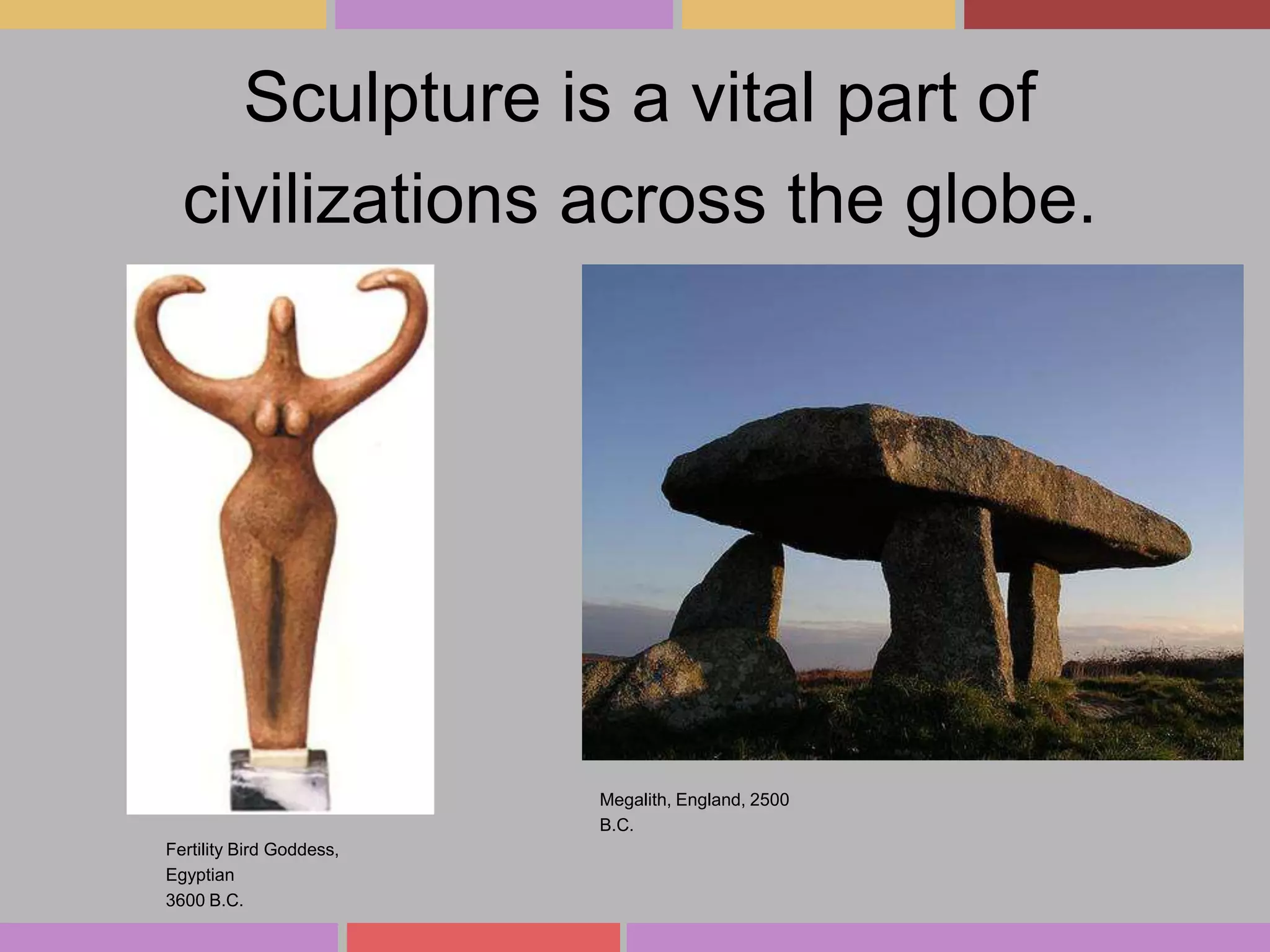
Sculpture is a vital part of
civilizations across the globe.

Megalith, England, 2500
B.C.
Fertility Bird Goddess,
Egyptian
3600 B.C.
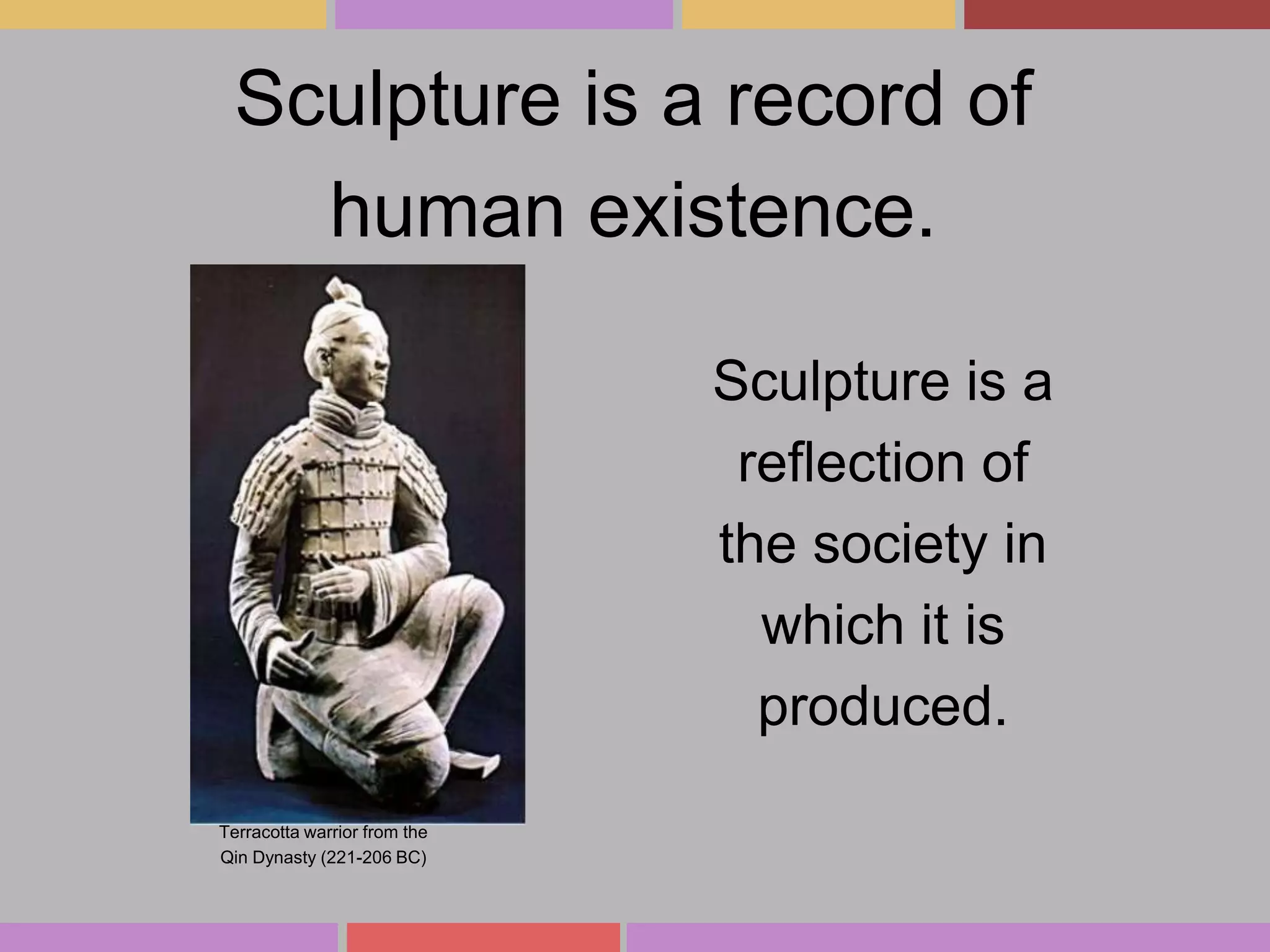
Sculpture is a record of
human existence.
Sculpture is a
reflection of
the society in
which it is
produced.
Terracotta warrior from the
Qin Dynasty (221-206 BC)
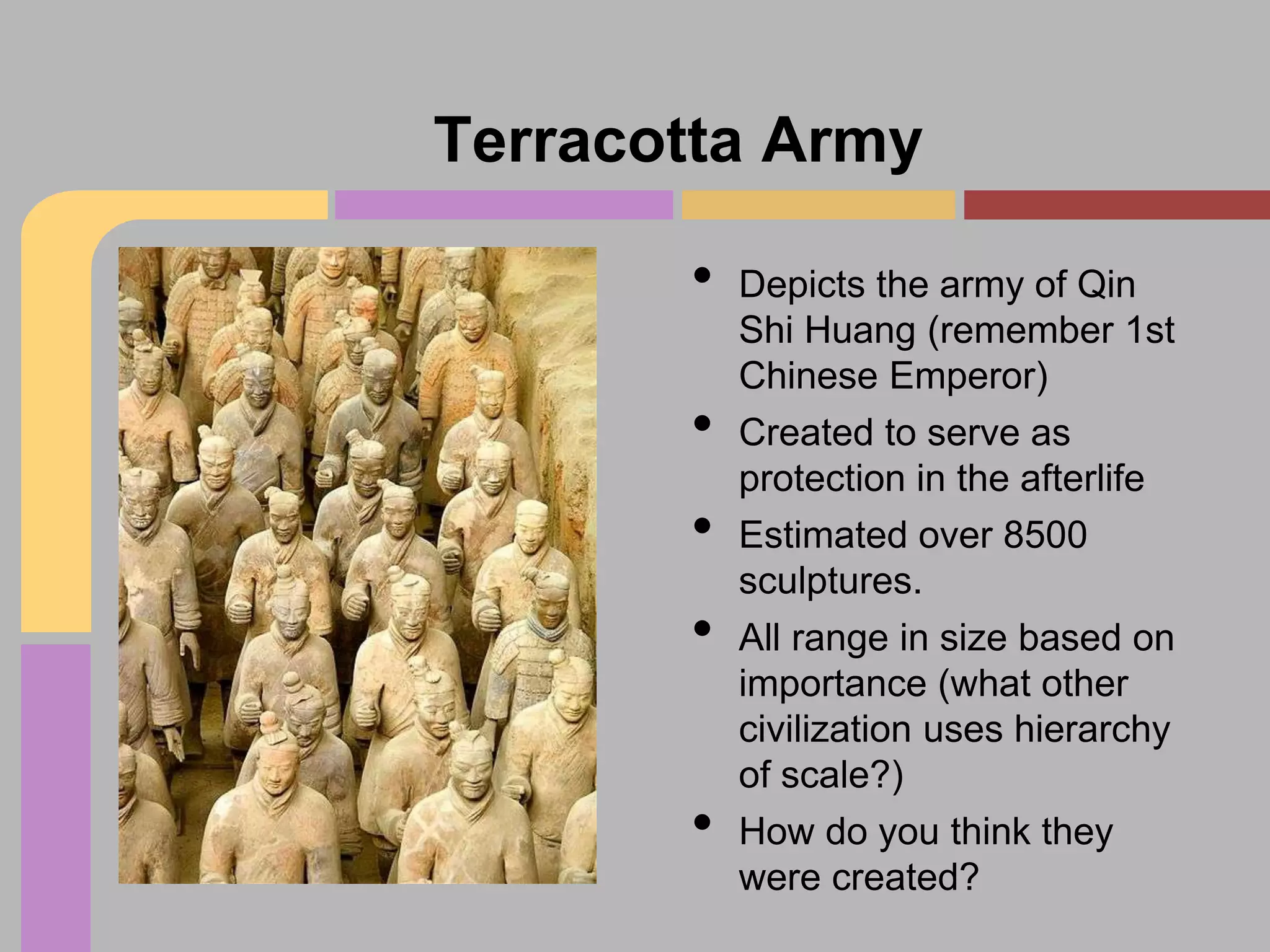
Terracotta Army
•

•
•

•
•

Depicts the army of Qin
Shi Huang (remember 1st
Chinese Emperor)
Created to serve as
protection in the afterlife
Estimated over 8500
sculptures.
All range in size based on
importance (what other
civilization uses hierarchy
of scale?)
How do you think they
were created?
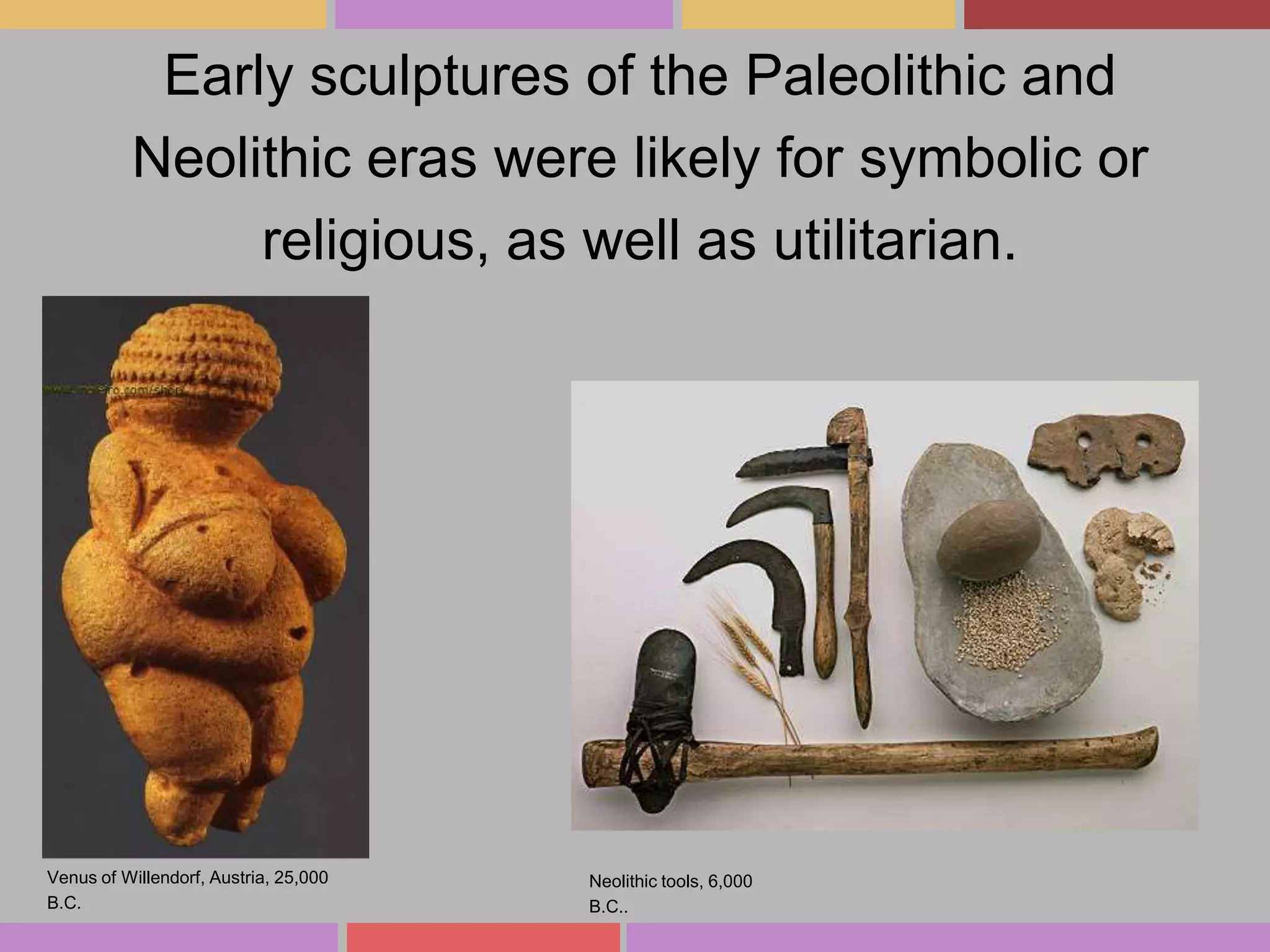
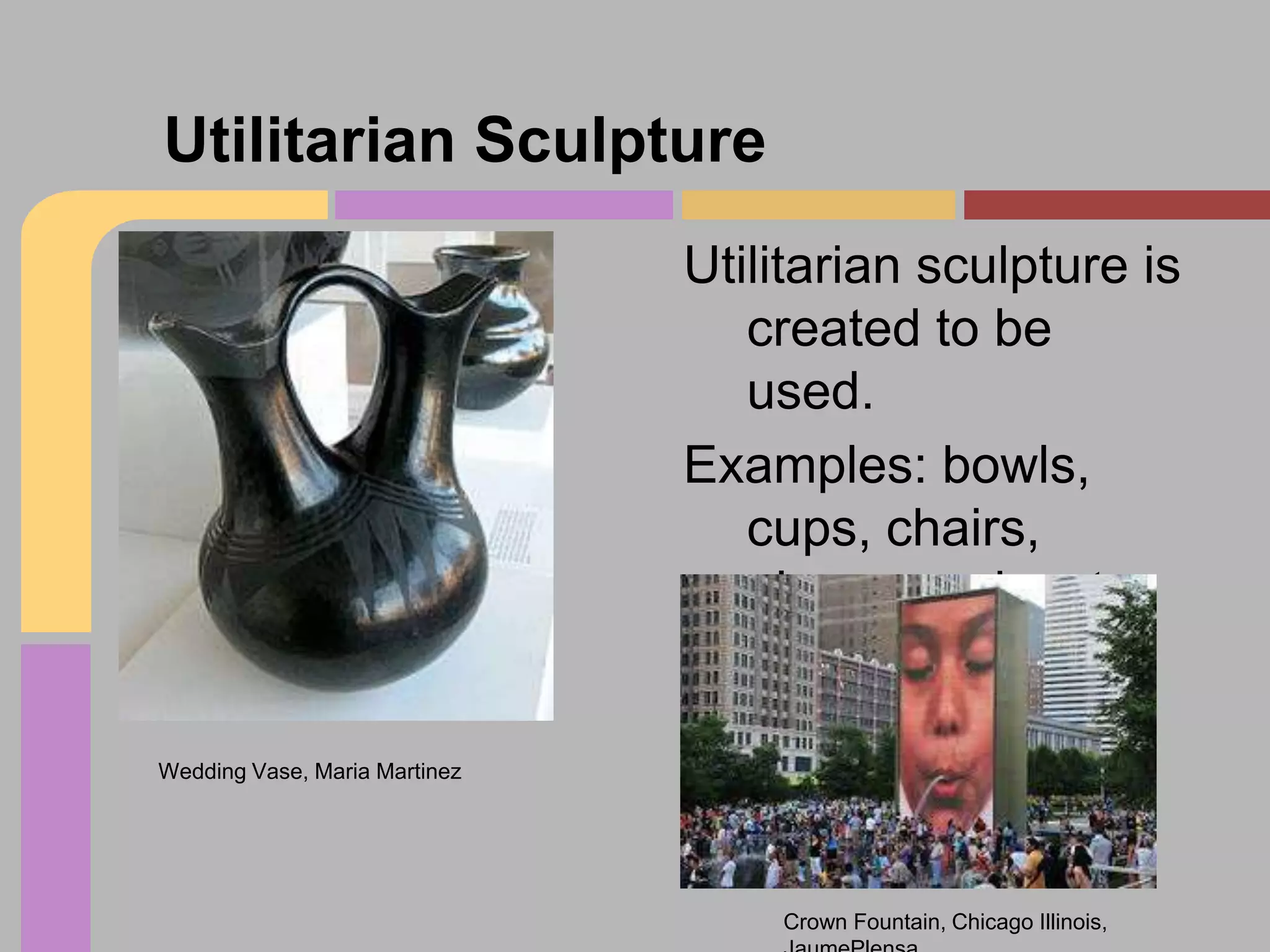
Early sculptures of the Paleolithic and
Neolithic eras were likely for symbolic or
religious, as well as utilitarian.

Venus of Willendorf, Austria, 25,000
B.C.

Neolithic tools, 6,000
B.C..
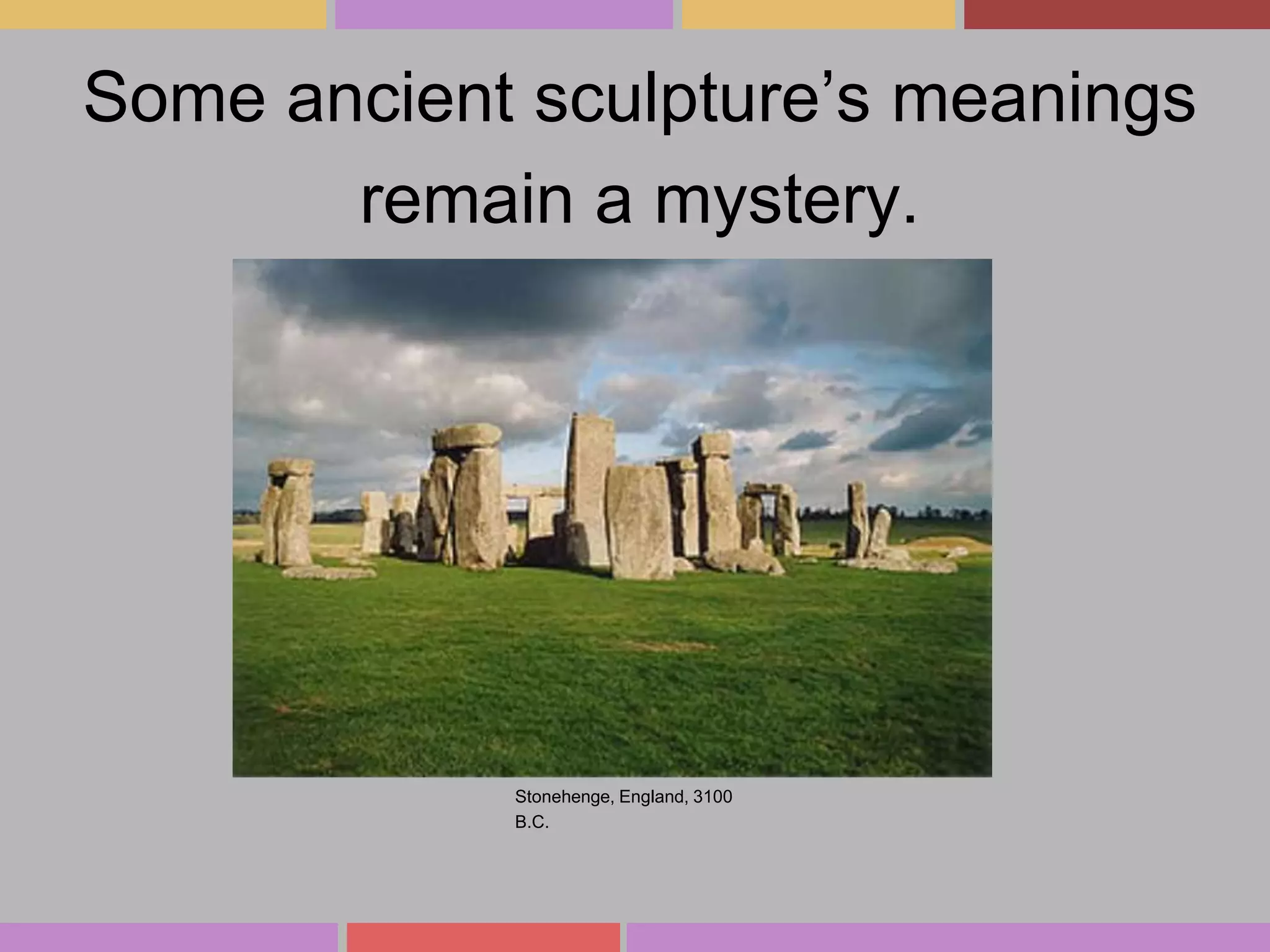
Utilitarian Sculpture
Utilitarian sculpture is
created to be
used.
Examples: bowls,
cups, chairs,
playgrounds, etc.

Wedding Vase, Maria Martinez

Crown Fountain, Chicago Illinois,
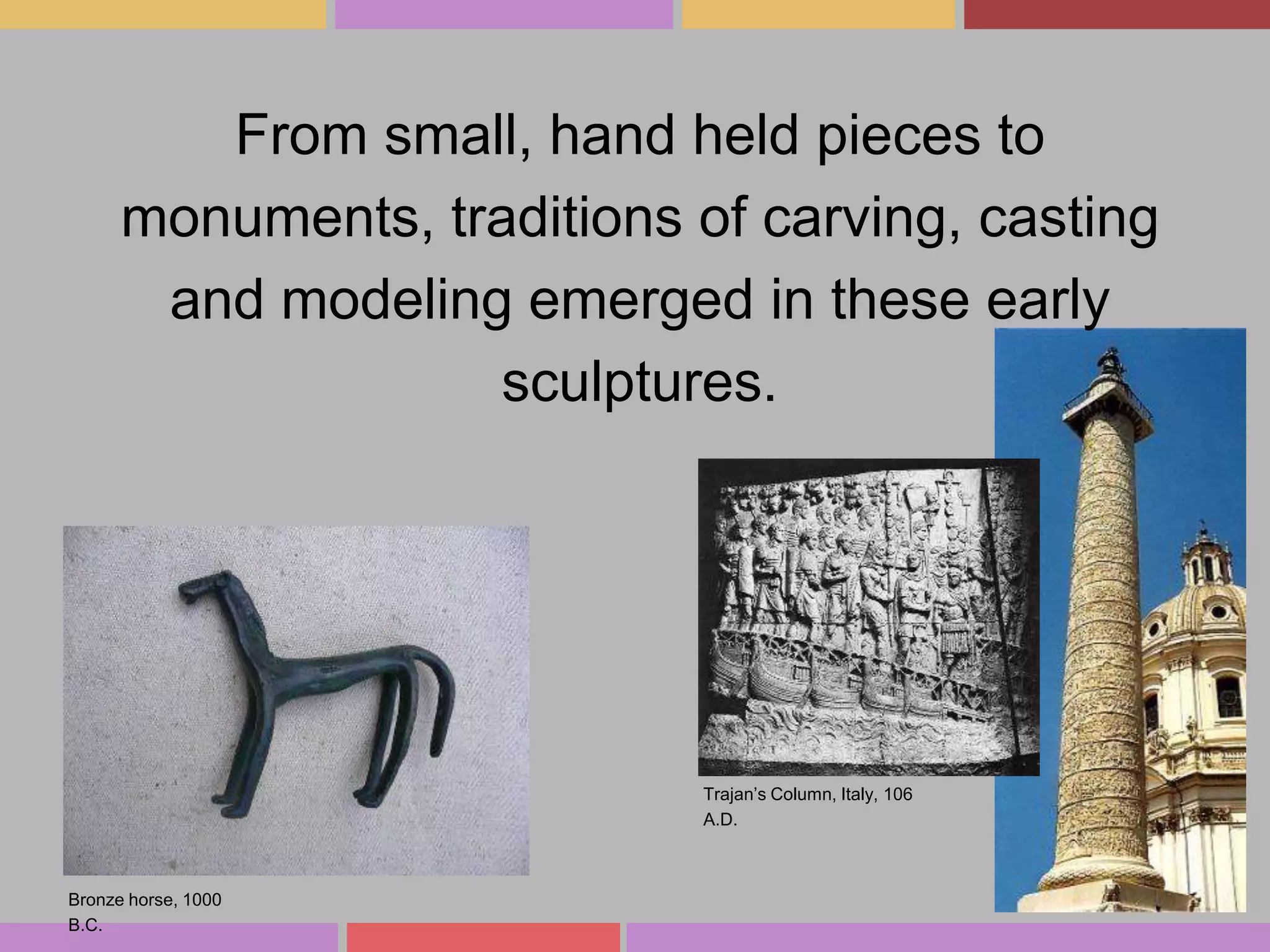
Some ancient sculpture’s meanings
remain a mystery.

Stonehenge, England, 3100
B.C.
From small, hand held pieces to
monuments, traditions of carving, casting
and modeling emerged in these early
sculptures.

Trajan’s Column, Italy, 106
A.D.

Bronze horse, 1000
B.C.
Sculpting Techniques
Carving
Casting
Constructing
Modeling
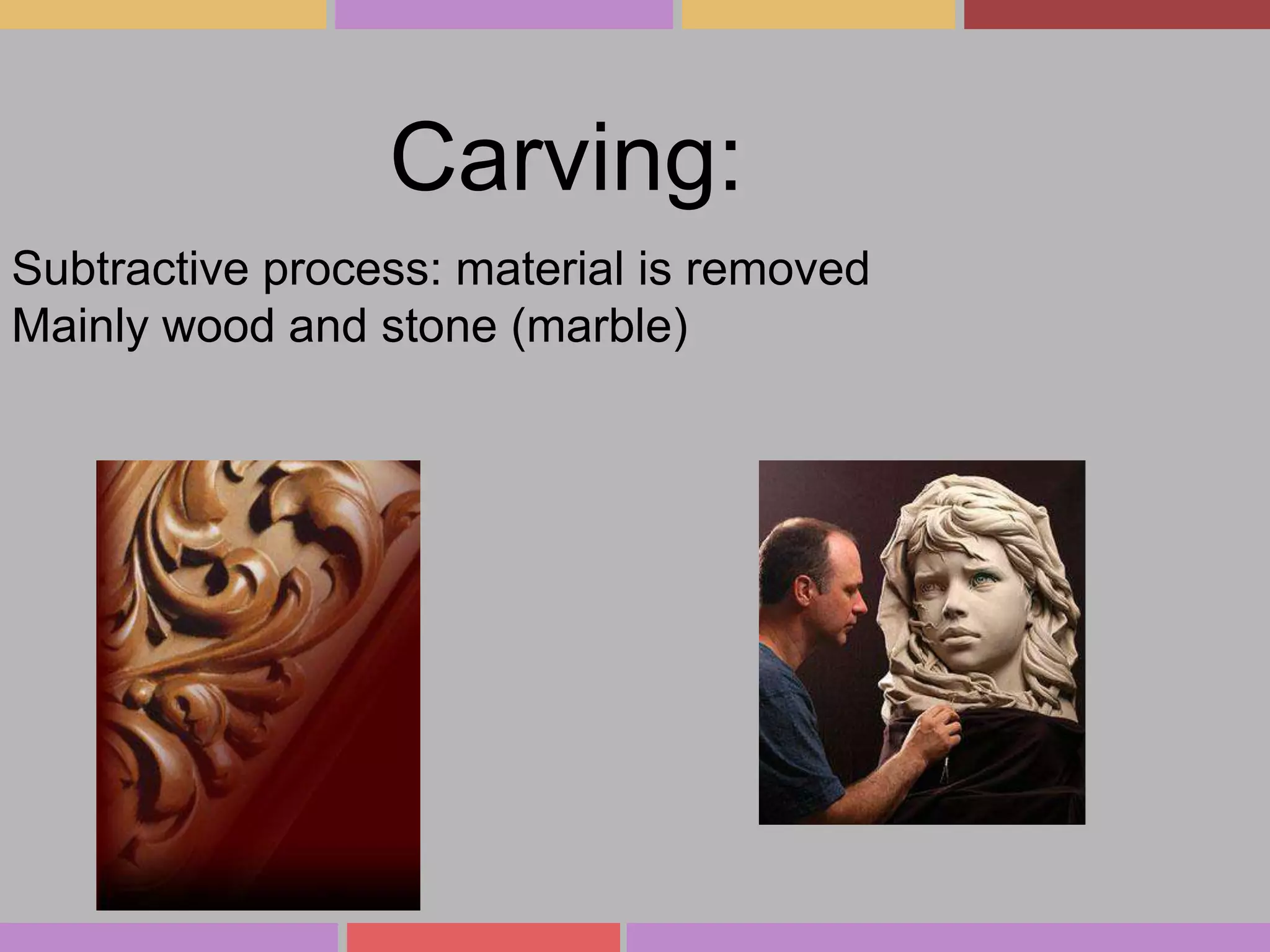
Carving:
Subtractive process: material is removed
Mainly wood and stone (marble)
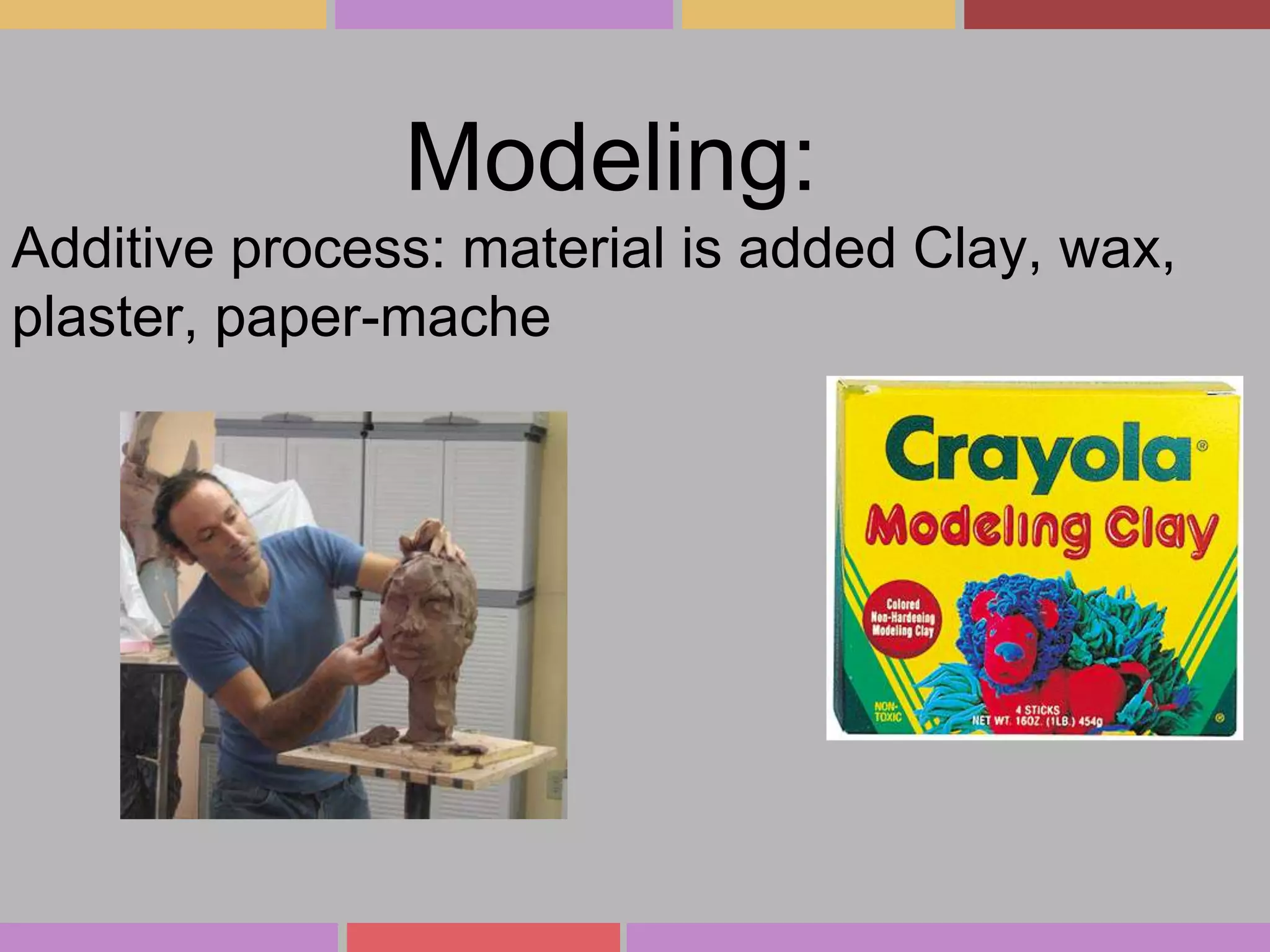
Modeling:
Additive process: material is added Clay, wax,
plaster, paper-mache
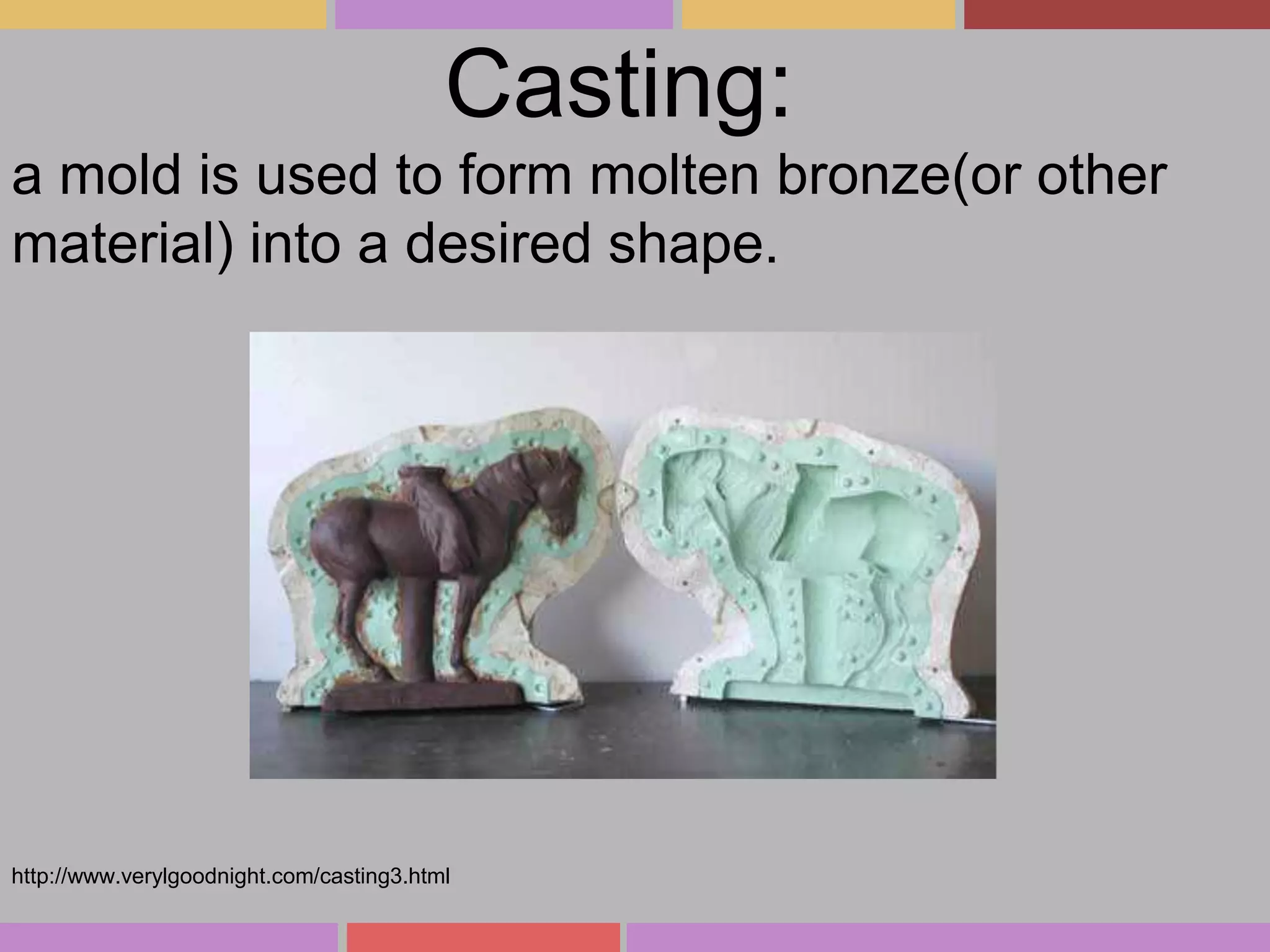
Casting:
a mold is used to form molten bronze(or other
material) into a desired shape.

http://www.verylgoodnight.com/casting3.html
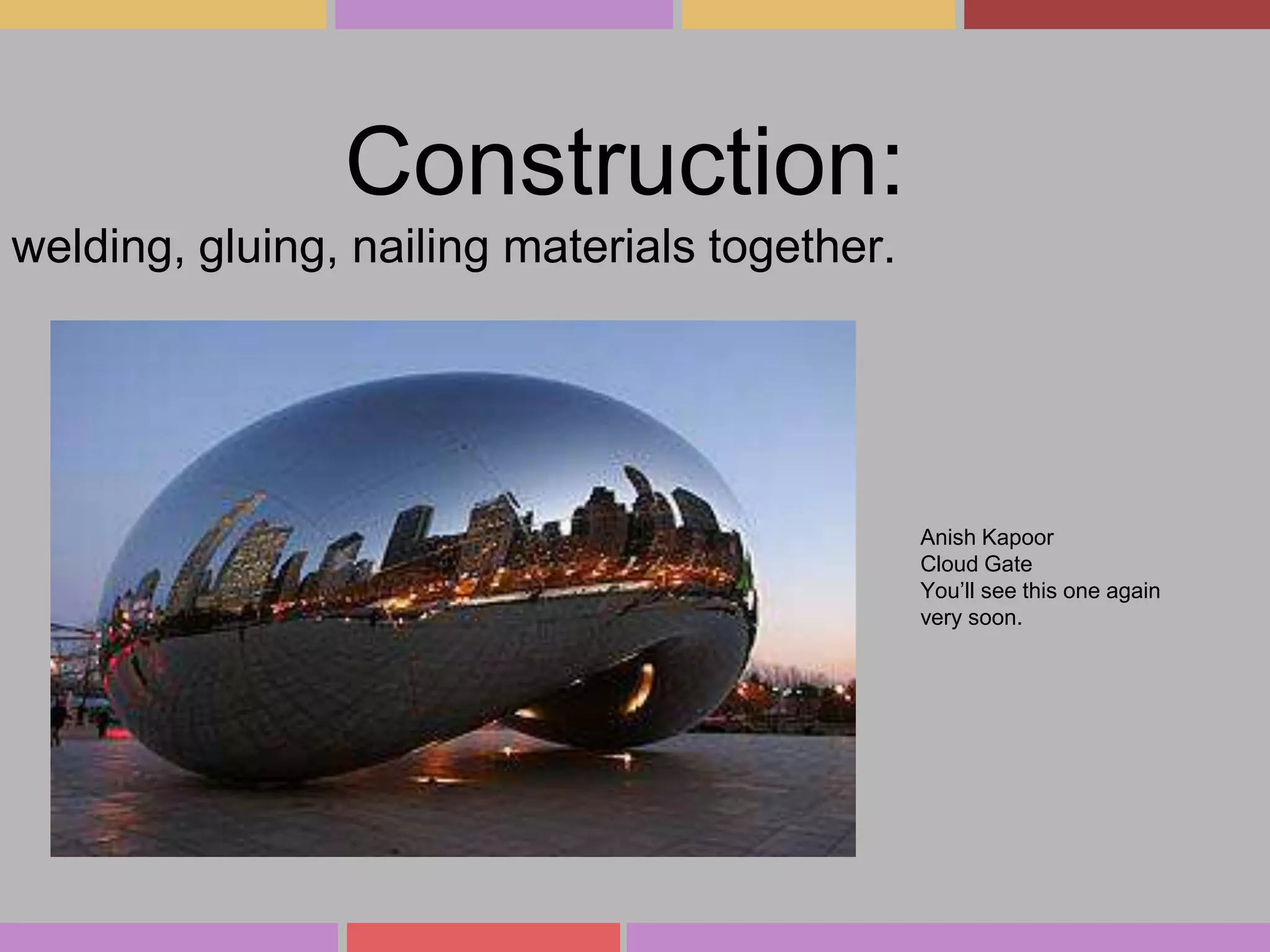
Construction:
welding, gluing, nailing materials together.

Anish Kapoor
Cloud Gate
You’ll see this one again
very soon.
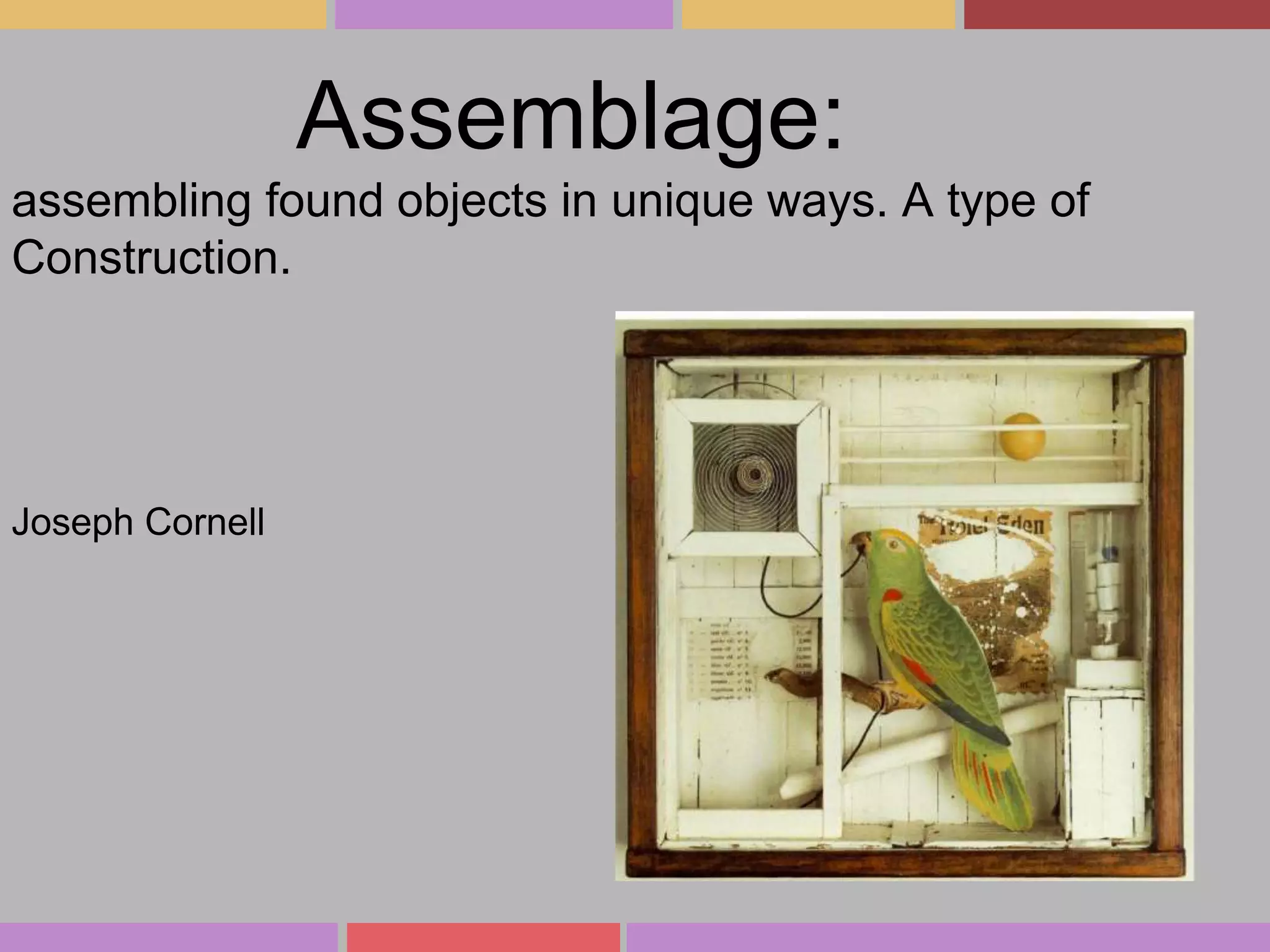
Assemblage:
assembling found objects in unique ways. A type of
Construction.

Joseph Cornell
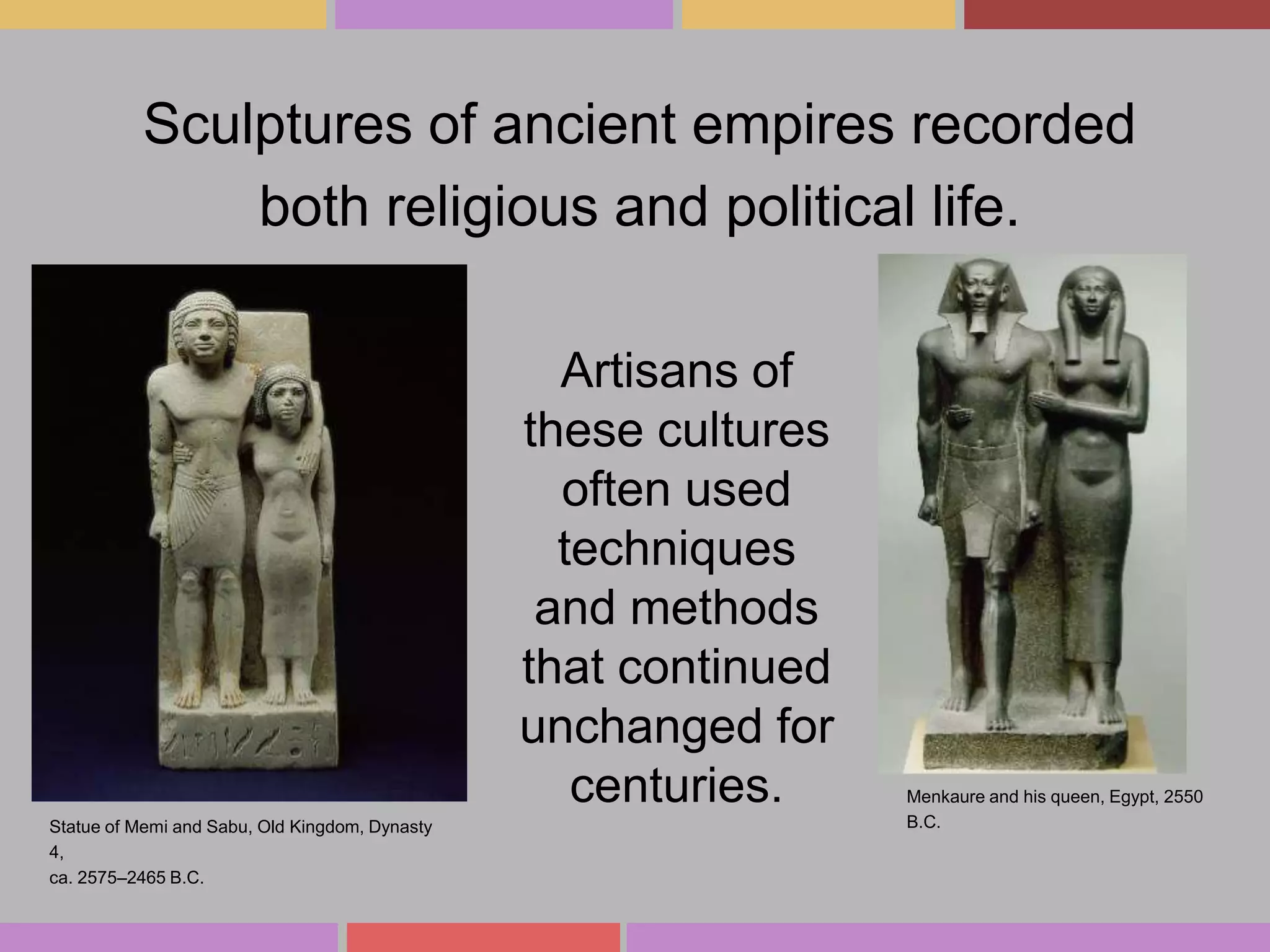
Sculptures of ancient empires recorded
both religious and political life.
Artisans of
these cultures
often used
techniques
and methods
that continued
unchanged for
centuries.
Statue of Memi and Sabu, Old Kingdom, Dynasty
4,
ca. 2575–2465 B.C.

Menkaure and his queen, Egypt, 2550
B.C.
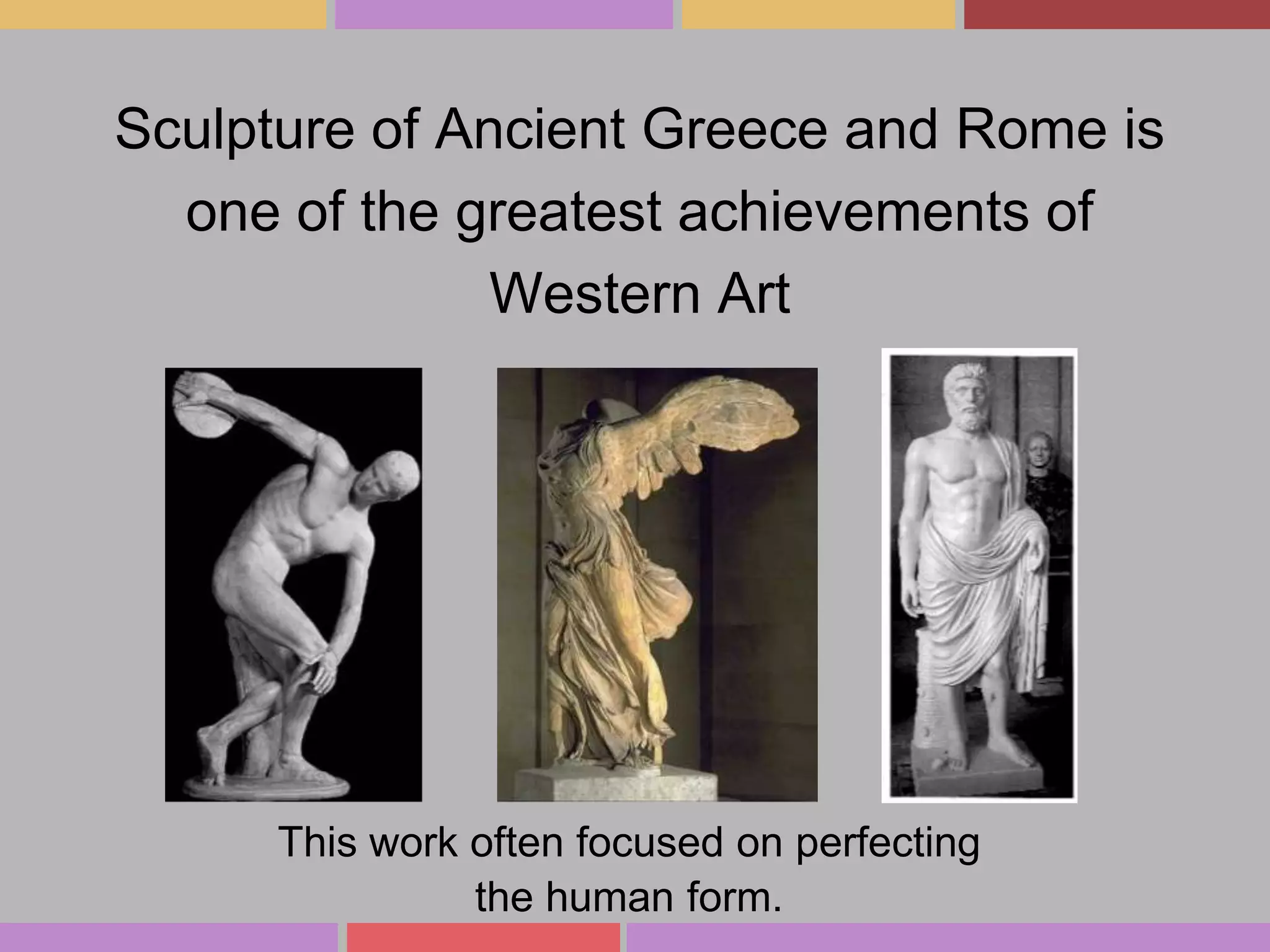
Sculpture of Ancient Greece and Rome is
one of the greatest achievements of
Western Art

This work often focused on perfecting
the human form.
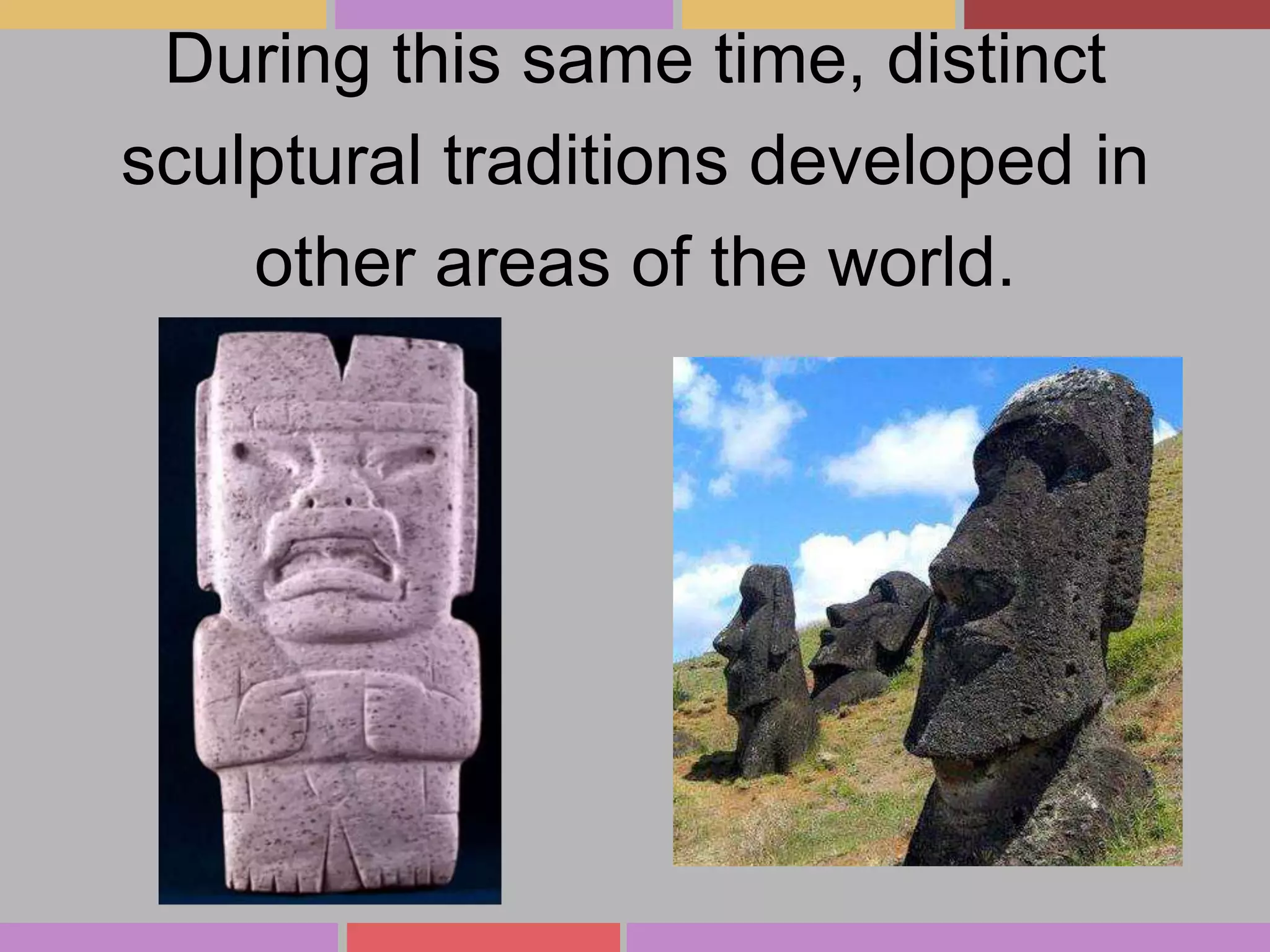
During this same time, distinct
sculptural traditions developed in
other areas of the world.
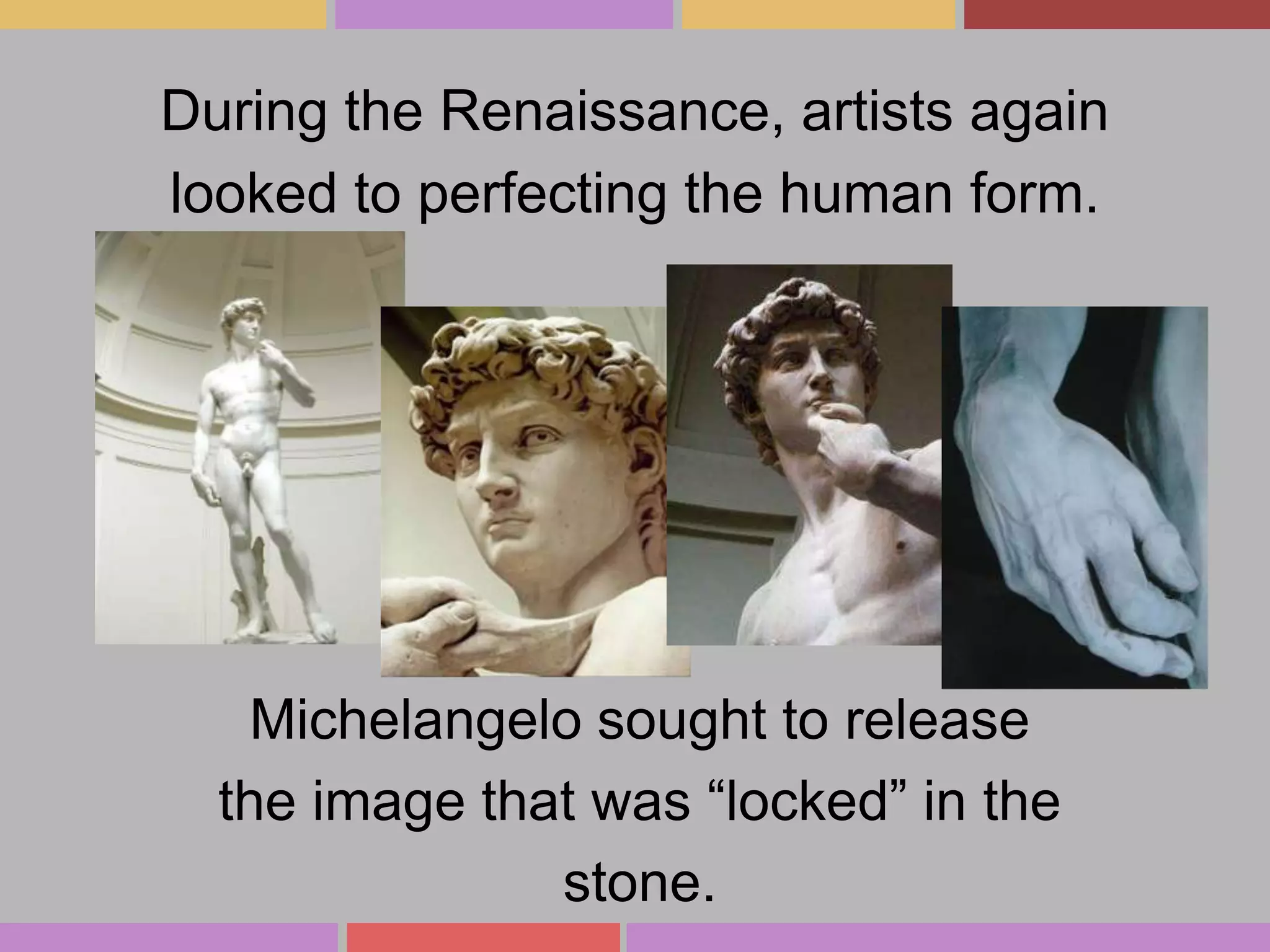
During the Renaissance, artists again
looked to perfecting the human form.

Michelangelo sought to release
the image that was “locked” in the
stone.
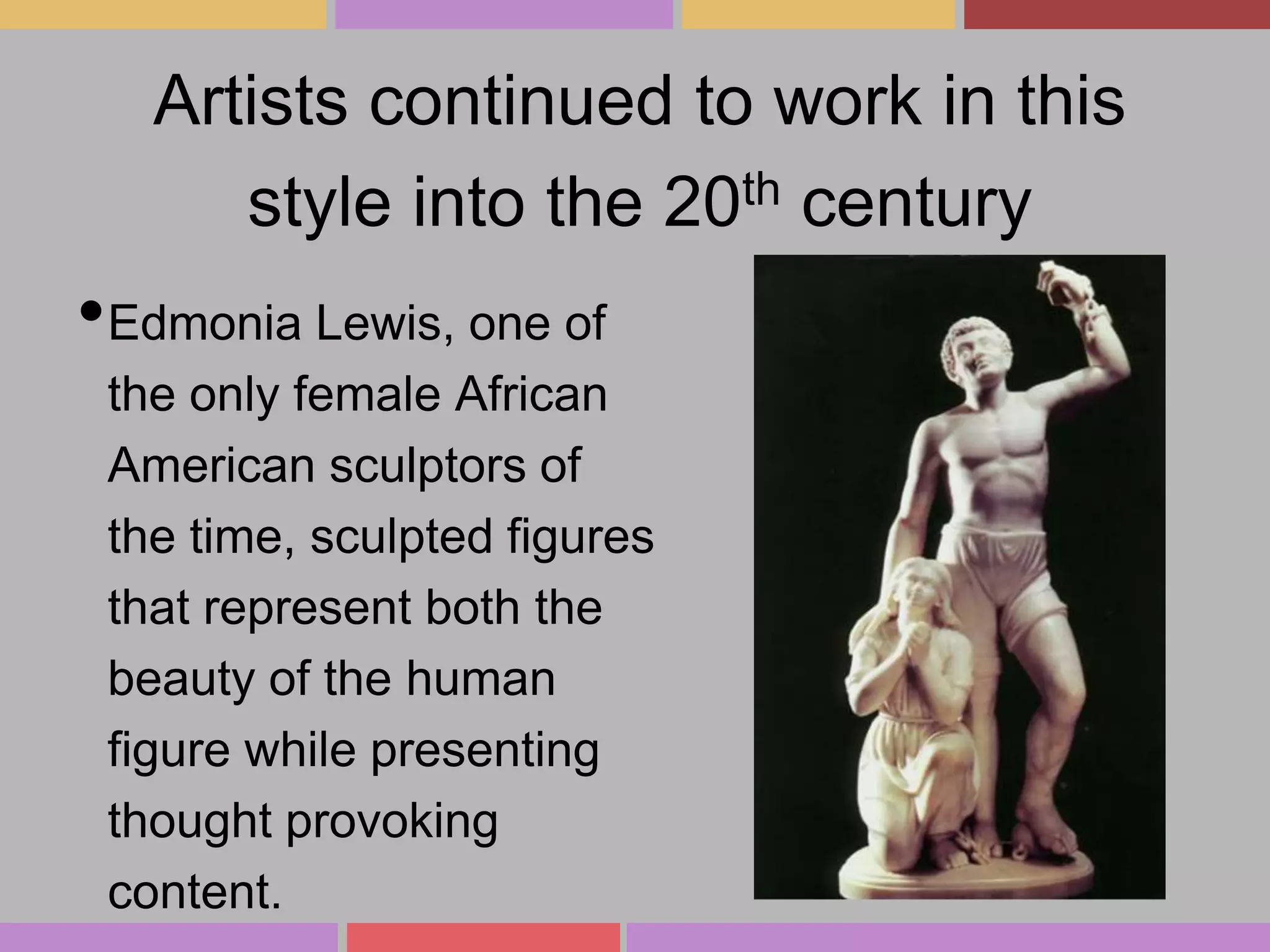
Artists continued to work in this
style into the 20th century

•Edmonia Lewis, one of
the only female African
American sculptors of
the time, sculpted figures
that represent both the
beauty of the human
figure while presenting
thought provoking
content.
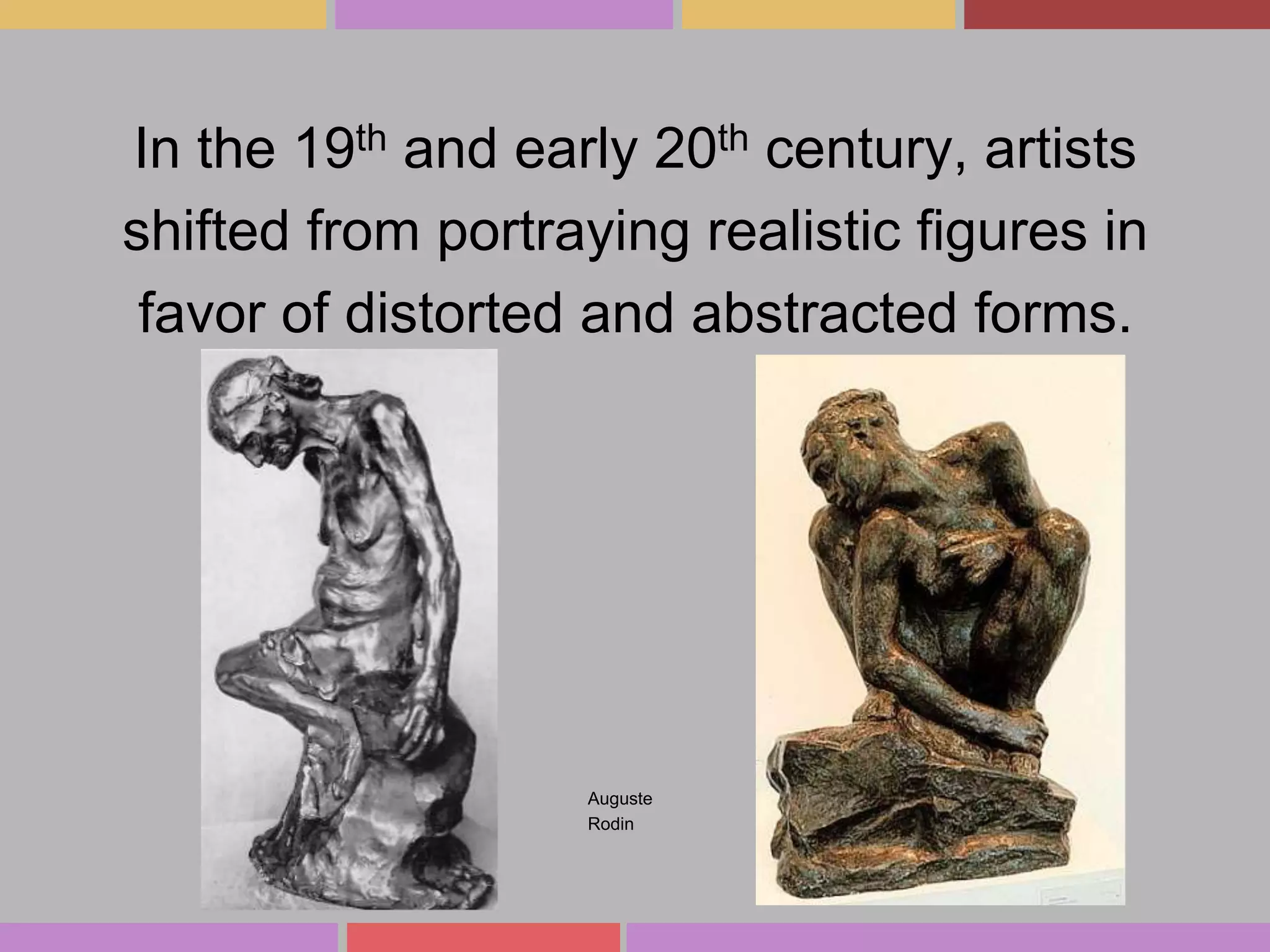
In the 19th and early 20th century, artists
shifted from portraying realistic figures in
favor of distorted and abstracted forms.

Auguste
Rodin
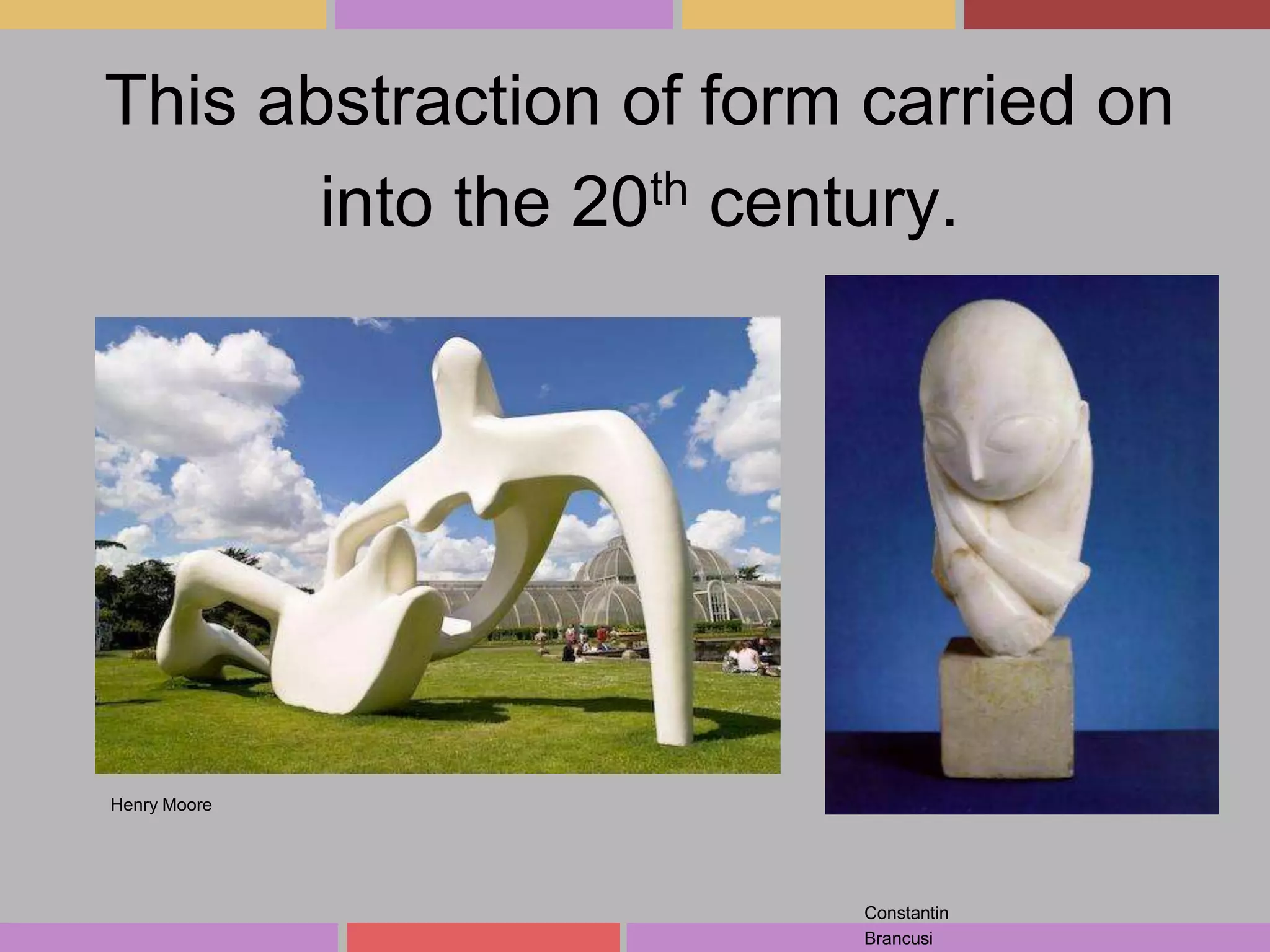
This abstraction of form carried on
into the 20th century.

Henry Moore

Constantin
Brancusi
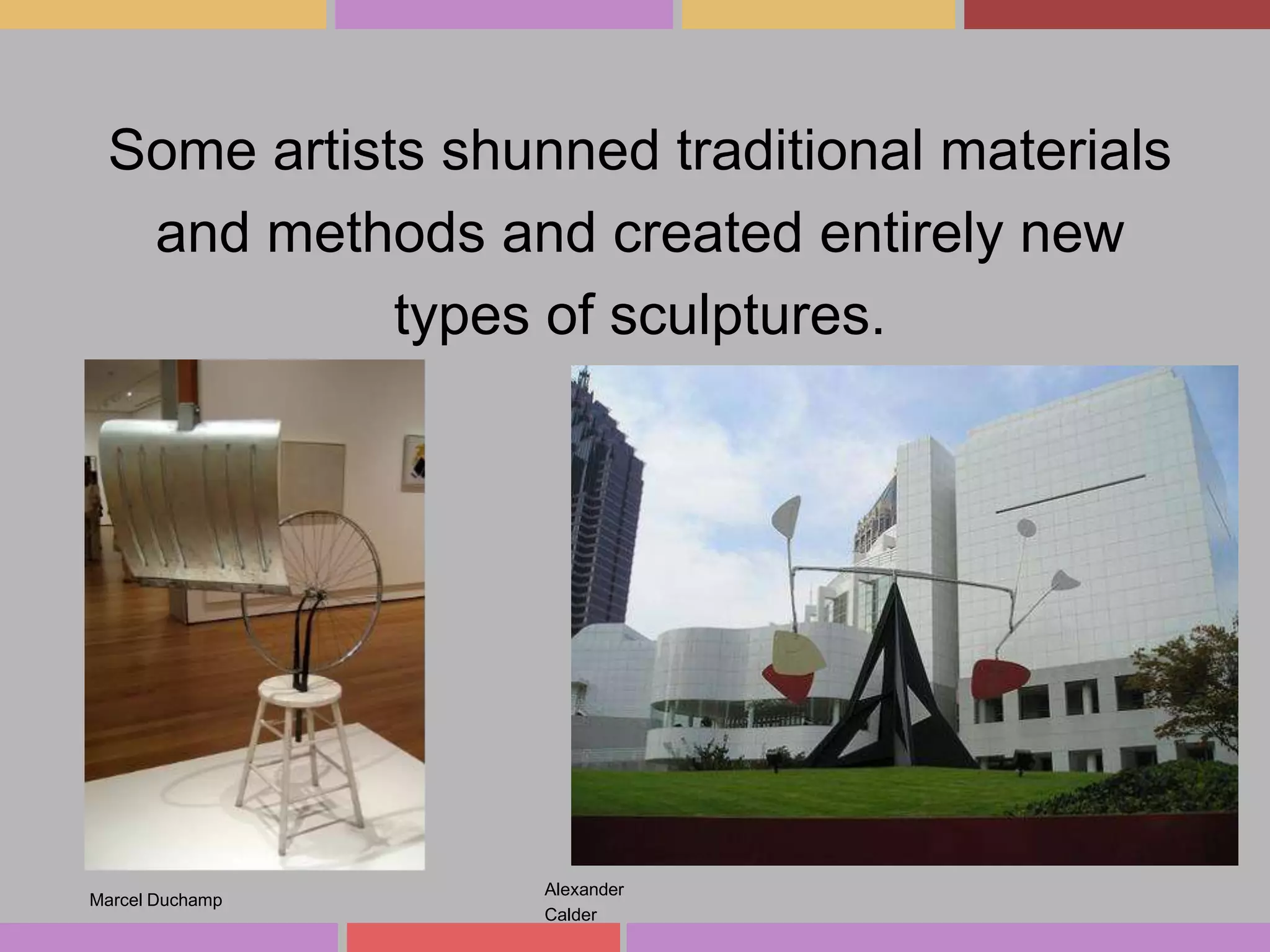
Some artists shunned traditional materials
and methods and created entirely new
types of sculptures.

Marcel Duchamp

Alexander
Calder
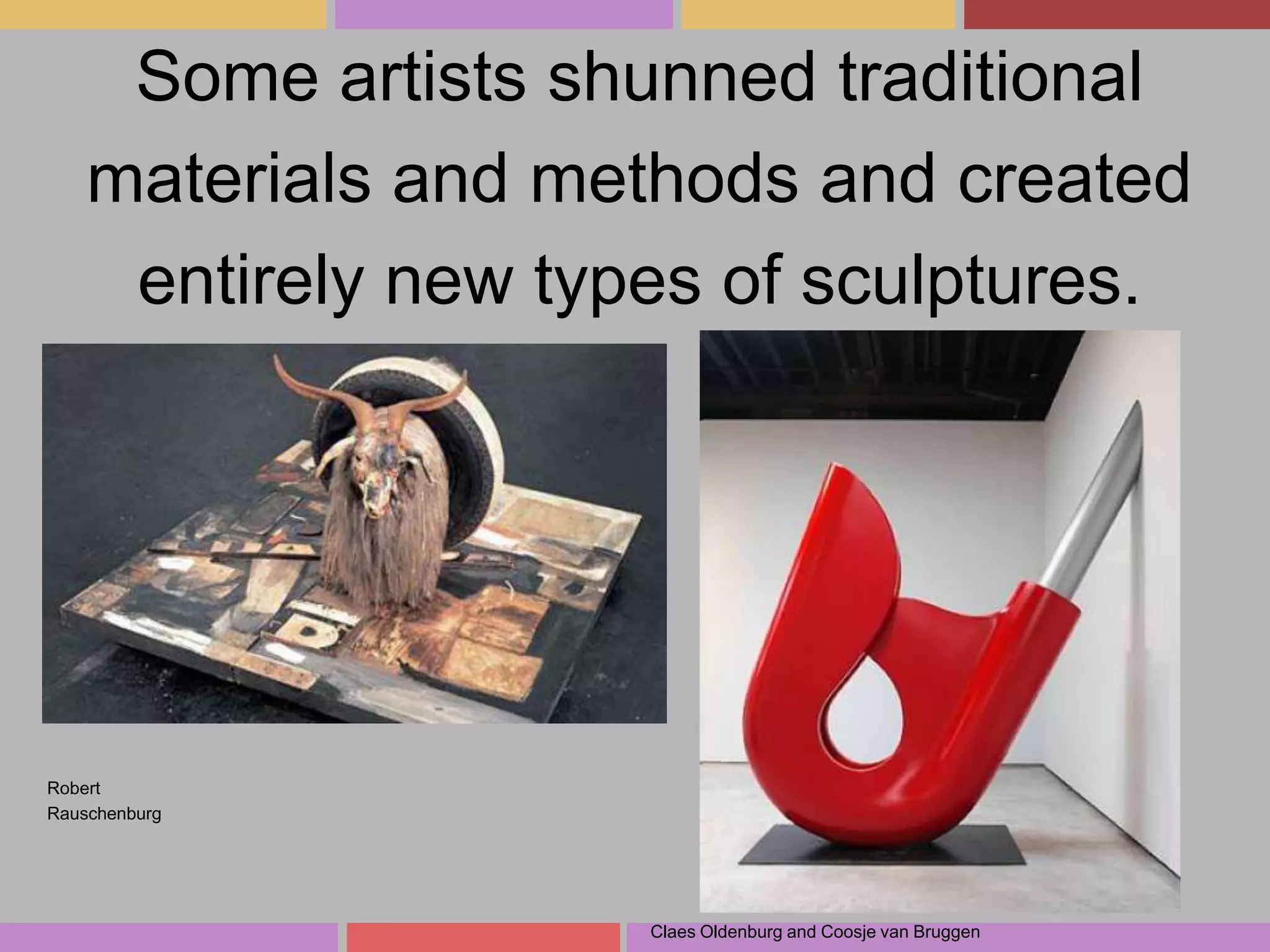
Some artists shunned traditional
materials and methods and created
entirely new types of sculptures.

Robert
Rauschenburg

Claes Oldenburg and Coosje van Bruggen
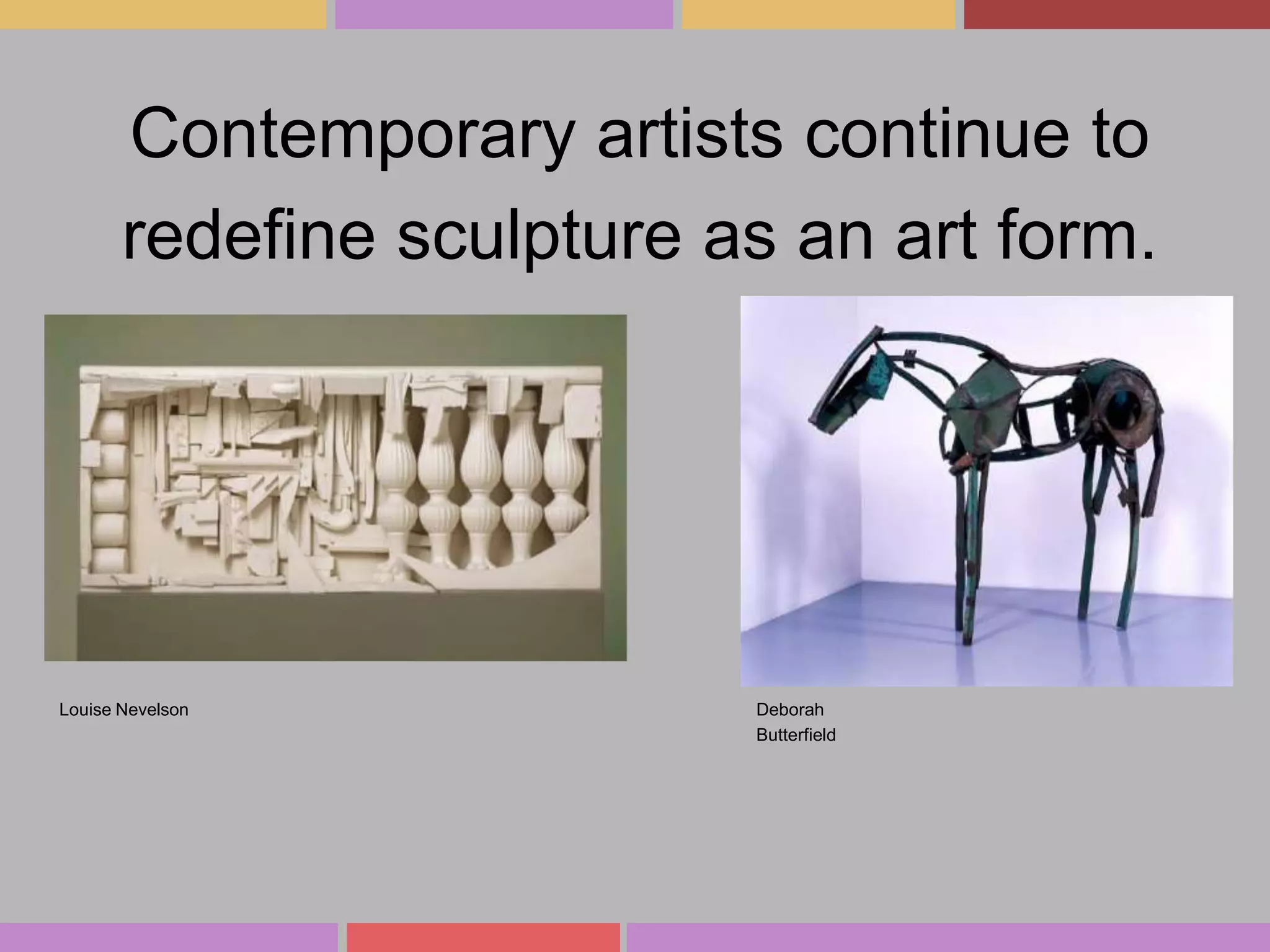
Contemporary artists continue to
redefine sculpture as an art form.

Louise Nevelson

Deborah
Butterfield
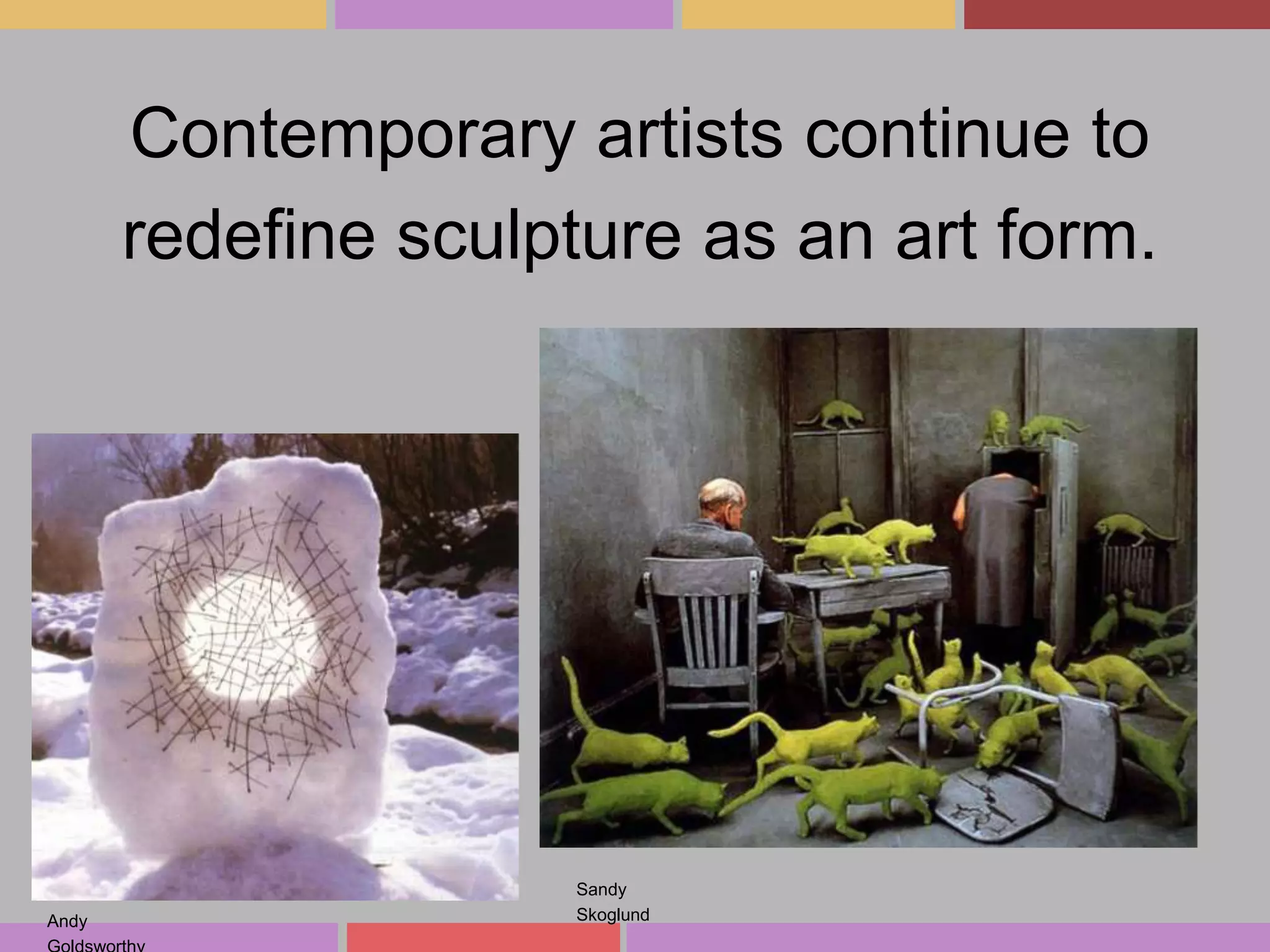
Contemporary artists continue to
redefine sculpture as an art form.

Andy

Sandy
Skoglund
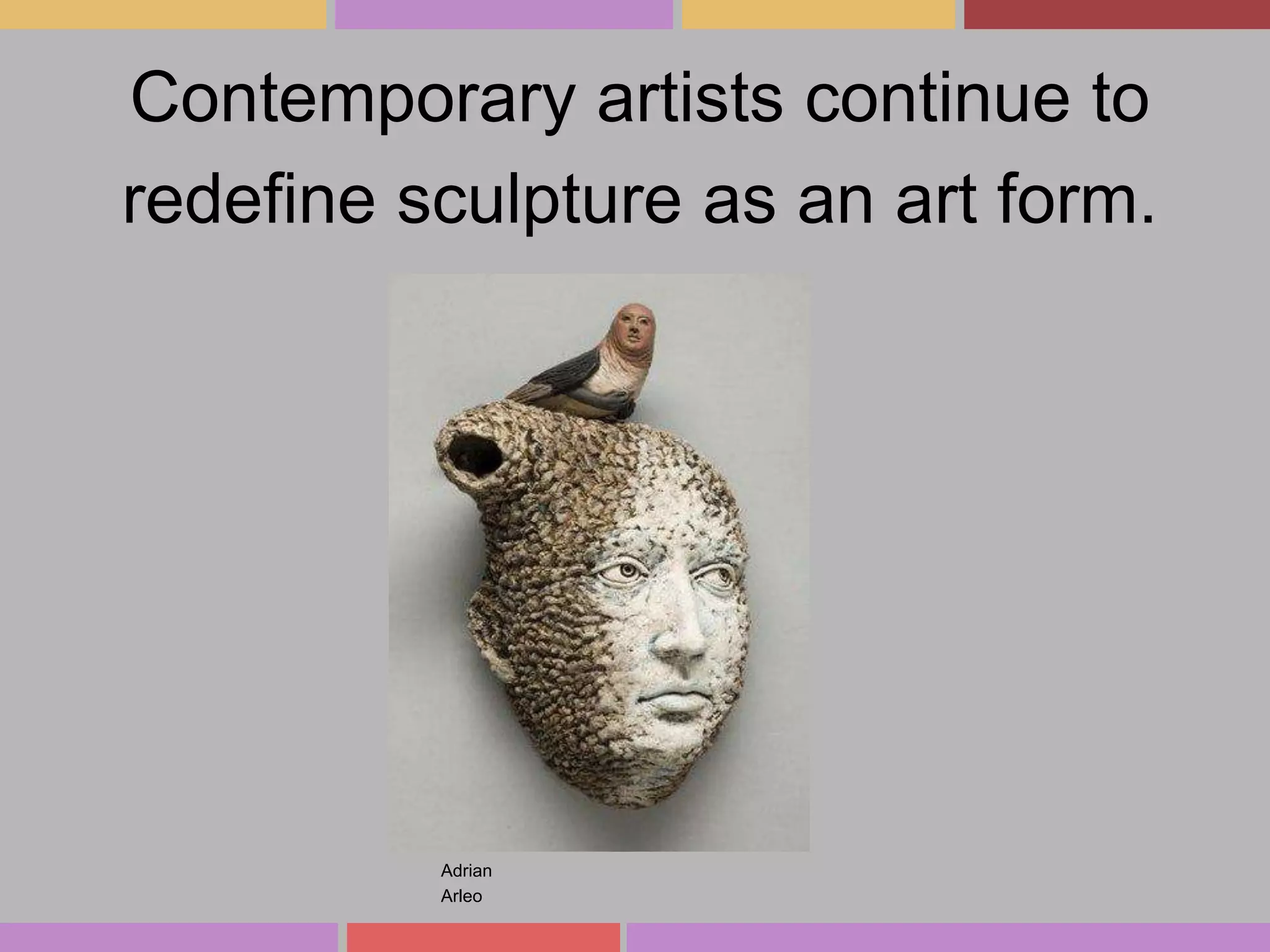
Contemporary artists continue to
redefine sculpture as an art form.

Adrian
Arleo
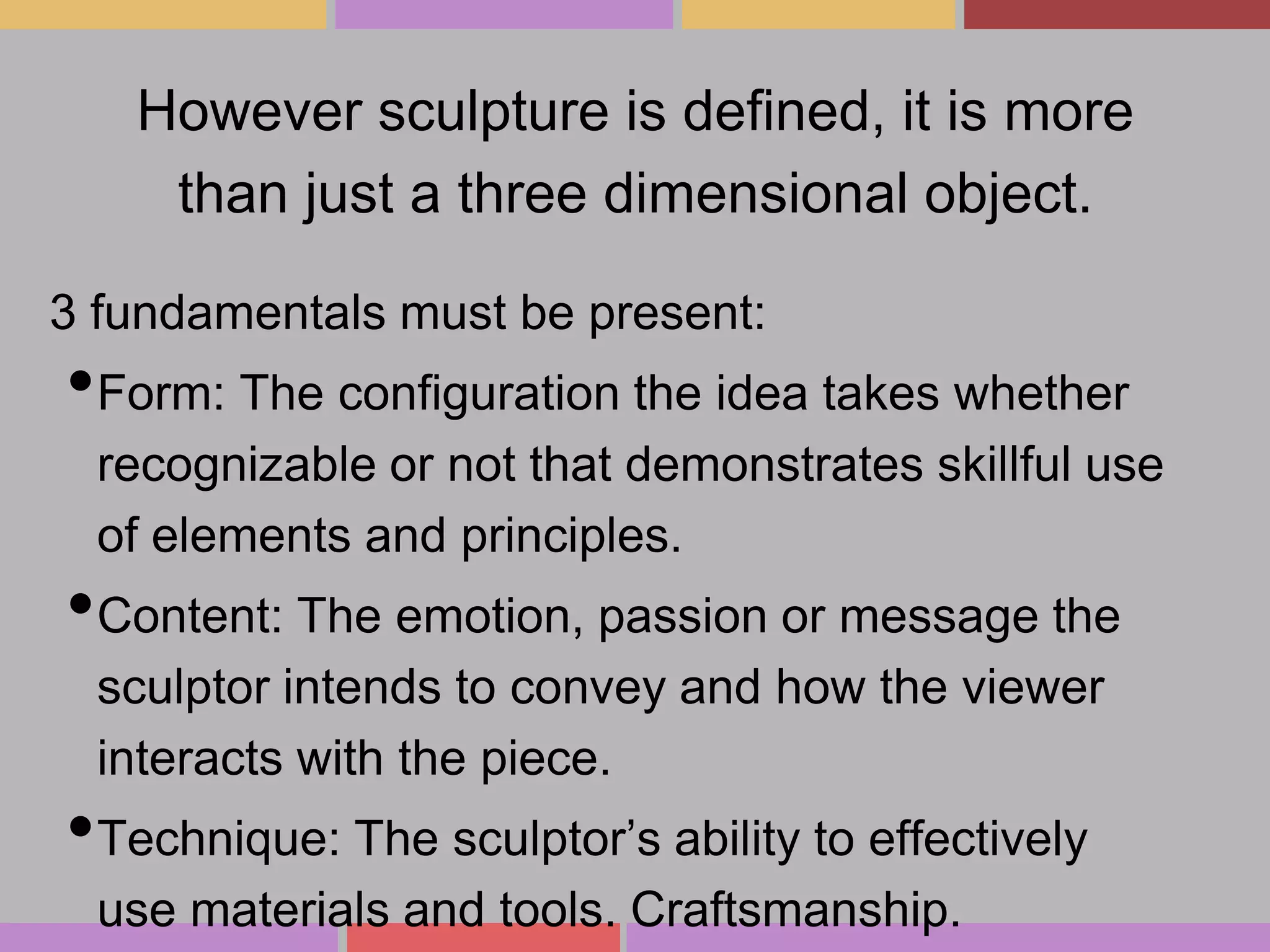
However sculpture is defined, it is more
than just a three dimensional object.
3 fundamentals must be present:

•Form: The configuration the idea takes whether
recognizable or not that demonstrates skillful use
of elements and principles.

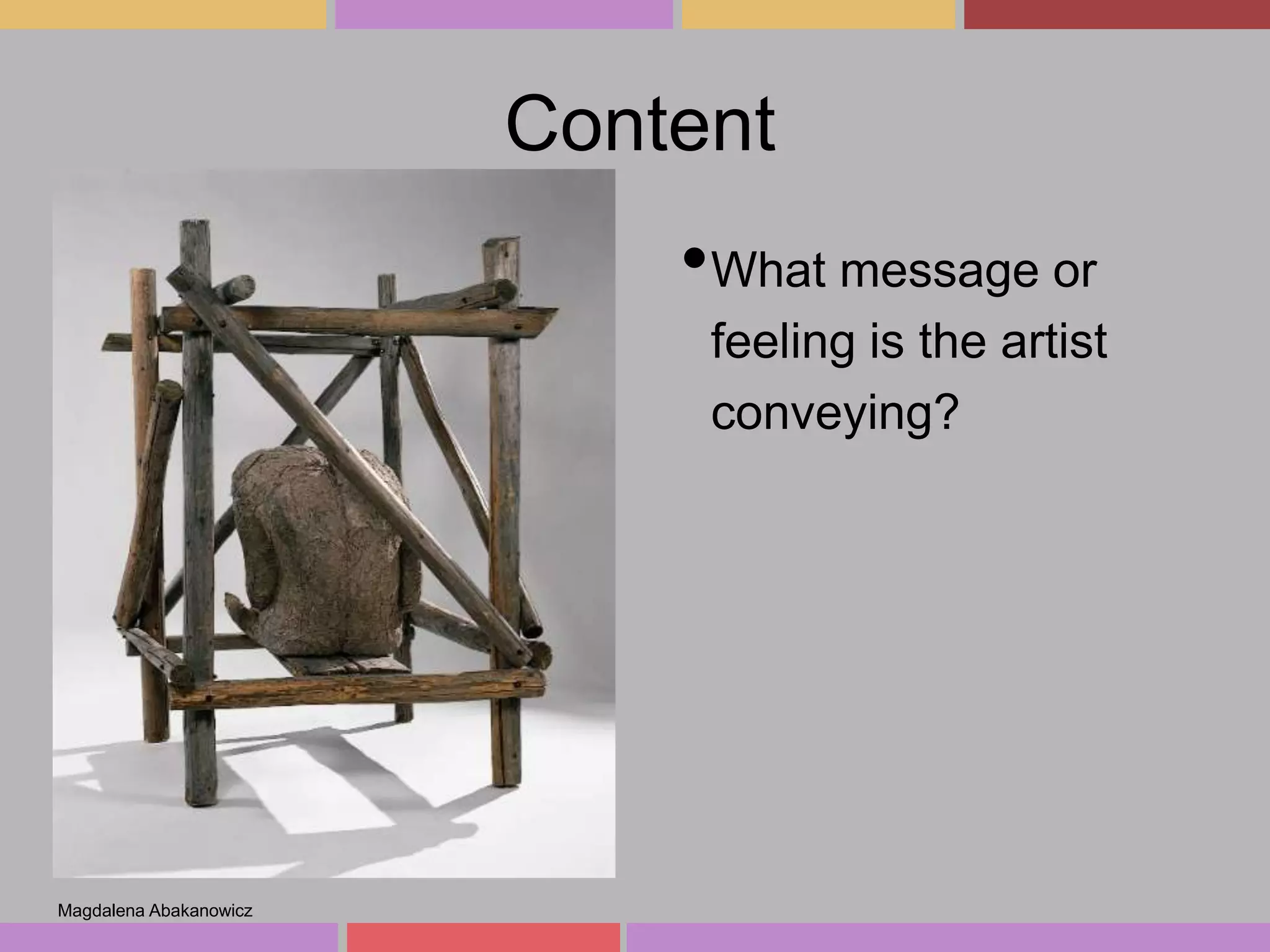
•Content: The emotion, passion or message the
sculptor intends to convey and how the viewer
interacts with the piece.

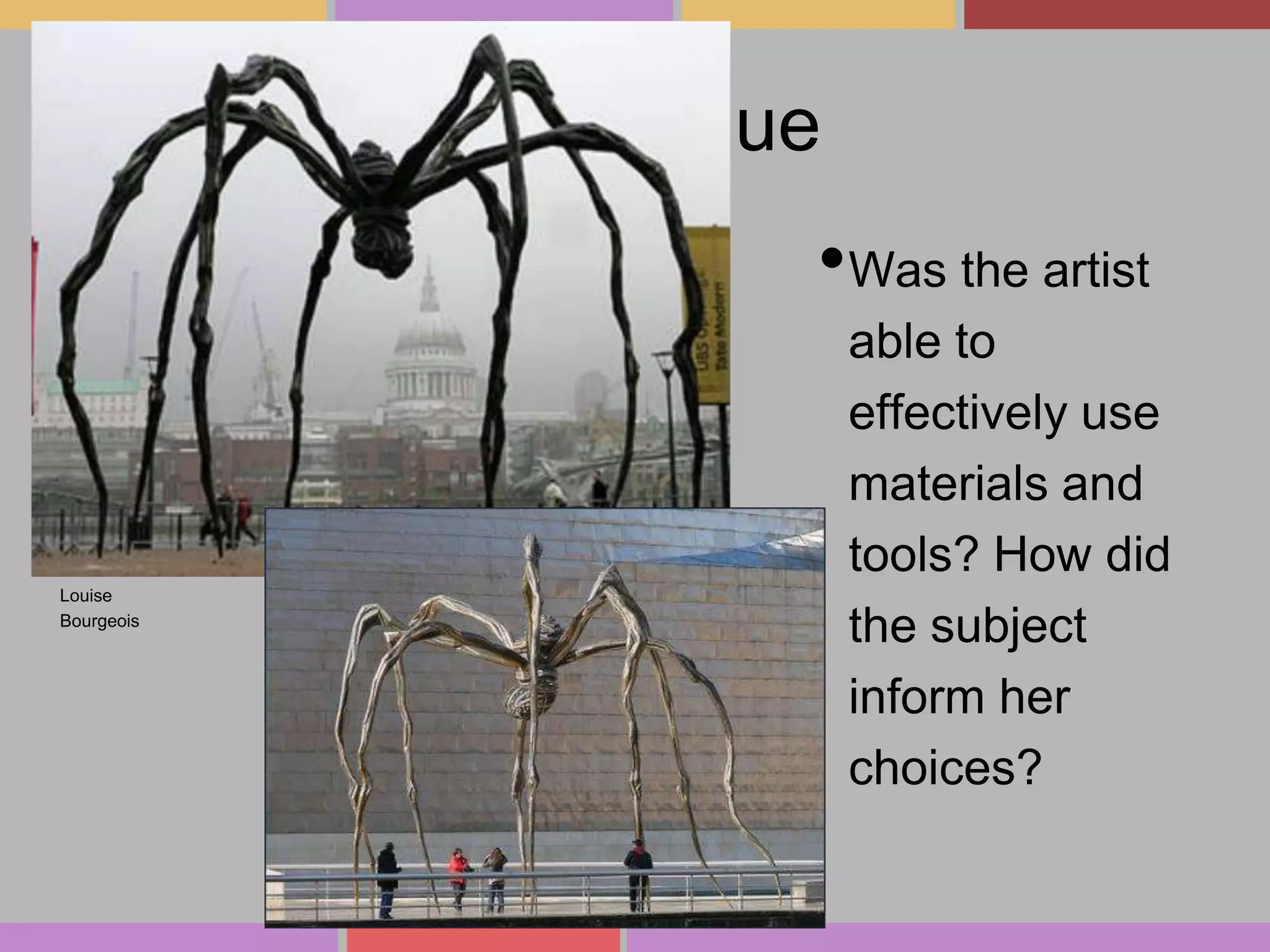
•Technique: The sculptor’s ability to effectively
use materials and tools. Craftsmanship.
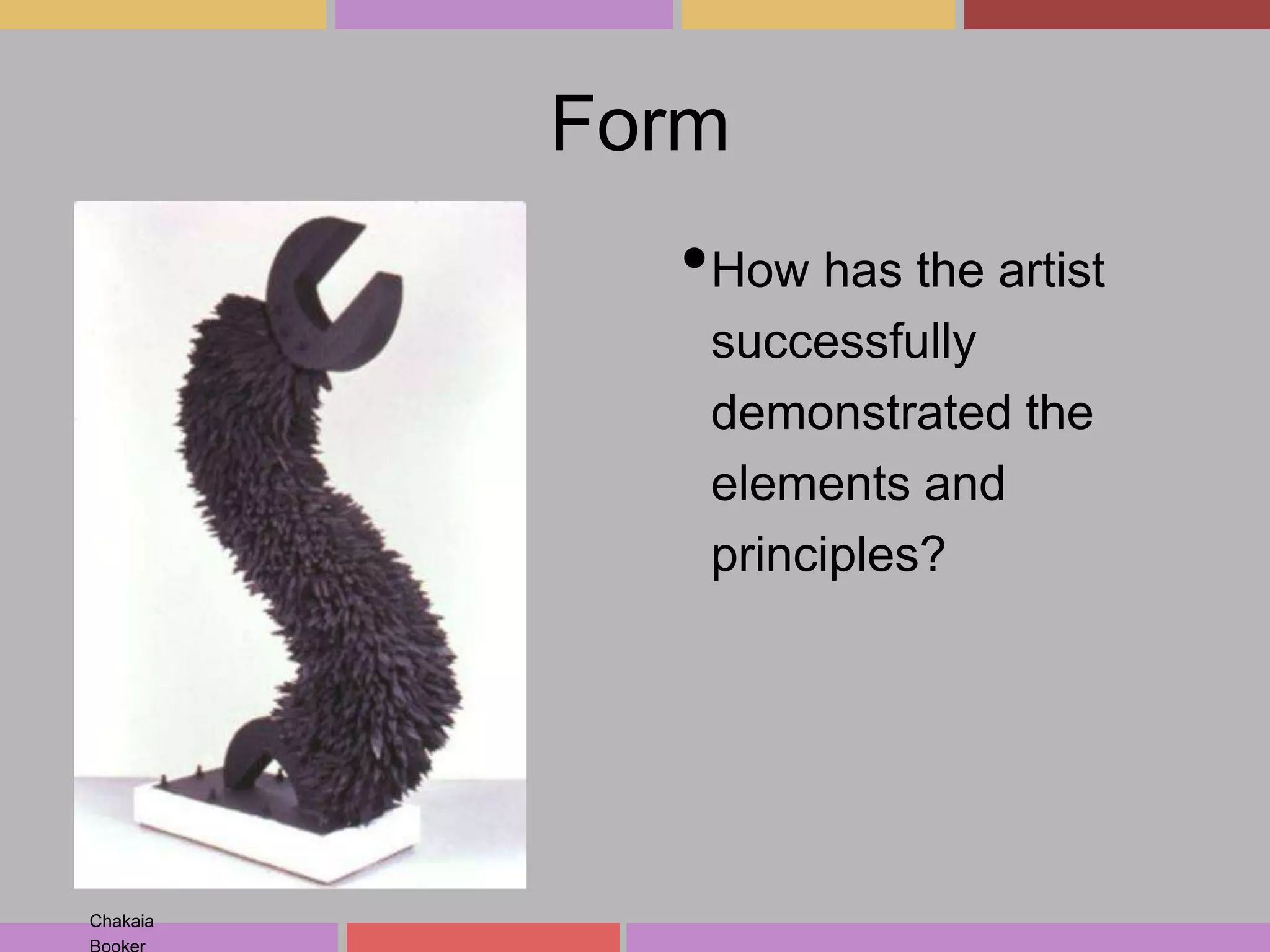
Form

•How has the artist
successfully
demonstrated the
elements and
principles?

Chakaia
Content

•What message or
feeling is the artist
conveying?

Magdalena Abakanowicz
Technique

•Was the artist

Louise
Bourgeois

able to
effectively use
materials and
tools? How did
the subject
inform her
choices?

Introduction to sculpture

  • 1.
  • 2.
    Sculpture is avital part of civilizations across the globe. Megalith, England, 2500 B.C. Fertility Bird Goddess, Egyptian 3600 B.C.
  • 3.
    Sculpture is arecord of human existence. Sculpture is a reflection of the society in which it is produced. Terracotta warrior from the Qin Dynasty (221-206 BC)
  • 4.
    Terracotta Army • • • • • Depicts thearmy of Qin Shi Huang (remember 1st Chinese Emperor) Created to serve as protection in the afterlife Estimated over 8500 sculptures. All range in size based on importance (what other civilization uses hierarchy of scale?) How do you think they were created?
  • 5.
    Early sculptures ofthe Paleolithic and Neolithic eras were likely for symbolic or religious, as well as utilitarian. Venus of Willendorf, Austria, 25,000 B.C. Neolithic tools, 6,000 B.C..
  • 6.
    Utilitarian Sculpture Utilitarian sculptureis created to be used. Examples: bowls, cups, chairs, playgrounds, etc. Wedding Vase, Maria Martinez Crown Fountain, Chicago Illinois,
  • 7.
    Some ancient sculpture’smeanings remain a mystery. Stonehenge, England, 3100 B.C.
  • 8.
    From small, handheld pieces to monuments, traditions of carving, casting and modeling emerged in these early sculptures. Trajan’s Column, Italy, 106 A.D. Bronze horse, 1000 B.C.
  • 9.
  • 10.
    Carving: Subtractive process: materialis removed Mainly wood and stone (marble)
  • 11.
    Modeling: Additive process: materialis added Clay, wax, plaster, paper-mache
  • 12.
    Casting: a mold isused to form molten bronze(or other material) into a desired shape. http://www.verylgoodnight.com/casting3.html
  • 13.
    Construction: welding, gluing, nailingmaterials together. Anish Kapoor Cloud Gate You’ll see this one again very soon.
  • 14.
    Assemblage: assembling found objectsin unique ways. A type of Construction. Joseph Cornell
  • 15.
    Sculptures of ancientempires recorded both religious and political life. Artisans of these cultures often used techniques and methods that continued unchanged for centuries. Statue of Memi and Sabu, Old Kingdom, Dynasty 4, ca. 2575–2465 B.C. Menkaure and his queen, Egypt, 2550 B.C.
  • 16.
    Sculpture of AncientGreece and Rome is one of the greatest achievements of Western Art This work often focused on perfecting the human form.
  • 17.
    During this sametime, distinct sculptural traditions developed in other areas of the world.
  • 18.
    During the Renaissance,artists again looked to perfecting the human form. Michelangelo sought to release the image that was “locked” in the stone.
  • 19.
    Artists continued towork in this style into the 20th century •Edmonia Lewis, one of the only female African American sculptors of the time, sculpted figures that represent both the beauty of the human figure while presenting thought provoking content.
  • 20.
    In the 19thand early 20th century, artists shifted from portraying realistic figures in favor of distorted and abstracted forms. Auguste Rodin
  • 21.
    This abstraction ofform carried on into the 20th century. Henry Moore Constantin Brancusi
  • 22.
    Some artists shunnedtraditional materials and methods and created entirely new types of sculptures. Marcel Duchamp Alexander Calder
  • 23.
    Some artists shunnedtraditional materials and methods and created entirely new types of sculptures. Robert Rauschenburg Claes Oldenburg and Coosje van Bruggen
  • 24.
    Contemporary artists continueto redefine sculpture as an art form. Louise Nevelson Deborah Butterfield
  • 25.
    Contemporary artists continueto redefine sculpture as an art form. Andy Sandy Skoglund
  • 26.
    Contemporary artists continueto redefine sculpture as an art form. Adrian Arleo
  • 27.
    However sculpture isdefined, it is more than just a three dimensional object. 3 fundamentals must be present: •Form: The configuration the idea takes whether recognizable or not that demonstrates skillful use of elements and principles. •Content: The emotion, passion or message the sculptor intends to convey and how the viewer interacts with the piece. •Technique: The sculptor’s ability to effectively use materials and tools. Craftsmanship.
  • 28.
    Form •How has theartist successfully demonstrated the elements and principles? Chakaia
  • 29.
    Content •What message or feelingis the artist conveying? Magdalena Abakanowicz
  • 30.
    Technique •Was the artist Louise Bourgeois ableto effectively use materials and tools? How did the subject inform her choices?