1
When Guided Reading isn’t Enough
Guidance:
Young Talented Readers
Dr. Liz Fogarty
lizfogarty.weebly.com
fogartye@ecu.edu
Your Name
Your Job (position/grade)
Where you are from?
Number times at Hormel Institute
What do you hope to get out of this class?
3
INTRODUCTIONS
4
To DO List :
•Defining: Young Talented Readers
•Limitations of guided reading with young,
talented readers
•Classroom environment
•Using powerful texts
•Differentiated teaching strategies
lizfogarty.weebly.com
Defining:
Young, Talented Reader
6
7
What are the Issues
for Young Talented
Readers?
Lack of Challenge
Lack of Growth
Boredom
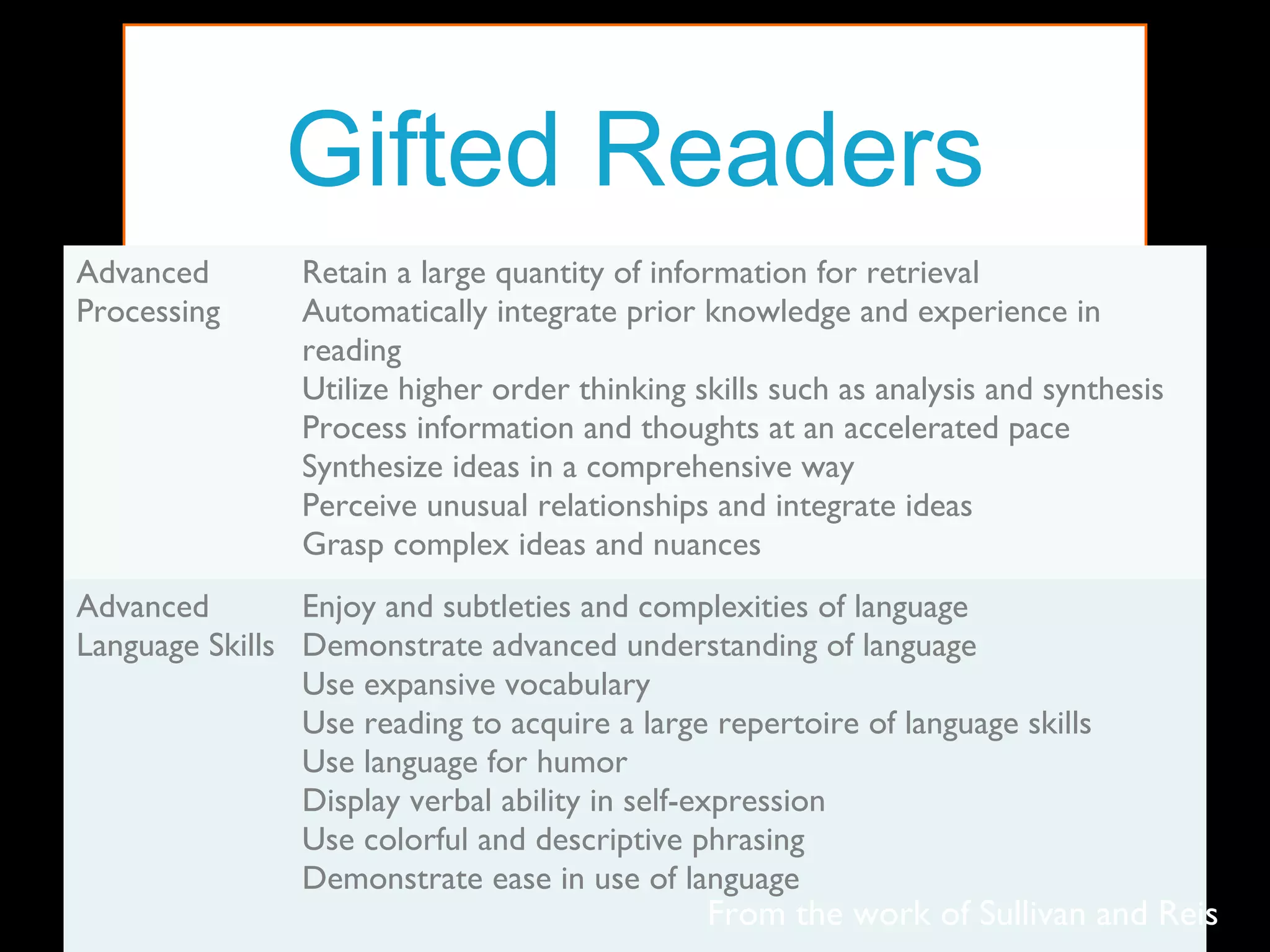
Gifted Readers
Advanced
Processing
Retain a large quantity of information for retrieval
Automatically integrate prior knowledge and experience in
reading
Utilize higher order thinking skills such as analysis and synthesis
Process information and thoughts at an accelerated pace
Synthesize ideas in a comprehensive way
Perceive unusual relationships and integrate ideas
Grasp complex ideas and nuances
Advanced
Language Skills
Enjoy and subtleties and complexities of language
Demonstrate advanced understanding of language
Use expansive vocabulary
Use reading to acquire a large repertoire of language skills
Use language for humor
Display verbal ability in self-expression
Use colorful and descriptive phrasing
Demonstrate ease in use of language
From the work of Sullivan and Reis
10
Who are young talented readers?
•Read at a level two grades or more above
their current grade
•Enjoy reading (usually)
•Read to satisfy curiosity and read to learn
•Read early and often without being
taught
Common Factors for Young, Talented
Readers
11
•Had mothers with high educational levels
•Range in socioeconomic status
12
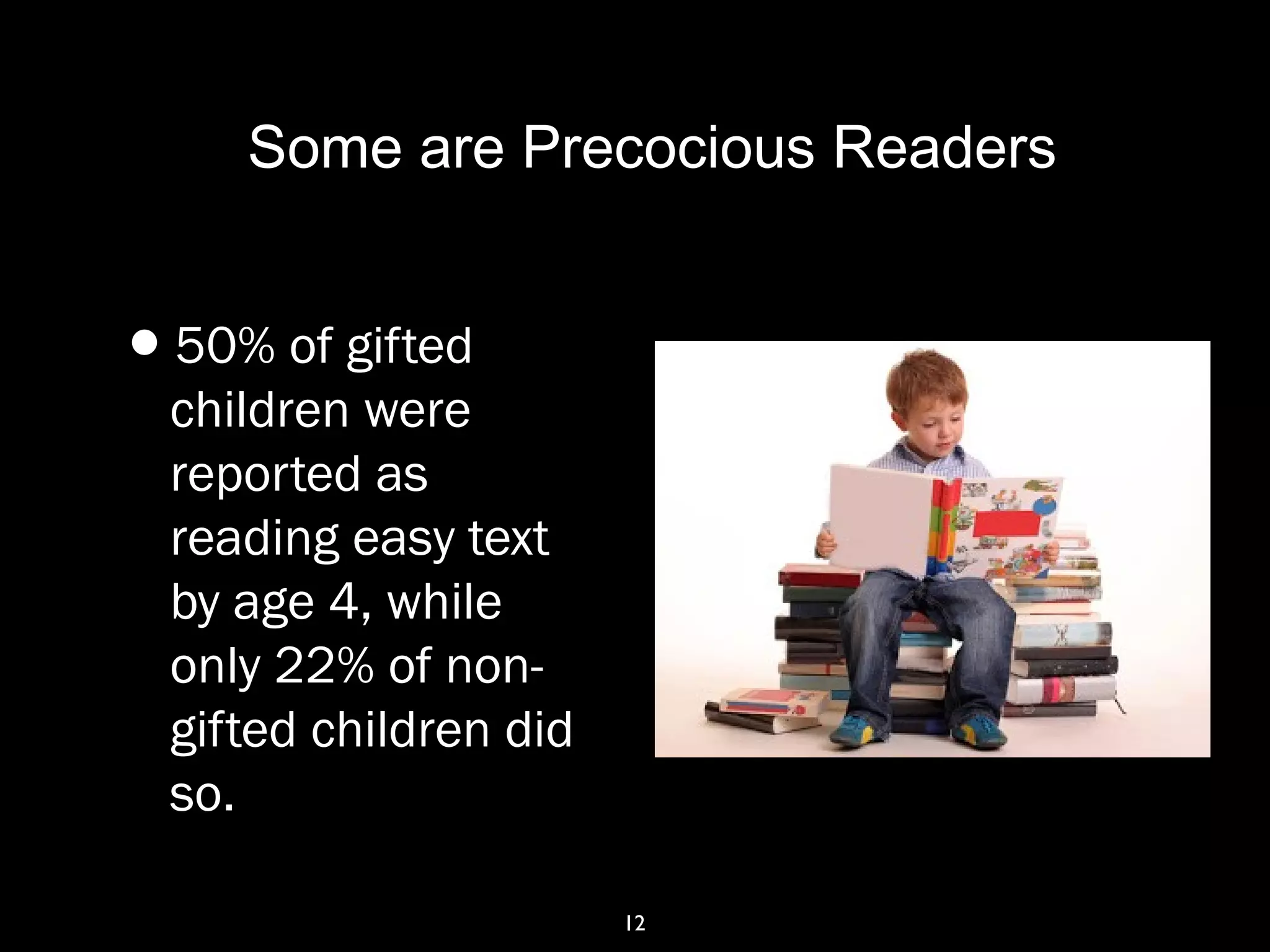
Some are Precocious Readers
•50% of gifted
children were
reported as
reading easy text
by age 4, while
only 22% of non-
gifted children did
so.
So What’s the Problem with
Guided Reading Anyway?
13
14
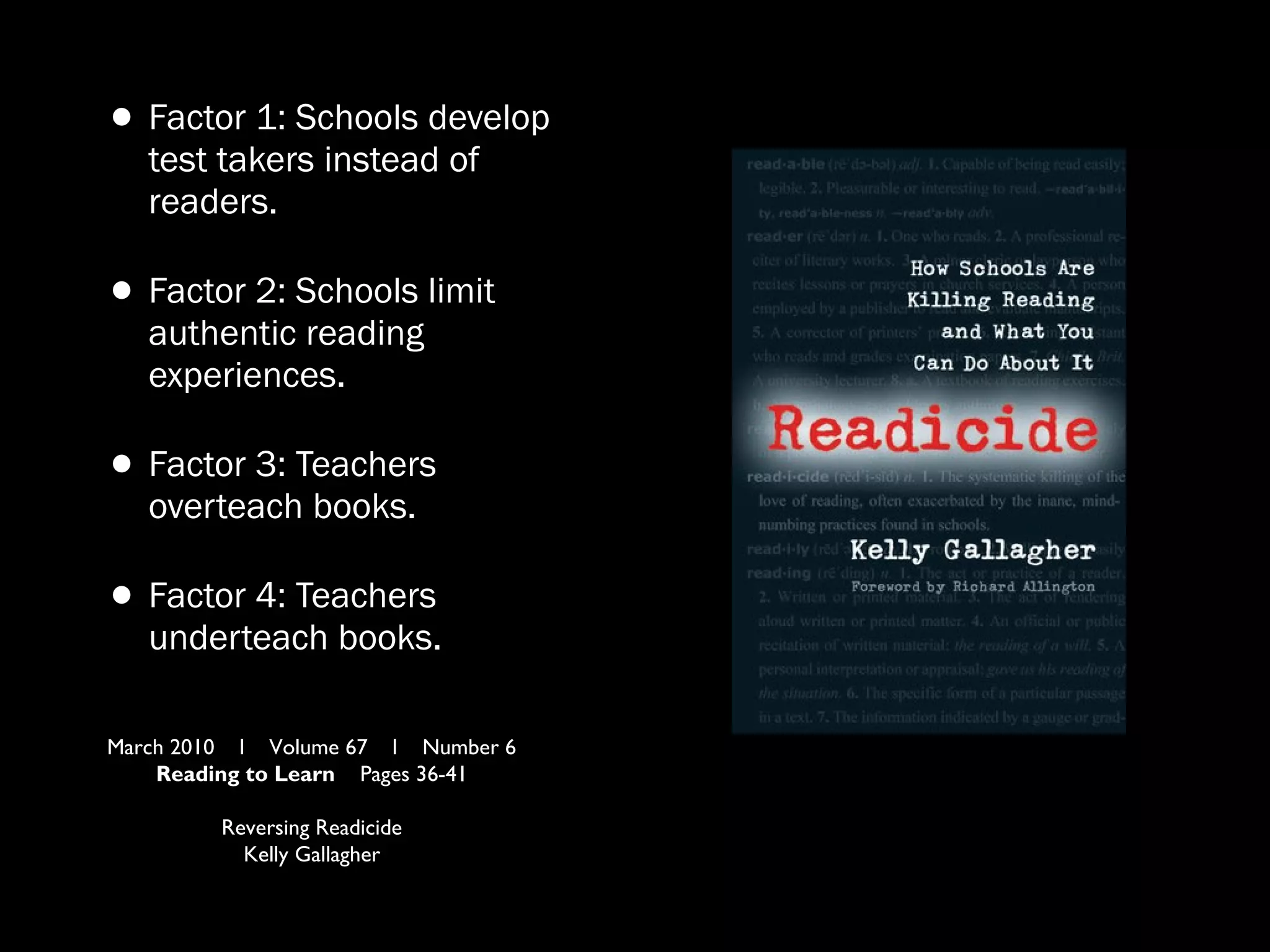
•Factor 1: Schools develop
test takers instead of
readers.
•Factor 2: Schools limit
authentic reading
experiences.
•Factor 3: Teachers
overteach books.
•Factor 4: Teachers
underteach books.
March 2010 l Volume 67 l Number 6
Reading to Learn Pages 36-41
Reversing Readicide
Kelly Gallagher
In a time of drastic change, it is the learners
who inherit the future. The learned find
themselves equipped to live in a world that no
longer exists.
- Eric Hoffer
Process vs. Content
Common Core illustrates a shift from
specifying WHAT to learn, to HOW to learn.
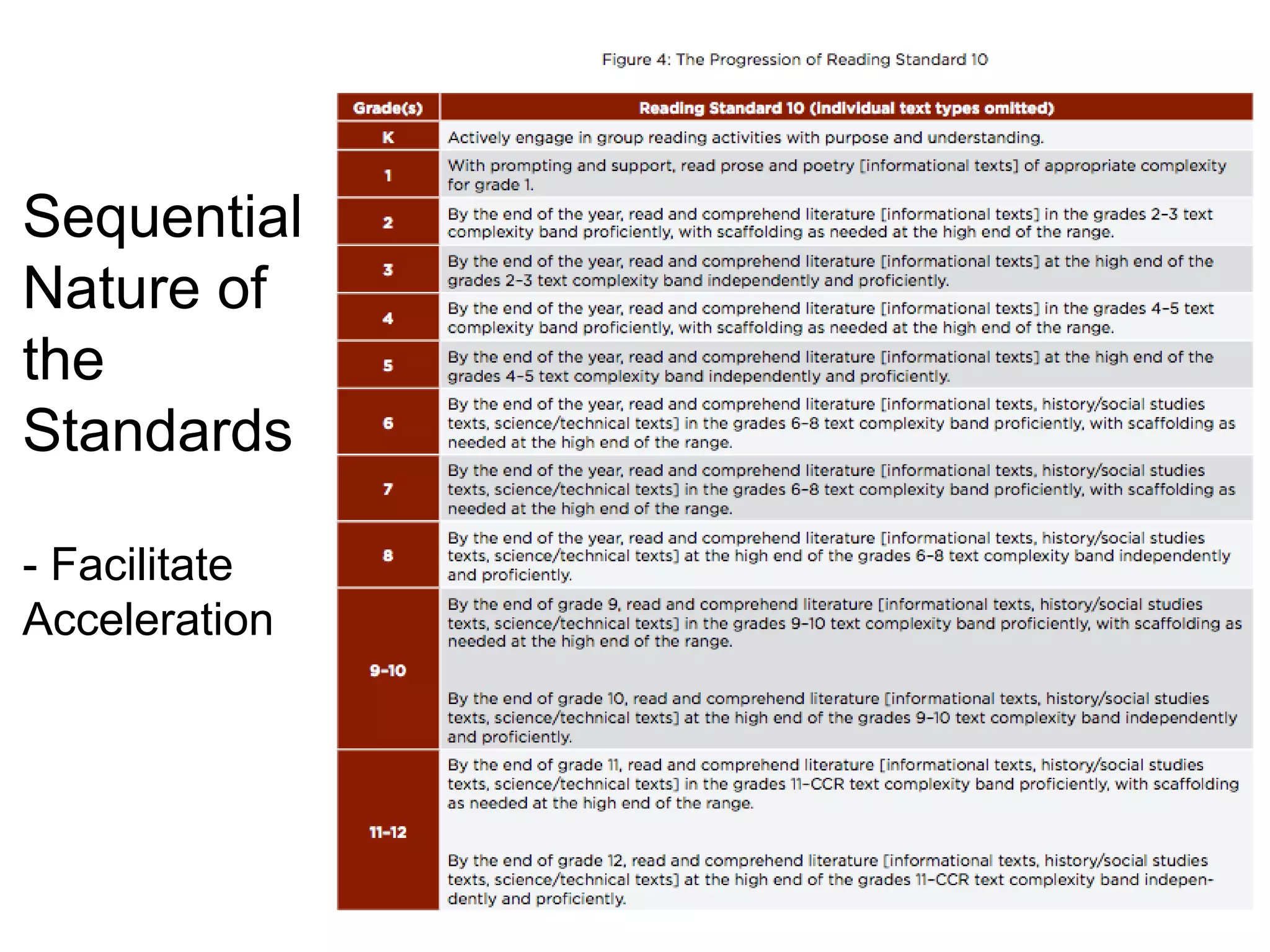
Sequential
Nature of
the
Standards
- Facilitate
Acceleration
18
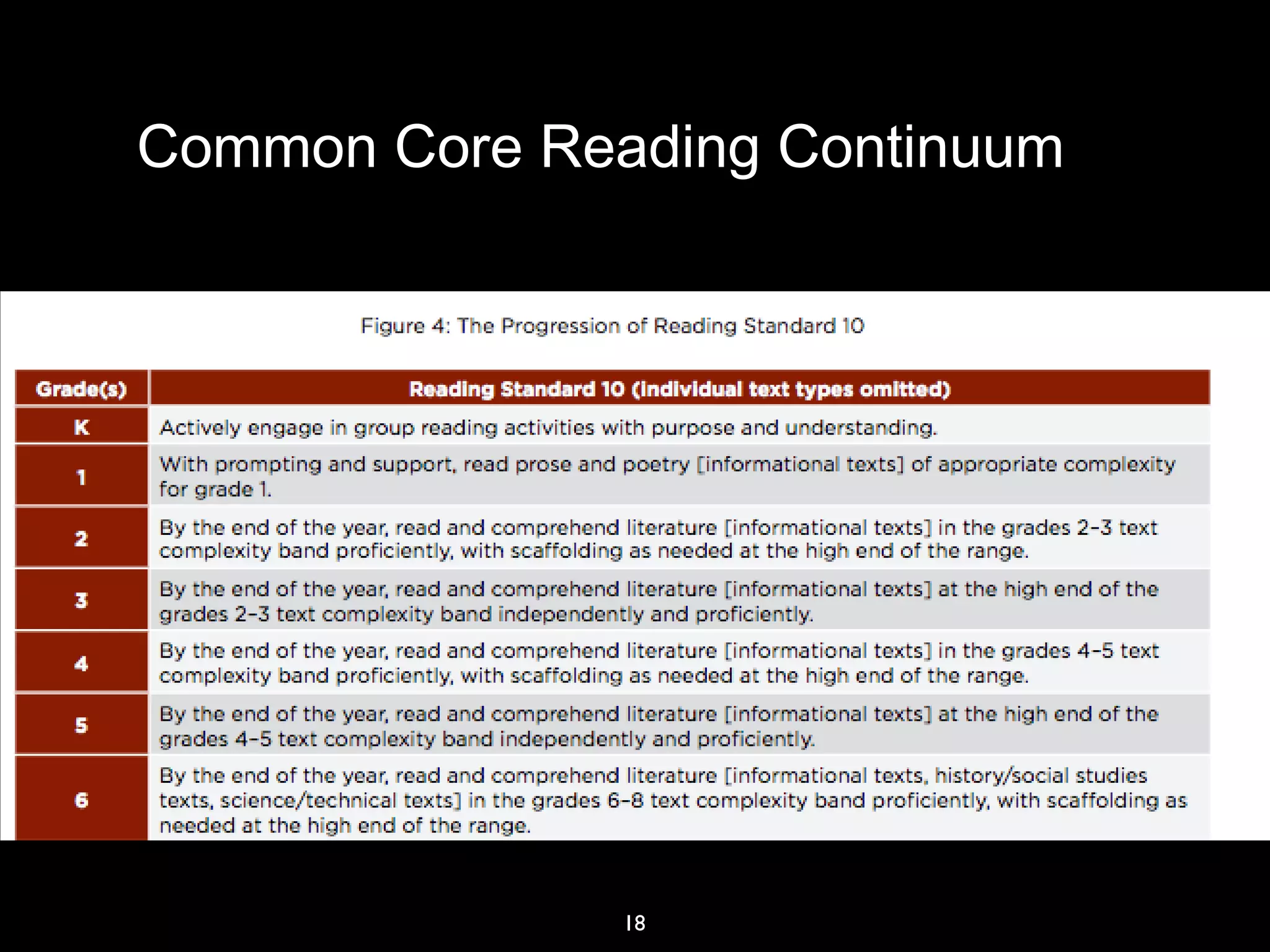
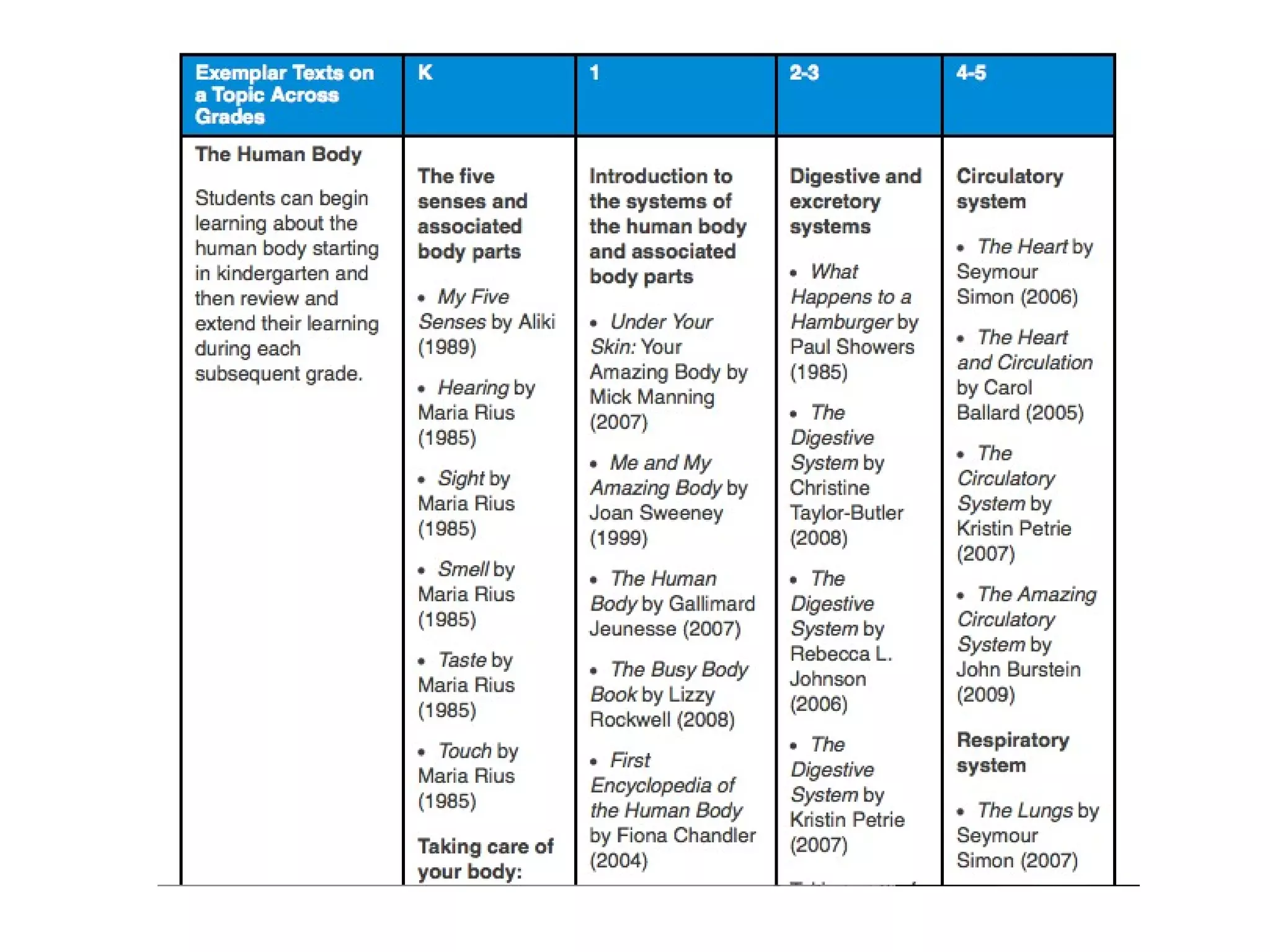
Common Core Reading Continuum
19
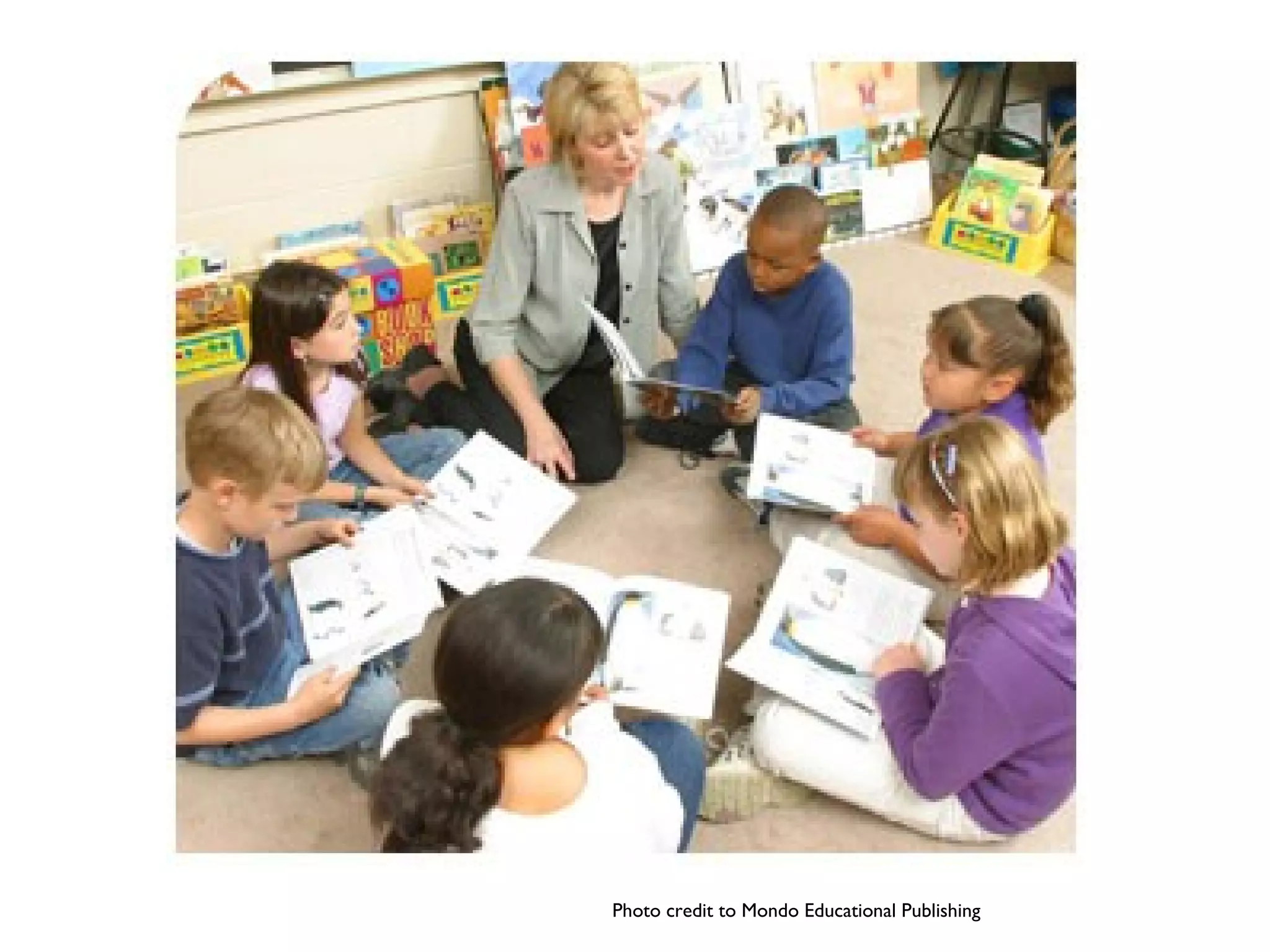
20Photo credit to Mondo Educational Publishing
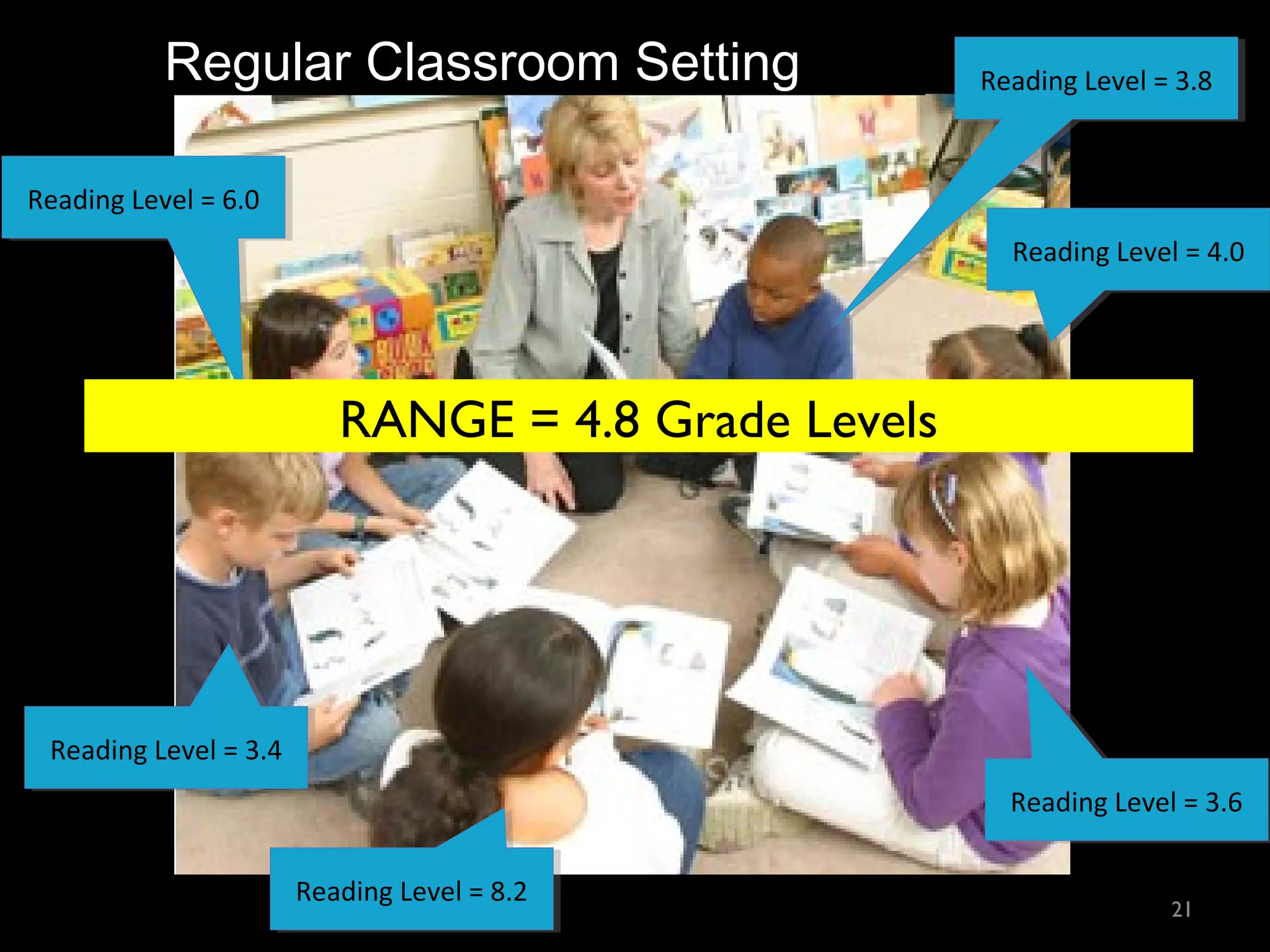
21
Photo credit to Mondo Educational Publishing
Reading Level = 3.8Reading Level = 3.8
Reading Level = 4.0Reading Level = 4.0
Reading Level = 3.6Reading Level = 3.6
Reading Level = 8.2Reading Level = 8.2
Reading Level = 3.4Reading Level = 3.4
Reading Level = 6.0Reading Level = 6.0
Regular Classroom Setting
RANGE = 4.8 Grade Levels
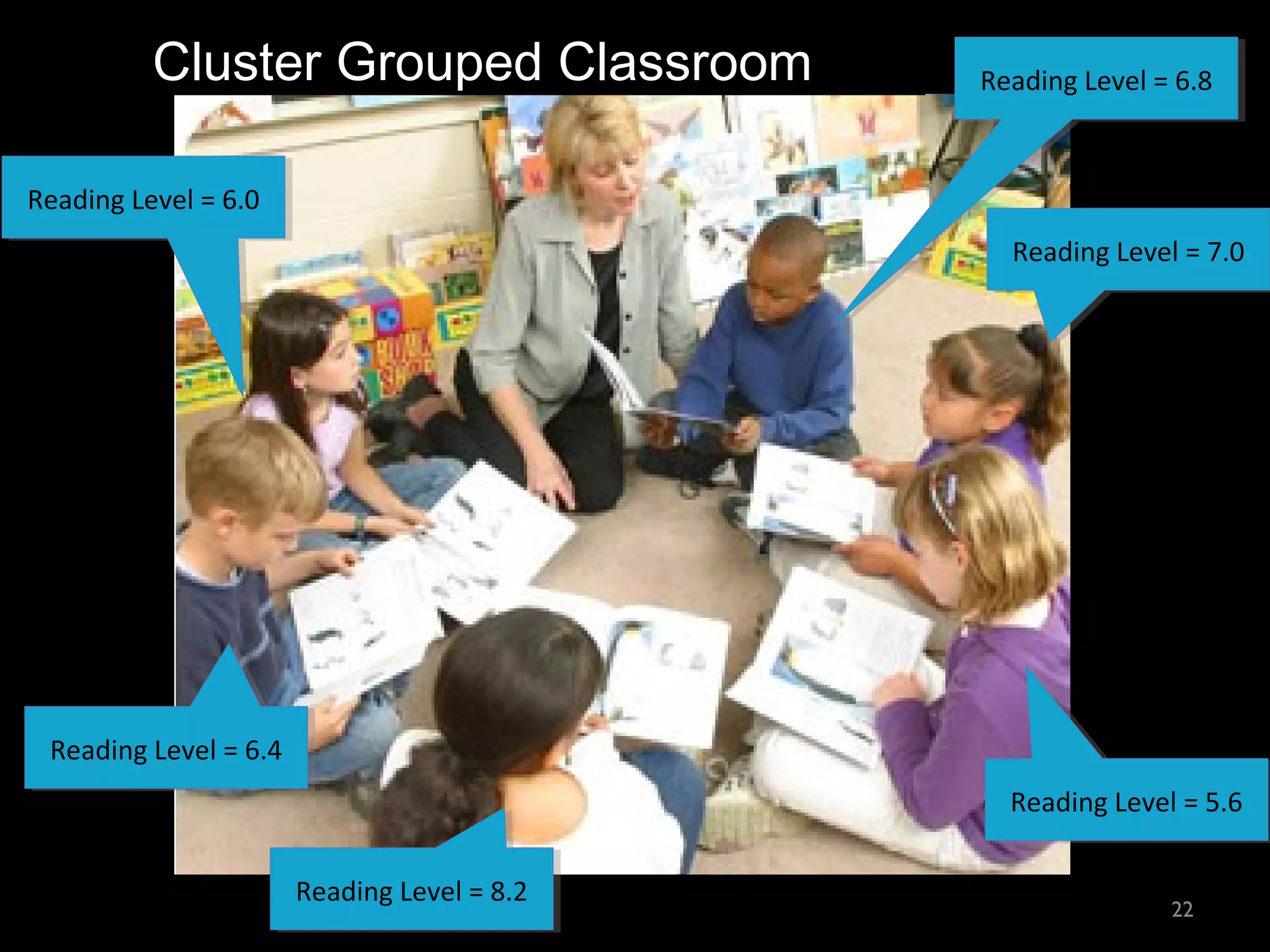
22
Photo credit to Mondo Educational Publishing
Reading Level = 6.8Reading Level = 6.8
Reading Level = 7.0Reading Level = 7.0
Reading Level = 5.6Reading Level = 5.6
Reading Level = 8.2Reading Level = 8.2
Reading Level = 6.4Reading Level = 6.4
Reading Level = 6.0Reading Level = 6.0
Cluster Grouped Classroom
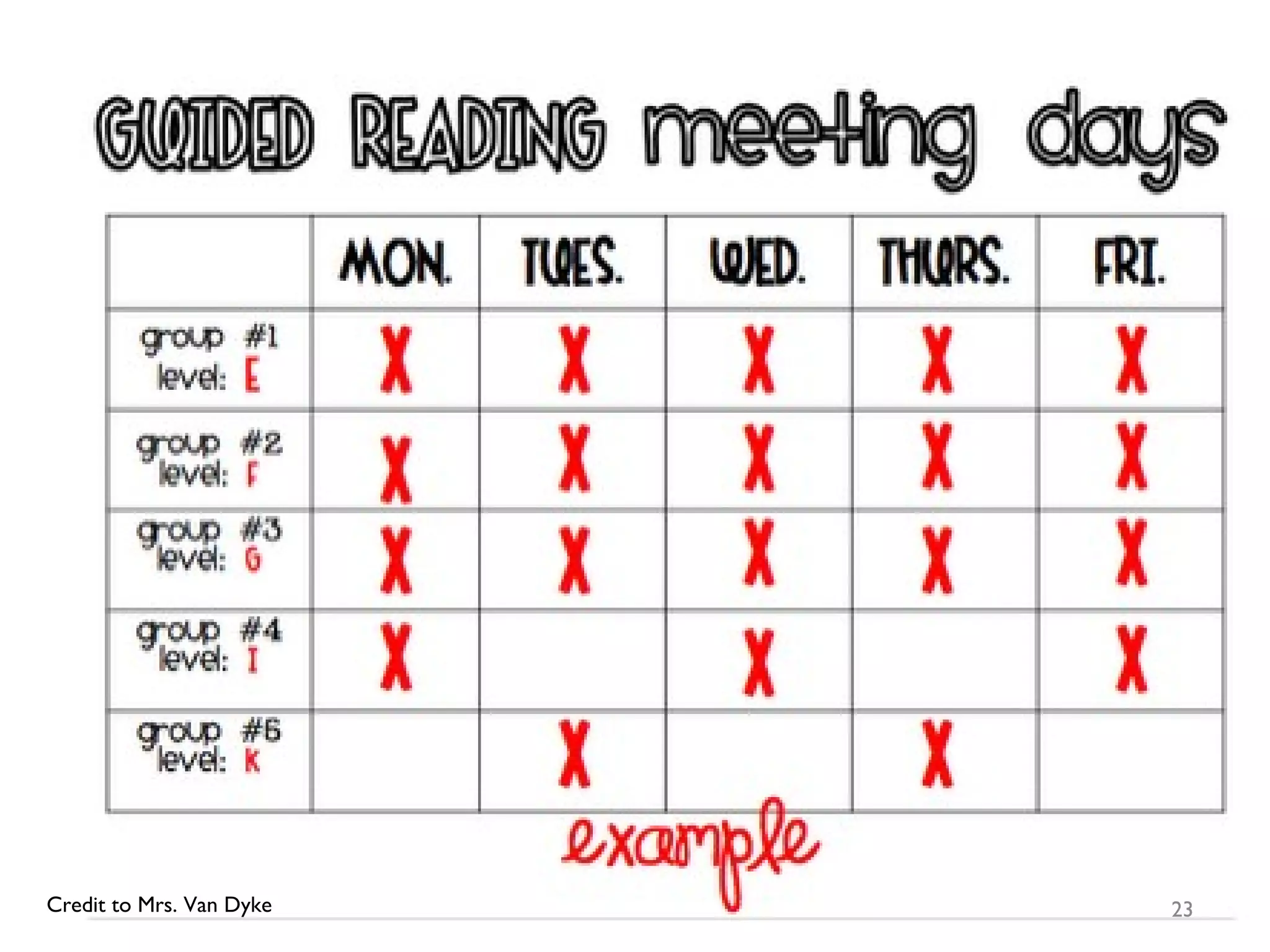
23Credit to Mrs. Van Dyke
24
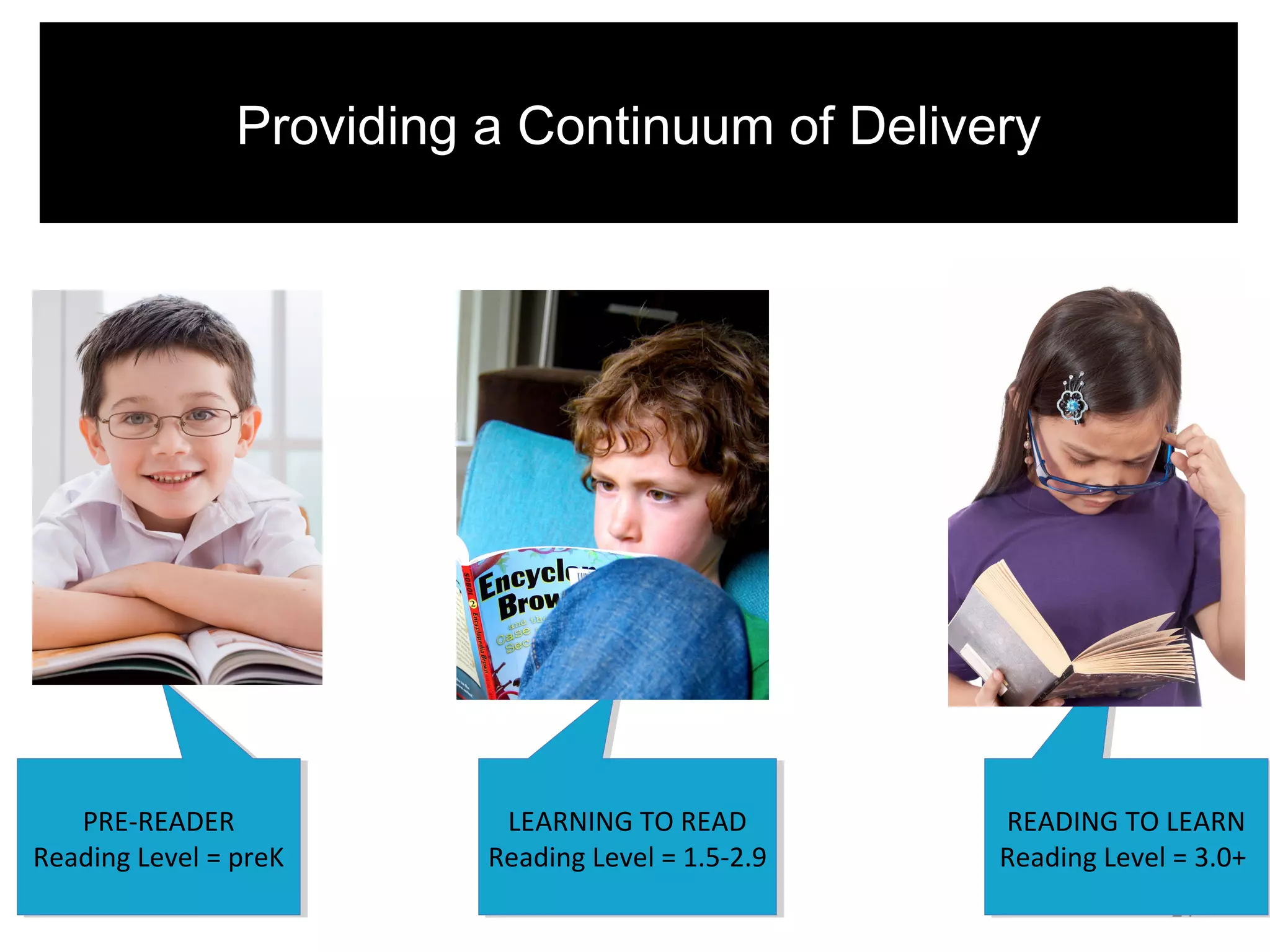
READING TO LEARN
Reading Level = 3.0+
READING TO LEARN
Reading Level = 3.0+
LEARNING TO READ
Reading Level = 1.5-2.9
LEARNING TO READ
Reading Level = 1.5-2.9
PRE-READER
Reading Level = preK
PRE-READER
Reading Level = preK
Providing a Continuum of Delivery
25
Schoolwide Components
•Cross grade grouping for reading
•Grade acceleration for reading
•Increase library access

When Guided Reading Isn't Enough Guidance - Day 1

  • 1.
    1 When Guided Readingisn’t Enough Guidance: Young Talented Readers Dr. Liz Fogarty lizfogarty.weebly.com fogartye@ecu.edu
  • 2.
    Your Name Your Job(position/grade) Where you are from? Number times at Hormel Institute What do you hope to get out of this class?
  • 3.
  • 4.
    4 To DO List: •Defining: Young Talented Readers •Limitations of guided reading with young, talented readers •Classroom environment •Using powerful texts •Differentiated teaching strategies
  • 5.
  • 6.
  • 7.
    7 What are theIssues for Young Talented Readers? Lack of Challenge Lack of Growth Boredom
  • 9.
    Gifted Readers Advanced Processing Retain alarge quantity of information for retrieval Automatically integrate prior knowledge and experience in reading Utilize higher order thinking skills such as analysis and synthesis Process information and thoughts at an accelerated pace Synthesize ideas in a comprehensive way Perceive unusual relationships and integrate ideas Grasp complex ideas and nuances Advanced Language Skills Enjoy and subtleties and complexities of language Demonstrate advanced understanding of language Use expansive vocabulary Use reading to acquire a large repertoire of language skills Use language for humor Display verbal ability in self-expression Use colorful and descriptive phrasing Demonstrate ease in use of language From the work of Sullivan and Reis
  • 10.
    10 Who are youngtalented readers? •Read at a level two grades or more above their current grade •Enjoy reading (usually) •Read to satisfy curiosity and read to learn •Read early and often without being taught
  • 11.
    Common Factors forYoung, Talented Readers 11 •Had mothers with high educational levels •Range in socioeconomic status
  • 12.
    12 Some are PrecociousReaders •50% of gifted children were reported as reading easy text by age 4, while only 22% of non- gifted children did so.
  • 13.
    So What’s theProblem with Guided Reading Anyway? 13
  • 14.
  • 15.
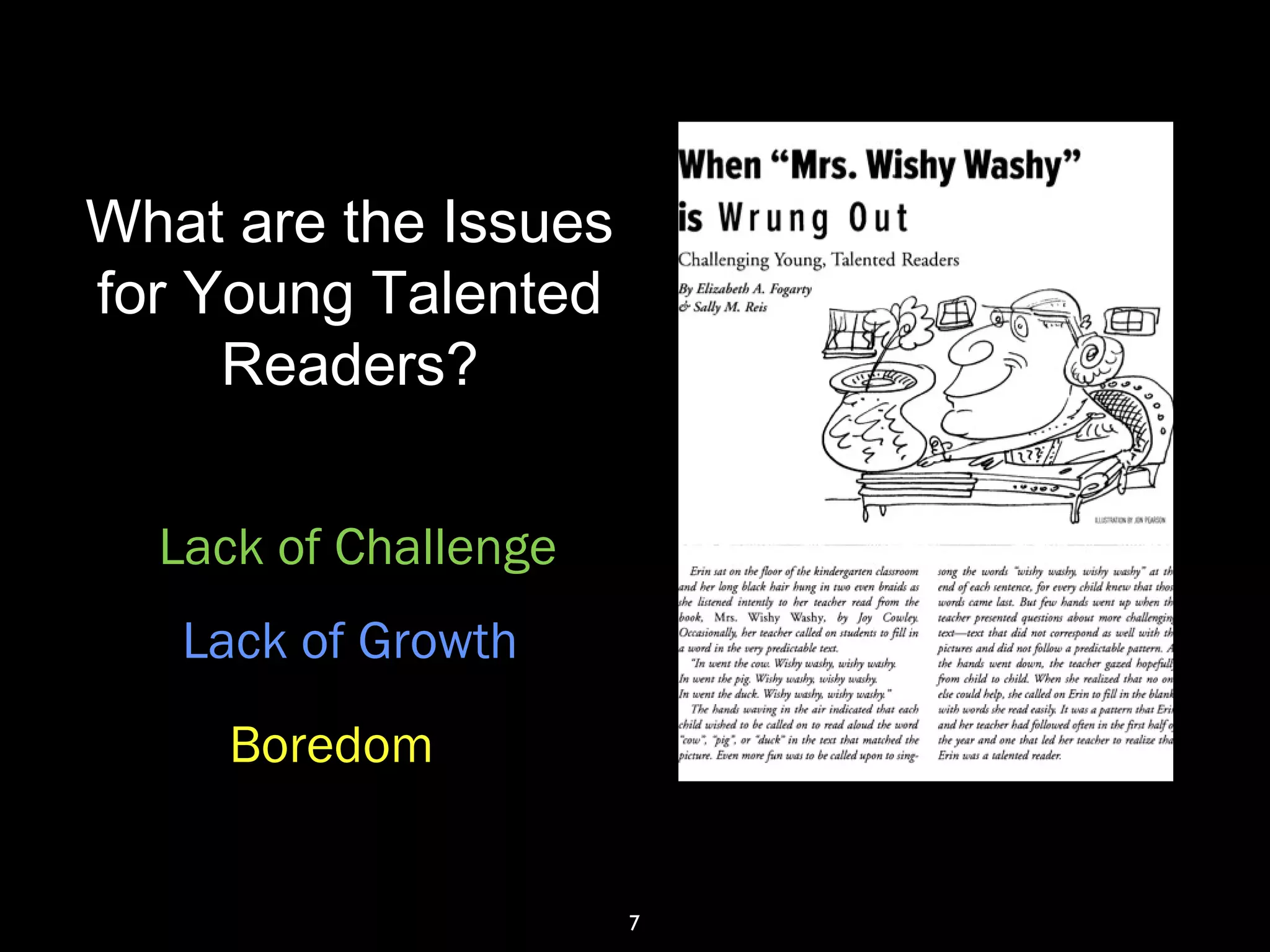
    •Factor 1: Schoolsdevelop test takers instead of readers. •Factor 2: Schools limit authentic reading experiences. •Factor 3: Teachers overteach books. •Factor 4: Teachers underteach books. March 2010 l Volume 67 l Number 6 Reading to Learn Pages 36-41 Reversing Readicide Kelly Gallagher
  • 16.
    In a timeof drastic change, it is the learners who inherit the future. The learned find themselves equipped to live in a world that no longer exists. - Eric Hoffer Process vs. Content Common Core illustrates a shift from specifying WHAT to learn, to HOW to learn.
  • 17.
  • 18.
  • 19.
  • 20.
    20Photo credit toMondo Educational Publishing
  • 21.
    21 Photo credit toMondo Educational Publishing Reading Level = 3.8Reading Level = 3.8 Reading Level = 4.0Reading Level = 4.0 Reading Level = 3.6Reading Level = 3.6 Reading Level = 8.2Reading Level = 8.2 Reading Level = 3.4Reading Level = 3.4 Reading Level = 6.0Reading Level = 6.0 Regular Classroom Setting RANGE = 4.8 Grade Levels
  • 22.
    22 Photo credit toMondo Educational Publishing Reading Level = 6.8Reading Level = 6.8 Reading Level = 7.0Reading Level = 7.0 Reading Level = 5.6Reading Level = 5.6 Reading Level = 8.2Reading Level = 8.2 Reading Level = 6.4Reading Level = 6.4 Reading Level = 6.0Reading Level = 6.0 Cluster Grouped Classroom
  • 23.
  • 24.
    24 READING TO LEARN ReadingLevel = 3.0+ READING TO LEARN Reading Level = 3.0+ LEARNING TO READ Reading Level = 1.5-2.9 LEARNING TO READ Reading Level = 1.5-2.9 PRE-READER Reading Level = preK PRE-READER Reading Level = preK Providing a Continuum of Delivery
  • 25.
    25 Schoolwide Components •Cross gradegrouping for reading •Grade acceleration for reading •Increase library access