WHEAT YELLOW STRIPE RUST
STUDENT COURSE TEACHER
Boopathi.N Dr..Parthasarathy.S
2015021021 Asst.Prof.,(Plant Pathology)
Disease Name: Wheat yellow stripe rust
Other Names : Stripe rust/Yellow rust
Pathogen name:
P. striiformis var. tritici
(Author: Westend-1854)
Inventor:
Gadd (1777)
Systematic position
Kingdom: Fungi
Phylum: Basidiomycota
Class: Urediniomycetes
Subclass: Incertaesedis
Order: Uredinales
Family: Pucciniastraceae
Genus: Puccinia
Species: P. striiformis var. tritici
History
 Gadd first described stripe rust of wheat in 1777.
 In 1896,Eriksson and Henning showed that stripe rust resulted
from a separate pathogen, which they named P. glumarum.
 In 1953, Hylander et al. revived the name P. striiformis.
Economic significance
 Losses can be 50%, but in severe situations 100% is
vulnerable.
 In countries where wheat is grown in winters or at high
elevations, yellow rust is a common threat, but not more
significant than wheat leaf rust and stem rust, which are
continuous threats in all wheat-growing countries.
Distribution
In India,
 Hills, foothills and plains of north western India and southern
hills zone (Nilgiri hills of Tamil Nadu).
In World,
 Europe and Australia(commonly known as yellow rust).
Pathogen Characters
 It is considered to be an obligate parasite.
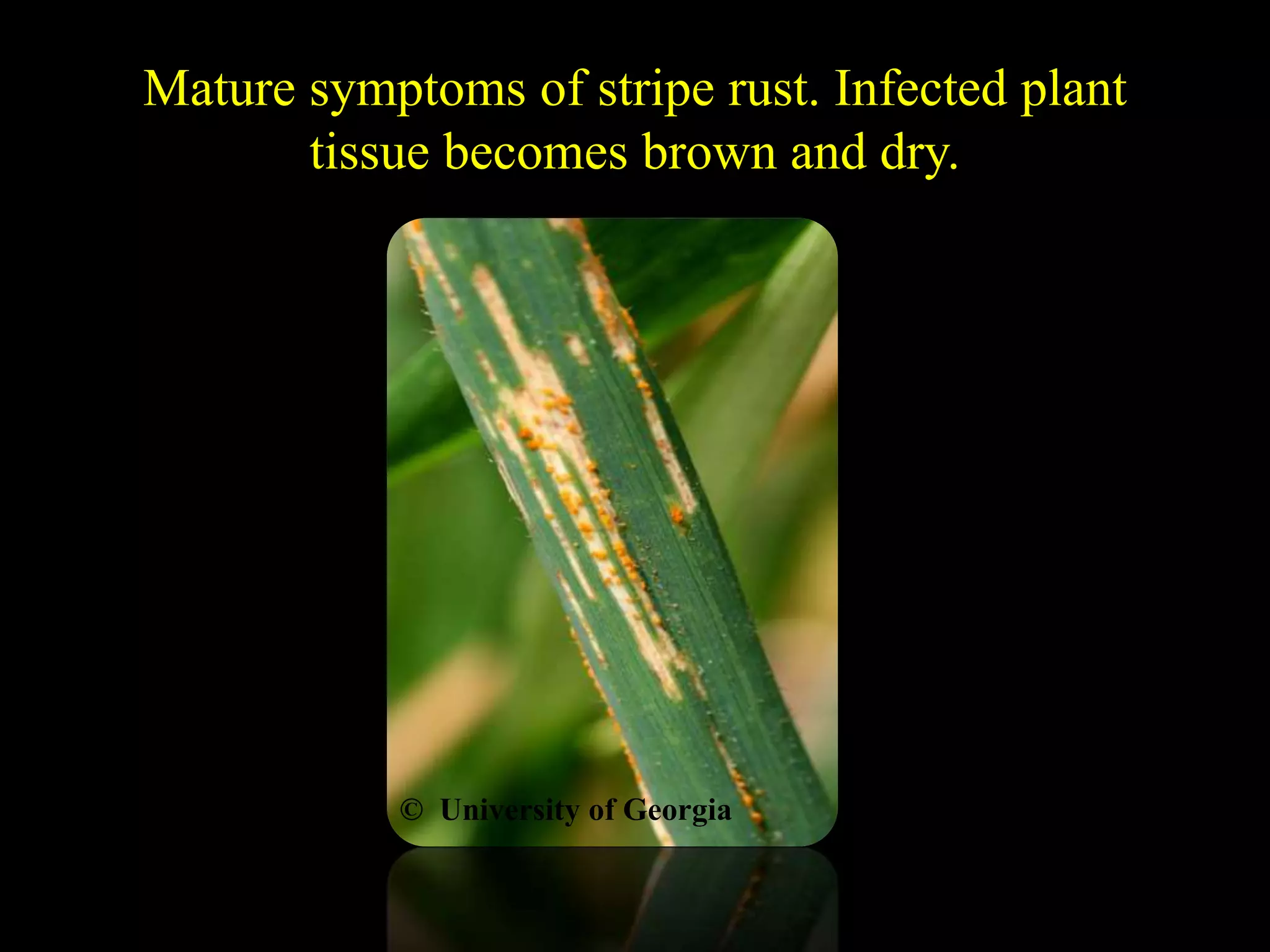
 The fungus produces bright yellow to orange uredospores 20
to 30 µm in diameter . These spores have thick and echinulated
walls and are contained in sori or pustules on the plant .
 Uredospore production usually is followed by teliospore
production late in the growing season.
 No alternate host is known. The pathogen survives in wheat as
dormant mycelium in cooler climates.
Symptoms
 The first sign of stripe rust is the appearance of yellow streaks
(pre-pustules), followed by small, bright yellow, elongated
uredial pustules arranged in conspicuous rows on the leaves,
leaf sheaths, glumes and awns .
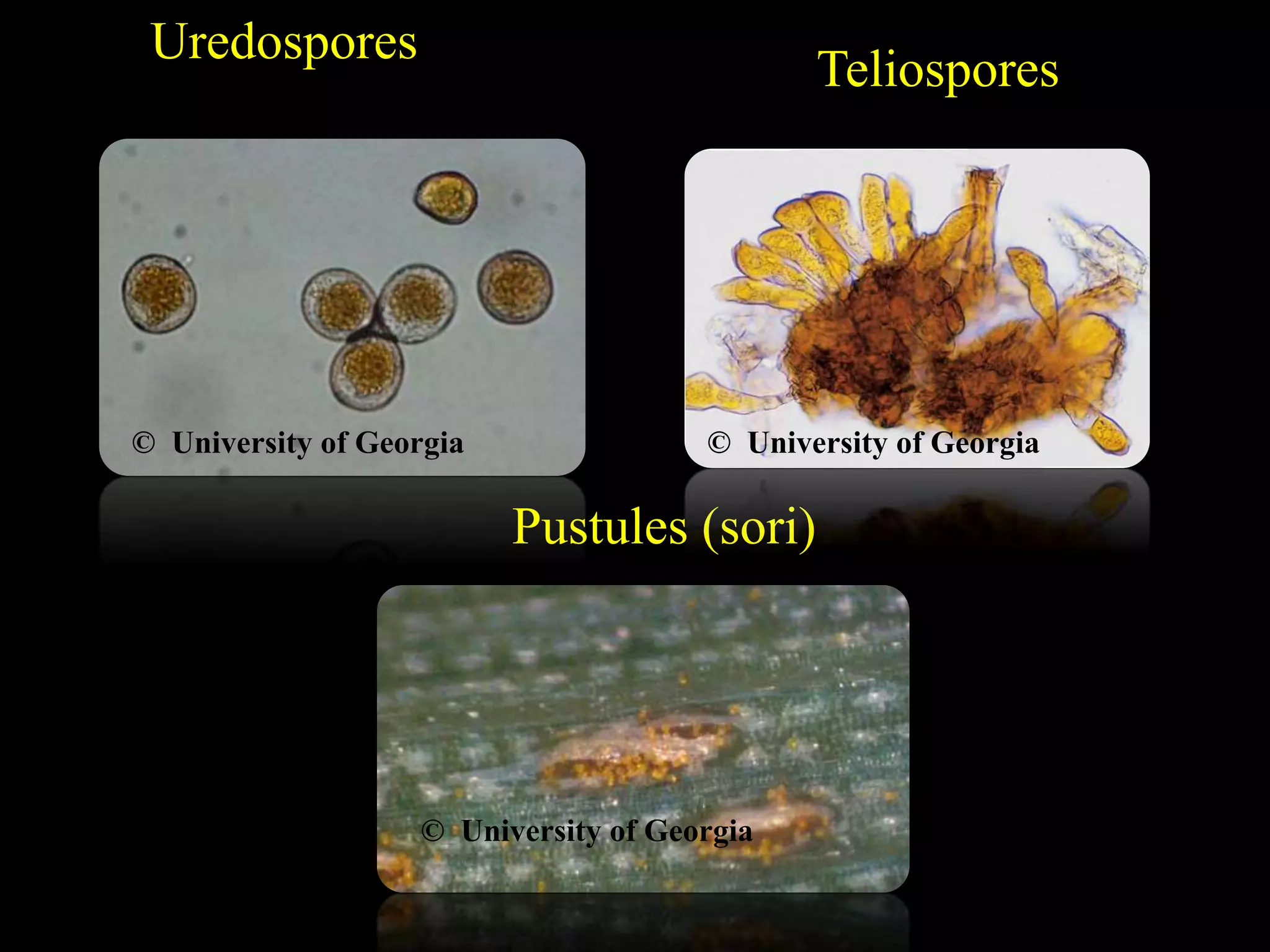
 Mature pustules will break open and release yellow-orange
masses of uredospores.
 In some varieties, long, narrow yellow stripes will develop on
leaves.
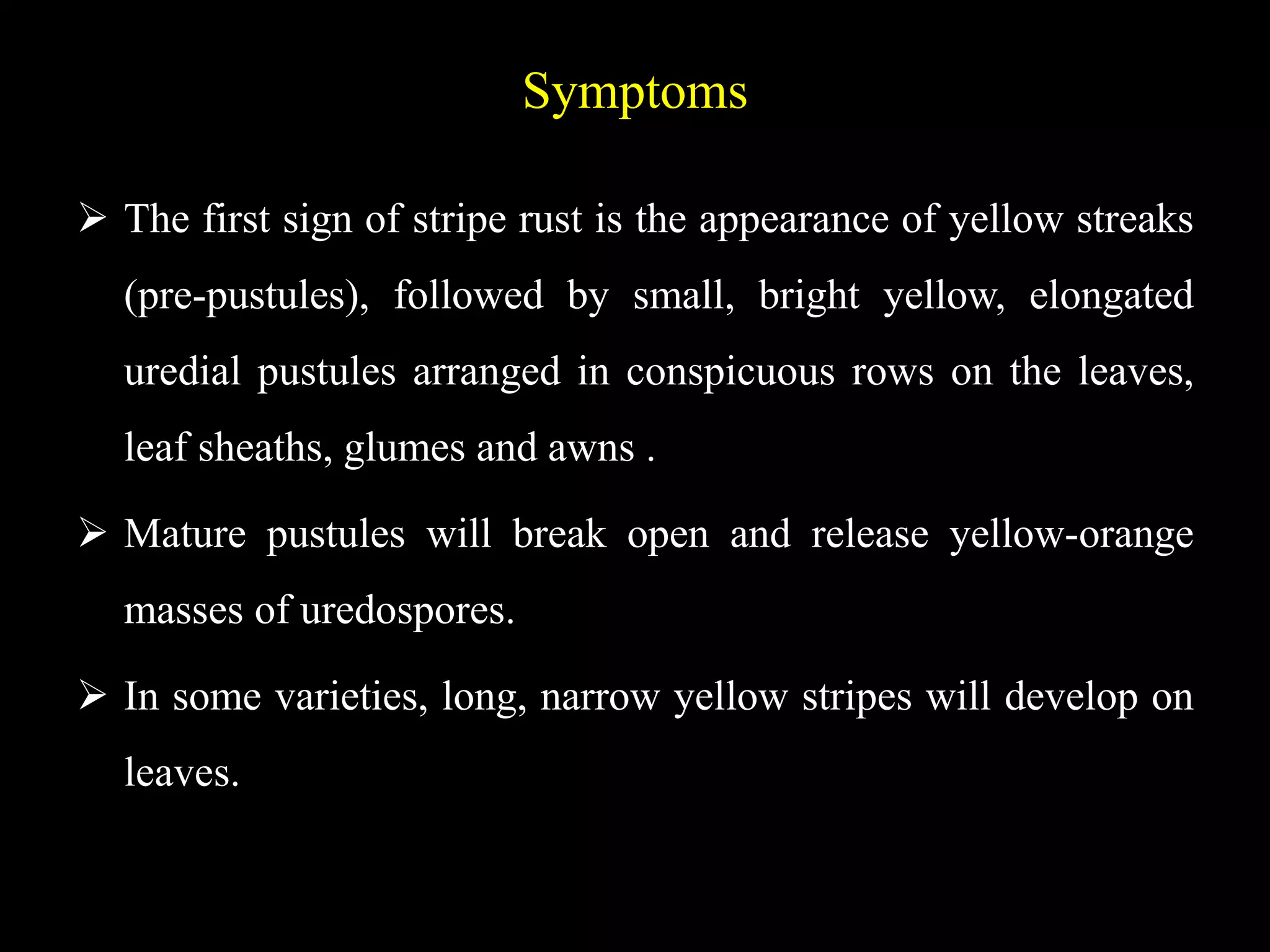
 The infected tissues may become brown and dry as the plant
matures or becomes stressed.
 Severe early infection can result in plant stunting.
Yellow streaks on leaf sheath
© University of Georgia
Yellow streaks on leaves Field View
© University of Georgia © University of Georgia
Mature symptoms of stripe rust. Infected plant
tissue becomes brown and dry.
© University of Georgia
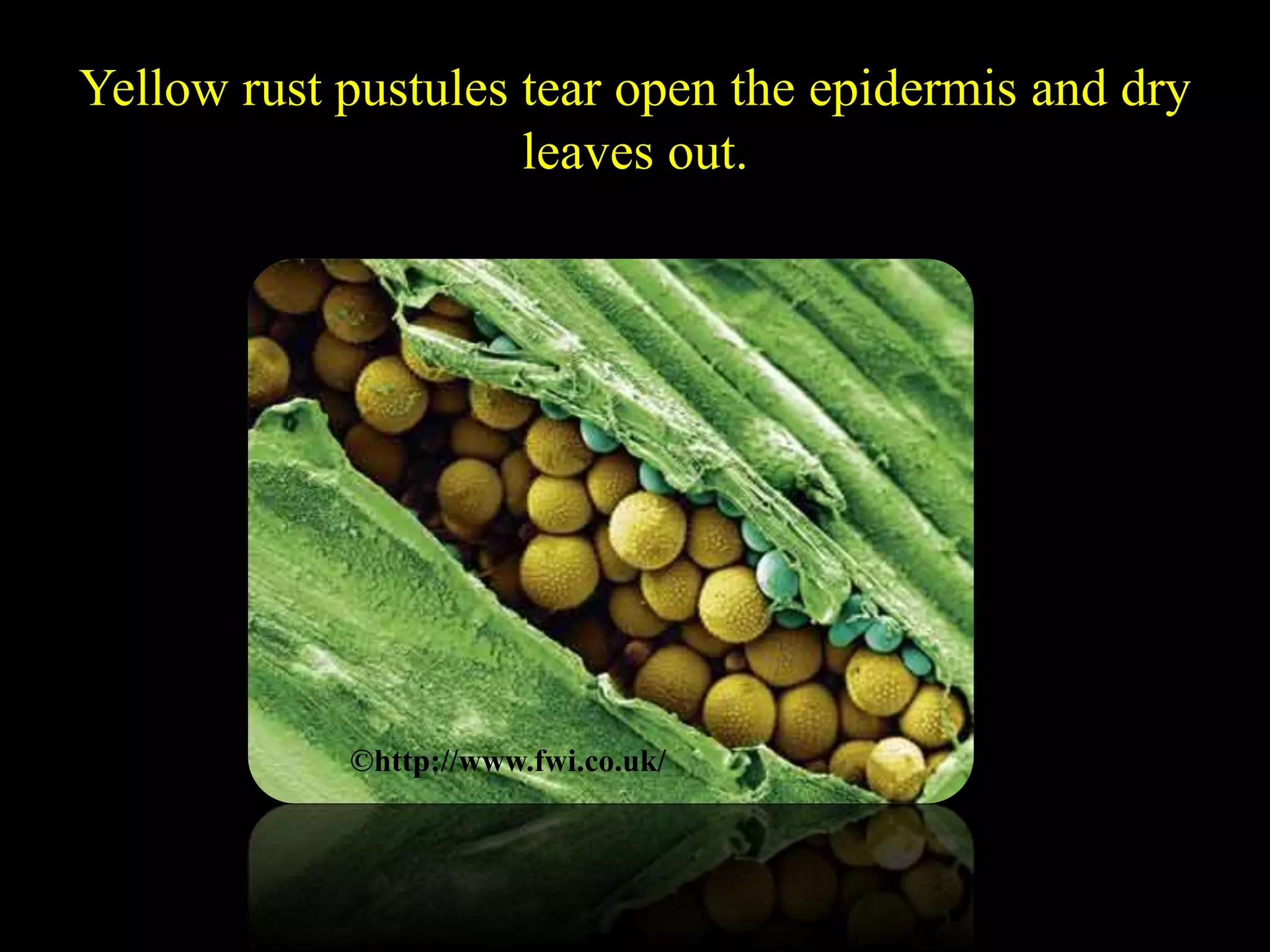
Uredospores
Pustules (sori)
Teliospores
© University of Georgia
Yellow rust pustules tear open the epidermis and dry
leaves out.
©http://www.fwi.co.uk/
Life cycle
©http://www.fwi.co.uk/
Favourable conditions
 Puccinia striiformis f. sp. tritici can survive as dormant
mycelium on wheat.
 Stripe rust is most common in higher elevations and cooler
climates. The pathogen is best sustained when night time
temperatures are <60°F (15°C).
 Stripe rust can develop on wheat at lower temperatures than
other rusts. Optimum uredospore germination occurs at 44-
59°F (7-15°C).
 Infection and disease development is most rapid between 50-
60°F (10-16°C).
 Heavy dew or intermittent rains can accelerate the spread of the
disease. Infection tends to cease when temperatures
consistently exceed 71-73°F (21-23°C).
 Pathogen survives in the cool temperatures of hills ( Himalayas
and Nilgiris ) and the primary infection takes places by middle
of January in the foot hills and sub mountainous parts of north
western India.Uredospores are spread via wind currents to
healthy plants where they can initiate new infections.
Management
 Mixed cropping and crop rotation.
 Avoid excess Nitrogenous fertilizers.
 Sulphur dusting @ 35-40 kg/ha.
 Spray Mancozeb @ 2g/lit.
 Growing Resistant varieties.
 Lerma Rojo, Safed Lerma,
 Sonalika and Chotil
 Foliar fungicides can effectively control stripe rust,applied
when the crop is at the boot stage of development.
 Products belonging to the strobilurin class of fungicides
(Headline, Quadirs) provide excellent activity against stripe
rust but are most effective when applied before infection.
 If stripe rust is already present in a field at the time of
application, it may be better to use products belonging to the
triazole class of fungicides (Folicur, Prosaro, Tilt) or premixes
of the two classes (Quilt, Stratego, Twinline).
Specific fungicides

Wheat Yellow Stripe Rust

  • 1.
    WHEAT YELLOW STRIPERUST STUDENT COURSE TEACHER Boopathi.N Dr..Parthasarathy.S 2015021021 Asst.Prof.,(Plant Pathology)
  • 2.
    Disease Name: Wheatyellow stripe rust Other Names : Stripe rust/Yellow rust Pathogen name: P. striiformis var. tritici (Author: Westend-1854) Inventor: Gadd (1777)
  • 3.
    Systematic position Kingdom: Fungi Phylum:Basidiomycota Class: Urediniomycetes Subclass: Incertaesedis Order: Uredinales Family: Pucciniastraceae Genus: Puccinia Species: P. striiformis var. tritici
  • 4.
    History  Gadd firstdescribed stripe rust of wheat in 1777.  In 1896,Eriksson and Henning showed that stripe rust resulted from a separate pathogen, which they named P. glumarum.  In 1953, Hylander et al. revived the name P. striiformis.
  • 5.
    Economic significance  Lossescan be 50%, but in severe situations 100% is vulnerable.  In countries where wheat is grown in winters or at high elevations, yellow rust is a common threat, but not more significant than wheat leaf rust and stem rust, which are continuous threats in all wheat-growing countries.
  • 6.
    Distribution In India,  Hills,foothills and plains of north western India and southern hills zone (Nilgiri hills of Tamil Nadu). In World,  Europe and Australia(commonly known as yellow rust).
  • 7.
    Pathogen Characters  Itis considered to be an obligate parasite.  The fungus produces bright yellow to orange uredospores 20 to 30 µm in diameter . These spores have thick and echinulated walls and are contained in sori or pustules on the plant .  Uredospore production usually is followed by teliospore production late in the growing season.  No alternate host is known. The pathogen survives in wheat as dormant mycelium in cooler climates.
  • 8.
    Symptoms  The firstsign of stripe rust is the appearance of yellow streaks (pre-pustules), followed by small, bright yellow, elongated uredial pustules arranged in conspicuous rows on the leaves, leaf sheaths, glumes and awns .  Mature pustules will break open and release yellow-orange masses of uredospores.  In some varieties, long, narrow yellow stripes will develop on leaves.
  • 9.
     The infectedtissues may become brown and dry as the plant matures or becomes stressed.  Severe early infection can result in plant stunting. Yellow streaks on leaf sheath © University of Georgia
  • 10.
    Yellow streaks onleaves Field View © University of Georgia © University of Georgia
  • 11.
    Mature symptoms ofstripe rust. Infected plant tissue becomes brown and dry. © University of Georgia
  • 12.
    Uredospores Pustules (sori) Teliospores © Universityof Georgia © University of Georgia © University of Georgia
  • 13.
    Yellow rust pustulestear open the epidermis and dry leaves out. ©http://www.fwi.co.uk/
  • 14.
  • 15.
    Favourable conditions  Pucciniastriiformis f. sp. tritici can survive as dormant mycelium on wheat.  Stripe rust is most common in higher elevations and cooler climates. The pathogen is best sustained when night time temperatures are <60°F (15°C).  Stripe rust can develop on wheat at lower temperatures than other rusts. Optimum uredospore germination occurs at 44- 59°F (7-15°C).
  • 16.
     Infection anddisease development is most rapid between 50- 60°F (10-16°C).  Heavy dew or intermittent rains can accelerate the spread of the disease. Infection tends to cease when temperatures consistently exceed 71-73°F (21-23°C).  Pathogen survives in the cool temperatures of hills ( Himalayas and Nilgiris ) and the primary infection takes places by middle of January in the foot hills and sub mountainous parts of north western India.Uredospores are spread via wind currents to healthy plants where they can initiate new infections.
  • 17.
    Management  Mixed croppingand crop rotation.  Avoid excess Nitrogenous fertilizers.  Sulphur dusting @ 35-40 kg/ha.  Spray Mancozeb @ 2g/lit.  Growing Resistant varieties.  Lerma Rojo, Safed Lerma,  Sonalika and Chotil
  • 18.
     Foliar fungicidescan effectively control stripe rust,applied when the crop is at the boot stage of development.  Products belonging to the strobilurin class of fungicides (Headline, Quadirs) provide excellent activity against stripe rust but are most effective when applied before infection.  If stripe rust is already present in a field at the time of application, it may be better to use products belonging to the triazole class of fungicides (Folicur, Prosaro, Tilt) or premixes of the two classes (Quilt, Stratego, Twinline). Specific fungicides