PRESENTED BY: SALU MAHARJAN
SARAD GIRI
SARASWATI TANDON
SAURAZ B.K.
SAURAV LUITEL
Ear cockle of wheat
 First reported in England in 1743 by Needham.
 First reported in Nepal in 1966 and caused considerable loss
in Rupendehi and Nawalparasi.
 The nematode is found in association with the yellow ear rot
(tundu disease) caused by bacterium Clavibacter tritici.
 Corynetotoxin produced with the association are toxic to
man and even death of cattle and sheep when such seed are
feed.
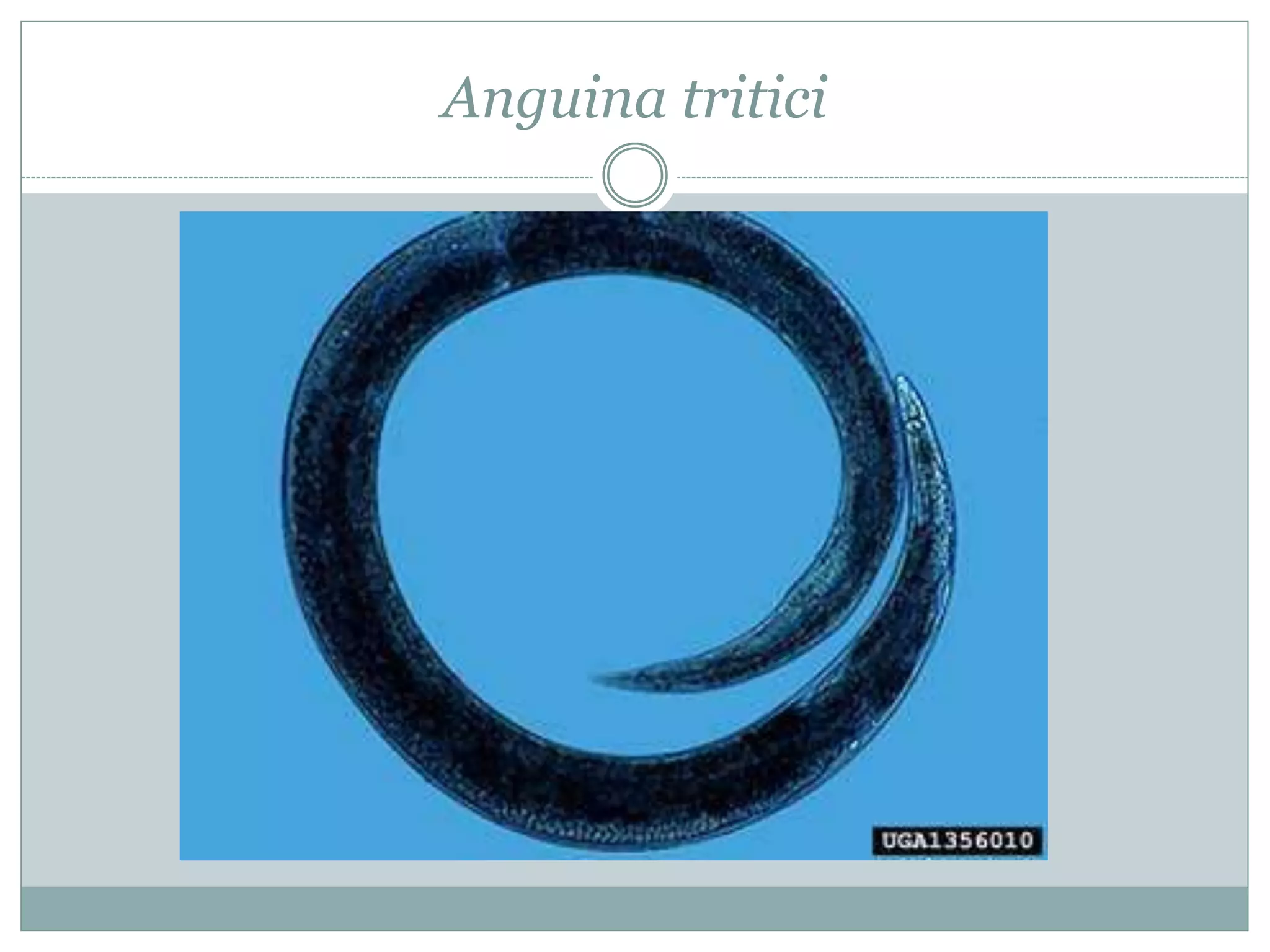
Causal agent: Auguina tritici
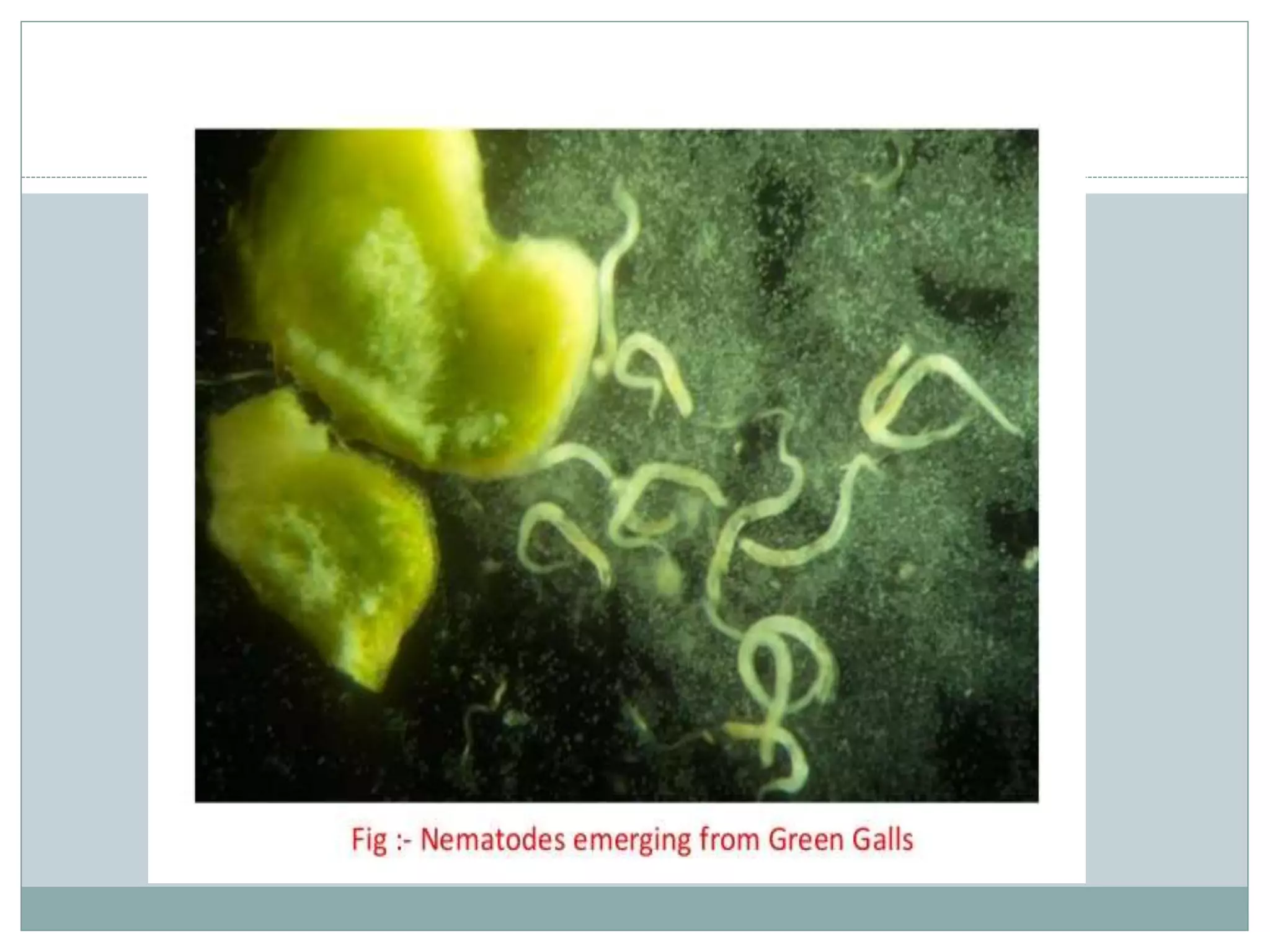
 Pathogen is large nematode about 3.2 mm long and
120micrometer in diameter.
 Host: specific to wheat
 Nematode lays eggs and produces all its juvenile stages
and adults in seed galls.
Anguina tritici
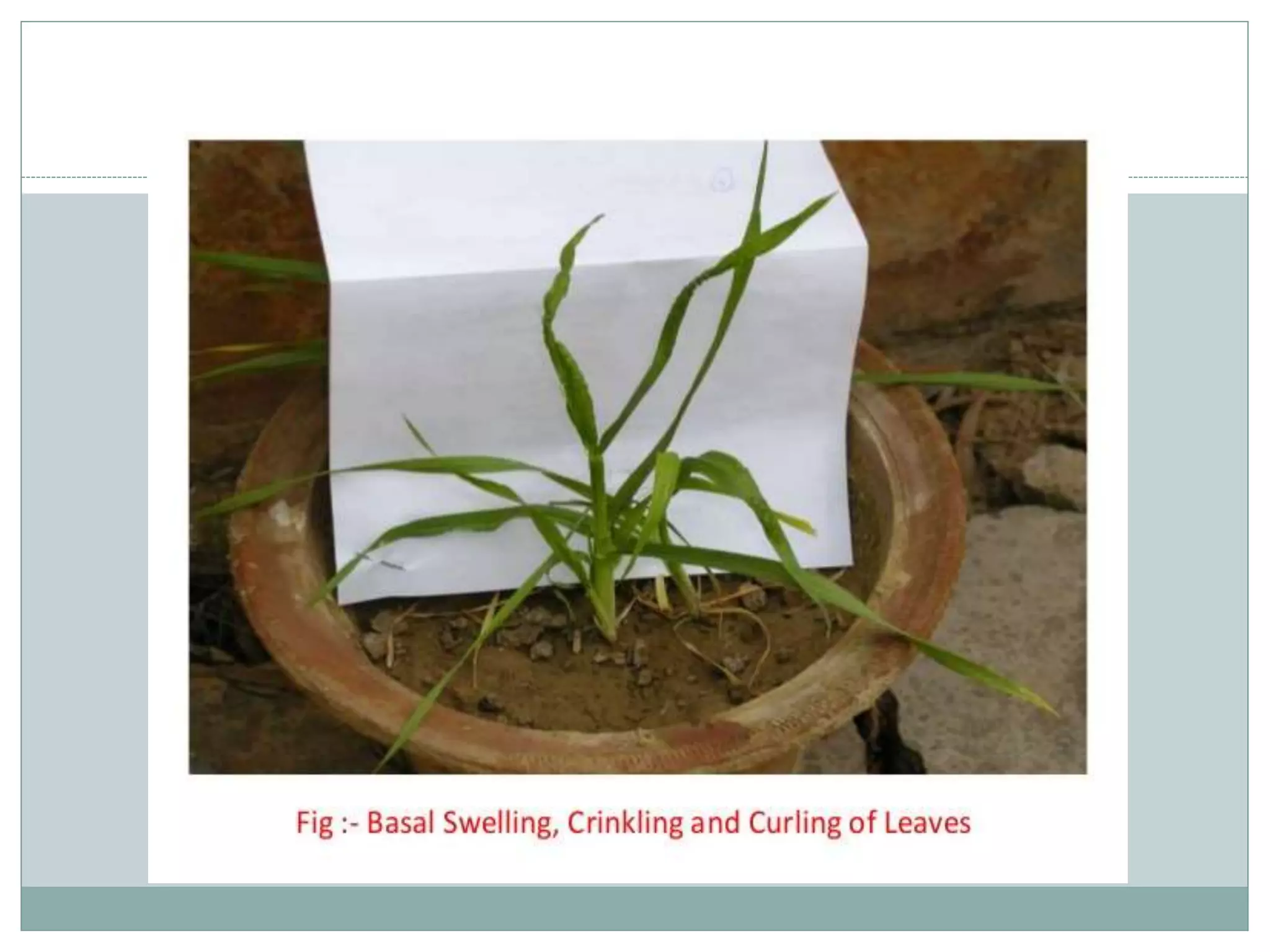
Symptoms
 Affects all growing stages.
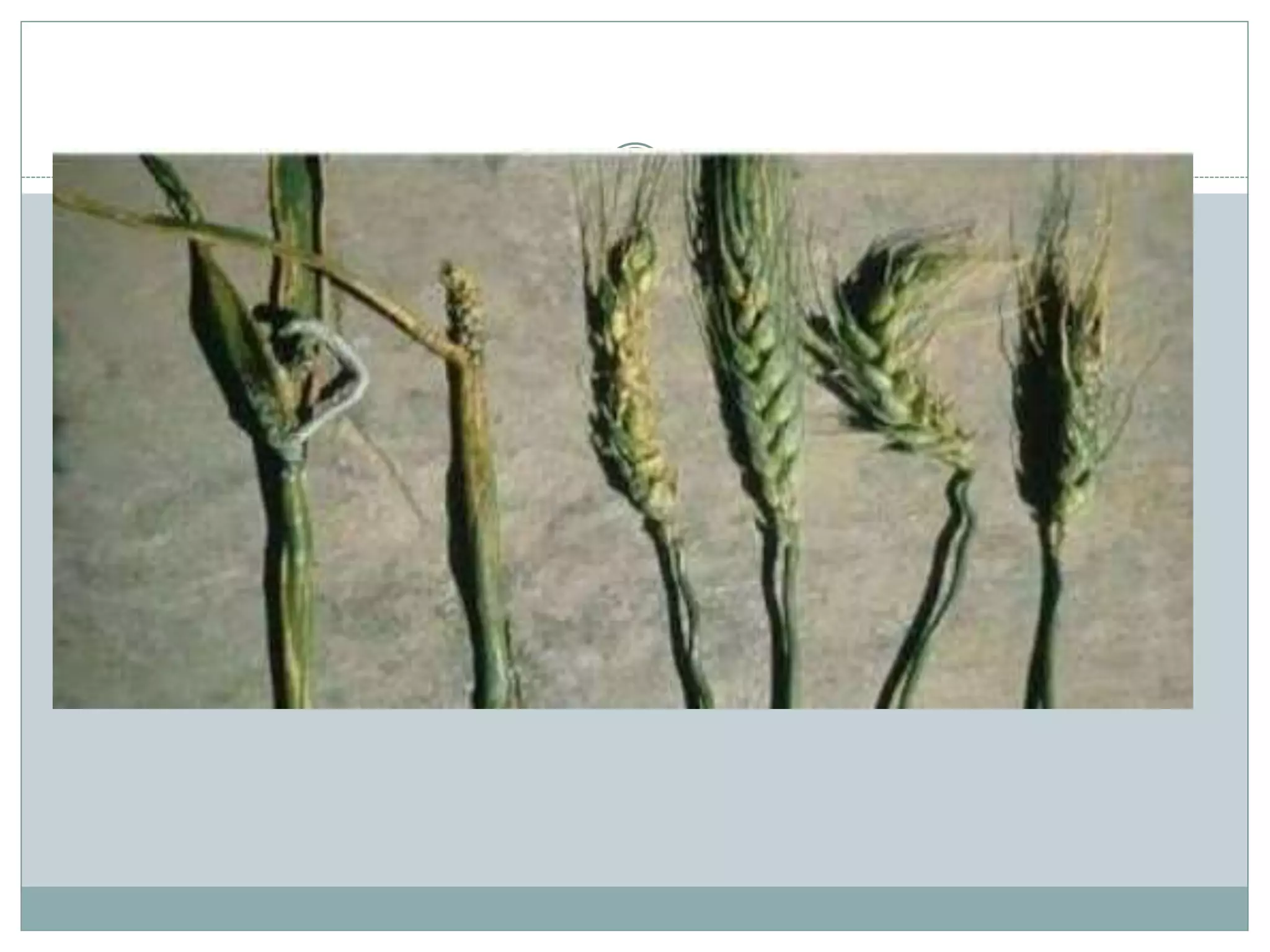
 Infected seedlings are more or less severly stunted and
show characteristics rolling and twisting of the leaves.
 A rolled leaves often traps the next emerging leaf and
inflorescence within it and causes it to become bent or
badly distorted.
 Base of the stem are enlarged, bent and generally stunted.
 Plants show spreading nature and tents towards more
tillering.
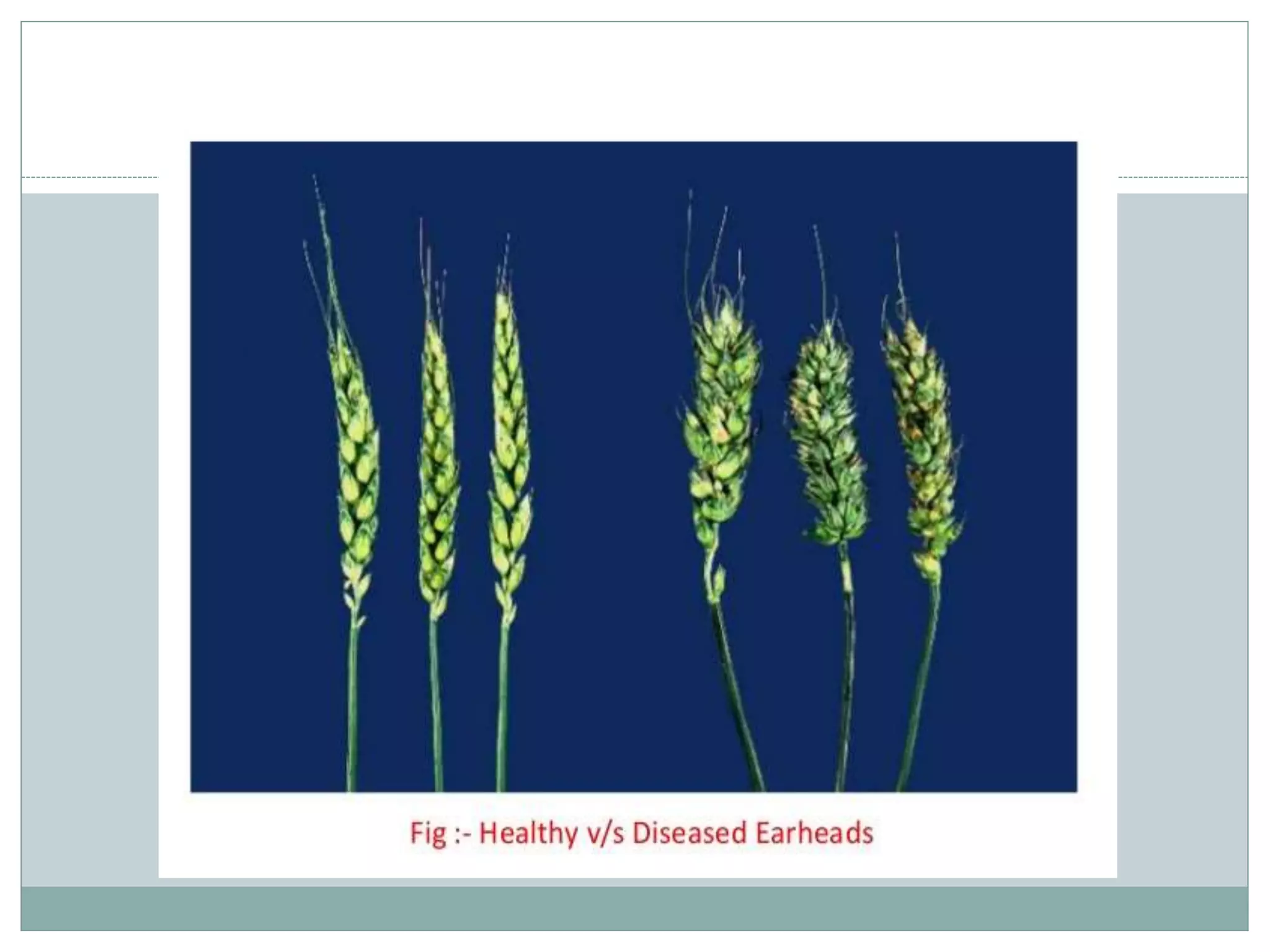
Infected ears/kernels
 The affected ears are shorter and broader with very short or no
awns on the glumes.
 The affected ears are greener than the healthy ones, and galls shed
off the ear more readily than kernels.
 Diseased head may have one, few or all of its kernel turned into
nematode galls.
 Galls are shiny at first but turn brown or black as the head matures.
 Mature galls are hard, dark, rounded and shorter than normal
wheat kernels.
Disease cycle
 Seed gall nematode contains 1000 to 3000 larvae in a seed.
 Galls fallen to ground softens during warm, moist weather and release
infective second stage juveniles.
 The juveniles swim upward on the leaves through film of water and feed
ectoparasitically on leaves.
 When the inflorescence begins to form, the juveniles enter the flower
primordia and produce the third and fourth stage juvenile and adults.
 Each infected flower primodium becomes a seed gall and may contain 80 or
more adults.
Interaction with bacterium
Anguina tritici plus Clavibacter tritici = yellow ear rot
 Nematode acts as a vector.
 Initial symptoms are same.
 Low temperature and high humidity favors this
disease.
 Yellow slimy ooze from leaves, stem and ear heads.
 Upon maturity, turns brown.
 No grain formation.
 Ear heads may not emerge from boot leaf.
Management
 Use only healthy seed from healthy crop.
 Cleaning of contaminated seeds by sieving or floating in
water.
 Crop rotation for 2.3 yrs such as barley or oat.
 Hot water treatment of seed, first soaking seed in cold
water for 4-5 hours and treating at 54°C.
 Soil application of nematicides such as Nemaphos,
Aldicap@ 10 kg a.i/ha.
 Easy to eradicate both diseases easily.
Ear cockle of wheat

Ear cockle of wheat

  • 1.
    PRESENTED BY: SALUMAHARJAN SARAD GIRI SARASWATI TANDON SAURAZ B.K. SAURAV LUITEL Ear cockle of wheat
  • 2.
     First reportedin England in 1743 by Needham.  First reported in Nepal in 1966 and caused considerable loss in Rupendehi and Nawalparasi.  The nematode is found in association with the yellow ear rot (tundu disease) caused by bacterium Clavibacter tritici.  Corynetotoxin produced with the association are toxic to man and even death of cattle and sheep when such seed are feed.
  • 3.
    Causal agent: Auguinatritici  Pathogen is large nematode about 3.2 mm long and 120micrometer in diameter.  Host: specific to wheat  Nematode lays eggs and produces all its juvenile stages and adults in seed galls.
  • 4.
  • 5.
    Symptoms  Affects allgrowing stages.  Infected seedlings are more or less severly stunted and show characteristics rolling and twisting of the leaves.  A rolled leaves often traps the next emerging leaf and inflorescence within it and causes it to become bent or badly distorted.  Base of the stem are enlarged, bent and generally stunted.  Plants show spreading nature and tents towards more tillering.
  • 6.
    Infected ears/kernels  Theaffected ears are shorter and broader with very short or no awns on the glumes.  The affected ears are greener than the healthy ones, and galls shed off the ear more readily than kernels.  Diseased head may have one, few or all of its kernel turned into nematode galls.  Galls are shiny at first but turn brown or black as the head matures.  Mature galls are hard, dark, rounded and shorter than normal wheat kernels.
  • 7.
    Disease cycle  Seedgall nematode contains 1000 to 3000 larvae in a seed.  Galls fallen to ground softens during warm, moist weather and release infective second stage juveniles.  The juveniles swim upward on the leaves through film of water and feed ectoparasitically on leaves.  When the inflorescence begins to form, the juveniles enter the flower primordia and produce the third and fourth stage juvenile and adults.  Each infected flower primodium becomes a seed gall and may contain 80 or more adults.
  • 12.
    Interaction with bacterium Anguinatritici plus Clavibacter tritici = yellow ear rot  Nematode acts as a vector.  Initial symptoms are same.  Low temperature and high humidity favors this disease.  Yellow slimy ooze from leaves, stem and ear heads.  Upon maturity, turns brown.  No grain formation.  Ear heads may not emerge from boot leaf.
  • 14.
    Management  Use onlyhealthy seed from healthy crop.  Cleaning of contaminated seeds by sieving or floating in water.  Crop rotation for 2.3 yrs such as barley or oat.  Hot water treatment of seed, first soaking seed in cold water for 4-5 hours and treating at 54°C.  Soil application of nematicides such as Nemaphos, Aldicap@ 10 kg a.i/ha.  Easy to eradicate both diseases easily.