Brown spot of paddy
A.Nitha Reddy
111718012002
DAG-A
Brownspot:
 PATHOGEN: Bipolaris oryzae (breda de hann)
shoemaker ( syn.Helminthosporium oryzae)
 This disease was considered to be the major
factor contributing to the “Great Bengal
Famine”in 1942.
 It is used by USA as biological weapon in JAPAN
during WORLD WAR II
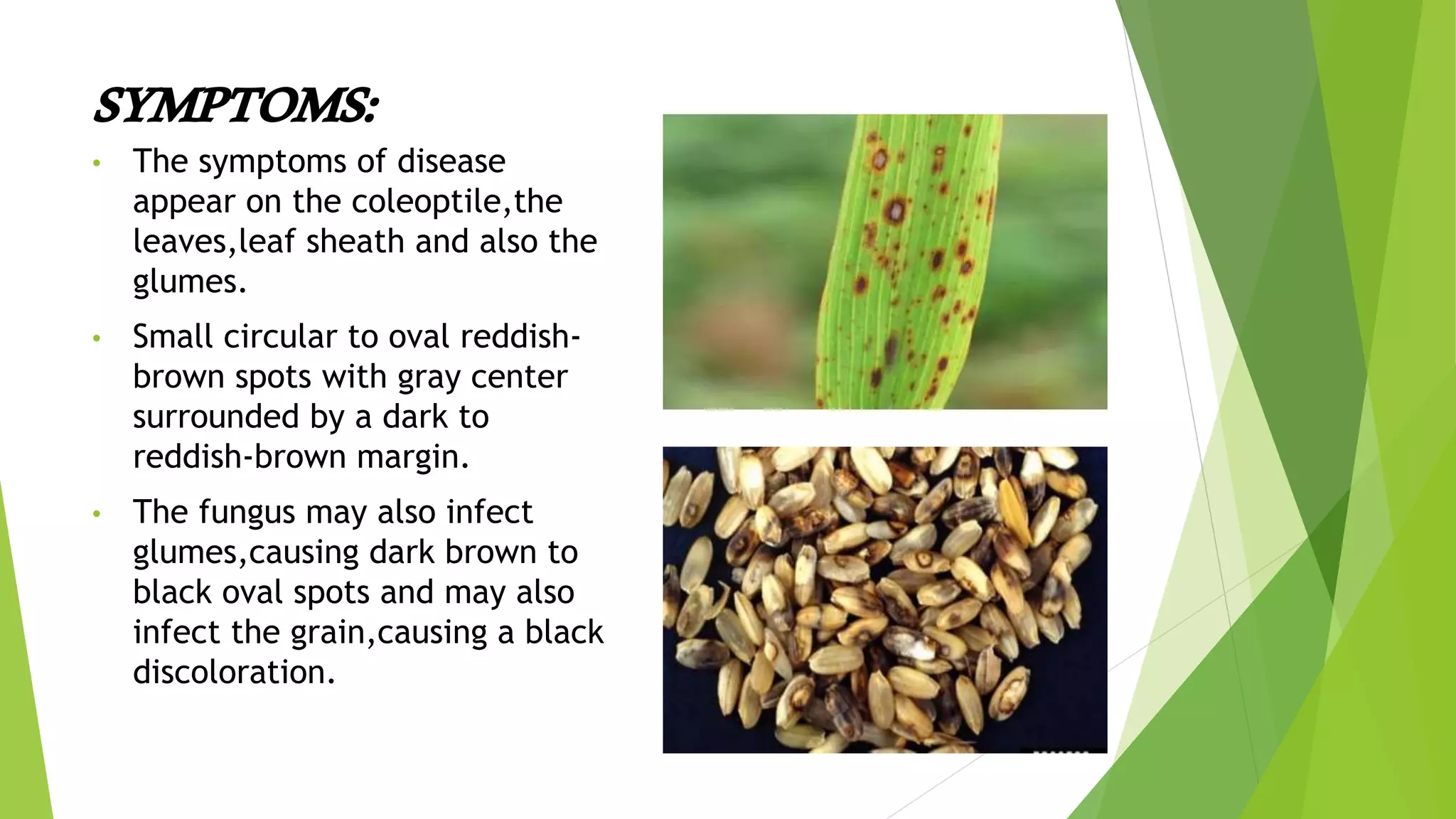
SYMPTOMS:
• The symptoms of disease
appear on the coleoptile,the
leaves,leaf sheath and also the
glumes.
• Small circular to oval reddish-
brown spots with gray center
surrounded by a dark to
reddish-brown margin.
• The fungus may also infect
glumes,causing dark brown to
black oval spots and may also
infect the grain,causing a black
discoloration.
ETIOLOGY:
 Greyish brown to dark brown septate mycelium.
 Conidiophore may arise singly or small group.
 They are striaght or geniculate(curved)-pale to
brown.
 Conidia are curved with a bulge in centre &
tappering towards end
 Olive green to golden brown,6-14 septate.
 Sexual fruiting body in sexual stage: perithecia
with asci
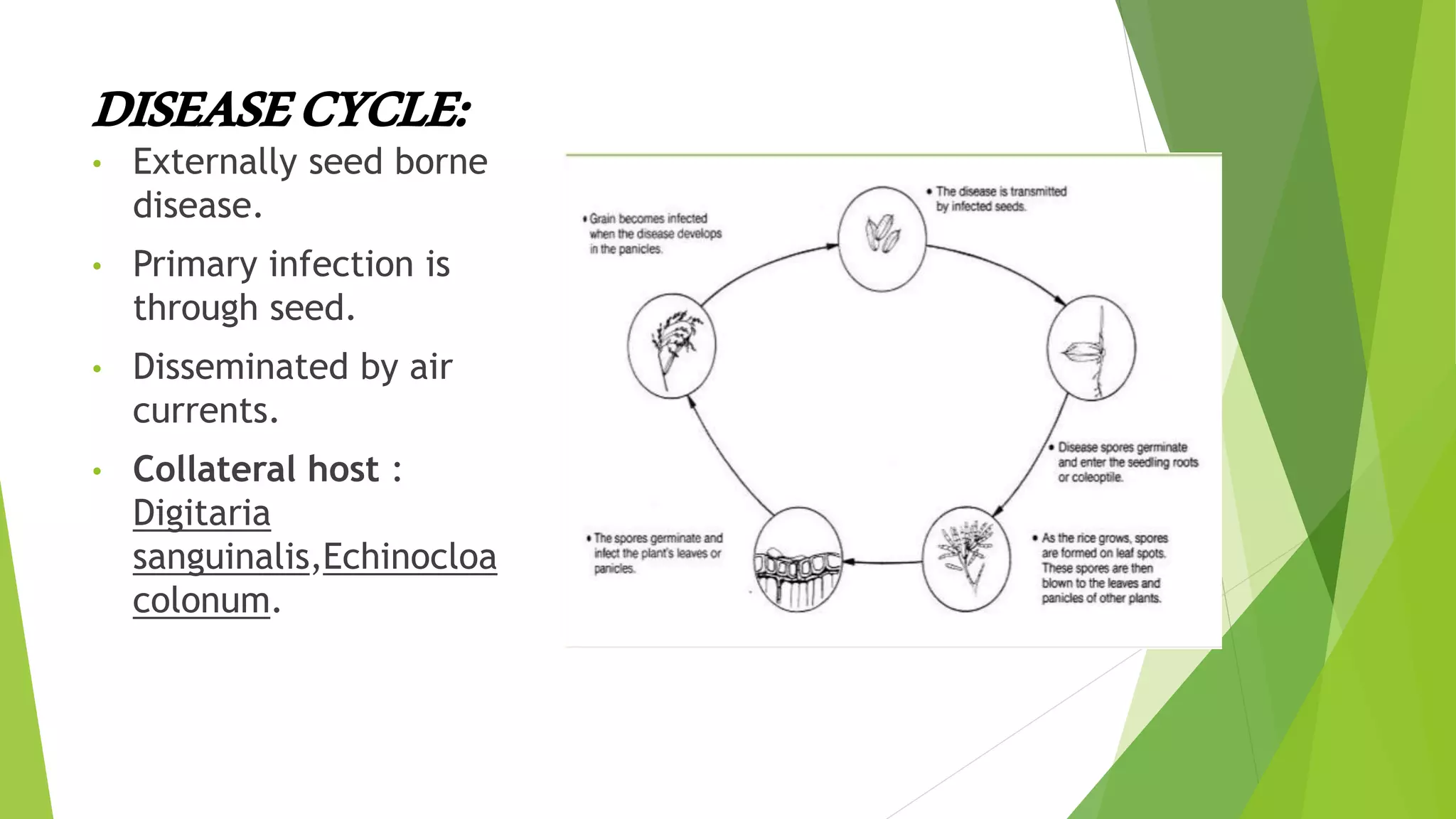
DISEASECYCLE:
• Externally seed borne
disease.
• Primary infection is
through seed.
• Disseminated by air
currents.
• Collateral host :
Digitaria
sanguinalis,Echinocloa
colonum.
FAVOURABLECONDITION:
 Temperature ranging from 25°c-30°c.
 Water stress and high humidity(80-100%).
 Poorly drained or abnormal soils, which are deficient in
nutrient elements.
 Leaves which are wet for 8-24 hrs are prone to infection.
MANAGEMENT: use of disease free seeds.
 Use of resistant varieties.
 Avoid excess use of N application
 Use of silicon fertilizers(eg.calcium silicate slag).
 Hot water seed treatmemt (54-54°c)for 10-12min.
 Seed treatment with captan,thiram or carbendazim.
 Spray Mancozeb@0.2% after flowering and milky stage.

BROWN SPOT OF PADDY

  • 1.
    Brown spot ofpaddy A.Nitha Reddy 111718012002 DAG-A
  • 2.
    Brownspot:  PATHOGEN: Bipolarisoryzae (breda de hann) shoemaker ( syn.Helminthosporium oryzae)  This disease was considered to be the major factor contributing to the “Great Bengal Famine”in 1942.  It is used by USA as biological weapon in JAPAN during WORLD WAR II
  • 3.
    SYMPTOMS: • The symptomsof disease appear on the coleoptile,the leaves,leaf sheath and also the glumes. • Small circular to oval reddish- brown spots with gray center surrounded by a dark to reddish-brown margin. • The fungus may also infect glumes,causing dark brown to black oval spots and may also infect the grain,causing a black discoloration.
  • 4.
    ETIOLOGY:  Greyish brownto dark brown septate mycelium.  Conidiophore may arise singly or small group.  They are striaght or geniculate(curved)-pale to brown.  Conidia are curved with a bulge in centre & tappering towards end  Olive green to golden brown,6-14 septate.  Sexual fruiting body in sexual stage: perithecia with asci
  • 5.
    DISEASECYCLE: • Externally seedborne disease. • Primary infection is through seed. • Disseminated by air currents. • Collateral host : Digitaria sanguinalis,Echinocloa colonum.
  • 6.
    FAVOURABLECONDITION:  Temperature rangingfrom 25°c-30°c.  Water stress and high humidity(80-100%).  Poorly drained or abnormal soils, which are deficient in nutrient elements.  Leaves which are wet for 8-24 hrs are prone to infection.
  • 7.
    MANAGEMENT: use ofdisease free seeds.  Use of resistant varieties.  Avoid excess use of N application  Use of silicon fertilizers(eg.calcium silicate slag).  Hot water seed treatmemt (54-54°c)for 10-12min.  Seed treatment with captan,thiram or carbendazim.  Spray Mancozeb@0.2% after flowering and milky stage.