WHAT IS SCIENCE
Ms. Donita D. Germono
What is Science?
■ Comes from the Latin word scientia, which means “to know”.
■ A systematic attempt to establish knowledge that helps explain natural and physical
occurrences through objective means.
■ Employs skills such as measuring, analyzing, observing and experimenting.
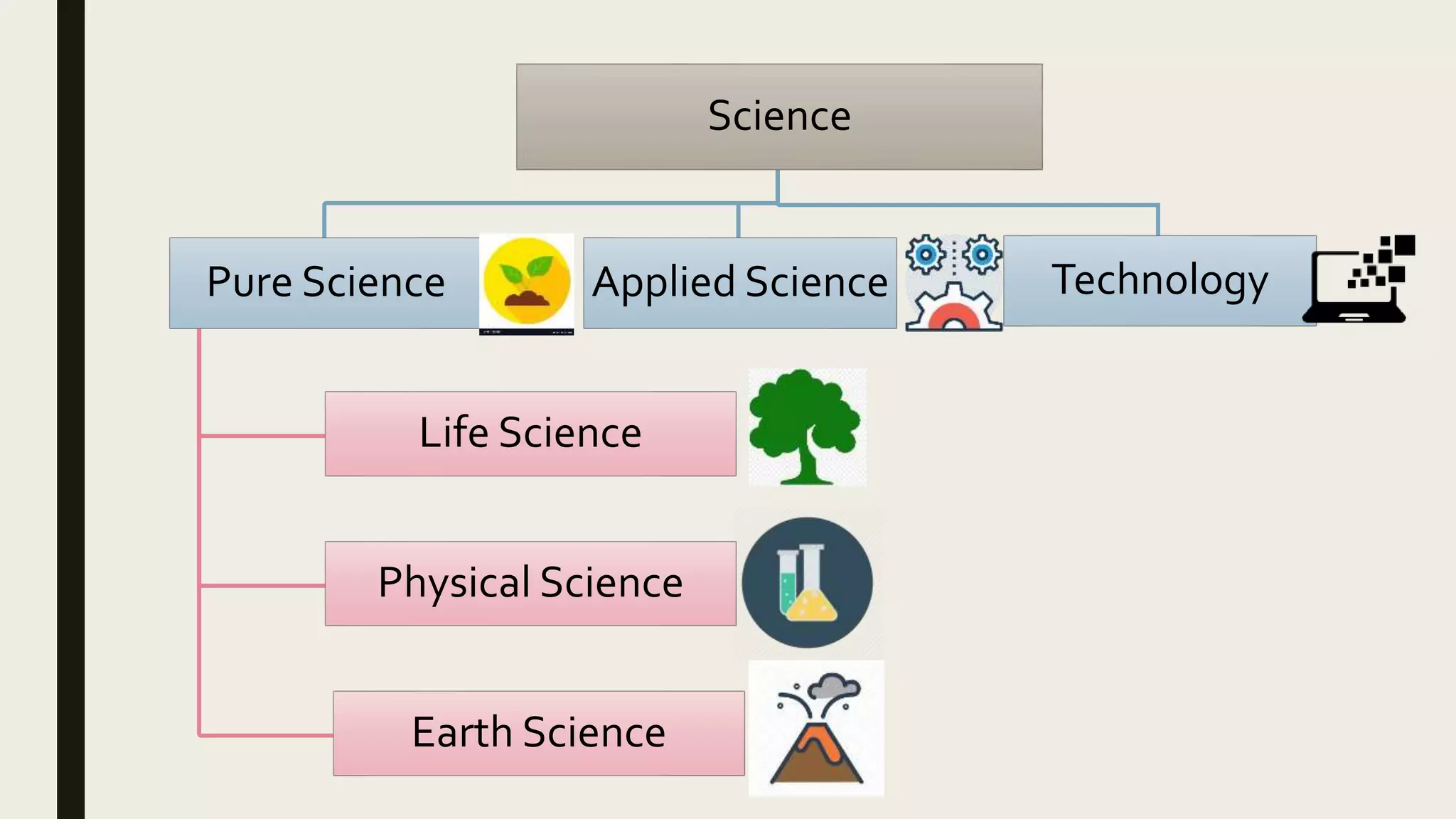
Science
Pure Science
Life Science
Physical Science
Earth Science
Applied Science Technology
Classified as follows:
■ Pure Science – involves gathering of information through
experimentation, which is done mainly for the pursuit of
knowledge
■ Applied Science – deals with the search for practical uses
scientific knowledge and scientific laws.
■ Technology – comes from the Greek word techne that means
“art, craft or skill” and logia that means “word or expression”
– Application of science that improves the quality of human
life.
Integrated Science includes 3 branches
of Pure Life Science:
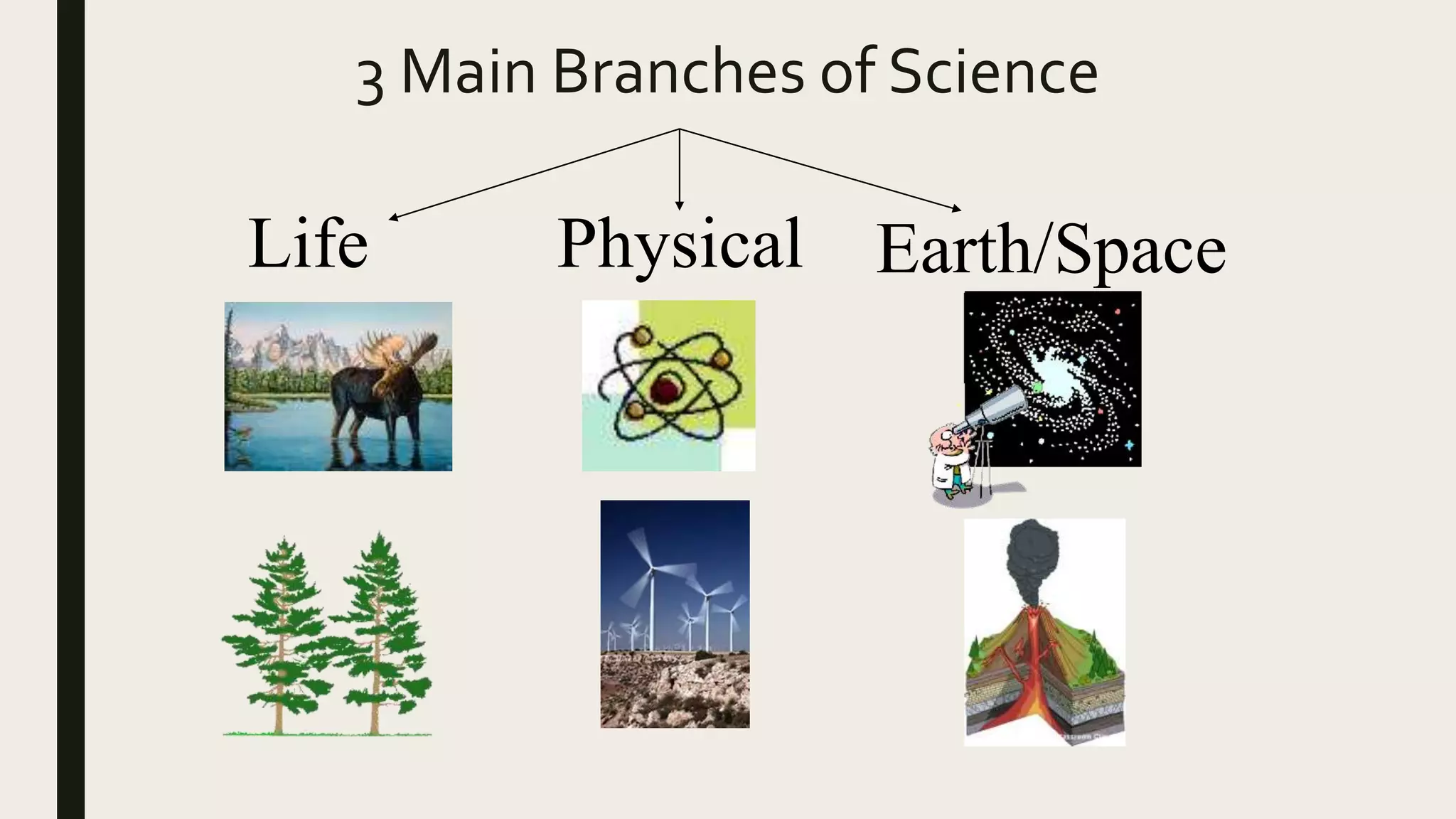
3 Main Branches of Science
Life Physical Earth/Space
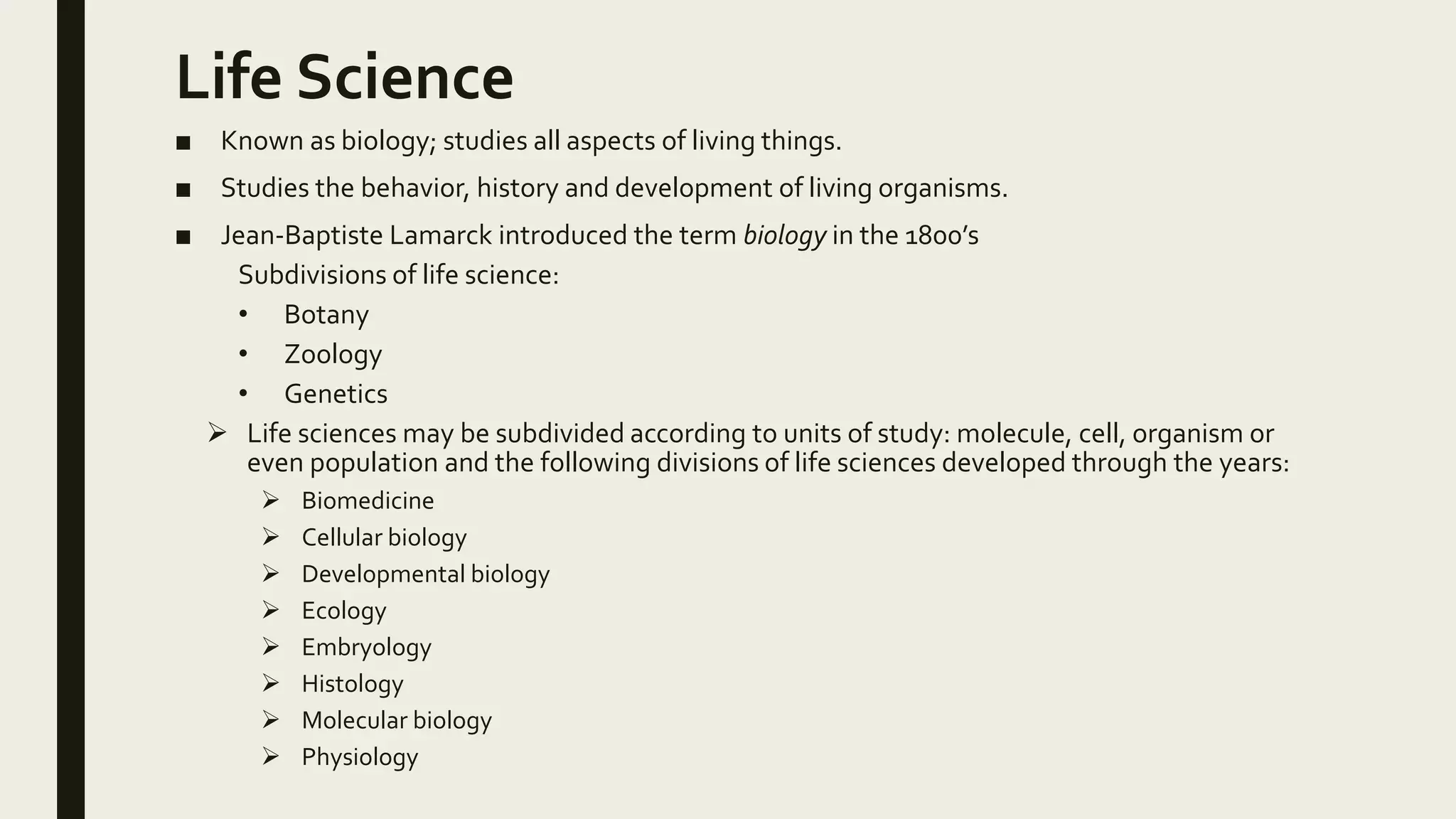
Life Science
■ Known as biology; studies all aspects of living things.
■ Studies the behavior, history and development of living organisms.
■ Jean-Baptiste Lamarck introduced the term biology in the 1800’s
Subdivisions of life science:
• Botany
• Zoology
• Genetics
 Life sciences may be subdivided according to units of study: molecule, cell, organism or
even population and the following divisions of life sciences developed through the years:
 Biomedicine
 Cellular biology
 Developmental biology
 Ecology
 Embryology
 Histology
 Molecular biology
 Physiology
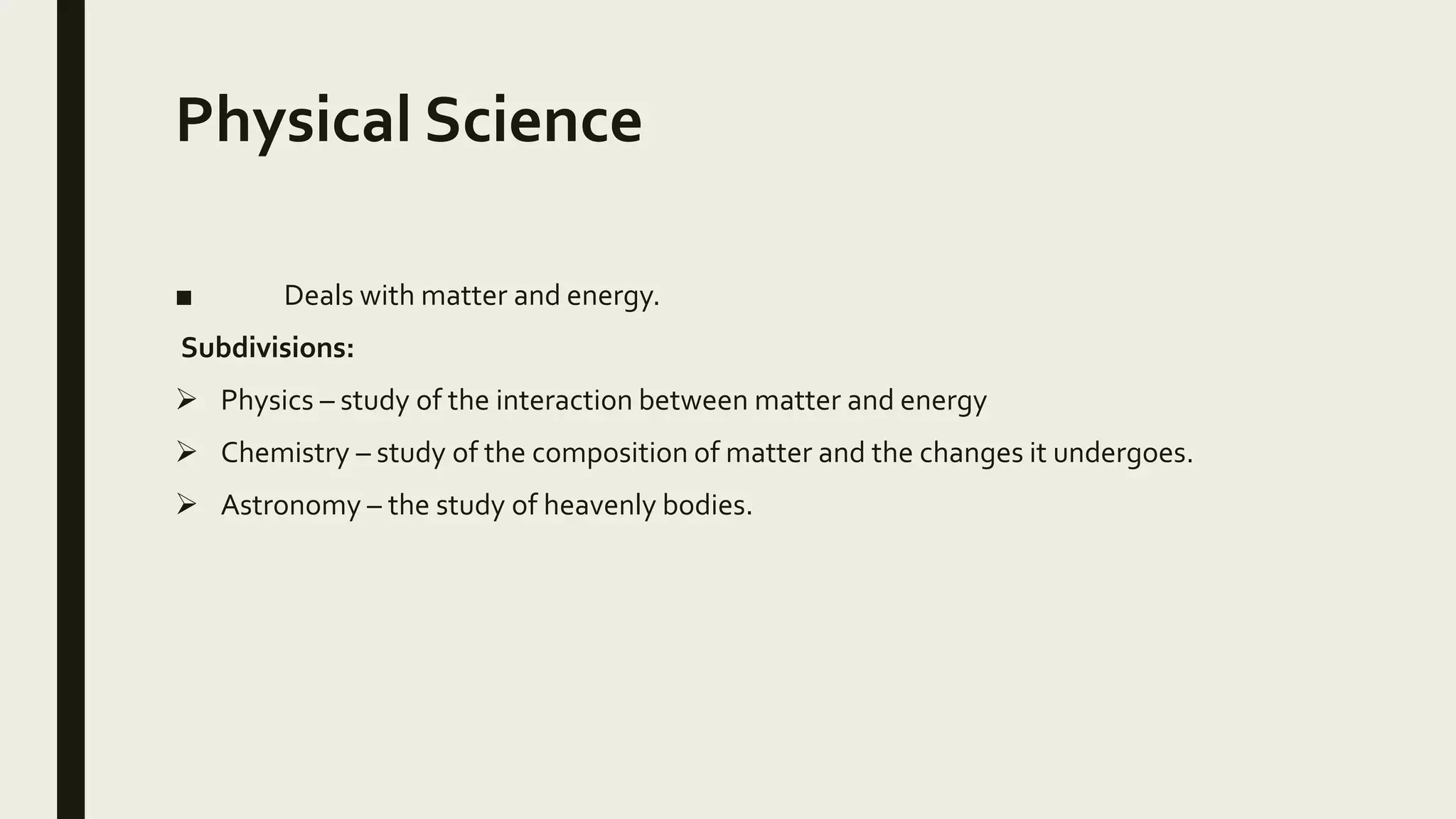
Physical Science
■ Deals with matter and energy.
Subdivisions:
 Physics – study of the interaction between matter and energy
 Chemistry – study of the composition of matter and the changes it undergoes.
 Astronomy – the study of heavenly bodies.
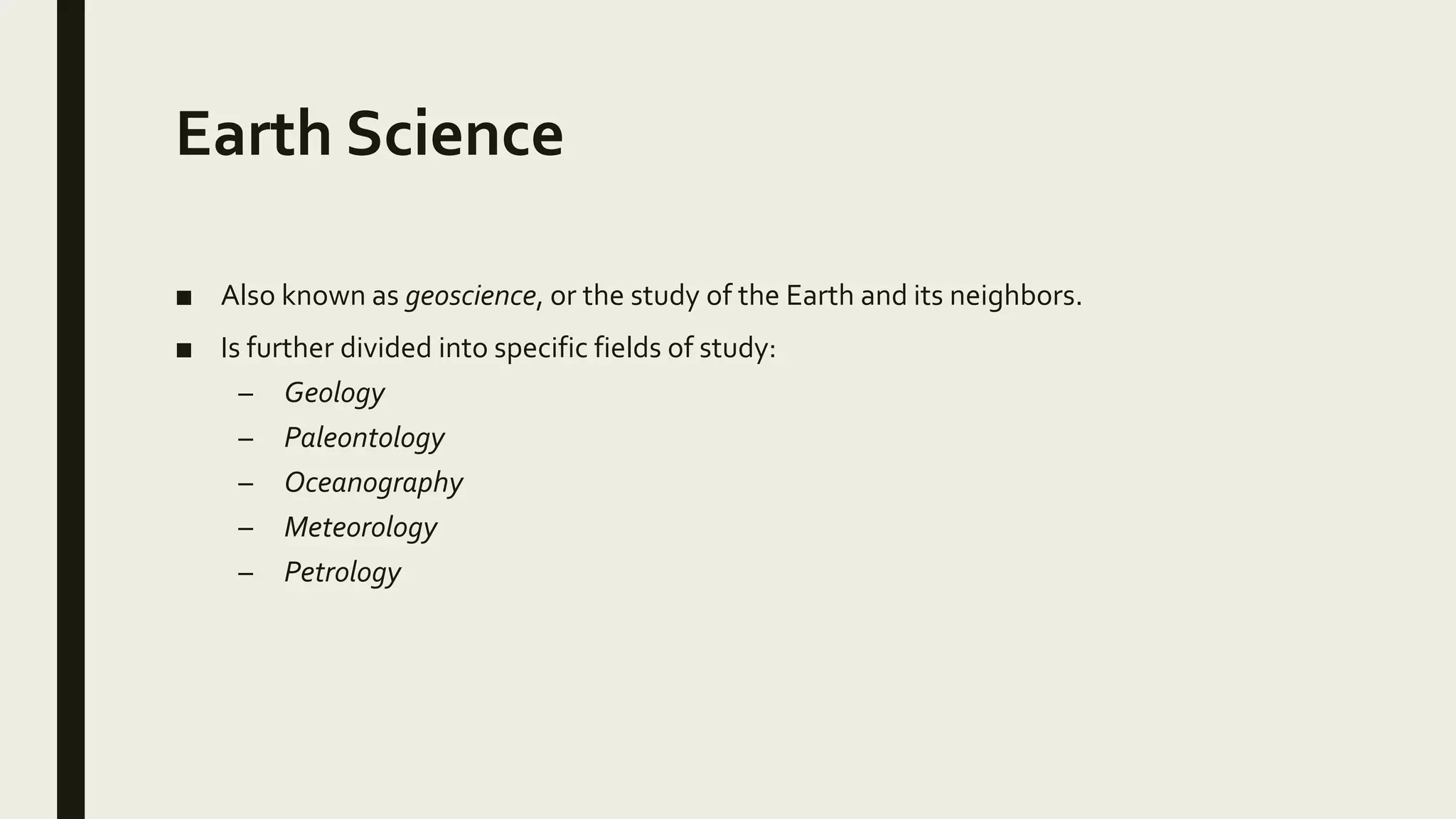
Earth Science
■ Also known as geoscience, or the study of the Earth and its neighbors.
■ Is further divided into specific fields of study:
– Geology
– Paleontology
– Oceanography
– Meteorology
– Petrology
What is-science-grade-7

What is-science-grade-7

  • 1.
    WHAT IS SCIENCE Ms.Donita D. Germono
  • 2.
    What is Science? ■Comes from the Latin word scientia, which means “to know”. ■ A systematic attempt to establish knowledge that helps explain natural and physical occurrences through objective means. ■ Employs skills such as measuring, analyzing, observing and experimenting.
  • 3.
    Science Pure Science Life Science PhysicalScience Earth Science Applied Science Technology
  • 4.
    Classified as follows: ■Pure Science – involves gathering of information through experimentation, which is done mainly for the pursuit of knowledge ■ Applied Science – deals with the search for practical uses scientific knowledge and scientific laws. ■ Technology – comes from the Greek word techne that means “art, craft or skill” and logia that means “word or expression” – Application of science that improves the quality of human life.
  • 5.
    Integrated Science includes3 branches of Pure Life Science:
  • 6.
    3 Main Branchesof Science Life Physical Earth/Space
  • 7.
    Life Science ■ Knownas biology; studies all aspects of living things. ■ Studies the behavior, history and development of living organisms. ■ Jean-Baptiste Lamarck introduced the term biology in the 1800’s Subdivisions of life science: • Botany • Zoology • Genetics  Life sciences may be subdivided according to units of study: molecule, cell, organism or even population and the following divisions of life sciences developed through the years:  Biomedicine  Cellular biology  Developmental biology  Ecology  Embryology  Histology  Molecular biology  Physiology
  • 8.
    Physical Science ■ Dealswith matter and energy. Subdivisions:  Physics – study of the interaction between matter and energy  Chemistry – study of the composition of matter and the changes it undergoes.  Astronomy – the study of heavenly bodies.
  • 9.
    Earth Science ■ Alsoknown as geoscience, or the study of the Earth and its neighbors. ■ Is further divided into specific fields of study: – Geology – Paleontology – Oceanography – Meteorology – Petrology