What is Science? 
Science is a systematic way 
of learning about the natural 
world 
There are 3 main branches of 
science: 
◦ Life Science 
◦ Earth Science 
◦ Physical Science
What is Physical Science? 
 Physical Science is the study of 
matter and energy, and the 
changes they undergo 
◦ Matter is anything that has mass 
and takes up space 
 Mass = the amount of matter an 
object contains 
◦ Energy is the ability to do work 
 Physical science has two 
branches: 
◦ Chemistry 
◦ Physics
What is Physical Science? 
Chemistry = the study of the 
properties of matter and the 
changes they undergo 
Physics = the study of matter 
and energy and how they 
interact
How Scientists Think… 
They use skills of observation 
to learn more about the 
natural world.
Observation 
Observing = using one or 
more senses to gather 
information 
Two Types: 
◦Quantitative observation 
◦ Qualitative observation
 Quantitative observations use 
numbers 
◦ Example: measuring your height or 
weight 
 Qualitative observations describe 
what you see; don’t involve 
numbers 
◦ Example: Noticing that a ball is 
round or that it is raining outside
Look at this animal speed chart: 
What are some observations you 
can make?
The Scientific Method 
 Definition: 
◦ A logical, stepwise approach used by 
scientists to find answers to questions. 
 Steps: 
◦ 1. Observation: Observations are made 
by scientists about their surrounding 
environment. The observations allow 
scientists to ask questions. 
◦ 2. State the Problem: The problem 
statement is in the form of a question. It 
is derived from the observations made by 
the scientist.
The Scientific Method 
◦ 3. Form a Hypothesis: A hypothesis 
(an educated guess) is a possible 
explanation for the observation or 
problem. 
 A hypothesis must be tested to determine its 
validity. 
◦ 4. Conduct an Experiment: An 
experiment tests your hypothesis. 
◦ 5. Analyze Data: Data (information 
gathered from the experiment) must be 
accurately recorded. Data can be 
displayed in a graph, chart, or table.
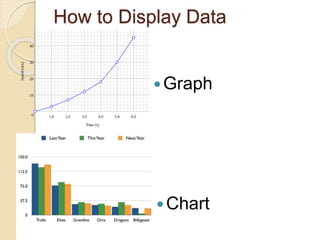
How to Display Data 
Graph 
Chart
How to Display Data 
Table
The Scientific Method 
◦ 6. Form a Conclusion: Based upon 
the experimental results, conclusions 
can be made about the validity, or 
correctness, of your hypothesis. 
 After many experiments that give 
the same results, a scientific 
theory may be formed.
The Scientific Method 
 A scientific theory is a well-tested, 
verified hypothesis that fits existing 
data and explains how natural 
processes or events are thought to 
occur. 
 It is a basis for predicting future events 
or discoveries. Theories may be 
modified as new information is gained. 
(Think back to your puzzle activity!)

Intro to Physical Science (Grade 8: Class B ONLY)

  • 1.
    What is Science? Science is a systematic way of learning about the natural world There are 3 main branches of science: ◦ Life Science ◦ Earth Science ◦ Physical Science
  • 2.
    What is PhysicalScience?  Physical Science is the study of matter and energy, and the changes they undergo ◦ Matter is anything that has mass and takes up space  Mass = the amount of matter an object contains ◦ Energy is the ability to do work  Physical science has two branches: ◦ Chemistry ◦ Physics
  • 3.
    What is PhysicalScience? Chemistry = the study of the properties of matter and the changes they undergo Physics = the study of matter and energy and how they interact
  • 4.
    How Scientists Think… They use skills of observation to learn more about the natural world.
  • 5.
    Observation Observing =using one or more senses to gather information Two Types: ◦Quantitative observation ◦ Qualitative observation
  • 6.
     Quantitative observationsuse numbers ◦ Example: measuring your height or weight  Qualitative observations describe what you see; don’t involve numbers ◦ Example: Noticing that a ball is round or that it is raining outside
  • 7.
    Look at thisanimal speed chart: What are some observations you can make?
  • 8.
    The Scientific Method  Definition: ◦ A logical, stepwise approach used by scientists to find answers to questions.  Steps: ◦ 1. Observation: Observations are made by scientists about their surrounding environment. The observations allow scientists to ask questions. ◦ 2. State the Problem: The problem statement is in the form of a question. It is derived from the observations made by the scientist.
  • 9.
    The Scientific Method ◦ 3. Form a Hypothesis: A hypothesis (an educated guess) is a possible explanation for the observation or problem.  A hypothesis must be tested to determine its validity. ◦ 4. Conduct an Experiment: An experiment tests your hypothesis. ◦ 5. Analyze Data: Data (information gathered from the experiment) must be accurately recorded. Data can be displayed in a graph, chart, or table.
  • 10.
    How to DisplayData Graph Chart
  • 11.
    How to DisplayData Table
  • 12.
    The Scientific Method ◦ 6. Form a Conclusion: Based upon the experimental results, conclusions can be made about the validity, or correctness, of your hypothesis.  After many experiments that give the same results, a scientific theory may be formed.
  • 13.
    The Scientific Method  A scientific theory is a well-tested, verified hypothesis that fits existing data and explains how natural processes or events are thought to occur.  It is a basis for predicting future events or discoveries. Theories may be modified as new information is gained. (Think back to your puzzle activity!)