

Topic: Communication Skills
BY: MUHAMMAD TALHA (BSSE 2ND)
Subject: Effective Communication Skills
Communication:
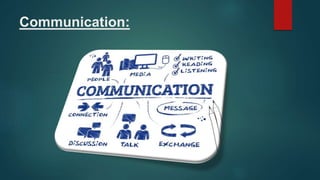
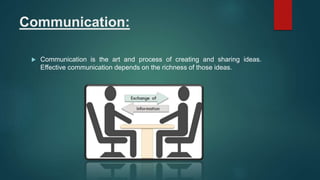
Communication:
 Communication is the art and process of creating and sharing ideas.
Effective communication depends on the richness of those ideas.
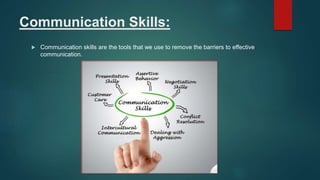
Communication Skills:
 Communication skills are the tools that we use to remove the barriers to effective
communication.
The Communication
Process
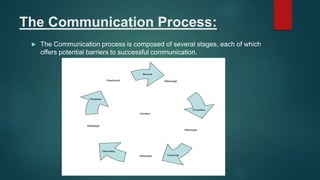
The Communication Process:
 The Communication process is composed of several stages, each of which
offers potential barriers to successful communication.
Source:
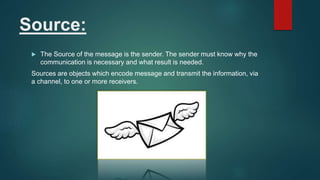
 The Source of the message is the sender. The sender must know why the
communication is necessary and what result is needed.
Sources are objects which encode message and transmit the information, via
a channel, to one or more receivers.
Message:
 The message is simply the information that you want to communicate. Without a message
thereis no cause for communicating.
Encoding:
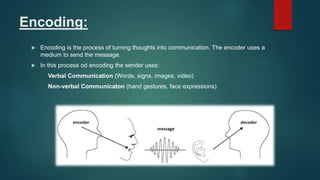
 Encoding is the process of turning thoughts into communication. The encoder uses a
medium to send the message.
 In this process od encoding the sender uses:
Verbal Communication (Words, signs, images, video)
Non-verbal Communicaton (hand gestures, face expressions)
Channel:
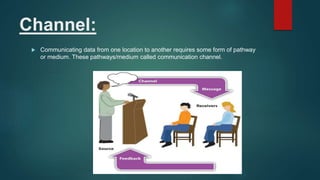
 Communicating data from one location to another requires some form of pathway
or medium. These pathways/medium called communication channel.
Channel:
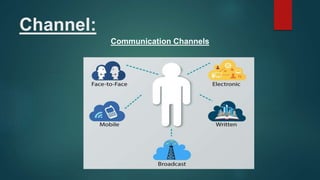
Communication Channels
Decoding:
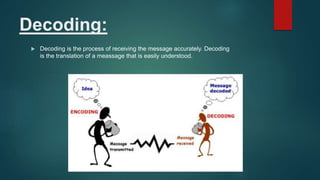
 Decoding is the process of receiving the message accurately. Decoding
is the translation of a meassage that is easily understood.
Receiver:
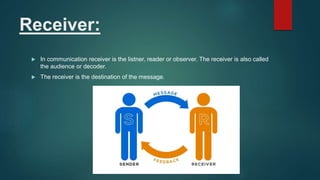
 In communication receiver is the listner, reader or observer. The receiver is also called
the audience or decoder.
 The receiver is the destination of the message.
Feedback:
Feedback:
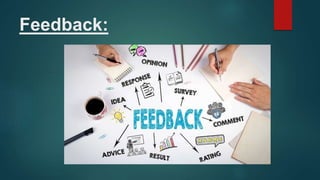
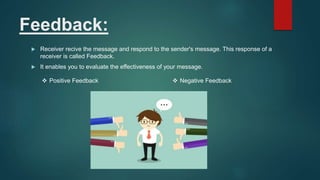
 Receiver recive the message and respond to the sender's message. This response of a
receiver is called Feedback.
 It enables you to evaluate the effectiveness of your message.
 Positive Feedback  Negative Feedback
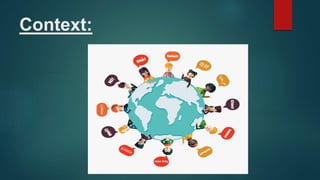
Context:
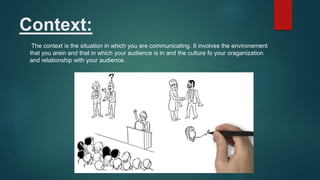
Context:
The context is the situation in which you are communicating. It involves the environement
that you arein and that in which your audience is in and the culture fo your oraganization
and relationship with your audience.
Thank you for your Attention
Presentation By: Muhammad Talha (BSSE 2nd )
May Allah Bless You

Effective Communication skill and its process.

  • 1.
    Topic: Communication Skills BY:MUHAMMAD TALHA (BSSE 2ND) Subject: Effective Communication Skills
  • 2.
  • 3.
    Communication:  Communication isthe art and process of creating and sharing ideas. Effective communication depends on the richness of those ideas.
  • 5.
    Communication Skills:  Communicationskills are the tools that we use to remove the barriers to effective communication.
  • 6.
  • 7.
    The Communication Process: The Communication process is composed of several stages, each of which offers potential barriers to successful communication.
  • 8.
    Source:  The Sourceof the message is the sender. The sender must know why the communication is necessary and what result is needed. Sources are objects which encode message and transmit the information, via a channel, to one or more receivers.
  • 9.
    Message:  The messageis simply the information that you want to communicate. Without a message thereis no cause for communicating.
  • 10.
    Encoding:  Encoding isthe process of turning thoughts into communication. The encoder uses a medium to send the message.  In this process od encoding the sender uses: Verbal Communication (Words, signs, images, video) Non-verbal Communicaton (hand gestures, face expressions)
  • 11.
    Channel:  Communicating datafrom one location to another requires some form of pathway or medium. These pathways/medium called communication channel.
  • 12.
  • 13.
    Decoding:  Decoding isthe process of receiving the message accurately. Decoding is the translation of a meassage that is easily understood.
  • 14.
    Receiver:  In communicationreceiver is the listner, reader or observer. The receiver is also called the audience or decoder.  The receiver is the destination of the message.
  • 15.
  • 16.
    Feedback:  Receiver recivethe message and respond to the sender's message. This response of a receiver is called Feedback.  It enables you to evaluate the effectiveness of your message.  Positive Feedback  Negative Feedback
  • 17.
  • 18.
    Context: The context isthe situation in which you are communicating. It involves the environement that you arein and that in which your audience is in and the culture fo your oraganization and relationship with your audience.
  • 19.
    Thank you foryour Attention Presentation By: Muhammad Talha (BSSE 2nd ) May Allah Bless You