Process of Communication
Purpose of Communication
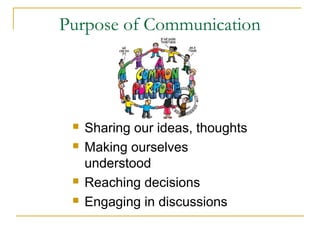
 Sharing our ideas, thoughts
 Making ourselves
understood
 Reaching decisions
 Engaging in discussions
What is Communication ?
 Communication is a process of transmitting
information, ideas and attitudes from one
person to another.
 Communication is the process of meaningful
interaction among human being.
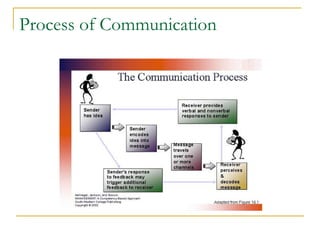
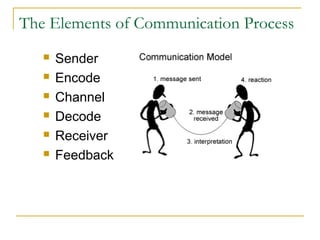
The Elements of Communication Process
 Sender
 Encode
 Channel
 Decode
 Receiver
 Feedback
Sender
 Sender is person who send the message.
 A sender make use of symbols to conveys
the message and produce the required
response.
 Ex :-
A Teacher is teaching to the students
Here teacher is a sender of message.
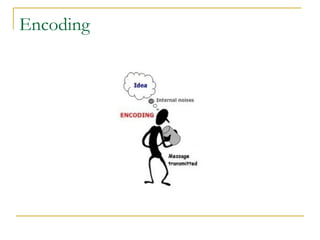
Encoding
 Encoding is way in which form sender send
the message to the receivers.
 Changing ideas into symbols + organizing into a
message (Encoding)
 Ex- Written medium is chosen when a message
has to be conveyed to a small group of people,
while an oral medium is chosen when
spontaneous feedback is required from the
recipient as misunderstanding are cleared then
and there.
Encoding
Channel
 Channel is medium through which transfer of
message take place between sender and
receiver.
 It may be through telephone, Face to face
conversation as well as non verbal like e-mail
and text messaging .
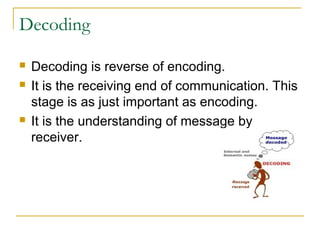
Decoding
 Decoding is reverse of encoding.
 It is the receiving end of communication. This
stage is as just important as encoding.
 It is the understanding of message by
receiver.
Receiver
 Receiver is the person to whom sender has
send the message.
 The decoding of message is depend upon
receiver and its vocabulary of understanding
the message.
Feedback
 Without feedback communication process is
incomplete.
 It helps the sender to understand that
receiver has got the message and he has
properly decode it.
 Feedback may be in verbal form or non
verbal form.
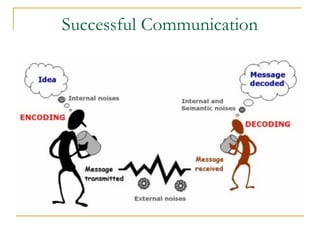
Successful Communication
Process of communication

Process of communication

  • 3.
  • 4.
    Purpose of Communication Sharing our ideas, thoughts  Making ourselves understood  Reaching decisions  Engaging in discussions
  • 5.
    What is Communication?  Communication is a process of transmitting information, ideas and attitudes from one person to another.  Communication is the process of meaningful interaction among human being.
  • 6.
    The Elements ofCommunication Process  Sender  Encode  Channel  Decode  Receiver  Feedback
  • 7.
    Sender  Sender isperson who send the message.  A sender make use of symbols to conveys the message and produce the required response.  Ex :- A Teacher is teaching to the students Here teacher is a sender of message.
  • 8.
    Encoding  Encoding isway in which form sender send the message to the receivers.  Changing ideas into symbols + organizing into a message (Encoding)  Ex- Written medium is chosen when a message has to be conveyed to a small group of people, while an oral medium is chosen when spontaneous feedback is required from the recipient as misunderstanding are cleared then and there.
  • 9.
  • 10.
    Channel  Channel ismedium through which transfer of message take place between sender and receiver.  It may be through telephone, Face to face conversation as well as non verbal like e-mail and text messaging .
  • 11.
    Decoding  Decoding isreverse of encoding.  It is the receiving end of communication. This stage is as just important as encoding.  It is the understanding of message by receiver.
  • 12.
    Receiver  Receiver isthe person to whom sender has send the message.  The decoding of message is depend upon receiver and its vocabulary of understanding the message.
  • 13.
    Feedback  Without feedbackcommunication process is incomplete.  It helps the sender to understand that receiver has got the message and he has properly decode it.  Feedback may be in verbal form or non verbal form.
  • 14.