DEPARTMENT OF INDUSTRIAL ENGINEERING
Student names and ID number:
UMUR OZ 121703002
IE314
MANUFACTURING TECHNOLOGY
PROJECT WORK PART 1
TOPIC NAME: 3D PRINTING
CONTENT
 INTRODUCTION
 HOW DOES 3D PRINTING WORK
 GENERAL PRINCIPLES OF 3D PRINTING
 TYPES OF 3D PRINTING
 MATERIALS USAGE OF 3D PRINTING
 PRINTING METHODS
 ADVANTAGES AND DISADVANTAGES
 CONCLUSION
INTRODUCTION
 3D printing: Is a process of making three
dimensional solid objects from a digital file. The
creation of a 3D printed object is achieved using
additive processes. In an additive process an object
is created by laying down successive layers of
material until the entire object is created. Each of
these layers can be seen as a thinly sliced
horizontal cross-section of the eventual object. A
3D printer is a type of industrial robot.
FUTURE OF 3D PRINTING
 It is predicted by some additive manufacturing advocates that
this technological development will change the nature of
commerce, because end users will be able to do much of their
own manufacturing rather than engaging in trade to buy
products from other people and corporations.
 3D printers capable of outputting in colour and multiple
materials already exist and will continue to improve to a point
where functional products will be able to be output. With
effects on energy use, waste reduction, customization,
product availability, medicine, art, construction and sciences,
3D printing will change the manufacturing world as we know it.
HOW DOES 3D PRINTING WORKS
 Modelling
 Save (in .stl format)
 The CAD information sent to the printer.
 The printer forms the item by depositing the
material in layer.
GENERAL PRINCIPLES
Modelling
Printing
Finishing
MODELLING
 3D printable models may be
created with a computer
aided design (CAD)
package, via a 3D scanner
or by a plain digital camera
and photogrammetry
software.
 AutoCAD, 3dsMAX,
SolidWork are some of the
(CAD) programs.
PRINTING
 Before printing a 3D model
from an STL file, it must first
be examined for errors. In
fact, most of the CAD
softwares produced errors
in the STL files: holes, faces
normals, self-intersections,
noise shells or manifold
errors. This step is called
"repair", as the original
model needs to be fixed.
FINISHING
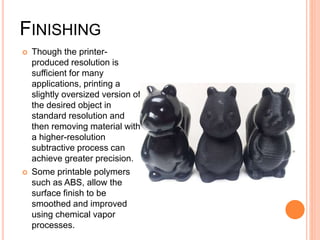
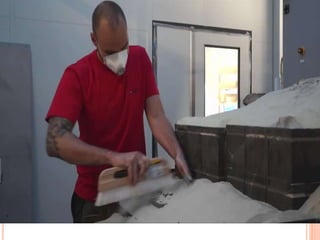
 Though the printer-
produced resolution is
sufficient for many
applications, printing a
slightly oversized version of
the desired object in
standard resolution and
then removing material with
a higher-resolution
subtractive process can
achieve greater precision.
 Some printable polymers
such as ABS, allow the
surface finish to be
smoothed and improved
using chemical vapor
processes.
TYPES OF 3D PRINTERS
 Industrial Use
 Medial Industry
 Aerospace & Aviation Industries
 Automotive Industry
 Consmer Use
 Large 3D Printer
 Microscale and Nanoscale 3D Printer
INDUSTRIAL USE
 Additive manufacturing
systems were on the market
that ranged from $200,000 to
$500,000 in price and were
employed in industries
including aerospace,
architecture, automotive,
defense, and medical
replacements, among many
others. For example,
General Electric uses the
high-end model to build parts
for turbines. Many of these
systems are used for rapid
prototyping, before mass
production methods are
employed.
MEDICAL INDUSTRY
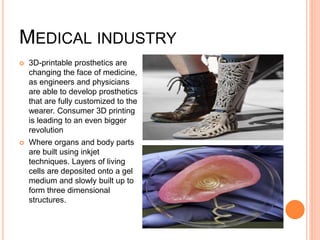
 3D-printable prosthetics are
changing the face of medicine,
as engineers and physicians
are able to develop prosthetics
that are fully customized to the
wearer. Consumer 3D printing
is leading to an even bigger
revolution
 Where organs and body parts
are built using inkjet
techniques. Layers of living
cells are deposited onto a gel
medium and slowly built up to
form three dimensional
structures.
AEROSPACE & AVIATION INDUSTRIES
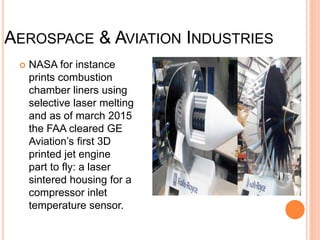
 NASA for instance
prints combustion
chamber liners using
selective laser melting
and as of march 2015
the FAA cleared GE
Aviation’s first 3D
printed jet engine
part to fly: a laser
sintered housing for a
compressor inlet
temperature sensor.
AUTOMOTIVE INDUSTRY
 Although the automotive industry was
among the earliest adopters of 3D
printing it has for decades relegated
3d printing technology to low volume
prototyping applications.
Nowadays the use of 3D printing in
automotive is evolving from relatively
simple concept models for fit and
finish checks and design verification,
to functional parts that are used in
test vehicles, engines, and platforms.
The expectations are that 3D printing
in the automotive industry will
generate a combined $1.1 billion
dollars by 2019.
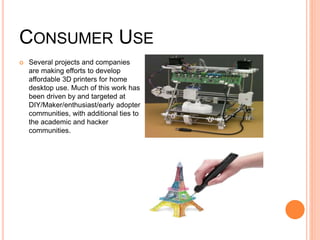
CONSUMER USE
 Several projects and companies
are making efforts to develop
affordable 3D printers for home
desktop use. Much of this work has
been driven by and targeted at
DIY/Maker/enthusiast/early adopter
communities, with additional ties to
the academic and hacker
communities.
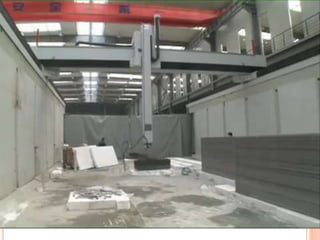
LARGE 3D PRINTER
 Large 3D printers have been developed for
industrial, education, and demonstrative
uses. The printer is capable of making an
object with diameter of up to 4 feet (1.2 m)
and up to 10 feet (3.0 m) in height. It also
uses plastic pellets as the raw material
instead of the typical plastic filaments used
in other 3D printers.
 Another type of large printer is Big Area
Additive Manufacturing (BAAM). The goal is
to develop printers that can produce a large
object in high speed. A BAAM machine of
Cincinnati Incorporated can produce an
object at the speeds 200-500 times faster
than typical 3D printers available in 2014.
Another BAAM machine is being developed
by Lockheed Martin with an aim to print
long objects of up to 100 feet (30 m) to be
used in aerospace industries.
MICROSCALE AND NANOSCALE 3D PRINTER
 Microelectronic device fabrication
methods can be employed to perform
the 3D printing of nanoscale-size
objects. Such printed objects are
typically grown on a solid substrate, e.g.
silicon wafer, to which they adhere after
printing as they're too small and fragile
to be manipulated post-construction.
 In one technique, 3D nanostructures
can be printed by physically moving a
dynamic stencil mask during the
material deposition process, somewhat
analogous to the extrusion method of
traditional 3D printers.
MATERIAL USAGE OF 3D PRINTER
 Standard Filaments
 Flexible Filaments
 Composite Filaments
 Speciality Filaments
 Support Filaments
STANDARD FILAMENTS
PLA
ABS
NYLON
PET
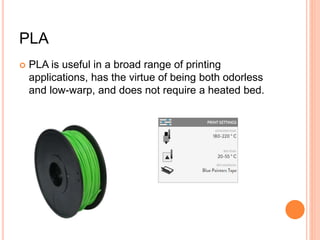
PLA
 PLA is useful in a broad range of printing
applications, has the virtue of being both odorless
and low-warp, and does not require a heated bed.
ABS
 Best used for making durable parts that need to
withstand higher temperatures. ABS plastic is less
‘brittle’.
PET
 PET (Polyethylene terephthalate) is an industrial
strength filament with several great features. It's
strength is much higher than PLA, it is FDA
approved for food containers and tools used for
food consumptionit is 100% reclaimable.
FLEXIBLE FILAMENTS
TPE
SOFT PLA
TPU
TPE
 TPE filament can be used to make parts that can
bend or must flex to fit their environment - stoppers,
belts, springs, phone cases and more.
TPU
 TPU Plastic has several applicable uses including
automotive instrument panels, caster wheels,
power tools, sporting goods, medical devices and
also it is also commonly used in mobile phone
cases.
COMPOSITE FILAMENTS
LAYBRICK
LAYWOO-D3
LAYCERAMIC
CARBON FIBER REINFORCED PLA
STEEL PLA
MAGNETIC IRON PLA
LAYBRICK
 LAYBRICK is a 3D printing material that gives parts
the look and feel of grey stone while retaining the
resiliency of plastic, making it ideal for landscape
and architectural designs.
LAYWOO-D3
 LAYWOO-D3 is a wood-like 3D printer material that
gives 3D printed objects the look and feel of
fiberboard. It also imbues parts with other wood-like
attributes, such as the ability be cut, painted, and
sanded. LAYWOO-D3 is made from a combination
of recycled wood particles.
LAYCERAMIC
 LayCeramic filament is exactly what it sounds like,
clay engineered for 3D Printers that can be used to
make ceramic objects. LayCeramic has all the
capabilities of normal clay including the ability to be
fired to give it a nice glossy look and increase
strength.
PRINTING METHODS
 Vat Photopolymerisation
 Material Jetting
 Binder Jetting
 Material Extrusion, Powder Bed Fusion and etc.
VAT PHOTOPOLYMERISATION
 A 3D printer based on the
Vat Photopolymerisation
method has a container
filled with photopolymer
resin which is then
hardened with UV light
source.
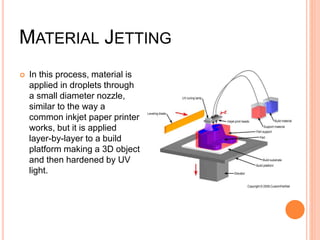
MATERIAL JETTING
 In this process, material is
applied in droplets through
a small diameter nozzle,
similar to the way a
common inkjet paper printer
works, but it is applied
layer-by-layer to a build
platform making a 3D object
and then hardened by UV
light.
MATERIAL EXTRUSION
 The most commonly used
technology in this process is
Fused deposition modeling
(FDM).
 The FDM technology works
using a plastic filament or
metal wire which is
unwound from a coil and
supplying material to an
extrusion nozzle which can
turn the flow on and off. The
nozzle is heated to melt the
material and can be moved
in both horizontal and
vertical directions by a
numerically controlled
mechanism.
ADVANTAGES AND DISADVANTAGES
The advantages of 3d printing
The disadvantages of 3d printing
THE ADVANTAGES OF 3D PRINTING
 1. Ability to customize products
 2. Rapid production of prototypes
 3. Low cost of production
 4. No storage cost
 5. Increased employment opportunities
 6. Quick availability of organs
THE DISADVANTAGES OF 3D PRINTING
 1. Intellectual property issues
 2. Unchecked production of dangerous items
 3. Limitations of size
 4. Limitations of raw material
 5. Cost of printers
 6. Bad quality (depends on 3d Printer)
CONCLUSION
 3D printing is presently gaining lots of attention in the press as
a new technology, but what does the technology landscape
look like through a patent landscape analysis? It is important
to comprehend the fact that the term “3D printing” can be
considered an umbrella term for a number of related
technologies that can be used to produce 3D objects.
 The fact that there is patent data from this era which is still
relevant to this field of technology, is illustrative of the fact that
this technology has existed in many forms for some time, and
that it is only recently with advances in computing and
software combined with large amounts of media interest, (plus
the expiration of a number of useful patents) that has led to
the current status regarding this technology.
QUESTIONS ABOUT 3D PRINTER
 Modelling;
 3D printable models may be created with a
computer aided design (CAD) package, via a 3D
scanner or by a plain digital camera and
photogrammetry software. AutoCAD, 3dsMAX,
SolidWork are some of the (CAD) programs.
 Printing;
 Before printing a 3D model from an STL file, it must
first be examined for errors. In fact, most of the
CAD softwares produced errors in the STL files:
holes, faces normals, self-intersections, noise
shells or manifold errors. This step is called
"repair", as the original model needs to be fixed.
 Finishing;
 Though the printer-produced resolution is sufficient
for many applications, printing a slightly oversized
version of the desired object in standard resolution
and then removing material with a higher-resolution
subtractive process can achieve greater precision.
 Some printable polymers such as ABS, allow the
surface finish to be smoothed and improved using
chemical vapor processes.
 Industrial Use
 Medial Industry
 Aerospace & Aviation Industries
 Automotive Industry
 Consmer Use
 Large 3D Printer
 Microscale and Nanoscale 3D Printer
1.How 3d Printer Work?
2. Determine the types of 3d
Printer? (Explain briefly)

What is 3D Printer?

  • 1.
    DEPARTMENT OF INDUSTRIALENGINEERING Student names and ID number: UMUR OZ 121703002 IE314 MANUFACTURING TECHNOLOGY PROJECT WORK PART 1 TOPIC NAME: 3D PRINTING
  • 2.
    CONTENT  INTRODUCTION  HOWDOES 3D PRINTING WORK  GENERAL PRINCIPLES OF 3D PRINTING  TYPES OF 3D PRINTING  MATERIALS USAGE OF 3D PRINTING  PRINTING METHODS  ADVANTAGES AND DISADVANTAGES  CONCLUSION
  • 3.
    INTRODUCTION  3D printing:Is a process of making three dimensional solid objects from a digital file. The creation of a 3D printed object is achieved using additive processes. In an additive process an object is created by laying down successive layers of material until the entire object is created. Each of these layers can be seen as a thinly sliced horizontal cross-section of the eventual object. A 3D printer is a type of industrial robot.
  • 4.
    FUTURE OF 3DPRINTING  It is predicted by some additive manufacturing advocates that this technological development will change the nature of commerce, because end users will be able to do much of their own manufacturing rather than engaging in trade to buy products from other people and corporations.  3D printers capable of outputting in colour and multiple materials already exist and will continue to improve to a point where functional products will be able to be output. With effects on energy use, waste reduction, customization, product availability, medicine, art, construction and sciences, 3D printing will change the manufacturing world as we know it.
  • 5.
    HOW DOES 3DPRINTING WORKS  Modelling  Save (in .stl format)  The CAD information sent to the printer.  The printer forms the item by depositing the material in layer.
  • 6.
  • 7.
    MODELLING  3D printablemodels may be created with a computer aided design (CAD) package, via a 3D scanner or by a plain digital camera and photogrammetry software.  AutoCAD, 3dsMAX, SolidWork are some of the (CAD) programs.
  • 8.
    PRINTING  Before printinga 3D model from an STL file, it must first be examined for errors. In fact, most of the CAD softwares produced errors in the STL files: holes, faces normals, self-intersections, noise shells or manifold errors. This step is called "repair", as the original model needs to be fixed.
  • 9.
    FINISHING  Though theprinter- produced resolution is sufficient for many applications, printing a slightly oversized version of the desired object in standard resolution and then removing material with a higher-resolution subtractive process can achieve greater precision.  Some printable polymers such as ABS, allow the surface finish to be smoothed and improved using chemical vapor processes.
  • 10.
    TYPES OF 3DPRINTERS  Industrial Use  Medial Industry  Aerospace & Aviation Industries  Automotive Industry  Consmer Use  Large 3D Printer  Microscale and Nanoscale 3D Printer
  • 11.
    INDUSTRIAL USE  Additivemanufacturing systems were on the market that ranged from $200,000 to $500,000 in price and were employed in industries including aerospace, architecture, automotive, defense, and medical replacements, among many others. For example, General Electric uses the high-end model to build parts for turbines. Many of these systems are used for rapid prototyping, before mass production methods are employed.
  • 13.
    MEDICAL INDUSTRY  3D-printableprosthetics are changing the face of medicine, as engineers and physicians are able to develop prosthetics that are fully customized to the wearer. Consumer 3D printing is leading to an even bigger revolution  Where organs and body parts are built using inkjet techniques. Layers of living cells are deposited onto a gel medium and slowly built up to form three dimensional structures.
  • 14.
    AEROSPACE & AVIATIONINDUSTRIES  NASA for instance prints combustion chamber liners using selective laser melting and as of march 2015 the FAA cleared GE Aviation’s first 3D printed jet engine part to fly: a laser sintered housing for a compressor inlet temperature sensor.
  • 15.
    AUTOMOTIVE INDUSTRY  Althoughthe automotive industry was among the earliest adopters of 3D printing it has for decades relegated 3d printing technology to low volume prototyping applications. Nowadays the use of 3D printing in automotive is evolving from relatively simple concept models for fit and finish checks and design verification, to functional parts that are used in test vehicles, engines, and platforms. The expectations are that 3D printing in the automotive industry will generate a combined $1.1 billion dollars by 2019.
  • 17.
    CONSUMER USE  Severalprojects and companies are making efforts to develop affordable 3D printers for home desktop use. Much of this work has been driven by and targeted at DIY/Maker/enthusiast/early adopter communities, with additional ties to the academic and hacker communities.
  • 19.
    LARGE 3D PRINTER Large 3D printers have been developed for industrial, education, and demonstrative uses. The printer is capable of making an object with diameter of up to 4 feet (1.2 m) and up to 10 feet (3.0 m) in height. It also uses plastic pellets as the raw material instead of the typical plastic filaments used in other 3D printers.  Another type of large printer is Big Area Additive Manufacturing (BAAM). The goal is to develop printers that can produce a large object in high speed. A BAAM machine of Cincinnati Incorporated can produce an object at the speeds 200-500 times faster than typical 3D printers available in 2014. Another BAAM machine is being developed by Lockheed Martin with an aim to print long objects of up to 100 feet (30 m) to be used in aerospace industries.
  • 21.
    MICROSCALE AND NANOSCALE3D PRINTER  Microelectronic device fabrication methods can be employed to perform the 3D printing of nanoscale-size objects. Such printed objects are typically grown on a solid substrate, e.g. silicon wafer, to which they adhere after printing as they're too small and fragile to be manipulated post-construction.  In one technique, 3D nanostructures can be printed by physically moving a dynamic stencil mask during the material deposition process, somewhat analogous to the extrusion method of traditional 3D printers.
  • 22.
    MATERIAL USAGE OF3D PRINTER  Standard Filaments  Flexible Filaments  Composite Filaments  Speciality Filaments  Support Filaments
  • 23.
  • 24.
    PLA  PLA isuseful in a broad range of printing applications, has the virtue of being both odorless and low-warp, and does not require a heated bed.
  • 25.
    ABS  Best usedfor making durable parts that need to withstand higher temperatures. ABS plastic is less ‘brittle’.
  • 26.
    PET  PET (Polyethyleneterephthalate) is an industrial strength filament with several great features. It's strength is much higher than PLA, it is FDA approved for food containers and tools used for food consumptionit is 100% reclaimable.
  • 27.
  • 28.
    TPE  TPE filamentcan be used to make parts that can bend or must flex to fit their environment - stoppers, belts, springs, phone cases and more.
  • 29.
    TPU  TPU Plastichas several applicable uses including automotive instrument panels, caster wheels, power tools, sporting goods, medical devices and also it is also commonly used in mobile phone cases.
  • 30.
  • 31.
    LAYBRICK  LAYBRICK isa 3D printing material that gives parts the look and feel of grey stone while retaining the resiliency of plastic, making it ideal for landscape and architectural designs.
  • 32.
    LAYWOO-D3  LAYWOO-D3 isa wood-like 3D printer material that gives 3D printed objects the look and feel of fiberboard. It also imbues parts with other wood-like attributes, such as the ability be cut, painted, and sanded. LAYWOO-D3 is made from a combination of recycled wood particles.
  • 33.
    LAYCERAMIC  LayCeramic filamentis exactly what it sounds like, clay engineered for 3D Printers that can be used to make ceramic objects. LayCeramic has all the capabilities of normal clay including the ability to be fired to give it a nice glossy look and increase strength.
  • 34.
    PRINTING METHODS  VatPhotopolymerisation  Material Jetting  Binder Jetting  Material Extrusion, Powder Bed Fusion and etc.
  • 35.
    VAT PHOTOPOLYMERISATION  A3D printer based on the Vat Photopolymerisation method has a container filled with photopolymer resin which is then hardened with UV light source.
  • 36.
    MATERIAL JETTING  Inthis process, material is applied in droplets through a small diameter nozzle, similar to the way a common inkjet paper printer works, but it is applied layer-by-layer to a build platform making a 3D object and then hardened by UV light.
  • 37.
    MATERIAL EXTRUSION  Themost commonly used technology in this process is Fused deposition modeling (FDM).  The FDM technology works using a plastic filament or metal wire which is unwound from a coil and supplying material to an extrusion nozzle which can turn the flow on and off. The nozzle is heated to melt the material and can be moved in both horizontal and vertical directions by a numerically controlled mechanism.
  • 38.
    ADVANTAGES AND DISADVANTAGES Theadvantages of 3d printing The disadvantages of 3d printing
  • 39.
    THE ADVANTAGES OF3D PRINTING  1. Ability to customize products  2. Rapid production of prototypes  3. Low cost of production  4. No storage cost  5. Increased employment opportunities  6. Quick availability of organs
  • 40.
    THE DISADVANTAGES OF3D PRINTING  1. Intellectual property issues  2. Unchecked production of dangerous items  3. Limitations of size  4. Limitations of raw material  5. Cost of printers  6. Bad quality (depends on 3d Printer)
  • 41.
    CONCLUSION  3D printingis presently gaining lots of attention in the press as a new technology, but what does the technology landscape look like through a patent landscape analysis? It is important to comprehend the fact that the term “3D printing” can be considered an umbrella term for a number of related technologies that can be used to produce 3D objects.  The fact that there is patent data from this era which is still relevant to this field of technology, is illustrative of the fact that this technology has existed in many forms for some time, and that it is only recently with advances in computing and software combined with large amounts of media interest, (plus the expiration of a number of useful patents) that has led to the current status regarding this technology.
  • 42.
    QUESTIONS ABOUT 3DPRINTER  Modelling;  3D printable models may be created with a computer aided design (CAD) package, via a 3D scanner or by a plain digital camera and photogrammetry software. AutoCAD, 3dsMAX, SolidWork are some of the (CAD) programs.  Printing;  Before printing a 3D model from an STL file, it must first be examined for errors. In fact, most of the CAD softwares produced errors in the STL files: holes, faces normals, self-intersections, noise shells or manifold errors. This step is called "repair", as the original model needs to be fixed.  Finishing;  Though the printer-produced resolution is sufficient for many applications, printing a slightly oversized version of the desired object in standard resolution and then removing material with a higher-resolution subtractive process can achieve greater precision.  Some printable polymers such as ABS, allow the surface finish to be smoothed and improved using chemical vapor processes.  Industrial Use  Medial Industry  Aerospace & Aviation Industries  Automotive Industry  Consmer Use  Large 3D Printer  Microscale and Nanoscale 3D Printer 1.How 3d Printer Work? 2. Determine the types of 3d Printer? (Explain briefly)