What are Viruses

A virus is a non-cellular particle
 made up of genetic material and
protein that can invade living cells.
Viruses – Are they Living Organisms?

• Tiny (50-100nm) “non-cellular particles”.

• Obligate, intracellular parasites:
   – Cannot reproduce on their own.
   – Cannot carry on metabolic processes.

• Do have hereditary material?
Studying Viruses

• Why?
  – Produce vaccines
  – Develop antiviral drugs
  – Used as vectors for molecular biology
    experiments – recombinant DNA studies.
Vaccines
• Viruses grown on chicken embryos are
  attenuated vaccines
• Another type of vaccine is made by heat
  killing the virus
Studying Viruses

• Morphology
  – Genome –

  – Capsid –

  – Envelope – some have a phospholipid/
  protein protective covering in addition to their
  capsid. Part viral part host in composition.
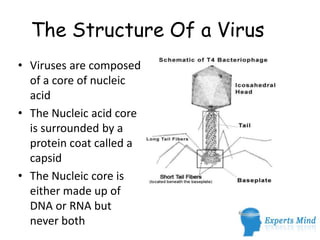
The Structure Of a Virus
• Viruses are composed
  of a core of nucleic
  acid
• The Nucleic acid core
  is surrounded by a
  protein coat called a
  capsid
• The Nucleic core is
  either made up of
  DNA or RNA but
  never both
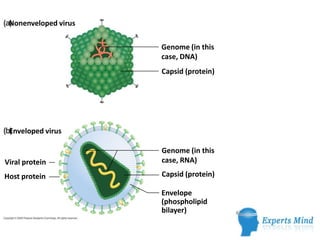
Nonenveloped virus

                      Genome (in this
                      case, DNA)
                      Capsid (protein)


 Enveloped virus

                      Genome (in this
Viral protein         case, RNA)

Host protein          Capsid (protein)

                      Envelope
                      (phospholipid
                      bilayer)
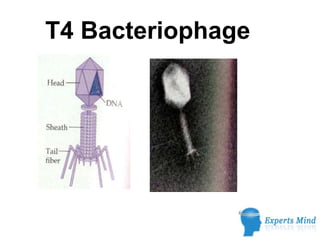
T4 Bacteriophage
General Features of Viruses #1
•   Obligate Intracellular Parasites
•   Very small (ultramicroscopic)
•   Non-cellular
•   Not Alive
•   Protein Coat Capsid
•   Envelopes (some viruses..not all)
General Features of Viruses #2
• Utilization of Host Cell Machinery
• Host Range
• Genome
   • DNA or RNA but NOT both
   • Single stranded or double stranded
• Enzymes (Polymerases) (some viruses…not all)
Virus Reproduction

• General Replication cycle – requires a host
  cell:
Virus Reproduction

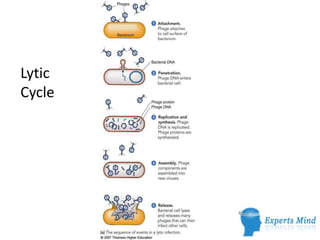
• 2 types of replication cycles:
  – Lytic – following entry, replication and
    assembly, new virus particles exit the cell by
    rupturing the host cell membrane, often
    destroying the host cell,
Lytic
Cycle
Studying Viruses

• 2 Replication cycles cont’d
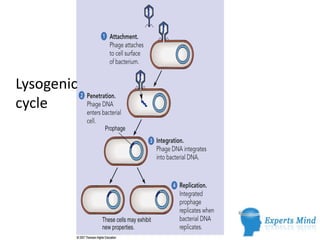
  – Lysogenic
     • Following entry, the viral genome is incorporated
       into the host cell genome.
     • As the host cell replicates its own genome the viral
       genome also is replicated and is passed on to
       daughter cells.
     • This phase may last years.
     • Usually some “trigger” will cause the host cell to
       enter a lytic phase.
Lysogenic
cycle
How do Viruses Enter Cells?

• Viruses may enter through an injured spot
  on a cell membrane/cell wall.
• Viruses with envelopes may enter by
  endocytosis.
• Many viruses prefer a certain kind of cell.
  – Recognize a specific membrane protein
    (receptor) on the cell membrane and bind to
    it.
  – Example: Influenza viruses bind to receptors
    in the respiratory tract only.
How do viruses enter cells?

• In general, viruses without envelopes
  empty only their genome into cell while
  viruses with envelopes incorporate
  genome and capsid into cell (endocytosis).

What are viruses

  • 1.
    What are Viruses Avirus is a non-cellular particle made up of genetic material and protein that can invade living cells.
  • 2.
    Viruses – Arethey Living Organisms? • Tiny (50-100nm) “non-cellular particles”. • Obligate, intracellular parasites: – Cannot reproduce on their own. – Cannot carry on metabolic processes. • Do have hereditary material?
  • 3.
    Studying Viruses • Why? – Produce vaccines – Develop antiviral drugs – Used as vectors for molecular biology experiments – recombinant DNA studies.
  • 4.
    Vaccines • Viruses grownon chicken embryos are attenuated vaccines • Another type of vaccine is made by heat killing the virus
  • 5.
    Studying Viruses • Morphology – Genome – – Capsid – – Envelope – some have a phospholipid/ protein protective covering in addition to their capsid. Part viral part host in composition.
  • 6.
    The Structure Ofa Virus • Viruses are composed of a core of nucleic acid • The Nucleic acid core is surrounded by a protein coat called a capsid • The Nucleic core is either made up of DNA or RNA but never both
  • 7.
    Nonenveloped virus Genome (in this case, DNA) Capsid (protein) Enveloped virus Genome (in this Viral protein case, RNA) Host protein Capsid (protein) Envelope (phospholipid bilayer)
  • 8.
  • 9.
    General Features ofViruses #1 • Obligate Intracellular Parasites • Very small (ultramicroscopic) • Non-cellular • Not Alive • Protein Coat Capsid • Envelopes (some viruses..not all)
  • 10.
    General Features ofViruses #2 • Utilization of Host Cell Machinery • Host Range • Genome • DNA or RNA but NOT both • Single stranded or double stranded • Enzymes (Polymerases) (some viruses…not all)
  • 11.
    Virus Reproduction • GeneralReplication cycle – requires a host cell:
  • 12.
    Virus Reproduction • 2types of replication cycles: – Lytic – following entry, replication and assembly, new virus particles exit the cell by rupturing the host cell membrane, often destroying the host cell,
  • 13.
  • 14.
    Studying Viruses • 2Replication cycles cont’d – Lysogenic • Following entry, the viral genome is incorporated into the host cell genome. • As the host cell replicates its own genome the viral genome also is replicated and is passed on to daughter cells. • This phase may last years. • Usually some “trigger” will cause the host cell to enter a lytic phase.
  • 15.
  • 16.
    How do VirusesEnter Cells? • Viruses may enter through an injured spot on a cell membrane/cell wall. • Viruses with envelopes may enter by endocytosis. • Many viruses prefer a certain kind of cell. – Recognize a specific membrane protein (receptor) on the cell membrane and bind to it. – Example: Influenza viruses bind to receptors in the respiratory tract only.
  • 17.
    How do virusesenter cells? • In general, viruses without envelopes empty only their genome into cell while viruses with envelopes incorporate genome and capsid into cell (endocytosis).