

Master the Art of Analytics
A Simplistic Explainer Series For Citizen Data Scientists
J o u r n e y To w a r d s A u g m e n t e d A n a l y t i c s
SAMPLING
What is Sampling
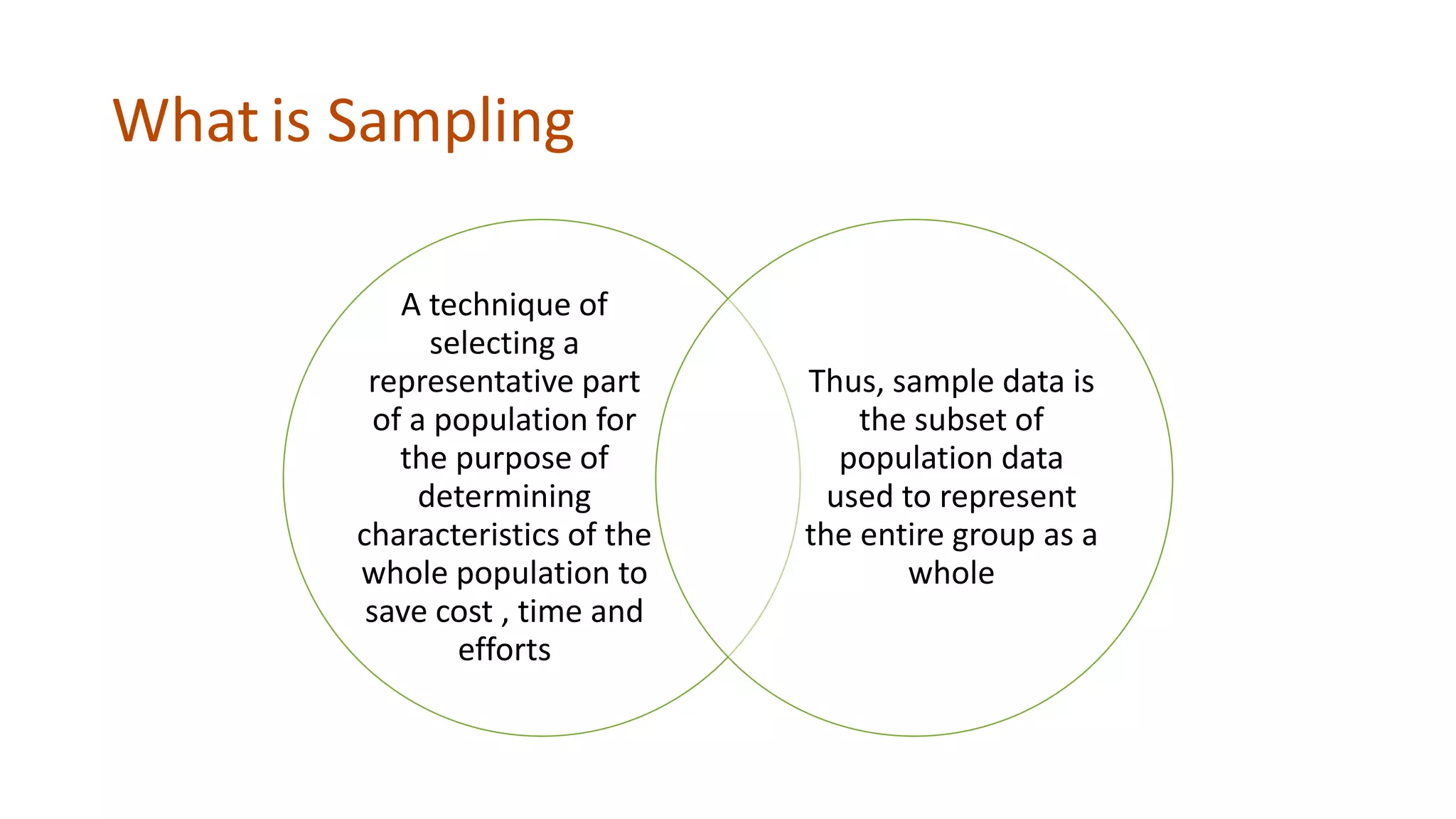
A technique of
selecting a
representative part
of a population for
the purpose of
determining
characteristics of the
whole population to
save cost , time and
efforts
Thus, sample data is
the subset of
population data
used to represent
the entire group as a
whole
Popular sampling methods
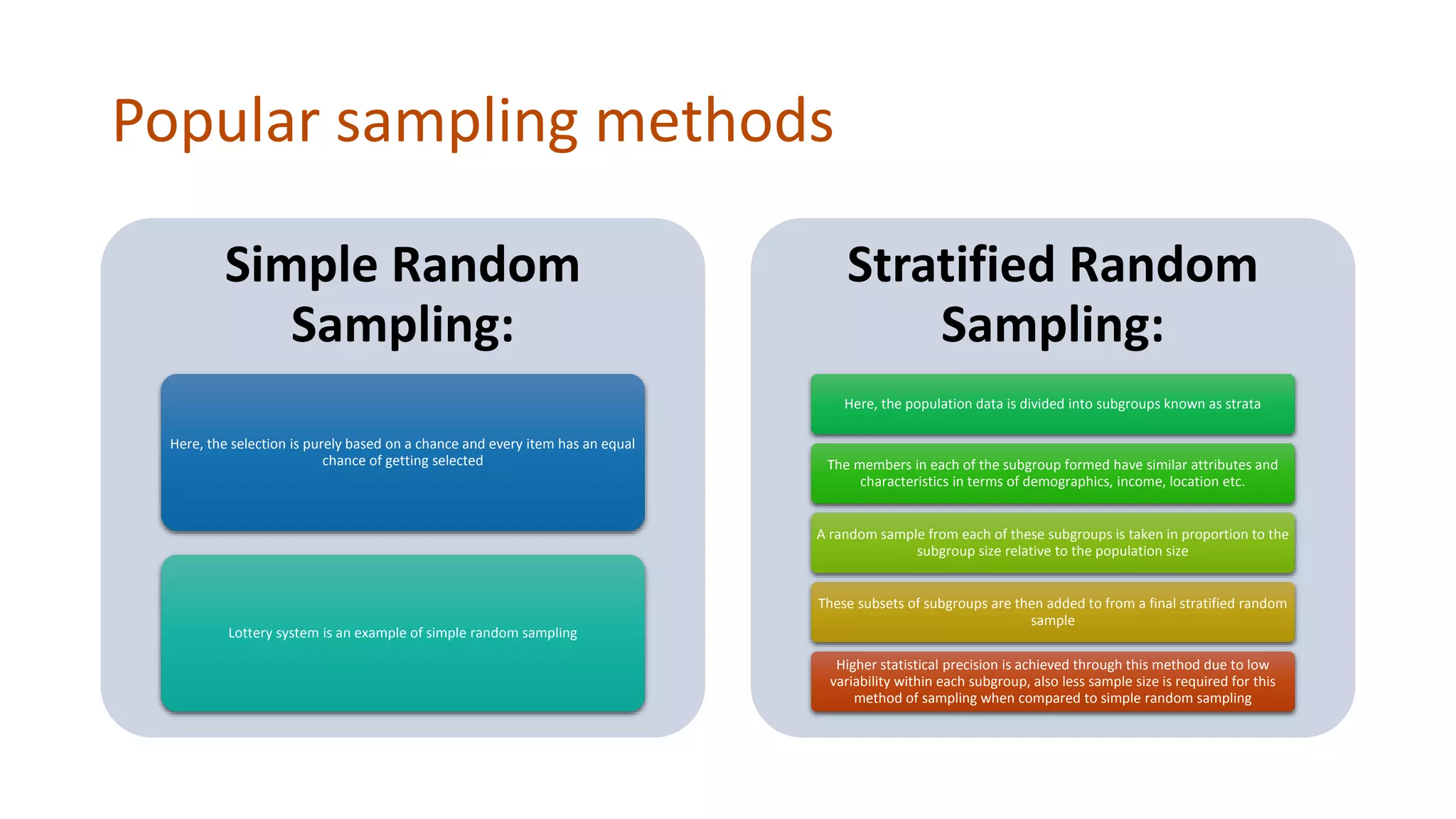
Simple Random
Sampling:
Here, the selection is purely based on a chance and every item has an equal
chance of getting selected
Lottery system is an example of simple random sampling
Stratified Random
Sampling:
Here, the population data is divided into subgroups known as strata
The members in each of the subgroup formed have similar attributes and
characteristics in terms of demographics, income, location etc.
A random sample from each of these subgroups is taken in proportion to the
subgroup size relative to the population size
These subsets of subgroups are then added to from a final stratified random
sample
Higher statistical precision is achieved through this method due to low
variability within each subgroup, also less sample size is required for this
method of sampling when compared to simple random sampling
Example : Simple Random SamplingForinstance
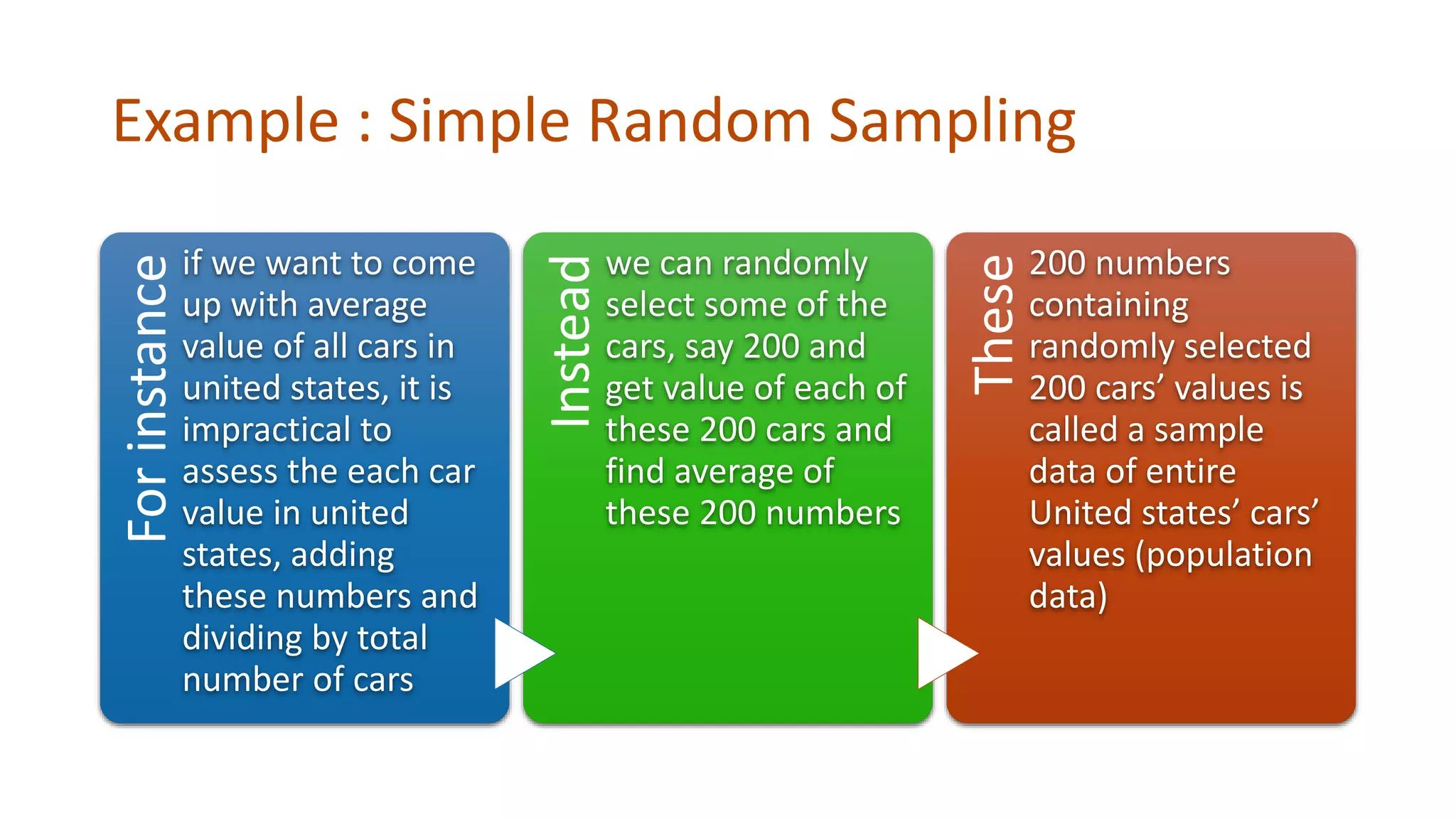
if we want to come
up with average
value of all cars in
united states, it is
impractical to
assess the each car
value in united
states, adding
these numbers and
dividing by total
number of cars
Instead
we can randomly
select some of the
cars, say 200 and
get value of each of
these 200 cars and
find average of
these 200 numbers
These
200 numbers
containing
randomly selected
200 cars’ values is
called a sample
data of entire
United states’ cars’
values (population
data)
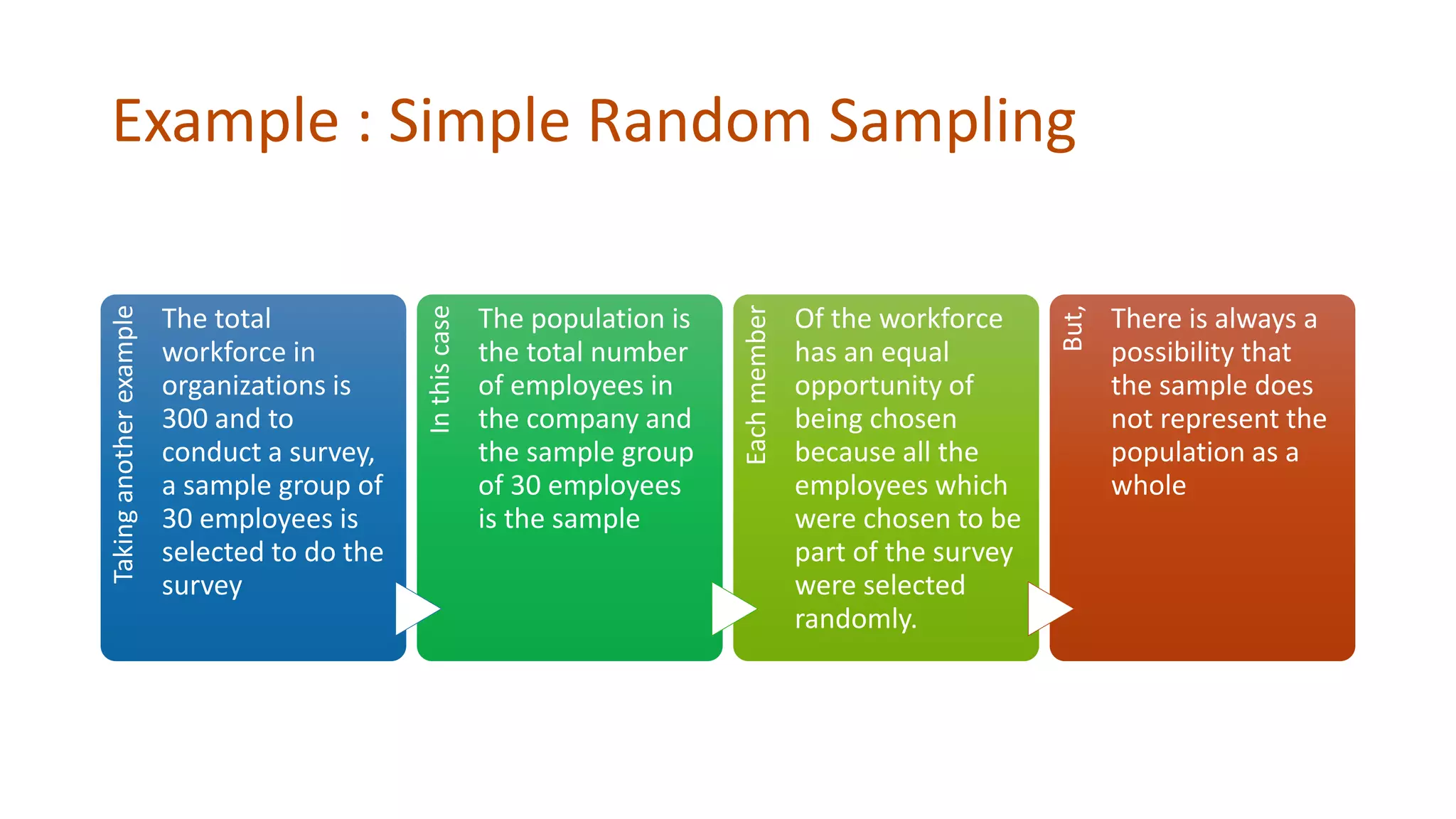
Example : Simple Random SamplingTakinganotherexample
The total
workforce in
organizations is
300 and to
conduct a survey,
a sample group of
30 employees is
selected to do the
survey
Inthiscase
The population is
the total number
of employees in
the company and
the sample group
of 30 employees
is the sample
Eachmember
Of the workforce
has an equal
opportunity of
being chosen
because all the
employees which
were chosen to be
part of the survey
were selected
randomly.
But,
There is always a
possibility that
the sample does
not represent the
population as a
whole
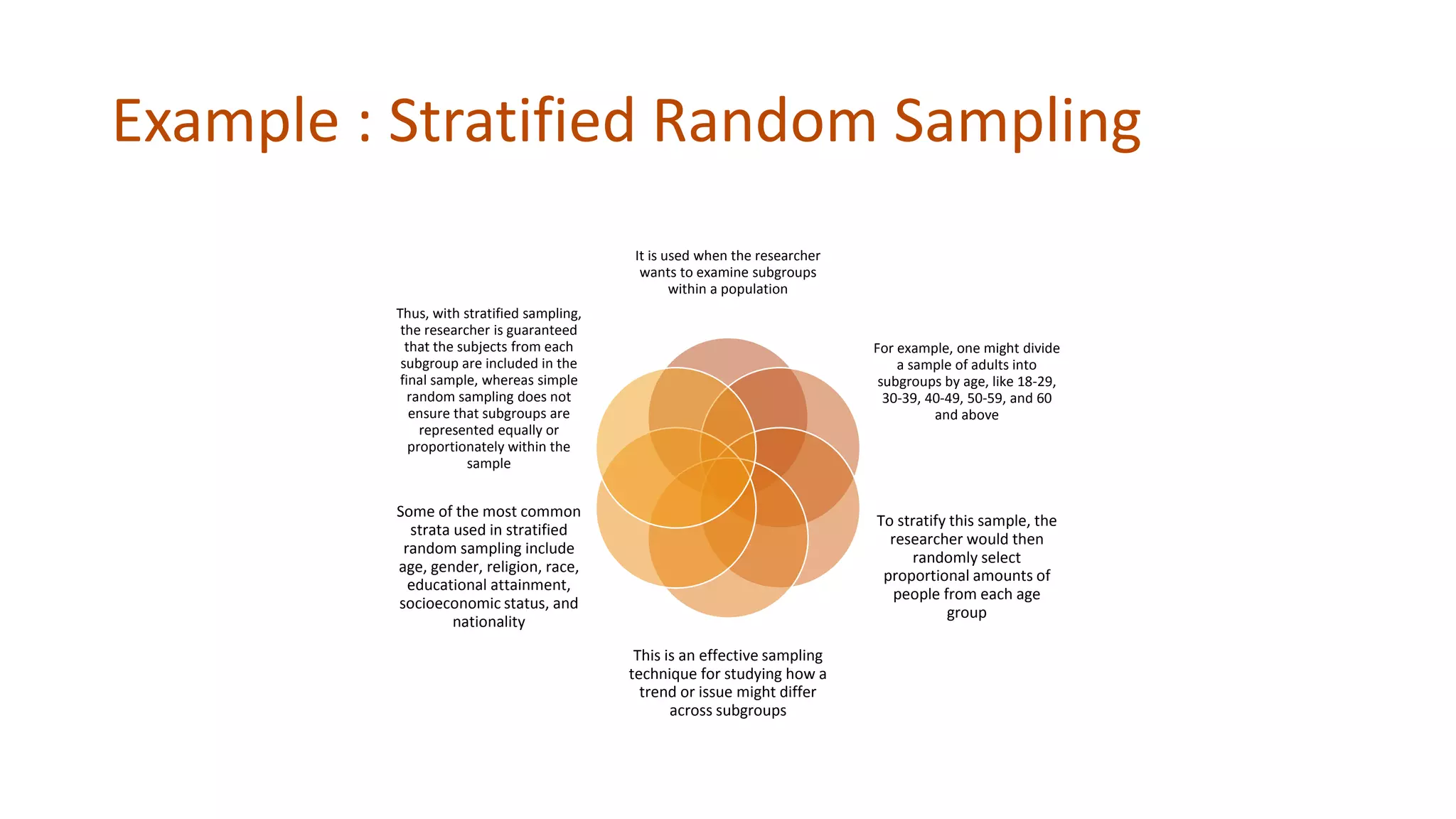
Example : Stratified Random Sampling
It is used when the researcher
wants to examine subgroups
within a population
For example, one might divide
a sample of adults into
subgroups by age, like 18-29,
30-39, 40-49, 50-59, and 60
and above
To stratify this sample, the
researcher would then
randomly select
proportional amounts of
people from each age
group
This is an effective sampling
technique for studying how a
trend or issue might differ
across subgroups
Some of the most common
strata used in stratified
random sampling include
age, gender, religion, race,
educational attainment,
socioeconomic status, and
nationality
Thus, with stratified sampling,
the researcher is guaranteed
that the subjects from each
subgroup are included in the
final sample, whereas simple
random sampling does not
ensure that subgroups are
represented equally or
proportionately within the
sample
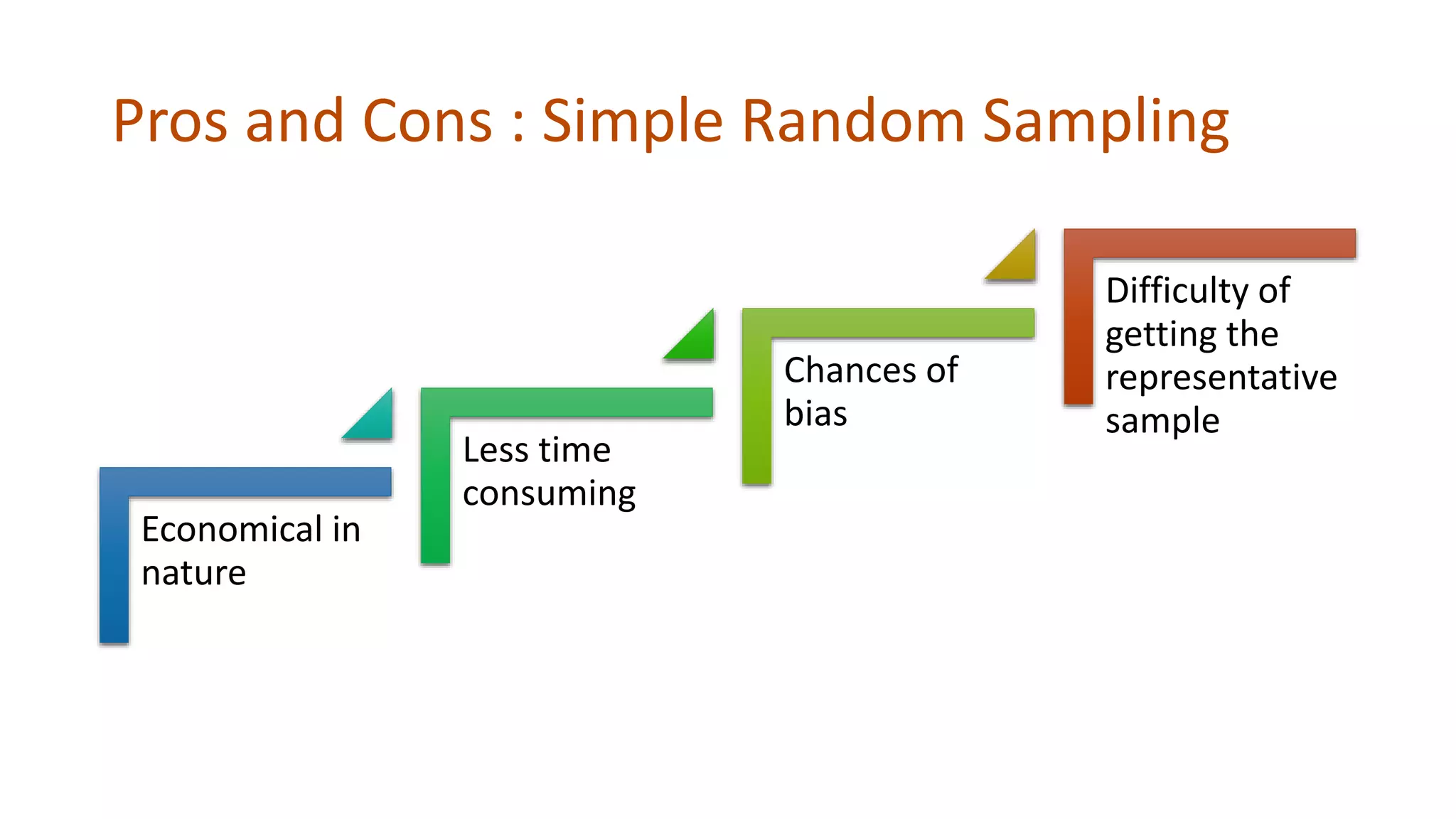
Pros and Cons : Simple Random Sampling
Economical in
nature
Less time
consuming
Chances of
bias
Difficulty of
getting the
representative
sample
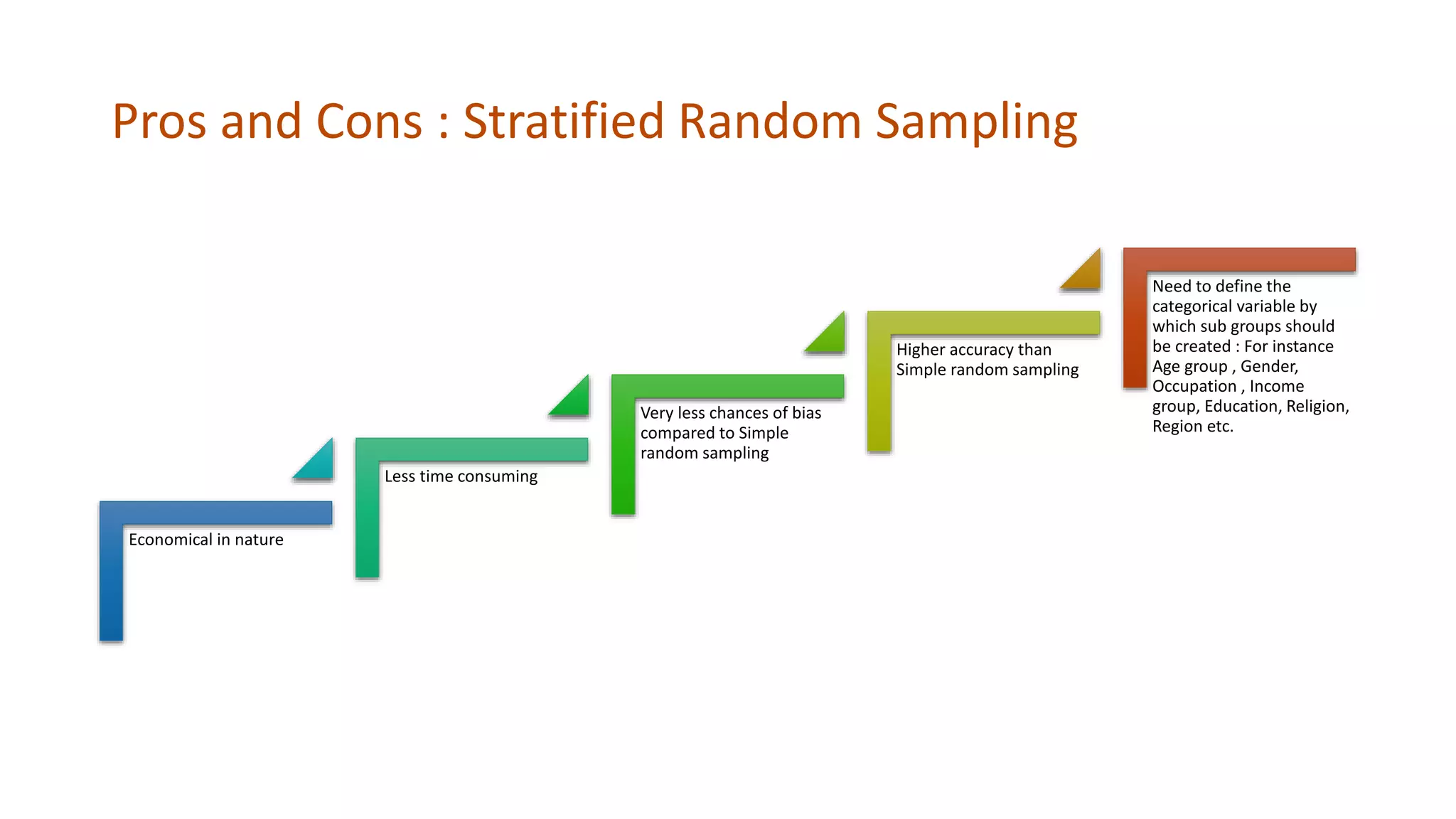
Pros and Cons : Stratified Random Sampling
Economical in nature
Less time consuming
Very less chances of bias
compared to Simple
random sampling
Higher accuracy than
Simple random sampling
Need to define the
categorical variable by
which sub groups should
be created : For instance
Age group , Gender,
Occupation , Income
group, Education, Religion,
Region etc.
Want to Learn
More?
Get in touch with us @
support@Smarten.com
And Do Checkout the Learning section
on
Smarten.com
June 2018

What Are Simple Random Sampling and Stratified Random Sampling Analytical Techniques?

  • 1.
    Master the Artof Analytics A Simplistic Explainer Series For Citizen Data Scientists J o u r n e y To w a r d s A u g m e n t e d A n a l y t i c s
  • 2.
  • 3.
    What is Sampling Atechnique of selecting a representative part of a population for the purpose of determining characteristics of the whole population to save cost , time and efforts Thus, sample data is the subset of population data used to represent the entire group as a whole
  • 4.
    Popular sampling methods SimpleRandom Sampling: Here, the selection is purely based on a chance and every item has an equal chance of getting selected Lottery system is an example of simple random sampling Stratified Random Sampling: Here, the population data is divided into subgroups known as strata The members in each of the subgroup formed have similar attributes and characteristics in terms of demographics, income, location etc. A random sample from each of these subgroups is taken in proportion to the subgroup size relative to the population size These subsets of subgroups are then added to from a final stratified random sample Higher statistical precision is achieved through this method due to low variability within each subgroup, also less sample size is required for this method of sampling when compared to simple random sampling
  • 5.
    Example : SimpleRandom SamplingForinstance if we want to come up with average value of all cars in united states, it is impractical to assess the each car value in united states, adding these numbers and dividing by total number of cars Instead we can randomly select some of the cars, say 200 and get value of each of these 200 cars and find average of these 200 numbers These 200 numbers containing randomly selected 200 cars’ values is called a sample data of entire United states’ cars’ values (population data)
  • 6.
    Example : SimpleRandom SamplingTakinganotherexample The total workforce in organizations is 300 and to conduct a survey, a sample group of 30 employees is selected to do the survey Inthiscase The population is the total number of employees in the company and the sample group of 30 employees is the sample Eachmember Of the workforce has an equal opportunity of being chosen because all the employees which were chosen to be part of the survey were selected randomly. But, There is always a possibility that the sample does not represent the population as a whole
  • 7.
    Example : StratifiedRandom Sampling It is used when the researcher wants to examine subgroups within a population For example, one might divide a sample of adults into subgroups by age, like 18-29, 30-39, 40-49, 50-59, and 60 and above To stratify this sample, the researcher would then randomly select proportional amounts of people from each age group This is an effective sampling technique for studying how a trend or issue might differ across subgroups Some of the most common strata used in stratified random sampling include age, gender, religion, race, educational attainment, socioeconomic status, and nationality Thus, with stratified sampling, the researcher is guaranteed that the subjects from each subgroup are included in the final sample, whereas simple random sampling does not ensure that subgroups are represented equally or proportionately within the sample
  • 8.
    Pros and Cons: Simple Random Sampling Economical in nature Less time consuming Chances of bias Difficulty of getting the representative sample
  • 9.
    Pros and Cons: Stratified Random Sampling Economical in nature Less time consuming Very less chances of bias compared to Simple random sampling Higher accuracy than Simple random sampling Need to define the categorical variable by which sub groups should be created : For instance Age group , Gender, Occupation , Income group, Education, Religion, Region etc.
  • 10.
    Want to Learn More? Getin touch with us @ support@Smarten.com And Do Checkout the Learning section on Smarten.com June 2018