Introduction to well completion
General Procedure of well completion
Open hole well completion
Cased hole well completion
Informal definition:
The high time of the well when engineer and
personnel comes to decide whether to install the
production casing in order to initiate the production at
the surface or it should be abandoned .
Technical Definition:
Well completion means to prepare the well for
production by installing the necessary
equipments into the well in order to allow the safe
and controlled flow of HCS at the surface.
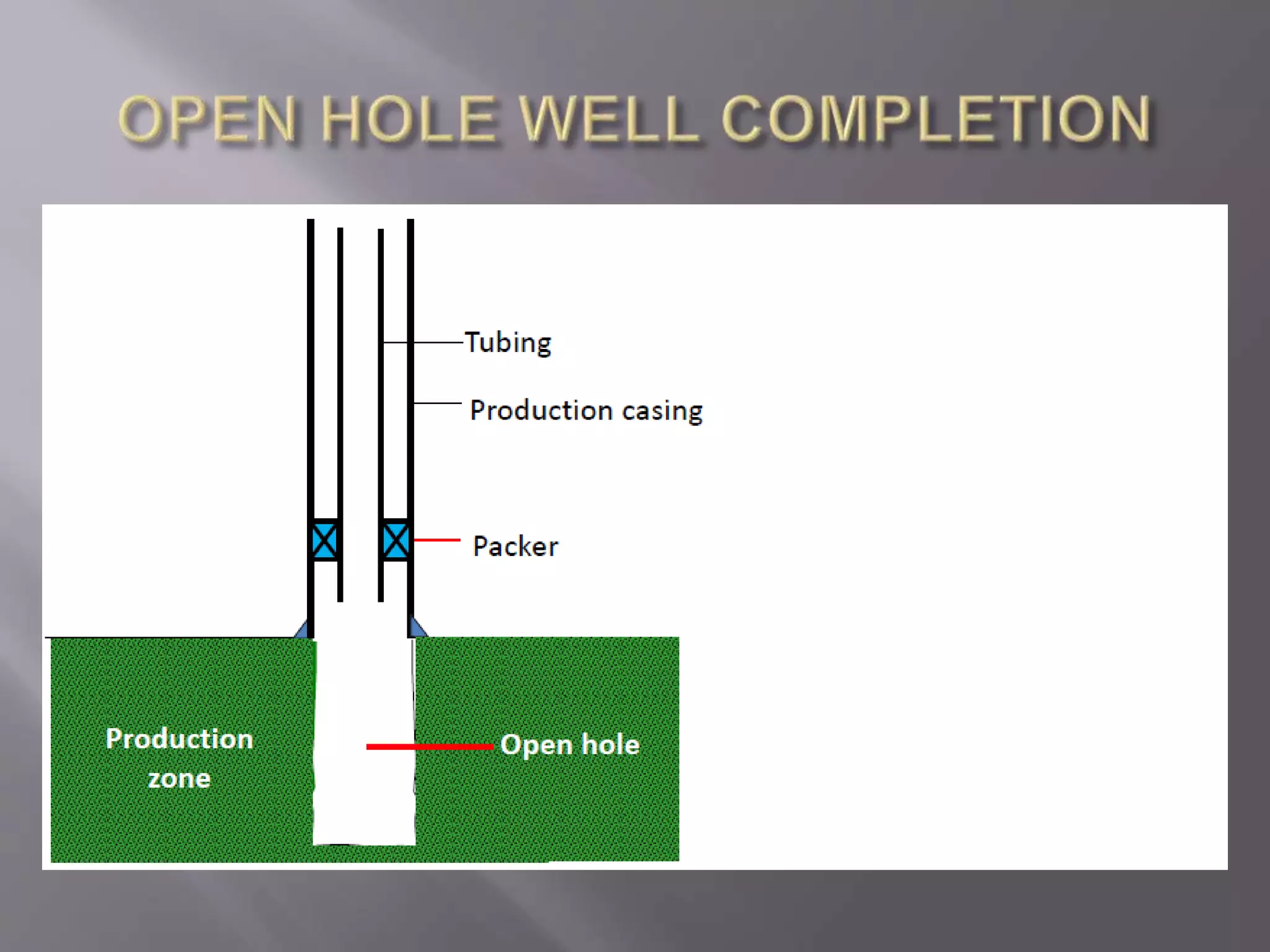
In an open hole well completion the production casing is
just set above the pay zone, while the entire deepen bottom
of pay zone is left uncased.
•Maximum exposure of pay zone
•Less pressure drawdown during flow
•No formation damage occurs due to cementing
and perforation.
•Less formation damage
•Inability to plug off water or gas zones
•Inability to stimulate the separate zones within the
productive zones
•For the most common type of well completion today
involves the cased hole completion, in which the
production casing and liner are cemented and
perforated subsequently.
•Select the sections of the pay zone we wish to produce
•Stimulate the separate pay zone from the well
•Multiple completion zones
•A Liner is installed across the pay zone
•It can be divided into two: Screen Liner and perforated
liner
•Screen Liner : Casing is set above the producing zone and
an uncemented screen and liner assembly is installed
across the pay zone
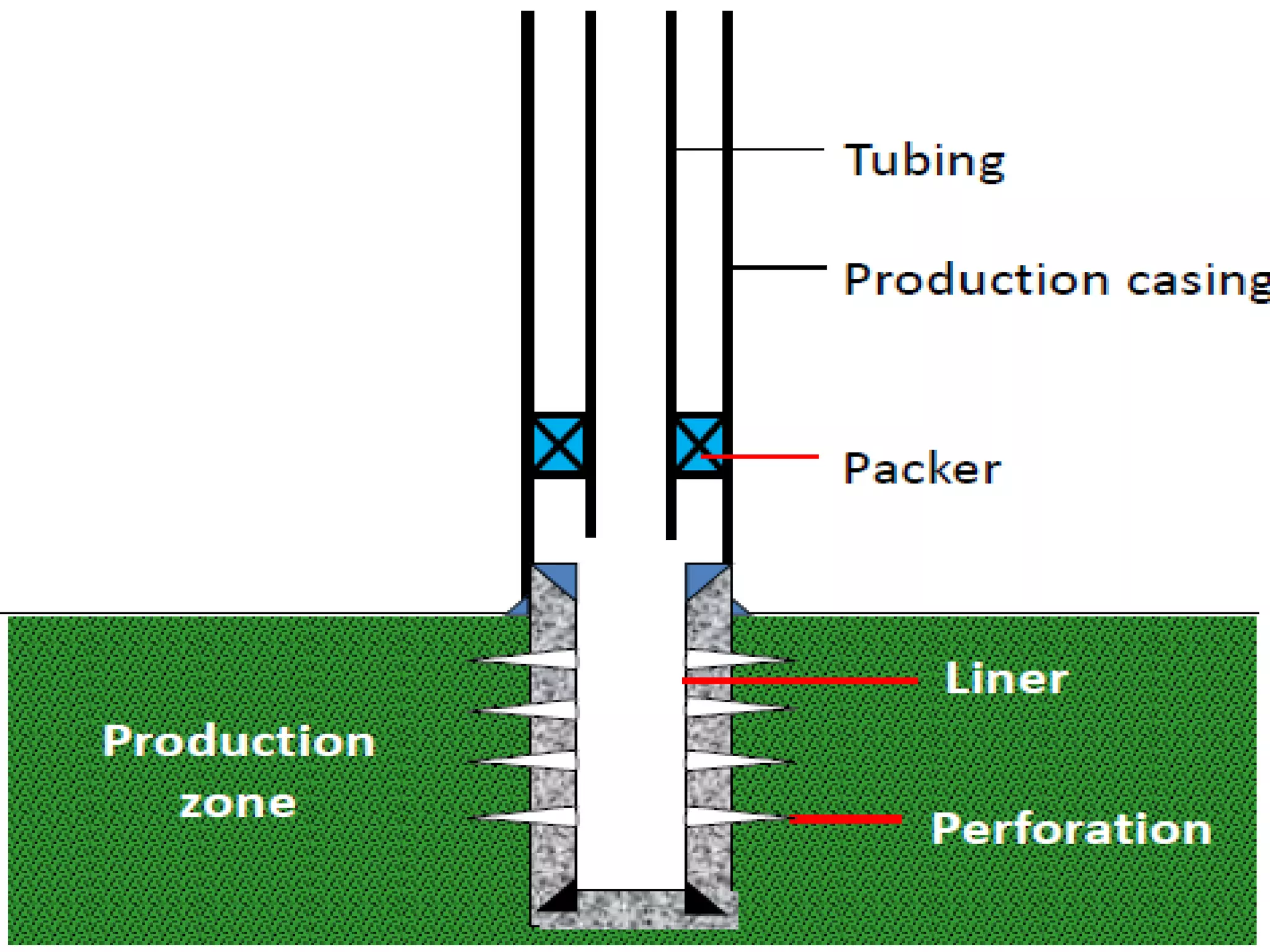
•Casing is set above the producing
zone and a liner assembly is installed
across the pay zone and cemented
in place. The liner is then perforated
selectively for production.
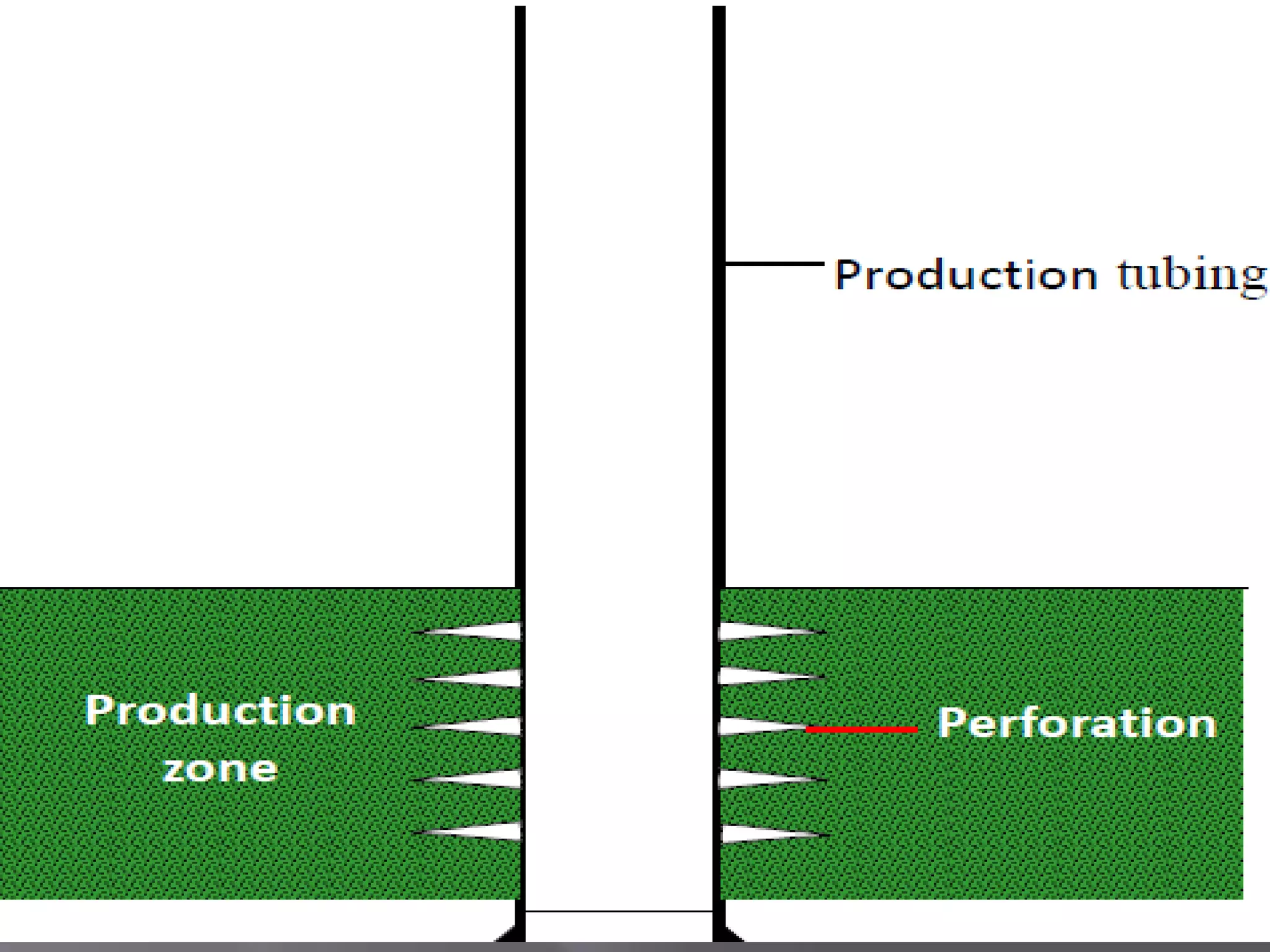
•Production casing is cemented through the
producing zone and pay section is selectively
perforated
•Production tubing is perforated and cemented
•Casing flow: large flow rate no tubing is required, used in middle
east.
•Tubing and Annulus flow: large flow rate flow segregation.
•Tubing flow: Used widely in Malaysia due to safety, may use one
more tubing strings.
•Simplest way of completing the well
•In this method well is completed by single zone with single
tubing
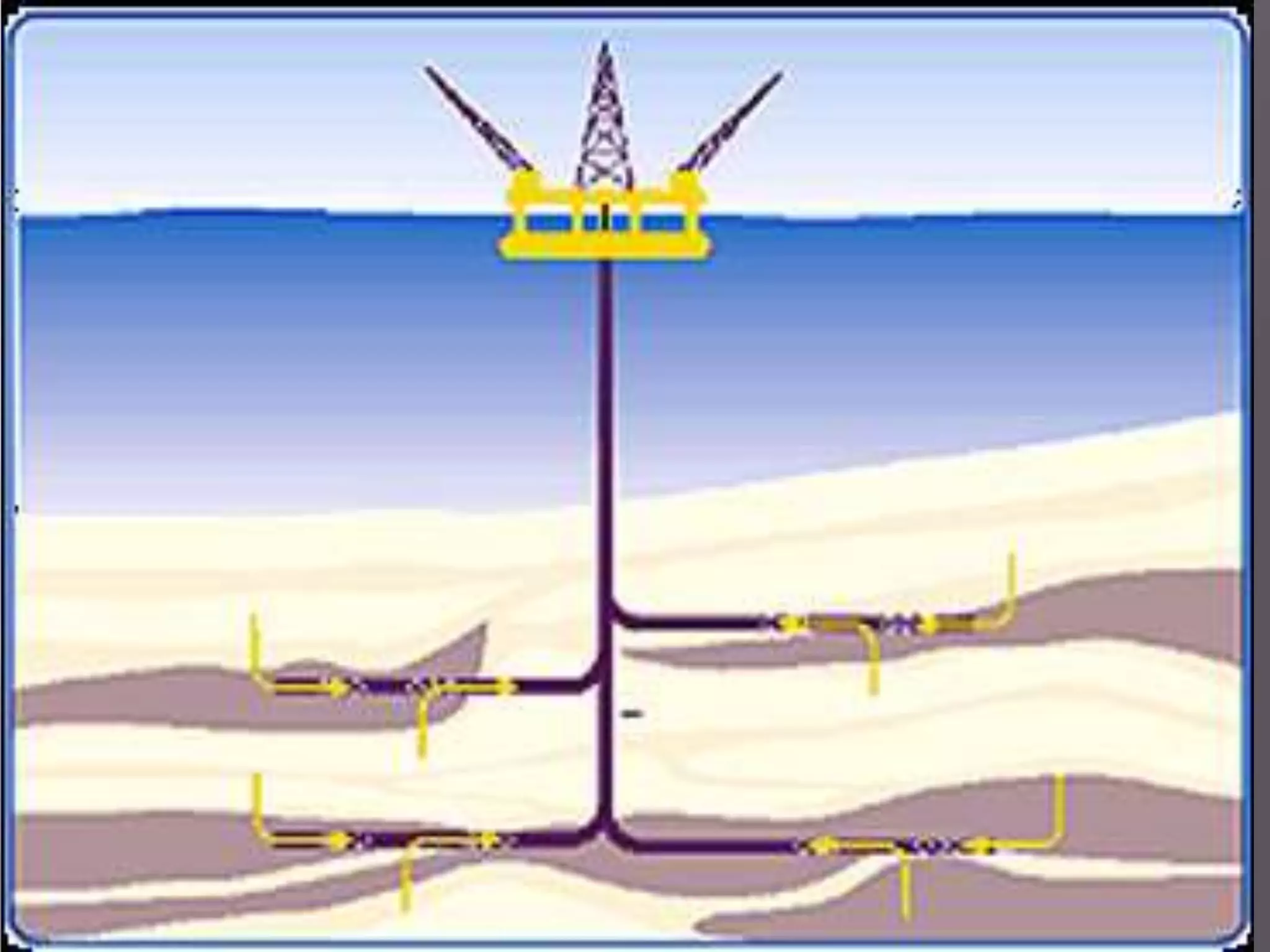
•In this multiple branches are drilled from a single zone
•It is used to improve productivity from closely spaced target zones.
Well completion

Well completion

  • 1.
    Introduction to wellcompletion General Procedure of well completion Open hole well completion Cased hole well completion
  • 2.
    Informal definition: The hightime of the well when engineer and personnel comes to decide whether to install the production casing in order to initiate the production at the surface or it should be abandoned . Technical Definition: Well completion means to prepare the well for production by installing the necessary equipments into the well in order to allow the safe and controlled flow of HCS at the surface.
  • 9.
    In an openhole well completion the production casing is just set above the pay zone, while the entire deepen bottom of pay zone is left uncased.
  • 11.
    •Maximum exposure ofpay zone •Less pressure drawdown during flow •No formation damage occurs due to cementing and perforation. •Less formation damage
  • 12.
    •Inability to plugoff water or gas zones •Inability to stimulate the separate zones within the productive zones
  • 13.
    •For the mostcommon type of well completion today involves the cased hole completion, in which the production casing and liner are cemented and perforated subsequently.
  • 14.
    •Select the sectionsof the pay zone we wish to produce •Stimulate the separate pay zone from the well •Multiple completion zones
  • 15.
    •A Liner isinstalled across the pay zone •It can be divided into two: Screen Liner and perforated liner •Screen Liner : Casing is set above the producing zone and an uncemented screen and liner assembly is installed across the pay zone
  • 17.
    •Casing is setabove the producing zone and a liner assembly is installed across the pay zone and cemented in place. The liner is then perforated selectively for production.
  • 19.
    •Production casing iscemented through the producing zone and pay section is selectively perforated
  • 21.
    •Production tubing isperforated and cemented
  • 23.
    •Casing flow: largeflow rate no tubing is required, used in middle east. •Tubing and Annulus flow: large flow rate flow segregation. •Tubing flow: Used widely in Malaysia due to safety, may use one more tubing strings.
  • 24.
    •Simplest way ofcompleting the well •In this method well is completed by single zone with single tubing
  • 25.
    •In this multiplebranches are drilled from a single zone •It is used to improve productivity from closely spaced target zones.

Editor's Notes

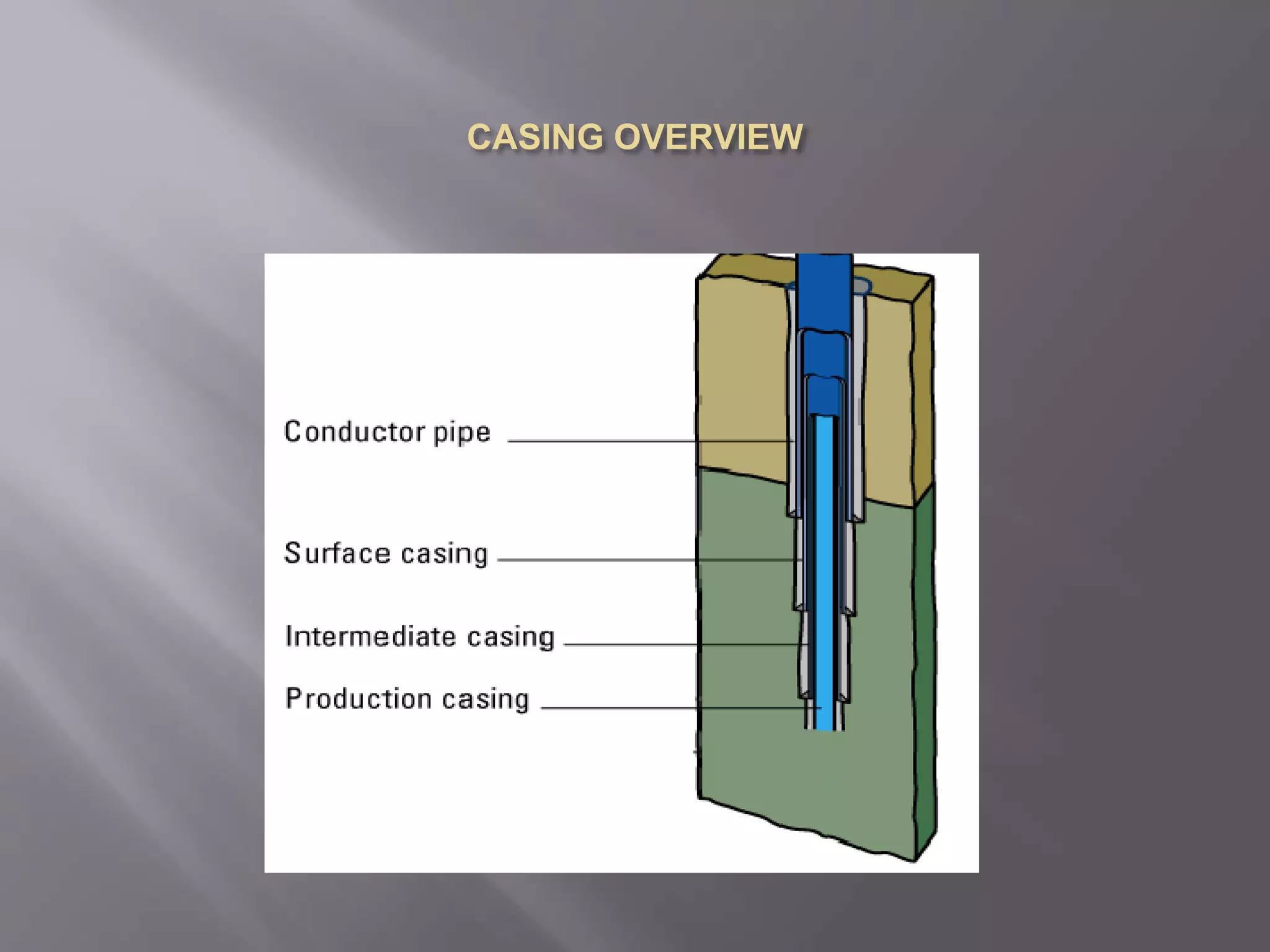
  • #6 Major cost of the total well is consumed by casing so to select the size, grade and setting depth is a primary function of an engineering consideration. Conductor Casing: is attached with the casing head above which the BOP is installed, it’s 1st casing installed into the sub surface and it isolates the sand water, fresh water bearing zones and prevents the contamination. Surface casing: is the 2nd casing installed in the series of casing the primary function surface casing is to provide the support to the well head in order to make it stable ,to isolate sand water and water zones and to prevent the lost circulation.
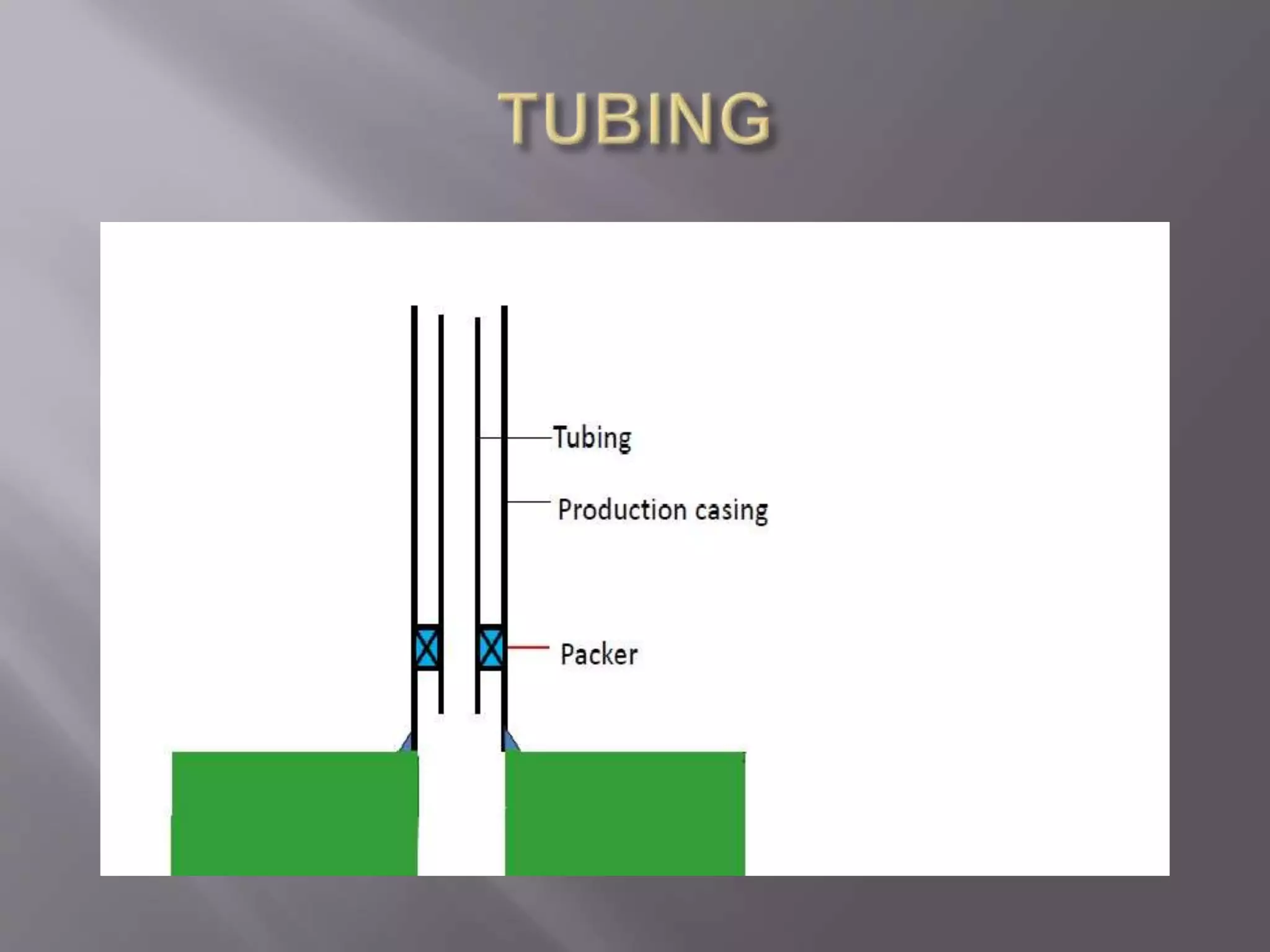
  • #7 Tubing is run into the well with smaller diameter compared to the production casing in order to move the oil or gas up to the surface. Packer: is attatched just above the producing zone and performs the job of seal b/w out side of the casing and inside of the tubing. The packer is expanded and grips and seal off the walls of the the production casing outside of the tubing and inside of the production casing.
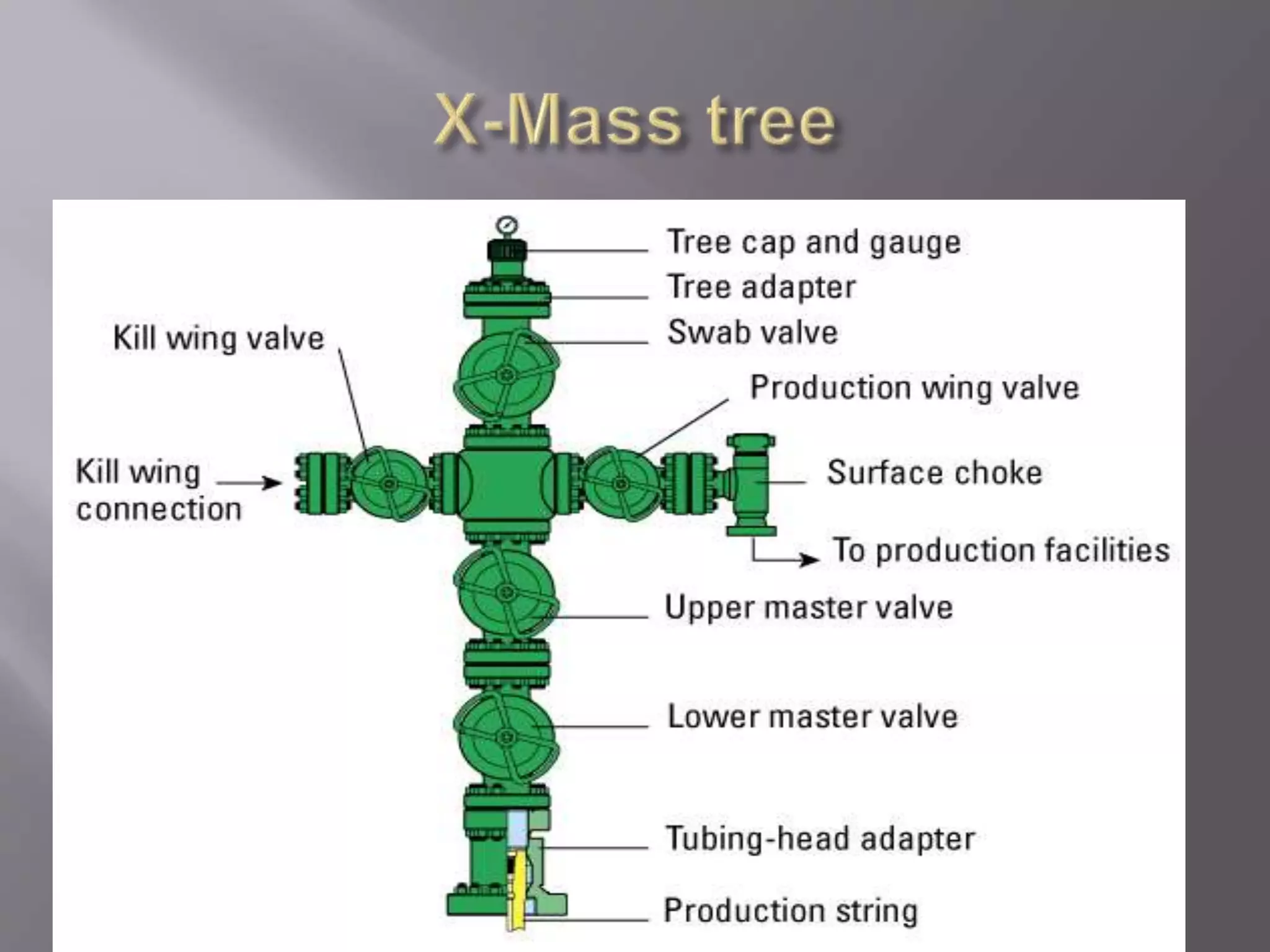
  • #8 Chrissmass tree: A collection of valves called the chriss mass tree is installed at the surface on the top of the casing hanger. As the production of the oil or gas enters into the xmass tree and through the closing and oopening valves of the chrissmass tree the flow of HCS is controlled.