Research Methodology
» Lecturer info » Recommended texts
» Materials
˃ Online
˃ Handouts
» Research portfolio
˃ Electronic
˃ Google sites
» Research Seminar
» Invited “speakers”
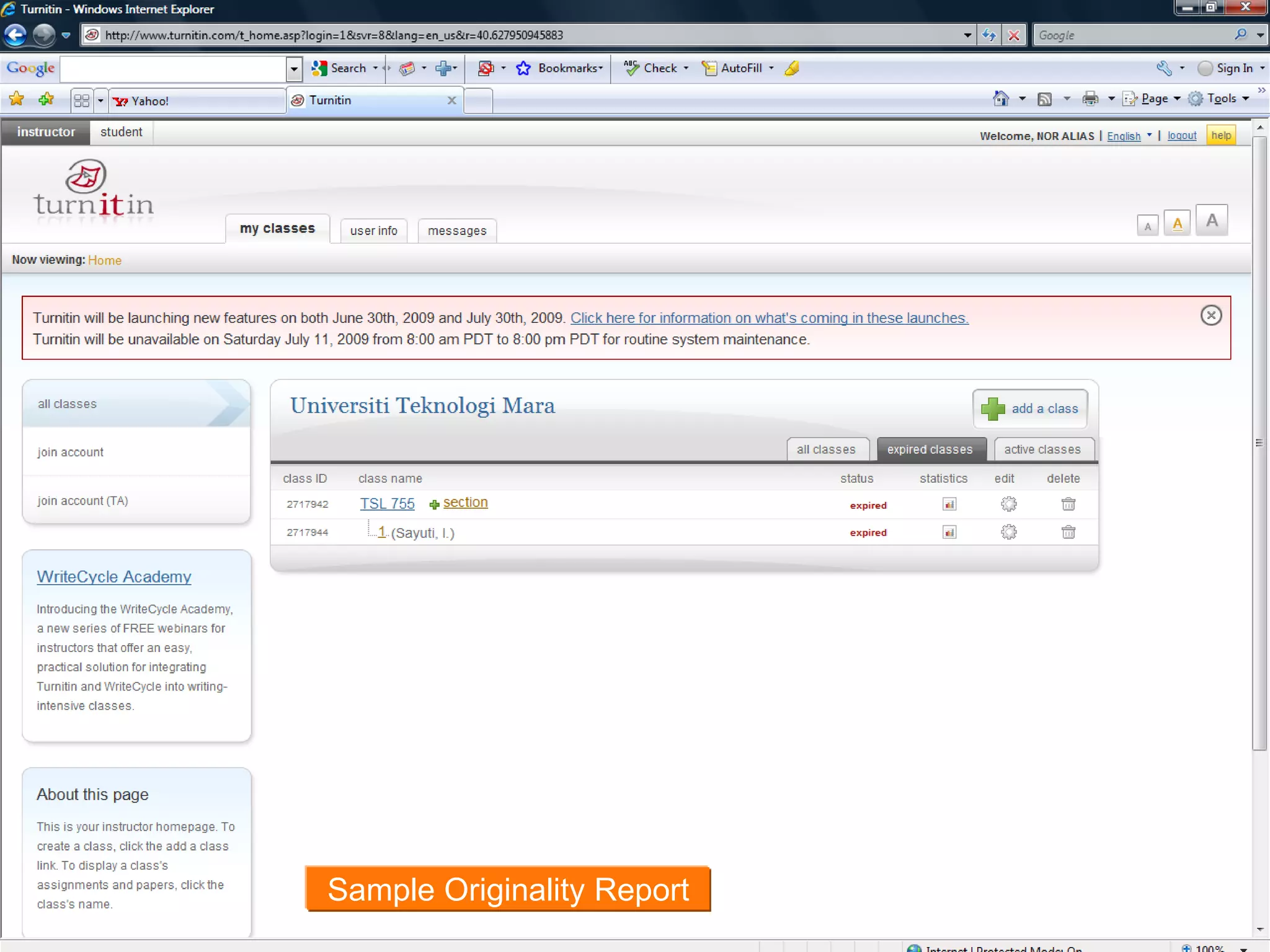
Sample Originality Report
» What is research
» Why carry out research
» Types and approaches
» Terminologies
Albert Einstein
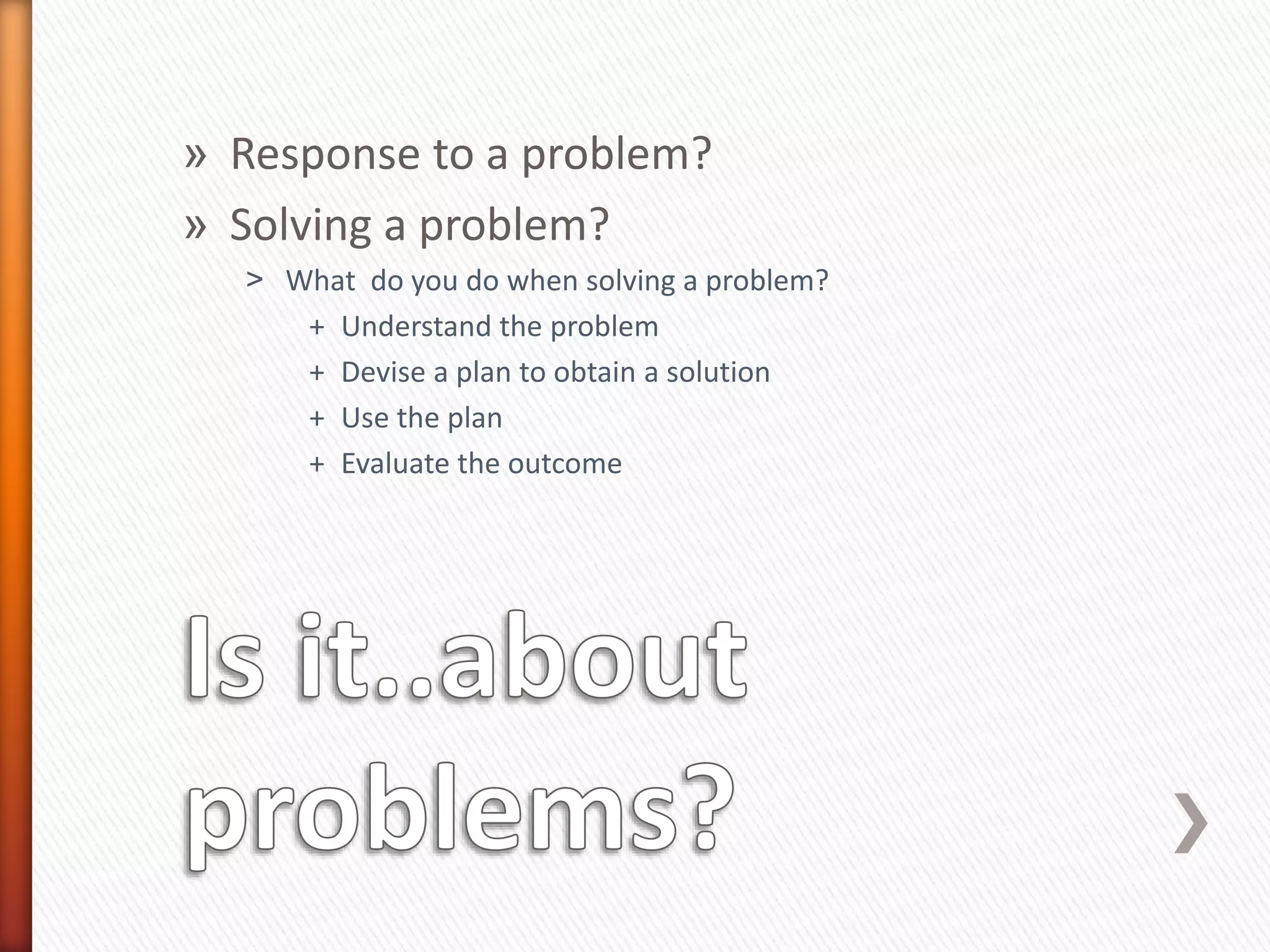
» Response to a problem?
» Solving a problem?
˃ What do you do when solving a problem?
+ Understand the problem
+ Devise a plan to obtain a solution
+ Use the plan
+ Evaluate the outcome
Sleep habits and academic
achievement
» Research is the formal systematic application of
the scientific and disciplined inquiry approach
to the study of problems
» Research is the formal
systematic application
of the scientific and
disciplined inquiry
approach to the study
of problems
» What do we mean by
scientific?
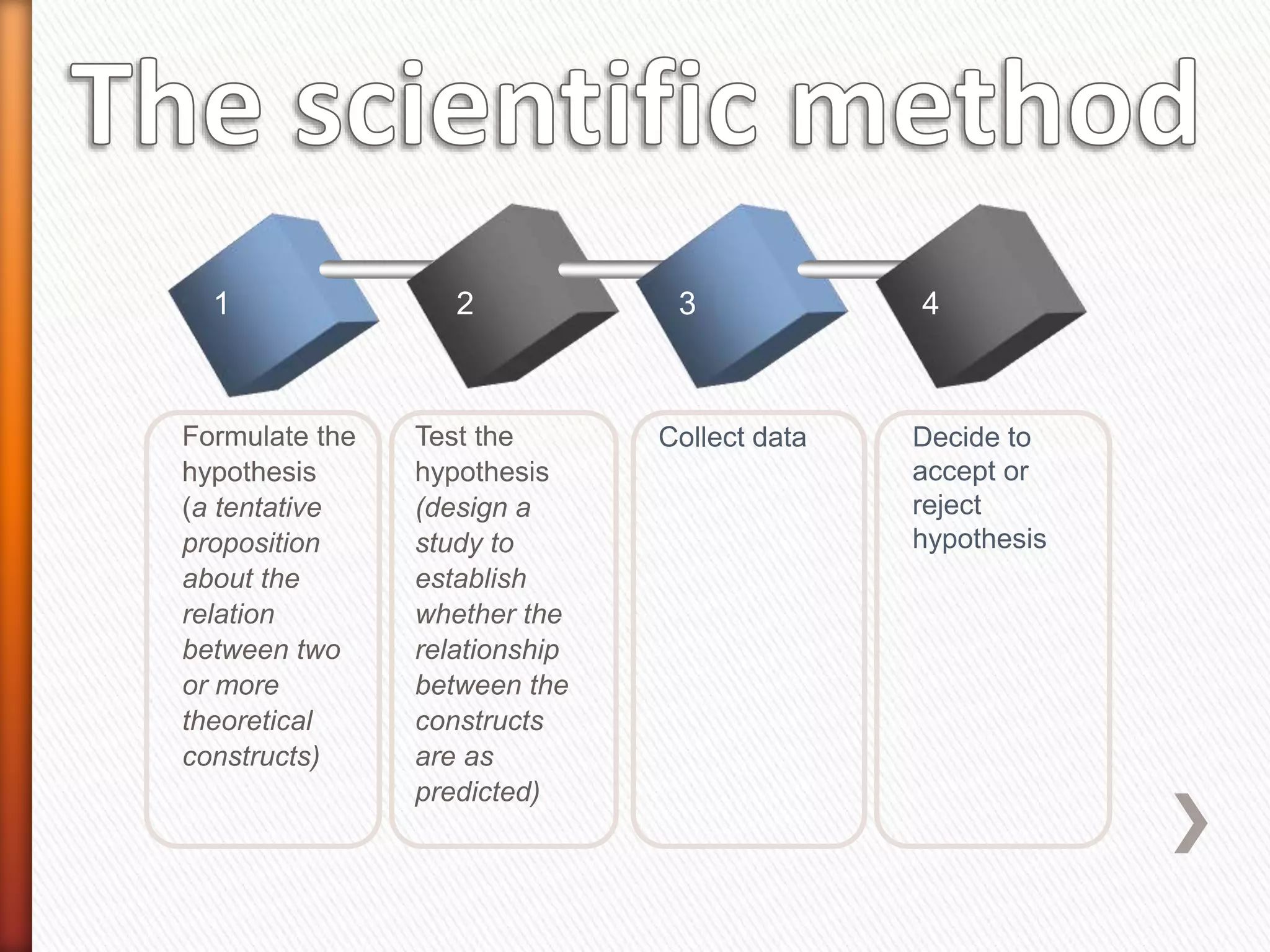
1 2 3 4
Formulate the
hypothesis
(a tentative
proposition
about the
relation
between two
or more
theoretical
constructs)
Test the
hypothesis
(design a
study to
establish
whether the
relationship
between the
constructs
are as
predicted)
Collect data Decide to
accept or
reject
hypothesis
 A diligent search or inquiry -
scientific investigation and study
to discover facts
 All claims open to question
 Knowledge can be observed and
tested again
» To Describe - describe the shape, colour, change over time, relation
to other constructs and so on..
» To Predict - given what is known the scientist attempts to predict
what might happen..
» To Control - by manipulating certain variables the scientist is
interested in determining whether it will lead to controlling a
particular condition.
» To Explain in the form of a Theory - ultimately the scientist is
interested in forming a theory to explain the phenomena being
investigated.
So what then is
 A systematic, and organized
effort to investigate and provide
trustworthy information about
educational problems, issues
and topics
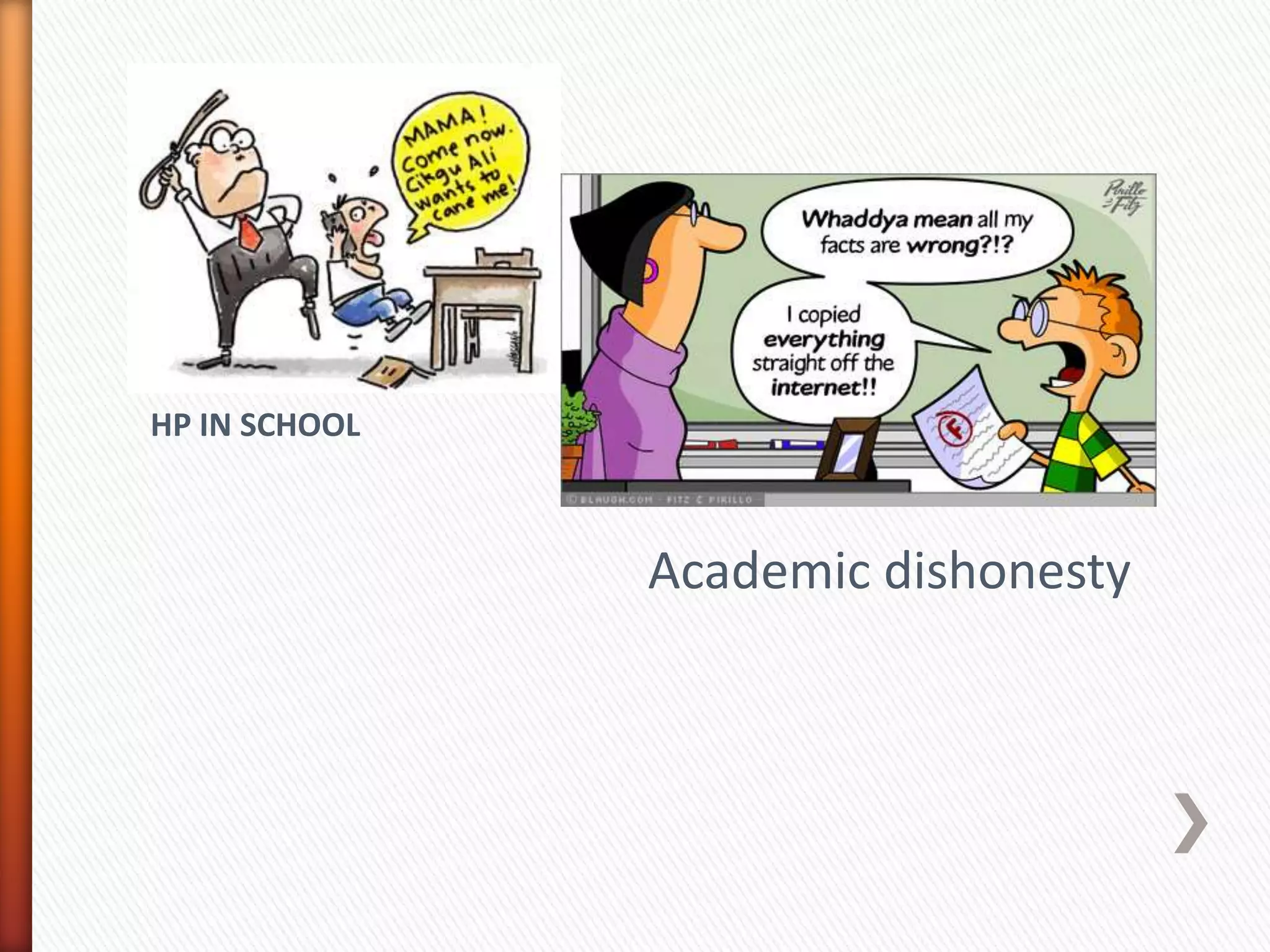
HP IN SCHOOL
Academic dishonesty
» Research begins with a question in the mind of the
researcher.
» Research demands a clear statement of the problem.
» Research requires a plan
» Research seeks direction through appropriate
hypotheses or research questions
» Research deals with facts and their meaning.
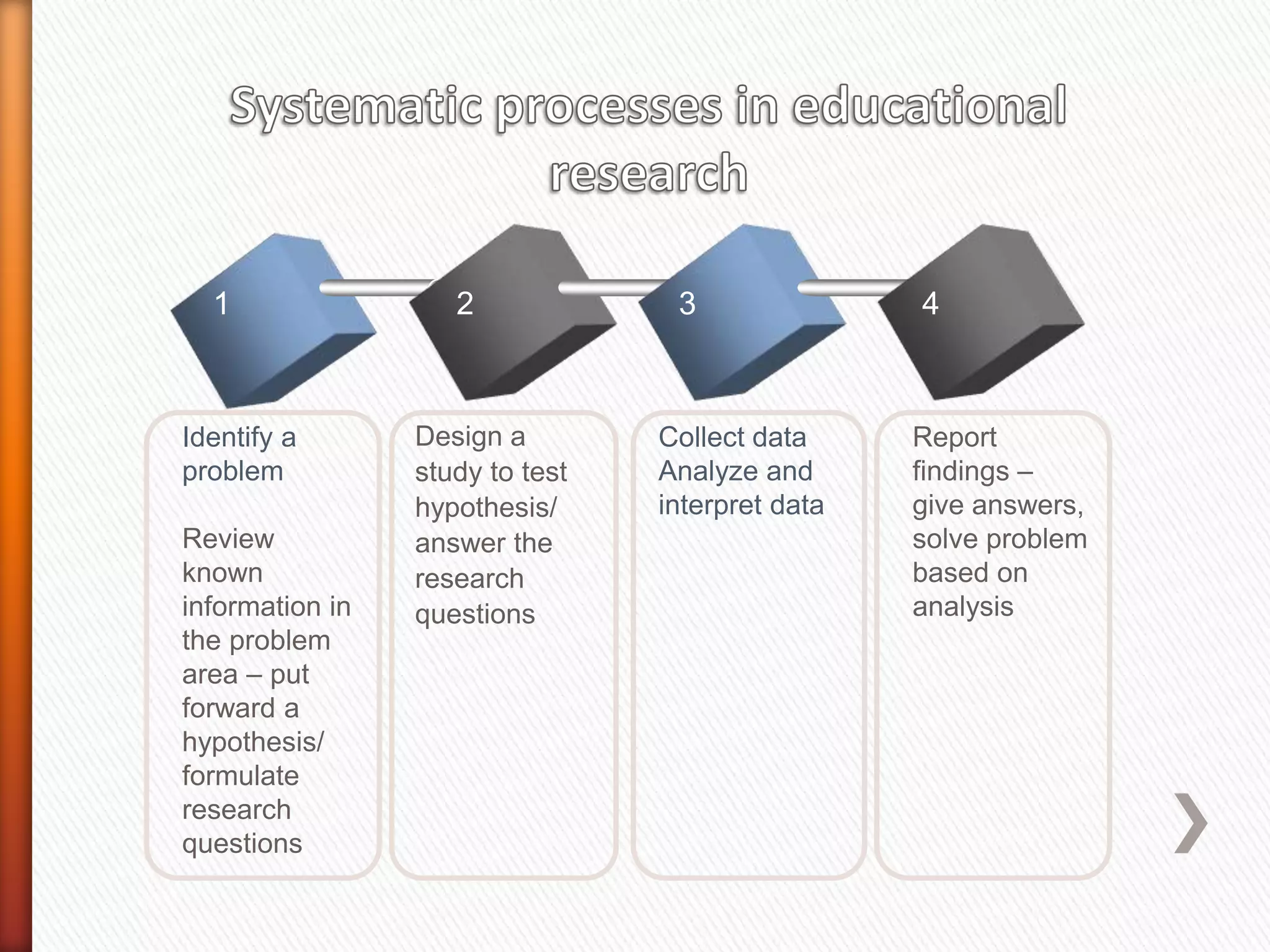
1 2 3 4
Identify a
problem
Review
known
information in
the problem
area – put
forward a
hypothesis/
formulate
research
questions
Collect data
Analyze and
interpret data
Report
findings –
give answers,
solve problem
based on
analysis
Design a
study to test
hypothesis/
answer the
research
questions
Explore? Describe? Predict? Control? Explain?
» To provide evidence to help people decide
which opinions are correct – or more correct
» To help develop better ways to think about the
field of education
» To investigate problems or questions concerned
with improvement of education (Sowell, 2001)
˃ contribute to the advances of knowledge and theory
˃ provide insights into societal concerns
˃ solve a particular problem within a particular setting
» Basic
˃ contribute to the advances of knowledge and theory
» Applied
˃ provide insights into societal concerns
˃ solve a particular problem within a particular setting
» Evaluation
˃ Decision making
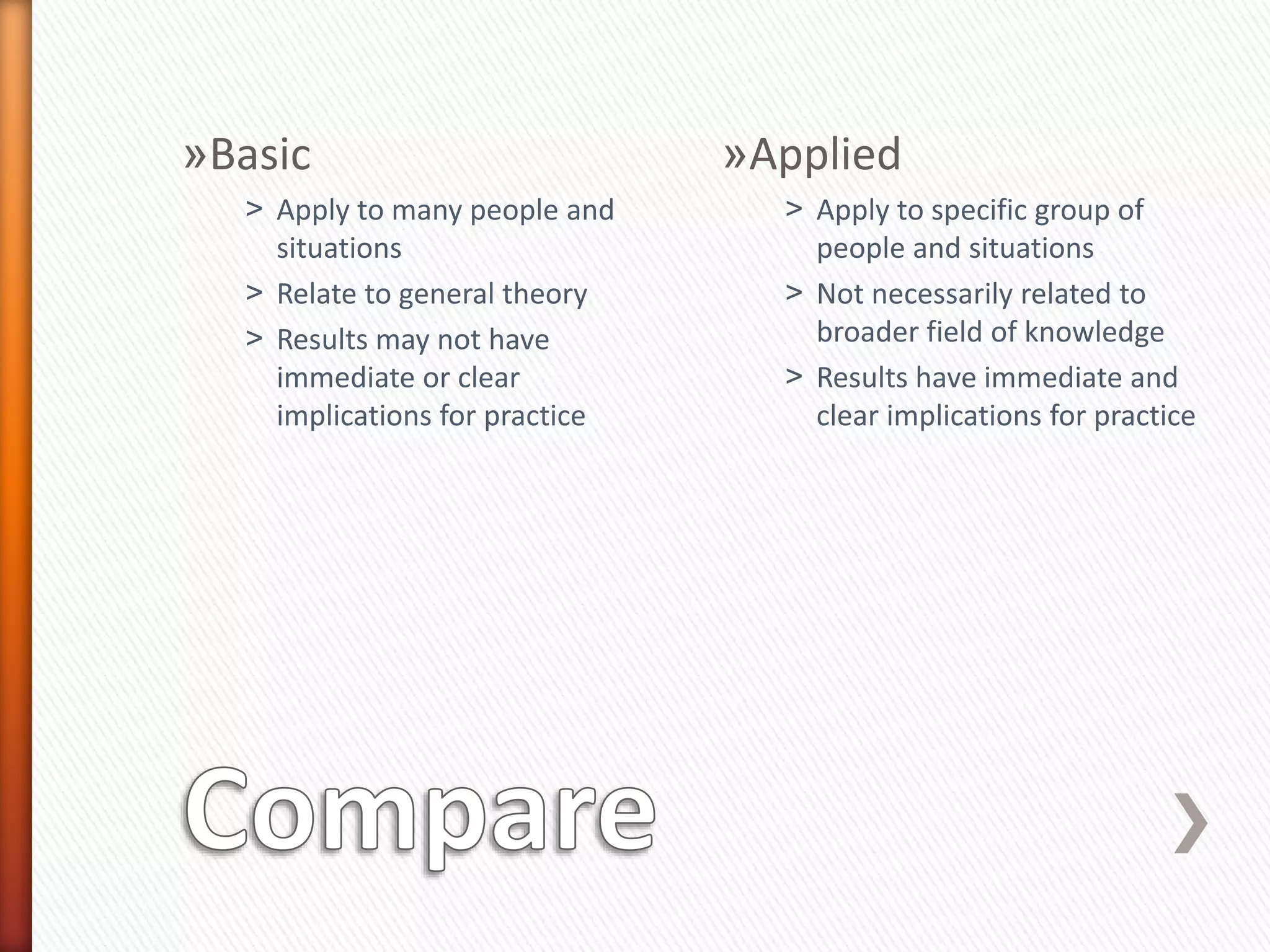
»Basic
˃ Apply to many people and
situations
˃ Relate to general theory
˃ Results may not have
immediate or clear
implications for practice
»Applied
˃ Apply to specific group of
people and situations
˃ Not necessarily related to
broader field of knowledge
˃ Results have immediate and
clear implications for practice
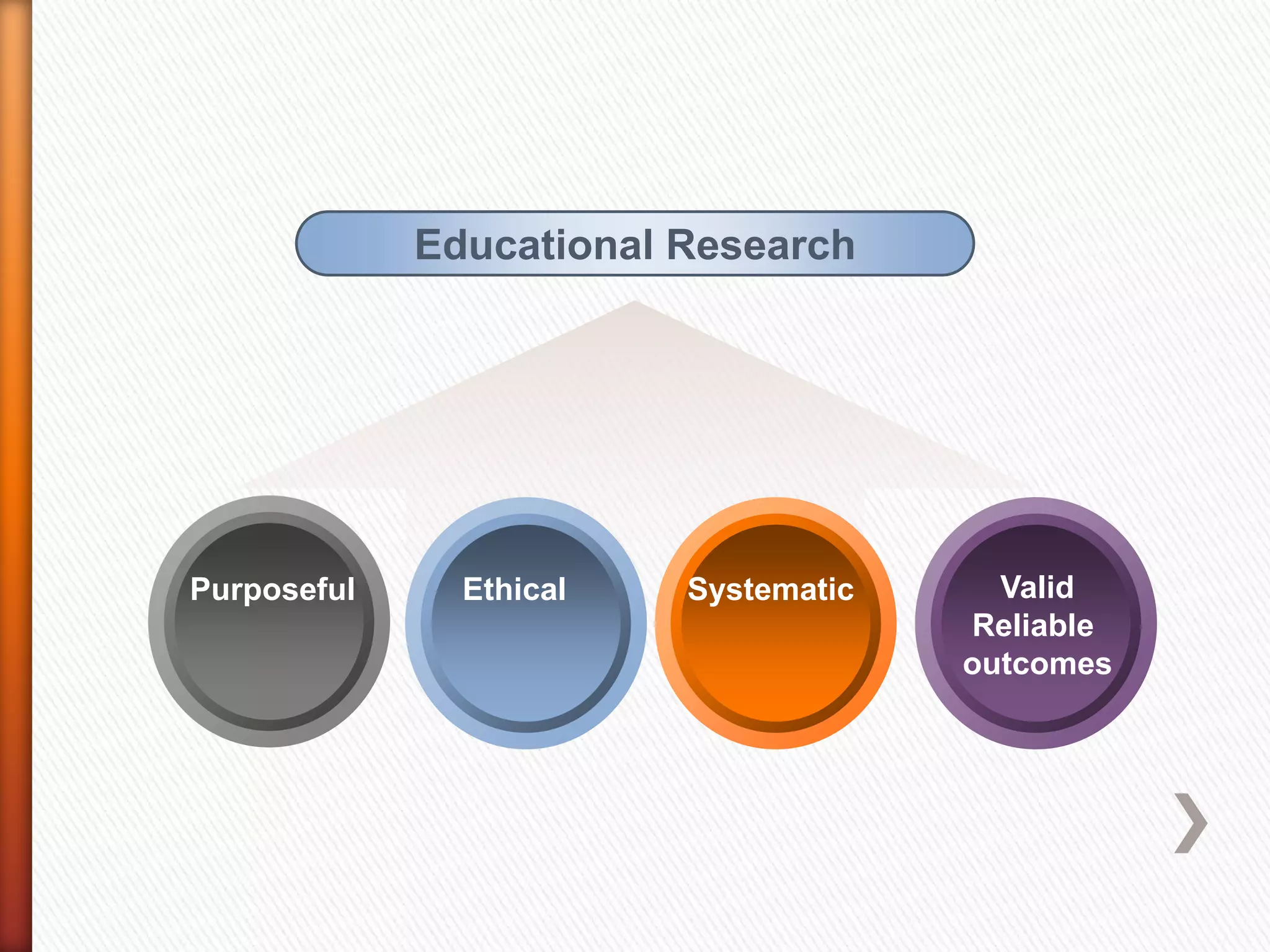
Educational Research
Purposeful SystematicEthical Valid
Reliable
outcomes
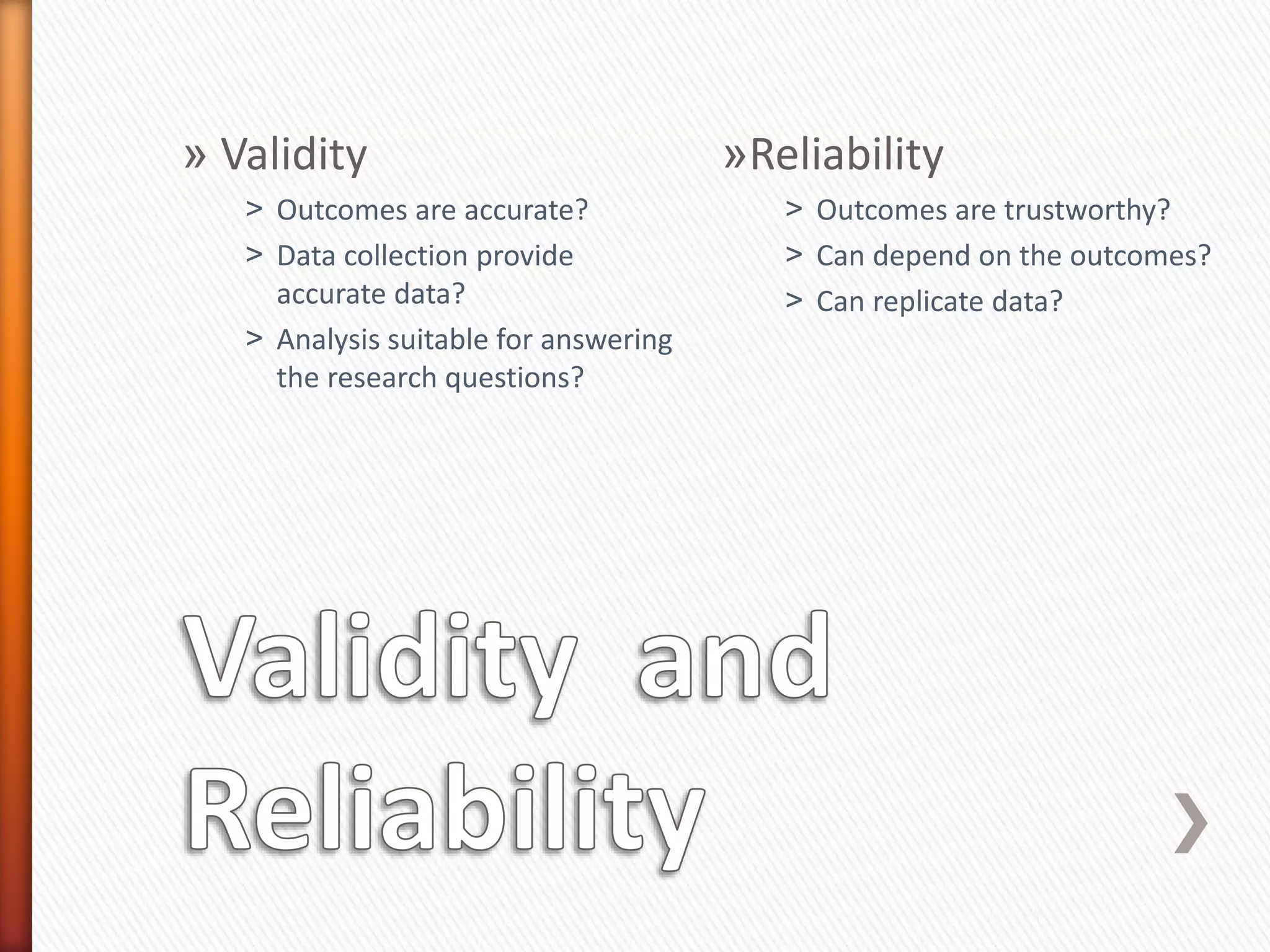
» Validity
˃ Outcomes are accurate?
˃ Data collection provide
accurate data?
˃ Analysis suitable for answering
the research questions?
»Reliability
˃ Outcomes are trustworthy?
˃ Can depend on the outcomes?
˃ Can replicate data?
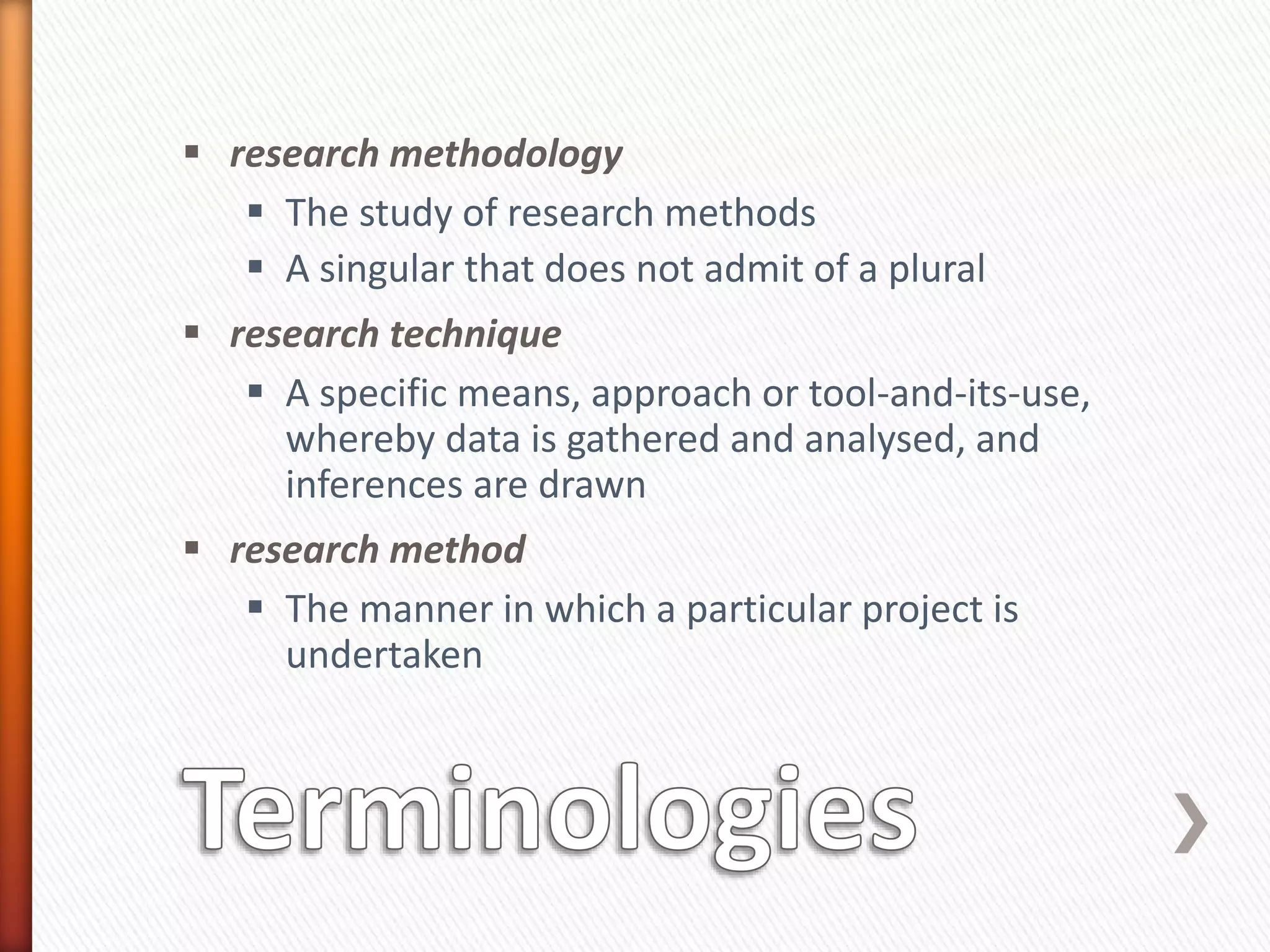
 research methodology
 The study of research methods
 A singular that does not admit of a plural
 research technique
 A specific means, approach or tool-and-its-use,
whereby data is gathered and analysed, and
inferences are drawn
 research method
 The manner in which a particular project is
undertaken
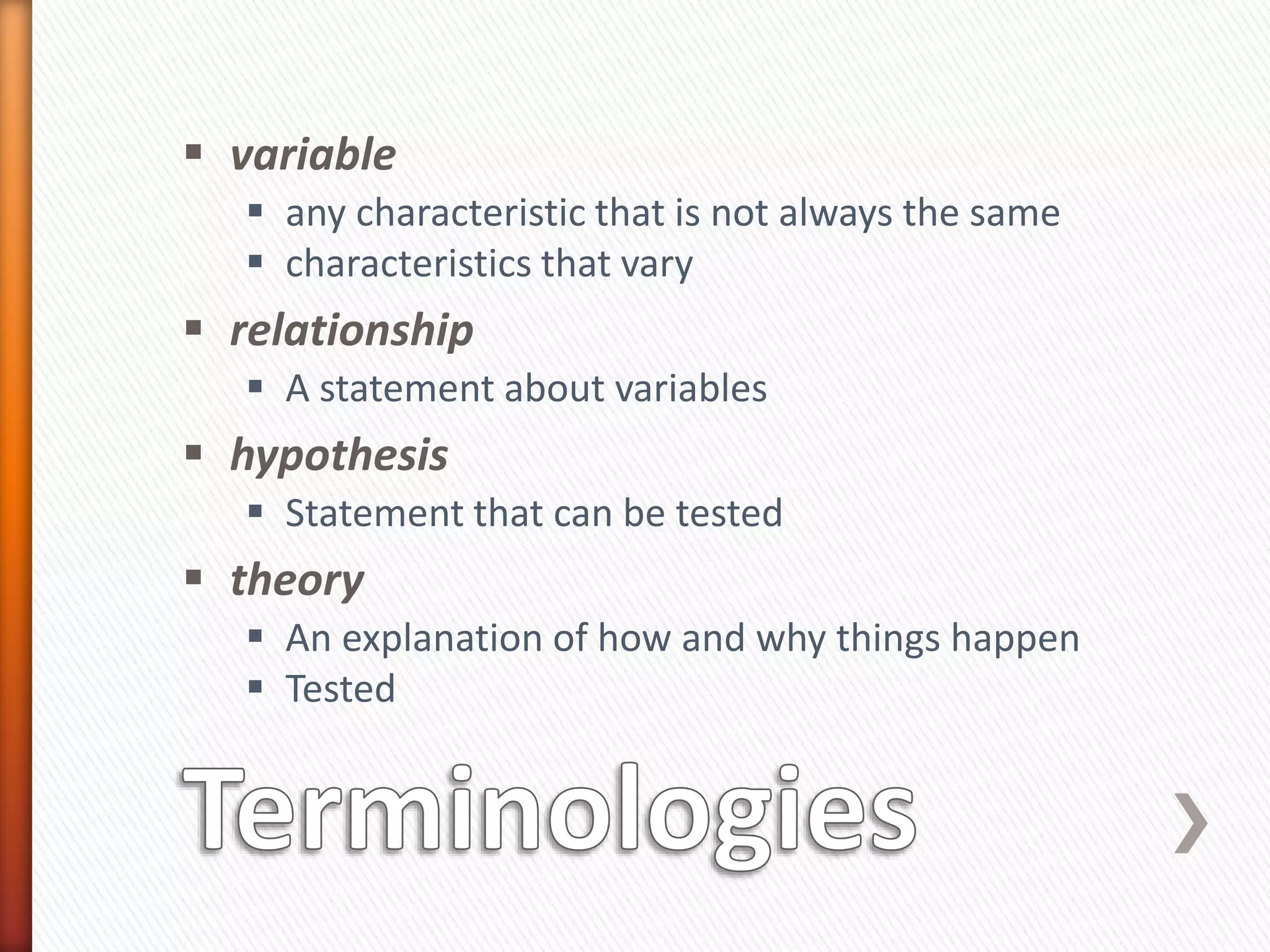
 variable
 any characteristic that is not always the same
 characteristics that vary
 relationship
 A statement about variables
 hypothesis
 Statement that can be tested
 theory
 An explanation of how and why things happen
 Tested
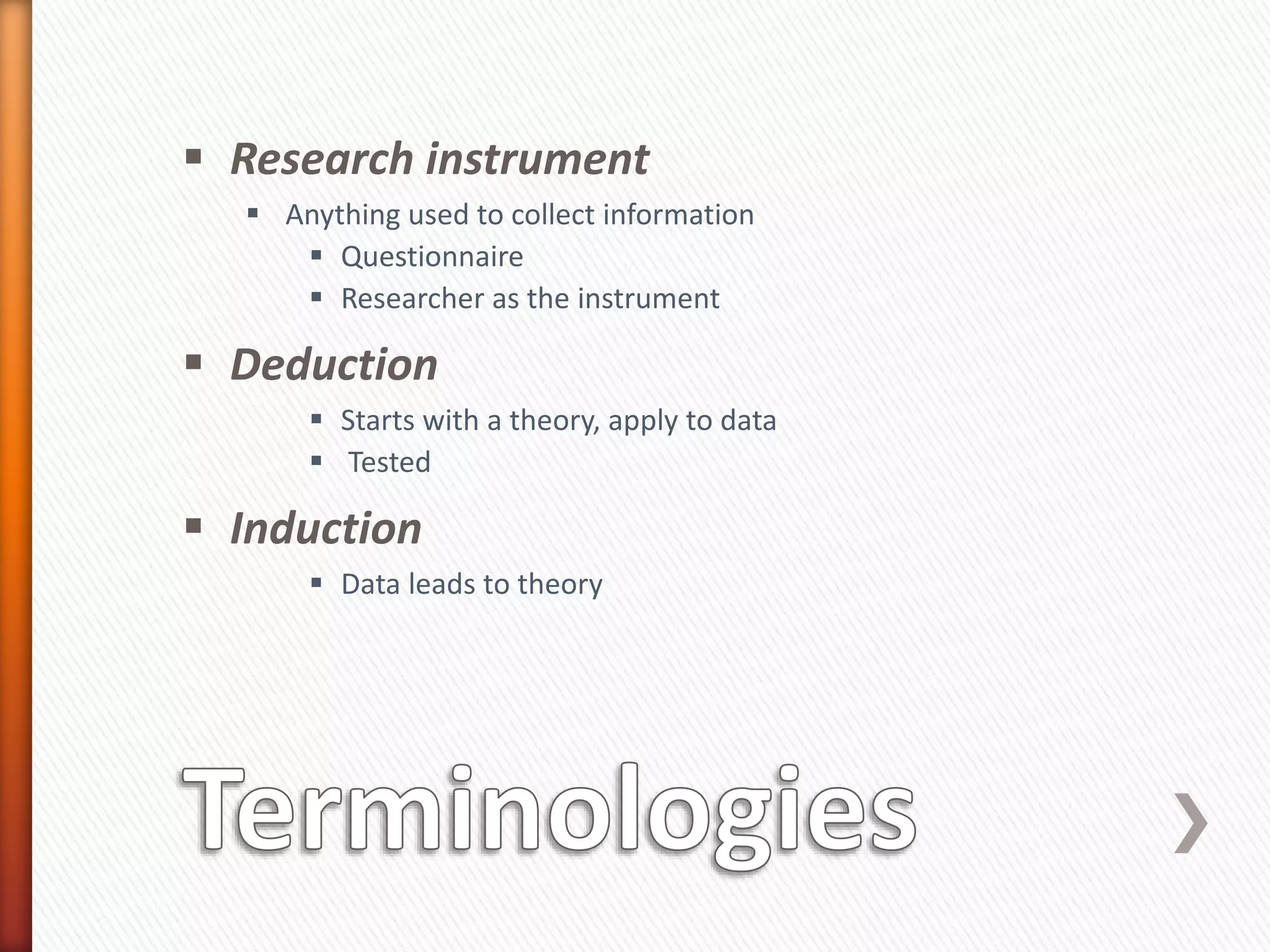
 Research instrument
 Anything used to collect information
 Questionnaire
 Researcher as the instrument
 Deduction
 Starts with a theory, apply to data
 Tested
 Induction
 Data leads to theory
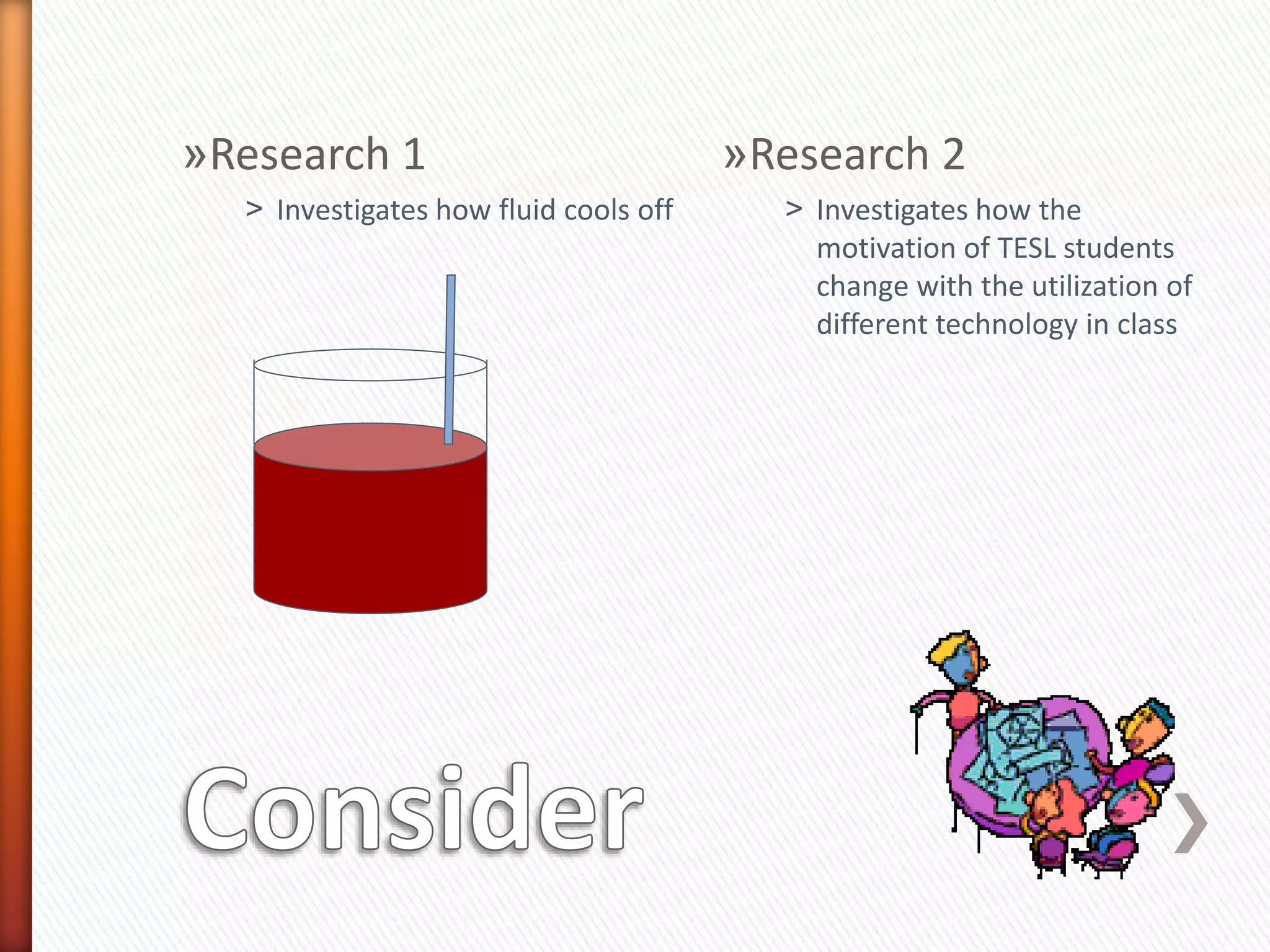
»Research 1
˃ Investigates how fluid cools off
»Research 2
˃ Investigates how the
motivation of TESL students
change with the utilization of
different technology in class
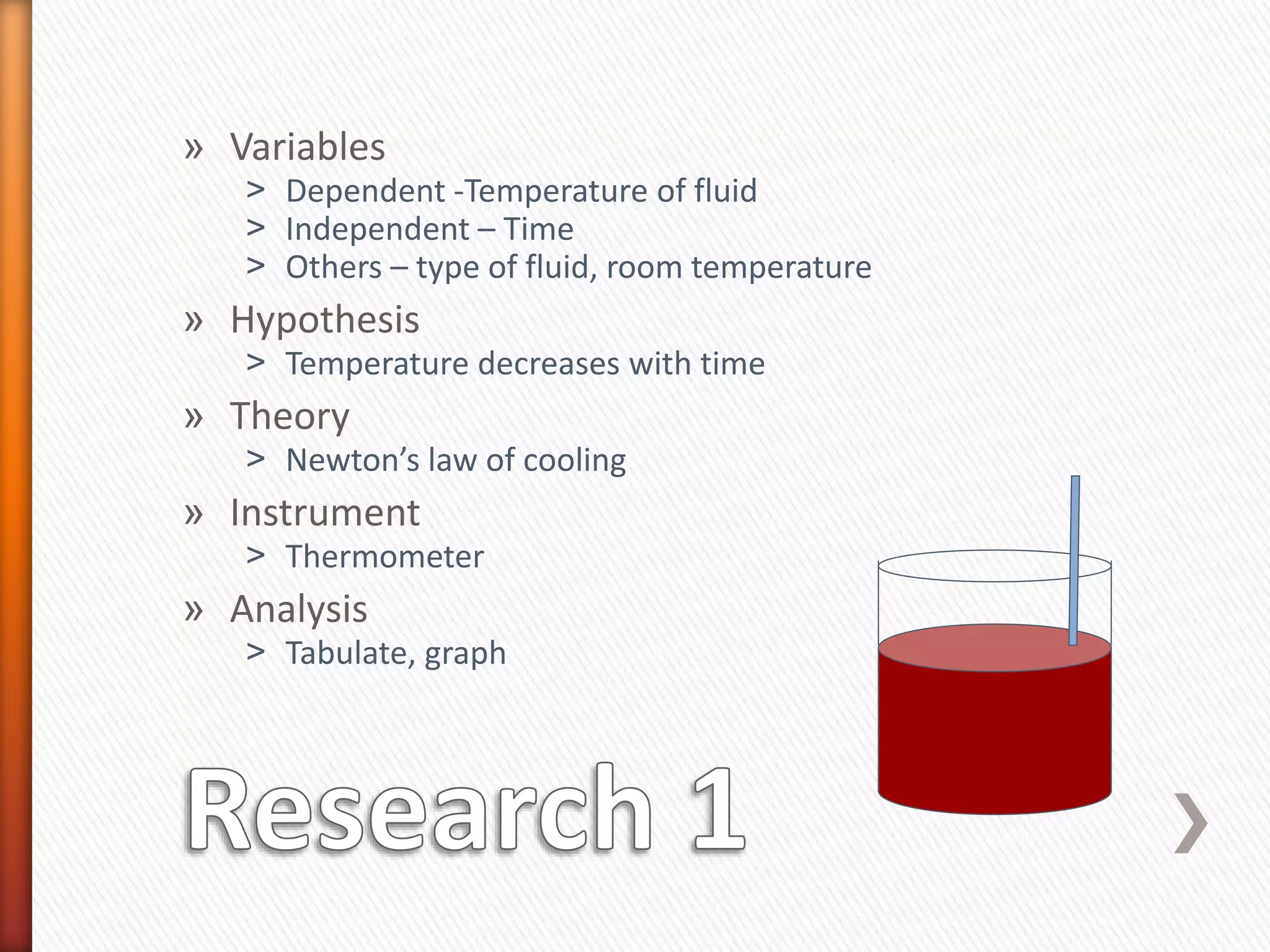
» Variables
˃ Dependent -Temperature of fluid
˃ Independent – Time
˃ Others – type of fluid, room temperature
» Hypothesis
˃ Temperature decreases with time
» Theory
˃ Newton’s law of cooling
» Instrument
˃ Thermometer
» Analysis
˃ Tabulate, graph
» Variables
˃ Dependent –Motivation
˃ Independent – ?
˃ Others – level of difficulty, personal problems etc
» Hypothesis
˃ The more recent the technology, the higher the level of motivation
» Theory
˃ “No specific law” – but have been researched
» Instrument
˃ Questionnaire
» Analysis
˃ Compute correlation coefficient
» Specify actions or operations to measure
motivation
˃ States that he/she likes research class
˃ Display interests – pays attention
˃ Observed to ask questions about subject
˃ Turns in all homework/assignments on time
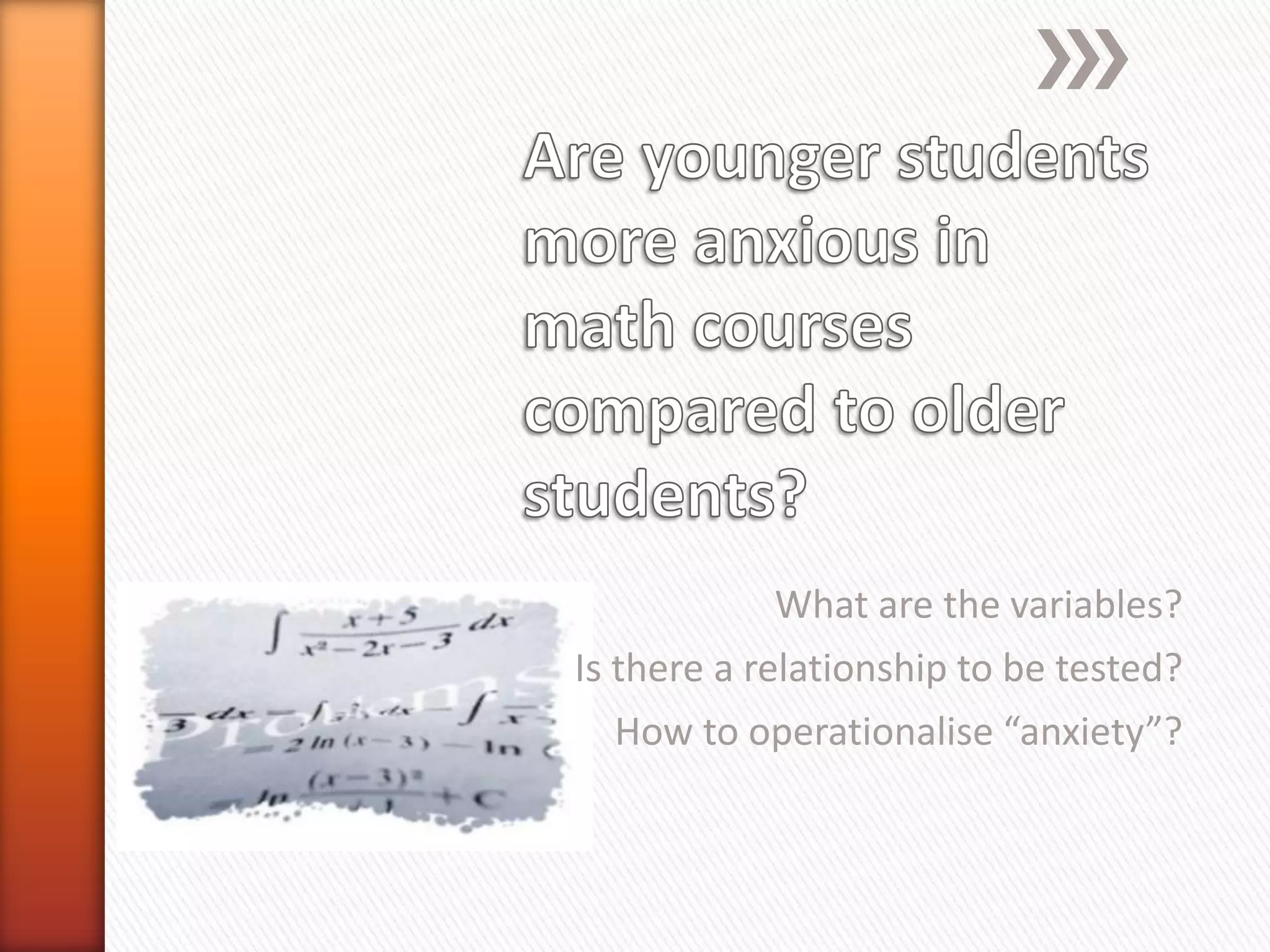
What are the variables?
Is there a relationship to be tested?
How to operationalise “anxiety”?
» Your personal interest
» Accessibility
» Socially relevant / useful
» Reiterate the significance of your would-be
research
» University of Edinburgh
http://www.lel.ed.ac.uk/research/
» Syntax & Semantics Research- research in both of these core areas of linguistic
theory, and in the interfaces between them and other areas, such as pragmatics.
» The Phonetics & Phonology - researchers treating a very broad range of topics -
"from speech synthesis to OT" - as part of a unified field of activity; hardly anyone in
the group can readily be pigeonholed as a "phonologist" or a "phonetician".
» The Centre for Speech Technology Research (CSTR) - concerned with research in all
areas of speech technology including speech recognition, speech synthesis, speech
signal processing, information access, multimodal interfaces and dialogue systems.
» The Language in Context Research - investigates how the social, interpersonal and
discursive context of language shapes its forms and uses.
» The Developmental Linguistics Research - undertakes theoretical and experimental
research on language acquisition, language attrition, and language change. The
fundamental research aim is to investigate the nature of the constraints on how
linguistic knowledge can vary over time, both within and between individuals.
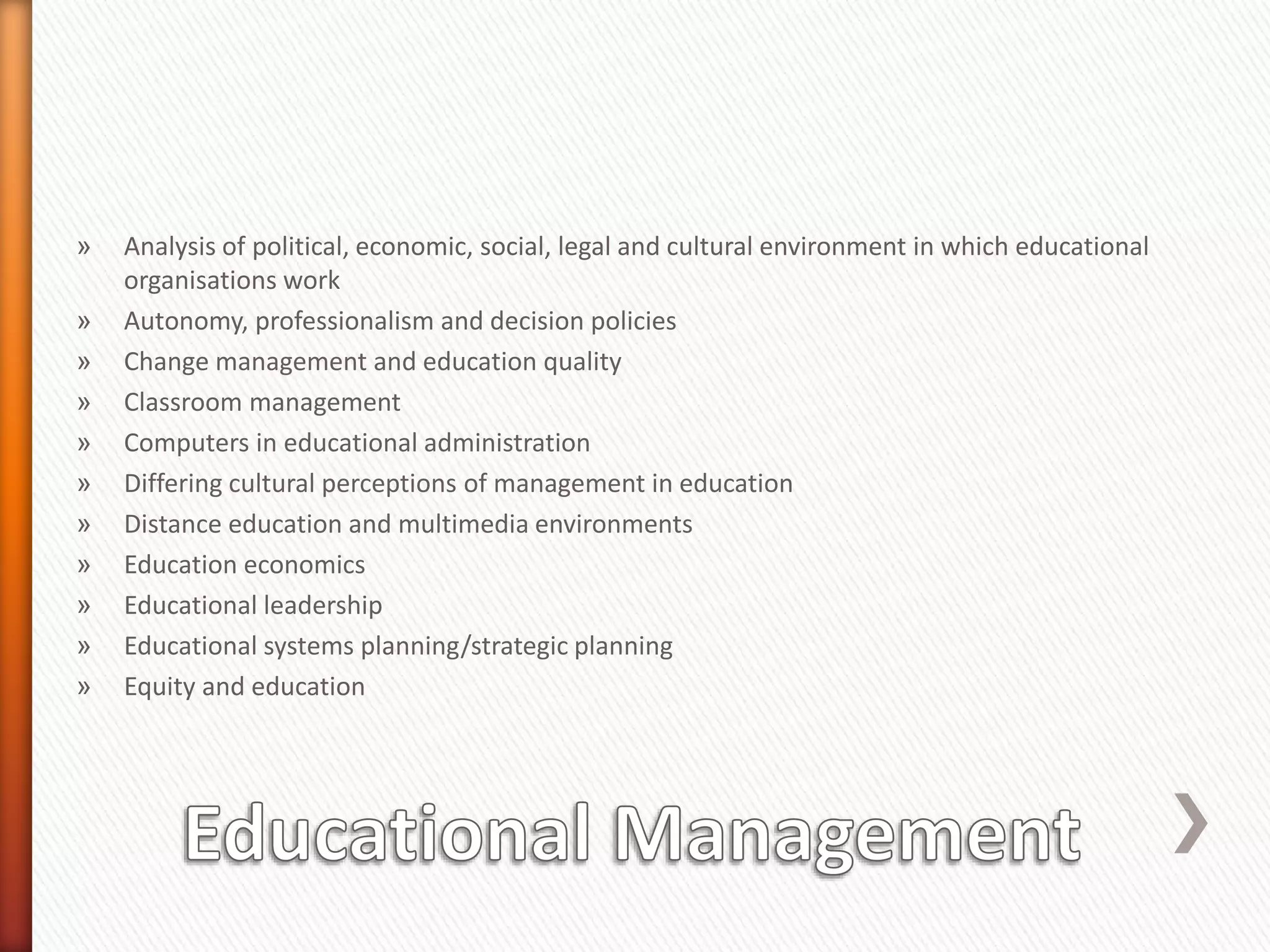
» Analysis of political, economic, social, legal and cultural environment in which educational
organisations work
» Autonomy, professionalism and decision policies
» Change management and education quality
» Classroom management
» Computers in educational administration
» Differing cultural perceptions of management in education
» Distance education and multimedia environments
» Education economics
» Educational leadership
» Educational systems planning/strategic planning
» Equity and education
» Globalisation and education
» Information systems for education and training support
» Leadership in education
» Lifelong learning and development of competences
» Management in higher education / Management of e-education
» Managing the curriculum
» Marketing in education
» Organisations as learning communities
» Policy analysis and evaluation of institutions and study programmes
» Professional development of teaching staff
» Public policies management
» School and school system improvement
» Transactional education, student and teaching mobility
» The Nineteenth-Century Artist-Teacher: A Case Study of
George Wallis and the Creation of a New Identity
» Dyslexia and the Studio: Bridging the Gap between
Theory and Practice
» Facilitating meta learning in Art and Design Education
» Making Creative Spaces: The Art and Design Classroom
as a Site of Performativity
» Ecological mural as community reconnection
» Systematic
» Start with newspaper, magazines, tv news
» Read textbook
» Read reports
» Read journals
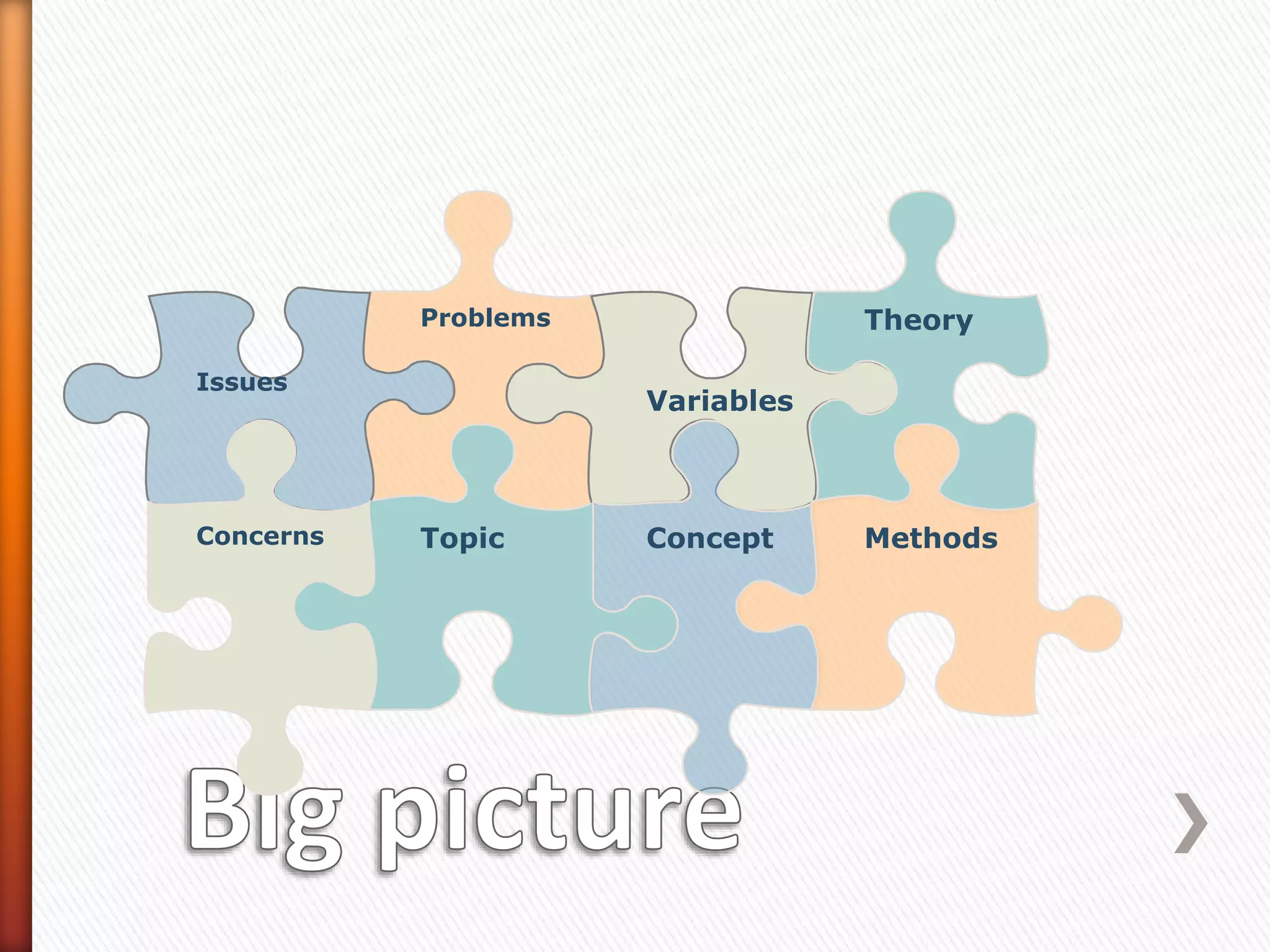
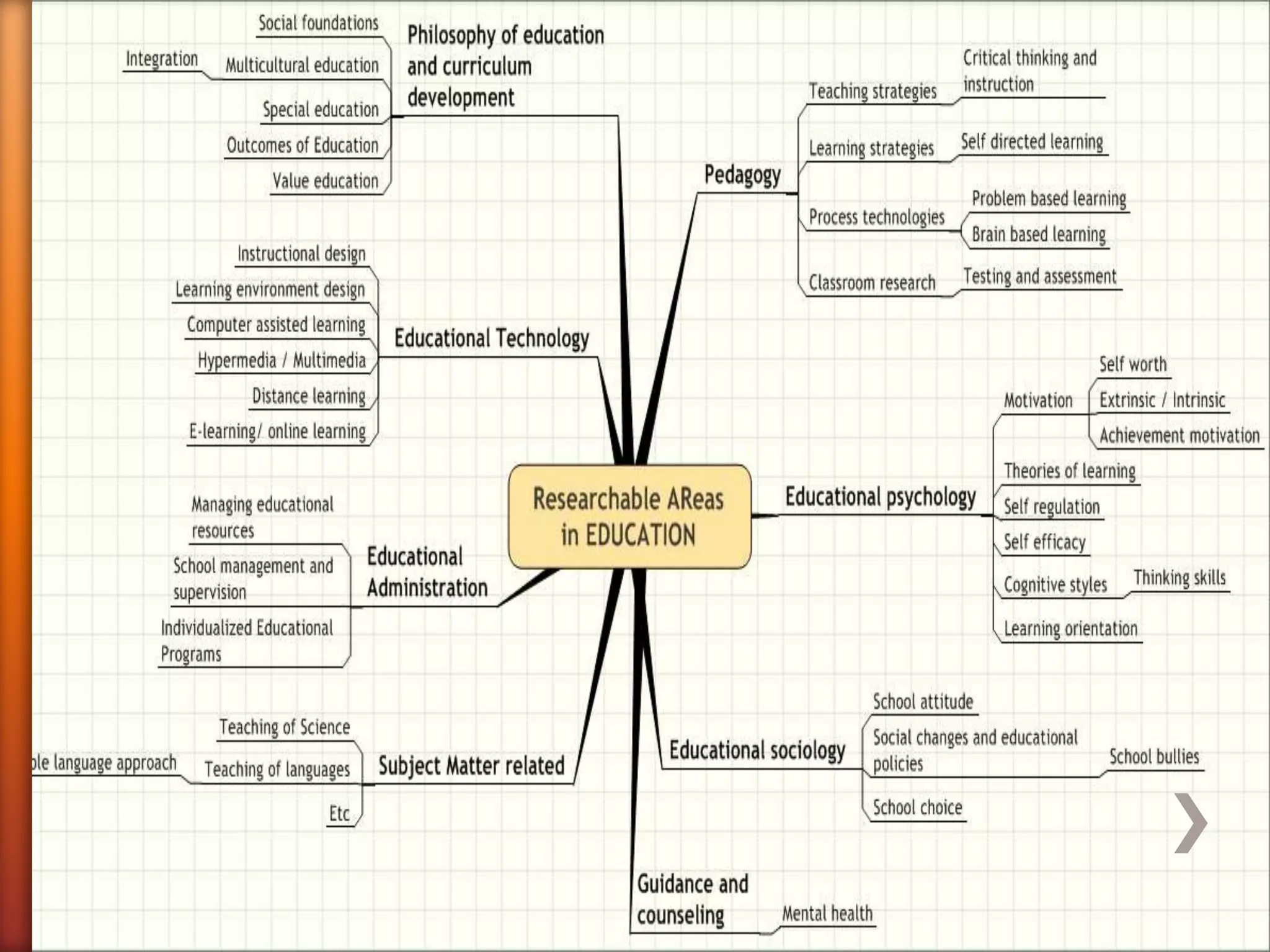
Problems
Topic
Variables
Concept
Theory
Methods
Issues
Concerns
» You have research questions and you answer
them by providing data collected through valid
and reliable processes.
» Explore the contents in the i-Learn portal
» Think of an area you want to research
» Set up your portfolio
˃ Start posting your reflection/thoughts/ideas
» Register as National Academies Press user at
http://www.nap.edu/ and
˃ read “ Scientific Research in education (2002)” chapter 5
» Better still read the whole book :-D

Week 1 intro to research 702 2015

  • 1.
  • 2.
    » Lecturer info» Recommended texts » Materials ˃ Online ˃ Handouts » Research portfolio ˃ Electronic ˃ Google sites » Research Seminar » Invited “speakers”

  • 4.
  • 5.
    » What isresearch » Why carry out research » Types and approaches » Terminologies
  • 6.
  • 8.
    » Response toa problem? » Solving a problem? ˃ What do you do when solving a problem? + Understand the problem + Devise a plan to obtain a solution + Use the plan + Evaluate the outcome
  • 9.
    Sleep habits andacademic achievement
  • 10.
    » Research isthe formal systematic application of the scientific and disciplined inquiry approach to the study of problems
  • 11.
    » Research isthe formal systematic application of the scientific and disciplined inquiry approach to the study of problems » What do we mean by scientific?
  • 12.
    1 2 34 Formulate the hypothesis (a tentative proposition about the relation between two or more theoretical constructs) Test the hypothesis (design a study to establish whether the relationship between the constructs are as predicted) Collect data Decide to accept or reject hypothesis
  • 13.
     A diligentsearch or inquiry - scientific investigation and study to discover facts  All claims open to question  Knowledge can be observed and tested again
  • 14.
    » To Describe- describe the shape, colour, change over time, relation to other constructs and so on.. » To Predict - given what is known the scientist attempts to predict what might happen.. » To Control - by manipulating certain variables the scientist is interested in determining whether it will lead to controlling a particular condition. » To Explain in the form of a Theory - ultimately the scientist is interested in forming a theory to explain the phenomena being investigated.
  • 15.
  • 16.
     A systematic,and organized effort to investigate and provide trustworthy information about educational problems, issues and topics
  • 17.
  • 18.
    » Research beginswith a question in the mind of the researcher. » Research demands a clear statement of the problem. » Research requires a plan » Research seeks direction through appropriate hypotheses or research questions » Research deals with facts and their meaning.
  • 19.
    1 2 34 Identify a problem Review known information in the problem area – put forward a hypothesis/ formulate research questions Collect data Analyze and interpret data Report findings – give answers, solve problem based on analysis Design a study to test hypothesis/ answer the research questions
  • 20.
    Explore? Describe? Predict?Control? Explain?
  • 21.
    » To provideevidence to help people decide which opinions are correct – or more correct » To help develop better ways to think about the field of education
  • 22.
    » To investigateproblems or questions concerned with improvement of education (Sowell, 2001) ˃ contribute to the advances of knowledge and theory ˃ provide insights into societal concerns ˃ solve a particular problem within a particular setting
  • 23.
    » Basic ˃ contributeto the advances of knowledge and theory » Applied ˃ provide insights into societal concerns ˃ solve a particular problem within a particular setting » Evaluation ˃ Decision making
  • 24.
    »Basic ˃ Apply tomany people and situations ˃ Relate to general theory ˃ Results may not have immediate or clear implications for practice »Applied ˃ Apply to specific group of people and situations ˃ Not necessarily related to broader field of knowledge ˃ Results have immediate and clear implications for practice
  • 25.
  • 26.
    » Validity ˃ Outcomesare accurate? ˃ Data collection provide accurate data? ˃ Analysis suitable for answering the research questions? »Reliability ˃ Outcomes are trustworthy? ˃ Can depend on the outcomes? ˃ Can replicate data?
  • 27.
     research methodology The study of research methods  A singular that does not admit of a plural  research technique  A specific means, approach or tool-and-its-use, whereby data is gathered and analysed, and inferences are drawn  research method  The manner in which a particular project is undertaken
  • 28.
     variable  anycharacteristic that is not always the same  characteristics that vary  relationship  A statement about variables  hypothesis  Statement that can be tested  theory  An explanation of how and why things happen  Tested
  • 29.
     Research instrument Anything used to collect information  Questionnaire  Researcher as the instrument  Deduction  Starts with a theory, apply to data  Tested  Induction  Data leads to theory
  • 30.
    »Research 1 ˃ Investigateshow fluid cools off »Research 2 ˃ Investigates how the motivation of TESL students change with the utilization of different technology in class
  • 31.
    » Variables ˃ Dependent-Temperature of fluid ˃ Independent – Time ˃ Others – type of fluid, room temperature » Hypothesis ˃ Temperature decreases with time » Theory ˃ Newton’s law of cooling » Instrument ˃ Thermometer » Analysis ˃ Tabulate, graph
  • 32.
    » Variables ˃ Dependent–Motivation ˃ Independent – ? ˃ Others – level of difficulty, personal problems etc » Hypothesis ˃ The more recent the technology, the higher the level of motivation » Theory ˃ “No specific law” – but have been researched » Instrument ˃ Questionnaire » Analysis ˃ Compute correlation coefficient
  • 33.
    » Specify actionsor operations to measure motivation ˃ States that he/she likes research class ˃ Display interests – pays attention ˃ Observed to ask questions about subject ˃ Turns in all homework/assignments on time
  • 34.
    What are thevariables? Is there a relationship to be tested? How to operationalise “anxiety”?
  • 35.
    » Your personalinterest » Accessibility » Socially relevant / useful » Reiterate the significance of your would-be research
  • 37.
    » University ofEdinburgh http://www.lel.ed.ac.uk/research/ » Syntax & Semantics Research- research in both of these core areas of linguistic theory, and in the interfaces between them and other areas, such as pragmatics. » The Phonetics & Phonology - researchers treating a very broad range of topics - "from speech synthesis to OT" - as part of a unified field of activity; hardly anyone in the group can readily be pigeonholed as a "phonologist" or a "phonetician". » The Centre for Speech Technology Research (CSTR) - concerned with research in all areas of speech technology including speech recognition, speech synthesis, speech signal processing, information access, multimodal interfaces and dialogue systems. » The Language in Context Research - investigates how the social, interpersonal and discursive context of language shapes its forms and uses. » The Developmental Linguistics Research - undertakes theoretical and experimental research on language acquisition, language attrition, and language change. The fundamental research aim is to investigate the nature of the constraints on how linguistic knowledge can vary over time, both within and between individuals.
  • 38.
    » Analysis ofpolitical, economic, social, legal and cultural environment in which educational organisations work » Autonomy, professionalism and decision policies » Change management and education quality » Classroom management » Computers in educational administration » Differing cultural perceptions of management in education » Distance education and multimedia environments » Education economics » Educational leadership » Educational systems planning/strategic planning » Equity and education
  • 39.
    » Globalisation andeducation » Information systems for education and training support » Leadership in education » Lifelong learning and development of competences » Management in higher education / Management of e-education » Managing the curriculum » Marketing in education » Organisations as learning communities » Policy analysis and evaluation of institutions and study programmes » Professional development of teaching staff » Public policies management » School and school system improvement » Transactional education, student and teaching mobility
  • 41.
    » The Nineteenth-CenturyArtist-Teacher: A Case Study of George Wallis and the Creation of a New Identity » Dyslexia and the Studio: Bridging the Gap between Theory and Practice » Facilitating meta learning in Art and Design Education » Making Creative Spaces: The Art and Design Classroom as a Site of Performativity » Ecological mural as community reconnection
  • 42.
    » Systematic » Startwith newspaper, magazines, tv news » Read textbook » Read reports » Read journals
  • 43.
  • 44.
    » You haveresearch questions and you answer them by providing data collected through valid and reliable processes.
  • 45.
    » Explore thecontents in the i-Learn portal » Think of an area you want to research » Set up your portfolio ˃ Start posting your reflection/thoughts/ideas » Register as National Academies Press user at http://www.nap.edu/ and ˃ read “ Scientific Research in education (2002)” chapter 5 » Better still read the whole book :-D