PRESENT SIMPLE -
PRESENT CONTINUOUS
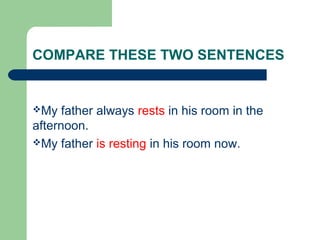
COMPARE THESE TWO SENTENCES
My father always rests in his room in the
afternoon.
My father is resting in his room now.
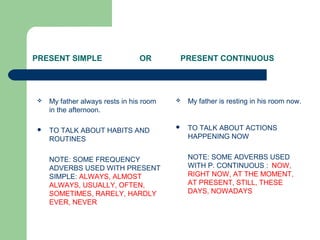
PRESENT SIMPLE OR PRESENT CONTINUOUS
 My father is resting in his room now.
 TO TALK ABOUT ACTIONS
HAPPENING NOW
NOTE: SOME ADVERBS USED
WITH P. CONTINUOUS : NOW,
RIGHT NOW, AT THE MOMENT,
AT PRESENT, STILL, THESE
DAYS, NOWADAYS
 My father always rests in his room
in the afternoon.
 TO TALK ABOUT HABITS AND
ROUTINES
NOTE: SOME FREQUENCY
ADVERBS USED WITH PRESENT
SIMPLE: ALWAYS, ALMOST
ALWAYS, USUALLY, OFTEN,
SOMETIMES, RARELY, HARDLY
EVER, NEVER
COMPARE THESE SENTENCES
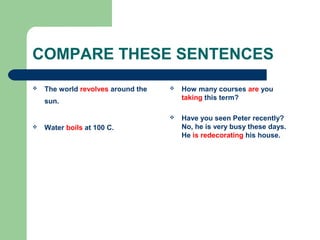
 The world revolves around the
sun.
 Water boils at 100 C.
 How many courses are you
taking this term?
 Have you seen Peter recently?
No, he is very busy these days.
He is redecorating his house.
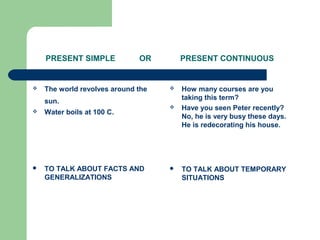
PRESENT SIMPLE OR PRESENT CONTINUOUS
 The world revolves around the
sun.
 Water boils at 100 C.
 TO TALK ABOUT FACTS AND
GENERALIZATIONS
 How many courses are you
taking this term?
 Have you seen Peter recently?
No, he is very busy these days.
He is redecorating his house.
 TO TALK ABOUT TEMPORARY
SITUATIONS
COMPARE THESE SENTENCES
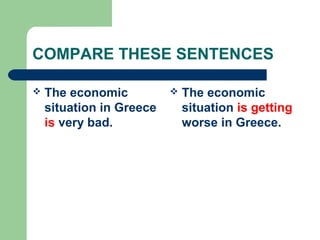
 The economic
situation in Greece
is very bad.
 The economic
situation is getting
worse in Greece.
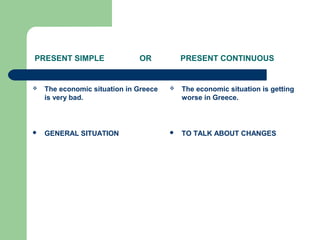
PRESENT SIMPLE OR PRESENT CONTINUOUS
 The economic situation in Greece
is very bad.
 GENERAL SITUATION
 The economic situation is getting
worse in Greece.
 TO TALK ABOUT CHANGES
COMPARE THESE TWO
SENTENCES
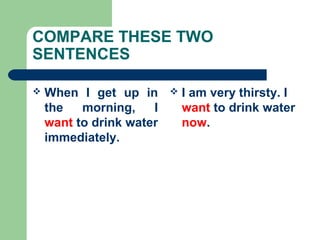
 When I get up in
the morning, I
want to drink water
immediately.
 I am very thirsty. I
want to drink water
now.
PRESENT SIMPLE OR PRESENT CONTINUOUS
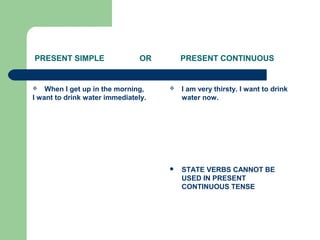
 When I get up in the morning,
I want to drink water immediately.
 I am very thirsty. I want to drink
water now.
 STATE VERBS CANNOT BE
USED IN PRESENT
CONTINUOUS TENSE
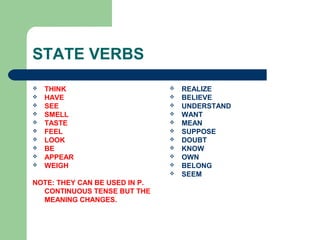
STATE VERBS
 THINK
 HAVE
 SEE
 SMELL
 TASTE
 FEEL
 LOOK
 BE
 APPEAR
 WEIGH
NOTE: THEY CAN BE USED IN P.
CONTINUOUS TENSE BUT THE
MEANING CHANGES.
 REALIZE
 BELIEVE
 UNDERSTAND
 WANT
 MEAN
 SUPPOSE
 DOUBT
 KNOW
 OWN
 BELONG
 SEEM
VERBS THAT CAN BE USED IN P. CONTINUOUS TENSE BUT
WITH A DIFFERENT MEANING
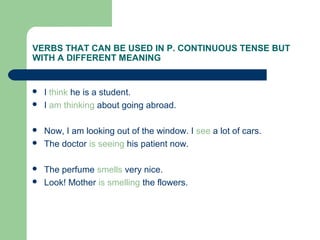
 I think he is a student.
 I am thinking about going abroad.
 Now, I am looking out of the window. I see a lot of cars.
 The doctor is seeing his patient now.
 The perfume smells very nice.
 Look! Mother is smelling the flowers.
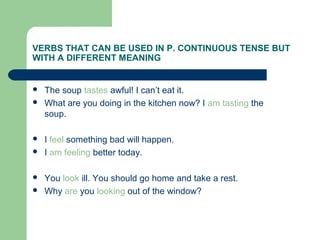
 The soup tastes awful! I can’t eat it.
 What are you doing in the kitchen now? I am tasting the
soup.
 I feel something bad will happen.
 I am feeling better today.
 You look ill. You should go home and take a rest.
 Why are you looking out of the window?
VERBS THAT CAN BE USED IN P. CONTINUOUS TENSE BUT
WITH A DIFFERENT MEANING
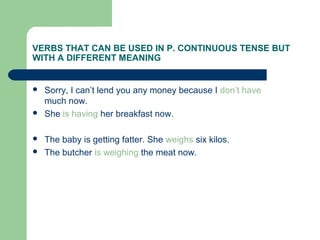
 Sorry, I can’t lend you any money because I don’t have
much now.
 She is having her breakfast now.
 The baby is getting fatter. She weighs six kilos.
 The butcher is weighing the meat now.
VERBS THAT CAN BE USED IN P. CONTINUOUS TENSE BUT
WITH A DIFFERENT MEANING
VERBS THAT CAN BE USED IN P. CONTINUOUS TENSE BUT
WITH A DIFFERENT MEANING
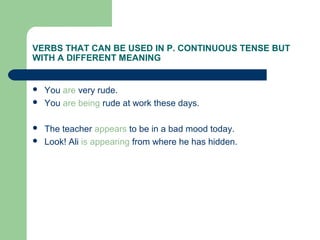
 You are very rude.
 You are being rude at work these days.
 The teacher appears to be in a bad mood today.
 Look! Ali is appearing from where he has hidden.

Week 01 present simple- present continuous

  • 1.
  • 2.
    COMPARE THESE TWOSENTENCES My father always rests in his room in the afternoon. My father is resting in his room now.
  • 3.
    PRESENT SIMPLE ORPRESENT CONTINUOUS  My father is resting in his room now.  TO TALK ABOUT ACTIONS HAPPENING NOW NOTE: SOME ADVERBS USED WITH P. CONTINUOUS : NOW, RIGHT NOW, AT THE MOMENT, AT PRESENT, STILL, THESE DAYS, NOWADAYS  My father always rests in his room in the afternoon.  TO TALK ABOUT HABITS AND ROUTINES NOTE: SOME FREQUENCY ADVERBS USED WITH PRESENT SIMPLE: ALWAYS, ALMOST ALWAYS, USUALLY, OFTEN, SOMETIMES, RARELY, HARDLY EVER, NEVER
  • 4.
    COMPARE THESE SENTENCES The world revolves around the sun.  Water boils at 100 C.  How many courses are you taking this term?  Have you seen Peter recently? No, he is very busy these days. He is redecorating his house.
  • 5.
    PRESENT SIMPLE ORPRESENT CONTINUOUS  The world revolves around the sun.  Water boils at 100 C.  TO TALK ABOUT FACTS AND GENERALIZATIONS  How many courses are you taking this term?  Have you seen Peter recently? No, he is very busy these days. He is redecorating his house.  TO TALK ABOUT TEMPORARY SITUATIONS
  • 6.
    COMPARE THESE SENTENCES The economic situation in Greece is very bad.  The economic situation is getting worse in Greece.
  • 7.
    PRESENT SIMPLE ORPRESENT CONTINUOUS  The economic situation in Greece is very bad.  GENERAL SITUATION  The economic situation is getting worse in Greece.  TO TALK ABOUT CHANGES
  • 8.
    COMPARE THESE TWO SENTENCES When I get up in the morning, I want to drink water immediately.  I am very thirsty. I want to drink water now.
  • 9.
    PRESENT SIMPLE ORPRESENT CONTINUOUS  When I get up in the morning, I want to drink water immediately.  I am very thirsty. I want to drink water now.  STATE VERBS CANNOT BE USED IN PRESENT CONTINUOUS TENSE
  • 10.
    STATE VERBS  THINK HAVE  SEE  SMELL  TASTE  FEEL  LOOK  BE  APPEAR  WEIGH NOTE: THEY CAN BE USED IN P. CONTINUOUS TENSE BUT THE MEANING CHANGES.  REALIZE  BELIEVE  UNDERSTAND  WANT  MEAN  SUPPOSE  DOUBT  KNOW  OWN  BELONG  SEEM
  • 11.
    VERBS THAT CANBE USED IN P. CONTINUOUS TENSE BUT WITH A DIFFERENT MEANING  I think he is a student.  I am thinking about going abroad.  Now, I am looking out of the window. I see a lot of cars.  The doctor is seeing his patient now.  The perfume smells very nice.  Look! Mother is smelling the flowers.
  • 12.
     The souptastes awful! I can’t eat it.  What are you doing in the kitchen now? I am tasting the soup.  I feel something bad will happen.  I am feeling better today.  You look ill. You should go home and take a rest.  Why are you looking out of the window? VERBS THAT CAN BE USED IN P. CONTINUOUS TENSE BUT WITH A DIFFERENT MEANING
  • 13.
     Sorry, Ican’t lend you any money because I don’t have much now.  She is having her breakfast now.  The baby is getting fatter. She weighs six kilos.  The butcher is weighing the meat now. VERBS THAT CAN BE USED IN P. CONTINUOUS TENSE BUT WITH A DIFFERENT MEANING
  • 14.
    VERBS THAT CANBE USED IN P. CONTINUOUS TENSE BUT WITH A DIFFERENT MEANING  You are very rude.  You are being rude at work these days.  The teacher appears to be in a bad mood today.  Look! Ali is appearing from where he has hidden.