










Web 3.0
            The Semantic Web
Hatem Mahmoud
Lead Developer, eSpace
ExpressionLab.com
Agenda
Introduction
The Problem
Solutions
Applications
Summary
Introduction
Every language has its
   own Syntax and
      Semantics
Syntax is the study of
      grammar
Semantics is the study of
       meaning
Syntax is how to say
     something
Semantic is the meaning
  behind what you say
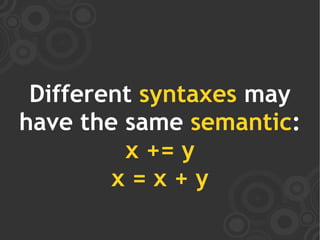
Different syntaxes may
have the same semantic:
         x += y
        x=x+y
Syntax and semantics
    are all about
   communication
Computers use
network protocols
to communicate in
     networks
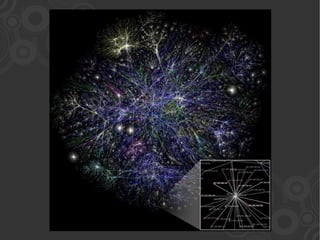
The Internet is a huge
network of computers
  that use TCP/IP to
    communicate
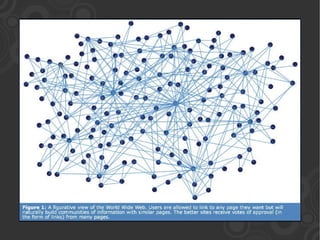
The Web is a system of
 interlinked documents
accessed via the Internet
Web browsers use HTTP
 to communicate with
      Web servers
You can view Web pages
 and use hyperlinks to
navigate between them
People can easily access
any of these documents
This is the largest source
  of information ever
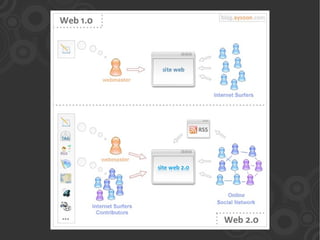
This is
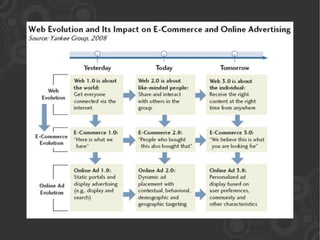
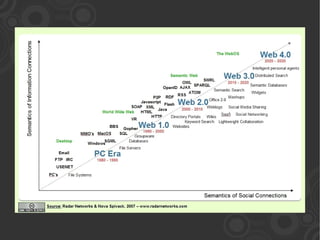
Web 1.0
Authors started to use
         Ajax
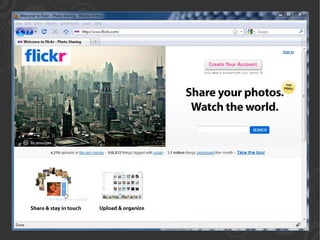
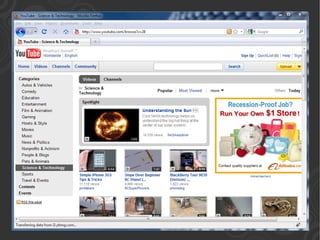
People started to share
  photos and videos
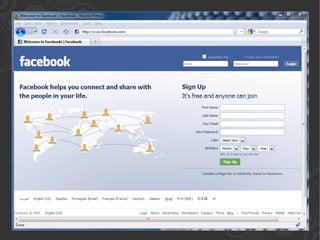
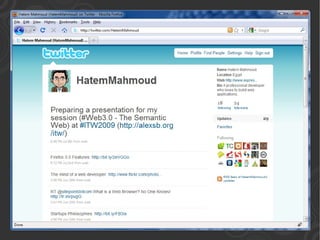
People started to
   interact in
 social networks
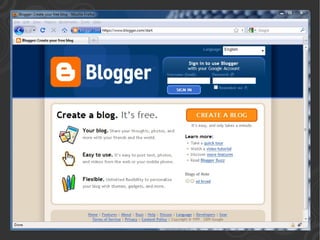
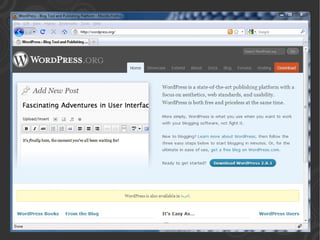
People started to publish
    content in blogs
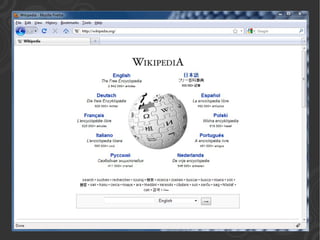
People started to
contribute in wikis
People started to use
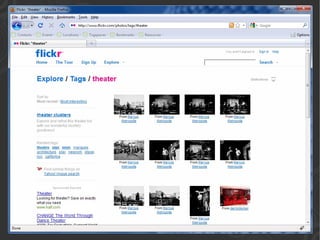
    tags and RSS
This is the
Read-Write Web
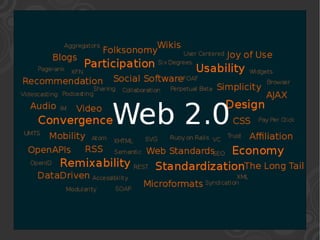
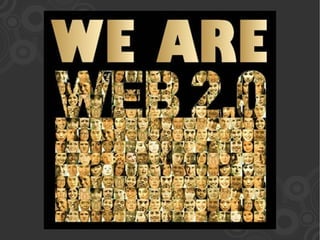
This is
Web 2.0
The Problem
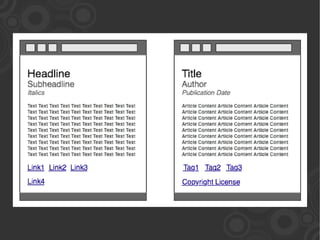
Web pages are written in
        HTML
HTML describes the
structure of information
HTML describes the
syntax not the semantics
If computers can
understand the meaning
 behind information...
they can learn what we
   are interested in
they can help us better
  find what we want
This is really what the
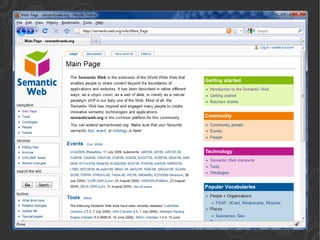
 Semantic Web is all
         about
This is
Web 3.0
Today's Web is about
    documents
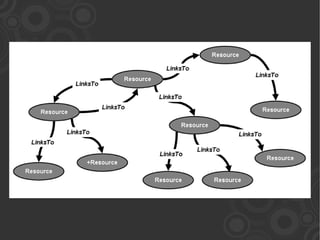
The Semantic Web is
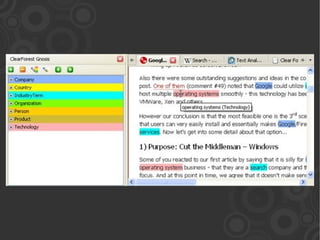
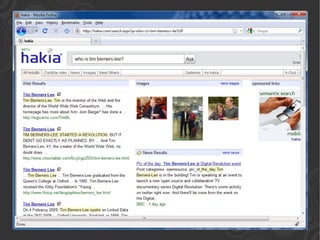
    about things
It can recognize people,
     places, events,
  companies, products,
      movies, etc.
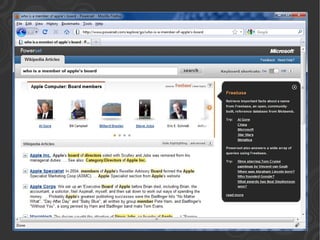
It can understand the
     relationships
    between things
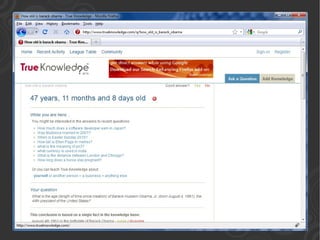
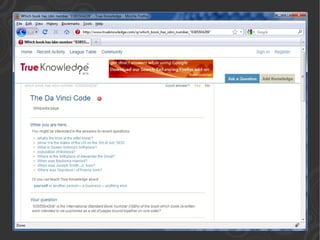
Example?
Solutions
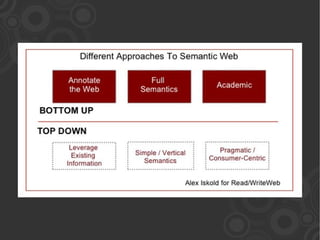
Solution: Top Down
Information analysis,
web scraping, natural
 language processing
Expensive!
human intervention,
 hard to maintain,
    legal issues
Solution: Bottom Up
Embedding semantical
annotations into the data
How?
Available options:
RDFa and microformats
RDFa
RDF is
Resource Description
    Framework
RDF is a W3C standard
for describing resources
       in the Web
RDF identifies things
     using URIs
 (Uniform Resource
    Identifiers)
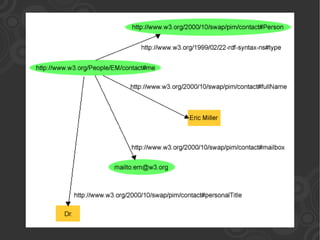
RDF uses simple
statements (Triples) to
    describe things
Thing-Property-Value
Subject-Predicate-Object
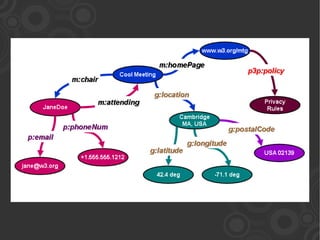
RDF graph
representation
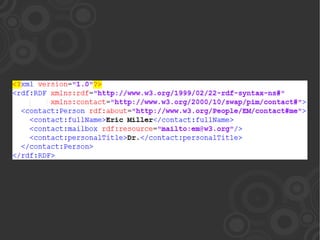
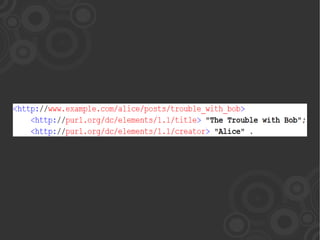
RDF/XML
N3
(Notation3)
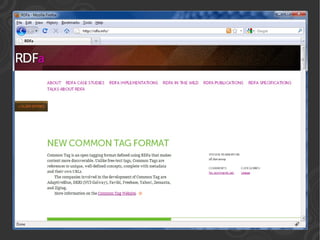
RDFa = RDF in attributes
RDFa provides a set of
XHTML attributes that
  express RDF data
Example:
Alice in Semantic
   Wonderland
Alice is a blogger who
 publishes articles at
http://example.com/alice
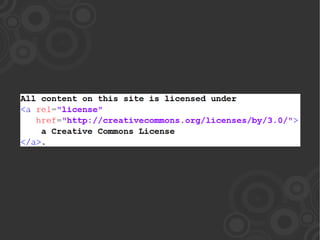
She wants to declare the
  license of her work
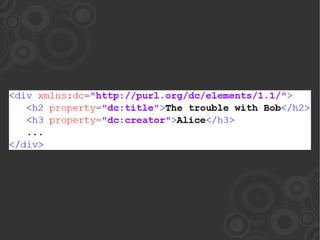
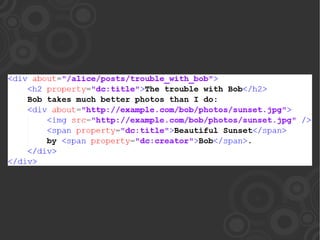
She wants to specify title
and creator of an article
But there are no such
 attributes in XHTML
She can use
 Dublin Core vocabulary

Dublin: Dublin, Ohio, USA
Core: only the core elements of metadata
She wants to give Bob
proper credit when she
   posts his photos
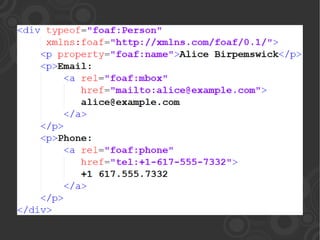
She wants to display her
name, email and phone
She can use
Friend-of-a-Friend
    vocabulary
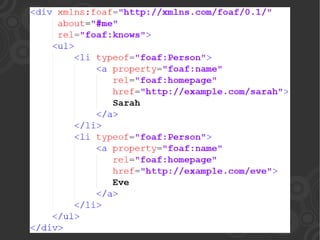
She wants to list her
      friends
SPARQL
(SPARQL Protocol And
RDF Query Language)
SPARQL is a query
language for RDF data
You can search for
  "friends of Alice who
created items whose title
      contains 'Bob'"
microformats
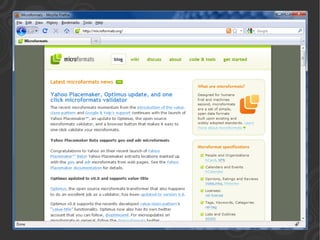
microformats are
 simple conventions for
embedding semantics in
         HTML
designed for
humans first, and
machines second
No namespaces,
 No new tags
Built upon existing
       standards
vCard, iCalendar, Atom,
          etc.
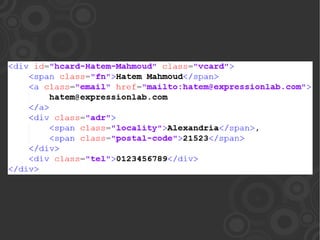
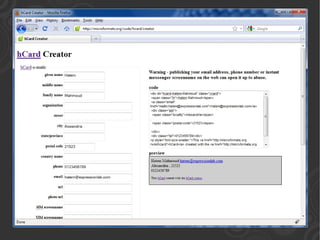
hCard
    (HTML vCard)
  represents people,
companies, places and
     organizations
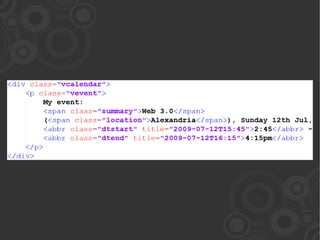
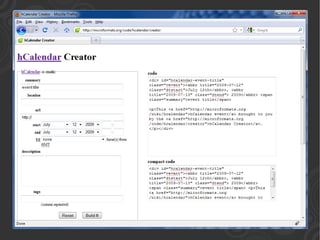
hCalendar
 (HTML iCalendar)
Represents calendar
      events
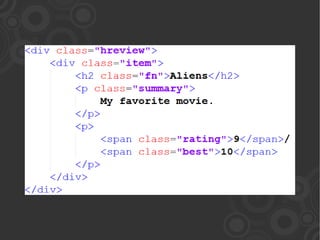
hReview
 Represents reviews of
  products, services,
businesses, events, etc.
hResume
represents resumes
Applications
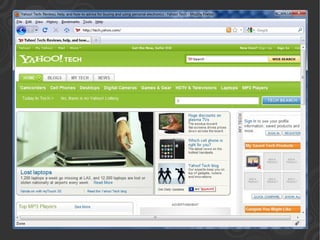
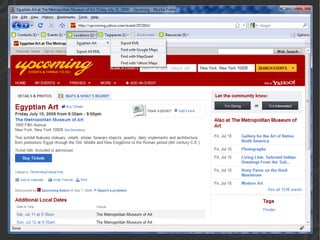
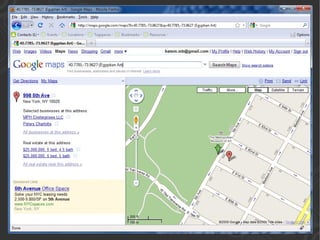
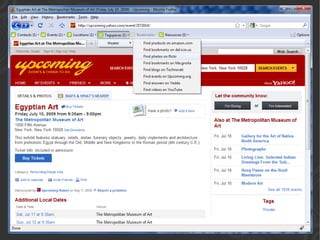
YahooTech uses hReview
  for product reviews
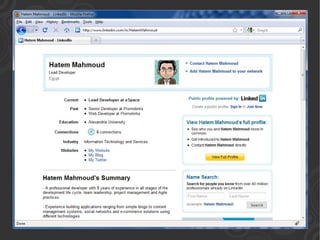
LinkedIn uses hResume
     for resumes
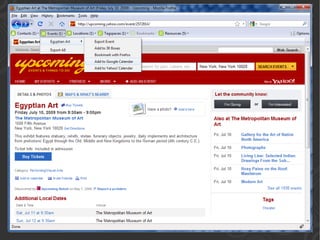
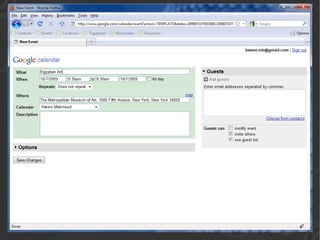
YahooUpcoming uses
  hCal for events
Challenges!
tools, privacy, trust,
applications, devices
Summary
“I have a dream for the Web in
   which computers become
 capable of analyzing all the
       data on the Web”

         Tim Berners-Lee, 1999
           Inventor of the Web
The Semantic Web is not
    a separate Web
but an extension of the
      current one
It is really happening
         today
Resources
Thank You!
Hatem Mahmoud
Lead Developer, eSpace
ExpressionLab.com

Web 3.0 The Semantic Web