Web 2.0 and the Library


                 Agnes Namaganda
                       0772367275
         agnama@mulib.mak.ac.ug or
        namaganda.agnes@gmail.com
Outline
• Introduction
• What is Web 2.0?
• Examples of Web 2.0
• Implications to libraries
• The Challenge: Managing Web
  2.0 in libraries
• Way forward
Introduction
 In addressing the point of Web 2.0 we
  are admitting that the Internet has a
  impact on our roles as librarians

 Question: In what ways is the
 Internet used or impacting our
 work as Librarians?
      For us to brainstorm
Web 2.0 and the rest of the Internet
service range
 Web 2.0 (web-based) implies there is Web
  1.0 (requires downloading software)

 What   is the difference?

 Is there a future beyond the Web 2.0 or is
 it at the apex?
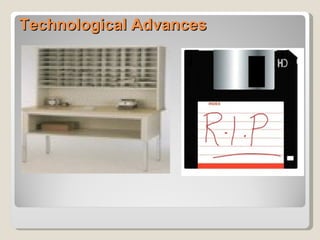
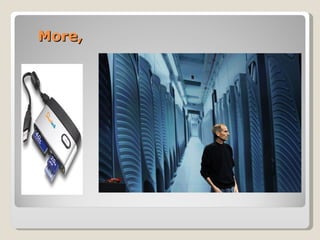
Technological Advances
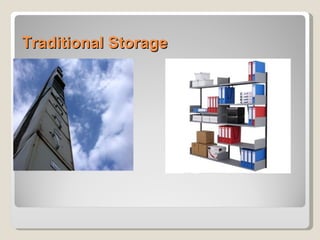
Traditional Storage
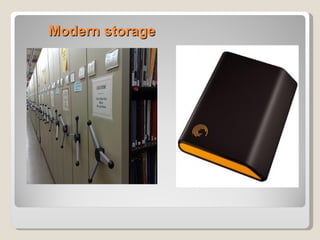
Modern storage
More,
What is Web 2.0
•   We can simply define it as a generation of
    the Internet. (It is just a fancy word
    coined by Tim O’reilly in 2004)

•   At this point it was agreed that the Web
    (Internet) as it had been known had been
    changed from a genre of static websites
    for individuals and companies to display
    what they want to a new communication
    formality
Web 2.0 Tools
 Web    2.0 tools are web-enabled services that
  allow persons and institutions to;
o construct a public or semi-public profile within a
  bounded system,
o articulate a list of other users with whom they
  share a connection, and
o view and traverse their list of connections and
  those made by others within the system.
Components of Web 2.0 tools

•   Web based (You need internet connection)
•   Ability to define a list of other users with whom
    they share a connection
•   Ability to traverse a list of connections made by
    others within the system
•   Information is shared in a system not only by the
    people or institutions that own the websites
•   Web 2.0 is not facebook
Examples of Web 2.0 tools
•   Micro blogging for personal diaries
•   Photo sharing sites Flickr, photobucket
•   Podcasting and video-casting software applications
•   Professional Networking sites such as Mendeley and LinkedIn
•   Really Simple syndication also known as RSS feeds
•   Social bookmarking (User tagging) such as delicious
•   Social networking sites (SNS) such as MySpace, Facebook,
    Friendster, LinkedIn
•   Synchronous messaging (also known as instant messaging (IM)
    such as Google talk, Yahoo Messenger and MSN Messenger, and
•   Wikis for collaborative works

We can choose from these for illustration.
Implications for Librarians and
 Information workers
 Ask   ourselves the following questions
  ◦ Who am I professionally
  ◦ What brand do I enjoy personally
  ◦ What brand does my library enjoy in the
    market (professional or institutional)
 We have to rid our selves of the image of
 information workers of a big table and shelves
 only
Benefits of Web 2.0
 Thesevary ranging on the Web 2.0 tool being
 adopted.
 ◦ In the first instance is the opportunity for
   faster and unlimited real-time
   communication with amongst the staff of
   the library and clients.
 ◦ Another critical merit is the platform to
   provide timely news for the whole records
   or information unit clientele.
Benefits (Cont. ……)
•   Staff get the opportunity to interact with library
    users beyond the normal working hours of the
    day in any time zones. (even on the privacy of
    your phone)
•   Web 2.0 also provides a seamless platform for
    persons to collaborate over projects during their
    course of study. Through applications such as
    web programs such as wiki spaces, Google
    docs
Benefits (Cont. …)
   Social media are also very invaluable to libraries
    in mobilisation of different stakeholders to
    pursue a given cause.
   Enables media sharing without one moving
    physically.
   More so, both sets of organisations use social
    media to improve their image and service point.
Challenges of Managing Web 2.0
 Resistance to change owing to human nature. However, this may
  be minimized by holding sensitization seminars to staff to
  familiarize them with the benefits of these developments.
 Lack of ‘political’ support from the management of the University.
  This may be due to the fact that implementing social software
  requires funding and yet the benefits may not be very obvious to
  a conservative manager. However, through sensitization efforts,
  this support can be won over.
 Another challenge is the inadequate funding for the
  implementation of social software applications. Whereas some of
  the applications can be implemented with simple Internet .
Consequences
   Inability to actively embrace Social software will limit
    access and usage of library collections of the future.
    Today’s physical space is inelastic to accommodate new
    collections and yet countless electronic resources are
    produced at faster rates. These exist in a myriad of forms
    from texts, to videos and audio resources. Such resources
    are most likely to dominate the library collections of the
    future. It is only with Social software that these can be
    harnessed lest academic demise.

   Failure to attract users especially the young people. Most of the
    Web 2.0 technologies in the world today have gained popularity
    because of their ability to attract the young people.
Other Challenges anticipated include;
   Copyright limitations and infringement with some to the
    resources that will be available especially in electronic
    forms.
   Inadequate skills of some of the staff and users in
    embracing the social software applications.
   Lack of steady supply of electricity to maintain the
    availability of servers.
   Misuse of social software for personal use as against
    professional academic performance.
   Lack of a synchronized editorial governance structure
    especially with blogs and collaborative works.
Why a Social media policy?
•   Offers a fundamental guideline in the use of social
    media by the company executives.
•   Provides guidelines on the use of the company symbols
    in their personal networks
•   The policy also places responsibility on who is to offer an
    official message on behalf of the library using social
    media
•   The policy provides guidelines on the use of the library’s
    network resources such bandwidth to access personal
    social networks. For example it could provide the time
    accessible for staff to use social media.
Benefits
•   Useful in providing guidance to staff on how to engage
    clients in case of disputes and confrontation over a
    social media platform.
•   Provides guidelines on how to deal with confidential
    information. Under ideal circumstances, this is normally
    to prevent library staff from divulging library secrets
    over social networks.
•   Provides invaluable guidelines on punitive measures
    for staff who do not comply with the professionalism
    and behavioral traits desired over a social networks.
Aspects of the Web 2.0 policy?
   Below are some of the proposed elements to be included in the
    social media policy of the academy library.

•   Definition of what is considered Social media
•   Purpose of the policy
•   Code of conduct over corporate social media
•   Code of conduct over personal social media
•   Acceptable behaviour of library Users over social media
•   Responsibility areas and productivity measures over social
    media
•   Security of corporate social media
•   Editorial guidelines regarding blogs and collaborative works
•   Punitive measures in case of breach by Library Users and staff.
•   Enforcement of the policy
Applicability
   Through platforms such as Facebook or Twitter groups
    librarians can send current notices to Users which they
    can access even on their smart phone handsets
     ◦ Selective Dissemination of Information (SDI) and
     ◦ Current Awareness Services to library clientele)

   Online Public Access Catalogues enable libraries to
    provide information about their holdings to all current and
    potential patrons of the library at any time of the day.

   Delivering Library instruction online (Online Tutorials)
Applicability cont’d
   Social software also provides a seamless platform for
    students to collaborate over projects during their course
    of study. Through applications such as web programs
    such as wiki spaces, students can contribute and modify
    content using simplified markup languages to joint
    projects
   Web 2.0 applications such as podcasts and video casts
    a new dimension to user education by availing such
    drills in an audio and video platform without having the
    lecturer to physically moving to the lecture. Even when
    they are stranded, they can ask for clarification through
    synchronous communication.
Applicability cont’d
   Technologies such as blogs are the best informal communication
    channel to extract latent feedback information from the users to
    enhance the quality of academic experience

   LibraryThing enables users, thousands of them potentially, to tag
    and recommend books to one another simply by viewing one
    another's collections (collection development).

   libraries are creating RSS feeds for users to subscribe to, including
    updates on new items in a collection, new services, and new
    content in subscription databases. They are also republishing
    content on their sites.
Conclusion
   The use of these Web 2.0 technologies and
    applications, will constitute a meaningful and substantive
    change in the history of libraries. The library's collection
    will change, becoming more interactive and fully
    accessible. The library's services will change, focusing
    more on the facilitation of information transfer and
    information literacy rather than providing controlled
    access to it
   Accumulating new social software services as the
    opportunities arise may in the end be impractical, and
    may present intractable difficulties in terms of workload,
    security, authentication and intellectual property
    management.
Way forward?
Question:
 Why should your employers continue
  extending Internet connectivity to
  your Office?
 What value are you adding using the
  Internet in your organisation
  (particularly in your unit)?
 Social Media Policy?
References
1.   Greenhow, C. (2011). Online social networks and learning. ON
     THE HORIZON, 19(1), 4-12.
2.   Halverson, E. R. (2011). Do social networking technologies have
     a place in formal learning environments? ON THE HORIZON,
     19(1), 62-67.
3.   Han, Z., & Liu, Y. Q. (2010). Web 2.0 applications in top Chinese
     university libraries. Library Hi Tech, 28(1), 41-62.
4.   Harinarayana, N. S., & Raju, N. V. (2010). Web 2.0 features in
     university library web sites. The Electronic Library, 28(1), 69-88.
5.   Harris C. S. (2010). Libraries (and Your Staff) in a Transliterate,
     Technology Fluent World. Tennessee: University of Tennessee
6.   Hoppe, M. (2011). The enormous significance of new and
     expanding Bas. ON THE HORIZON, 19(2), 134-139.
The   End


Thank   You!

Namaganda

  • 1.
    Web 2.0 andthe Library Agnes Namaganda 0772367275 agnama@mulib.mak.ac.ug or namaganda.agnes@gmail.com
  • 2.
    Outline • Introduction • Whatis Web 2.0? • Examples of Web 2.0 • Implications to libraries • The Challenge: Managing Web 2.0 in libraries • Way forward
  • 3.
    Introduction  In addressingthe point of Web 2.0 we are admitting that the Internet has a impact on our roles as librarians  Question: In what ways is the Internet used or impacting our work as Librarians?  For us to brainstorm
  • 4.
    Web 2.0 andthe rest of the Internet service range  Web 2.0 (web-based) implies there is Web 1.0 (requires downloading software)  What is the difference?  Is there a future beyond the Web 2.0 or is it at the apex?
  • 5.
  • 6.
  • 7.
  • 8.
  • 9.
    What is Web2.0 • We can simply define it as a generation of the Internet. (It is just a fancy word coined by Tim O’reilly in 2004) • At this point it was agreed that the Web (Internet) as it had been known had been changed from a genre of static websites for individuals and companies to display what they want to a new communication formality
  • 10.
    Web 2.0 Tools Web 2.0 tools are web-enabled services that allow persons and institutions to; o construct a public or semi-public profile within a bounded system, o articulate a list of other users with whom they share a connection, and o view and traverse their list of connections and those made by others within the system.
  • 11.
    Components of Web2.0 tools • Web based (You need internet connection) • Ability to define a list of other users with whom they share a connection • Ability to traverse a list of connections made by others within the system • Information is shared in a system not only by the people or institutions that own the websites • Web 2.0 is not facebook
  • 12.
    Examples of Web2.0 tools • Micro blogging for personal diaries • Photo sharing sites Flickr, photobucket • Podcasting and video-casting software applications • Professional Networking sites such as Mendeley and LinkedIn • Really Simple syndication also known as RSS feeds • Social bookmarking (User tagging) such as delicious • Social networking sites (SNS) such as MySpace, Facebook, Friendster, LinkedIn • Synchronous messaging (also known as instant messaging (IM) such as Google talk, Yahoo Messenger and MSN Messenger, and • Wikis for collaborative works We can choose from these for illustration.
  • 13.
    Implications for Librariansand Information workers  Ask ourselves the following questions ◦ Who am I professionally ◦ What brand do I enjoy personally ◦ What brand does my library enjoy in the market (professional or institutional)  We have to rid our selves of the image of information workers of a big table and shelves only
  • 14.
    Benefits of Web2.0  Thesevary ranging on the Web 2.0 tool being adopted. ◦ In the first instance is the opportunity for faster and unlimited real-time communication with amongst the staff of the library and clients. ◦ Another critical merit is the platform to provide timely news for the whole records or information unit clientele.
  • 15.
    Benefits (Cont. ……) • Staff get the opportunity to interact with library users beyond the normal working hours of the day in any time zones. (even on the privacy of your phone) • Web 2.0 also provides a seamless platform for persons to collaborate over projects during their course of study. Through applications such as web programs such as wiki spaces, Google docs
  • 16.
    Benefits (Cont. …)  Social media are also very invaluable to libraries in mobilisation of different stakeholders to pursue a given cause.  Enables media sharing without one moving physically.  More so, both sets of organisations use social media to improve their image and service point.
  • 17.
    Challenges of ManagingWeb 2.0  Resistance to change owing to human nature. However, this may be minimized by holding sensitization seminars to staff to familiarize them with the benefits of these developments.  Lack of ‘political’ support from the management of the University. This may be due to the fact that implementing social software requires funding and yet the benefits may not be very obvious to a conservative manager. However, through sensitization efforts, this support can be won over.  Another challenge is the inadequate funding for the implementation of social software applications. Whereas some of the applications can be implemented with simple Internet .
  • 18.
    Consequences  Inability to actively embrace Social software will limit access and usage of library collections of the future. Today’s physical space is inelastic to accommodate new collections and yet countless electronic resources are produced at faster rates. These exist in a myriad of forms from texts, to videos and audio resources. Such resources are most likely to dominate the library collections of the future. It is only with Social software that these can be harnessed lest academic demise.  Failure to attract users especially the young people. Most of the Web 2.0 technologies in the world today have gained popularity because of their ability to attract the young people.
  • 19.
    Other Challenges anticipatedinclude;  Copyright limitations and infringement with some to the resources that will be available especially in electronic forms.  Inadequate skills of some of the staff and users in embracing the social software applications.  Lack of steady supply of electricity to maintain the availability of servers.  Misuse of social software for personal use as against professional academic performance.  Lack of a synchronized editorial governance structure especially with blogs and collaborative works.
  • 20.
    Why a Socialmedia policy? • Offers a fundamental guideline in the use of social media by the company executives. • Provides guidelines on the use of the company symbols in their personal networks • The policy also places responsibility on who is to offer an official message on behalf of the library using social media • The policy provides guidelines on the use of the library’s network resources such bandwidth to access personal social networks. For example it could provide the time accessible for staff to use social media.
  • 21.
    Benefits • Useful in providing guidance to staff on how to engage clients in case of disputes and confrontation over a social media platform. • Provides guidelines on how to deal with confidential information. Under ideal circumstances, this is normally to prevent library staff from divulging library secrets over social networks. • Provides invaluable guidelines on punitive measures for staff who do not comply with the professionalism and behavioral traits desired over a social networks.
  • 22.
    Aspects of theWeb 2.0 policy?  Below are some of the proposed elements to be included in the social media policy of the academy library. • Definition of what is considered Social media • Purpose of the policy • Code of conduct over corporate social media • Code of conduct over personal social media • Acceptable behaviour of library Users over social media • Responsibility areas and productivity measures over social media • Security of corporate social media • Editorial guidelines regarding blogs and collaborative works • Punitive measures in case of breach by Library Users and staff. • Enforcement of the policy
  • 23.
    Applicability  Through platforms such as Facebook or Twitter groups librarians can send current notices to Users which they can access even on their smart phone handsets ◦ Selective Dissemination of Information (SDI) and ◦ Current Awareness Services to library clientele)  Online Public Access Catalogues enable libraries to provide information about their holdings to all current and potential patrons of the library at any time of the day.  Delivering Library instruction online (Online Tutorials)
  • 24.
    Applicability cont’d  Social software also provides a seamless platform for students to collaborate over projects during their course of study. Through applications such as web programs such as wiki spaces, students can contribute and modify content using simplified markup languages to joint projects  Web 2.0 applications such as podcasts and video casts a new dimension to user education by availing such drills in an audio and video platform without having the lecturer to physically moving to the lecture. Even when they are stranded, they can ask for clarification through synchronous communication.
  • 25.
    Applicability cont’d  Technologies such as blogs are the best informal communication channel to extract latent feedback information from the users to enhance the quality of academic experience  LibraryThing enables users, thousands of them potentially, to tag and recommend books to one another simply by viewing one another's collections (collection development).  libraries are creating RSS feeds for users to subscribe to, including updates on new items in a collection, new services, and new content in subscription databases. They are also republishing content on their sites.
  • 26.
    Conclusion  The use of these Web 2.0 technologies and applications, will constitute a meaningful and substantive change in the history of libraries. The library's collection will change, becoming more interactive and fully accessible. The library's services will change, focusing more on the facilitation of information transfer and information literacy rather than providing controlled access to it  Accumulating new social software services as the opportunities arise may in the end be impractical, and may present intractable difficulties in terms of workload, security, authentication and intellectual property management.
  • 27.
    Way forward? Question:  Whyshould your employers continue extending Internet connectivity to your Office?  What value are you adding using the Internet in your organisation (particularly in your unit)?  Social Media Policy?
  • 28.
    References 1. Greenhow, C. (2011). Online social networks and learning. ON THE HORIZON, 19(1), 4-12. 2. Halverson, E. R. (2011). Do social networking technologies have a place in formal learning environments? ON THE HORIZON, 19(1), 62-67. 3. Han, Z., & Liu, Y. Q. (2010). Web 2.0 applications in top Chinese university libraries. Library Hi Tech, 28(1), 41-62. 4. Harinarayana, N. S., & Raju, N. V. (2010). Web 2.0 features in university library web sites. The Electronic Library, 28(1), 69-88. 5. Harris C. S. (2010). Libraries (and Your Staff) in a Transliterate, Technology Fluent World. Tennessee: University of Tennessee 6. Hoppe, M. (2011). The enormous significance of new and expanding Bas. ON THE HORIZON, 19(2), 134-139.
  • 29.
    The End Thank You!