Web 2.0 and Related
Technology

     Excerpt from Technology for the
      School Librarian: Theory and
                Practice
     Presentation by Cathryn Dozier
Introduction to Web 2.0

 Creation of content is easy
 Features a level of interactivity
 Provides opportunity
 Knowledge communication
Introduction to Web 2.0


 Single to
 connections
 Changing
 Some being
 replaced
 Beyond single
 users
 Not data storage
Library and School 2.0
 4 Elements
 User-centered
 Video and audio
 Synchronous communication
 Innovating
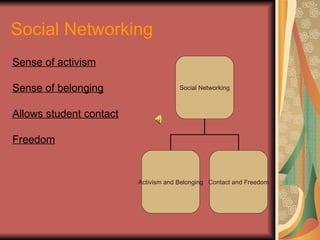
Social Networking
Sense of activism

Sense of belonging                    Social Networking


Allows student contact

Freedom


                         Activism and Belonging Contact and Freedom
Wikis


o Original and unique

o Collaboration

o Editing

o Simple
Podcasting

o Learner needs
o Content
o Technical quality
o Design
o Instructional quality
Visual Conferencing
 Only two approaches to video conferencing

 Value-added chat
 Very expensive distance equipment
Course Management System
  o Most Popular
  o Angel Learning
  o Moodle
  o Sakai Project
  o Think.com
  o Blackboard
Twitter
  o Keep in touch
  o Latest technology
  o News
  o Conferences
  o Online reference
  o Posting
Blogs
  o Called web blogs
  o Can be texts
  o Audios
  o Graphics
  o Communication
Virtual Sites with Avatars
   o Have enough bandwidth
   o Applications work with
     data projectors
   Confirm the level of skills

  Watch the downloading
  of software
Terms
o   Degree- The amount of something
o   World Wide Web- Internet
o   Twitter-Social Network
o   Blog-Form of communication
o   Podcasting-Virtual conferencing
o   Social networking-Communicating across the
    internet
o   Wikis-Informal spreading of information
o   Virtual conferencing-Conferencing over the
    Internet
o   System-A way of doing something
o   Avatar-Virtual character
Response to Questions
Report on blogs and wikis: On both my blogs
   and my wikis, I have gotten a few viewers
   and one or two comments. These devices
   are great ways to spread information and
   receive feedback.

Report on social networking:
      Facebook is an interesting site. This site
   keeps the patrons busy with educational
   organizations, fun activities, informative
   groups. There is a social freedom. Students
   and adults can contact people as needed.
Summary

   This presentation outlines the Web 2.0.
 There are several applications that are fun
 and educational for the students to use.
 These applications include social
 networking, Twitter, blogs, Wikis,
 podcasting, and other applications.
Other Resources and URLs

       2 Videos:

        http://www.youtube.com/embed/WH0n_skELzM
        http://www.youtube.com/embed/8iVj0upwymk

        URLs
        http://web2012.discoveryeducation.com/web20tools
        http://
        www.webopedia.com/welcomead/

Web 2.0 and related technology

  • 1.
    Web 2.0 andRelated Technology Excerpt from Technology for the School Librarian: Theory and Practice Presentation by Cathryn Dozier
  • 2.
    Introduction to Web2.0 Creation of content is easy Features a level of interactivity Provides opportunity Knowledge communication
  • 3.
    Introduction to Web2.0 Single to connections Changing Some being replaced Beyond single users Not data storage
  • 4.
    Library and School2.0 4 Elements User-centered Video and audio Synchronous communication Innovating
  • 5.
    Social Networking Sense ofactivism Sense of belonging Social Networking Allows student contact Freedom Activism and Belonging Contact and Freedom
  • 6.
    Wikis o Original andunique o Collaboration o Editing o Simple
  • 7.
    Podcasting o Learner needs oContent o Technical quality o Design o Instructional quality
  • 8.
    Visual Conferencing Onlytwo approaches to video conferencing Value-added chat Very expensive distance equipment
  • 9.
    Course Management System o Most Popular o Angel Learning o Moodle o Sakai Project o Think.com o Blackboard
  • 10.
    Twitter oKeep in touch o Latest technology o News o Conferences o Online reference o Posting
  • 11.
    Blogs oCalled web blogs o Can be texts o Audios o Graphics o Communication
  • 12.
    Virtual Sites withAvatars o Have enough bandwidth o Applications work with data projectors Confirm the level of skills Watch the downloading of software
  • 13.
    Terms o Degree- The amount of something o World Wide Web- Internet o Twitter-Social Network o Blog-Form of communication o Podcasting-Virtual conferencing o Social networking-Communicating across the internet o Wikis-Informal spreading of information o Virtual conferencing-Conferencing over the Internet o System-A way of doing something o Avatar-Virtual character
  • 14.
    Response to Questions Reporton blogs and wikis: On both my blogs and my wikis, I have gotten a few viewers and one or two comments. These devices are great ways to spread information and receive feedback. Report on social networking: Facebook is an interesting site. This site keeps the patrons busy with educational organizations, fun activities, informative groups. There is a social freedom. Students and adults can contact people as needed.
  • 15.
    Summary This presentation outlines the Web 2.0. There are several applications that are fun and educational for the students to use. These applications include social networking, Twitter, blogs, Wikis, podcasting, and other applications.
  • 16.
    Other Resources andURLs  2 Videos: http://www.youtube.com/embed/WH0n_skELzM http://www.youtube.com/embed/8iVj0upwymk URLs http://web2012.discoveryeducation.com/web20tools http:// www.webopedia.com/welcomead/