Wearable technologies should
promote adaptive learners
Dragan Gašević
@dgasevic
November 15, 2016
aWear 2016
Stanford, CA, USA
Excitement about the use of
technology in education
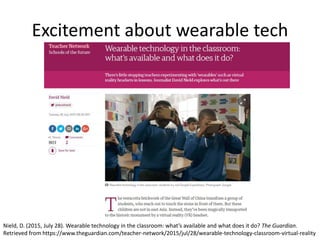
Excitement about wearable tech
Nield, D. (2015, July 28). Wearable technology in the classroom: what’s available and what does it do? The Guardian.
Retrieved from https://www.theguardian.com/teacher-network/2015/jul/28/wearable-technology-classroom-virtual-reality
Collecting more data about
learners than ever before
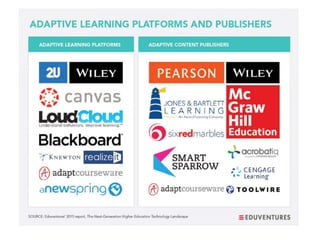
Rhetoric of adaptive learning
Adaptive learning
Offer some benefits, but focus
primarily on adaptive algorithms
What about adaptive learners?
ADAPTIVE LEARNERS
Learners construct knowledge
Learners are agents
Winne, P. H. (2006). How software technologies can improve research on learning and bolster school reform.
Educational Psychologist, 41(1), 5–17.
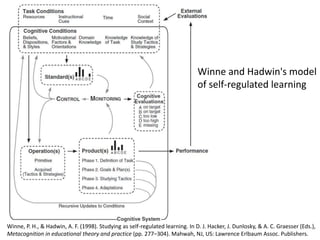
Winne and Hadwin's model
of self-regulated learning
Winne, P. H., & Hadwin, A. F. (1998). Studying as self-regulated learning. In D. J. Hacker, J. Dunlosky, & A. C. Graesser (Eds.),
Metacognition in educational theory and practice (pp. 277–304). Mahwah, NJ, US: Lawrence Erlbaum Assoc. Publishers.
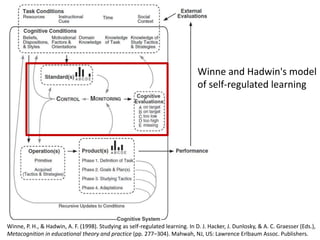
Winne and Hadwin's model
of self-regulated learning
Winne, P. H., & Hadwin, A. F. (1998). Studying as self-regulated learning. In D. J. Hacker, J. Dunlosky, & A. C. Graesser (Eds.),
Metacognition in educational theory and practice (pp. 277–304). Mahwah, NJ, US: Lawrence Erlbaum Assoc. Publishers.
Why do adaptive learners
matter?!
Metacognitive skills
Bjork, R. A., Dunlosky, J., & Kornell, N. (2013). Self-Regulated Learning: Beliefs, Techniques, and Illusions. Annual
Review of Psychology, 64, 417-444. doi:10.1146/annurev-psych-113011-143823
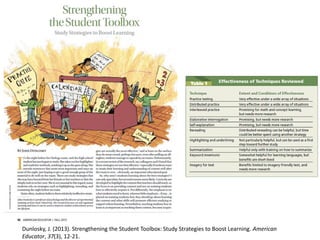
Dunlosky, J. (2013). Strengthening the Student Toolbox: Study Strategies to Boost Learning. American
Educator, 37(3), 12-21.
Why do adaptive learners
matter?!
Information seeking skills
Judd, T., & Kennedy, G. (2011). Expediency-based practice? Medical students’ reliance on Google and Wikipedia for
biomedical inquiries. British Journal of Educational Technology, 42 (2), 351-360. doi:10.1111/j.1467-
8535.2009.01019.x
Why do adaptive learners
matter?!
Sensemaking paradox
Butcher, K. R., & Sumner, R. (2011). Self-Directed Learning and the Sensemaking Paradox. Human–Computer
Interaction, 26(1-2), 123-159. doi:10.1080/07370024.2011.556552
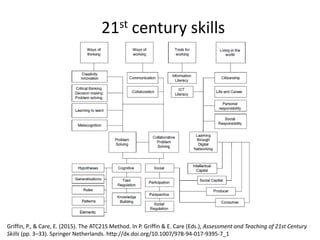
21st century skills
Griffin, P., & Care, E. (2015). The ATC21S Method. In P. Griffin & E. Care (Eds.), Assessment and Teaching of 21st Century
Skills (pp. 3–33). Springer Netherlands. http://dx.doi.org/10.1007/978-94-017-9395-7_1
Study skills associated with
mind growths
Yan, V. X., Thai, K. P., & Bjork, R. A. (2014). Habits and beliefs that guide self-regulated learning: Do they vary with
mindset?. Journal of Applied Research in Memory and Cognition, 3(3), 140-152.
Teaching study tactics is
possible
Gašević, D., Mirriahi, N., Dawson, S., & Joksimović, S. (2016, in press). Effects of instructional conditions and experience
on the adoption of a learning tool. Computers in Human Behavior. http://dx.doi.org/10.1016/j.chb.2016.10.026
Study strategy detected from
trace data
Jovanović, J., Gašević, D., Pardo, A., Dawson, S., Mirriahi, N. (2016). Learning Analytics to Unveil Learning Strategies
in a Flipped Classroom. Submitted to The Internet and Higher Education.
Learning strategy
“Any thoughts, behaviors, beliefs or
emotions that facilitate the acquisition,
understanding or later transfer of new
knowledge and skills”
Weinstein, C. E., Mayer, R. E., & Wittrock, M. (1986). The teaching of learning strategies. In Handbook of research
on teaching (Vol. 3, pp. 315–327). New York: Macmillan.
WEARABLES FOR
ADAPTIVE LEARNERS
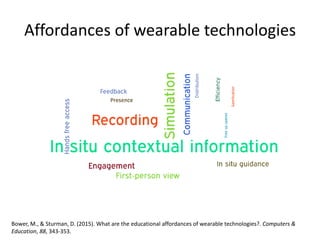
Affordances of wearable technologies
Bower, M., & Sturman, D. (2015). What are the educational affordances of wearable technologies?. Computers &
Education, 88, 343-353.
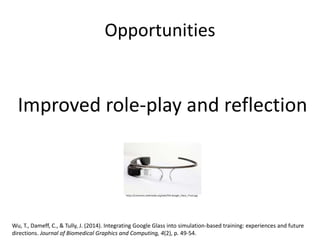
Opportunities
Wu, T., Dameff, C., & Tully, J. (2014). Integrating Google Glass into simulation-based training: experiences and future
directions. Journal of Biomedical Graphics and Computing, 4(2), p. 49-54.
Improved role-play and reflection
https://commons.wikimedia.org/wiki/File:Google_Glass_Front.jpg
Opportunities (eye tracking)
Jeelani, I., Albert, A., Azevedo, R., & Jaselskis, E. J. (2016). Development and Testing of a Personalized Hazard-
Recognition Training Intervention. Journal of Construction Engineering and Management, 04016120.
Facilitate introspection,
self-diagnosis, and correction
Opportunities (dual eye tracking)
Sharma, K., Jermann, P., Nüssli, M. A., & Dillenbourg, P. (2013). Understanding collaborative program comprehension:
Interlacing gaze and dialogues. In Proceedings of the 10th International Conference on Computer Supported
Collaborative Learning (pp. 430-437).
Collaborative problem solving
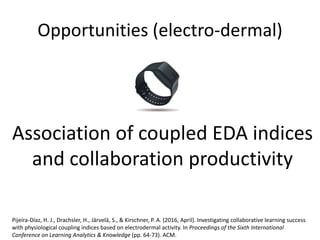
Opportunities (electro-dermal)
Pijeira-Díaz, H. J., Drachsler, H., Järvelä, S., & Kirschner, P. A. (2016, April). Investigating collaborative learning success
with physiological coupling indices based on electrodermal activity. In Proceedings of the Sixth International
Conference on Learning Analytics & Knowledge (pp. 64-73). ACM.
Association of coupled EDA indices
and collaboration productivity
CHALLENGES FOR FUTURE WORK
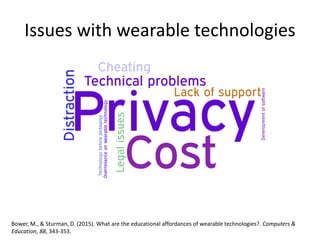
Issues with wearable technologies
Bower, M., & Sturman, D. (2015). What are the educational affordances of wearable technologies?. Computers &
Education, 88, 343-353.
Too much (wear) tech dependence
Potential deterioration and/or
constrained development
Gill, S. P. (2008). Socio-ethics of interaction with intelligent interactive technologies. Ai & Society, 22(3), 283e300
Lessons from medicine
Presence of wearable devices
does not imply better outcomes!
Patel, M. S., Asch, D. A., & Volpp, K. G. (2015). Wearable Devices as Facilitators, Not Drivers, of Health Behavior Change.
JAMA, 313(5), 459–460. https://doi.org/10.1001/jama.2014.14781
Implications for
Activities around devices need
to be designed
Longitudinal studies are
necessary
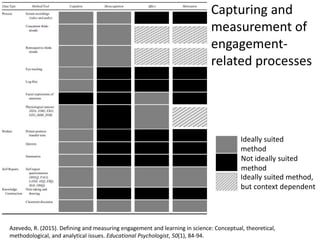
Ideally suited
method
Not ideally suited
method
Ideally suited method,
but context dependent
Azevedo, R. (2015). Defining and measuring engagement and learning in science: Conceptual, theoretical,
methodological, and analytical issues. Educational Psychologist, 50(1), 84-94.
Capturing and
measurement of
engagement-
related processes
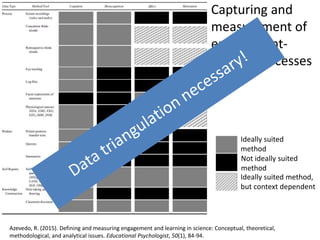
Ideally suited
method
Not ideally suited
method
Ideally suited method,
but context dependent
Azevedo, R. (2015). Defining and measuring engagement and learning in science: Conceptual, theoretical,
methodological, and analytical issues. Educational Psychologist, 50(1), 84-94.
Capturing and
measurement of
engagement-
related processes
How to analyze data when
everyone is an outlier
Sharma, K., Chavez-Demoulin, V., Dillenbourg, P. (2016). An Application of Extreme Values Theory to Learning Analytics:

Predicting Collaboration Quality from Eye-tracking Data. Submitted to Journal of Learning Analytics
Theory-driven research and
theory building
Gašević, D., Dawson, S., & Siemens, G. (2015). Let’s not forget: Learning analytics are about learning. TechTrends, 59(1),
64-71.
FINAL REMARKS
Wearable technologies offer
much promise
We must not forget!
Learning and (adaptive) learners
must come first on the agenda
Gašević, D., Dawson, S., & Siemens, G. (2015). Let’s not forget: Learning analytics are about learning. TechTrends, 59(1),
64–71. https://doi.org/10.1007/s11528-014-0822-x
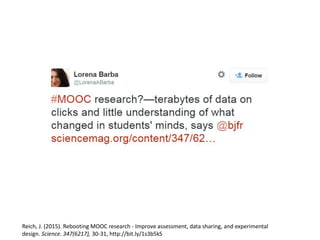
Reich, J. (2015). Rebooting MOOC research - Improve assessment, data sharing, and experimental
design. Science. 347(6217), 30-31, http://bit.ly/1s3b5kS
Interdisciplinary teams needed
more than ever before
Thank you!
http://learning-analytics.info/
http://lak17.solaresearch.org/

Wearable technologies should promote adaptive learners

  • 1.
    Wearable technologies should promoteadaptive learners Dragan Gašević @dgasevic November 15, 2016 aWear 2016 Stanford, CA, USA
  • 2.
    Excitement about theuse of technology in education
  • 3.
    Excitement about wearabletech Nield, D. (2015, July 28). Wearable technology in the classroom: what’s available and what does it do? The Guardian. Retrieved from https://www.theguardian.com/teacher-network/2015/jul/28/wearable-technology-classroom-virtual-reality
  • 4.
    Collecting more dataabout learners than ever before
  • 5.
  • 7.
    Adaptive learning Offer somebenefits, but focus primarily on adaptive algorithms
  • 8.
  • 9.
  • 10.
    Learners construct knowledge Learnersare agents Winne, P. H. (2006). How software technologies can improve research on learning and bolster school reform. Educational Psychologist, 41(1), 5–17.
  • 11.
    Winne and Hadwin'smodel of self-regulated learning Winne, P. H., & Hadwin, A. F. (1998). Studying as self-regulated learning. In D. J. Hacker, J. Dunlosky, & A. C. Graesser (Eds.), Metacognition in educational theory and practice (pp. 277–304). Mahwah, NJ, US: Lawrence Erlbaum Assoc. Publishers.
  • 12.
    Winne and Hadwin'smodel of self-regulated learning Winne, P. H., & Hadwin, A. F. (1998). Studying as self-regulated learning. In D. J. Hacker, J. Dunlosky, & A. C. Graesser (Eds.), Metacognition in educational theory and practice (pp. 277–304). Mahwah, NJ, US: Lawrence Erlbaum Assoc. Publishers.
  • 13.
    Why do adaptivelearners matter?! Metacognitive skills Bjork, R. A., Dunlosky, J., & Kornell, N. (2013). Self-Regulated Learning: Beliefs, Techniques, and Illusions. Annual Review of Psychology, 64, 417-444. doi:10.1146/annurev-psych-113011-143823
  • 14.
    Dunlosky, J. (2013).Strengthening the Student Toolbox: Study Strategies to Boost Learning. American Educator, 37(3), 12-21.
  • 15.
    Why do adaptivelearners matter?! Information seeking skills Judd, T., & Kennedy, G. (2011). Expediency-based practice? Medical students’ reliance on Google and Wikipedia for biomedical inquiries. British Journal of Educational Technology, 42 (2), 351-360. doi:10.1111/j.1467- 8535.2009.01019.x
  • 16.
    Why do adaptivelearners matter?! Sensemaking paradox Butcher, K. R., & Sumner, R. (2011). Self-Directed Learning and the Sensemaking Paradox. Human–Computer Interaction, 26(1-2), 123-159. doi:10.1080/07370024.2011.556552
  • 17.
    21st century skills Griffin,P., & Care, E. (2015). The ATC21S Method. In P. Griffin & E. Care (Eds.), Assessment and Teaching of 21st Century Skills (pp. 3–33). Springer Netherlands. http://dx.doi.org/10.1007/978-94-017-9395-7_1
  • 18.
    Study skills associatedwith mind growths Yan, V. X., Thai, K. P., & Bjork, R. A. (2014). Habits and beliefs that guide self-regulated learning: Do they vary with mindset?. Journal of Applied Research in Memory and Cognition, 3(3), 140-152.
  • 19.
    Teaching study tacticsis possible Gašević, D., Mirriahi, N., Dawson, S., & Joksimović, S. (2016, in press). Effects of instructional conditions and experience on the adoption of a learning tool. Computers in Human Behavior. http://dx.doi.org/10.1016/j.chb.2016.10.026
  • 20.
    Study strategy detectedfrom trace data Jovanović, J., Gašević, D., Pardo, A., Dawson, S., Mirriahi, N. (2016). Learning Analytics to Unveil Learning Strategies in a Flipped Classroom. Submitted to The Internet and Higher Education.
  • 21.
    Learning strategy “Any thoughts,behaviors, beliefs or emotions that facilitate the acquisition, understanding or later transfer of new knowledge and skills” Weinstein, C. E., Mayer, R. E., & Wittrock, M. (1986). The teaching of learning strategies. In Handbook of research on teaching (Vol. 3, pp. 315–327). New York: Macmillan.
  • 22.
  • 23.
    Affordances of wearabletechnologies Bower, M., & Sturman, D. (2015). What are the educational affordances of wearable technologies?. Computers & Education, 88, 343-353.
  • 24.
    Opportunities Wu, T., Dameff,C., & Tully, J. (2014). Integrating Google Glass into simulation-based training: experiences and future directions. Journal of Biomedical Graphics and Computing, 4(2), p. 49-54. Improved role-play and reflection https://commons.wikimedia.org/wiki/File:Google_Glass_Front.jpg
  • 25.
    Opportunities (eye tracking) Jeelani,I., Albert, A., Azevedo, R., & Jaselskis, E. J. (2016). Development and Testing of a Personalized Hazard- Recognition Training Intervention. Journal of Construction Engineering and Management, 04016120. Facilitate introspection, self-diagnosis, and correction
  • 26.
    Opportunities (dual eyetracking) Sharma, K., Jermann, P., Nüssli, M. A., & Dillenbourg, P. (2013). Understanding collaborative program comprehension: Interlacing gaze and dialogues. In Proceedings of the 10th International Conference on Computer Supported Collaborative Learning (pp. 430-437). Collaborative problem solving
  • 27.
    Opportunities (electro-dermal) Pijeira-Díaz, H.J., Drachsler, H., Järvelä, S., & Kirschner, P. A. (2016, April). Investigating collaborative learning success with physiological coupling indices based on electrodermal activity. In Proceedings of the Sixth International Conference on Learning Analytics & Knowledge (pp. 64-73). ACM. Association of coupled EDA indices and collaboration productivity
  • 28.
  • 29.
    Issues with wearabletechnologies Bower, M., & Sturman, D. (2015). What are the educational affordances of wearable technologies?. Computers & Education, 88, 343-353.
  • 30.
    Too much (wear)tech dependence Potential deterioration and/or constrained development Gill, S. P. (2008). Socio-ethics of interaction with intelligent interactive technologies. Ai & Society, 22(3), 283e300
  • 31.
    Lessons from medicine Presenceof wearable devices does not imply better outcomes! Patel, M. S., Asch, D. A., & Volpp, K. G. (2015). Wearable Devices as Facilitators, Not Drivers, of Health Behavior Change. JAMA, 313(5), 459–460. https://doi.org/10.1001/jama.2014.14781
  • 32.
    Implications for Activities arounddevices need to be designed
  • 33.
  • 34.
    Ideally suited method Not ideallysuited method Ideally suited method, but context dependent Azevedo, R. (2015). Defining and measuring engagement and learning in science: Conceptual, theoretical, methodological, and analytical issues. Educational Psychologist, 50(1), 84-94. Capturing and measurement of engagement- related processes
  • 35.
    Ideally suited method Not ideallysuited method Ideally suited method, but context dependent Azevedo, R. (2015). Defining and measuring engagement and learning in science: Conceptual, theoretical, methodological, and analytical issues. Educational Psychologist, 50(1), 84-94. Capturing and measurement of engagement- related processes
  • 36.
    How to analyzedata when everyone is an outlier Sharma, K., Chavez-Demoulin, V., Dillenbourg, P. (2016). An Application of Extreme Values Theory to Learning Analytics: Predicting Collaboration Quality from Eye-tracking Data. Submitted to Journal of Learning Analytics
  • 37.
    Theory-driven research and theorybuilding Gašević, D., Dawson, S., & Siemens, G. (2015). Let’s not forget: Learning analytics are about learning. TechTrends, 59(1), 64-71.
  • 38.
  • 39.
  • 40.
    We must notforget! Learning and (adaptive) learners must come first on the agenda Gašević, D., Dawson, S., & Siemens, G. (2015). Let’s not forget: Learning analytics are about learning. TechTrends, 59(1), 64–71. https://doi.org/10.1007/s11528-014-0822-x
  • 41.
    Reich, J. (2015).Rebooting MOOC research - Improve assessment, data sharing, and experimental design. Science. 347(6217), 30-31, http://bit.ly/1s3b5kS
  • 42.
  • 43.

Editor's Notes

  • #14 Students generally have poor self-regulation skills: Weak metacomprehension – assessment of own knowledge – stop learning, when they don’t know enough Confusion of the rate of learning - stop learning, when they don’t know enough Externally-generated self-monitoring prompts – Azevedo Weak metacognitive awareness – inefficient study tactics used
  • #16 Use of unreliable sources Poor querying skills
  • #17 Students are asked to seek information about domains they do not have sufficient background knowledge They will stop seeking information even if the proper one hasn’t been found
  • #19 Use of unreliable sources Poor querying skills
  • #21 Use of unreliable sources Poor querying skills
  • #22 Use of unreliable sources Poor querying skills
  • #28 we identified five physiological coupling indices (PCIs) found in the literature: 1) Signal Matching (SM), 2) Instantaneous Derivative Matching (IDM), 3) Directional Agreement (DA), 4) Pearson’s correlation coefficient (PCC) and the 5) Fisher’s z-transform (FZT) of the PCC. On the other hand, three collaborative learning measurements were used: 1) collaborative will (CW), 2) collaborative learning product (CLP) and 3) dual learning gain (DLG). Regression analyses showed that out of the five PCIs, IDM related the most to CW and was the best predictor of the CLP. Meanwhile, DA predicted DLG the best. These results play a role in determining informative collaboration measures for designing a learning analytics, biofeedback dashboard.