Ways of Becoming An Effective
Teacher
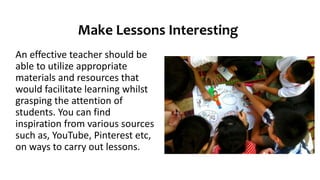
Make Lessons Interesting
An effective teacher should be
able to utilize appropriate
materials and resources that
would facilitate learning whilst
grasping the attention of
students. You can find
inspiration from various sources
such as, YouTube, Pinterest etc,
on ways to carry out lessons.
Be Supportive
A great amount of students are not as fortunate to
receive support from parents or guardians. Students
need to know that someone is interested in them and
their academic performance. Making students feel safe,
secure and special can make a huge difference in their
lives as well as on their academic performance.
Spread Positivity
Most times students’ performance is based on their
teachers’ perspective on them. If the teacher possesses
a negative attitude about a student, said student will
not feel the need for performing well. Whereas, when a
positive attitude is displayed, the student understands
that certain behavioural and academic objectives is
expected of them.
Be Patient
Students learn at different paces. Although you may have
a class of twenty students and it may be difficult and
time-consuming to reach each student at the same time,
take into consideration that some students may not
grasp concepts as quickly as others may. It is not the end
of the world if a student does not catch on right away.
One of the roles of a teacher is to be patient and
discover alternative methods of teaching a lesson.
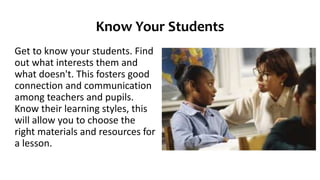
Know Your Students
Get to know your students. Find
out what interests them and
what doesn't. This fosters good
connection and communication
among teachers and pupils.
Know their learning styles, this
will allow you to choose the
right materials and resources for
a lesson.
Be Organised
This includes the preparation of lesson plans for each
day. Ensure that you know what is being taught and
when it should be taught. For instance, it is suggested
that Math should be taught in the morning when the
brain is fresh rather than at evening time. Maintain
classroom organisation. This allows the day’s lessons to
flow freely.
Be Open-Minded
Be willing to consider new ideas and methods of teaching.
Have an open mind to possible criticism from fellow
teachers as well as students. Even if you think you are right
be willing to listen to the opposing or contradictory views of
others. Embrace Change. Trying alternative methods could
allow you to being a more effective teacher.
Be a Role Model
Students watch and copy what they see others doing.
Thus, it is especially important, is this day and age, that
teachers be upright and maintain certain values so that
students can have a good example in which to follow. Do
not simply teach students what is right from wrong but
also practice these same teachings.
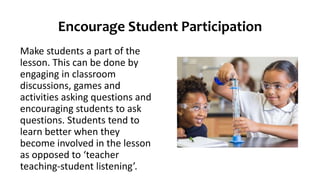
Encourage Student Participation
Make students a part of the
lesson. This can be done by
engaging in classroom
discussions, games and
activities asking questions and
encouraging students to ask
questions. Students tend to
learn better when they
become involved in the lesson
as opposed to ‘teacher
teaching-student listening’.
Reflect
If a lesson does not go as planned, sit and reflect on
what went wrong and what could have been done
differently to produce the desired results. Learning is an
ongoing process for both student and teacher and there
are numerous ways in which lessons and teaching skills
can be improved.
The End
By: Secret Walters

Ways to be an effective teacher

  • 1.
    Ways of BecomingAn Effective Teacher
  • 2.
    Make Lessons Interesting Aneffective teacher should be able to utilize appropriate materials and resources that would facilitate learning whilst grasping the attention of students. You can find inspiration from various sources such as, YouTube, Pinterest etc, on ways to carry out lessons.
  • 3.
    Be Supportive A greatamount of students are not as fortunate to receive support from parents or guardians. Students need to know that someone is interested in them and their academic performance. Making students feel safe, secure and special can make a huge difference in their lives as well as on their academic performance.
  • 4.
    Spread Positivity Most timesstudents’ performance is based on their teachers’ perspective on them. If the teacher possesses a negative attitude about a student, said student will not feel the need for performing well. Whereas, when a positive attitude is displayed, the student understands that certain behavioural and academic objectives is expected of them.
  • 5.
    Be Patient Students learnat different paces. Although you may have a class of twenty students and it may be difficult and time-consuming to reach each student at the same time, take into consideration that some students may not grasp concepts as quickly as others may. It is not the end of the world if a student does not catch on right away. One of the roles of a teacher is to be patient and discover alternative methods of teaching a lesson.
  • 6.
    Know Your Students Getto know your students. Find out what interests them and what doesn't. This fosters good connection and communication among teachers and pupils. Know their learning styles, this will allow you to choose the right materials and resources for a lesson.
  • 7.
    Be Organised This includesthe preparation of lesson plans for each day. Ensure that you know what is being taught and when it should be taught. For instance, it is suggested that Math should be taught in the morning when the brain is fresh rather than at evening time. Maintain classroom organisation. This allows the day’s lessons to flow freely.
  • 8.
    Be Open-Minded Be willingto consider new ideas and methods of teaching. Have an open mind to possible criticism from fellow teachers as well as students. Even if you think you are right be willing to listen to the opposing or contradictory views of others. Embrace Change. Trying alternative methods could allow you to being a more effective teacher.
  • 9.
    Be a RoleModel Students watch and copy what they see others doing. Thus, it is especially important, is this day and age, that teachers be upright and maintain certain values so that students can have a good example in which to follow. Do not simply teach students what is right from wrong but also practice these same teachings.
  • 10.
    Encourage Student Participation Makestudents a part of the lesson. This can be done by engaging in classroom discussions, games and activities asking questions and encouraging students to ask questions. Students tend to learn better when they become involved in the lesson as opposed to ‘teacher teaching-student listening’.
  • 11.
    Reflect If a lessondoes not go as planned, sit and reflect on what went wrong and what could have been done differently to produce the desired results. Learning is an ongoing process for both student and teacher and there are numerous ways in which lessons and teaching skills can be improved.
  • 12.