Wave
Polarization
Radio Frequency
Communication
Saptarshi Mazumdar
1729058 - CSCE-1
Introduction
Polarization is the path traversed
by the Electric Field vector (Ê) of
the Electromagnetic wave as a
function of time at a fixed point in
space.
In the figure 1, an EM wave is
shown which is converted into
Electric wave.
† Figure 1
Types of Polarization
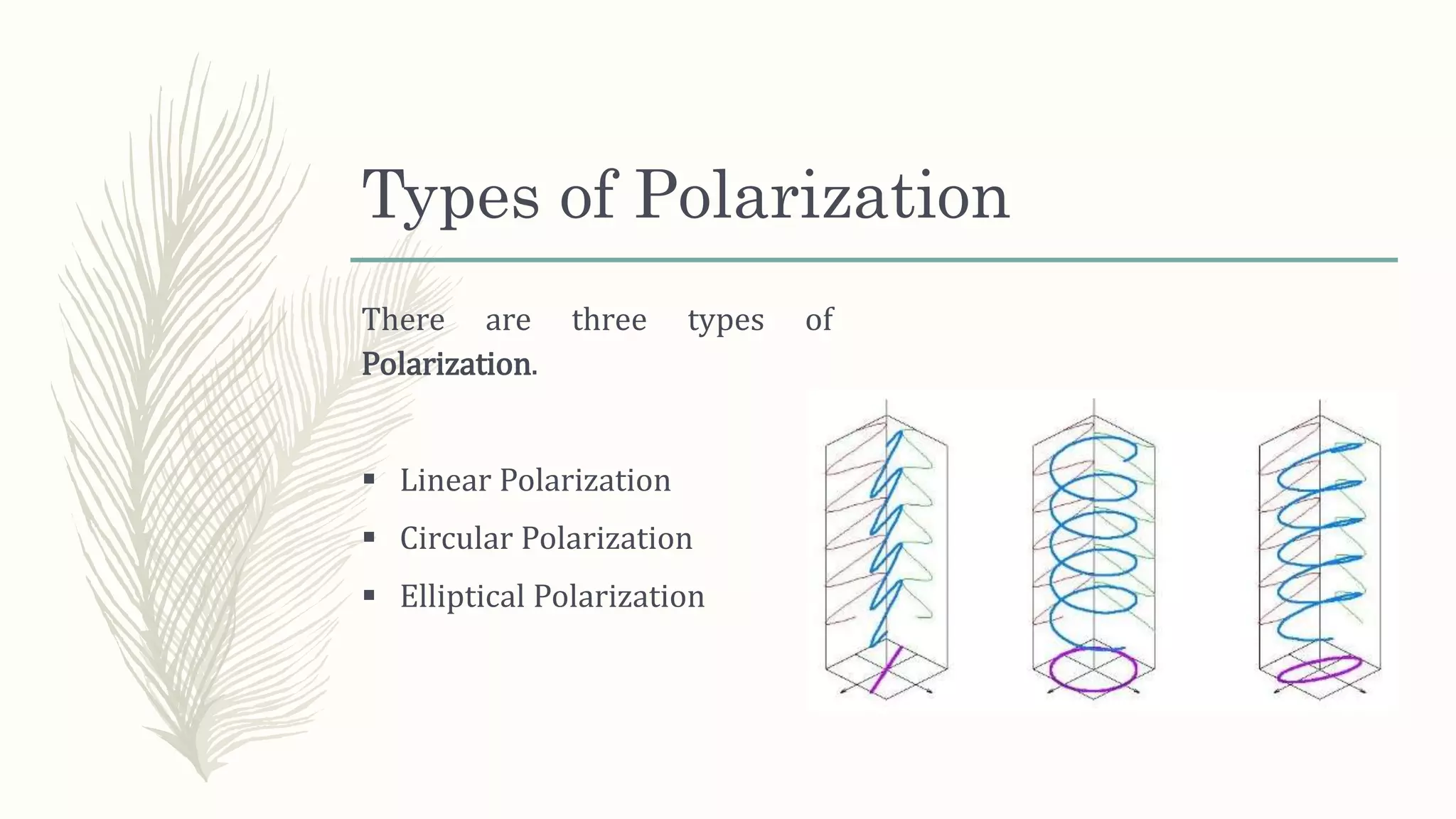
There are three types of
Polarization.
 Linear Polarization
 Circular Polarization
 Elliptical Polarization
Linear Polarization
In Linear Polarization, the electric
field vector traverses a linear path
with respect to time at any point in
space.
Considering a wave travelling in z
direction can be represented
using,
E(x,y,z,t) = Ex (x,y,z,t)ax + Ey
(x,y,z,t)ay
The wave is said to be Linear
Polarization if the ratio of y
component to that of the x
component is a constant, i.e.,
[Ex (x,y,z,t)] / [Ey (x,y,z,t)]= k
Elliptical Polarization
In Elliptical Polarization, the locus
of the electrical field vector is an
ellipse at any given point in space,
with respect to the time.
There are two types of Elliptical
Polarization:
 Right Hand Polarization
 Left Hand Polarization
According to the equation of
Ellipse,
{Ex (x,y,z,t) / A}^2 + {Ey
(x,y,z,t) / B}^2= 1
Circular Polarization
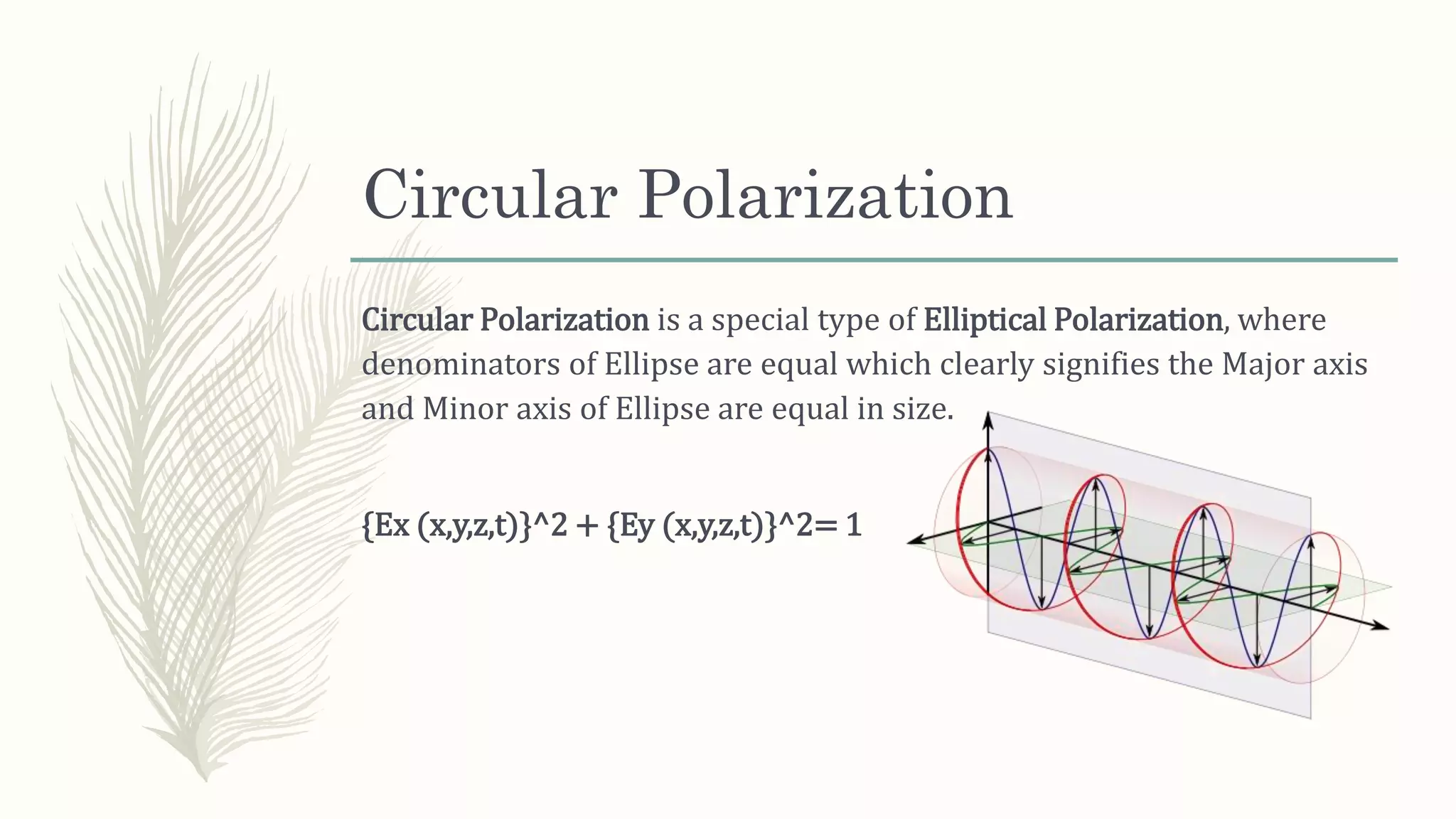
Circular Polarization is a special type of Elliptical Polarization, where
denominators of Ellipse are equal which clearly signifies the Major axis
and Minor axis of Ellipse are equal in size.
{Ex (x,y,z,t)}^2 + {Ey (x,y,z,t)}^2= 1
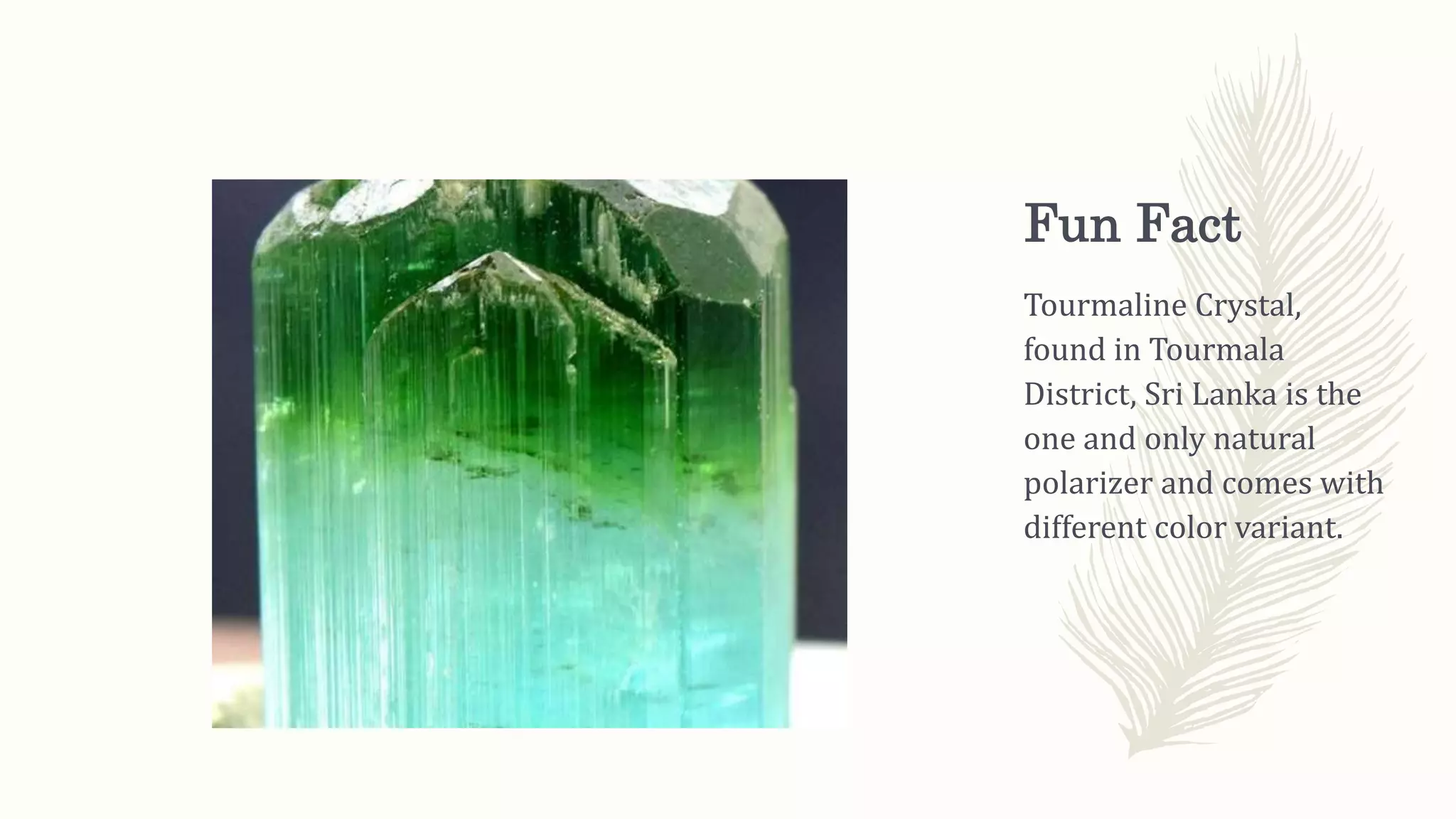
Fun Fact
Tourmaline Crystal,
found in Tourmala
District, Sri Lanka is the
one and only natural
polarizer and comes with
different color variant.
Thank You
Access Slides: http://bit.ly/slidesharesaptarshi
Visit me at http://bit.ly/saptarshimazumdar

Wave Polarization

  • 1.
  • 2.
    Introduction Polarization is thepath traversed by the Electric Field vector (Ê) of the Electromagnetic wave as a function of time at a fixed point in space. In the figure 1, an EM wave is shown which is converted into Electric wave. † Figure 1
  • 3.
    Types of Polarization Thereare three types of Polarization.  Linear Polarization  Circular Polarization  Elliptical Polarization
  • 4.
    Linear Polarization In LinearPolarization, the electric field vector traverses a linear path with respect to time at any point in space. Considering a wave travelling in z direction can be represented using, E(x,y,z,t) = Ex (x,y,z,t)ax + Ey (x,y,z,t)ay The wave is said to be Linear Polarization if the ratio of y component to that of the x component is a constant, i.e., [Ex (x,y,z,t)] / [Ey (x,y,z,t)]= k
  • 5.
    Elliptical Polarization In EllipticalPolarization, the locus of the electrical field vector is an ellipse at any given point in space, with respect to the time. There are two types of Elliptical Polarization:  Right Hand Polarization  Left Hand Polarization According to the equation of Ellipse, {Ex (x,y,z,t) / A}^2 + {Ey (x,y,z,t) / B}^2= 1
  • 6.
    Circular Polarization Circular Polarizationis a special type of Elliptical Polarization, where denominators of Ellipse are equal which clearly signifies the Major axis and Minor axis of Ellipse are equal in size. {Ex (x,y,z,t)}^2 + {Ey (x,y,z,t)}^2= 1
  • 7.
    Fun Fact Tourmaline Crystal, foundin Tourmala District, Sri Lanka is the one and only natural polarizer and comes with different color variant.
  • 8.
    Thank You Access Slides:http://bit.ly/slidesharesaptarshi Visit me at http://bit.ly/saptarshimazumdar