BABA SAHEB BHIMRAO
AMBEDKAR CENTRAL
UNIVERSITY, LUCKNOW (BBAU)
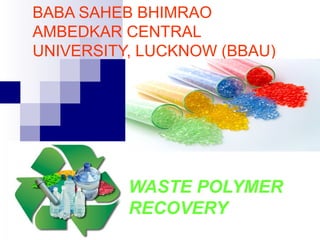
WASTE POLYMER
RECOVERY
Aadrsh Tiwari M.Sc. 3rd
semester
POLYMER CHEMISTRY
ENERGY RECOVERY-
 Waste plastics contains energy of 3000 to
8500Kcal/Kg.
 Energy content of-
 Industrial plastics waste:1.3kg= 1lit. of petrol.
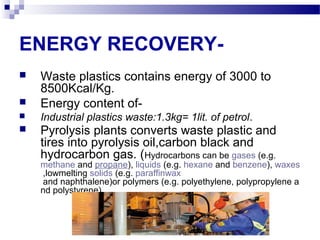
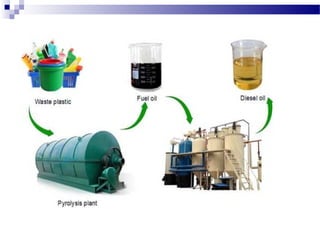
 Pyrolysis plants converts waste plastic and
tires into pyrolysis oil,carbon black and
hydrocarbon gas. (Hydrocarbons can be gases (e.g.
methane and propane), liquids (e.g. hexane and benzene), waxes
,lowmelting solids (e.g. paraffinwax
and naphthalene)or polymers (e.g. polyethylene, polypropylene a
nd polystyrene).
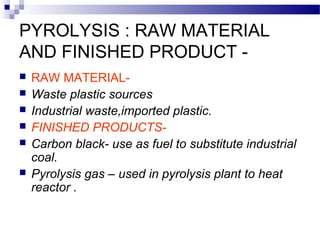
PYROLYSIS : RAW MATERIAL
AND FINISHED PRODUCT -
 RAW MATERIAL-
 Waste plastic sources
 Industrial waste,imported plastic.
 FINISHED PRODUCTS-
 Carbon black- use as fuel to substitute industrial
coal.
 Pyrolysis gas – used in pyrolysis plant to heat
reactor .
ENERGY RECOVERY FROM
PLASTICS-
 ENVIRONMENTAL-
 Carbon disposal- use as replacement to
coal.
 Emissions- latest technology complies
with emission norms.
 Reuse of hydrocarbon gas –safe storage
and reuse.
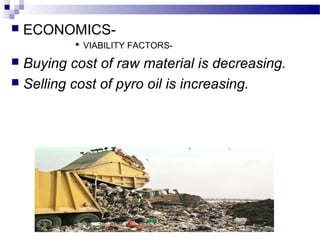
 ECONOMICS-
 VIABILITY FACTORS-
 Buying cost of raw material is decreasing.
 Selling cost of pyro oil is increasing.
PYROLYSIS
 Thermal decomposition of orgine material at elevated temperatures
in the absence of oxygen.
 Pyrolysis does not involve reaction with oxygen , water or any other
reagent .
 In practice it is not possible to achieve a completely oxygen free
atmosphere.
 (Because some oxygen is present in any pyrolysis system, a small
amount of oxidation occurs.
 PRODUCT OF PYROLYSIS-
 Char (Charcoal is obtained by heating wood until its complete
pyrolysis (carbonization) occurs, leaving only carbon and
inorganic ash. )
 Bio-oil
PROCESS-
 Operating temperature – above -430
degree (806F).
 For agricultural waste for example, typical
temperature are 450 to 550degreeC .
TYPES OF PYROLYSIS
 DRY PYROLYSIS
 LOW TEMPERATURE ANALYSIS
 MEDIUM TEMPERATURE ANALYSIS
 HIGH TEMPERATURE ANALYSIS
 OXIDIZING PYROLYSISOXIDIZING PYROLYSIS
DRY PYROLYSIS
 Process of thermal decomposition without
access of oxygen.
 Product of dry pyrolysis are gas with high
heat of combustion,liquid and solid
residuce.
 Types of a dry pyrolysis depend on the
temperature of the process.
OXIDIZING PYROLYSIS
 Its impossible to achieve a completely
oxygen free atmosphere.
 Thus, small amount of oxidation occurs .if
volatile or semi volatile materials are
present in the waste,thermal desorption
will also occur .
Aadrsh kumar tiwari bbau

Aadrsh kumar tiwari bbau

  • 1.
    BABA SAHEB BHIMRAO AMBEDKARCENTRAL UNIVERSITY, LUCKNOW (BBAU) WASTE POLYMER RECOVERY
  • 2.
    Aadrsh Tiwari M.Sc.3rd semester POLYMER CHEMISTRY
  • 4.
    ENERGY RECOVERY-  Wasteplastics contains energy of 3000 to 8500Kcal/Kg.  Energy content of-  Industrial plastics waste:1.3kg= 1lit. of petrol.  Pyrolysis plants converts waste plastic and tires into pyrolysis oil,carbon black and hydrocarbon gas. (Hydrocarbons can be gases (e.g. methane and propane), liquids (e.g. hexane and benzene), waxes ,lowmelting solids (e.g. paraffinwax and naphthalene)or polymers (e.g. polyethylene, polypropylene a nd polystyrene).
  • 5.
    PYROLYSIS : RAWMATERIAL AND FINISHED PRODUCT -  RAW MATERIAL-  Waste plastic sources  Industrial waste,imported plastic.  FINISHED PRODUCTS-  Carbon black- use as fuel to substitute industrial coal.  Pyrolysis gas – used in pyrolysis plant to heat reactor .
  • 7.
    ENERGY RECOVERY FROM PLASTICS- ENVIRONMENTAL-  Carbon disposal- use as replacement to coal.  Emissions- latest technology complies with emission norms.  Reuse of hydrocarbon gas –safe storage and reuse.
  • 8.
     ECONOMICS-  VIABILITYFACTORS-  Buying cost of raw material is decreasing.  Selling cost of pyro oil is increasing.
  • 9.
    PYROLYSIS  Thermal decompositionof orgine material at elevated temperatures in the absence of oxygen.  Pyrolysis does not involve reaction with oxygen , water or any other reagent .  In practice it is not possible to achieve a completely oxygen free atmosphere.  (Because some oxygen is present in any pyrolysis system, a small amount of oxidation occurs.  PRODUCT OF PYROLYSIS-  Char (Charcoal is obtained by heating wood until its complete pyrolysis (carbonization) occurs, leaving only carbon and inorganic ash. )  Bio-oil
  • 12.
    PROCESS-  Operating temperature– above -430 degree (806F).  For agricultural waste for example, typical temperature are 450 to 550degreeC .
  • 13.
    TYPES OF PYROLYSIS DRY PYROLYSIS  LOW TEMPERATURE ANALYSIS  MEDIUM TEMPERATURE ANALYSIS  HIGH TEMPERATURE ANALYSIS  OXIDIZING PYROLYSISOXIDIZING PYROLYSIS
  • 14.
    DRY PYROLYSIS  Processof thermal decomposition without access of oxygen.  Product of dry pyrolysis are gas with high heat of combustion,liquid and solid residuce.  Types of a dry pyrolysis depend on the temperature of the process.
  • 15.
    OXIDIZING PYROLYSIS  Itsimpossible to achieve a completely oxygen free atmosphere.  Thus, small amount of oxidation occurs .if volatile or semi volatile materials are present in the waste,thermal desorption will also occur .