PARALA MAHARAJA ENGINEERING COLLEGE
BERHAMPUR
PYROLYSIS
PRESENtEd BY:-
NAME- JAGAMOHAN BEHERA
REGd.NO- 2021109026
BRANCH- CHEMICAL ENGINEERING
CONtENt
 Introduction
 Types Of Pyrolysis
 Pyrolysis Process
 Uses Of Pyrolysis
 Application Of Pyrolysis
 Advantages & Disadvantages Of Pyrolysis
 Conclusion
 References
INtROdUCtION
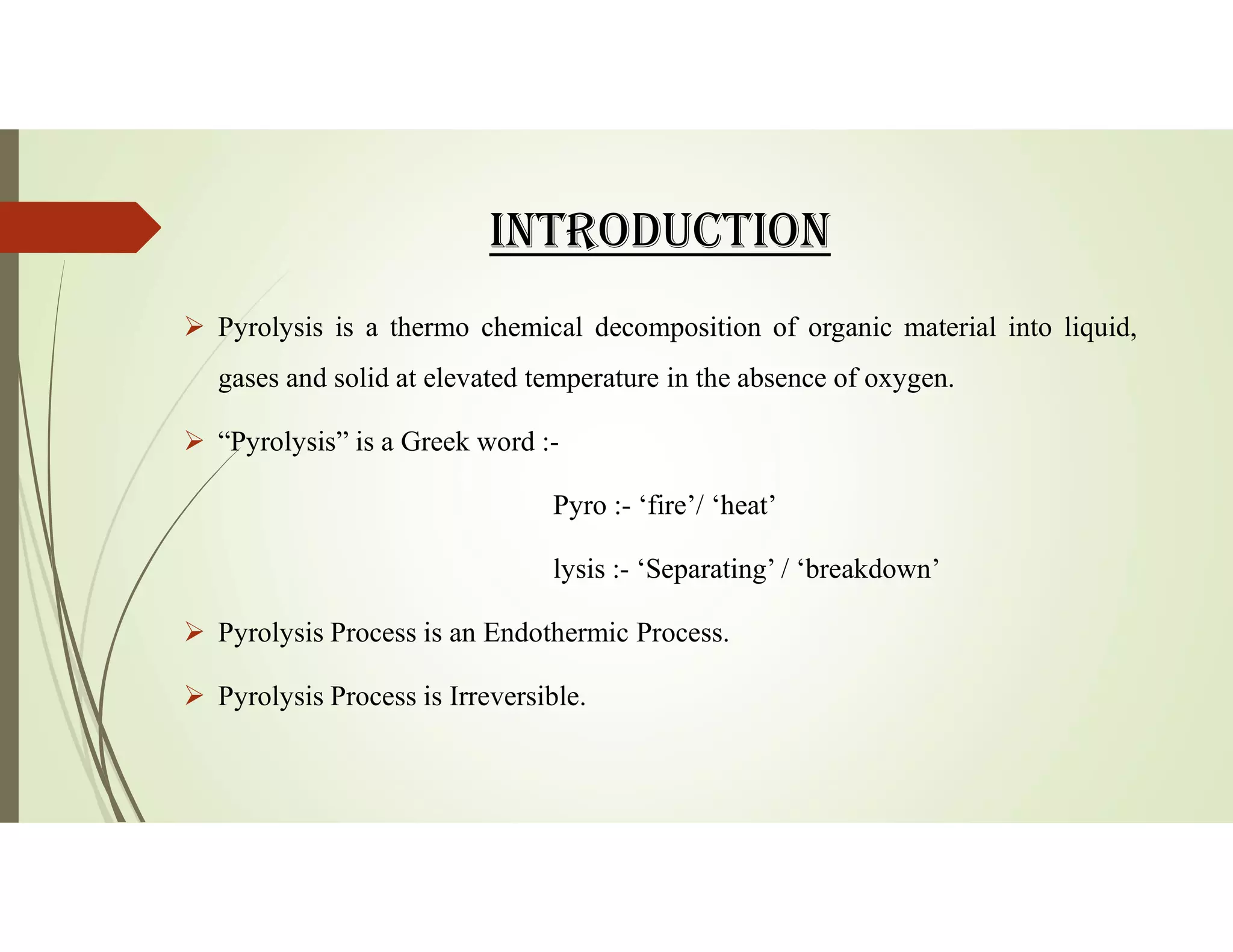
 Pyrolysis is a thermo chemical decomposition of organic material into liquid,
gases and solid at elevated temperature in the absence of oxygen.
 “Pyrolysis” is a Greek word :-
Pyro :- ‘fire’/ ‘heat’
lysis :- ‘Separating’ / ‘breakdown’
 Pyrolysis Process is an Endothermic Process.
 Pyrolysis Process is Irreversible.
tYPES Of PYROLYSIS
 Generally Three Types of Pyrolysis.
Slow Pyrolysis
Fast Pyrolysis
Flash Pyrolysis
SLOw PYROLYSIS
 It is characterized by lengthy Solids and gas residence times, low temperature,
Slow biomass heating rates.
 It is used to modify the solid material and minimize the oil product.
 Temperature – 400-5000C
 Residence – Long(5-30 min)
fASt PYROLYSIS
 It is a rapid thermal decompotion of carbon-containing materials in the absence of
oxygen in moderate to high heating rates.
 It is the most common method used in research and in practical use.
 The major product is bio-oil.
 Temperature – 400-6500c
 Residence time – (0.5-2.0 Sec)
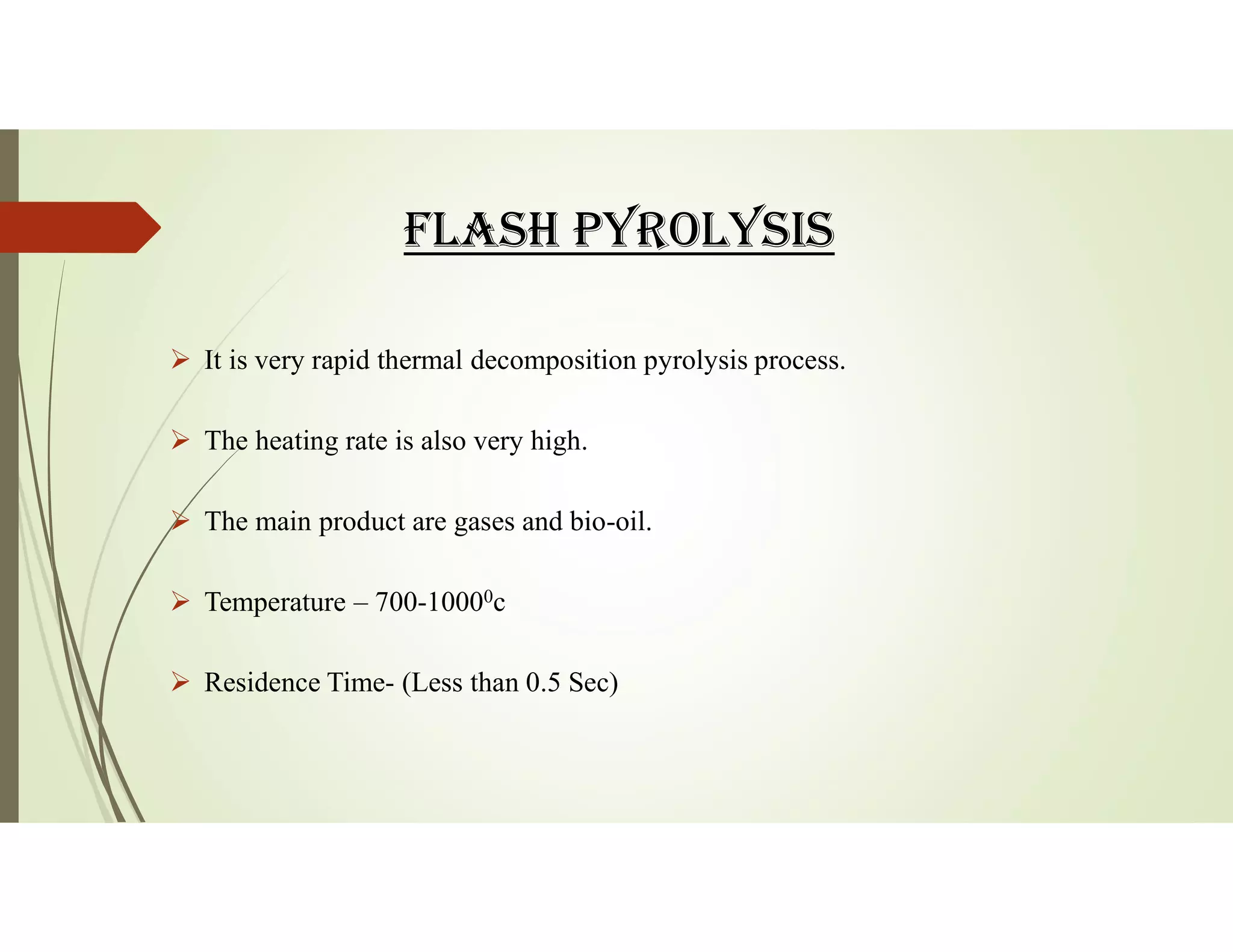
fLASH PYROLYSIS
 It is very rapid thermal decomposition pyrolysis process.
 The heating rate is also very high.
 The main product are gases and bio-oil.
 Temperature – 700-10000c
 Residence Time- (Less than 0.5 Sec)
Fig.1. Pyrolysis Process
USES Of PYROLYSIS
 It reduce the risk of water pollution.
 Self- sustain energy.
 Utilization of renewable resources.
 It reduce waste going to landfills and green house gas emission.
APPLICAtION Of PYROLYSIS
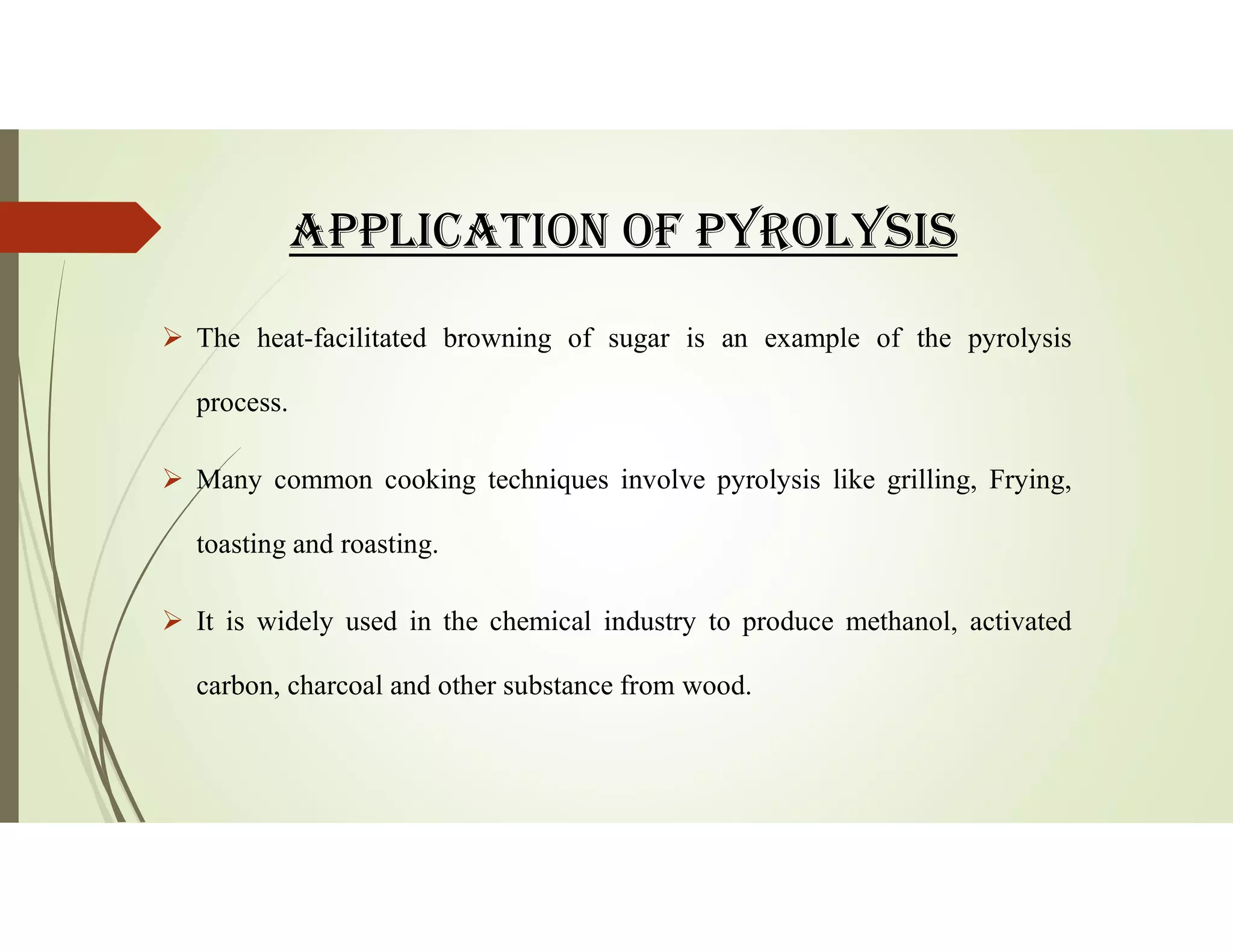
 The heat-facilitated browning of sugar is an example of the pyrolysis
process.
 Many common cooking techniques involve pyrolysis like grilling, Frying,
toasting and roasting.
 It is widely used in the chemical industry to produce methanol, activated
carbon, charcoal and other substance from wood.
AdvANtAGES & dISAdvANtAGES Of PYROLYSIS
Advantages
 Simple.
 Low cost technology.
 Low risk of water pollution .
 Low risk of odours .
 High recovery rate of resources .
Disadvantages
 Technology is still evolving.
 Market are yet to be developed for
char product and pyrolysis liquid.
CONCLUSION
 Pyrolysis has been attracting much attention due to its high efficiency and good
environmental performance characteristics.
 It also provides an opportunity for the processing of agricultural residues, wood
wastes and municipal solid waste into clean energy.
REfERENCES
 Samolada MC. Catalyst evaluation for catalytic biomass pyrolysis. Energy & Fuels.
2000.
 Yaman S. Pyrolysis of biomass to produce fuels and chemical feed stocks. Energy
Conversion and Management. 2004.
pyrolysis.pdf

pyrolysis.pdf

  • 1.
    PARALA MAHARAJA ENGINEERINGCOLLEGE BERHAMPUR PYROLYSIS PRESENtEd BY:- NAME- JAGAMOHAN BEHERA REGd.NO- 2021109026 BRANCH- CHEMICAL ENGINEERING
  • 2.
    CONtENt  Introduction  TypesOf Pyrolysis  Pyrolysis Process  Uses Of Pyrolysis  Application Of Pyrolysis  Advantages & Disadvantages Of Pyrolysis  Conclusion  References
  • 3.
    INtROdUCtION  Pyrolysis isa thermo chemical decomposition of organic material into liquid, gases and solid at elevated temperature in the absence of oxygen.  “Pyrolysis” is a Greek word :- Pyro :- ‘fire’/ ‘heat’ lysis :- ‘Separating’ / ‘breakdown’  Pyrolysis Process is an Endothermic Process.  Pyrolysis Process is Irreversible.
  • 4.
    tYPES Of PYROLYSIS Generally Three Types of Pyrolysis. Slow Pyrolysis Fast Pyrolysis Flash Pyrolysis
  • 5.
    SLOw PYROLYSIS  Itis characterized by lengthy Solids and gas residence times, low temperature, Slow biomass heating rates.  It is used to modify the solid material and minimize the oil product.  Temperature – 400-5000C  Residence – Long(5-30 min)
  • 6.
    fASt PYROLYSIS  Itis a rapid thermal decompotion of carbon-containing materials in the absence of oxygen in moderate to high heating rates.  It is the most common method used in research and in practical use.  The major product is bio-oil.  Temperature – 400-6500c  Residence time – (0.5-2.0 Sec)
  • 7.
    fLASH PYROLYSIS  Itis very rapid thermal decomposition pyrolysis process.  The heating rate is also very high.  The main product are gases and bio-oil.  Temperature – 700-10000c  Residence Time- (Less than 0.5 Sec)
  • 8.
  • 9.
    USES Of PYROLYSIS It reduce the risk of water pollution.  Self- sustain energy.  Utilization of renewable resources.  It reduce waste going to landfills and green house gas emission.
  • 10.
    APPLICAtION Of PYROLYSIS The heat-facilitated browning of sugar is an example of the pyrolysis process.  Many common cooking techniques involve pyrolysis like grilling, Frying, toasting and roasting.  It is widely used in the chemical industry to produce methanol, activated carbon, charcoal and other substance from wood.
  • 11.
    AdvANtAGES & dISAdvANtAGESOf PYROLYSIS Advantages  Simple.  Low cost technology.  Low risk of water pollution .  Low risk of odours .  High recovery rate of resources . Disadvantages  Technology is still evolving.  Market are yet to be developed for char product and pyrolysis liquid.
  • 12.
    CONCLUSION  Pyrolysis hasbeen attracting much attention due to its high efficiency and good environmental performance characteristics.  It also provides an opportunity for the processing of agricultural residues, wood wastes and municipal solid waste into clean energy.
  • 13.
    REfERENCES  Samolada MC.Catalyst evaluation for catalytic biomass pyrolysis. Energy & Fuels. 2000.  Yaman S. Pyrolysis of biomass to produce fuels and chemical feed stocks. Energy Conversion and Management. 2004.