Waste Management
Introduction:

Waste (also known as rubbish, trash, refuse, garbage, junk, and litter) is unwanted or useless
materials, which has lost its value to its owner or does not impose any economic value. Waste is
linked to people development. Litter refers to waste disposed of improperly.

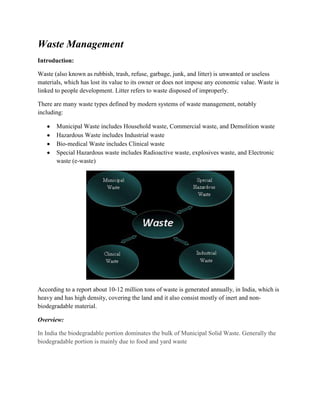
There are many waste types defined by modern systems of waste management, notably
including:

       Municipal Waste includes Household waste, Commercial waste, and Demolition waste
       Hazardous Waste includes Industrial waste
       Bio-medical Waste includes Clinical waste
       Special Hazardous waste includes Radioactive waste, explosives waste, and Electronic
       waste (e-waste)


According to a report about 10-12 million tons of waste is generated annually, in India, which is
heavy and has high density, covering the land and it also consist mostly of inert and non-
biodegradable material.

Overview:

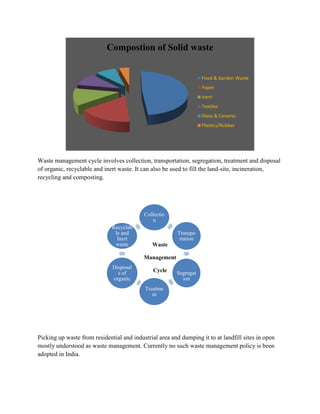
In India the biodegradable portion dominates the bulk of Municipal Solid Waste. Generally the
biodegradable portion is mainly due to food and yard waste
Compostion of Solid waste


                                                                    Food & Garden Waste
                                                                    Paper
                                                                    Inert
                                                                    Textiles
                                                                    Glass & Ceramic
                                                                    Plastics/Rubber


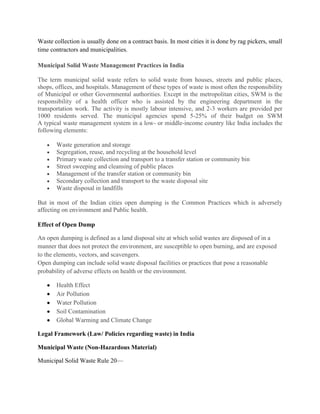
Waste management cycle involves collection, transportation, segregation, treatment and disposal
of organic, recyclable and inert waste. It can also be used to fill the land-site, incineration,
recycling and composting.


                                           Collectio
                                               n
                              Recyclab
                               le and                    Transpo
                                Inert                     rtation
                               waste          Waste

                                           Management
                              Disposal
                                s of           Cycle    Segregat
                              organic                     ion
                                            Treatme
                                               nt


Picking up waste from residential and industrial area and dumping it to at landfill sites in open
mostly understood as waste management. Currently no such waste management policy is been
adopted in India.
Waste collection is usually done on a contract basis. In most cities it is done by rag pickers, small
time contractors and municipalities.

Municipal Solid Waste Management Practices in India

The term municipal solid waste refers to solid waste from houses, streets and public places,
shops, offices, and hospitals. Management of these types of waste is most often the responsibility
of Municipal or other Governmental authorities. Except in the metropolitan cities, SWM is the
responsibility of a health officer who is assisted by the engineering department in the
transportation work. The activity is mostly labour intensive, and 2-3 workers are provided per
1000 residents served. The municipal agencies spend 5-25% of their budget on SWM
A typical waste management system in a low- or middle-income country like India includes the
following elements:

       Waste generation and storage
       Segregation, reuse, and recycling at the household level
       Primary waste collection and transport to a transfer station or community bin
       Street sweeping and cleansing of public places
       Management of the transfer station or community bin
       Secondary collection and transport to the waste disposal site
       Waste disposal in landfills

But in most of the Indian cities open dumping is the Common Practices which is adversely
affecting on environment and Public health.

Effect of Open Dump

An open dumping is defined as a land disposal site at which solid wastes are disposed of in a
manner that does not protect the environment, are susceptible to open burning, and are exposed
to the elements, vectors, and scavengers.
Open dumping can include solid waste disposal facilities or practices that pose a reasonable
probability of adverse effects on health or the environment.

       Health Effect
       Air Pollution
       Water Pollution
       Soil Contamination
       Global Warming and Climate Change

Legal Framework (Law/ Policies regarding waste) in India

Municipal Waste (Non-Hazardous Material)

Municipal Solid Waste Rule 20—
Applicable to all municipal authorities responsible for collection, segregation, storage,
transportation processing and disposal of municipal solid wastes Industrial

Waste (Hazardous)

Hazardous & Toxic Waste Handling Rule of 20—Act
Rules apply to handling of hazardous wastes, it mandatory for occupier and the operator of a
facility for proper collection, reception, treatment, storage and disposal of hazardous wastes.


Biomedical Waste

Bio-medical Wastes (Management and Handling) Rules, 19—

It applies to every occupier of an institution generating bio-medical waste which includes a
hospital, nursing home, clinic, dispensary, veterinary institution, animal house, pathological
laboratory, blood bank

Electronic Waste

No separate legislation/policy for e-waste E-waste management is governed by following
environmental legislations:
– Municipal Solid Wastes (Management and Handling) Rules, 20--
– Hazardous Wastes(Management and Handling) Rules, 20--
– Draft Hazardous Materials Rules, 20—
– Public Liability Act, 19—
 – Batteries (Management and Handling) Rules, 20--


Municipal Solid Waste (Managment & Handling ) Rule was notified by the Ministry of
Environment and Forest, Govt. of India [vide No.S.O.908 (B) dated the 25th September 2000].
The objective of these Rules was to make every municipal authority responsible for the
implementation of the various provisions of the Rules within its territorial area and also to
develop an effective infrastructure for collection, storage, segregation, transportation, processing
and disposal of Municipal Solid Wastes. The Civic bodies have the responsibility to enforce
these rules.

The major functions of civic body include

       Prohibiting littering of street
       Organizing house to house waste collection.
       Conducting awareness programs to disseminate information to public.
       Providing adequate community storage facilities.
       Use of colour code bins and promotion of waste segregation.
       Transport of wastes in covered vehicles.
       Processing of wastes by adopting an appropriate combination of composting, anaerobic
       digestion, Pellatisation etc.
Upgradation of the existing dump sites and Disposal of inert wastes in sanitary landfills.

As per the Rules, the citizens are responsible for

         Segregation of wastes at source.
         Avoid littering of streets.
         Delivery of wastes in accordance with the delivery system notified by the respective
         Civic body.


Issues and Challenges

         Lack of Awareness
         Lack of collection and segregation at source
         India becoming ground for waste
         Scarcity of land


Solutions:

Government

             Government should come up with such effective policy and implement it
             Avoid or use paper in limit as major share of percent paper is used in govt.
             organization.

Industries

             Should make such products that can easily be recycle or reuse
             Such Plastics Material should be produce which is bio-degradable. Most plastics takes
             200-400 years to degrade or use degrade-able plastics

People

             Kitchen and housing waste can be recycle
             Incineration and burial of garbage in graveyard

Hospitals

             Store securely of clinical waste
             Toxic and chemicals should be managed properly
Conclusion:

With the increase in population, usage of every item is increasing and where the resources are
diminishing waste material is increasing day by day, but the problem is that no policy has been
taken, yet, and even this waste is not been managed properly resulting various adverse effect on
society, which can easily be seen. To make earth the better place to live in future, we must take
charge and take some effective initiative on ground level, today.

Waste management

  • 1.
    Waste Management Introduction: Waste (alsoknown as rubbish, trash, refuse, garbage, junk, and litter) is unwanted or useless materials, which has lost its value to its owner or does not impose any economic value. Waste is linked to people development. Litter refers to waste disposed of improperly. There are many waste types defined by modern systems of waste management, notably including: Municipal Waste includes Household waste, Commercial waste, and Demolition waste Hazardous Waste includes Industrial waste Bio-medical Waste includes Clinical waste Special Hazardous waste includes Radioactive waste, explosives waste, and Electronic waste (e-waste) According to a report about 10-12 million tons of waste is generated annually, in India, which is heavy and has high density, covering the land and it also consist mostly of inert and non- biodegradable material. Overview: In India the biodegradable portion dominates the bulk of Municipal Solid Waste. Generally the biodegradable portion is mainly due to food and yard waste
  • 2.
    Compostion of Solidwaste Food & Garden Waste Paper Inert Textiles Glass & Ceramic Plastics/Rubber Waste management cycle involves collection, transportation, segregation, treatment and disposal of organic, recyclable and inert waste. It can also be used to fill the land-site, incineration, recycling and composting. Collectio n Recyclab le and Transpo Inert rtation waste Waste Management Disposal s of Cycle Segregat organic ion Treatme nt Picking up waste from residential and industrial area and dumping it to at landfill sites in open mostly understood as waste management. Currently no such waste management policy is been adopted in India.
  • 3.
    Waste collection isusually done on a contract basis. In most cities it is done by rag pickers, small time contractors and municipalities. Municipal Solid Waste Management Practices in India The term municipal solid waste refers to solid waste from houses, streets and public places, shops, offices, and hospitals. Management of these types of waste is most often the responsibility of Municipal or other Governmental authorities. Except in the metropolitan cities, SWM is the responsibility of a health officer who is assisted by the engineering department in the transportation work. The activity is mostly labour intensive, and 2-3 workers are provided per 1000 residents served. The municipal agencies spend 5-25% of their budget on SWM A typical waste management system in a low- or middle-income country like India includes the following elements: Waste generation and storage Segregation, reuse, and recycling at the household level Primary waste collection and transport to a transfer station or community bin Street sweeping and cleansing of public places Management of the transfer station or community bin Secondary collection and transport to the waste disposal site Waste disposal in landfills But in most of the Indian cities open dumping is the Common Practices which is adversely affecting on environment and Public health. Effect of Open Dump An open dumping is defined as a land disposal site at which solid wastes are disposed of in a manner that does not protect the environment, are susceptible to open burning, and are exposed to the elements, vectors, and scavengers. Open dumping can include solid waste disposal facilities or practices that pose a reasonable probability of adverse effects on health or the environment. Health Effect Air Pollution Water Pollution Soil Contamination Global Warming and Climate Change Legal Framework (Law/ Policies regarding waste) in India Municipal Waste (Non-Hazardous Material) Municipal Solid Waste Rule 20—
  • 4.
    Applicable to allmunicipal authorities responsible for collection, segregation, storage, transportation processing and disposal of municipal solid wastes Industrial Waste (Hazardous) Hazardous & Toxic Waste Handling Rule of 20—Act Rules apply to handling of hazardous wastes, it mandatory for occupier and the operator of a facility for proper collection, reception, treatment, storage and disposal of hazardous wastes. Biomedical Waste Bio-medical Wastes (Management and Handling) Rules, 19— It applies to every occupier of an institution generating bio-medical waste which includes a hospital, nursing home, clinic, dispensary, veterinary institution, animal house, pathological laboratory, blood bank Electronic Waste No separate legislation/policy for e-waste E-waste management is governed by following environmental legislations: – Municipal Solid Wastes (Management and Handling) Rules, 20-- – Hazardous Wastes(Management and Handling) Rules, 20-- – Draft Hazardous Materials Rules, 20— – Public Liability Act, 19— – Batteries (Management and Handling) Rules, 20-- Municipal Solid Waste (Managment & Handling ) Rule was notified by the Ministry of Environment and Forest, Govt. of India [vide No.S.O.908 (B) dated the 25th September 2000]. The objective of these Rules was to make every municipal authority responsible for the implementation of the various provisions of the Rules within its territorial area and also to develop an effective infrastructure for collection, storage, segregation, transportation, processing and disposal of Municipal Solid Wastes. The Civic bodies have the responsibility to enforce these rules. The major functions of civic body include Prohibiting littering of street Organizing house to house waste collection. Conducting awareness programs to disseminate information to public. Providing adequate community storage facilities. Use of colour code bins and promotion of waste segregation. Transport of wastes in covered vehicles. Processing of wastes by adopting an appropriate combination of composting, anaerobic digestion, Pellatisation etc.
  • 5.
    Upgradation of theexisting dump sites and Disposal of inert wastes in sanitary landfills. As per the Rules, the citizens are responsible for Segregation of wastes at source. Avoid littering of streets. Delivery of wastes in accordance with the delivery system notified by the respective Civic body. Issues and Challenges Lack of Awareness Lack of collection and segregation at source India becoming ground for waste Scarcity of land Solutions: Government Government should come up with such effective policy and implement it Avoid or use paper in limit as major share of percent paper is used in govt. organization. Industries Should make such products that can easily be recycle or reuse Such Plastics Material should be produce which is bio-degradable. Most plastics takes 200-400 years to degrade or use degrade-able plastics People Kitchen and housing waste can be recycle Incineration and burial of garbage in graveyard Hospitals Store securely of clinical waste Toxic and chemicals should be managed properly
  • 6.
    Conclusion: With the increasein population, usage of every item is increasing and where the resources are diminishing waste material is increasing day by day, but the problem is that no policy has been taken, yet, and even this waste is not been managed properly resulting various adverse effect on society, which can easily be seen. To make earth the better place to live in future, we must take charge and take some effective initiative on ground level, today.