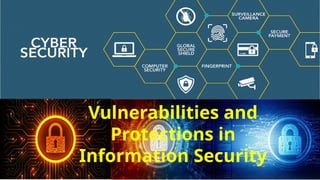
Vulnerabilities and
Protections in
Information Security
Learning Outcome:
• Identify common vulnerabilities that threaten information
security.
• Recognize the potential consequences of unaddressed
vulnerabilities
• Learn preventive actions to reduce vulnerabilities.
• Appreciate the role of awareness and training in enhancing
security
• Explore advanced methods to secure information
• Understand how to respond effectively to security incidents
• Reinforce the importance of continuous monitoring and
updating security measures.
Vulnerabilities and Protections in
Information Security
•Information Security involves safeguarding
information systems from unauthorized access,
misuse, disclosure, disruption, modification, or
destruction.
•Vulnerabilities are weaknesses or gaps in a system
that attackers can exploit.
•Protections are measures and techniques used to
mitigate these vulnerabilities and enhance the
system's security.
Common Types of Vulnerabilities
• A. Software Vulnerabilities
• Code Flaws: Bugs or errors in software code that attackers
exploit.
• Examples: Buffer overflow, SQL injection, cross-site scripting (XSS).
• Unpatched Software: Failing to update software with the
latest security patches.
• Default Configurations: Using default usernames, passwords,
or settings, which attackers often know.
• B. Hardware Vulnerabilities
• Firmware Issues: Insecure firmware that can be modified by
attackers.
• Physical Access: Unauthorized access to hardware devices.
• Unsecured Protocols: Using outdated or insecure
communication protocols like HTTP instead of HTTPS.
• Man-in-the-Middle (MITM) Attacks: Interception of data
transmitted between devices.
Human-Related Vulnerabilities
• Social Engineering: Manipulating individuals into divulging
confidential information.
• Examples: Phishing, baiting, pretexting.
• Weak Passwords: Using easily guessable or reused
passwords.
• Insider Threats: Employees or associates intentionally or
unintentionally compromising security.
Network Vulnerabilities
Physical Vulnerabilities
• Unsecured Premises: Lack of physical barriers or surveillance.
• Device Theft: Loss or theft of devices containing sensitive
data.
Emerging Vulnerabilities
• IoT Devices: (internet of things security)
• Poorly secured Internet of Things devices.
• Cloud Vulnerabilities: Misconfigurations or data breaches in
cloud storage.
• AI and ML Attacks: Exploiting weaknesses in AI systems
Protections Against Vulnerabilities
Software Protections
• Regular Updates and Patching: Apply updates to fix
known vulnerabilities.
• Secure Development Practices:
• Use static and dynamic code analysis tools during
development.
• Follow secure coding standards.
• Application Firewalls: Block malicious requests
(e.g., Web Application Firewall).
Hardware Protections
• Secure Firmware Updates: Regularly update firmware with
verified sources.
• Access Control: Use hardware-based access control
mechanisms like Trusted Platform Module (TPM).
Network Protections
• Encryption: Encrypt data in transit and at rest using
protocols like TLS or AES.
• Firewalls and IDS/IPS:
• Firewalls: Monitor and control incoming/outgoing traffic.
• Intrusion Detection/Prevention Systems: Detect and block
suspicious activities.
• VPNs (Virtual Private Networks): Secure communication
over public networks.
Human-Centric Protections
• Awareness Training: Train employees to recognize
phishing and social engineering tactics.
• Strong Password Policies:
• Enforce password complexity and regular updates.
• Implement multi-factor authentication (MFA).
• Monitoring and Logging: Track user activities to detect
anomalies.
Physical Protections
• Access Controls:
• Use biometric scanners, RFID cards, or smart locks.
• Surveillance: Install CCTV cameras and motion sensors.
• Data Backups: Store backups in secure locations.
Advanced Protections
• Zero Trust Architecture: Assume no
device or user is inherently trusted.
• Threat Intelligence: Monitor
emerging threats and vulnerabilities
in real time.
• AI and Automation: Use AI to
detect patterns of attacks and
respond promptly.
Vulnerability Management Process
• Identification: Use vulnerability scanners and
penetration tests.
• Prioritization: Assess risks based on impact and
likelihood of exploitation.
• Remediation: Apply patches or implement mitigations.
• Verification: Test to confirm the vulnerability is
resolved.
• Documentation and Monitoring: Maintain records for
audits and continuous monitoring.
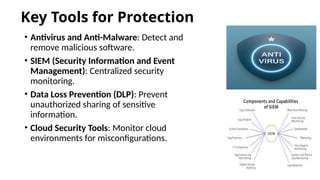
Key Tools for Protection
• Antivirus and Anti-Malware: Detect and
remove malicious software.
• SIEM (Security Information and Event
Management): Centralized security
monitoring.
• Data Loss Prevention (DLP): Prevent
unauthorized sharing of sensitive
information.
• Cloud Security Tools: Monitor cloud
environments for misconfigurations.
Challenges in Protection
• Evolving Threat Landscape: Cybercriminals
continuously adapt their methods.
• Resource Constraints: Limited budget and expertise
for implementing robust security.
• Integration Issues: Ensuring new protections work
seamlessly with existing systems.
Conclusion
• Vulnerabilities in information security are inevitable due to evolving
technologies and human factors. However, robust protections,
proactive vulnerability management, and continuous monitoring can
significantly reduce the risks. Organizations must adopt a
comprehensive approach combining technical, procedural, and
physical safeguards to ensure data integrity, confidentiality, and
availability.
Vulnerabilities and Protections in Information Security.pptx

Vulnerabilities and Protections in Information Security.pptx

  • 1.
  • 2.
    Learning Outcome: • Identifycommon vulnerabilities that threaten information security. • Recognize the potential consequences of unaddressed vulnerabilities • Learn preventive actions to reduce vulnerabilities. • Appreciate the role of awareness and training in enhancing security • Explore advanced methods to secure information • Understand how to respond effectively to security incidents • Reinforce the importance of continuous monitoring and updating security measures.
  • 3.
    Vulnerabilities and Protectionsin Information Security •Information Security involves safeguarding information systems from unauthorized access, misuse, disclosure, disruption, modification, or destruction. •Vulnerabilities are weaknesses or gaps in a system that attackers can exploit. •Protections are measures and techniques used to mitigate these vulnerabilities and enhance the system's security.
  • 4.
    Common Types ofVulnerabilities • A. Software Vulnerabilities • Code Flaws: Bugs or errors in software code that attackers exploit. • Examples: Buffer overflow, SQL injection, cross-site scripting (XSS). • Unpatched Software: Failing to update software with the latest security patches. • Default Configurations: Using default usernames, passwords, or settings, which attackers often know. • B. Hardware Vulnerabilities • Firmware Issues: Insecure firmware that can be modified by attackers. • Physical Access: Unauthorized access to hardware devices.
  • 5.
    • Unsecured Protocols:Using outdated or insecure communication protocols like HTTP instead of HTTPS. • Man-in-the-Middle (MITM) Attacks: Interception of data transmitted between devices. Human-Related Vulnerabilities • Social Engineering: Manipulating individuals into divulging confidential information. • Examples: Phishing, baiting, pretexting. • Weak Passwords: Using easily guessable or reused passwords. • Insider Threats: Employees or associates intentionally or unintentionally compromising security. Network Vulnerabilities
  • 6.
    Physical Vulnerabilities • UnsecuredPremises: Lack of physical barriers or surveillance. • Device Theft: Loss or theft of devices containing sensitive data. Emerging Vulnerabilities • IoT Devices: (internet of things security) • Poorly secured Internet of Things devices. • Cloud Vulnerabilities: Misconfigurations or data breaches in cloud storage. • AI and ML Attacks: Exploiting weaknesses in AI systems
  • 7.
    Protections Against Vulnerabilities SoftwareProtections • Regular Updates and Patching: Apply updates to fix known vulnerabilities. • Secure Development Practices: • Use static and dynamic code analysis tools during development. • Follow secure coding standards. • Application Firewalls: Block malicious requests (e.g., Web Application Firewall).
  • 8.
    Hardware Protections • SecureFirmware Updates: Regularly update firmware with verified sources. • Access Control: Use hardware-based access control mechanisms like Trusted Platform Module (TPM). Network Protections • Encryption: Encrypt data in transit and at rest using protocols like TLS or AES. • Firewalls and IDS/IPS: • Firewalls: Monitor and control incoming/outgoing traffic. • Intrusion Detection/Prevention Systems: Detect and block suspicious activities. • VPNs (Virtual Private Networks): Secure communication over public networks.
  • 9.
    Human-Centric Protections • AwarenessTraining: Train employees to recognize phishing and social engineering tactics. • Strong Password Policies: • Enforce password complexity and regular updates. • Implement multi-factor authentication (MFA). • Monitoring and Logging: Track user activities to detect anomalies. Physical Protections • Access Controls: • Use biometric scanners, RFID cards, or smart locks. • Surveillance: Install CCTV cameras and motion sensors. • Data Backups: Store backups in secure locations.
  • 10.
    Advanced Protections • ZeroTrust Architecture: Assume no device or user is inherently trusted. • Threat Intelligence: Monitor emerging threats and vulnerabilities in real time. • AI and Automation: Use AI to detect patterns of attacks and respond promptly.
  • 11.
    Vulnerability Management Process •Identification: Use vulnerability scanners and penetration tests. • Prioritization: Assess risks based on impact and likelihood of exploitation. • Remediation: Apply patches or implement mitigations. • Verification: Test to confirm the vulnerability is resolved. • Documentation and Monitoring: Maintain records for audits and continuous monitoring.
  • 12.
    Key Tools forProtection • Antivirus and Anti-Malware: Detect and remove malicious software. • SIEM (Security Information and Event Management): Centralized security monitoring. • Data Loss Prevention (DLP): Prevent unauthorized sharing of sensitive information. • Cloud Security Tools: Monitor cloud environments for misconfigurations.
  • 13.
    Challenges in Protection •Evolving Threat Landscape: Cybercriminals continuously adapt their methods. • Resource Constraints: Limited budget and expertise for implementing robust security. • Integration Issues: Ensuring new protections work seamlessly with existing systems.
  • 14.
    Conclusion • Vulnerabilities ininformation security are inevitable due to evolving technologies and human factors. However, robust protections, proactive vulnerability management, and continuous monitoring can significantly reduce the risks. Organizations must adopt a comprehensive approach combining technical, procedural, and physical safeguards to ensure data integrity, confidentiality, and availability.