Special Nursing Management
Venticulo-peritoneal shunt
Outline
Hydrocephalus: Overview
Ventriculo-peritoneal Shunt
Indications
Complications
Nursing Care
Evidences
Quiz
Hydrocephalus: Overview
• Cerebrospinal fluid (CSF) is produced in the brain, primarily by the choroid
plexus and absorbed by subarachnoid villi, CSF is a clear fluid that helps nourish
the brain, removes debris from the brain, and protects the brain and spinal cord
from injury.
A newborn may have an estimated 5 mL of CSF in the ventricular system and it is
produced at a rate of or 0.33 mL/kg/h.
Hydrocephalus is a condition in which there is a lack of absorption, blockage of
flow, or overproduction of the CSF that is found inside the ventricles (fluid-filled
areas) of the brain.
This may result in a build up of fluid that can cause the pressure inside of the
head to increase and the skull bones to expand to a larger-than-normal
appearance.
Ref: Vecca VN. Ventriculoperitoneal Shunt: What nurses need to know: Nursing 2018;48:12.
Hydrocephalus: Overview
Hydrocephalus occurs in approximately 0.5 to one out of 1,000 births.
The following are the primary reasons why hydrocephalus occurs:
Blockage of the CSF flow inside of the head.
Problems with the body absorbing the CSF.
Overproduction of the CSF.
Hydrocephalus can occur either congenital or acquired later in life.
When hydrocephalus is not related to a known genetic cause, it is
thought that many factors, both genetic and environmental, contribute
to the condition.
In a small percentage of children, a single gene defect on the X
chromosome, or another chromosome, is responsible for the condition.
In these cases, the chance for recurrence is higher.
Hydrocephalus: Overview
Copyright © 2017 by The National Association of Neonatal Nurses DOI: 10.1097/ANC.0000000000000439
Advances in Neonatal Care • Vol. 17, No. 6 • pp. 430-439.
Hydrocephalus: Overview
The goal of treatment is to reduce the pressure and to properly
drain the cerebral spinal fluid (CSF). Occasionally, medications
or procedures to draw off the extra CSF may be used.
Surgery may be needed for some cases of hydrocephalus.
Surgery usually involves placing a mechanical shunting device
into the head to help drain the extra CSF from the brain and
redirect the extra fluid to another part of the body to be
absorbed.
Shunts are the cornerstone of hydrocephalus treatment.
A common type of shunt is the ventriculoperitoneal shunt.
Ventriculoperitoneal Shunt
Ventriculoperitoneal shunt (VPS) placement is one of the most commonly
performed neurosurgical procedures and is necessary to treat most forms
of hydrocephalus.
VPS shunt is a cerebral shunt that drains excess cerebrospinal fluid (CSF)
when there is an obstruction in the normal outflow or there is a decreased
absorption of the fluid.
The ventricles of the brain are a communicating network of cavities
located within the brain parenchyma. The choroid plexus in the ventricles
produce CSF, which fills the ventricle and the subarachnoid space in a
constant cycle of production and reabsorption.
The CSF is then absorbed into the cerebral venous circulation through the
arachnoid granulations. Any block or obstruction in this pathway will
produce obstructive hydrocephalus and if permanent will require a shunt.
Ventriculoperitoneal Shunt
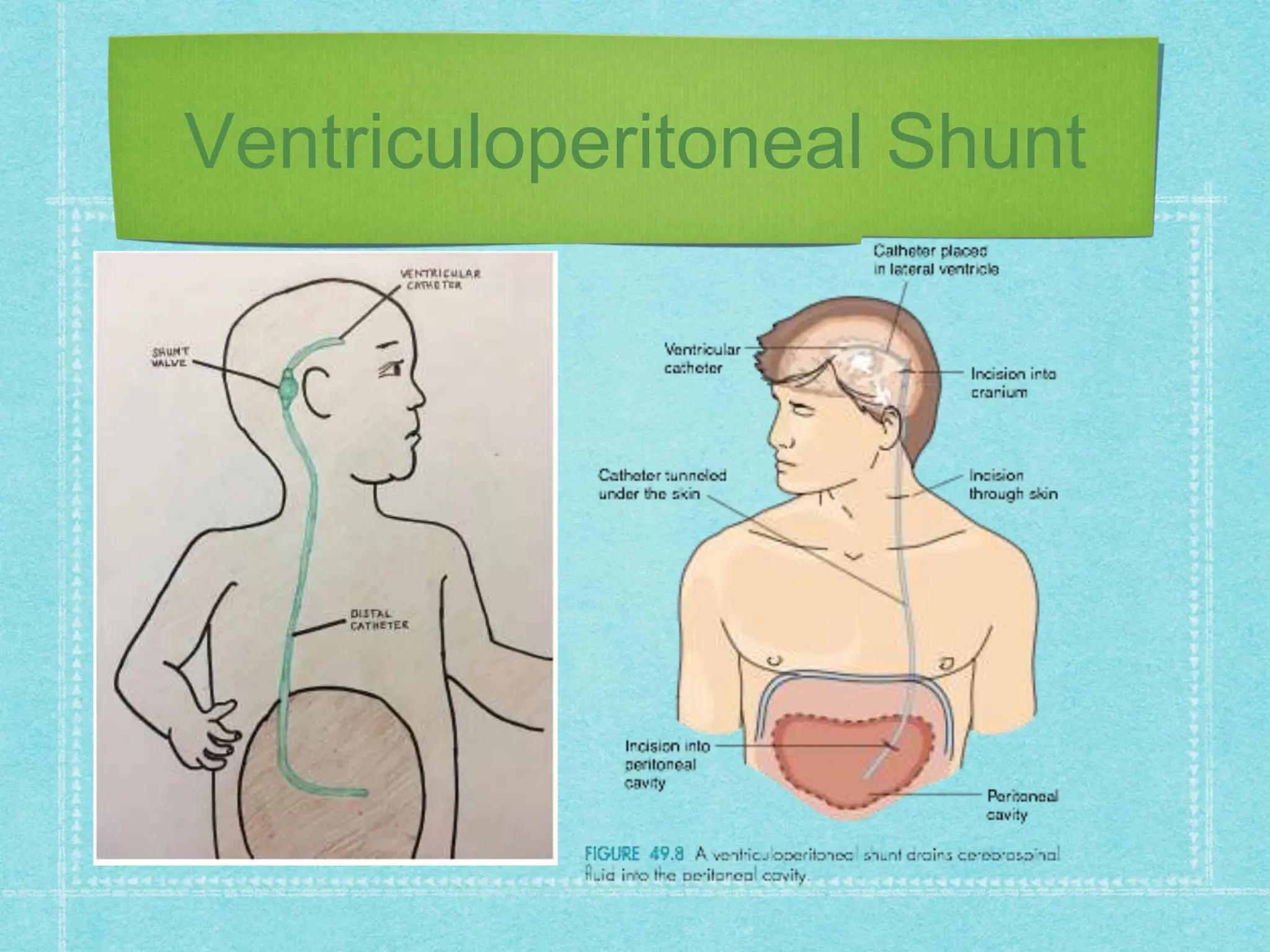
Placement of a cerebral shunt and its location is determined based on the
surgeon's preference. It may be placed through a frontal approach into the
anterior horn of the lateral ventricles or though a parieto-occipital approach
into the trigone or occipital horn of the lateral ventricle.
The most preferred proximal shunt location is on the right lateral ventricle as
any complication will not be associated with the dominant hemisphere.
Shunt systems are composed of a proximal ventricular catheter that is located
in the ventricular system of the brain, or lumber subdural space, a one-way
valve system, and a distal catheter located in different body cavities,
commonly the peritoneum or right atrium.
In all cases, however, the distal end of the catheter can be located in any
tissue with cells capable of absorbing the incoming CSF.
Ventriculoperitoneal Shunt
Indications
Most VP shunts are placed to treat the hydrocephalus. Disorders that
typically requiring shunting includes:
1. Congenital hydrocephalus associated with mental retardation,
abducted thumbs, and spastic paraplegia.
2. Tumors leading to CSF blockage of the ventricles.
3. Communicating hydrocephalus secondary to meningitis or
subarachnoid hemorrhage.
4. Myelomeningocele causes the development of hydrocephalus because
the ow of CSF is altered due to hindbrain malformation.
5. Craniosynostosis occurs when the sutures of the skull close too early
with sutures fusing before the brain stops growing and in rare
occasions can cause hydrocephalus.
Indications
6. Arachnoid cysts are a defect caused when CSF forms a
collection that is trapped in the arachnoid membranes.
7. Idiopathic intracranial hypertension is a rare
neurological disorder affecting usually women of
childbearing age, causing a rise in intracranial pressure
which can result in permanent loss of vision.
8. Normal-pressure hydrocephalus caused a classic triad
of memory problems/dementia, gait dysfunction, and
urinary incontinence.
Contraindications
Absolute contraindications include:
• Infection over the entry site
• Infection of the CSF
• Allergy to any of the catheter components (silicone)
Related contraindications include:
• Altered coagulation function
• High CSF protein
• CSF with blood
Equipments
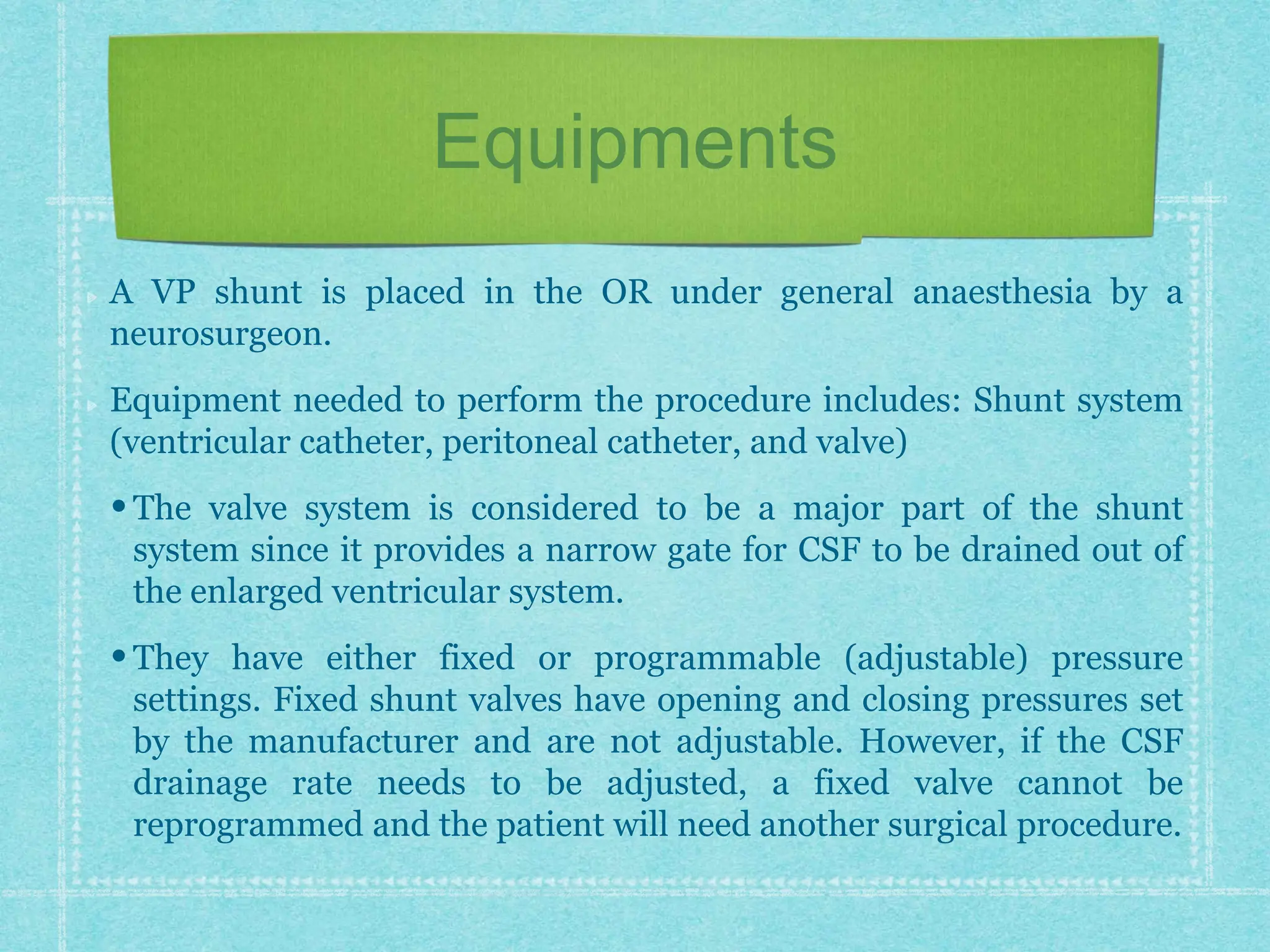
A VP shunt is placed in the OR under general anaesthesia by a
neurosurgeon.
Equipment needed to perform the procedure includes: Shunt system
(ventricular catheter, peritoneal catheter, and valve)
•The valve system is considered to be a major part of the shunt
system since it provides a narrow gate for CSF to be drained out of
the enlarged ventricular system.
•They have either fixed or programmable (adjustable) pressure
settings. Fixed shunt valves have opening and closing pressures set
by the manufacturer and are not adjustable. However, if the CSF
drainage rate needs to be adjusted, a fixed valve cannot be
reprogrammed and the patient will need another surgical procedure.
Equipments
•With programmable valves, the opening and closing pressures can be
adjusted without the need for a surgical procedure. Using a
transdermal magnetic device, a low-pressure setting can be changed
non-invasively to a medium-pressure setting.
•Although the programmable valves are more expensive than fixed
valves, they may be associated with fewer surgeries as the
programmable valve can be adjusted based on changes in the
patient’s clinical status.
•Specimen tubes for CSF
•Drill for the burr hole
•Shunt passer
•Image-guided navigation system (only for small ventricles)
Preparation
Brain magnetic resonance imaging (MRI) or computed
tomography (CT) scan is reviewed for the planning of the
shunt and the proper placement of the proximal catheter.
All patients need appropriate preoperative workup and
informed consent for surgery and general anaesthesia.
The patient is placed supine. For a parieto-occipital
approach, the head is tilted to the contralateral side of the
shunt placement.
Preoperative antibiotics are given and the patient is
dressed in sterile conditions.
Technique
Shave the hair away from the head incision site (some surgeons use
minimal shaving) Clean the skin with an antiseptic.
Apply a sterile fenestrated drape over the incision sites (head, neck, chest,
and abdomen).
Make a "U or C" shaped skin incision over the entry point where the burr
hole is to be performed for the introduction of the ventricular catheter.
If the frontal approach will be used, then Kocher’s point is used. Burr hole
is performed at the desired entry point and the dura incised. A small entry
point in the cortex is coagulated and incised.
Ventricular catheter is introduced directed into the ventricle and cut to the
appropriate pre-measured length.
Technique
CSF samples are collected. The ventricular shunt is connected to the valve and
secured with a silk tie.
An incision in the abdomen is done to access the peritoneal cavity; the site
depends on the surgeon's preference and can be done in the upper quadrant or
the midline
Shunt passer is used to pass the peritoneal distal catheter between both
incisions.
Peritoneal catheter is connected to the valve and secured with a silk tie.
After good distal CSF ow at the peritoneal catheter, it is introduced into the
peritoneal cavity. Wounds are closed in anatomical layers.
The CSF sample is sent to the laboratory for cell count, glucose, protein, gram
stain, and culture.
Technique
Watch Video
https://www.youtube.com/watch?v=ZSV1LauJlYk
Placement
Complications
• Unfortunately, complications related to VPS placement are
common, and multiple shunt revisions are almost expected
throughout a patient's lifetime.
• Despite continuous attempts to reduce the incidence of VPS
complications, such as improved sterile techniques, antibiotic
impregnated catheters, and programmable valves, VPS
malfunction remains a major problem, which often leads to
multiple and costly hospital admissions.
• Shunt malfunction may be attributed to multiple causes, including
obstruction, infection and bowel perforation. It leads to retention
of CSF, resulting in increased ICP. Report signs and symptoms of
increased ICP, including change in level of consciousness,
headache, vomiting, lethargy, and confusion.
Complications
1. Shunt catheter obstruction is the most common cause shunt
malfunction, accounts approximately 50% of all shunt
malfunction.
• Obstruction can occur in the proximal catheter, within the
valve, or within the distal catheter, however, the most common
site of obstruction sited in most studies is the proximal catheter
(may become clogged with brain parenchyma or due to
adhesions with the choroid plexus).
• Cause of shunt obstruction also can be that debris, such as
blood and proteinaceous fluid may gradually accumulate within
and eventually occlude the thin catheter tubing.
Complications
Patients who present with symptoms of shunt failure due to
obstruction may present with headache, lethargy, nausea and
vomiting, while fever is more common among infected patients.
To improve ventricular catheter position, perioperative
sonography, neuronavigation and endoscopy have been used.
They can be safe and effective and help in reducing improper
placement rates.
In spite of this, revision of the ventricular catheter is still the
most common burden to afford in children with shunt
malfunction.
Evidences
26
Complications
2. Shunt infection “A Neurosurgeon’s Worst Nightmare”:
• Infection is the second most common cause of shunt malfunction,
with a reported rate of approximately 8–15% among patients who
undergo VPS placement, usually from Staphylococcus epidermis,
Staph aureus. It is a serious complication with a great potential for
severe morbidity and mortality.
• It occurs in the early peri-operative period due to intra-operative
contamination of shunt system due to breach in sterility, poor
surgical technique, imperfect surgical materials, or long operations.
• Rare cause could be meningitis that can contaminate proximal
catheter or peritonitis that can contaminate distal catheter.
Complications
2. Shunt Infection:
Signs and symptoms of infection include fever, lethargy, irritability, abdominal
pain, headache, nuchal rigidity, and elevated white blood cell count. Shunt
infection can quickly lead to meningitis.
Treatment of shunt infections is inevitably a lengthy process that involves week to
month-long admissions in the hospital.
After the infected shunt is removed, an external ventricular drain (EVD) must be
placed while intravenous antibiotics are administered.
The EVD must then remain in place until the infection is cleared and a new shunt
can safely be implanted. This process requires admission in the hospital and
often in the intensive care unit throughout the duration of therapy.
Complications
2. Shunt Infection
Effective means of reducing the rate of shunt infections include use of
use perioperative antibiotics, optimising sterile technique, and
reducing the time of the procedure.
For example, Rotim et al. (1997) adopted a strict protocol for shunt
placement, including special attention to skin prep, perioperative
antibiotics, and operating time not exceeding 40 min, and they found
that their per patient rate of shunt infection dropped from 17.9% to
8%.
Ref: K. Rotim, P. Miklic, J. Paladino, A. Melada, M. Marcikic, M. Scap, Reducing the incidence of infection
in pediatric cerebrospinal fluid shunt operations, Childs Nerv. Syst. 13 (1997) 584–587.
Evidences
Complications
3. Others
• Intracerebral or intraventricular hemorrhage, Subdural hematomas (can result
from erosion of the catheter into cerebral vasculature or sudden ICP reduction
after VPS placement).
• Malposition, Bowel perforation
• Shunt erosion of the skin with exposure of the system Shunt over drainage (slit
ventricles)
• Shunt disconnection
• Abdominal CSF collections
• Shunt breakage at any point
• Catheter perforation of viscera and rarely extrusion through the anus, Seizures
Evidences
Ref: Springer International Publishing AG 2017 209 A. Ammar (ed.), Hydrocephalus, DOI 10.1007/978-3-319-61304-8_16.
Nursing Care
• The responsibilities include preparing infant for surgery, caring for
immediate postoperative infant, proper functioning and
monitoring shunt function, preventing complications, caring for
the surgical sites and educating family for ongoing care.
• The ongoing care of an infant with VP shunt is crucial for long-term
clinical outcomes; therefore, emphasis is placed on the education of
family members.
• Positioning: After the shunt is inserted, the nurse shouldn’t lie
the child on the side of the body where the shunt is located.
• The child should lie supine to avoid rapid decompression and
decrease complications that might occur from too rapid a reduction
in intracranial fluid.
Nursing Care
• Assess both proximal (head) and distal (abdominal)
shunt catheter site incisions for bleeding, drainage,
and signs of wound infection.
• Signs and symptoms of infection include erythema
or edema at the incision site or along the catheter
pathway, fever, lethargy or irritability, abdominal
pain, anorexia, headache, nuchal rigidity, low-grade
fever, and elevated white blood cell count.
Nursing Care
• After a CSF specimen for culture has been obtained, start
treatment with a broad-spectrum antibiotic such as
vancomycin as prescribed.
• To optimize CSF drainage, elevate the head of bed, typically to
30 degrees, although the shunt will drain as programmed
independent of head of bed elevation.
• Perform frequent neurologic and other organ system
assessments to detect changes that may result from
intracerebral hemorrhage, SDH, increased ICP, meningitis, or
peritonitis.
Nursing Care
• Throughout the postoperative period, it is essential to
monitor for the symptoms of increased ICP to rule out shunt
failure.
• Careful suctioning, analgesic administration to control pain
prior to procedures, comfort measures can prevent increased
ICP.
• Nurses must measure the head circumference at a frequency
as prescribed.
• In addition, observe for seizures and assess surgical sites for
signs of infection. Assess the abdomen for any signs of ileus.
Nursing Care
• Peritonitis may develop as a peritoneal response to the foreign
object. Assess for abdominal pain or tenderness, erythema, and
warmth and tenderness over the shunt tubing.
• CSF malabsorption from the peritoneal cavity can lead to
abdominal distension and discomfort, and frank ascites.
• Parental concerns about long-term neurodevelopmental
outcomes, intellectual or physical challenges, complications,
and need for shunt revisions should be addressed as they
pertain to the uniqueness of the child and the reason for shunt
procedure.
Nursing Care
Delayed intracranial haemorrhage can be a result of erosion of
vasculature by catheter cannulation or sudden ICP reduction
after VPS placement.
Monitor for signs of bleeding such as pallor, tachycardia, and
hypotension, and notify the care team quickly.
If the patient is scheduled for an MRI, inform appropriate
personnel that the patient has a VPS in place. The MRI can
redial a programmable shunt to an inappropriate setting, the
shunt must be checked and redialed if indicated following the
MRI to confirm correct pressure setting.
Nursing Care
Excessive drainage of CSF is seen in children shunted early in
life, which may be evident by a sunken fontanel, increased urine
output, and increased sodium loss.
Therefore, monitoring intake and output is an important aspect
of postoperative care. Complications associated with
overdrainage is certainly a problem.
When excess CSF is drained, the ventricles will shrink to
become extremely small, a condition called slit ventricle. Acute
intermittent headache, relieved by lying down, is an indicator of
a slit ventricle in older children. Changing the pressure
(increase) of the system can help reduce CSF drainage.
Discharge Teaching
Once postoperative edema resolves, a raised area at
scalp and abdominal insertion sites will remain visible.
Teach patients and caregivers to protect these areas.
When the hair regrows, the raised area is usually
unnoticeable.
Educate the patient, family, and caregivers about
potential complications associated with the CSF shunt,
including over- and/or under drainage, infection, and
signs and symptoms of increasing ICP.
Discharge Teaching
Explain the need to use caution with devices such as cell
phones containing magnets that could theoretically alter the
programmed shunt valve.
Patients, families, and caregivers should know the signs and
symptoms that indicate shunt failure or infection and
inform treating physician immediately if they suspect any
problems.
Inform them that shunt complications can occur at any time
regardless of how long a shunt has been in place. All
patients with a shunt require close monitoring for
complications.
“Type a quote here.”
–Johnny Appleseed
Copyright © 2017 by The National Association of Neonatal Nurses DOI: 10.1097/ANC.0000000000000439
Advances in Neonatal Care • Vol. 17, No. 6 • pp. 430-439.
Evidences
Quiz - 1
A nurse is caring for a child after shunt
insertion to relieve hydrocephalus. Which
intervention should the nurse perform?
1. Place the child in an upright
position.
2. Avoid lying the child on the side
where the shunt is located.
3. Place the child in the semi-Fowler
position.
4. Place the child in a prone position.
Answer - 1
2. Avoid lying the child on the side
where the shunt is located.
Quiz - 2
A school-age child who has hydrocephalus
is admitted for a revision of his
ventriculoperitoneal shunt. When he
returns from surgery, how should the
nurse position him?
1. On his abdomen where he’s comfort-
able
2. In semi-Fowler’s position to prevent
aspiration
3. With the bed flat to prevent a sub-
dural hematoma
4. On the same side as the shunt repair
Answer - 2
3. With the bed flat to prevent a sub-
dural hematoma
Quiz - 3
The most common organism
identified in VP shunt infection is
1. Escherichia coli.
2. Psuedomonas aeruginosa.
3. Staphylococcus aureus.
4. Group B Streptococcal infection.
Answer - 3
3. Staphylococcus aureus.
Quiz - 4
A slit ventricle should be
suspected when an older child
with a VP shunt experiences an
acute intermittent headache
relieved by
1. lying down.
2. sitting upright.
3. movement.
4. prone position
Answer - 4
1. lying down.
Any
Queries?
Thank you!

VP Shunt ppt.ppt medical surgical nursing

  • 1.
  • 2.
  • 3.
    Hydrocephalus: Overview • Cerebrospinalfluid (CSF) is produced in the brain, primarily by the choroid plexus and absorbed by subarachnoid villi, CSF is a clear fluid that helps nourish the brain, removes debris from the brain, and protects the brain and spinal cord from injury. A newborn may have an estimated 5 mL of CSF in the ventricular system and it is produced at a rate of or 0.33 mL/kg/h. Hydrocephalus is a condition in which there is a lack of absorption, blockage of flow, or overproduction of the CSF that is found inside the ventricles (fluid-filled areas) of the brain. This may result in a build up of fluid that can cause the pressure inside of the head to increase and the skull bones to expand to a larger-than-normal appearance.
  • 4.
    Ref: Vecca VN.Ventriculoperitoneal Shunt: What nurses need to know: Nursing 2018;48:12.
  • 5.
    Hydrocephalus: Overview Hydrocephalus occursin approximately 0.5 to one out of 1,000 births. The following are the primary reasons why hydrocephalus occurs: Blockage of the CSF flow inside of the head. Problems with the body absorbing the CSF. Overproduction of the CSF. Hydrocephalus can occur either congenital or acquired later in life. When hydrocephalus is not related to a known genetic cause, it is thought that many factors, both genetic and environmental, contribute to the condition. In a small percentage of children, a single gene defect on the X chromosome, or another chromosome, is responsible for the condition. In these cases, the chance for recurrence is higher.
  • 6.
    Hydrocephalus: Overview Copyright ©2017 by The National Association of Neonatal Nurses DOI: 10.1097/ANC.0000000000000439 Advances in Neonatal Care • Vol. 17, No. 6 • pp. 430-439.
  • 9.
    Hydrocephalus: Overview The goalof treatment is to reduce the pressure and to properly drain the cerebral spinal fluid (CSF). Occasionally, medications or procedures to draw off the extra CSF may be used. Surgery may be needed for some cases of hydrocephalus. Surgery usually involves placing a mechanical shunting device into the head to help drain the extra CSF from the brain and redirect the extra fluid to another part of the body to be absorbed. Shunts are the cornerstone of hydrocephalus treatment. A common type of shunt is the ventriculoperitoneal shunt.
  • 10.
    Ventriculoperitoneal Shunt Ventriculoperitoneal shunt(VPS) placement is one of the most commonly performed neurosurgical procedures and is necessary to treat most forms of hydrocephalus. VPS shunt is a cerebral shunt that drains excess cerebrospinal fluid (CSF) when there is an obstruction in the normal outflow or there is a decreased absorption of the fluid. The ventricles of the brain are a communicating network of cavities located within the brain parenchyma. The choroid plexus in the ventricles produce CSF, which fills the ventricle and the subarachnoid space in a constant cycle of production and reabsorption. The CSF is then absorbed into the cerebral venous circulation through the arachnoid granulations. Any block or obstruction in this pathway will produce obstructive hydrocephalus and if permanent will require a shunt.
  • 11.
    Ventriculoperitoneal Shunt Placement ofa cerebral shunt and its location is determined based on the surgeon's preference. It may be placed through a frontal approach into the anterior horn of the lateral ventricles or though a parieto-occipital approach into the trigone or occipital horn of the lateral ventricle. The most preferred proximal shunt location is on the right lateral ventricle as any complication will not be associated with the dominant hemisphere. Shunt systems are composed of a proximal ventricular catheter that is located in the ventricular system of the brain, or lumber subdural space, a one-way valve system, and a distal catheter located in different body cavities, commonly the peritoneum or right atrium. In all cases, however, the distal end of the catheter can be located in any tissue with cells capable of absorbing the incoming CSF.
  • 12.
  • 13.
    Indications Most VP shuntsare placed to treat the hydrocephalus. Disorders that typically requiring shunting includes: 1. Congenital hydrocephalus associated with mental retardation, abducted thumbs, and spastic paraplegia. 2. Tumors leading to CSF blockage of the ventricles. 3. Communicating hydrocephalus secondary to meningitis or subarachnoid hemorrhage. 4. Myelomeningocele causes the development of hydrocephalus because the ow of CSF is altered due to hindbrain malformation. 5. Craniosynostosis occurs when the sutures of the skull close too early with sutures fusing before the brain stops growing and in rare occasions can cause hydrocephalus.
  • 14.
    Indications 6. Arachnoid cystsare a defect caused when CSF forms a collection that is trapped in the arachnoid membranes. 7. Idiopathic intracranial hypertension is a rare neurological disorder affecting usually women of childbearing age, causing a rise in intracranial pressure which can result in permanent loss of vision. 8. Normal-pressure hydrocephalus caused a classic triad of memory problems/dementia, gait dysfunction, and urinary incontinence.
  • 15.
    Contraindications Absolute contraindications include: •Infection over the entry site • Infection of the CSF • Allergy to any of the catheter components (silicone) Related contraindications include: • Altered coagulation function • High CSF protein • CSF with blood
  • 16.
    Equipments A VP shuntis placed in the OR under general anaesthesia by a neurosurgeon. Equipment needed to perform the procedure includes: Shunt system (ventricular catheter, peritoneal catheter, and valve) •The valve system is considered to be a major part of the shunt system since it provides a narrow gate for CSF to be drained out of the enlarged ventricular system. •They have either fixed or programmable (adjustable) pressure settings. Fixed shunt valves have opening and closing pressures set by the manufacturer and are not adjustable. However, if the CSF drainage rate needs to be adjusted, a fixed valve cannot be reprogrammed and the patient will need another surgical procedure.
  • 17.
    Equipments •With programmable valves,the opening and closing pressures can be adjusted without the need for a surgical procedure. Using a transdermal magnetic device, a low-pressure setting can be changed non-invasively to a medium-pressure setting. •Although the programmable valves are more expensive than fixed valves, they may be associated with fewer surgeries as the programmable valve can be adjusted based on changes in the patient’s clinical status. •Specimen tubes for CSF •Drill for the burr hole •Shunt passer •Image-guided navigation system (only for small ventricles)
  • 18.
    Preparation Brain magnetic resonanceimaging (MRI) or computed tomography (CT) scan is reviewed for the planning of the shunt and the proper placement of the proximal catheter. All patients need appropriate preoperative workup and informed consent for surgery and general anaesthesia. The patient is placed supine. For a parieto-occipital approach, the head is tilted to the contralateral side of the shunt placement. Preoperative antibiotics are given and the patient is dressed in sterile conditions.
  • 19.
    Technique Shave the hairaway from the head incision site (some surgeons use minimal shaving) Clean the skin with an antiseptic. Apply a sterile fenestrated drape over the incision sites (head, neck, chest, and abdomen). Make a "U or C" shaped skin incision over the entry point where the burr hole is to be performed for the introduction of the ventricular catheter. If the frontal approach will be used, then Kocher’s point is used. Burr hole is performed at the desired entry point and the dura incised. A small entry point in the cortex is coagulated and incised. Ventricular catheter is introduced directed into the ventricle and cut to the appropriate pre-measured length.
  • 20.
    Technique CSF samples arecollected. The ventricular shunt is connected to the valve and secured with a silk tie. An incision in the abdomen is done to access the peritoneal cavity; the site depends on the surgeon's preference and can be done in the upper quadrant or the midline Shunt passer is used to pass the peritoneal distal catheter between both incisions. Peritoneal catheter is connected to the valve and secured with a silk tie. After good distal CSF ow at the peritoneal catheter, it is introduced into the peritoneal cavity. Wounds are closed in anatomical layers. The CSF sample is sent to the laboratory for cell count, glucose, protein, gram stain, and culture.
  • 21.
  • 22.
  • 23.
    Complications • Unfortunately, complicationsrelated to VPS placement are common, and multiple shunt revisions are almost expected throughout a patient's lifetime. • Despite continuous attempts to reduce the incidence of VPS complications, such as improved sterile techniques, antibiotic impregnated catheters, and programmable valves, VPS malfunction remains a major problem, which often leads to multiple and costly hospital admissions. • Shunt malfunction may be attributed to multiple causes, including obstruction, infection and bowel perforation. It leads to retention of CSF, resulting in increased ICP. Report signs and symptoms of increased ICP, including change in level of consciousness, headache, vomiting, lethargy, and confusion.
  • 24.
    Complications 1. Shunt catheterobstruction is the most common cause shunt malfunction, accounts approximately 50% of all shunt malfunction. • Obstruction can occur in the proximal catheter, within the valve, or within the distal catheter, however, the most common site of obstruction sited in most studies is the proximal catheter (may become clogged with brain parenchyma or due to adhesions with the choroid plexus). • Cause of shunt obstruction also can be that debris, such as blood and proteinaceous fluid may gradually accumulate within and eventually occlude the thin catheter tubing.
  • 25.
    Complications Patients who presentwith symptoms of shunt failure due to obstruction may present with headache, lethargy, nausea and vomiting, while fever is more common among infected patients. To improve ventricular catheter position, perioperative sonography, neuronavigation and endoscopy have been used. They can be safe and effective and help in reducing improper placement rates. In spite of this, revision of the ventricular catheter is still the most common burden to afford in children with shunt malfunction.
  • 26.
  • 27.
    Complications 2. Shunt infection“A Neurosurgeon’s Worst Nightmare”: • Infection is the second most common cause of shunt malfunction, with a reported rate of approximately 8–15% among patients who undergo VPS placement, usually from Staphylococcus epidermis, Staph aureus. It is a serious complication with a great potential for severe morbidity and mortality. • It occurs in the early peri-operative period due to intra-operative contamination of shunt system due to breach in sterility, poor surgical technique, imperfect surgical materials, or long operations. • Rare cause could be meningitis that can contaminate proximal catheter or peritonitis that can contaminate distal catheter.
  • 28.
    Complications 2. Shunt Infection: Signsand symptoms of infection include fever, lethargy, irritability, abdominal pain, headache, nuchal rigidity, and elevated white blood cell count. Shunt infection can quickly lead to meningitis. Treatment of shunt infections is inevitably a lengthy process that involves week to month-long admissions in the hospital. After the infected shunt is removed, an external ventricular drain (EVD) must be placed while intravenous antibiotics are administered. The EVD must then remain in place until the infection is cleared and a new shunt can safely be implanted. This process requires admission in the hospital and often in the intensive care unit throughout the duration of therapy.
  • 29.
    Complications 2. Shunt Infection Effectivemeans of reducing the rate of shunt infections include use of use perioperative antibiotics, optimising sterile technique, and reducing the time of the procedure. For example, Rotim et al. (1997) adopted a strict protocol for shunt placement, including special attention to skin prep, perioperative antibiotics, and operating time not exceeding 40 min, and they found that their per patient rate of shunt infection dropped from 17.9% to 8%. Ref: K. Rotim, P. Miklic, J. Paladino, A. Melada, M. Marcikic, M. Scap, Reducing the incidence of infection in pediatric cerebrospinal fluid shunt operations, Childs Nerv. Syst. 13 (1997) 584–587.
  • 30.
  • 31.
    Complications 3. Others • Intracerebralor intraventricular hemorrhage, Subdural hematomas (can result from erosion of the catheter into cerebral vasculature or sudden ICP reduction after VPS placement). • Malposition, Bowel perforation • Shunt erosion of the skin with exposure of the system Shunt over drainage (slit ventricles) • Shunt disconnection • Abdominal CSF collections • Shunt breakage at any point • Catheter perforation of viscera and rarely extrusion through the anus, Seizures
  • 32.
    Evidences Ref: Springer InternationalPublishing AG 2017 209 A. Ammar (ed.), Hydrocephalus, DOI 10.1007/978-3-319-61304-8_16.
  • 33.
    Nursing Care • Theresponsibilities include preparing infant for surgery, caring for immediate postoperative infant, proper functioning and monitoring shunt function, preventing complications, caring for the surgical sites and educating family for ongoing care. • The ongoing care of an infant with VP shunt is crucial for long-term clinical outcomes; therefore, emphasis is placed on the education of family members. • Positioning: After the shunt is inserted, the nurse shouldn’t lie the child on the side of the body where the shunt is located. • The child should lie supine to avoid rapid decompression and decrease complications that might occur from too rapid a reduction in intracranial fluid.
  • 34.
    Nursing Care • Assessboth proximal (head) and distal (abdominal) shunt catheter site incisions for bleeding, drainage, and signs of wound infection. • Signs and symptoms of infection include erythema or edema at the incision site or along the catheter pathway, fever, lethargy or irritability, abdominal pain, anorexia, headache, nuchal rigidity, low-grade fever, and elevated white blood cell count.
  • 35.
    Nursing Care • Aftera CSF specimen for culture has been obtained, start treatment with a broad-spectrum antibiotic such as vancomycin as prescribed. • To optimize CSF drainage, elevate the head of bed, typically to 30 degrees, although the shunt will drain as programmed independent of head of bed elevation. • Perform frequent neurologic and other organ system assessments to detect changes that may result from intracerebral hemorrhage, SDH, increased ICP, meningitis, or peritonitis.
  • 36.
    Nursing Care • Throughoutthe postoperative period, it is essential to monitor for the symptoms of increased ICP to rule out shunt failure. • Careful suctioning, analgesic administration to control pain prior to procedures, comfort measures can prevent increased ICP. • Nurses must measure the head circumference at a frequency as prescribed. • In addition, observe for seizures and assess surgical sites for signs of infection. Assess the abdomen for any signs of ileus.
  • 37.
    Nursing Care • Peritonitismay develop as a peritoneal response to the foreign object. Assess for abdominal pain or tenderness, erythema, and warmth and tenderness over the shunt tubing. • CSF malabsorption from the peritoneal cavity can lead to abdominal distension and discomfort, and frank ascites. • Parental concerns about long-term neurodevelopmental outcomes, intellectual or physical challenges, complications, and need for shunt revisions should be addressed as they pertain to the uniqueness of the child and the reason for shunt procedure.
  • 38.
    Nursing Care Delayed intracranialhaemorrhage can be a result of erosion of vasculature by catheter cannulation or sudden ICP reduction after VPS placement. Monitor for signs of bleeding such as pallor, tachycardia, and hypotension, and notify the care team quickly. If the patient is scheduled for an MRI, inform appropriate personnel that the patient has a VPS in place. The MRI can redial a programmable shunt to an inappropriate setting, the shunt must be checked and redialed if indicated following the MRI to confirm correct pressure setting.
  • 39.
    Nursing Care Excessive drainageof CSF is seen in children shunted early in life, which may be evident by a sunken fontanel, increased urine output, and increased sodium loss. Therefore, monitoring intake and output is an important aspect of postoperative care. Complications associated with overdrainage is certainly a problem. When excess CSF is drained, the ventricles will shrink to become extremely small, a condition called slit ventricle. Acute intermittent headache, relieved by lying down, is an indicator of a slit ventricle in older children. Changing the pressure (increase) of the system can help reduce CSF drainage.
  • 40.
    Discharge Teaching Once postoperativeedema resolves, a raised area at scalp and abdominal insertion sites will remain visible. Teach patients and caregivers to protect these areas. When the hair regrows, the raised area is usually unnoticeable. Educate the patient, family, and caregivers about potential complications associated with the CSF shunt, including over- and/or under drainage, infection, and signs and symptoms of increasing ICP.
  • 41.
    Discharge Teaching Explain theneed to use caution with devices such as cell phones containing magnets that could theoretically alter the programmed shunt valve. Patients, families, and caregivers should know the signs and symptoms that indicate shunt failure or infection and inform treating physician immediately if they suspect any problems. Inform them that shunt complications can occur at any time regardless of how long a shunt has been in place. All patients with a shunt require close monitoring for complications.
  • 42.
    “Type a quotehere.” –Johnny Appleseed Copyright © 2017 by The National Association of Neonatal Nurses DOI: 10.1097/ANC.0000000000000439 Advances in Neonatal Care • Vol. 17, No. 6 • pp. 430-439.
  • 43.
  • 44.
    Quiz - 1 Anurse is caring for a child after shunt insertion to relieve hydrocephalus. Which intervention should the nurse perform? 1. Place the child in an upright position. 2. Avoid lying the child on the side where the shunt is located. 3. Place the child in the semi-Fowler position. 4. Place the child in a prone position.
  • 45.
    Answer - 1 2.Avoid lying the child on the side where the shunt is located.
  • 46.
    Quiz - 2 Aschool-age child who has hydrocephalus is admitted for a revision of his ventriculoperitoneal shunt. When he returns from surgery, how should the nurse position him? 1. On his abdomen where he’s comfort- able 2. In semi-Fowler’s position to prevent aspiration 3. With the bed flat to prevent a sub- dural hematoma 4. On the same side as the shunt repair
  • 47.
    Answer - 2 3.With the bed flat to prevent a sub- dural hematoma
  • 48.
    Quiz - 3 Themost common organism identified in VP shunt infection is 1. Escherichia coli. 2. Psuedomonas aeruginosa. 3. Staphylococcus aureus. 4. Group B Streptococcal infection.
  • 49.
    Answer - 3 3.Staphylococcus aureus.
  • 50.
    Quiz - 4 Aslit ventricle should be suspected when an older child with a VP shunt experiences an acute intermittent headache relieved by 1. lying down. 2. sitting upright. 3. movement. 4. prone position
  • 51.
    Answer - 4 1.lying down.
  • 52.

Editor's Notes

  • #7 Chiari malformation (kee-AH-ree mal-for-MAY-shun) is a condition in which brain tissue extends into the spinal canal. It occurs when part of the skull is misshapen or smaller than is typical. The skull presses on the brain and forces it downward.
  • #14 Communicating hydrocephalus occurs when the flow of CSF is blocked after it exits the ventricles.
  • #16 Increased protein level may be a sign of a tumor, bleeding, nerve inflammation, or injury. A blockage in the flow of spinal fluid can cause the rapid buildup of protein in the lower spinal area.
  • #18 mage-guided surgical navigation (ISN) is a useful tool in orbital surgery which allows for 3-dimensial (3D) localization of the surgeon's ...
  • #33 Slit ventricle syndrome (SVS) is a complication that occurs after cerebrospinal fluid shunting with a ventriculoperitoneal (VP) shunt. SVS is a poorly defined syndrome characterized by cerebrospinal fluid shunt-related symptoms in the setting of small ventricles on neuroimaging.  occurs after years of overshunting in patients who had a ventricular shunt placed as an infant. The disease is characterized by severe, life-modifying headaches with normal or smaller-than-normal ventricles.