immunity, immunizing
agents and immunization
Presented by
Deepa Manandhar
Lecturer
Community Health Nursing
Immunity
• Ability of the body to recognize, destroy and eliminating antigenic
materials foreign to its own.
• The term immunity refers to the body’s specific protective response to
an invading foreign agent or organism.
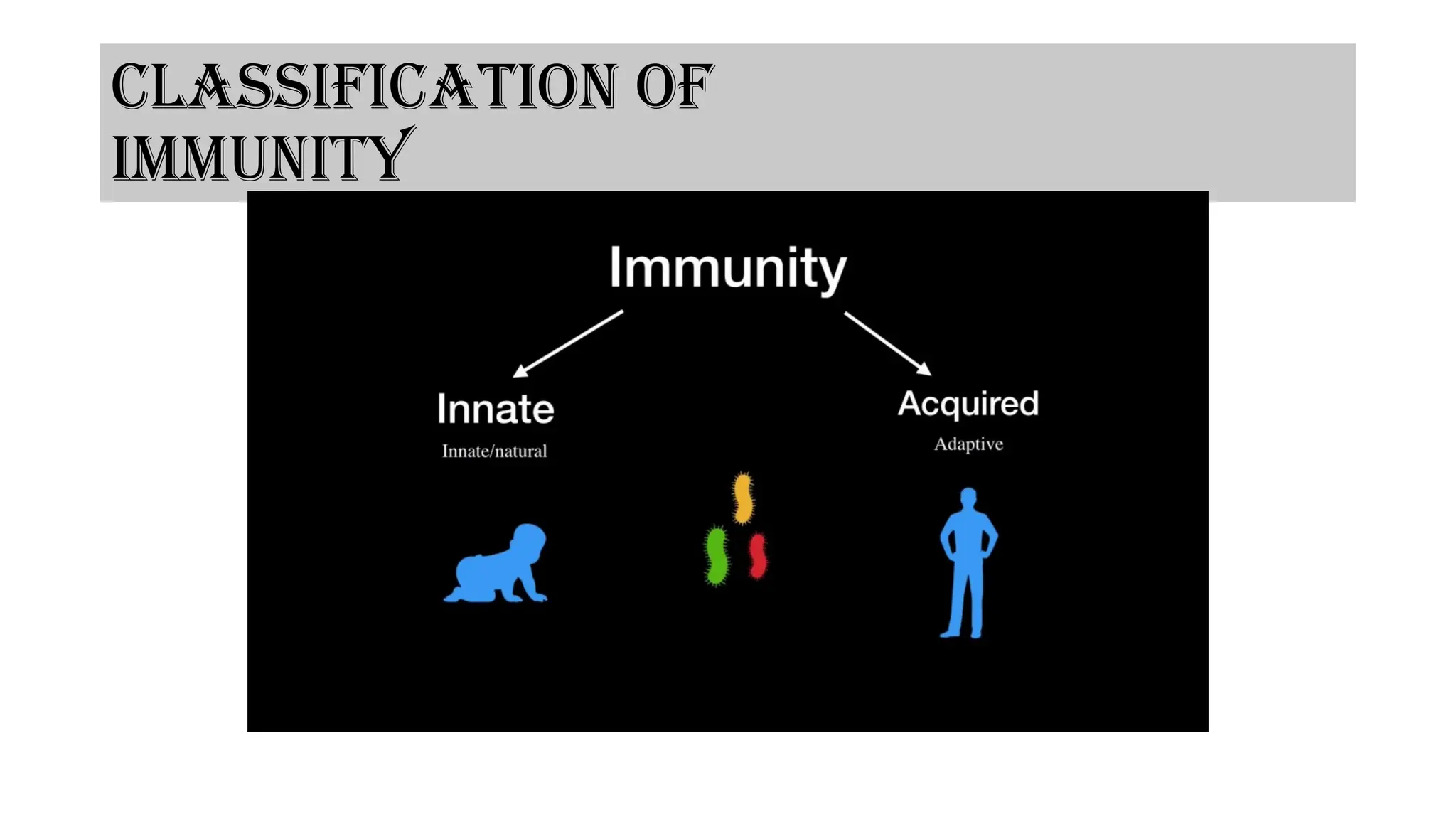
Classification of
immunity
natural/innate immunity
• Immunity with which an individual is born or is acquired during
growth by virtue of its species, racial or individual pecularities.
• It is natural resistance to illness which is developed before the contact
with an antigen.
• It is divided into: species, racial and individual pecularities.
Classification of
natural/innate immunity
Classification of
natural/innate immunity
1. Species immunity:
Resistance to pathogen, shown by all members of a particular species.
EG: Birds are resistant to anthrax but Human are susceptible.
Classification of
natural/innate immunity
2. Racial immunity:
Racial differences are known to be genetic in origin.
For examples; certain African race are more resistant to malaria and
yellow fever where are Asian or Americans are susceptible to same
infection.
Classification of
natural/innate immunity
3. Individual immunity:
If one individual of certain race or cast is resistant while other
individuals of same race or cast are susceptible to certain infection, then
it is called as individual immunity
Classification of
natural/innate immunity
3. Individual immunity:
• Individual immunity is determined by various factors such as health
status, nutritional status, previous illness, personal hygiene, genetic
differences etc.
• For example; although many people exposed to infection, but only
some develop the disease during the epidemic
MCQ
What type of immunity is transferred to the fetus from mother?
a. Active natural
b. Active artificial
c. Passive natural
d. Passive artificial
ANS: c
Classification of acquired
immunity
Classification of
immunity
Herd immunity (community immunity)
a type of immunity that occurs when the vaccination of a portion of
population (or herd) provides protection to unprotected individuals.
Herd immunity (community
immunity)
Immunizing agents
Preparations administered to produce immunity are called immunizing
agents.
Immunizing agents
Classified into three main groups
1. Vaccine
2. Immunoglobulin
3. Anti sera
MCQ
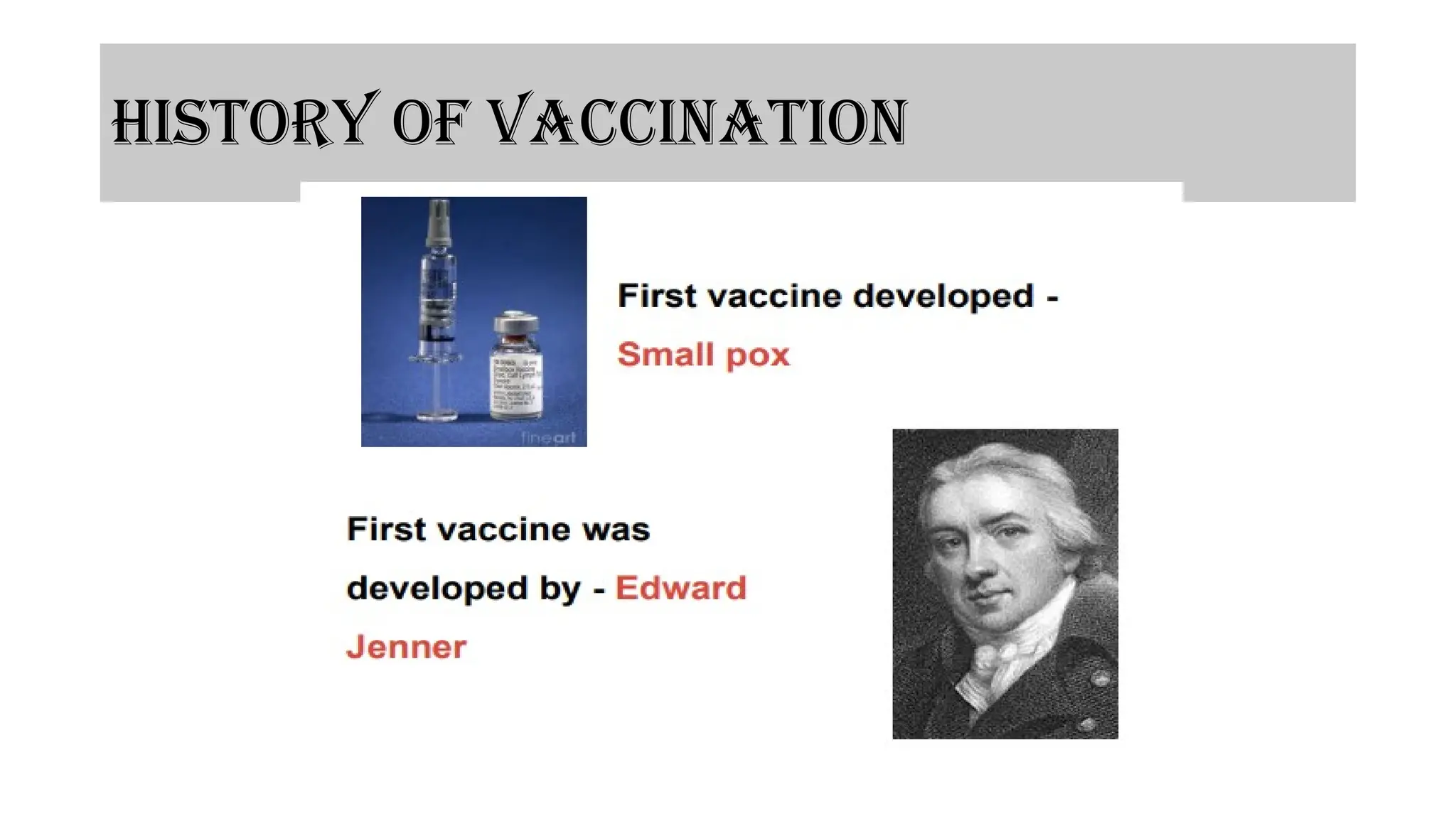
First vaccine to be developed was?
a. Polio
b. Small pox
c. BCG
d. MMR
ANS: b
History of vaccination
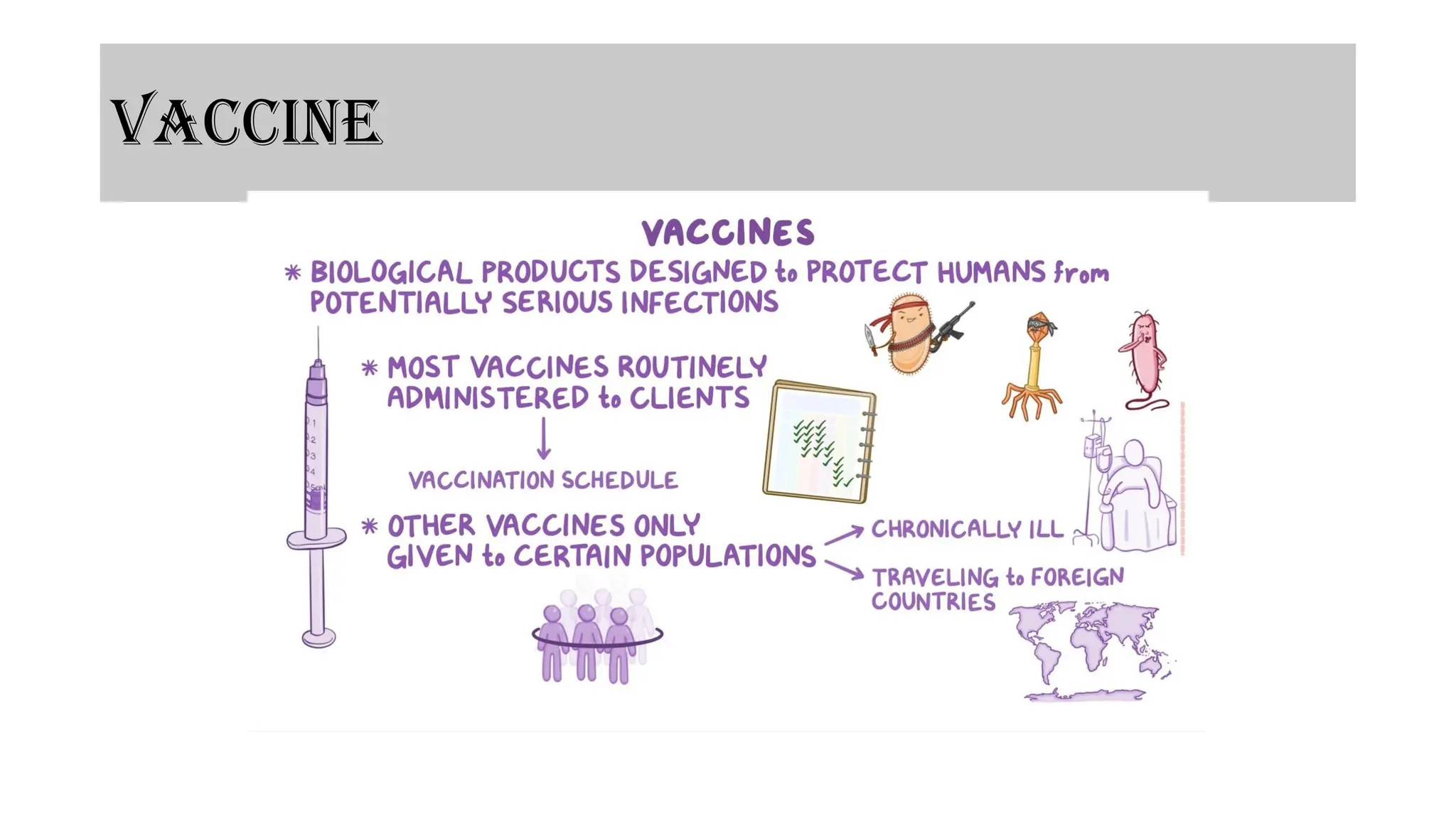
vaccine
vaccine
• prepared from disease causing agent or its toxic product that
stimulate for the production of specific antibody.
Types
 Live attenuated vaccine
 Dead or killed vaccine (inactivated)
 Toxoids
 Combination
vaccine
Live attenuated vaccine
 prepared from live organism and these organisms are allowed to
weaken (attenuated).
 Attenuation: reduced pathogenicity/virulence; Maintained
antigenicity/immunogenicity.
vaccine
Live attenuated vaccine
As a result, after its administration an individual will contract only a
very mild illness.
Antibodies develops which will protect against the severe form of
disease in the future.
 Examples: BGC, measles, mumps, rubella, oral polio, rota virus,
Japanese encephalitis, typhoid etc.
vaccine
Live attenuated vaccine
Contraindications
• Pregnancy
• Immune deficiency disease (Leukemia, AIDS)
• Corticosteroid therapy
vaccine
Death or killed vaccine
 Organisms killed by heat or chemically when injected into the body
stimulate active immunity.
 Usually required a primary series of 3-5 doses of vaccine to produce
adequate antibody response and most cases booster injection are
required.
vaccine
Death or killed vaccine
Contraindication
• The only absolute contraindication to their administration is a several
low or general reaction to previous dose.
• polio (salk type), hepatitis A, rabies, hepatitis B etc
vaccine
Toxoid vaccine
 Certain organisms produce exotoxin eg, Diptheria and tetanus.
 The toxin produced by these organisms are detoxicated and used in
the preparation of vaccine.
vaccine
Toxoid vaccine
 Toxoids are highly effective and usually safe.
 Examples: Diptheria, Tetanus
vaccine
Cellular fraction
 Some vaccines are prepared from extracted cellular fractions eg,
Meningococcal vaccine from the polysaccharide part of cell wall and
the pneumococcal vaccine from the polysaccharide contained in the
capsule of the organism.
 These are safe and effective.
vaccine
Combination
• If more than one kind of immunizing agent is included in the vaccine,
it is called mixed or combined vaccine.
• The aim is to simplify administration, reduce costs and minimize the
number of contacts with the health center.
• Examples: DPT (diphtheria, pertusis, tetanus)
MMR (Measles, Mumps, Rubella)
vaccine
Salk vaccine is a:
a. Live attenuated vaccine
b. Killed vaccine
c. Toxoid
d. Cellular fraction
ANS: b
vaccine
Which vaccine is contraindicated in pregnancy?
a. Rubella
b. Diphtheria
c. Tetanus
d. Hepatitis B
ANS: a
Immunoglobulin
Immunoglobulin
Only class of immunoglobins which can transport across the placenta is:
a. IgG
b. IgA
c. IgM
d. IgD
ANS: a
Immunoglobulin
The human immunoglobulin system is composed of five major classes
these are IgG, IgM, IgA, IgD and IgE.
IgG:
 major immunoglobulin of serum, comprise about 8o% of total
serum immunoglobulin.
 only class of immunoglobins which can transport across the
placenta.
 Main blood antibody of secondary responses, neutralizes toxins.
Immunoglobulin
IgM:
it accounts about 10% of normal serum immunoglobulin.
 It represents antibody that is promptly formed with the exposure to
antigen.
Its present may be indicative of recent infection. (Main antibody of
primary response)
Immunoglobulin
IgA:
 Accounts about 15% of normal serum immunoglobulin. It is found
in body secretions
 Eg. Saliva, milk colostrums, small intestine and vaginal secretion
etc.
 It provides defense mechanism at the mucus membranes against
local infection.
Immunoglobulin
• IgD: Present in lymphocytes cell surface. Its main function has not yet
been determined.
• IgE:
• it is concentrated on submucous tissue.
• It is the major antibody responsible for immediate allergic
anaphylactic reaction.
• Important in protection against parasites.
Immunoglobulin
Two types immunoglobulin preparations are available for passive
immunization:
1. Normal human immunoglobulin
2. Specific (hyper immune) human immunoglobulin
normal human immunoglobulin
 This is prepared from the pooled plasma of at least 1000 donors.
 It consists of IgG.
 It produces instantaneous but temporary immunity.
 It is used to prevent measles in highly susceptible individuals
normal human immunoglobulin
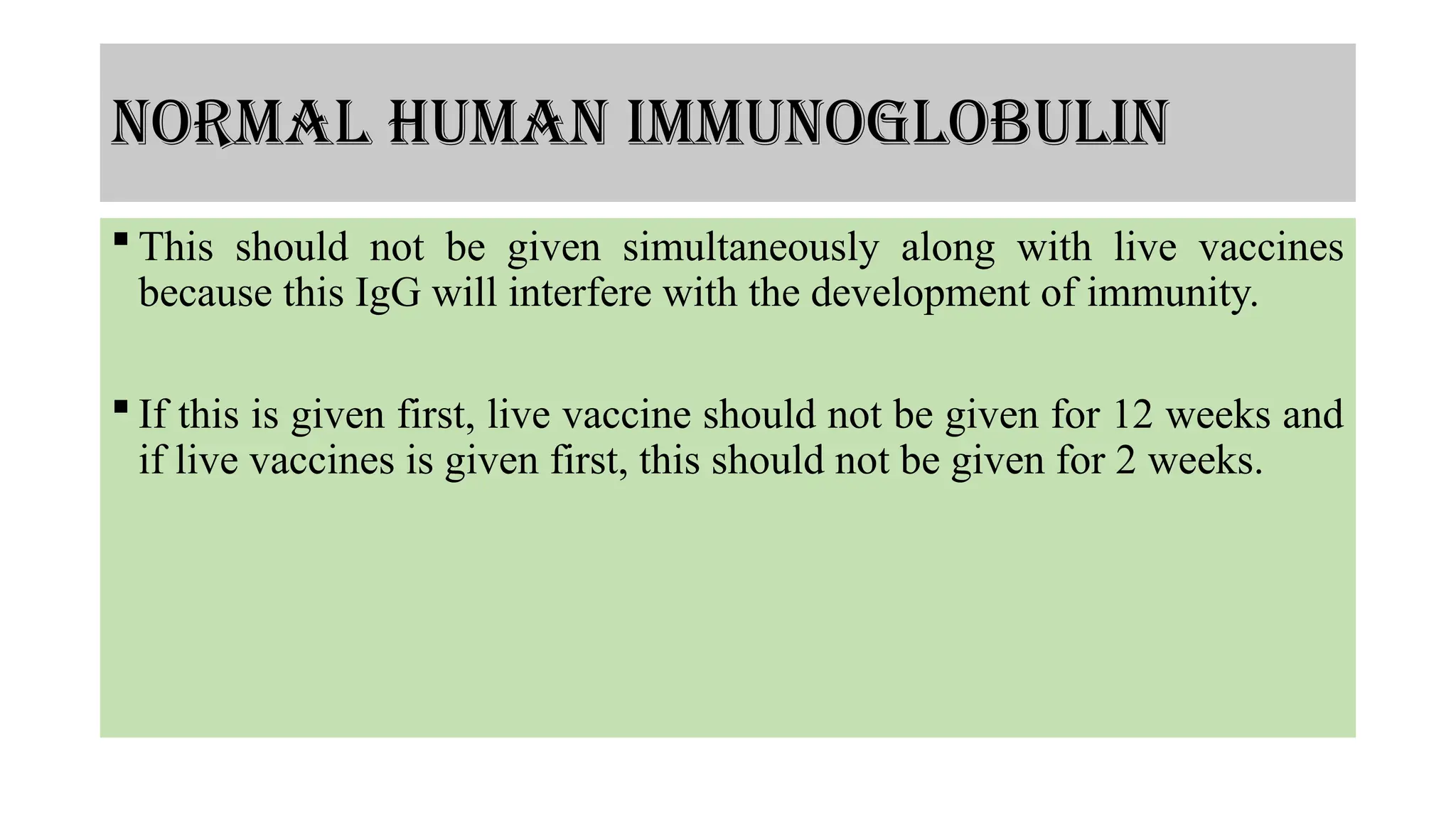
 This should not be given simultaneously along with live vaccines
because this IgG will interfere with the development of immunity.
 If this is given first, live vaccine should not be given for 12 weeks and
if live vaccines is given first, this should not be given for 2 weeks.
Specific (hyper immune) human
immunoglobulin
 This is prepared from the plasma of those persons, who have been
recently immunised of recovered from the disease.
 This is highly safe, effective and costly.
 Passive immunity lasts longer than normal human immunoglobulins.
 e.g. human rabies immunoglobulin (HRIg), human tetanus
immunoglobulins (HTIg), hepatitis B immunoglobulin (HBIg)
MCQ
Active and passive immunization is done simultaneously in all except:
a. Hepatitis B
b. Measles
c. Rabies
d. Tetanus
ANS: b
anti sera
 These are the specific immunoglobulins prepared from the plasma of
immunized animals, such as horses.
 Immunity lasts for about 2-3 weeks only.
anti sera
e.g. anti-tetanus serum (ATS), anti-diphtheria serum (ADS), anti-snake
venom.
MCQ
Which of the following immunoglobulins are secretory and present in
the milk?
a. IgG
b. IgM
c. IgA
d. IgE
ANS: c
MCQ
Name the class of immunoglobulin which takes part in hypersensitivity
reaction?
a. IgG
b. IgM
c. IgA
d. IgE
ANS: d
National Immunization
Programme
National immunization
programme
 National Immunization Program of Nepal (Expanded Program on
Immunization) was started in 2034 BS and is a priority 1 program.
 achieved several milestones contributing to reduction in morbidity
and mortality associated with vaccine preventable diseases.
National immunization
programme
 Currently, the program provides vaccination against 13 vaccine
preventable diseases.
 Immunization services are delivered through 16,500 service delivery
points in health facilities (fixed sessions), outreach sessions, and
mobile clinics.
National immunization
programme
 NIP has a very good track record of meeting the target for control,
elimination and eradication of vaccine preventable diseases.
 Small pox has now become history due to eradication in 2034 BS
(1977 AD).
 Maternal and neonatal tetanus (MNT) was eliminated in 2005 and
the elimination status has been sustained since then.
National immunization
programme
 The last case of polio in Nepal was in 2010, and along with other
countries of the South East Asia Region, Nepal was certified polio
free in 2014.
 This status has been maintained since then.
Comprehensive Multi-year plan for
immunization (cMYPI)
 The cMYPI 2017- 2021 provides a plan for five years to achieve
immunization related goals of the country.
 Provide the framework required to meet the goal of reducing infant
and child mortality and morbidity with vaccine-preventable diseases.
Comprehensive Multi-year plan for
immunization (cMYPI)
Vision:
Nepal: a country free of vaccine-preventable diseases.
Mission:
To provide every child and mother high-quality, safe and affordable
vaccines and immunization services from the National Immunization
Program in an equitable manner.
Comprehensive Multi-year plan for
immunization (cMYPI)
Goal:
Reduction of morbidity, mortality and disability associated with vaccine
preventable diseases.
Cold chain
 The ‘cold chain’ is the system of transporting and storing vaccines at
recommended temperature from the point of manufacture to the point
of use.
 To prevent vaccine failure (sensitive to temperature).
 Potency of the vaccine decreases when exposed to inappropriate
temperatures.
Cold chain
Deep freezer:
•Temperature b/w -15° to -25°C.
•Used for storing OPV vaccine and for freezing ice packs
Ice lined refrigerator:
•Temperature b/w +2° to +8°C.
DPT, TT, HepB, IPV & pentavalent vaccines, BCG, measles, JE
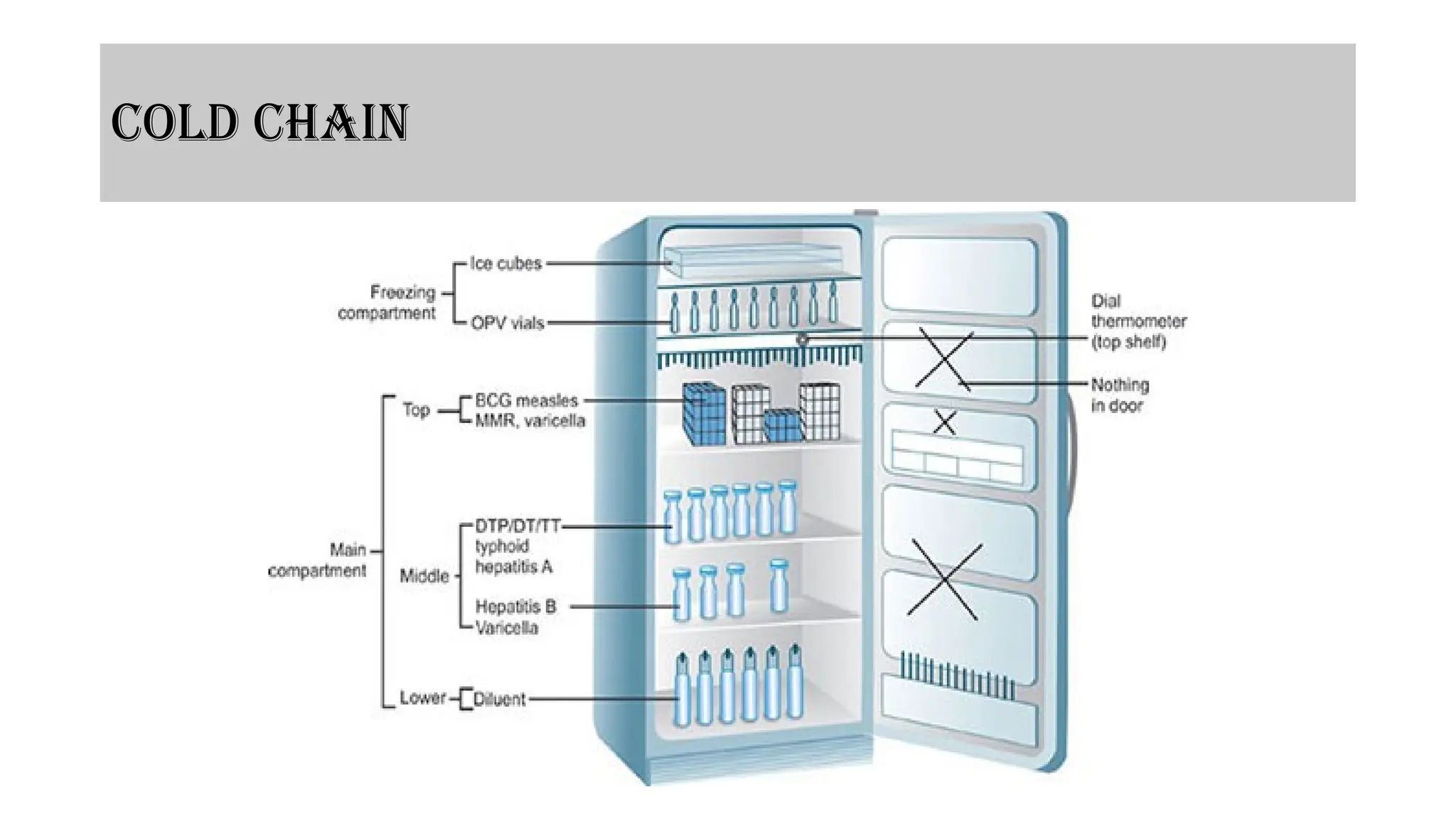
Cold chain
Cold chain
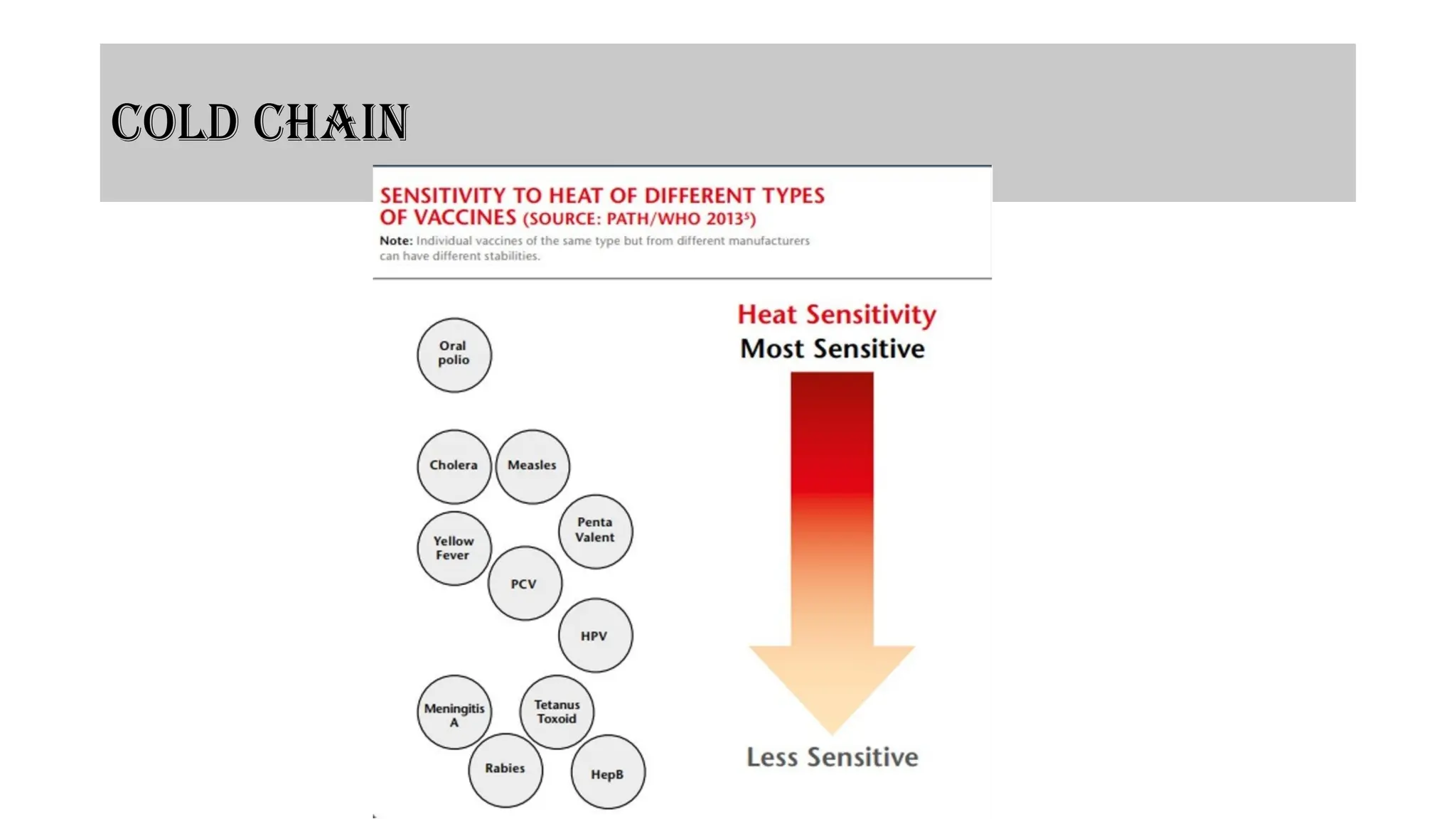
Among all vaccine oral polio is the most heat sensitive.
At the health centers, most vaccines except polio can be stored at 2-8
deg Celsius for 5 weeks.
Cold chain
MCQ
Most heat sensitive vaccine is:
a. BCG
b. Polio
c. Measles
d. DPT
ANS: b
MCQ
Which type of vaccine is MMR:
a. Live attenuated
b. killed
c. Toxoid
d. Cellular fraction
ANS: a
MCQ
BCG is given:
a. Intramuscular
b. Subcutaneous
c. Intradermal
d. Intravenous
ANS: c
MCQ
Active and passive immunity should be given in all except:
a. Hepatitis B
b. Tetanus
c. Rabies
d. Measles
ANS: d
MCQ
Toxoid is prepared from:
a. Endotoxin
b. Exotoxin
c. Both
d. None
ANS: b
references
Park, K. (2019). Park`s Textbook of Preventive and Social Medicine.
M/s Banarsidas Bhanot publishers.
Gupta, MC, Mahajan, BK. (2013). Mahajan and Gupta Textbook of
Preventive and Social Medicine. Brothers Medical Publishers (P) Ltd.
Jain, B. (2016). Review of Preventive and Social Medicine. The
Health Sciences Publisher.
Ghimire, B. (2019). A Textbook of Social Medicine. Jaypee
Community Health Nursing. Vidyarthi Pustak Bhandar.

Immunization.pptxttdtftfyfgyguihgiuhuihugu

  • 1.
    immunity, immunizing agents andimmunization Presented by Deepa Manandhar Lecturer Community Health Nursing
  • 2.
    Immunity • Ability ofthe body to recognize, destroy and eliminating antigenic materials foreign to its own. • The term immunity refers to the body’s specific protective response to an invading foreign agent or organism.
  • 3.
  • 4.
    natural/innate immunity • Immunitywith which an individual is born or is acquired during growth by virtue of its species, racial or individual pecularities. • It is natural resistance to illness which is developed before the contact with an antigen. • It is divided into: species, racial and individual pecularities.
  • 5.
  • 6.
    Classification of natural/innate immunity 1.Species immunity: Resistance to pathogen, shown by all members of a particular species. EG: Birds are resistant to anthrax but Human are susceptible.
  • 7.
    Classification of natural/innate immunity 2.Racial immunity: Racial differences are known to be genetic in origin. For examples; certain African race are more resistant to malaria and yellow fever where are Asian or Americans are susceptible to same infection.
  • 8.
    Classification of natural/innate immunity 3.Individual immunity: If one individual of certain race or cast is resistant while other individuals of same race or cast are susceptible to certain infection, then it is called as individual immunity
  • 9.
    Classification of natural/innate immunity 3.Individual immunity: • Individual immunity is determined by various factors such as health status, nutritional status, previous illness, personal hygiene, genetic differences etc. • For example; although many people exposed to infection, but only some develop the disease during the epidemic
  • 10.
    MCQ What type ofimmunity is transferred to the fetus from mother? a. Active natural b. Active artificial c. Passive natural d. Passive artificial ANS: c
  • 11.
  • 12.
    Classification of immunity Herd immunity(community immunity) a type of immunity that occurs when the vaccination of a portion of population (or herd) provides protection to unprotected individuals.
  • 13.
  • 14.
    Immunizing agents Preparations administeredto produce immunity are called immunizing agents.
  • 15.
    Immunizing agents Classified intothree main groups 1. Vaccine 2. Immunoglobulin 3. Anti sera
  • 16.
    MCQ First vaccine tobe developed was? a. Polio b. Small pox c. BCG d. MMR ANS: b
  • 17.
  • 18.
  • 19.
    vaccine • prepared fromdisease causing agent or its toxic product that stimulate for the production of specific antibody. Types  Live attenuated vaccine  Dead or killed vaccine (inactivated)  Toxoids  Combination
  • 20.
    vaccine Live attenuated vaccine prepared from live organism and these organisms are allowed to weaken (attenuated).  Attenuation: reduced pathogenicity/virulence; Maintained antigenicity/immunogenicity.
  • 21.
    vaccine Live attenuated vaccine Asa result, after its administration an individual will contract only a very mild illness. Antibodies develops which will protect against the severe form of disease in the future.  Examples: BGC, measles, mumps, rubella, oral polio, rota virus, Japanese encephalitis, typhoid etc.
  • 22.
    vaccine Live attenuated vaccine Contraindications •Pregnancy • Immune deficiency disease (Leukemia, AIDS) • Corticosteroid therapy
  • 23.
    vaccine Death or killedvaccine  Organisms killed by heat or chemically when injected into the body stimulate active immunity.  Usually required a primary series of 3-5 doses of vaccine to produce adequate antibody response and most cases booster injection are required.
  • 24.
    vaccine Death or killedvaccine Contraindication • The only absolute contraindication to their administration is a several low or general reaction to previous dose. • polio (salk type), hepatitis A, rabies, hepatitis B etc
  • 25.
    vaccine Toxoid vaccine  Certainorganisms produce exotoxin eg, Diptheria and tetanus.  The toxin produced by these organisms are detoxicated and used in the preparation of vaccine.
  • 26.
    vaccine Toxoid vaccine  Toxoidsare highly effective and usually safe.  Examples: Diptheria, Tetanus
  • 27.
    vaccine Cellular fraction  Somevaccines are prepared from extracted cellular fractions eg, Meningococcal vaccine from the polysaccharide part of cell wall and the pneumococcal vaccine from the polysaccharide contained in the capsule of the organism.  These are safe and effective.
  • 28.
    vaccine Combination • If morethan one kind of immunizing agent is included in the vaccine, it is called mixed or combined vaccine. • The aim is to simplify administration, reduce costs and minimize the number of contacts with the health center. • Examples: DPT (diphtheria, pertusis, tetanus) MMR (Measles, Mumps, Rubella)
  • 29.
    vaccine Salk vaccine isa: a. Live attenuated vaccine b. Killed vaccine c. Toxoid d. Cellular fraction ANS: b
  • 30.
    vaccine Which vaccine iscontraindicated in pregnancy? a. Rubella b. Diphtheria c. Tetanus d. Hepatitis B ANS: a
  • 31.
  • 32.
    Immunoglobulin Only class ofimmunoglobins which can transport across the placenta is: a. IgG b. IgA c. IgM d. IgD ANS: a
  • 33.
    Immunoglobulin The human immunoglobulinsystem is composed of five major classes these are IgG, IgM, IgA, IgD and IgE. IgG:  major immunoglobulin of serum, comprise about 8o% of total serum immunoglobulin.  only class of immunoglobins which can transport across the placenta.  Main blood antibody of secondary responses, neutralizes toxins.
  • 34.
    Immunoglobulin IgM: it accounts about10% of normal serum immunoglobulin.  It represents antibody that is promptly formed with the exposure to antigen. Its present may be indicative of recent infection. (Main antibody of primary response)
  • 35.
    Immunoglobulin IgA:  Accounts about15% of normal serum immunoglobulin. It is found in body secretions  Eg. Saliva, milk colostrums, small intestine and vaginal secretion etc.  It provides defense mechanism at the mucus membranes against local infection.
  • 36.
    Immunoglobulin • IgD: Presentin lymphocytes cell surface. Its main function has not yet been determined. • IgE: • it is concentrated on submucous tissue. • It is the major antibody responsible for immediate allergic anaphylactic reaction. • Important in protection against parasites.
  • 37.
    Immunoglobulin Two types immunoglobulinpreparations are available for passive immunization: 1. Normal human immunoglobulin 2. Specific (hyper immune) human immunoglobulin
  • 38.
    normal human immunoglobulin This is prepared from the pooled plasma of at least 1000 donors.  It consists of IgG.  It produces instantaneous but temporary immunity.  It is used to prevent measles in highly susceptible individuals
  • 39.
    normal human immunoglobulin This should not be given simultaneously along with live vaccines because this IgG will interfere with the development of immunity.  If this is given first, live vaccine should not be given for 12 weeks and if live vaccines is given first, this should not be given for 2 weeks.
  • 40.
    Specific (hyper immune)human immunoglobulin  This is prepared from the plasma of those persons, who have been recently immunised of recovered from the disease.  This is highly safe, effective and costly.  Passive immunity lasts longer than normal human immunoglobulins.  e.g. human rabies immunoglobulin (HRIg), human tetanus immunoglobulins (HTIg), hepatitis B immunoglobulin (HBIg)
  • 41.
    MCQ Active and passiveimmunization is done simultaneously in all except: a. Hepatitis B b. Measles c. Rabies d. Tetanus ANS: b
  • 42.
    anti sera  Theseare the specific immunoglobulins prepared from the plasma of immunized animals, such as horses.  Immunity lasts for about 2-3 weeks only.
  • 43.
    anti sera e.g. anti-tetanusserum (ATS), anti-diphtheria serum (ADS), anti-snake venom.
  • 44.
    MCQ Which of thefollowing immunoglobulins are secretory and present in the milk? a. IgG b. IgM c. IgA d. IgE ANS: c
  • 45.
    MCQ Name the classof immunoglobulin which takes part in hypersensitivity reaction? a. IgG b. IgM c. IgA d. IgE ANS: d
  • 46.
  • 47.
    National immunization programme  NationalImmunization Program of Nepal (Expanded Program on Immunization) was started in 2034 BS and is a priority 1 program.  achieved several milestones contributing to reduction in morbidity and mortality associated with vaccine preventable diseases.
  • 48.
    National immunization programme  Currently,the program provides vaccination against 13 vaccine preventable diseases.  Immunization services are delivered through 16,500 service delivery points in health facilities (fixed sessions), outreach sessions, and mobile clinics.
  • 49.
    National immunization programme  NIPhas a very good track record of meeting the target for control, elimination and eradication of vaccine preventable diseases.  Small pox has now become history due to eradication in 2034 BS (1977 AD).  Maternal and neonatal tetanus (MNT) was eliminated in 2005 and the elimination status has been sustained since then.
  • 50.
    National immunization programme  Thelast case of polio in Nepal was in 2010, and along with other countries of the South East Asia Region, Nepal was certified polio free in 2014.  This status has been maintained since then.
  • 51.
    Comprehensive Multi-year planfor immunization (cMYPI)  The cMYPI 2017- 2021 provides a plan for five years to achieve immunization related goals of the country.  Provide the framework required to meet the goal of reducing infant and child mortality and morbidity with vaccine-preventable diseases.
  • 52.
    Comprehensive Multi-year planfor immunization (cMYPI) Vision: Nepal: a country free of vaccine-preventable diseases. Mission: To provide every child and mother high-quality, safe and affordable vaccines and immunization services from the National Immunization Program in an equitable manner.
  • 53.
    Comprehensive Multi-year planfor immunization (cMYPI) Goal: Reduction of morbidity, mortality and disability associated with vaccine preventable diseases.
  • 55.
    Cold chain  The‘cold chain’ is the system of transporting and storing vaccines at recommended temperature from the point of manufacture to the point of use.  To prevent vaccine failure (sensitive to temperature).  Potency of the vaccine decreases when exposed to inappropriate temperatures.
  • 56.
    Cold chain Deep freezer: •Temperatureb/w -15° to -25°C. •Used for storing OPV vaccine and for freezing ice packs Ice lined refrigerator: •Temperature b/w +2° to +8°C. DPT, TT, HepB, IPV & pentavalent vaccines, BCG, measles, JE
  • 57.
  • 58.
    Cold chain Among allvaccine oral polio is the most heat sensitive. At the health centers, most vaccines except polio can be stored at 2-8 deg Celsius for 5 weeks.
  • 59.
  • 60.
    MCQ Most heat sensitivevaccine is: a. BCG b. Polio c. Measles d. DPT ANS: b
  • 61.
    MCQ Which type ofvaccine is MMR: a. Live attenuated b. killed c. Toxoid d. Cellular fraction ANS: a
  • 62.
    MCQ BCG is given: a.Intramuscular b. Subcutaneous c. Intradermal d. Intravenous ANS: c
  • 63.
    MCQ Active and passiveimmunity should be given in all except: a. Hepatitis B b. Tetanus c. Rabies d. Measles ANS: d
  • 64.
    MCQ Toxoid is preparedfrom: a. Endotoxin b. Exotoxin c. Both d. None ANS: b
  • 65.
    references Park, K. (2019).Park`s Textbook of Preventive and Social Medicine. M/s Banarsidas Bhanot publishers. Gupta, MC, Mahajan, BK. (2013). Mahajan and Gupta Textbook of Preventive and Social Medicine. Brothers Medical Publishers (P) Ltd. Jain, B. (2016). Review of Preventive and Social Medicine. The Health Sciences Publisher. Ghimire, B. (2019). A Textbook of Social Medicine. Jaypee Community Health Nursing. Vidyarthi Pustak Bhandar.