A Sharing Session  on Normal Pressure Hydrocephalus (NPH) Suhaila Mohamed Usuludin 17 April 2008
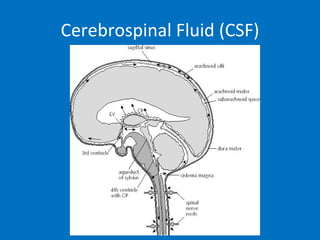
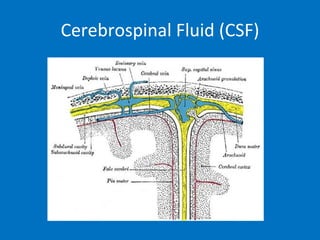
Cerebrospinal Fluid (CSF) A clear, colourless fluid that contains small quantities of glucose and protein Fills the ventricles of the brain and the central canal of the spinal cord Production by choroid plexus in lateral ventricle at 20ml/hr
Cerebrospinal Fluid (CSF)
Functions drainage route for waste products of brain metabolism bouyancy electrolytes and nutrient exchange Pressure decrease from site of production -> site of absorption determined by  venous pressure Cerebrospinal Fluid (CSF)
Pressure is raised if Brain volume increases Venous pressure increases Outflow obstruction At ventricles (non-communicating hydrocephalus) At absorptive site (communicating hydrocephalus) Cerebrospinal Fluid (CSF)
NPH Gradual decrease CSF absorption at arachnoid granulations back pressure effect Increase pressure in ventricles Compensatory mechanisms to maintain pressure Distension of ventricles
NPH Slowly progressive Onset > 40 years Most common in elderly
Symptoms of NPH Adams triad Impaired gait Urinary incontinence Impaired cognitive function
Impaired gait Usually first and prominent symptom reduced step height stride length velocity Shuffling gait wide-based  trunk sway ‘ magnetic gait’ gait apraxia
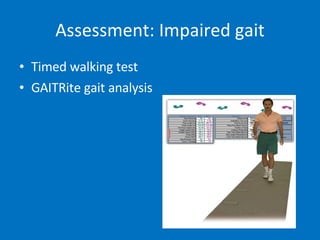
Timed walking test GAITRite gait analysis Assessment: Impaired gait
Urinary Incontinence Usually 2 nd  symptom to follow Urgency and frequency Fecal incontinence Rare except in advanced cases
Impaired Cognitive Functions Reversible cause of dementia Subcortical dementia Inattention Delayed recent recall Delayed psychomotor functioning Behavioural changes Emotional instability Executive functioning may be affected as disease progresses
MMSE AMT Neuropsychological tests: Trail Making Test Digit/Letter Cancellation Kendrick Object Learning Test (KOLT): visual memory Assessment of Impaired Cognitive Functions
NOT  Expected Symptoms Seizures Signs and symptoms of increased ICP Headache Nausea Vomiting Altered level of consciousness Papilledema
Differential Diagnoses Old age Parkinsonism Dementia – AD, vascular Depression Cerebellar/spinal cord involvement
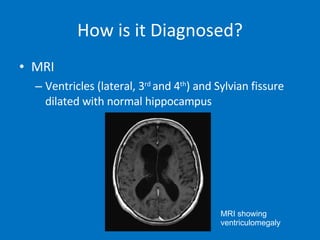
How is it Diagnosed? MRI Ventricles (lateral, 3 rd  and 4 th ) and Sylvian fissure dilated with normal hippocampus MRI showing ventriculomegaly
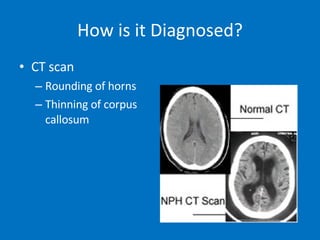
CT scan Rounding of horns Thinning of corpus callosum How is it Diagnosed?
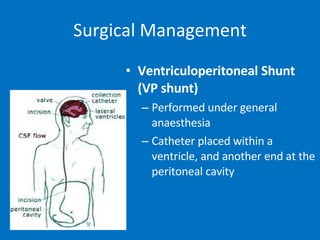
Surgical Management Ventriculoperitoneal Shunt (VP shunt) Performed under general anaesthesia Catheter placed within a ventricle, and another end at the peritoneal cavity
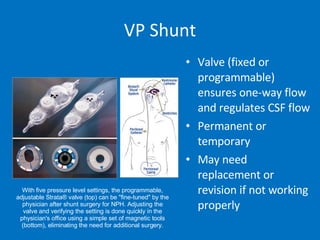
VP Shunt Valve (fixed or programmable) ensures one-way flow and regulates CSF flow Permanent or temporary May need replacement or revision if not working properly With five pressure level settings, the programmable, adjustable Strata® valve (top) can be "fine-tuned" by the physician after shunt surgery for NPH. Adjusting the valve and verifying the setting is done quickly in the physician's office using a simple set of magnetic tools (bottom), eliminating the need for additional surgery.
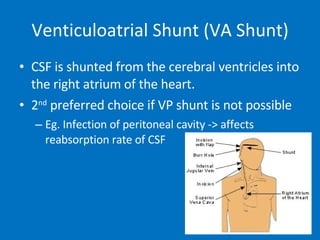
Venticuloatrial Shunt (VA Shunt) CSF is shunted from the cerebral ventricles into the right atrium of the heart. 2 nd  preferred choice if VP shunt is not possible Eg. Infection of peritoneal cavity -> affects reabsorption rate of CSF
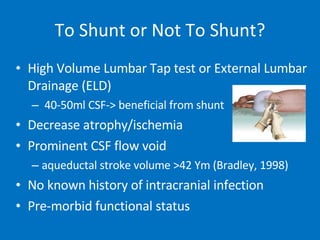
To Shunt or Not To Shunt? High Volume Lumbar Tap test or External Lumbar Drainage (ELD) 40-50ml CSF-> beneficial from shunt Decrease atrophy/ischemia Prominent CSF flow void aqueductal stroke volume >42 Ym (Bradley, 1998) No known history of intracranial infection Pre-morbid functional status
Operation Risks Ileus Slow gastric and bowel movement post operation and may feel nausea Infection Most common organisms are  S. epidermidis and S. aureus Obstruction Most often due to the head tip is obstructed with cells, choroid plexus, or debris.
Operation Risks Misplacement Occurs when the ventricular or peritoneal end of the shunt tubing is in a position which does not facilitate free flow of CSF Wound breakdown/shunt tube exposure Occurs when the wound does not heal well or the overlying skin is thin with minimal subcutaneous tissue layer resulting in wound breakdown.
Prognosis Gait shows highest improvement rates Better gait does not correlate to better ADLs functioning All components of triad considered to achieve higher ADL scores Temporary improvements from 1 to 3 years May be substantial for improving QoL > 1 year, co-morbidities may affect effects of shunting
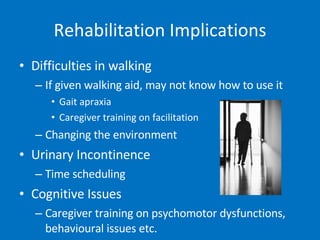
Rehabilitation Implications Difficulties in walking If given walking aid, may not know how to use it  Gait apraxia Caregiver training on facilitation Changing the environment Urinary Incontinence Time scheduling Cognitive Issues Caregiver training on psychomotor dysfunctions, behavioural issues etc.
References Presentations from various professionals from the symposium Bradley, W.G. (1998). MR Prediction of Shunt Response in NPH: CSF Morphology versus Physiology.  American Journal of Neuroradiology ,  19 , 1285-1286. Department of Neurosurgery (2007).  A Patient / Family Informed Consent Guide to Ventricular Peritoneal (VP) Shunt Insertion /Revision .  Singapore:  National Neuroscience Institute. Factora, R. (2006). When do common symptoms indicate normal pressure hydrocephalus?.  Cleveland  Clinic Journal of Medicine ,  73  (5), 447-457. Gallia, G.L., Rigamonti, D., & Williams, M.A. (2006). The diagnosis and treatment of idiopathic normal pressure hydrocephalus.  Nature Clinical Practice Neurology ,  2  (7), 375-381.
Thank You

Normal Pressure Hydrocephalus

  • 1.
    A Sharing Session on Normal Pressure Hydrocephalus (NPH) Suhaila Mohamed Usuludin 17 April 2008
  • 2.
    Cerebrospinal Fluid (CSF)A clear, colourless fluid that contains small quantities of glucose and protein Fills the ventricles of the brain and the central canal of the spinal cord Production by choroid plexus in lateral ventricle at 20ml/hr
  • 3.
  • 4.
  • 5.
    Functions drainage routefor waste products of brain metabolism bouyancy electrolytes and nutrient exchange Pressure decrease from site of production -> site of absorption determined by venous pressure Cerebrospinal Fluid (CSF)
  • 6.
    Pressure is raisedif Brain volume increases Venous pressure increases Outflow obstruction At ventricles (non-communicating hydrocephalus) At absorptive site (communicating hydrocephalus) Cerebrospinal Fluid (CSF)
  • 7.
    NPH Gradual decreaseCSF absorption at arachnoid granulations back pressure effect Increase pressure in ventricles Compensatory mechanisms to maintain pressure Distension of ventricles
  • 8.
    NPH Slowly progressiveOnset > 40 years Most common in elderly
  • 9.
    Symptoms of NPHAdams triad Impaired gait Urinary incontinence Impaired cognitive function
  • 10.
    Impaired gait Usuallyfirst and prominent symptom reduced step height stride length velocity Shuffling gait wide-based trunk sway ‘ magnetic gait’ gait apraxia
  • 11.
    Timed walking testGAITRite gait analysis Assessment: Impaired gait
  • 12.
    Urinary Incontinence Usually2 nd symptom to follow Urgency and frequency Fecal incontinence Rare except in advanced cases
  • 13.
    Impaired Cognitive FunctionsReversible cause of dementia Subcortical dementia Inattention Delayed recent recall Delayed psychomotor functioning Behavioural changes Emotional instability Executive functioning may be affected as disease progresses
  • 14.
    MMSE AMT Neuropsychologicaltests: Trail Making Test Digit/Letter Cancellation Kendrick Object Learning Test (KOLT): visual memory Assessment of Impaired Cognitive Functions
  • 15.
    NOT ExpectedSymptoms Seizures Signs and symptoms of increased ICP Headache Nausea Vomiting Altered level of consciousness Papilledema
  • 16.
    Differential Diagnoses Oldage Parkinsonism Dementia – AD, vascular Depression Cerebellar/spinal cord involvement
  • 17.
    How is itDiagnosed? MRI Ventricles (lateral, 3 rd and 4 th ) and Sylvian fissure dilated with normal hippocampus MRI showing ventriculomegaly
  • 18.
    CT scan Roundingof horns Thinning of corpus callosum How is it Diagnosed?
  • 19.
    Surgical Management VentriculoperitonealShunt (VP shunt) Performed under general anaesthesia Catheter placed within a ventricle, and another end at the peritoneal cavity
  • 20.
    VP Shunt Valve(fixed or programmable) ensures one-way flow and regulates CSF flow Permanent or temporary May need replacement or revision if not working properly With five pressure level settings, the programmable, adjustable Strata® valve (top) can be "fine-tuned" by the physician after shunt surgery for NPH. Adjusting the valve and verifying the setting is done quickly in the physician's office using a simple set of magnetic tools (bottom), eliminating the need for additional surgery.
  • 21.
    Venticuloatrial Shunt (VAShunt) CSF is shunted from the cerebral ventricles into the right atrium of the heart. 2 nd preferred choice if VP shunt is not possible Eg. Infection of peritoneal cavity -> affects reabsorption rate of CSF
  • 22.
    To Shunt orNot To Shunt? High Volume Lumbar Tap test or External Lumbar Drainage (ELD) 40-50ml CSF-> beneficial from shunt Decrease atrophy/ischemia Prominent CSF flow void aqueductal stroke volume >42 Ym (Bradley, 1998) No known history of intracranial infection Pre-morbid functional status
  • 23.
    Operation Risks IleusSlow gastric and bowel movement post operation and may feel nausea Infection Most common organisms are S. epidermidis and S. aureus Obstruction Most often due to the head tip is obstructed with cells, choroid plexus, or debris.
  • 24.
    Operation Risks MisplacementOccurs when the ventricular or peritoneal end of the shunt tubing is in a position which does not facilitate free flow of CSF Wound breakdown/shunt tube exposure Occurs when the wound does not heal well or the overlying skin is thin with minimal subcutaneous tissue layer resulting in wound breakdown.
  • 25.
    Prognosis Gait showshighest improvement rates Better gait does not correlate to better ADLs functioning All components of triad considered to achieve higher ADL scores Temporary improvements from 1 to 3 years May be substantial for improving QoL > 1 year, co-morbidities may affect effects of shunting
  • 26.
    Rehabilitation Implications Difficultiesin walking If given walking aid, may not know how to use it Gait apraxia Caregiver training on facilitation Changing the environment Urinary Incontinence Time scheduling Cognitive Issues Caregiver training on psychomotor dysfunctions, behavioural issues etc.
  • 27.
    References Presentations fromvarious professionals from the symposium Bradley, W.G. (1998). MR Prediction of Shunt Response in NPH: CSF Morphology versus Physiology. American Journal of Neuroradiology , 19 , 1285-1286. Department of Neurosurgery (2007). A Patient / Family Informed Consent Guide to Ventricular Peritoneal (VP) Shunt Insertion /Revision . Singapore: National Neuroscience Institute. Factora, R. (2006). When do common symptoms indicate normal pressure hydrocephalus?. Cleveland Clinic Journal of Medicine , 73 (5), 447-457. Gallia, G.L., Rigamonti, D., & Williams, M.A. (2006). The diagnosis and treatment of idiopathic normal pressure hydrocephalus. Nature Clinical Practice Neurology , 2 (7), 375-381.
  • 28.