Public Administration
and Civil Society
Relations: Theories,
Concepts, Frameworks
 But it is public Administration?The Place ofBut it is public Administration?The Place of
voluntary Sector Management in the Disciplinevoluntary Sector Management in the Discipline
 Hygiene Factors in the Management ofVolunteerHygiene Factors in the Management ofVolunteer
OrganizationsOrganizations
 Volunteer Sector: Its Public EssenceVolunteer Sector: Its Public Essence
 But it is public Administration?The Place ofBut it is public Administration?The Place of
voluntary Sector Management in the Disciplinevoluntary Sector Management in the Discipline
 Hygiene Factors in the Management ofVolunteerHygiene Factors in the Management ofVolunteer
OrganizationsOrganizations
 Volunteer Sector: Its Public EssenceVolunteer Sector: Its Public Essence
 The voluntary sector is large and growing, and many of its
organizations are in the process of institutionalization. Thus,
the demand to learn how to manage their operations
systematically and effectively, though now untapped, is real
and strong. Besides, the significant role of civil society in
governance is becoming increasingly recognized, propelled
in diverse ways by the trends towards democratization and
globalization. There is just one point that gives them pause:
is it really public administration?
Justification: voluntary sector, non
profits, nongovernmental organizations
or civil society organizations have been
increasing in recent years throughout
the world (Crowder Hodgkinson,1992)
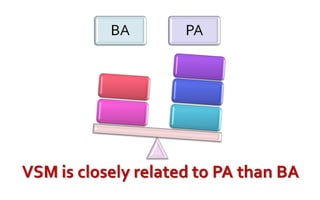
 In the publicness –privateness continuum the
voluntary sector hews closer to the civil service than
to business firms.
 Analysis of the management concerns of voluntary
sector and compare them with government and
business administration
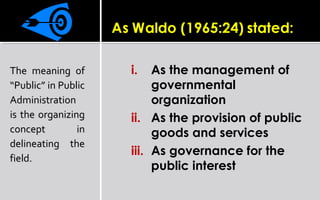
The meaning ofThe meaning of
“Public” in Public“Public” in Public
AdministrationAdministration
is the organizingis the organizing
concept inconcept in
delineating thedelineating the
field.field.
i. As the management of
governmental
organization
ii. As the provision of public
goods and services
iii. As governance for the
public interest
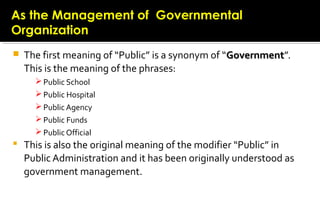
 The first meaning of “Public” is a synonym of “GovernmentGovernment”.
This is the meaning of the phrases:
 Public School
 Public Hospital
 Public Agency
 Public Funds
 Public Official
 This is also the original meaning of the modifier “Public” in
Public Administration and it has been originally understood as
government management.
As the Management of GovernmentalAs the Management of Governmental
OrganizationOrganization
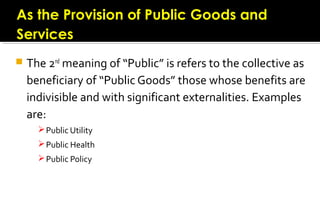
 The 2nd
meaning of “Public” is refers to the collective as
beneficiary of “Public Goods” those whose benefits are
indivisible and with significant externalities. Examples
are:
Public Utility
Public Health
Public Policy
As the Provision of Public Goods andAs the Provision of Public Goods and
ServicesServices
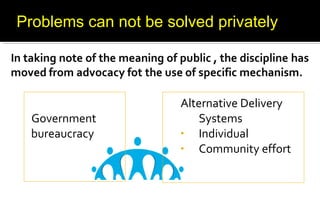
Problems can not be solved privately
Alternative Delivery
Systems
• Individual
• Community effort
Government
bureaucracy
 The influence of political economy and Public choice
Theory is especially evident (Ostrom and Ostrom,
1971)
 PA moved both deeper and wider: deeper in
implementation (found to be neglected area in the
field) wider as the whole public policy process - from
formulation – implementation – evaluation became
its special focus.
 Leading departments of PA reorganized themselves
into schools of public policy abandoning bureaucracy
but also casting the net wider by including political
parts of the policy process, zeroing on program
administration and recognizing non bureaucratic
ways by which public goods are produced and
delivered
 In many ways, this process marked the first entry of
NGOs into the consciousness of scholars of PA.
 The 3rd
meaning of “Public” in Public Administration is
as the “PeoplePeople” the presumed beneficiary of
government and providers of other public goods as
well as the embodiment of the collective in a nation.
As Governance for the Public InterestAs Governance for the Public Interest
 The philosophy of public administration and public philosophy
as a whole have always given a central place to the people as
embodied in ideas of “Public Interest” or the “Public Good”.
 This is not a new concept , since the philosophy have always
given a central place of the people as embodied in the ideas of
“public interest” or the “public good”.
 Public service – the commitment of public officials, all
professions and professionals
 All citizens are not only recipient or beneficiary of public goods
but also creator and participant in the process.
As Governance for the Public InterestAs Governance for the Public Interest
 In governance, the sectors outside of the bureaucracy
and the formal political hierarchy play a role in
providing services
 They take political roles – in envisioning the good
society and defining the public interest, in acting as
representative of people, in reinforcing public values
and standards, in becoming vehicles for socialization
of the citizenry for social responsibility and public
service
• It is this notion of PA that management of the
voluntary sector, non profit, or civil society
organizations can take a rightful place.
• The inclusion of voluntary sector in public
administration is propelled by the historical
development of the discipline and the theoretical
import of its role in society
 Civil society insert themselves into the realm of
government and becoming more like a political
institution
 Consider themselves as vessels of public interest and
representatives of the people
 The advocate public policy not only for the good of their
organization but on behalf of those who do speak out
 They correct distributional problems by consciously
seeking out the marginalized
 The NGOs and other parts of public sector make
significant political and administrative
contributions towards its governance for public
interest.
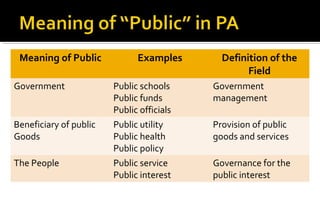
Meaning of Public Examples Definition of the
Field
Government Public schools
Public funds
Public officials
Government
management
Beneficiary of public
Goods
Public utility
Public health
Public policy
Provision of public
goods and services
The People Public service
Public interest
Governance for the
public interest
According to Barry Bozeman (1987), in a
seminal book. Stated that all organization
are “Public” . If that is true, the obverse
would also be true: All organization are
“Private”
The Volunteer Sector in theThe Volunteer Sector in the
Continuum of Publicness-PrivatenessContinuum of Publicness-Privateness
Bozeman argue that some governmentBozeman argue that some government
organization are private in that:organization are private in that:
Some of their good are “purely private” orSome of their good are “purely private” or
intermediate between the purely privateintermediate between the purely private
and purely public. (1987:50)and purely public. (1987:50)
Public ownership is diluted, thus power isPublic ownership is diluted, thus power is
delegated to managers. (1987:54)delegated to managers. (1987:54)
The Volunteer Sector in the Continuum ofThe Volunteer Sector in the Continuum of
Publicness-PrivatenessPublicness-Privateness
 Cont……
Some administration motive is self-interest, even
when the stated organization motive is not.
(1987:53)
“A public manager will have a great opportunity to
increased his well being at the expense of the
owner’s wealth to a greater extent that a manager
of a proprietary concern because it is relatively less
costly to do so.” (Bozeman 1987:53, quoting Davies
1981:115)
The Volunteer Sector in the Continuum ofThe Volunteer Sector in the Continuum of
Publicness-PrivatenessPublicness-Privateness
 Public when their involvement is serving the public
interest and in their critique or advocacy of public
policy;
 SomeVS provide goods and services that are
indivisible and have high externalities.
 Others generate income which places them in
market. However, since the profit is not distributed
to the members as individuals, the organ9ization
retain their public quality.
Voluntary Sector (VS) have public and private
characteristics
 Civil society have elements of private for their initiative and
funding.They are mediated not by market forces but by the
values of philanthrophy and commitment.
 A second element of privateness is their nature of
unelected representatives.While claiming broader
constituencies, they are criticized as representing only
themselves in public policy discussions
 On balance, the publicness of civil society organizations
outweighs their private qualities
Comparison of Business, PublicComparison of Business, Public
and Voluntary Sectorand Voluntary Sector
ManagementManagement
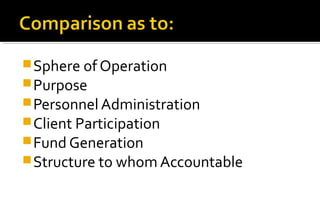
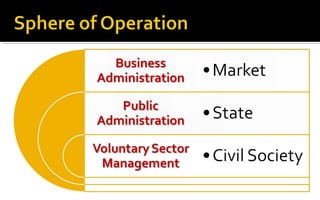
Sphere of Operation
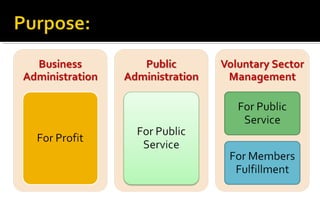
Purpose
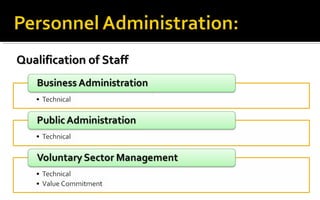
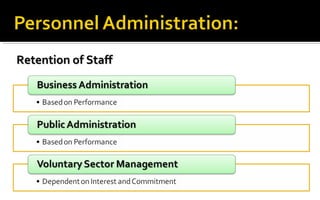
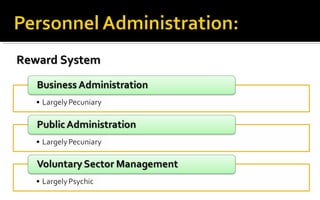
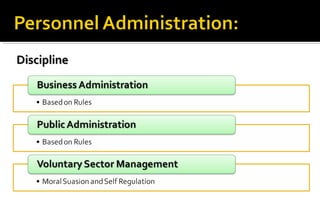
Personnel Administration
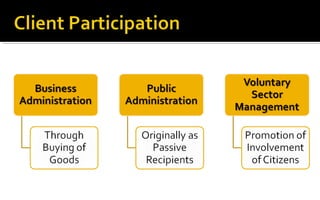
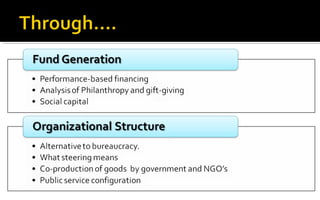
Client Participation
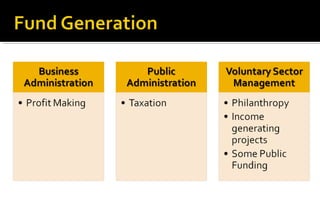
Fund Generation
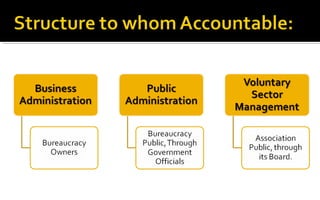
Structure to whom Accountable
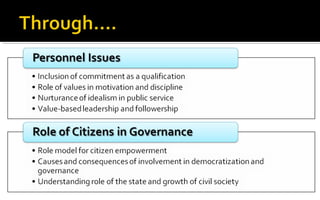
Qualification of StaffQualification of Staff
Retention of StaffRetention of Staff
Reward SystemReward System
DisciplineDiscipline
Ledivina V. Carino
But it is Public Administration?The Place of
Volountary Sector Management in the Discipline
Introduction to PA in the Philippines: A Reader
2nd
edition, UP NCPAG 2003
END…
But is it public Administration?But is it public Administration?
The Place of Voluntary SectorThe Place of Voluntary Sector
Management in the Discipline.Management in the Discipline.

Voluntary sector management

  • 1.
    Public Administration and CivilSociety Relations: Theories, Concepts, Frameworks
  • 2.
     But itis public Administration?The Place ofBut it is public Administration?The Place of voluntary Sector Management in the Disciplinevoluntary Sector Management in the Discipline  Hygiene Factors in the Management ofVolunteerHygiene Factors in the Management ofVolunteer OrganizationsOrganizations  Volunteer Sector: Its Public EssenceVolunteer Sector: Its Public Essence  But it is public Administration?The Place ofBut it is public Administration?The Place of voluntary Sector Management in the Disciplinevoluntary Sector Management in the Discipline  Hygiene Factors in the Management ofVolunteerHygiene Factors in the Management ofVolunteer OrganizationsOrganizations  Volunteer Sector: Its Public EssenceVolunteer Sector: Its Public Essence
  • 3.
     The voluntarysector is large and growing, and many of its organizations are in the process of institutionalization. Thus, the demand to learn how to manage their operations systematically and effectively, though now untapped, is real and strong. Besides, the significant role of civil society in governance is becoming increasingly recognized, propelled in diverse ways by the trends towards democratization and globalization. There is just one point that gives them pause: is it really public administration?
  • 4.
    Justification: voluntary sector,non profits, nongovernmental organizations or civil society organizations have been increasing in recent years throughout the world (Crowder Hodgkinson,1992)
  • 5.
     In thepublicness –privateness continuum the voluntary sector hews closer to the civil service than to business firms.  Analysis of the management concerns of voluntary sector and compare them with government and business administration
  • 6.
    The meaning ofThemeaning of “Public” in Public“Public” in Public AdministrationAdministration is the organizingis the organizing concept inconcept in delineating thedelineating the field.field. i. As the management of governmental organization ii. As the provision of public goods and services iii. As governance for the public interest
  • 7.
     The firstmeaning of “Public” is a synonym of “GovernmentGovernment”. This is the meaning of the phrases:  Public School  Public Hospital  Public Agency  Public Funds  Public Official  This is also the original meaning of the modifier “Public” in Public Administration and it has been originally understood as government management. As the Management of GovernmentalAs the Management of Governmental OrganizationOrganization
  • 8.
     The 2nd meaningof “Public” is refers to the collective as beneficiary of “Public Goods” those whose benefits are indivisible and with significant externalities. Examples are: Public Utility Public Health Public Policy As the Provision of Public Goods andAs the Provision of Public Goods and ServicesServices
  • 9.
    Problems can notbe solved privately Alternative Delivery Systems • Individual • Community effort Government bureaucracy
  • 10.
     The influenceof political economy and Public choice Theory is especially evident (Ostrom and Ostrom, 1971)  PA moved both deeper and wider: deeper in implementation (found to be neglected area in the field) wider as the whole public policy process - from formulation – implementation – evaluation became its special focus.
  • 11.
     Leading departmentsof PA reorganized themselves into schools of public policy abandoning bureaucracy but also casting the net wider by including political parts of the policy process, zeroing on program administration and recognizing non bureaucratic ways by which public goods are produced and delivered  In many ways, this process marked the first entry of NGOs into the consciousness of scholars of PA.
  • 12.
     The 3rd meaningof “Public” in Public Administration is as the “PeoplePeople” the presumed beneficiary of government and providers of other public goods as well as the embodiment of the collective in a nation. As Governance for the Public InterestAs Governance for the Public Interest
  • 13.
     The philosophyof public administration and public philosophy as a whole have always given a central place to the people as embodied in ideas of “Public Interest” or the “Public Good”.  This is not a new concept , since the philosophy have always given a central place of the people as embodied in the ideas of “public interest” or the “public good”.  Public service – the commitment of public officials, all professions and professionals  All citizens are not only recipient or beneficiary of public goods but also creator and participant in the process. As Governance for the Public InterestAs Governance for the Public Interest
  • 14.
     In governance,the sectors outside of the bureaucracy and the formal political hierarchy play a role in providing services  They take political roles – in envisioning the good society and defining the public interest, in acting as representative of people, in reinforcing public values and standards, in becoming vehicles for socialization of the citizenry for social responsibility and public service
  • 15.
    • It isthis notion of PA that management of the voluntary sector, non profit, or civil society organizations can take a rightful place. • The inclusion of voluntary sector in public administration is propelled by the historical development of the discipline and the theoretical import of its role in society
  • 16.
     Civil societyinsert themselves into the realm of government and becoming more like a political institution  Consider themselves as vessels of public interest and representatives of the people  The advocate public policy not only for the good of their organization but on behalf of those who do speak out  They correct distributional problems by consciously seeking out the marginalized
  • 17.
     The NGOsand other parts of public sector make significant political and administrative contributions towards its governance for public interest.
  • 18.
    Meaning of PublicExamples Definition of the Field Government Public schools Public funds Public officials Government management Beneficiary of public Goods Public utility Public health Public policy Provision of public goods and services The People Public service Public interest Governance for the public interest
  • 19.
    According to BarryBozeman (1987), in a seminal book. Stated that all organization are “Public” . If that is true, the obverse would also be true: All organization are “Private” The Volunteer Sector in theThe Volunteer Sector in the Continuum of Publicness-PrivatenessContinuum of Publicness-Privateness
  • 20.
    Bozeman argue thatsome governmentBozeman argue that some government organization are private in that:organization are private in that: Some of their good are “purely private” orSome of their good are “purely private” or intermediate between the purely privateintermediate between the purely private and purely public. (1987:50)and purely public. (1987:50) Public ownership is diluted, thus power isPublic ownership is diluted, thus power is delegated to managers. (1987:54)delegated to managers. (1987:54) The Volunteer Sector in the Continuum ofThe Volunteer Sector in the Continuum of Publicness-PrivatenessPublicness-Privateness
  • 21.
     Cont…… Some administrationmotive is self-interest, even when the stated organization motive is not. (1987:53) “A public manager will have a great opportunity to increased his well being at the expense of the owner’s wealth to a greater extent that a manager of a proprietary concern because it is relatively less costly to do so.” (Bozeman 1987:53, quoting Davies 1981:115) The Volunteer Sector in the Continuum ofThe Volunteer Sector in the Continuum of Publicness-PrivatenessPublicness-Privateness
  • 22.
     Public whentheir involvement is serving the public interest and in their critique or advocacy of public policy;  SomeVS provide goods and services that are indivisible and have high externalities.  Others generate income which places them in market. However, since the profit is not distributed to the members as individuals, the organ9ization retain their public quality. Voluntary Sector (VS) have public and private characteristics
  • 23.
     Civil societyhave elements of private for their initiative and funding.They are mediated not by market forces but by the values of philanthrophy and commitment.  A second element of privateness is their nature of unelected representatives.While claiming broader constituencies, they are criticized as representing only themselves in public policy discussions  On balance, the publicness of civil society organizations outweighs their private qualities
  • 24.
    Comparison of Business,PublicComparison of Business, Public and Voluntary Sectorand Voluntary Sector ManagementManagement
  • 25.
    Sphere of Operation Purpose PersonnelAdministration Client Participation Fund Generation Structure to whom Accountable
  • 28.
  • 29.
  • 30.
  • 31.
  • 39.
    Ledivina V. Carino Butit is Public Administration?The Place of Volountary Sector Management in the Discipline Introduction to PA in the Philippines: A Reader 2nd edition, UP NCPAG 2003
  • 40.
    END… But is itpublic Administration?But is it public Administration? The Place of Voluntary SectorThe Place of Voluntary Sector Management in the Discipline.Management in the Discipline.