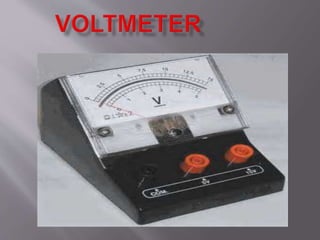
A voltmeter is an instrument used for
measuring electrical potential difference
between two points in an electric circuit.
Analog voltmeters move a pointer across a scale
in proportion to the voltage of the circuit;
digital voltmeters give a numerical display of
voltage by use of an analog to digital converter.
A moving coil galvanometer can be used as a
voltmeter by inserting a resistor in series with
the instrument.
The sensitivity and input resistance of a
voltmeter can be increased if the current
required to deflect the meter pointer is supplied
by an amplifier and power supply instead of by
the circuit under test. The electronic amplifier
between input and meter gives two benefits; a
rugged moving coil instrument can be used,
since its sensitivity need not be high, and the
input resistance can be made high, reducing the
current drawn from the circuit under test.
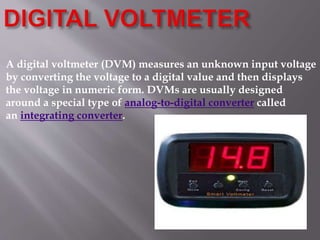
A digital voltmeter (DVM) measures an unknown input voltage
by converting the voltage to a digital value and then displays
the voltage in numeric form. DVMs are usually designed
around a special type of analog-to-digital converter called
an integrating converter.
A potentiometer is an instrument for variable potential(voltage)
in a circuit. Before the introduction of the moving coil and
digital volt meters, potentiometers were used in
measuring voltage. The method was described by Johann
Christian Poggendorff around 1841 and became a standard
laboratory measuring technique
Potentiometer is a simple device used to
measure the EMF, TPD, internal resistance of
a cell. It consists of a board where a tungsten
or manganese wire is fitted on it. It works on
the principle that the potential dropped
between two points in a wire of uniform cross
section is directly proportional to the distance
between the points.
The constant resistance potentiometer
is a variation of the basic idea in
which a variable current is fed
through a fixed resistor. These are
used primarily for measurements in
the millivolt and microvolt range.
This is a form of the constant
resistance potentiometer described
above but designed to minimize the
effects of contact resistance and
thermal emf. This equipment is
satisfactorily used down to readings of
1000 nV or so.
Another development of the standard types was
the 'thermocouple potentiometer' especially
adapted for temperature measurement
with thermocouples. Potentiometers for use with
thermocouples also measure the temperature at
which the thermocouple wires are connected, so
that cold-junction compensation may be applied
to correct the apparent measured EMF to the
standard cold-junction temperature of 0 degrees
C.
A meter bridge is a simple type of potentiometer
which may be used in school science
laboratories to demonstrate the principle of
resistance measurement by potentiometric
means. A resistance wire is laid along the length
of a meter rule and contact with the wire is
made through a galvanometer by a slider. When
the galvanometer reads zero, the ratio between
the lengths of wire to the left and right of the
slider is equal to the ratio between the values of
a known and an unknown resistor in a parallel
circuit.
Voltmeter

Voltmeter

  • 2.
    A voltmeter isan instrument used for measuring electrical potential difference between two points in an electric circuit. Analog voltmeters move a pointer across a scale in proportion to the voltage of the circuit; digital voltmeters give a numerical display of voltage by use of an analog to digital converter.
  • 4.
    A moving coilgalvanometer can be used as a voltmeter by inserting a resistor in series with the instrument.
  • 6.
    The sensitivity andinput resistance of a voltmeter can be increased if the current required to deflect the meter pointer is supplied by an amplifier and power supply instead of by the circuit under test. The electronic amplifier between input and meter gives two benefits; a rugged moving coil instrument can be used, since its sensitivity need not be high, and the input resistance can be made high, reducing the current drawn from the circuit under test.
  • 7.
    A digital voltmeter(DVM) measures an unknown input voltage by converting the voltage to a digital value and then displays the voltage in numeric form. DVMs are usually designed around a special type of analog-to-digital converter called an integrating converter.
  • 8.
    A potentiometer isan instrument for variable potential(voltage) in a circuit. Before the introduction of the moving coil and digital volt meters, potentiometers were used in measuring voltage. The method was described by Johann Christian Poggendorff around 1841 and became a standard laboratory measuring technique
  • 9.
    Potentiometer is asimple device used to measure the EMF, TPD, internal resistance of a cell. It consists of a board where a tungsten or manganese wire is fitted on it. It works on the principle that the potential dropped between two points in a wire of uniform cross section is directly proportional to the distance between the points.
  • 11.
    The constant resistancepotentiometer is a variation of the basic idea in which a variable current is fed through a fixed resistor. These are used primarily for measurements in the millivolt and microvolt range.
  • 12.
    This is aform of the constant resistance potentiometer described above but designed to minimize the effects of contact resistance and thermal emf. This equipment is satisfactorily used down to readings of 1000 nV or so.
  • 13.
    Another development ofthe standard types was the 'thermocouple potentiometer' especially adapted for temperature measurement with thermocouples. Potentiometers for use with thermocouples also measure the temperature at which the thermocouple wires are connected, so that cold-junction compensation may be applied to correct the apparent measured EMF to the standard cold-junction temperature of 0 degrees C.
  • 14.
    A meter bridgeis a simple type of potentiometer which may be used in school science laboratories to demonstrate the principle of resistance measurement by potentiometric means. A resistance wire is laid along the length of a meter rule and contact with the wire is made through a galvanometer by a slider. When the galvanometer reads zero, the ratio between the lengths of wire to the left and right of the slider is equal to the ratio between the values of a known and an unknown resistor in a parallel circuit.