VISUAL FIELDS
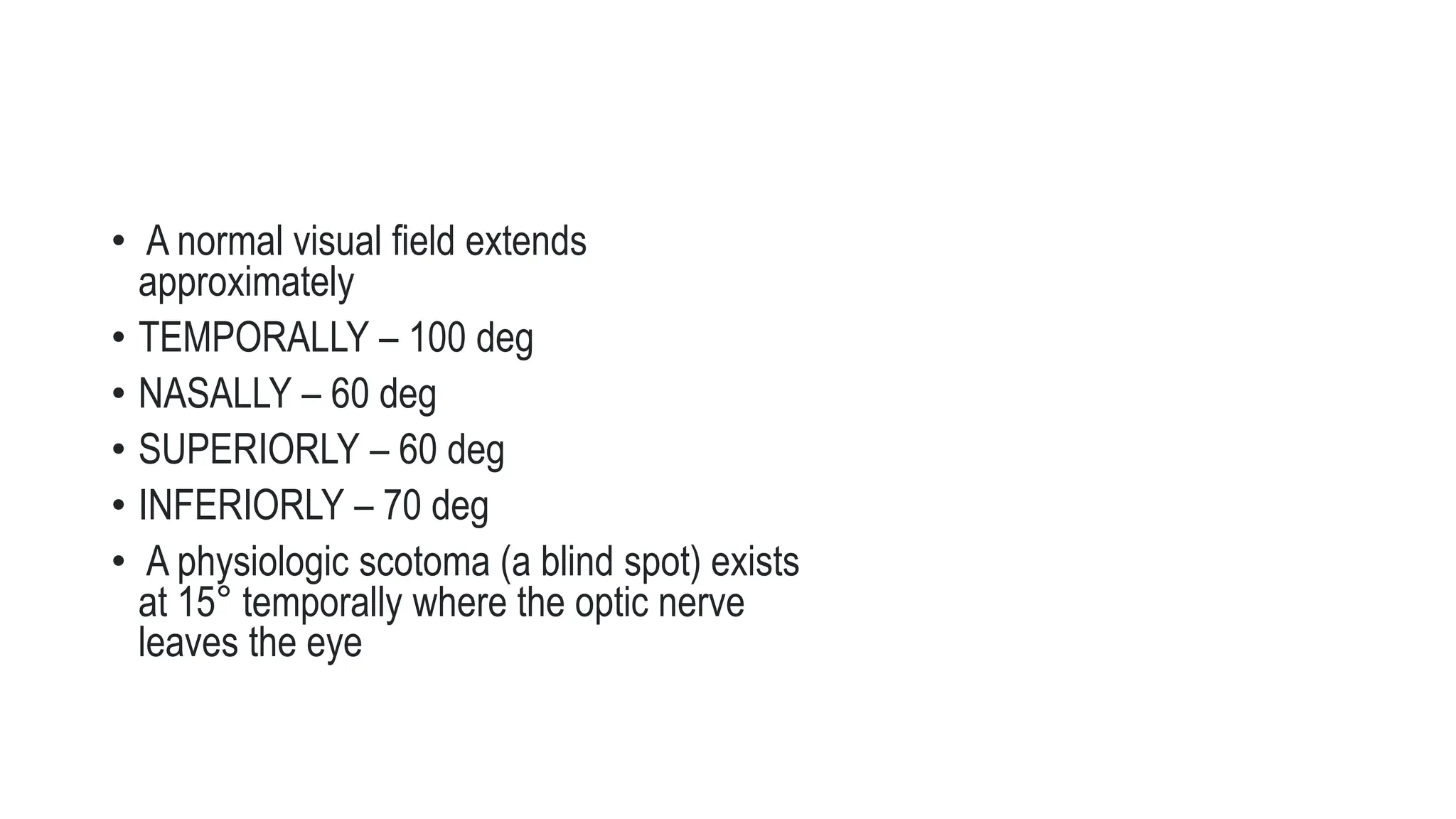
• A normal visual field extends
approximately
• TEMPORALLY – 100 deg
• NASALLY – 60 deg
• SUPERIORLY – 60 deg
• INFERIORLY – 70 deg
• A physiologic scotoma (a blind spot) exists
at 15° temporally where the optic nerve
leaves the eye
Humphey perimetry
• 10-2: Measures 10 degrees temporally and nasally and tests 68 points.
Used for macula, retinal and neuro-ophthalmic conditions and
advanced glaucoma[4]
• 24-2: Measures 24 degrees temporally and 30 degrees nasally and tests
54 points. Used for neuro-ophthalmic conditions and general
screening[5] as well as early detection of glaucoma[6][7]
• 30-2: Measures 30 degrees temporally and nasally and tests 76 points.
Used for general screening, early glaucoma and neurological conditions[6]
• The above tests can be performed in either SITA-Standard or SITA-Fast.
• SITA-Fast is a quicker method of testing. It produces similar results
compared to SITA-Standard, however repeatability is questionable and it is
slightly less sensitive
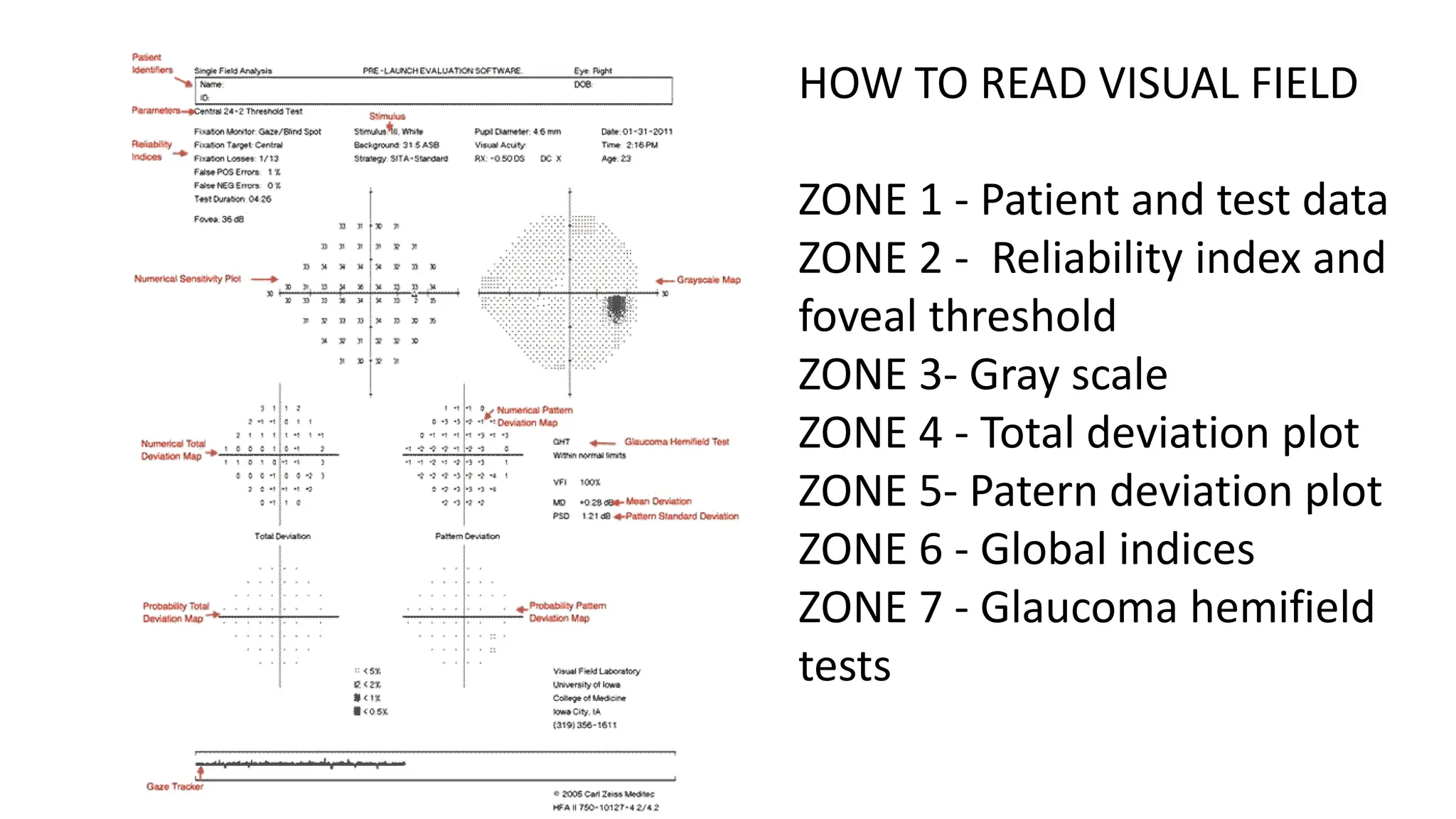
HOW TO READ VISUAL FIELD
ZONE 1 - Patient and test data
ZONE 2 - Reliability index and
foveal threshold
ZONE 3- Gray scale
ZONE 4 - Total deviation plot
ZONE 5- Patern deviation plot
ZONE 6 - Global indices
ZONE 7 - Glaucoma hemifield
tests
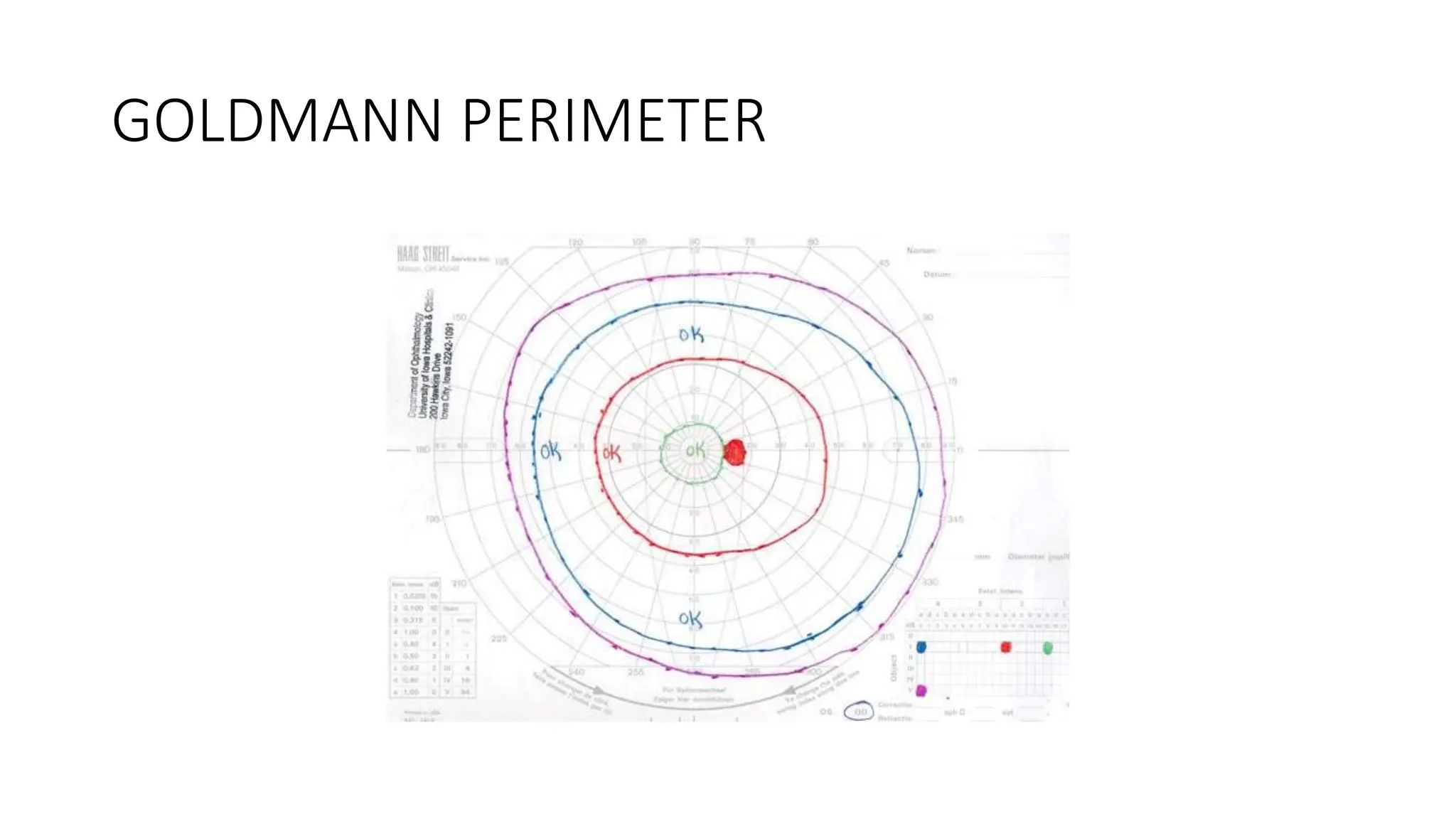
GOLDMANN PERIMETER
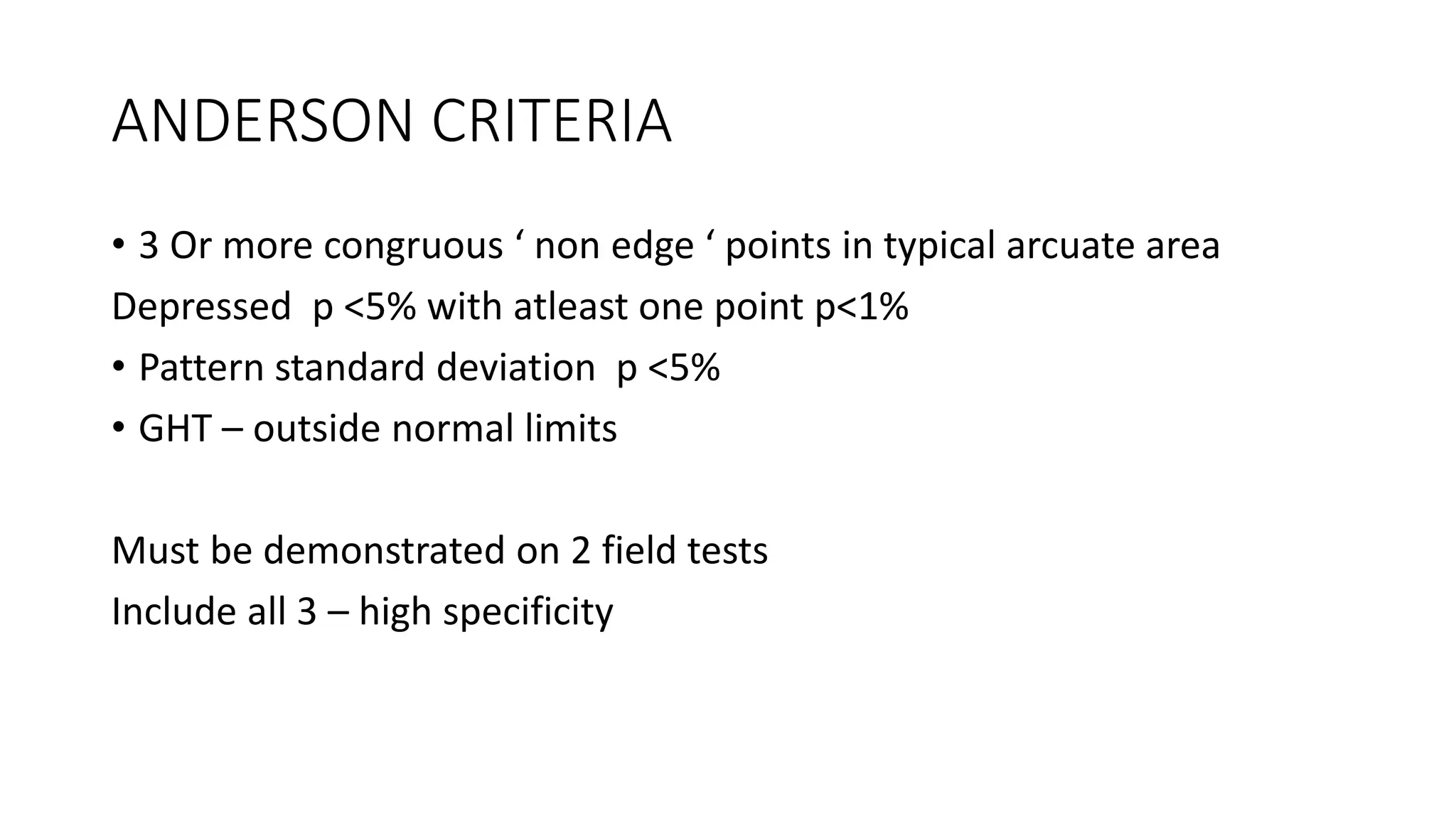
ANDERSON CRITERIA
• 3 Or more congruous ‘ non edge ‘ points in typical arcuate area
Depressed p <5% with atleast one point p<1%
• Pattern standard deviation p <5%
• GHT – outside normal limits
Must be demonstrated on 2 field tests
Include all 3 – high specificity
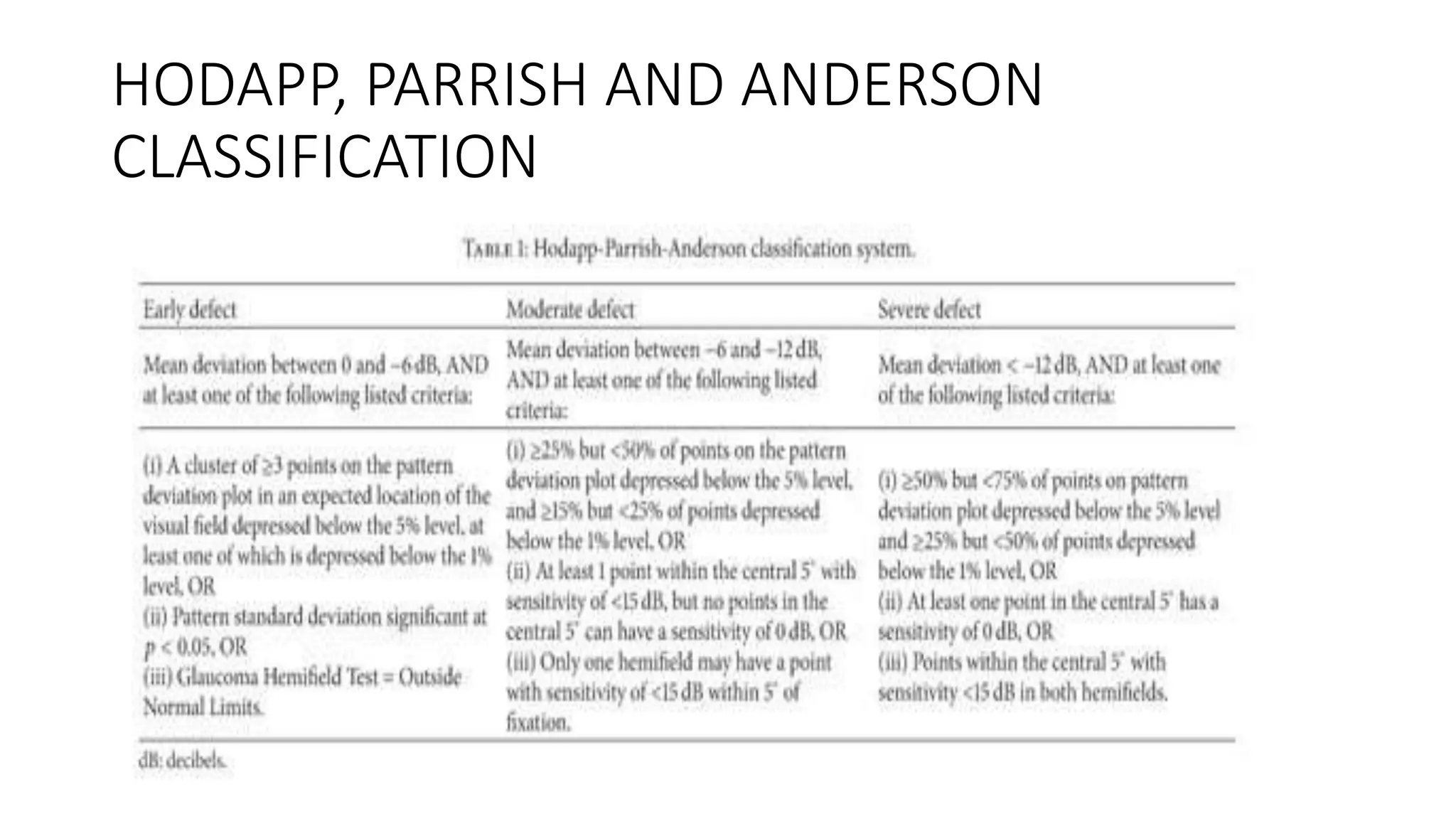
HODAPP, PARRISH AND ANDERSON
CLASSIFICATION
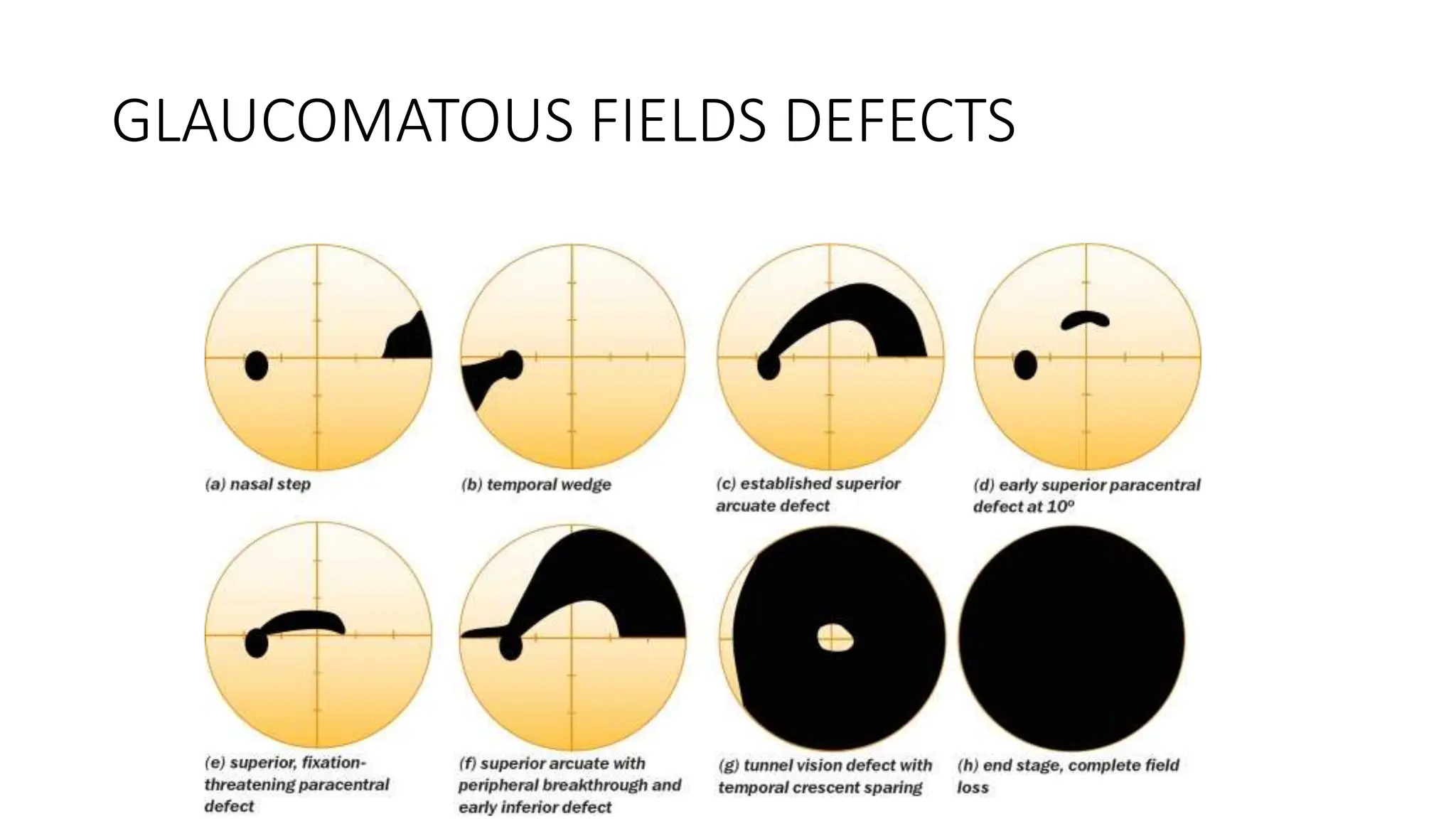
GLAUCOMATOUS FIELDS DEFECTS
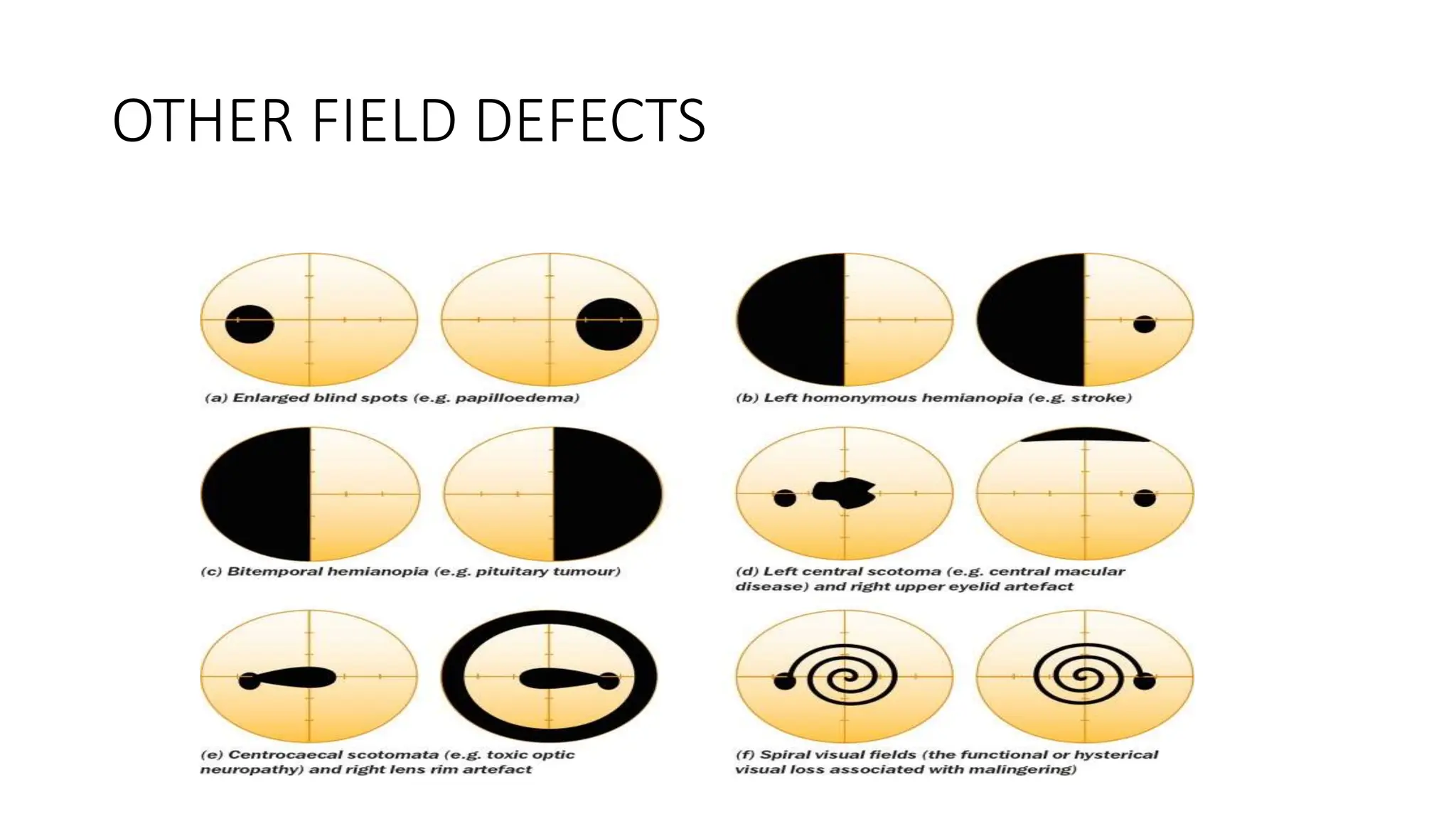
OTHER FIELD DEFECTS

VISUAL FIELDS , PERIMETRY, INTERPRETATION

  • 1.
  • 2.
    • A normalvisual field extends approximately • TEMPORALLY – 100 deg • NASALLY – 60 deg • SUPERIORLY – 60 deg • INFERIORLY – 70 deg • A physiologic scotoma (a blind spot) exists at 15° temporally where the optic nerve leaves the eye
  • 4.
    Humphey perimetry • 10-2:Measures 10 degrees temporally and nasally and tests 68 points. Used for macula, retinal and neuro-ophthalmic conditions and advanced glaucoma[4] • 24-2: Measures 24 degrees temporally and 30 degrees nasally and tests 54 points. Used for neuro-ophthalmic conditions and general screening[5] as well as early detection of glaucoma[6][7] • 30-2: Measures 30 degrees temporally and nasally and tests 76 points. Used for general screening, early glaucoma and neurological conditions[6] • The above tests can be performed in either SITA-Standard or SITA-Fast. • SITA-Fast is a quicker method of testing. It produces similar results compared to SITA-Standard, however repeatability is questionable and it is slightly less sensitive
  • 5.
    HOW TO READVISUAL FIELD ZONE 1 - Patient and test data ZONE 2 - Reliability index and foveal threshold ZONE 3- Gray scale ZONE 4 - Total deviation plot ZONE 5- Patern deviation plot ZONE 6 - Global indices ZONE 7 - Glaucoma hemifield tests
  • 6.
  • 7.
    ANDERSON CRITERIA • 3Or more congruous ‘ non edge ‘ points in typical arcuate area Depressed p <5% with atleast one point p<1% • Pattern standard deviation p <5% • GHT – outside normal limits Must be demonstrated on 2 field tests Include all 3 – high specificity
  • 8.
    HODAPP, PARRISH ANDANDERSON CLASSIFICATION
  • 9.
  • 10.