
Visual Elements
The basic building blocks of design.
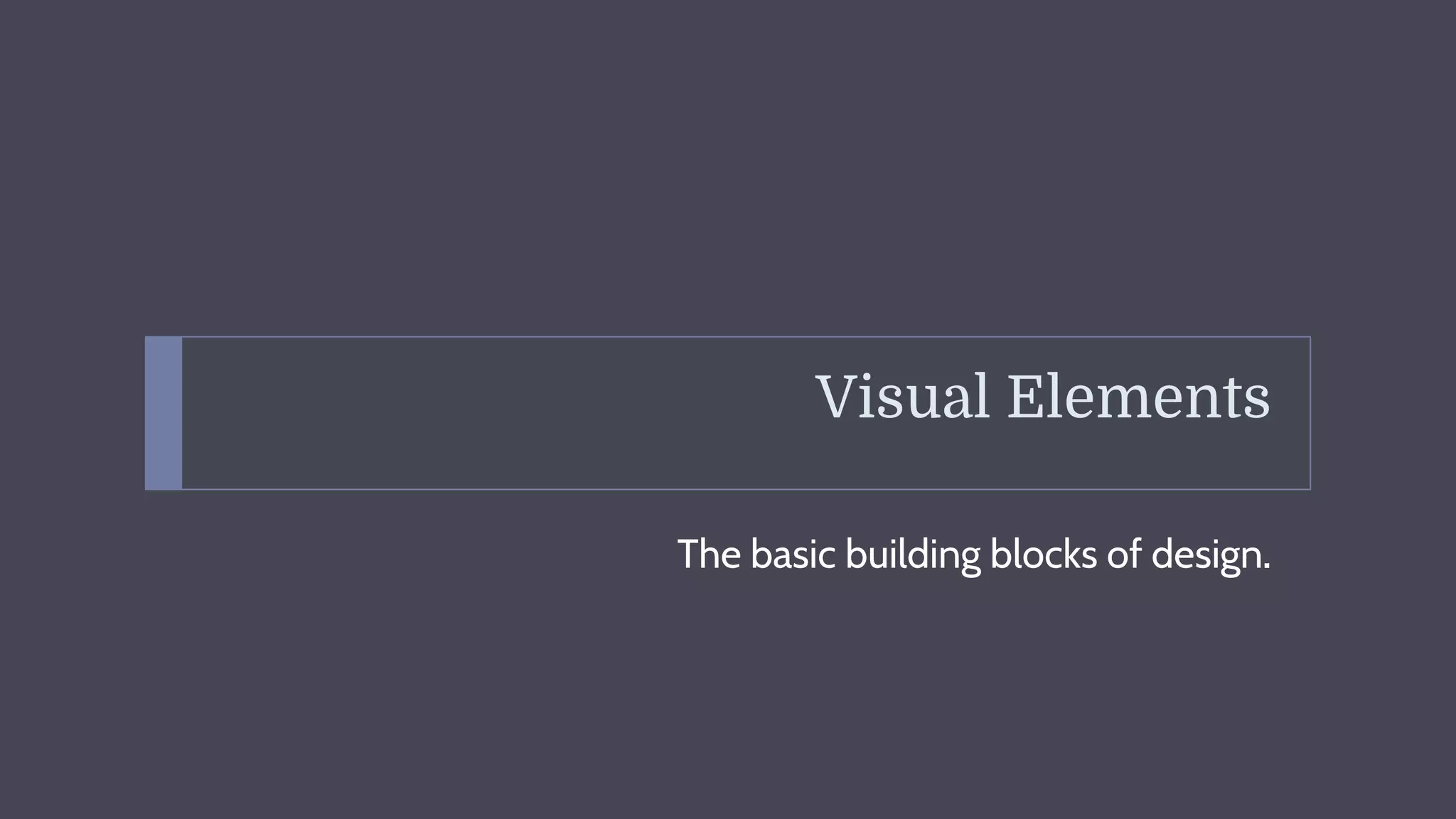
Line
A continuous point (mark)
used to delineate an edge,
or to lead the eye through
a design.
A line is just a continuation
of a point (dot), which is
the smallest unit of design.
2001:A Space Odyssey (Stanley Kubrick, 1968)
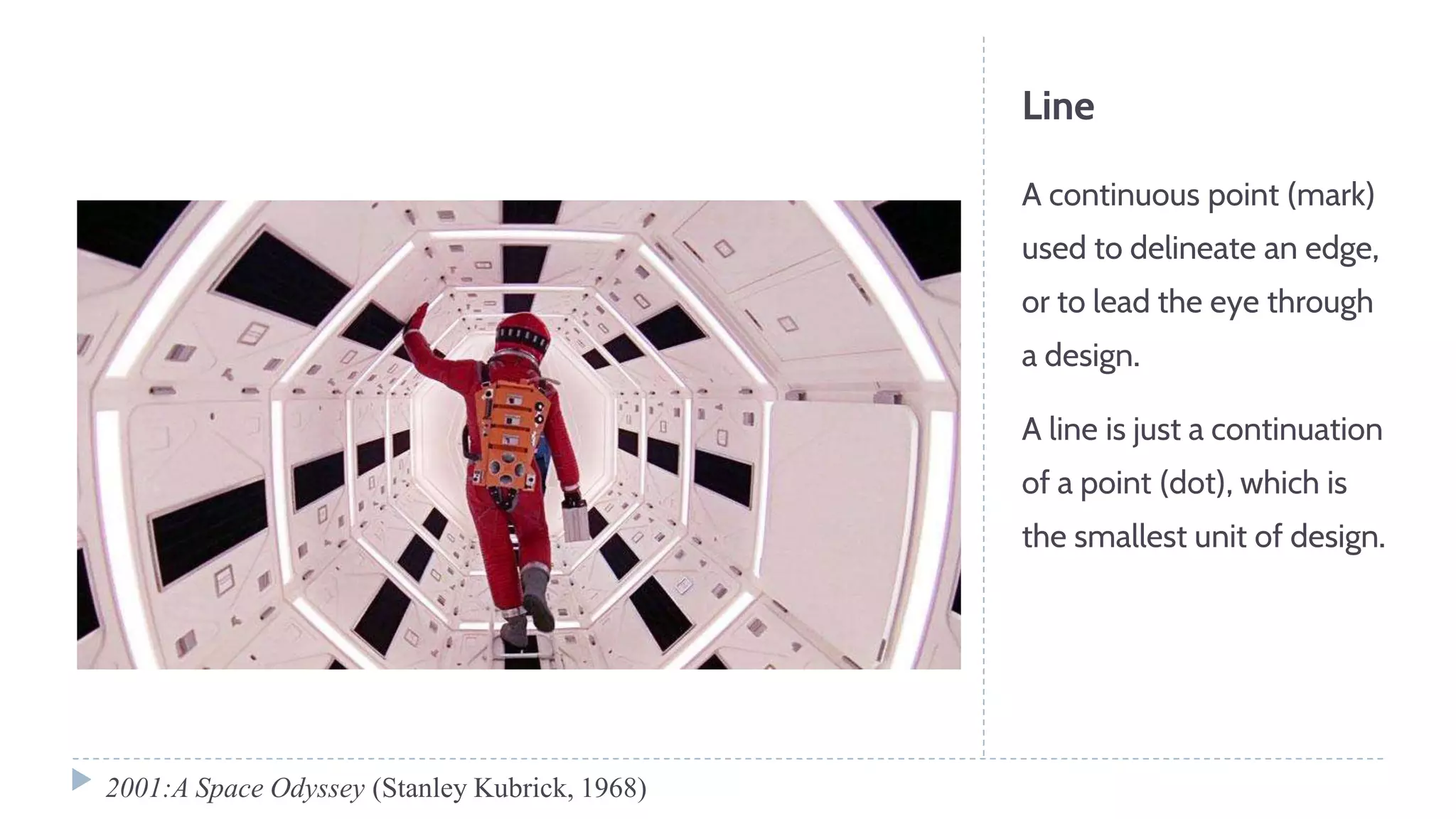
Types of Lines
Static
Horizontal = sense of peace
and calm.
Vertical = power, strength,
grandeur, and awe.
Dynamic
Diagonal = speed,
movement, and depth
Curved = Create a sense of
peace and tranquility.
Bedroom at Arles (1992) Roy Lichtenstein
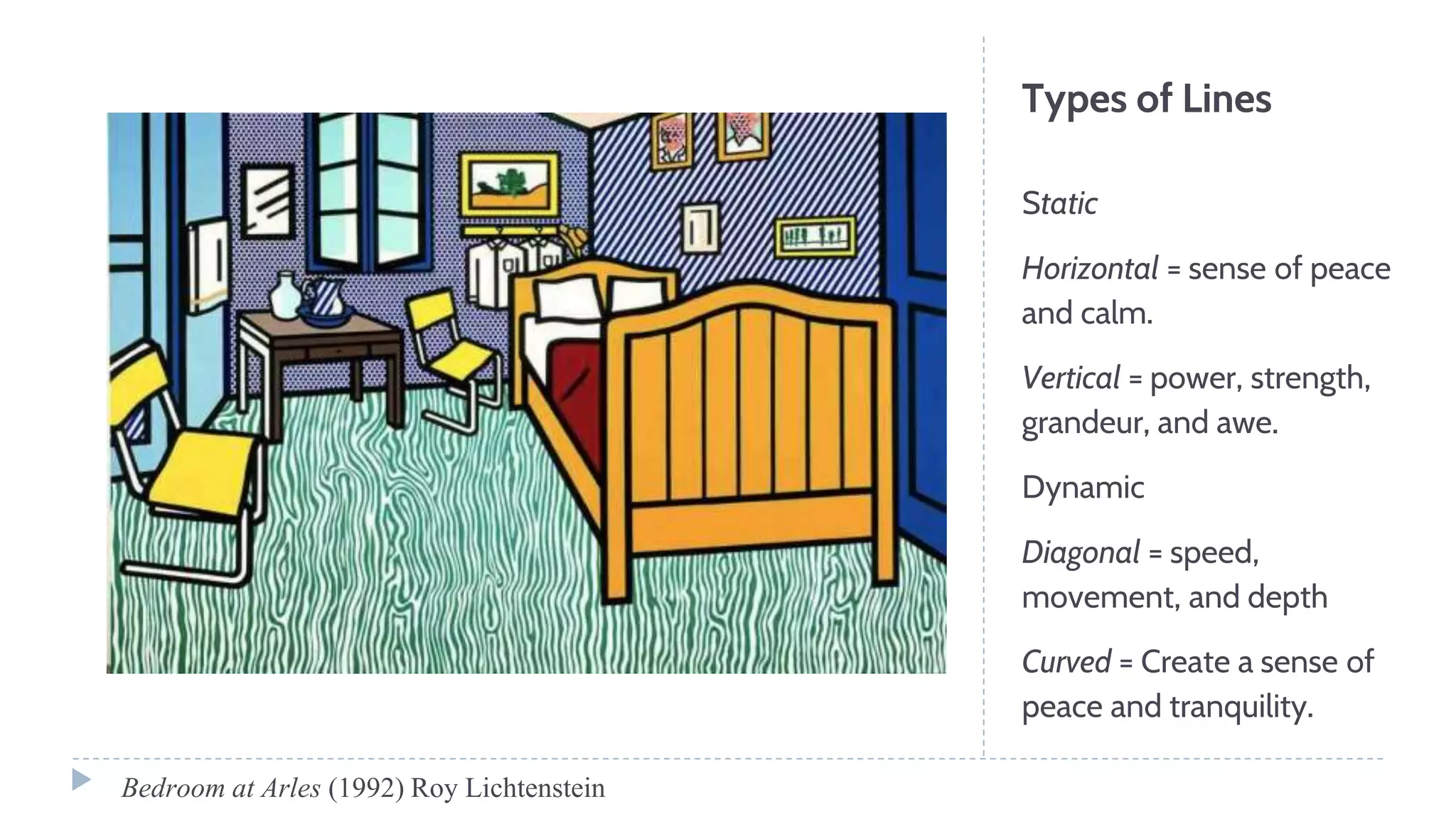
Leading Lines
Lines that guide a viewer’s
eyes around, or through, a
design.
Scanno (1953) Henri Cartier-Bresson
Shape/Form
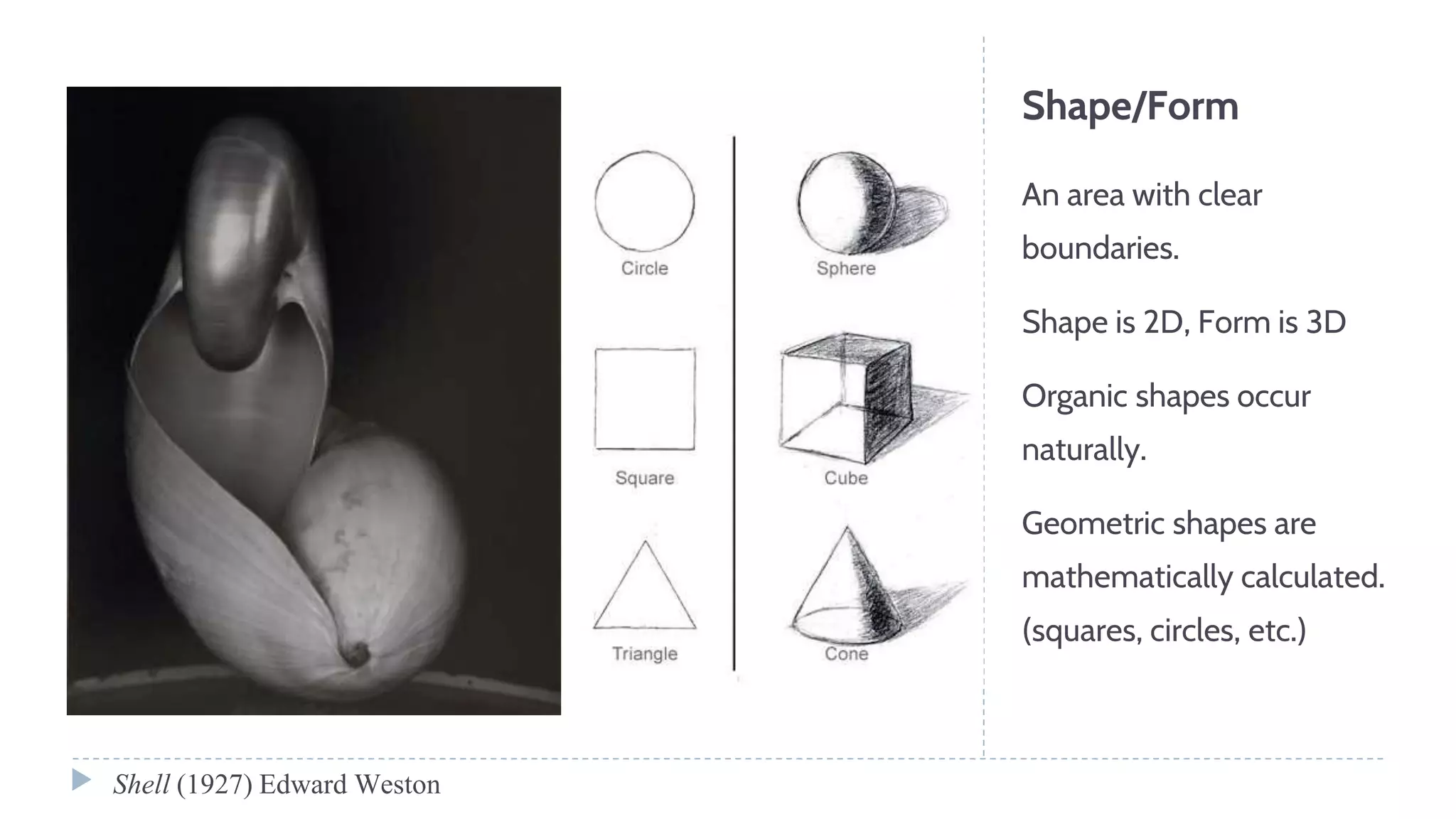
An area with clear
boundaries.
Shape is 2D, Form is 3D
Organic shapes occur
naturally.
Geometric shapes are
mathematically calculated.
(squares, circles, etc.)
Shell (1927) Edward Weston
Space
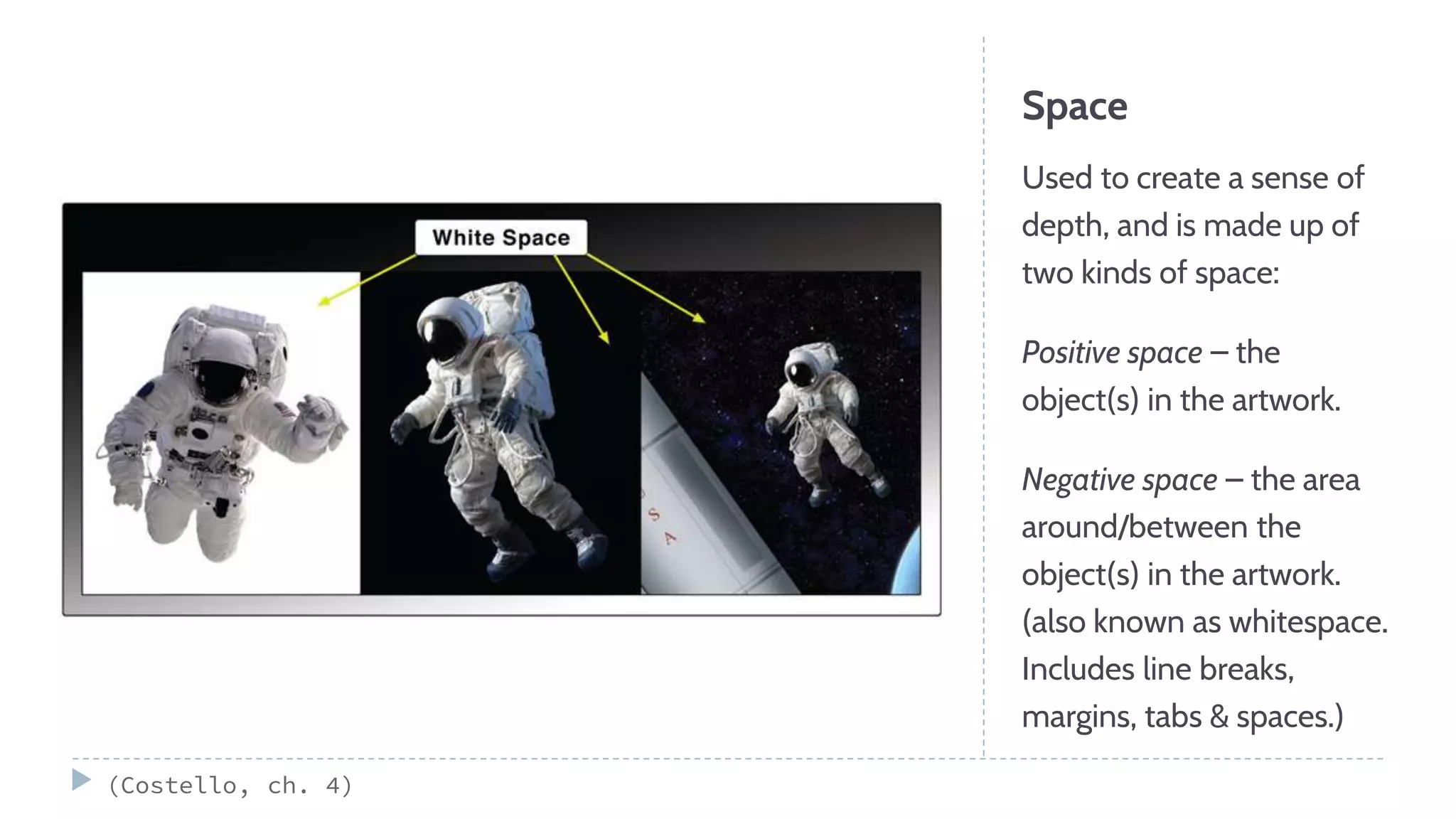
Used to create a sense of
depth, and is made up of
two kinds of space:
Positive space – the
object(s) in the artwork.
Negative space – the area
around/between the
object(s) in the artwork.
(also known as whitespace.
Includes line breaks,
margins, tabs & spaces.)
(Costello, ch. 4)
Digital Workspaces
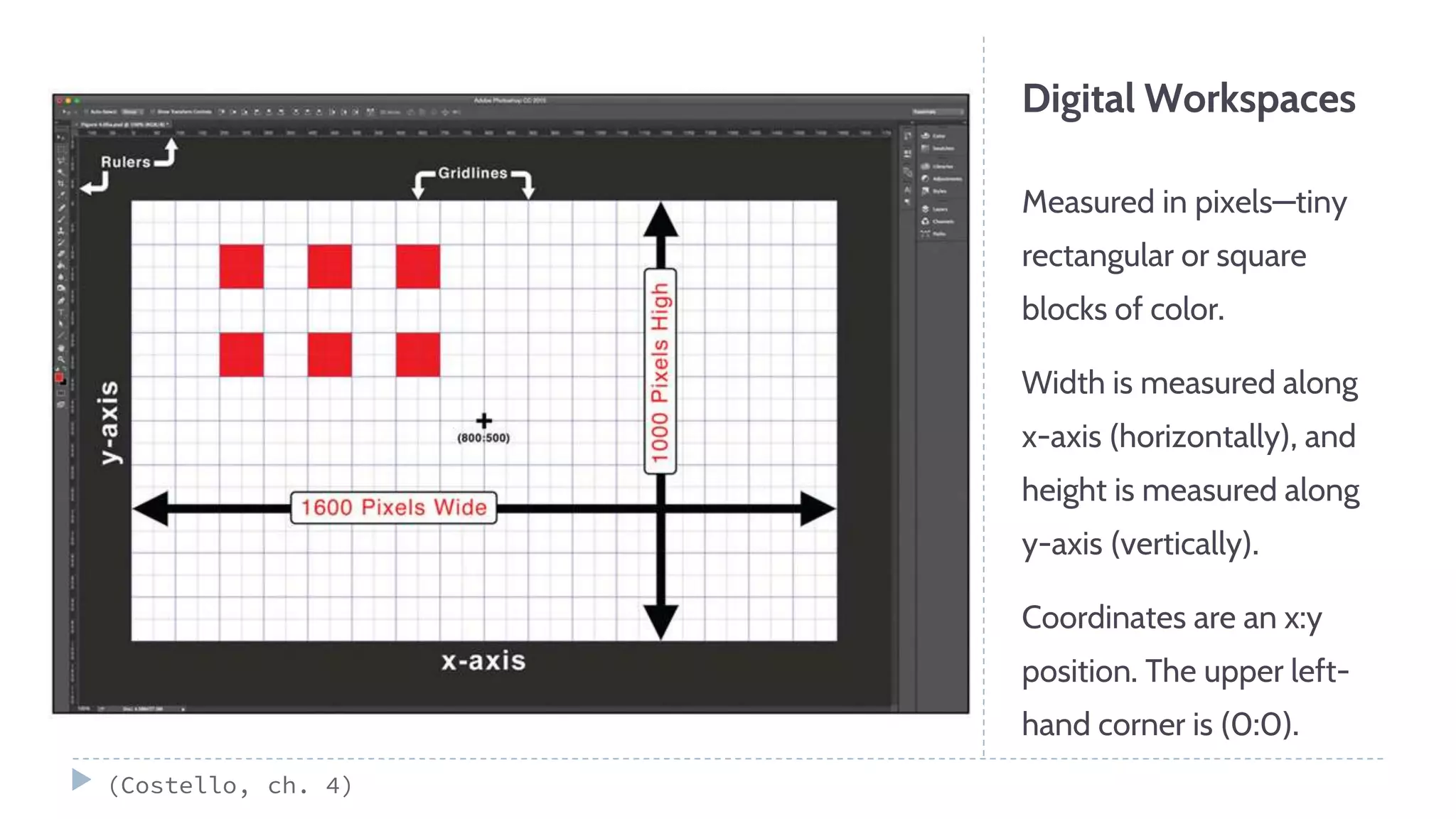
Measured in pixels—tiny
rectangular or square
blocks of color.
Width is measured along
x-axis (horizontally), and
height is measured along
y-axis (vertically).
Coordinates are an x:y
position. The upper left-
hand corner is (0:0).
(Costello, ch. 4)
Texture
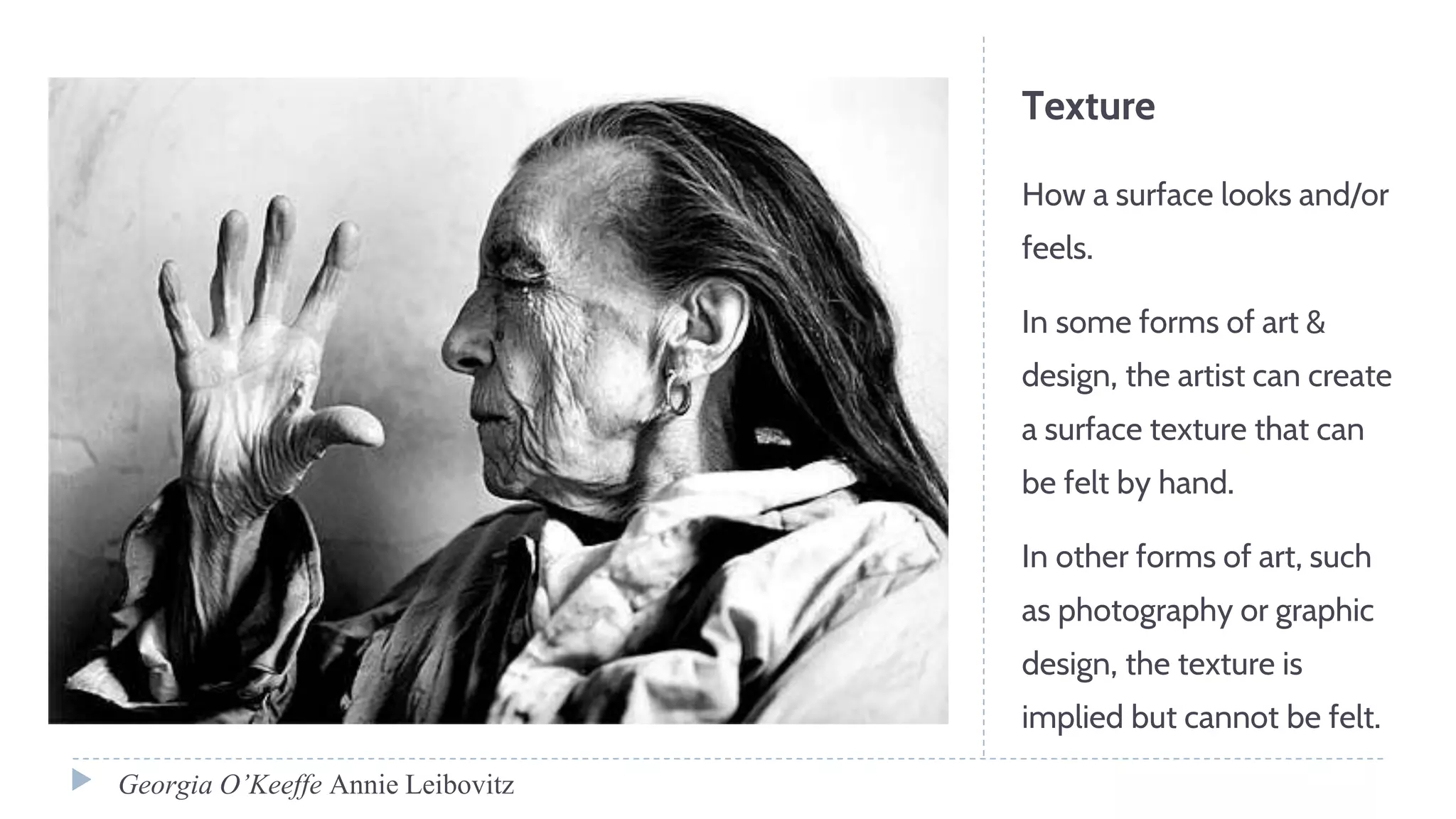
How a surface looks and/or
feels.
In some forms of art &
design, the artist can create
a surface texture that can
be felt by hand.
In other forms of art, such
as photography or graphic
design, the texture is
implied but cannot be felt.
Georgia O’Keeffe Annie Leibovitz
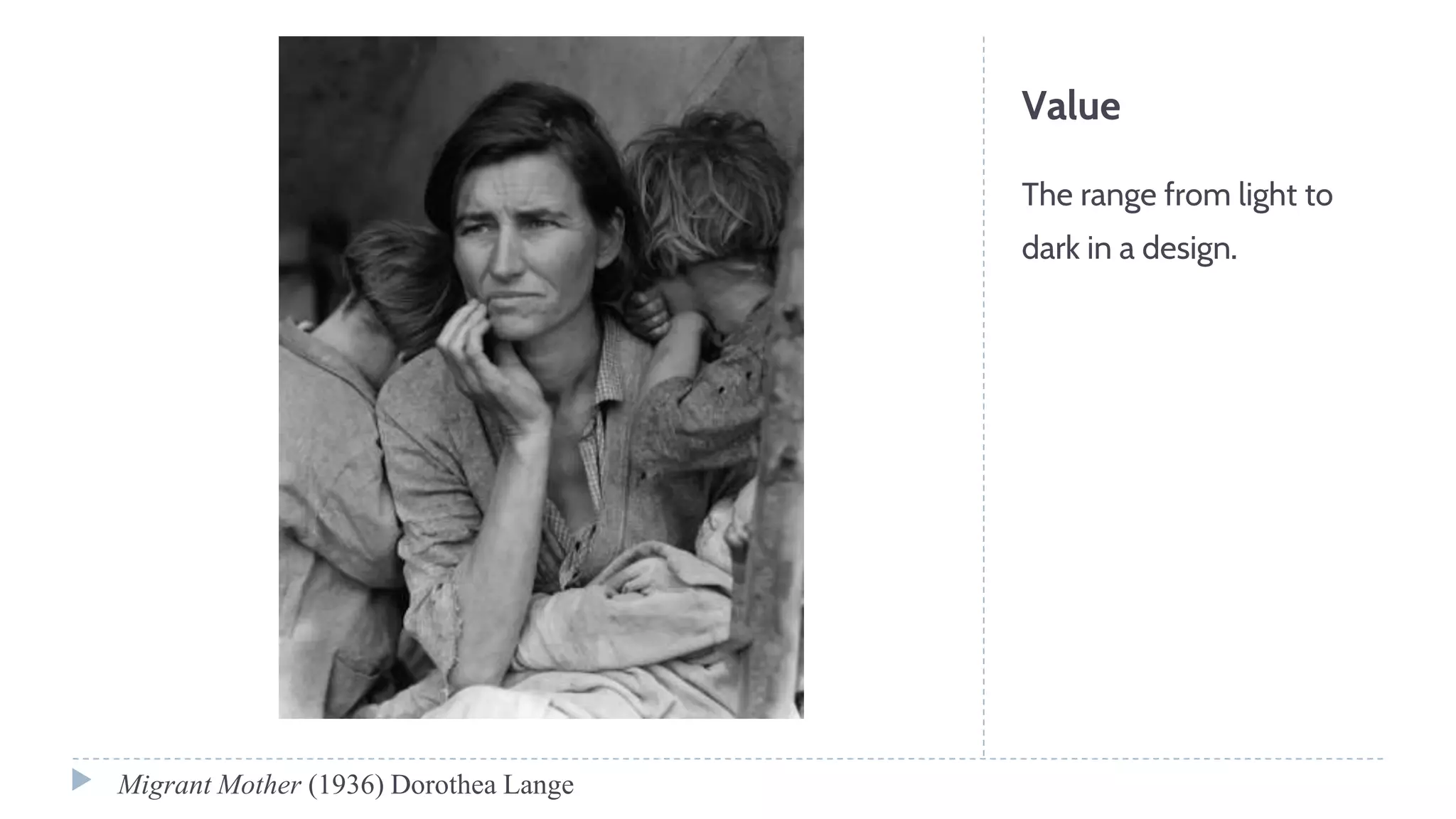
Value
The range from light to
dark in a design.
Migrant Mother (1936) Dorothea Lange
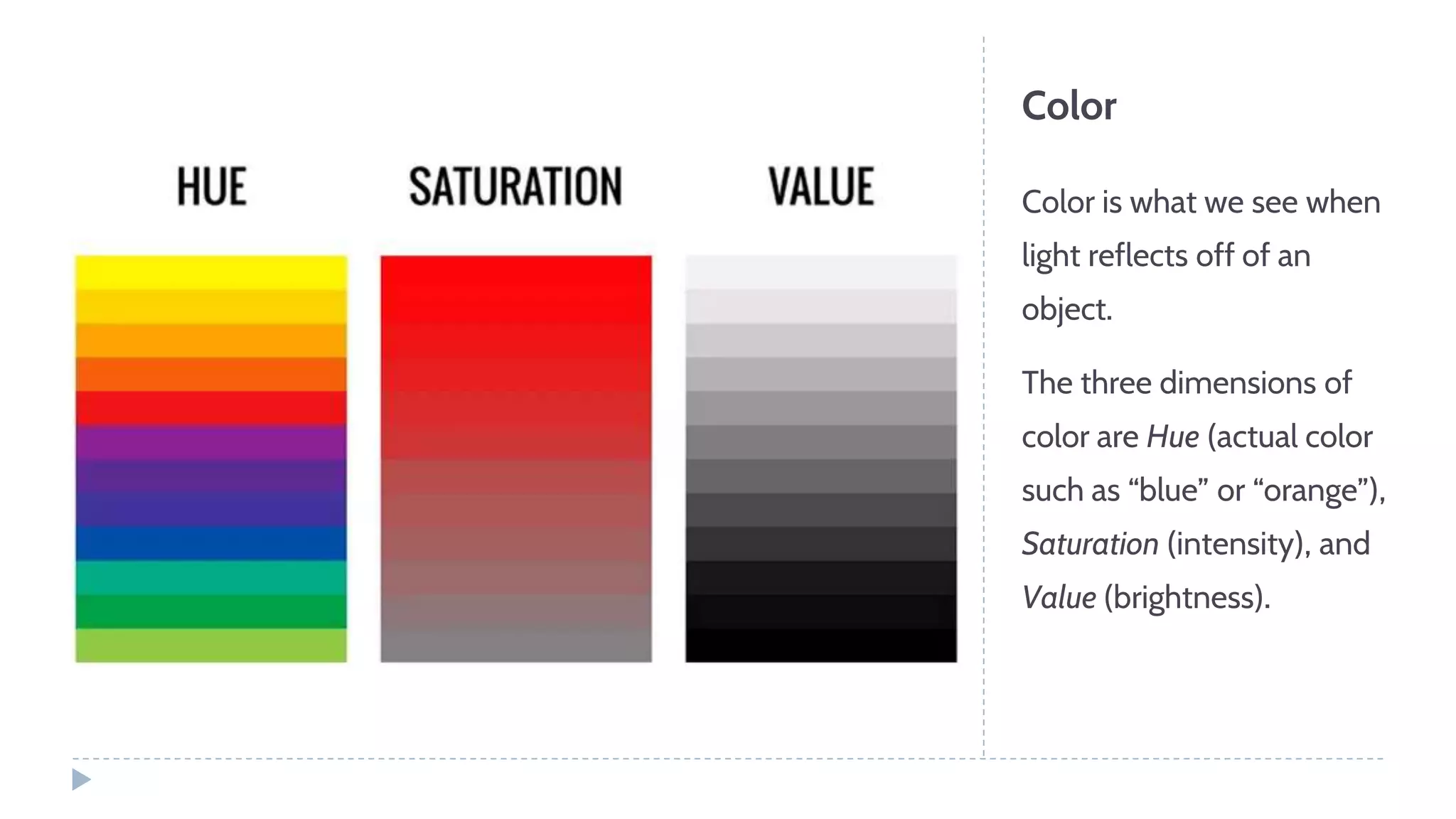
Color
Color is what we see when
light reflects off of an
object.
The three dimensions of
color are Hue (actual color
such as “blue” or “orange”),
Saturation (intensity), and
Value (brightness).
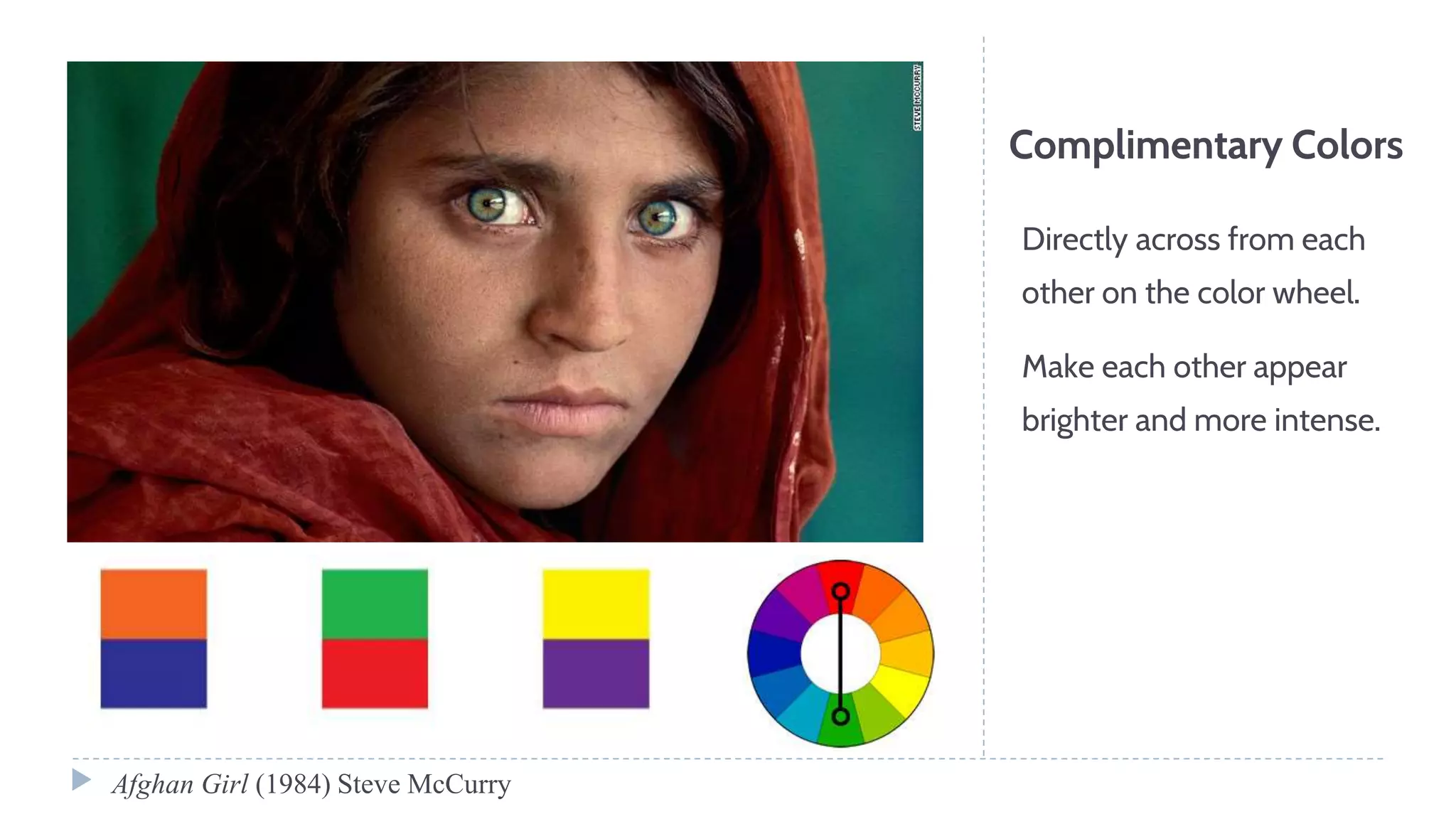
Complimentary Colors
Directly across from each
other on the color wheel.
Make each other appear
brighter and more intense.
Afghan Girl (1984) Steve McCurry
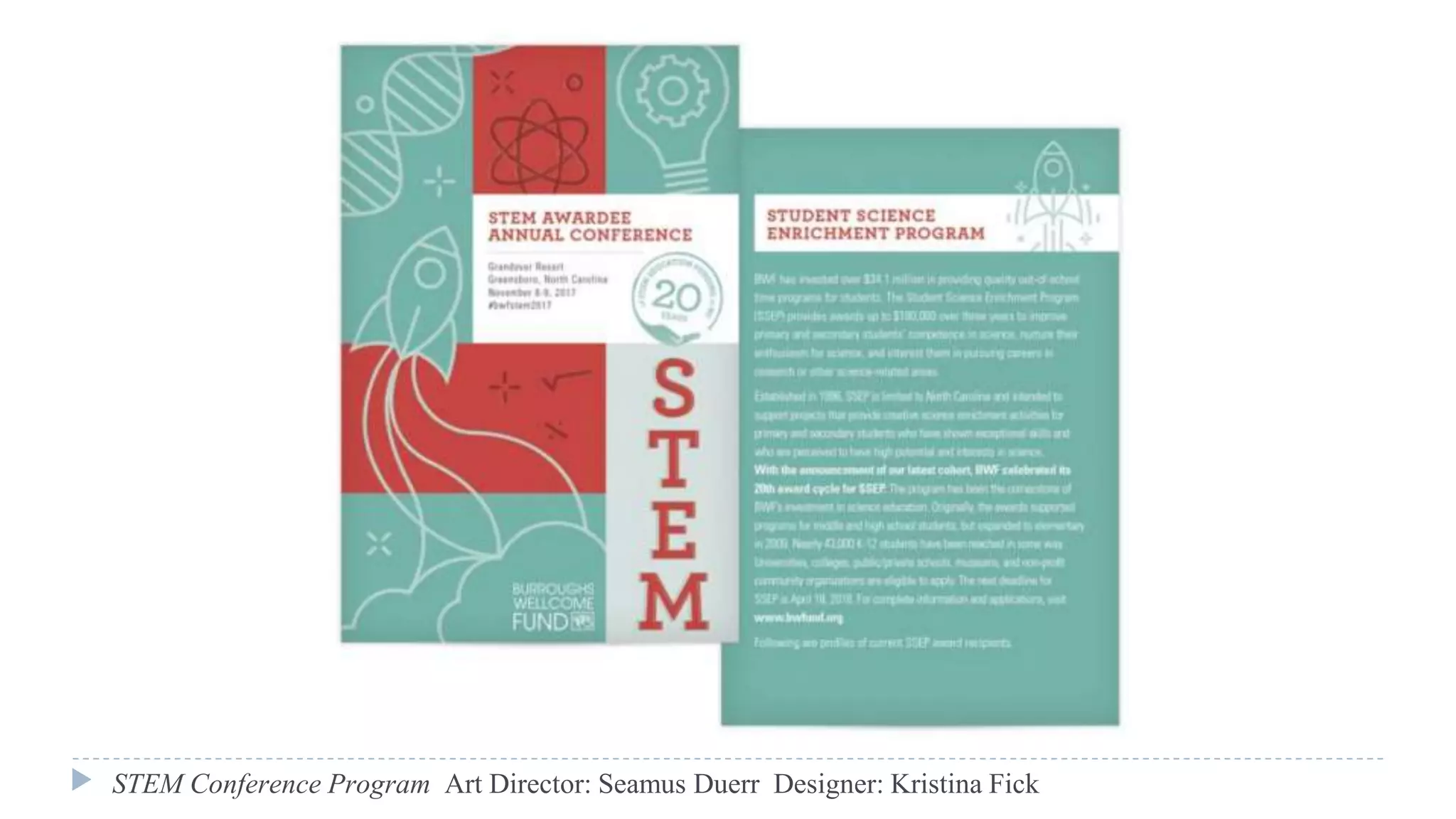
STEM Conference Program Art Director: Seamus Duerr Designer: Kristina Fick
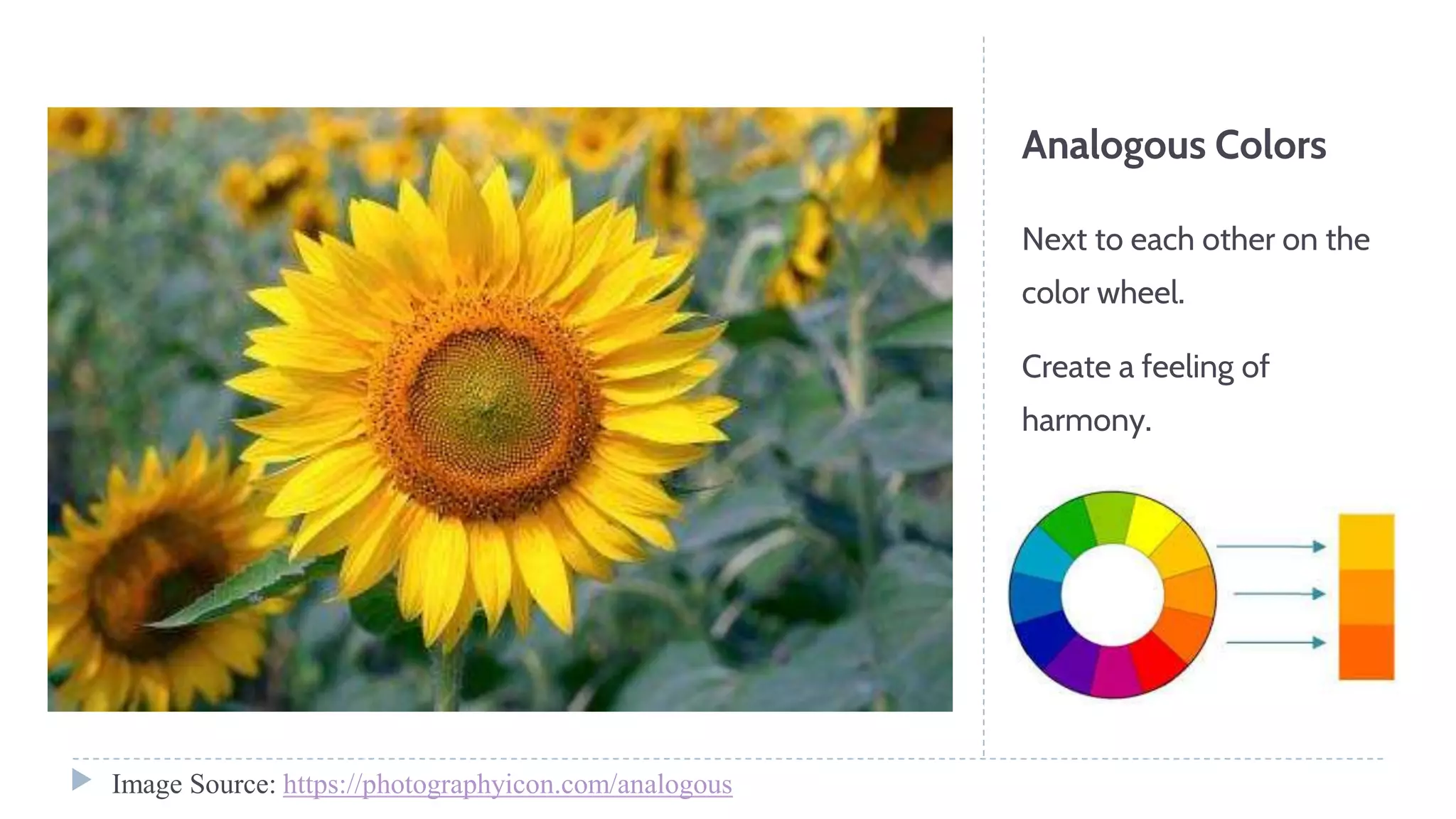
Analogous Colors
Next to each other on the
color wheel.
Create a feeling of
harmony.
Image Source: https://photographyicon.com/analogous
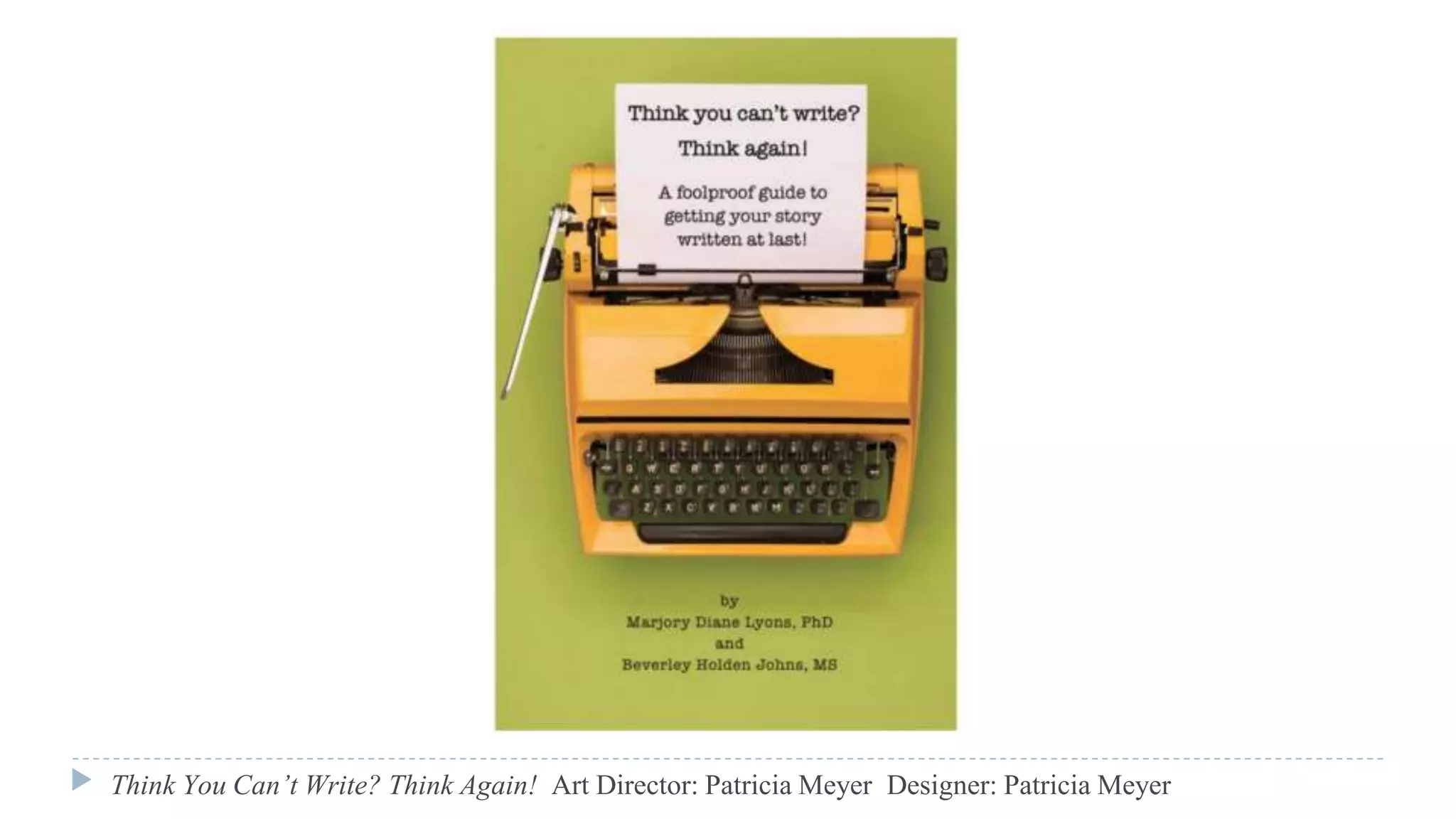
Think You Can’t Write? Think Again! Art Director: Patricia Meyer Designer: Patricia Meyer
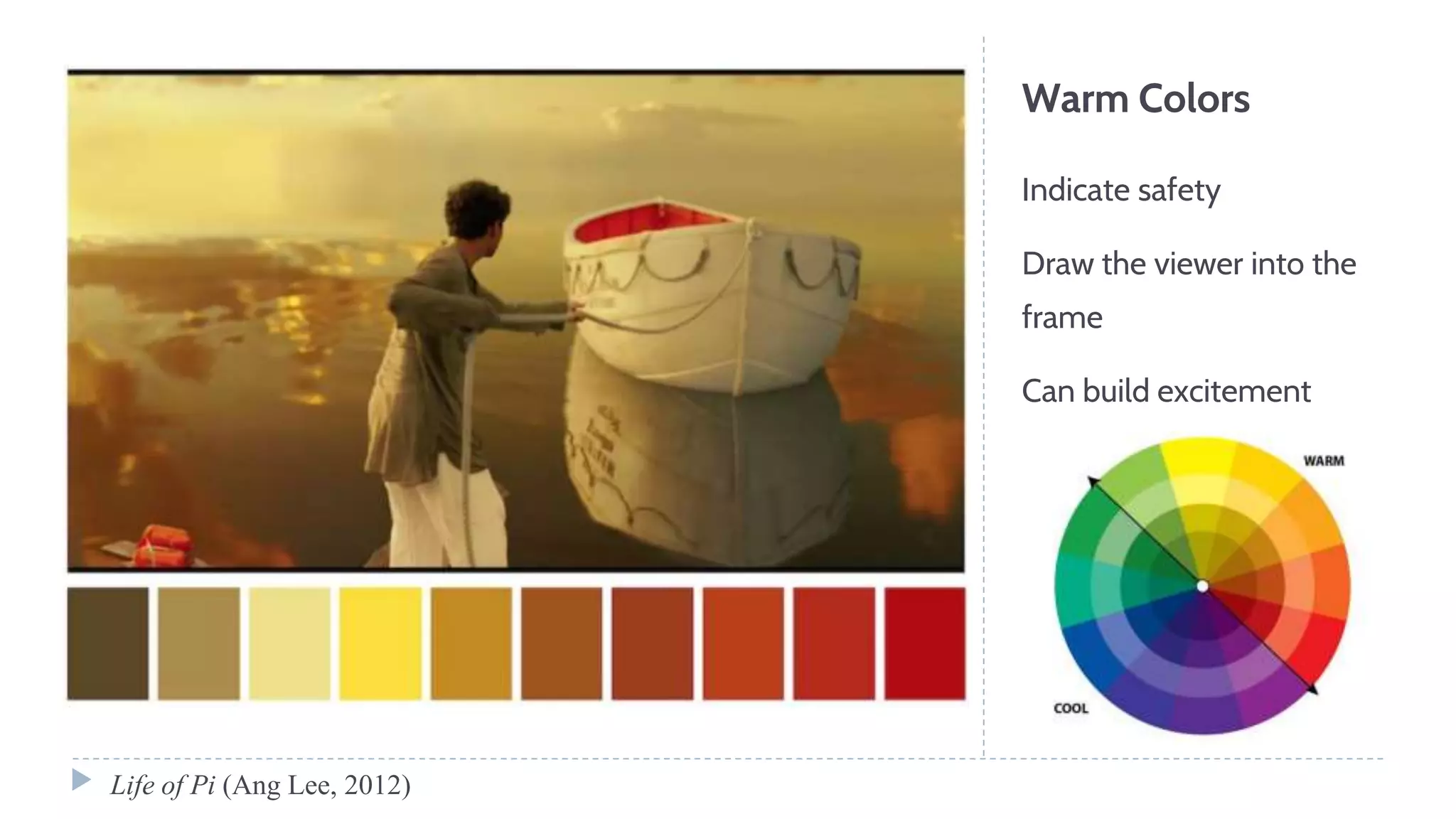
Warm Colors
Indicate safety
Draw the viewer into the
frame
Can build excitement
Life of Pi (Ang Lee, 2012)
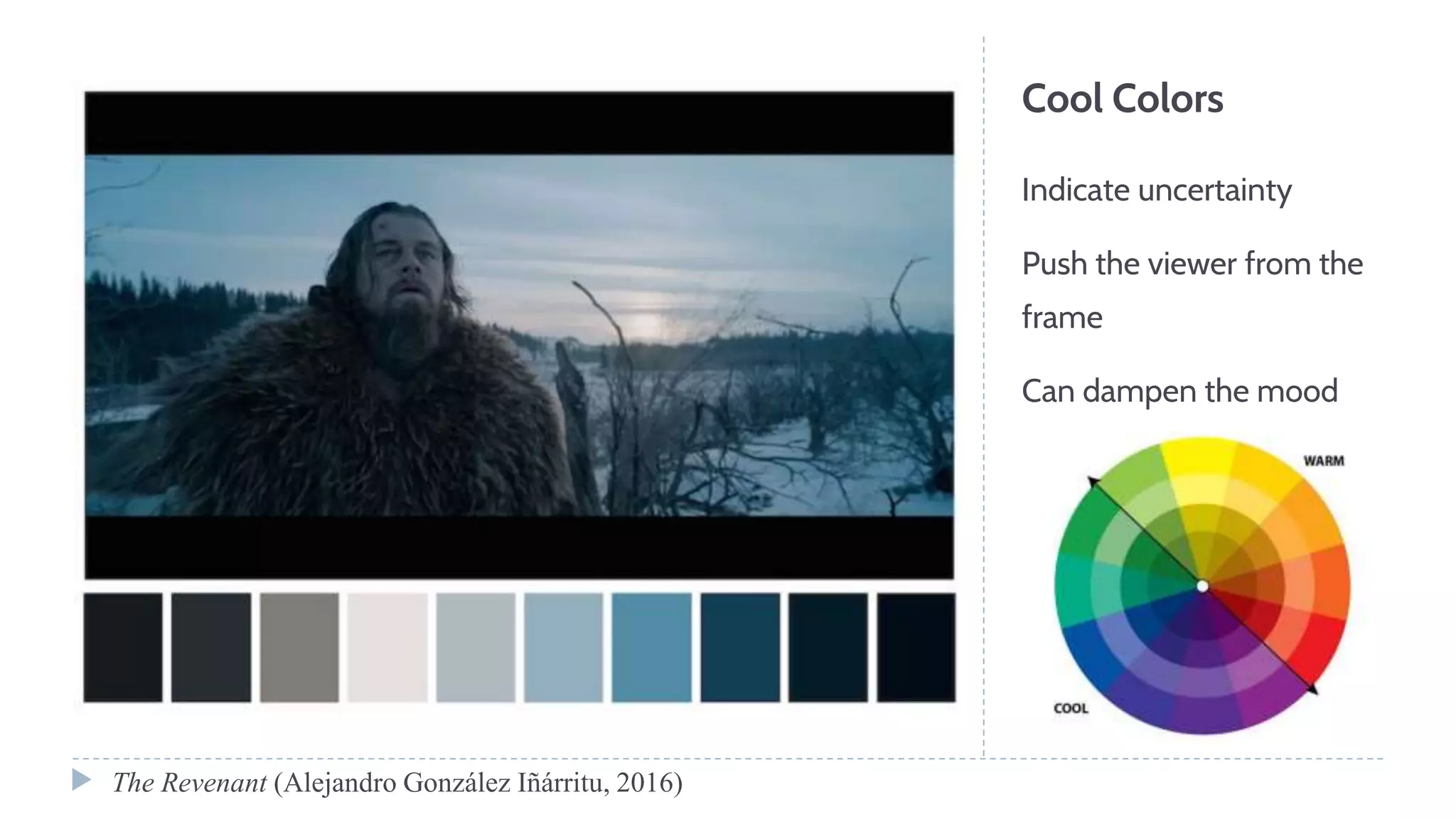
Cool Colors
Indicate uncertainty
Push the viewer from the
frame
Can dampen the mood
The Revenant (Alejandro González Iñárritu, 2016)

Visual Elements

  • 1.
    Visual Elements The basicbuilding blocks of design.
  • 2.
    Line A continuous point(mark) used to delineate an edge, or to lead the eye through a design. A line is just a continuation of a point (dot), which is the smallest unit of design. 2001:A Space Odyssey (Stanley Kubrick, 1968)
  • 3.
    Types of Lines Static Horizontal= sense of peace and calm. Vertical = power, strength, grandeur, and awe. Dynamic Diagonal = speed, movement, and depth Curved = Create a sense of peace and tranquility. Bedroom at Arles (1992) Roy Lichtenstein
  • 4.
    Leading Lines Lines thatguide a viewer’s eyes around, or through, a design. Scanno (1953) Henri Cartier-Bresson
  • 5.
    Shape/Form An area withclear boundaries. Shape is 2D, Form is 3D Organic shapes occur naturally. Geometric shapes are mathematically calculated. (squares, circles, etc.) Shell (1927) Edward Weston
  • 6.
    Space Used to createa sense of depth, and is made up of two kinds of space: Positive space – the object(s) in the artwork. Negative space – the area around/between the object(s) in the artwork. (also known as whitespace. Includes line breaks, margins, tabs & spaces.) (Costello, ch. 4)
  • 7.
    Digital Workspaces Measured inpixels—tiny rectangular or square blocks of color. Width is measured along x-axis (horizontally), and height is measured along y-axis (vertically). Coordinates are an x:y position. The upper left- hand corner is (0:0). (Costello, ch. 4)
  • 8.
    Texture How a surfacelooks and/or feels. In some forms of art & design, the artist can create a surface texture that can be felt by hand. In other forms of art, such as photography or graphic design, the texture is implied but cannot be felt. Georgia O’Keeffe Annie Leibovitz
  • 9.
    Value The range fromlight to dark in a design. Migrant Mother (1936) Dorothea Lange
  • 12.
    Color Color is whatwe see when light reflects off of an object. The three dimensions of color are Hue (actual color such as “blue” or “orange”), Saturation (intensity), and Value (brightness).
  • 13.
    Complimentary Colors Directly acrossfrom each other on the color wheel. Make each other appear brighter and more intense. Afghan Girl (1984) Steve McCurry
  • 14.
    STEM Conference ProgramArt Director: Seamus Duerr Designer: Kristina Fick
  • 15.
    Analogous Colors Next toeach other on the color wheel. Create a feeling of harmony. Image Source: https://photographyicon.com/analogous
  • 16.
    Think You Can’tWrite? Think Again! Art Director: Patricia Meyer Designer: Patricia Meyer
  • 17.
    Warm Colors Indicate safety Drawthe viewer into the frame Can build excitement Life of Pi (Ang Lee, 2012)
  • 18.
    Cool Colors Indicate uncertainty Pushthe viewer from the frame Can dampen the mood The Revenant (Alejandro González Iñárritu, 2016)