VARIOUS TYPES OF
INFORMATIONAL OR
FACTUAL TEXTS
Guess the Mystery Word
Informational Structure
■Informational Structure refers
to how the information within a
written text is organized. It
features a detailed description
of something to give the reader
a mental picture.
1. What do you think is the purpose of this
text?
2. How do we classify this informational text
or structure?
3. What do the following expressions
mean?
a. A cold shoulder
b. Break a leg
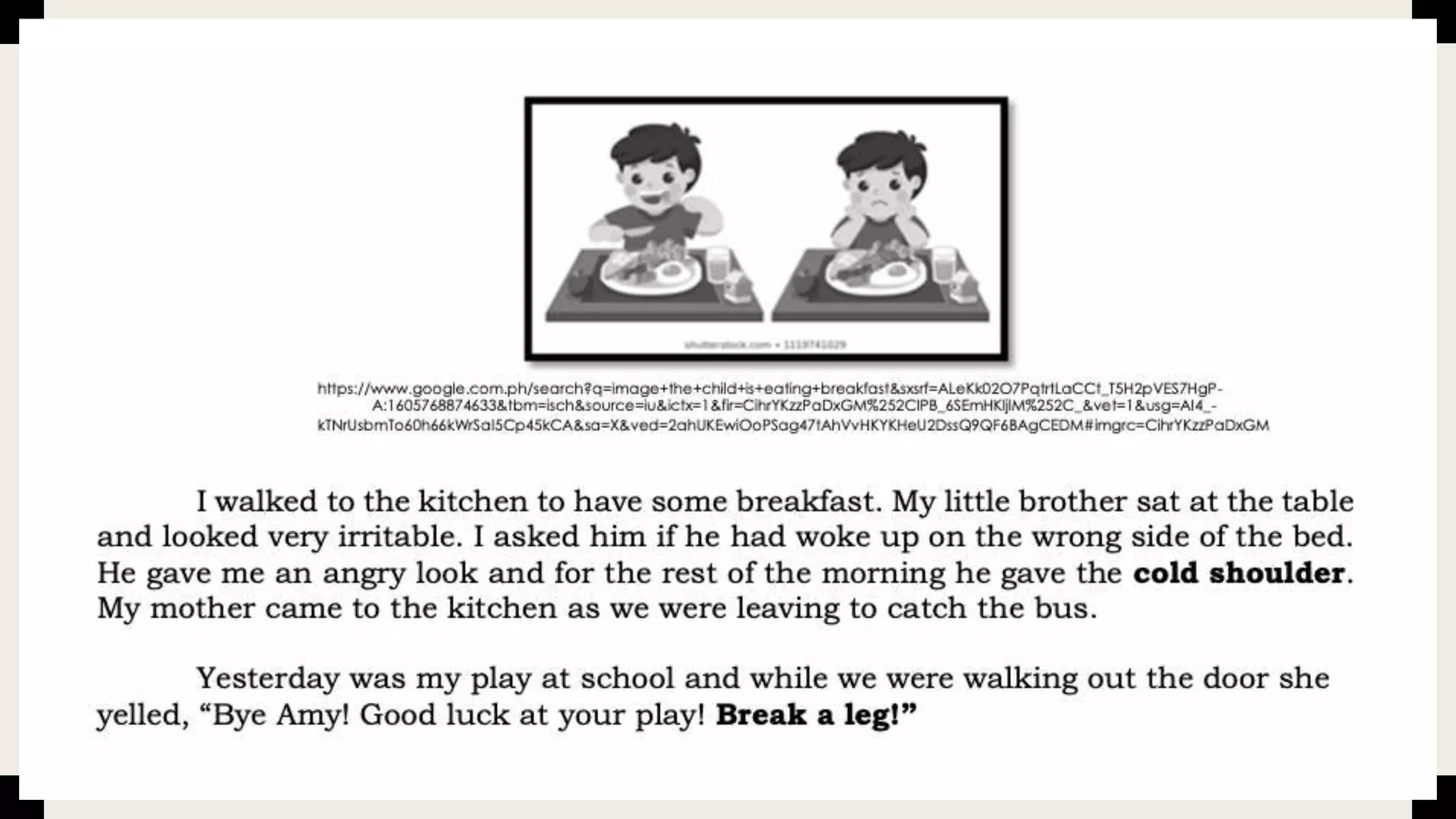
The writer is narrating a certain
story or event. Right? How can
you tell? How are the events in the
text arranged?
Informational text
■ Informational text is defined as text with the
primary purpose of expressing information
about the arts, sciences, or social studies.
This text ranges from newspaper and
magazine articles to digital information to
nonfiction trade books to textbooks and
reference materials.
■ There are specifically four types of
informational text: literary nonfiction,
expository, argument or persuasion, and
procedural.
Literary nonfiction
■ Literary nonfiction includes shorter texts, such as
“personal essays, speeches, opinion pieces,
essays about art or literature, biographies,
memoirs, journalism, and historical, scientific,
technical, or economic accounts (including digital
sources) written for a broad audience.”
Autobiographies, biographies, other narrative
nonfiction, informational picture books, and
informational poetry often fit into this category.
Narration
■ Narration is the telling of
a story. The purpose of
which is to entertain, to
gain and to take hold of
the reader’s interest. You
have noticed all the
events are arranged
chronologically. This is
called a NARRATIVE
Procedural Texts
■ Procedural texts provide step-by-step guidelines
that describe how to complete a task. They often
include a materials-needed section and graphics
that illustrate the process, as found in Doug
Stillinger’s The Klutz Book of Paper Airplanes.
Jane Drake and Ann Love’s Get Outside provides
readers with rules for games and directions for
making things like bird feeders, kites, and
sundials.
Expository Texts
■Expository texts inform, explain, and
expose. They utilize various text
structures, such as description,
cause and effect, comparison and
contrast, problem and solution,
question and answer, and temporal
sequence.
Argument or Persuasion Texts
■ Argument or persuasion texts provide evidence
with the intent of influencing the beliefs or
actions of the target audience. These texts
typically include claims, evidence, and warrants
to explain how the evidence is linked to the
claims. Writers of persuasion or argument also
make appeals—appeals to the author’s
credibility, to the audience’s needs, or to reason
and evidence.
Activity: I Heard Them Right!
Directions: With your groupmates, read
the text in front of the class. As you read,
ask the other groups to listen and tell
them to identify what type of informational
text you are reading. Let them write their
answer on a “show me board.”

Informational Text.pptx

  • 1.
  • 2.
  • 3.
    Informational Structure ■Informational Structurerefers to how the information within a written text is organized. It features a detailed description of something to give the reader a mental picture.
  • 5.
    1. What doyou think is the purpose of this text? 2. How do we classify this informational text or structure? 3. What do the following expressions mean? a. A cold shoulder b. Break a leg
  • 6.
    The writer isnarrating a certain story or event. Right? How can you tell? How are the events in the text arranged?
  • 7.
    Informational text ■ Informationaltext is defined as text with the primary purpose of expressing information about the arts, sciences, or social studies. This text ranges from newspaper and magazine articles to digital information to nonfiction trade books to textbooks and reference materials.
  • 8.
    ■ There arespecifically four types of informational text: literary nonfiction, expository, argument or persuasion, and procedural.
  • 9.
    Literary nonfiction ■ Literarynonfiction includes shorter texts, such as “personal essays, speeches, opinion pieces, essays about art or literature, biographies, memoirs, journalism, and historical, scientific, technical, or economic accounts (including digital sources) written for a broad audience.” Autobiographies, biographies, other narrative nonfiction, informational picture books, and informational poetry often fit into this category.
  • 10.
    Narration ■ Narration isthe telling of a story. The purpose of which is to entertain, to gain and to take hold of the reader’s interest. You have noticed all the events are arranged chronologically. This is called a NARRATIVE
  • 11.
    Procedural Texts ■ Proceduraltexts provide step-by-step guidelines that describe how to complete a task. They often include a materials-needed section and graphics that illustrate the process, as found in Doug Stillinger’s The Klutz Book of Paper Airplanes. Jane Drake and Ann Love’s Get Outside provides readers with rules for games and directions for making things like bird feeders, kites, and sundials.
  • 12.
    Expository Texts ■Expository textsinform, explain, and expose. They utilize various text structures, such as description, cause and effect, comparison and contrast, problem and solution, question and answer, and temporal sequence.
  • 13.
    Argument or PersuasionTexts ■ Argument or persuasion texts provide evidence with the intent of influencing the beliefs or actions of the target audience. These texts typically include claims, evidence, and warrants to explain how the evidence is linked to the claims. Writers of persuasion or argument also make appeals—appeals to the author’s credibility, to the audience’s needs, or to reason and evidence.
  • 14.
    Activity: I HeardThem Right! Directions: With your groupmates, read the text in front of the class. As you read, ask the other groups to listen and tell them to identify what type of informational text you are reading. Let them write their answer on a “show me board.”