Ethical Considerations for
Visual Media Makers
Invasion of Privacy
Key Considerations:
Purpose of the image or footage
Emotional impact on the subject
Respecting privacy, especially in vulnerable situations
Consent:
● Always seek consent from subjects
● Avoid photographing minors without parental permission
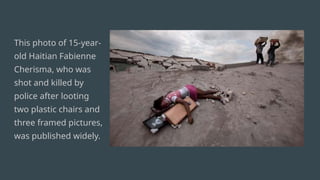
This photo of 15-year-
old Haitian Fabienne
Cherisma, who was
shot and killed by
police after looting
two plastic chairs and
three framed pictures,
was published widely.
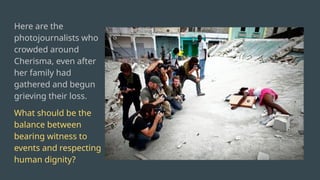
Here are the
photojournalists who
crowded around
Cherisma, even after
her family had
gathered and begun
grieving their loss.
What should be the
balance between
bearing witness to
events and respecting
human dignity?
Responsibility to Subject
Ethical responsibility goes beyond capturing a moment; it involves
considering the subject's dignity and the impact on their loved ones.
Key Questions to Ask:
Is there a journalistic purpose behind the image?
Does it inform the public meaningfully?
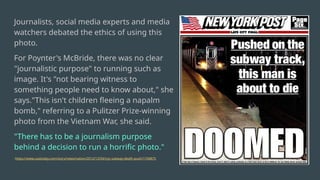
Journalists, social media experts and media
watchers debated the ethics of using this
photo.
For Poynter's McBride, there was no clear
"journalistic purpose" to running such as
image. It's "not bearing witness to
something people need to know about," she
says."This isn't children fleeing a napalm
bomb," referring to a Pulitzer Prize-winning
photo from the Vietnam War, she said.
"There has to be a journalism purpose
behind a decision to run a horrific photo."
-https://www.usatoday.com/story/news/nation/2012/12/04/nyc-subway-death-push/1744875
Context and Misrepresentation
The framing of images and headlines can drastically alter
perceptions.
Ethical reporting demands nuance and awareness of cultural
sensitivities.
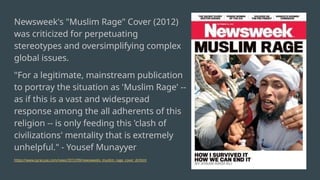
Newsweek's "Muslim Rage" Cover (2012)
was criticized for perpetuating
stereotypes and oversimplifying complex
global issues.
"For a legitimate, mainstream publication
to portray the situation as 'Muslim Rage' --
as if this is a vast and widespread
response among the all adherents of this
religion -- is only feeding this 'clash of
civilizations' mentality that is extremely
unhelpful." - Yousef Munayyer
https://www.syracuse.com/news/2012/09/newsweeks_muslim_rage_cover_dr.html
Graphic Photos/Videos
Graphic visuals can be powerful tools for raising awareness but must
be used responsibly.
Considerations:
Newsworthiness of the image
Potential harm to the victim's family and community
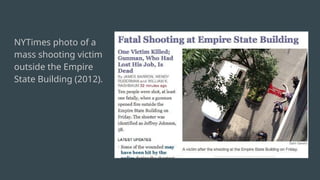
“It is an extremely
graphic image and we
understand why many
people found it
jarring,” Times
spokesperson Eileen
Murphy told me in an
email. “Our editorial
judgment is that it is a
newsworthy
photograph that
shows the result and
impact of a public act
of violence.”
NYTimes photo of a
mass shooting victim
outside the Empire
State Building (2012).
Staged Photos/Videos
Journalism must prioritize truth and accuracy. Staging undermines
the core principle of presenting reality.
Sometimes staged visuals can effectively convey an emotional or
symbolic truth, but the intent must be transparent.
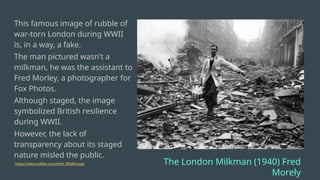
This famous image of rubble of
war-torn London during WWII
is, in a way, a fake.
The man pictured wasn't a
milkman, he was the assistant to
Fred Morley, a photographer for
Fox Photos.
Although staged, the image
symbolized British resilience
during WWII.
However, the lack of
transparency about its staged
nature misled the public.
https://www.oddee.com/item_99568.aspx The London Milkman (1940) Fred
Morely
Manipulation of Images
Avoid altering images in ways that distort meaning.
Be transparent about edits made for clarity or technical reasons.
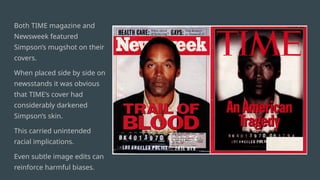
Both TIME magazine and
Newsweek featured
Simpson’s mugshot on their
covers.
When placed side by side on
newsstands it was obvious
that TIME’s cover had
considerably darkened
Simpson’s skin.
This carried unintended
racial implications.
Even subtle image edits can
reinforce harmful biases.
Social Media
Accuracy Over Speed
Verify facts before posting or sharing
Avoid spreading unconfirmed information
Clearly label updates as “Breaking” or “Developing”
Cross-reference sources before publishing.
Transparency and Accountability
Be transparent about corrections and updates
Own up to mistakes publicly
Provide context for complex issues
Example: Use pinned tweets or posts to clarify updates.
Engagement, Not Conflict
Best Practices:
Engage respectfully with audiences
Avoid responding emotionally to criticism
Use moderation tools to manage harmful comments
Tip: Constructive conversations build trust.
Balancing Personal and Professional Presence
Key Tips:
Maintain a professional tone on public profiles
Use disclaimers for personal opinions
Be cautious about what you “like” or share
Example: “Tweets are my own” disclaimer in bio.
Ethical Considerations
Follow your organization's code of ethics
Avoid sharing private or sensitive information
Respect copyright and give proper attribution
Always credit original sources, including photos and videos.
Key Takeaways
Respect for privacy and human dignity
Transparency and accountability in image usage
Responsible engagement on social media platforms
Ethical Considerations for Visual Media Makers

  • 1.
  • 2.
    Invasion of Privacy KeyConsiderations: Purpose of the image or footage Emotional impact on the subject Respecting privacy, especially in vulnerable situations Consent: ● Always seek consent from subjects ● Avoid photographing minors without parental permission
  • 4.
    This photo of15-year- old Haitian Fabienne Cherisma, who was shot and killed by police after looting two plastic chairs and three framed pictures, was published widely.
  • 5.
    Here are the photojournalistswho crowded around Cherisma, even after her family had gathered and begun grieving their loss. What should be the balance between bearing witness to events and respecting human dignity?
  • 6.
    Responsibility to Subject Ethicalresponsibility goes beyond capturing a moment; it involves considering the subject's dignity and the impact on their loved ones. Key Questions to Ask: Is there a journalistic purpose behind the image? Does it inform the public meaningfully?
  • 7.
    Journalists, social mediaexperts and media watchers debated the ethics of using this photo. For Poynter's McBride, there was no clear "journalistic purpose" to running such as image. It's "not bearing witness to something people need to know about," she says."This isn't children fleeing a napalm bomb," referring to a Pulitzer Prize-winning photo from the Vietnam War, she said. "There has to be a journalism purpose behind a decision to run a horrific photo." -https://www.usatoday.com/story/news/nation/2012/12/04/nyc-subway-death-push/1744875
  • 8.
    Context and Misrepresentation Theframing of images and headlines can drastically alter perceptions. Ethical reporting demands nuance and awareness of cultural sensitivities.
  • 10.
    Newsweek's "Muslim Rage"Cover (2012) was criticized for perpetuating stereotypes and oversimplifying complex global issues. "For a legitimate, mainstream publication to portray the situation as 'Muslim Rage' -- as if this is a vast and widespread response among the all adherents of this religion -- is only feeding this 'clash of civilizations' mentality that is extremely unhelpful." - Yousef Munayyer https://www.syracuse.com/news/2012/09/newsweeks_muslim_rage_cover_dr.html
  • 11.
    Graphic Photos/Videos Graphic visualscan be powerful tools for raising awareness but must be used responsibly. Considerations: Newsworthiness of the image Potential harm to the victim's family and community
  • 13.
    “It is anextremely graphic image and we understand why many people found it jarring,” Times spokesperson Eileen Murphy told me in an email. “Our editorial judgment is that it is a newsworthy photograph that shows the result and impact of a public act of violence.” NYTimes photo of a mass shooting victim outside the Empire State Building (2012).
  • 14.
    Staged Photos/Videos Journalism mustprioritize truth and accuracy. Staging undermines the core principle of presenting reality. Sometimes staged visuals can effectively convey an emotional or symbolic truth, but the intent must be transparent.
  • 16.
    This famous imageof rubble of war-torn London during WWII is, in a way, a fake. The man pictured wasn't a milkman, he was the assistant to Fred Morley, a photographer for Fox Photos. Although staged, the image symbolized British resilience during WWII. However, the lack of transparency about its staged nature misled the public. https://www.oddee.com/item_99568.aspx The London Milkman (1940) Fred Morely
  • 17.
    Manipulation of Images Avoidaltering images in ways that distort meaning. Be transparent about edits made for clarity or technical reasons.
  • 20.
    Both TIME magazineand Newsweek featured Simpson’s mugshot on their covers. When placed side by side on newsstands it was obvious that TIME’s cover had considerably darkened Simpson’s skin. This carried unintended racial implications. Even subtle image edits can reinforce harmful biases.
  • 21.
  • 22.
    Accuracy Over Speed Verifyfacts before posting or sharing Avoid spreading unconfirmed information Clearly label updates as “Breaking” or “Developing” Cross-reference sources before publishing.
  • 23.
    Transparency and Accountability Betransparent about corrections and updates Own up to mistakes publicly Provide context for complex issues Example: Use pinned tweets or posts to clarify updates.
  • 24.
    Engagement, Not Conflict BestPractices: Engage respectfully with audiences Avoid responding emotionally to criticism Use moderation tools to manage harmful comments Tip: Constructive conversations build trust.
  • 25.
    Balancing Personal andProfessional Presence Key Tips: Maintain a professional tone on public profiles Use disclaimers for personal opinions Be cautious about what you “like” or share Example: “Tweets are my own” disclaimer in bio.
  • 26.
    Ethical Considerations Follow yourorganization's code of ethics Avoid sharing private or sensitive information Respect copyright and give proper attribution Always credit original sources, including photos and videos.
  • 28.
    Key Takeaways Respect forprivacy and human dignity Transparency and accountability in image usage Responsible engagement on social media platforms