






Visual Conversations with Data

              Tony Hirst
   Dept of Communication and Systems,
           The Open University
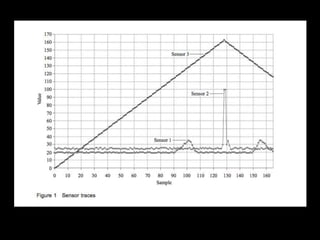
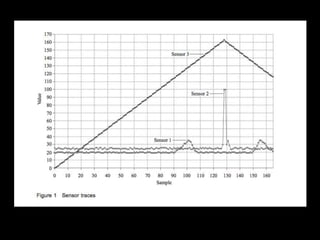
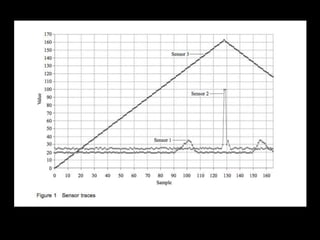
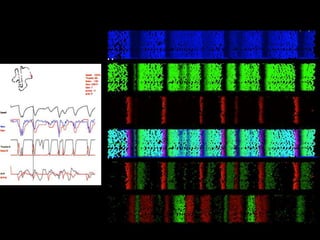
Figure 1 Sensor Traces

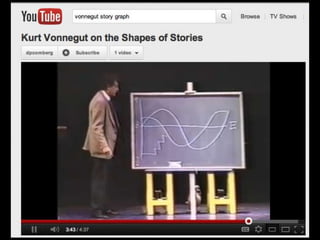
is a chart that’s designed to be read
IT TELLS A STORY
IT TELLS THE
ROBOT’S STORY
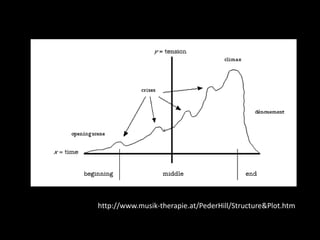
http://www.musik-therapie.at/PederHill/Structure&Plot.htm
Data
conversations
Conversations
around what’s not
     there…
Presentation Graphics
         vs.
   Visual Analysis
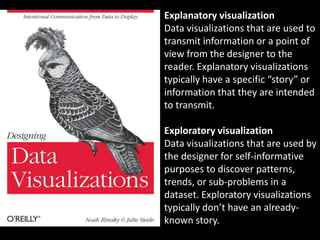
Explanatory visualization
Data visualizations that are used to
transmit information or a point of
view from the designer to the
reader. Explanatory visualizations
typically have a specific “story” or
information that they are intended
to transmit.

Exploratory visualization
Data visualizations that are used by
the designer for self-informative
purposes to discover patterns,
trends, or sub-problems in a
dataset. Exploratory visualizations
typically don’t have an already-
known story.
Visual Analysis
      or
 Presentation
  Graphics?
Algorithmic
Visualisation
ggplot2 (R)

d3.js (Javascript)
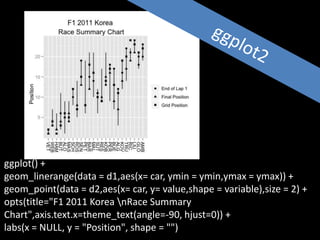
ggplot() +
geom_linerange(data = d1,aes(x= car, ymin = ymin,ymax = ymax)) +
geom_point(data = d2,aes(x= car, y= value,shape = variable),size = 2) +
opts(title="F1 2011 Korea nRace Summary
Chart",axis.text.x=theme_text(angle=-90, hjust=0)) +
labs(x = NULL, y = "Position", shape = "")
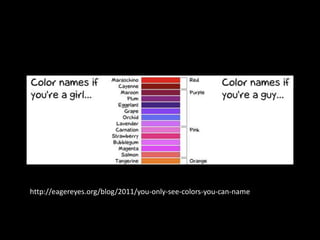
http://eagereyes.org/blog/2011/you-only-see-colors-you-can-name
Exploiting
Structure
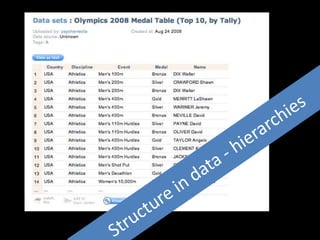
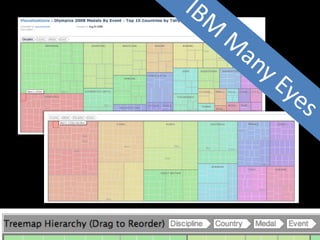
Hierarchical data and treemaps - medals


Pivot tables
Macroscopes
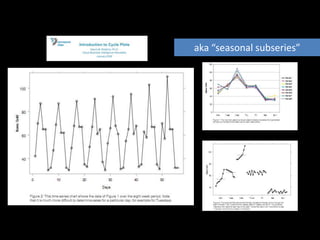
aka “seasonal subseries”
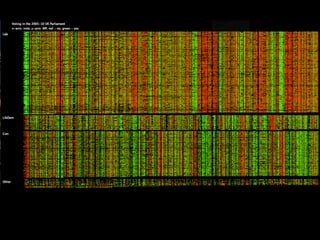
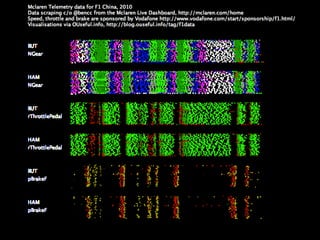
Show me the difference…


        Let me see the difference…
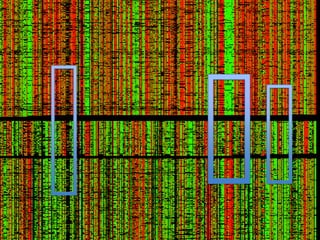
Can I see the difference..?
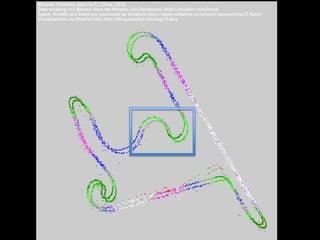
Where exactly..?
Emergent views
 of structural
  properties
[ Freemind ]
Have you had a visual
conversation with any
 of YOUR data lately?
blog.ouseful.info

@psychemedia

Visual Conversations

Editor's Notes

  • #2 Visual Conversations with Data Datasets often contain amyriad number of stories,but how can we best make sense of them? Maybe avisual conversation can help? 30 mins
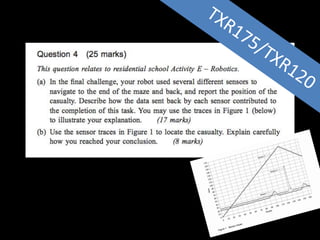
  • #3 Example of data powered storytelling in YXR175/TXR120 robotics activity
  • #4 Brief explanation of chart and what the labels are.
  • #15 Wheel diameter, actual distance travelled
  • #18 Livescribes, process of creation of the rich picture… the diagramming is an active storytelling process that builds on itself amd has potentially many narrative threads
  • #27 Also how you position marks on a canvas in relation to each other
  • #31 Collaborative commentary
  • #39 The top, blue strip shows the gear (1 to 7); the green strip shows the throttle pedal depression (0-100%), and the red strip shows the brake (0-100%). The light blue strip is a composite of the previous three strips. The whiter the pixel, the closer it is to 100% throttle in 7th gear with no braking.The bottom two traces show the longitudinal and lateral g-force respectively. For the longitudinal trace, red shows braking – being forced into the steering wheel; green shows acceleration – being forced back into your seat. You’ll see the greatest g-force under braking occurs when the brakes are slapped full on… (the red bits in the third and fifth traces line up). For the latitudinal g-force, the red shows the driving being flung to the left (i.e. right hand corner), the green shows them being pushed out to the right.
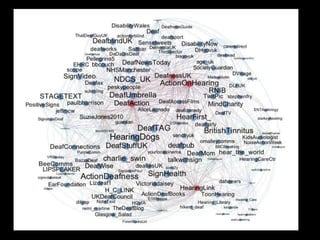
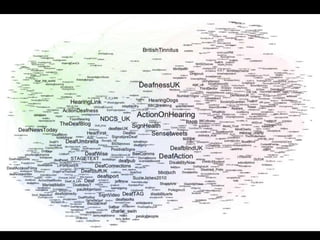
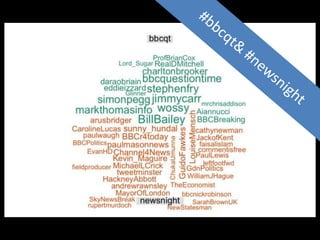
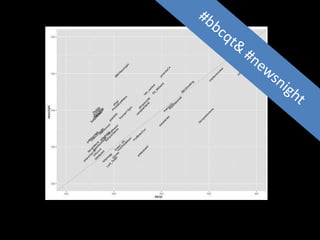
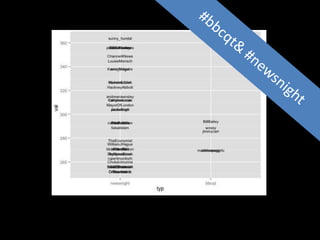
  • #47 Emergent Social Positioning: origins: 1.5 degree egonet (how followers follow each other, how hashtaggers follow each other)- projection maps from followers to folk they commonly follow;-- projection maps from hashtaggers to folk they commonly follow- projection maps from friends to folk who commonly follow them