Data Visualisation: A Taster
Tony Hirst                                         Martin Hawksey
Dept of Communication and Systems,                      JISC CETIS
The Open University

@psychemedia/blog.ouseful.info       @mhawksey/mashe.hawksey.info
<A QUICK NOTE>
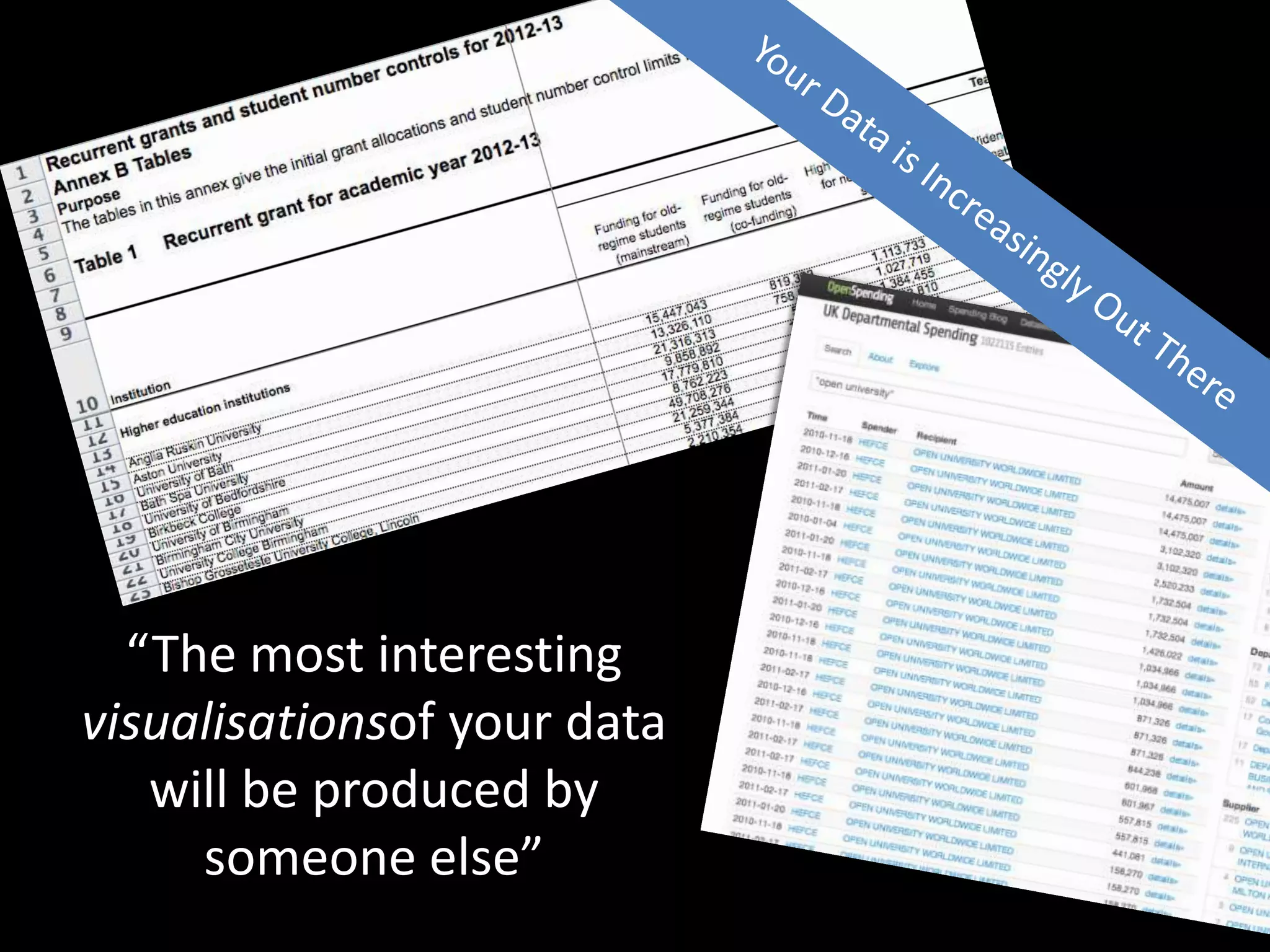
“The most interesting
visualisationsof your data
   will be produced by
     someone else”
Presentation Graphics
         vs.
   Visual Analysis
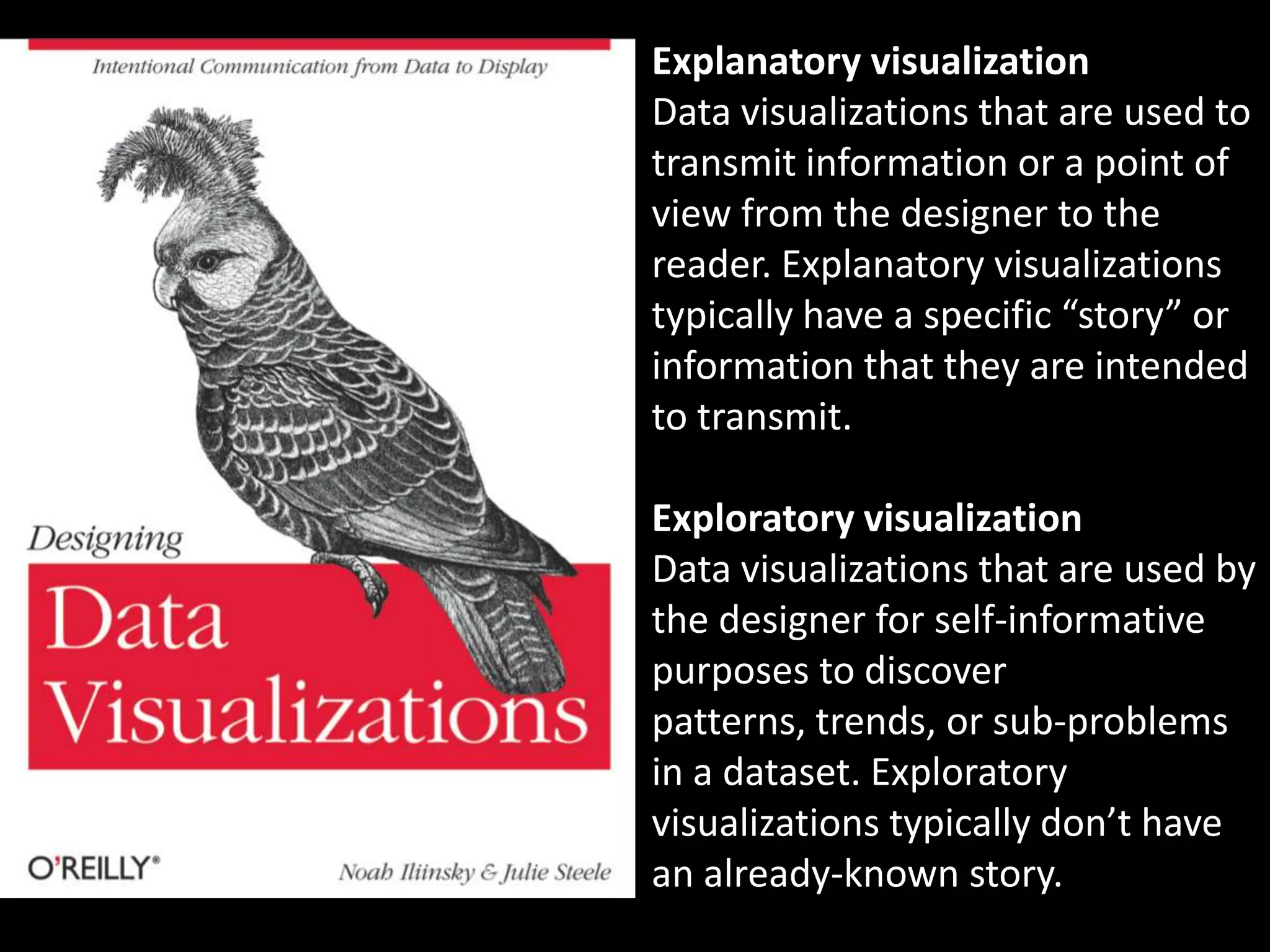
Explanatory visualization
Data visualizations that are used to
transmit information or a point of
view from the designer to the
reader. Explanatory visualizations
typically have a specific “story” or
information that they are intended
to transmit.

Exploratory visualization
Data visualizations that are used by
the designer for self-informative
purposes to discover
patterns, trends, or sub-problems
in a dataset. Exploratory
visualizations typically don’t have
an already-known story.
Data sketches
  [ Amanda Cox, New York Times ]
Infographics
             ≠
(Exploratory) Visualisation
Macroscopes
Expressions of
  Structure
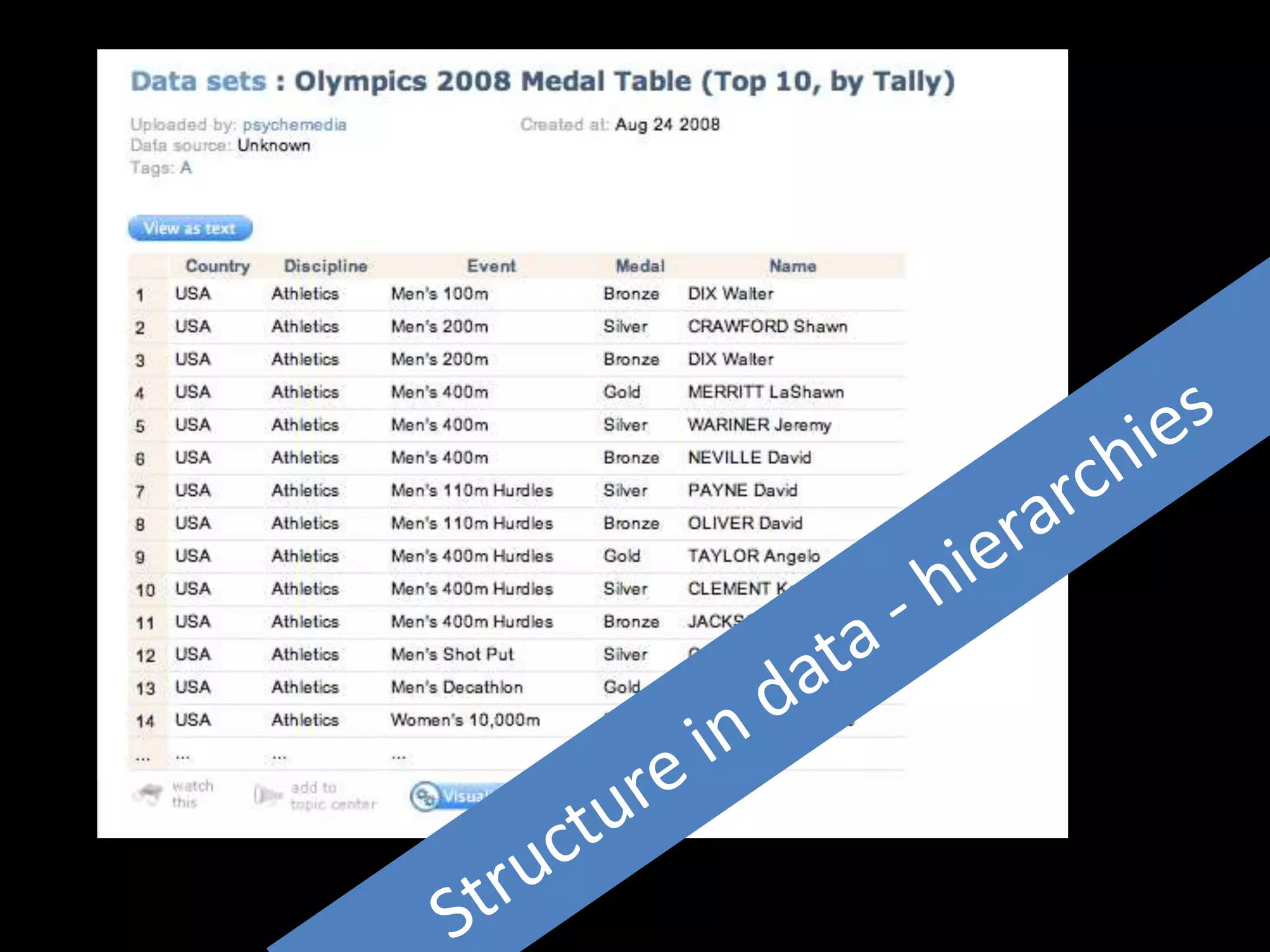
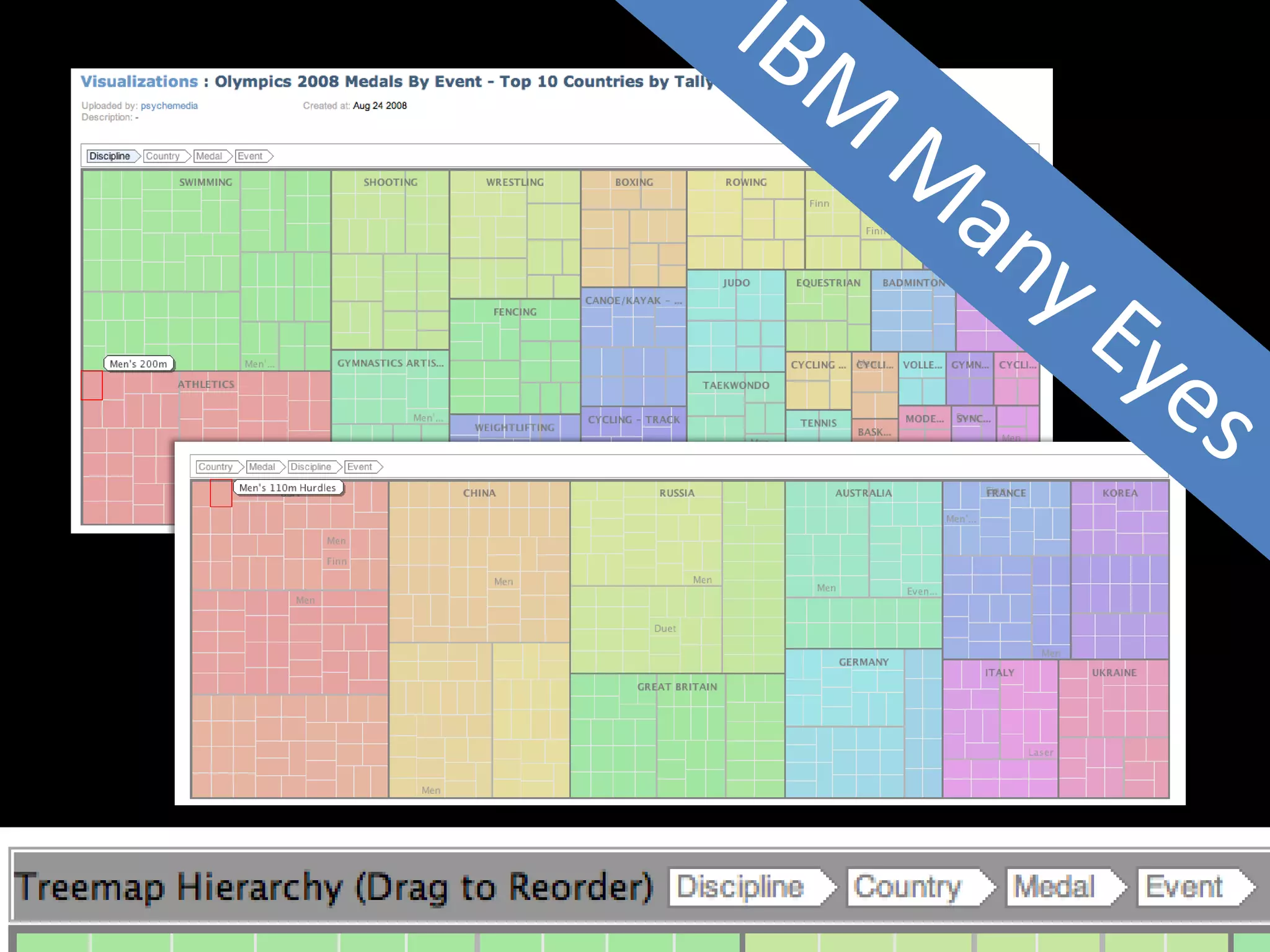
Hierarchical data and treemaps - medals


Pivot tables
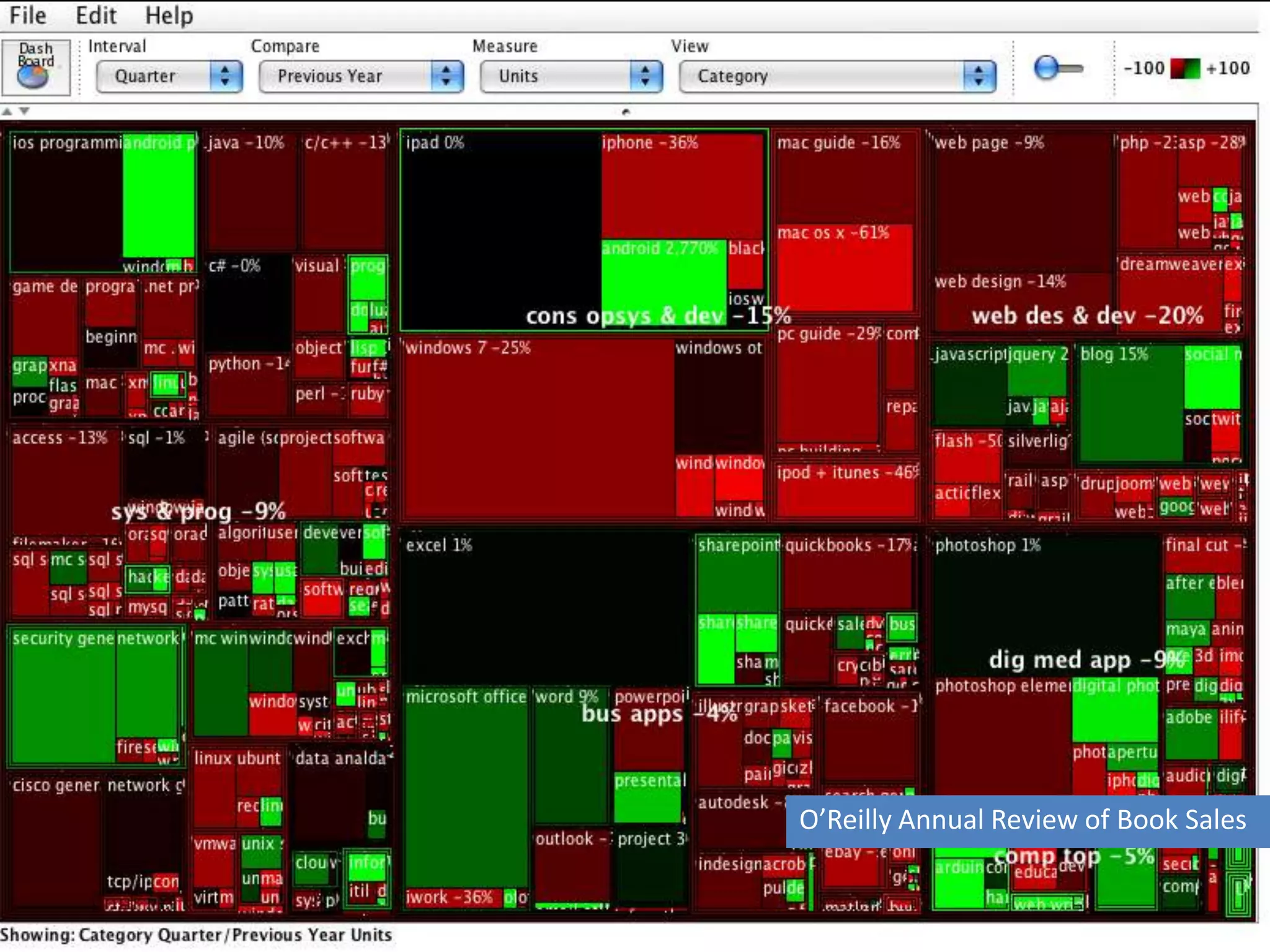
O’Reilly Annual Review of Book Sales
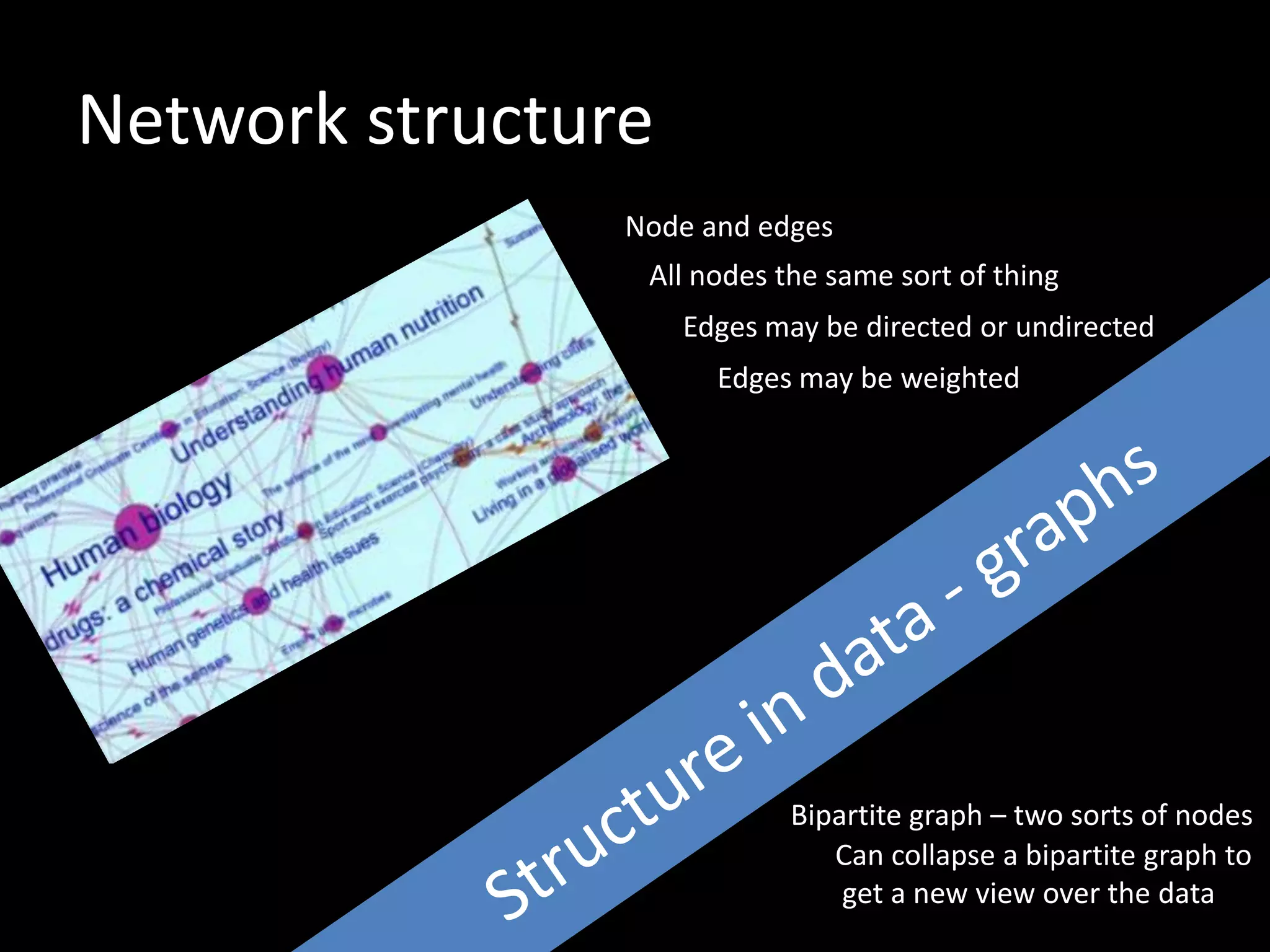
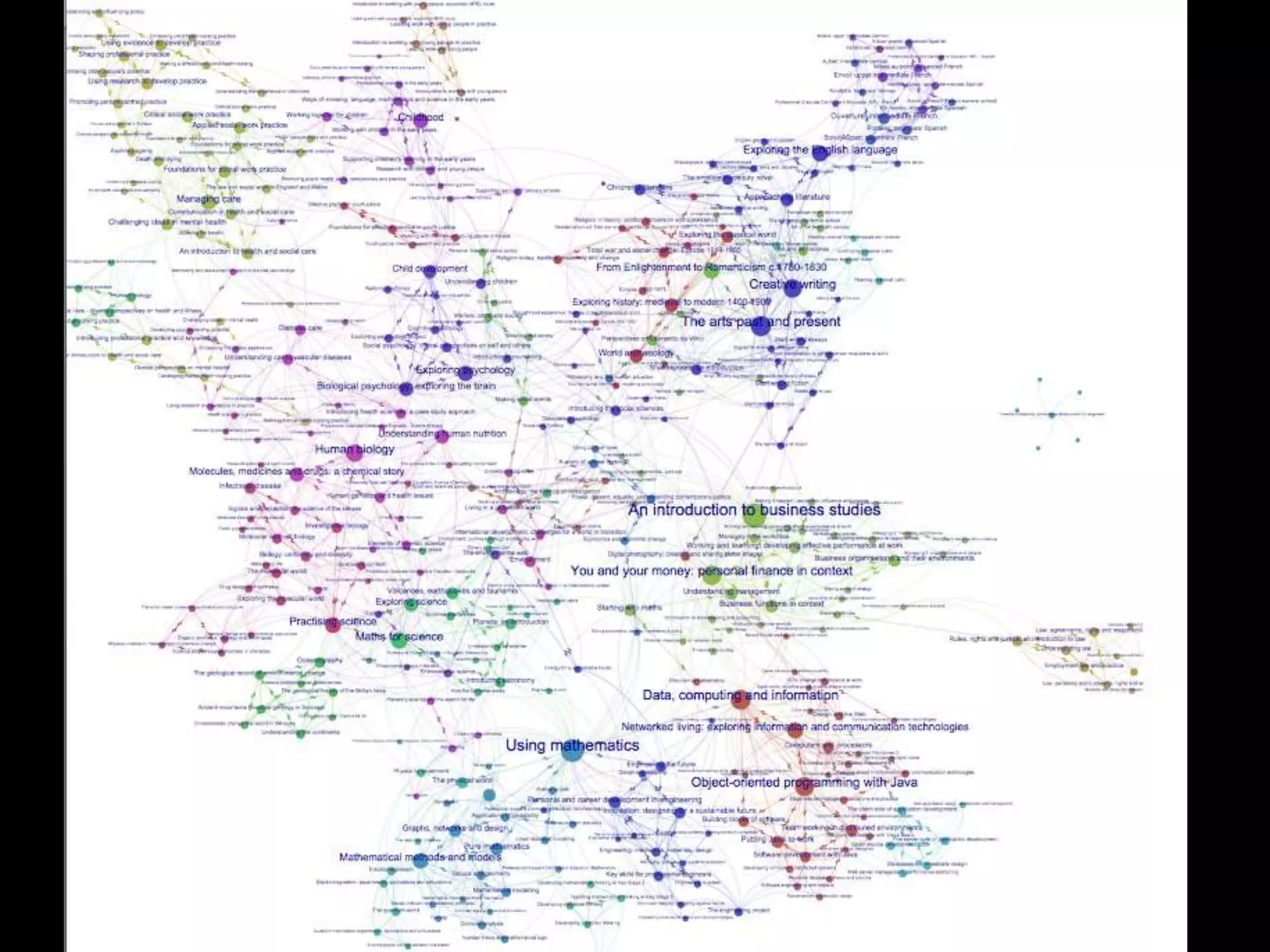
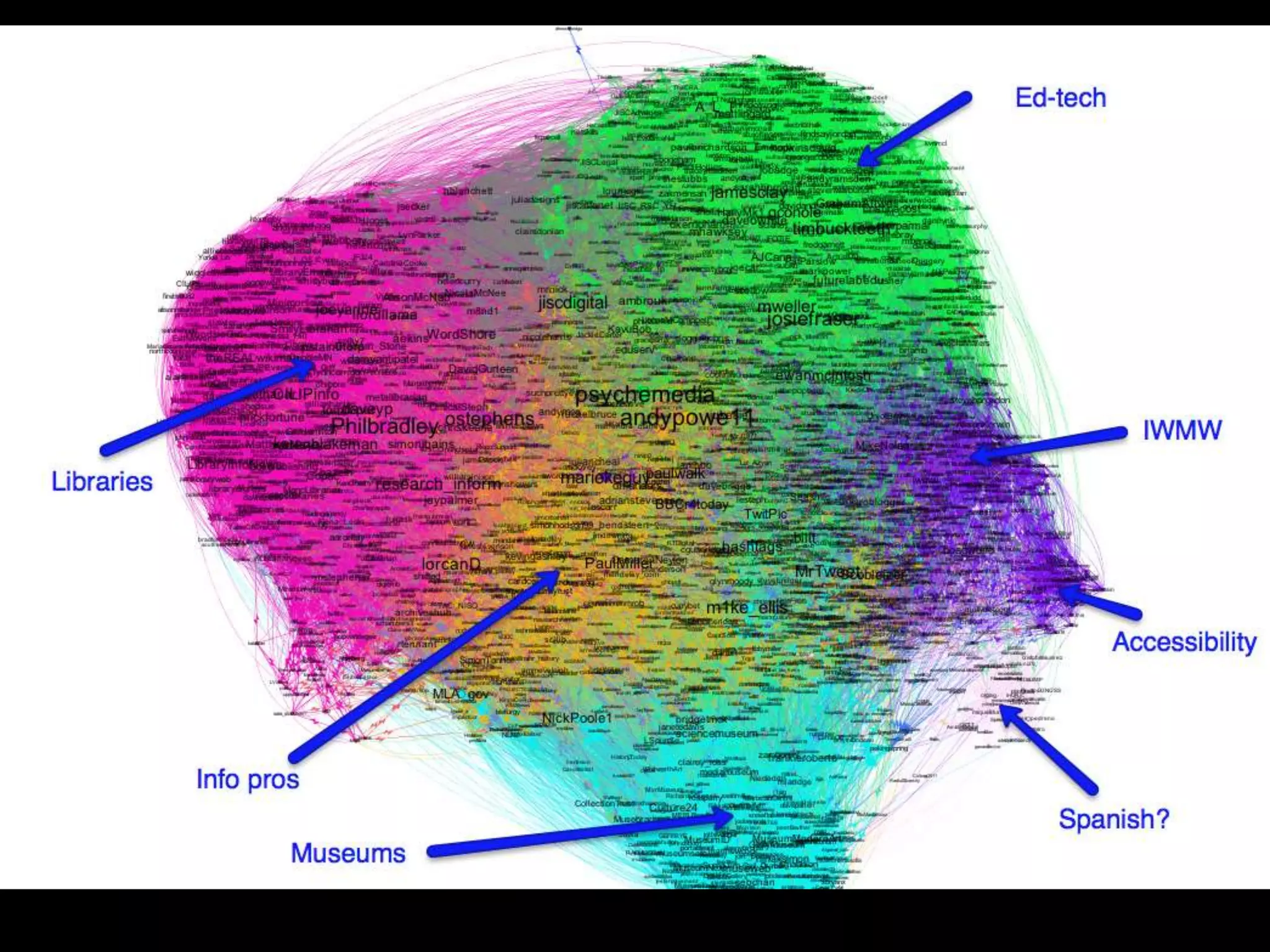
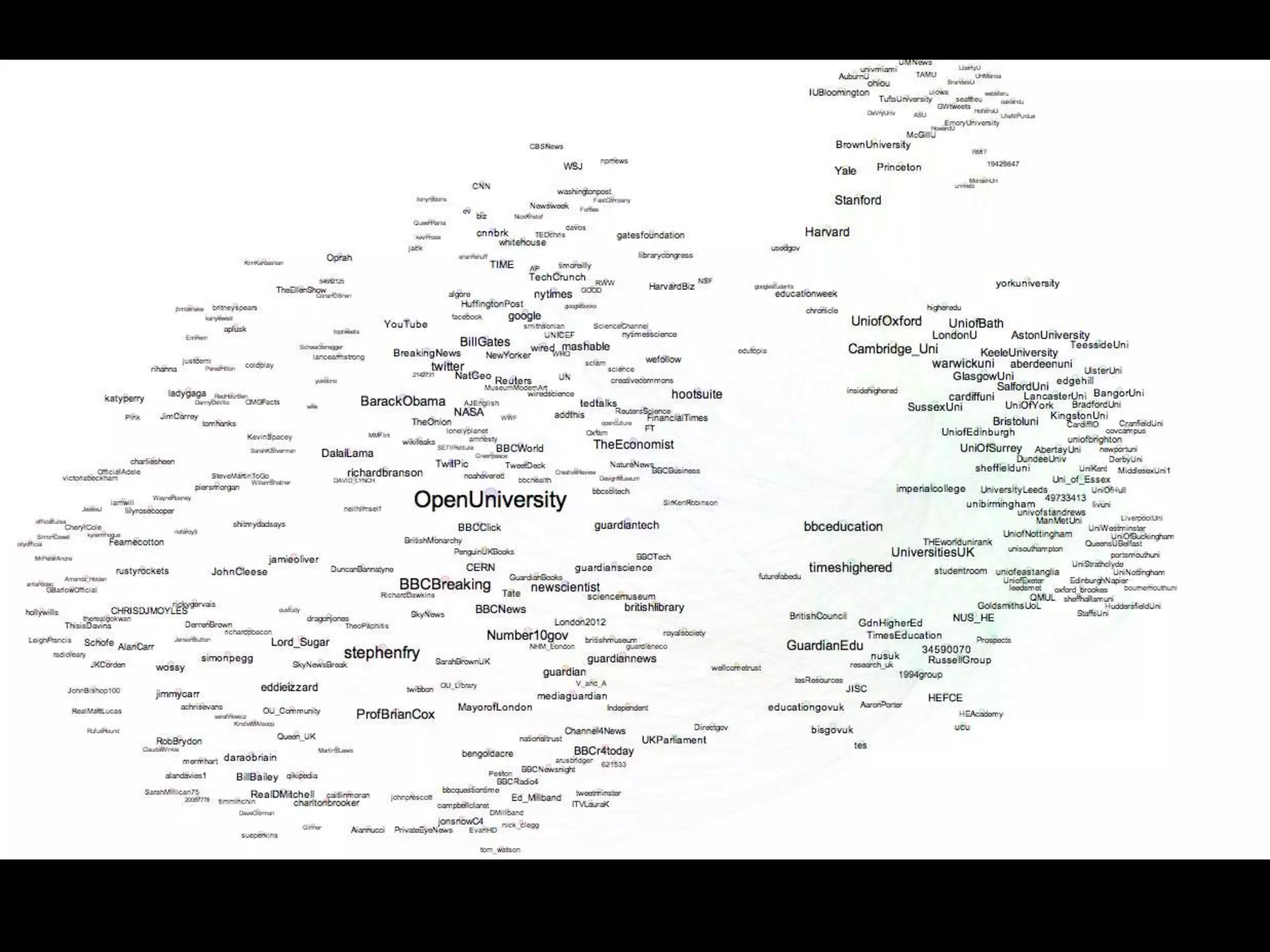
Network structure
                Node and edges
                 All nodes the same sort of thing
                    Edges may be directed or undirected
                      Edges may be weighted


                            Bipartite graph – two sorts of nodes
                               Can collapse a bipartite graph to
                                get a new view over the data
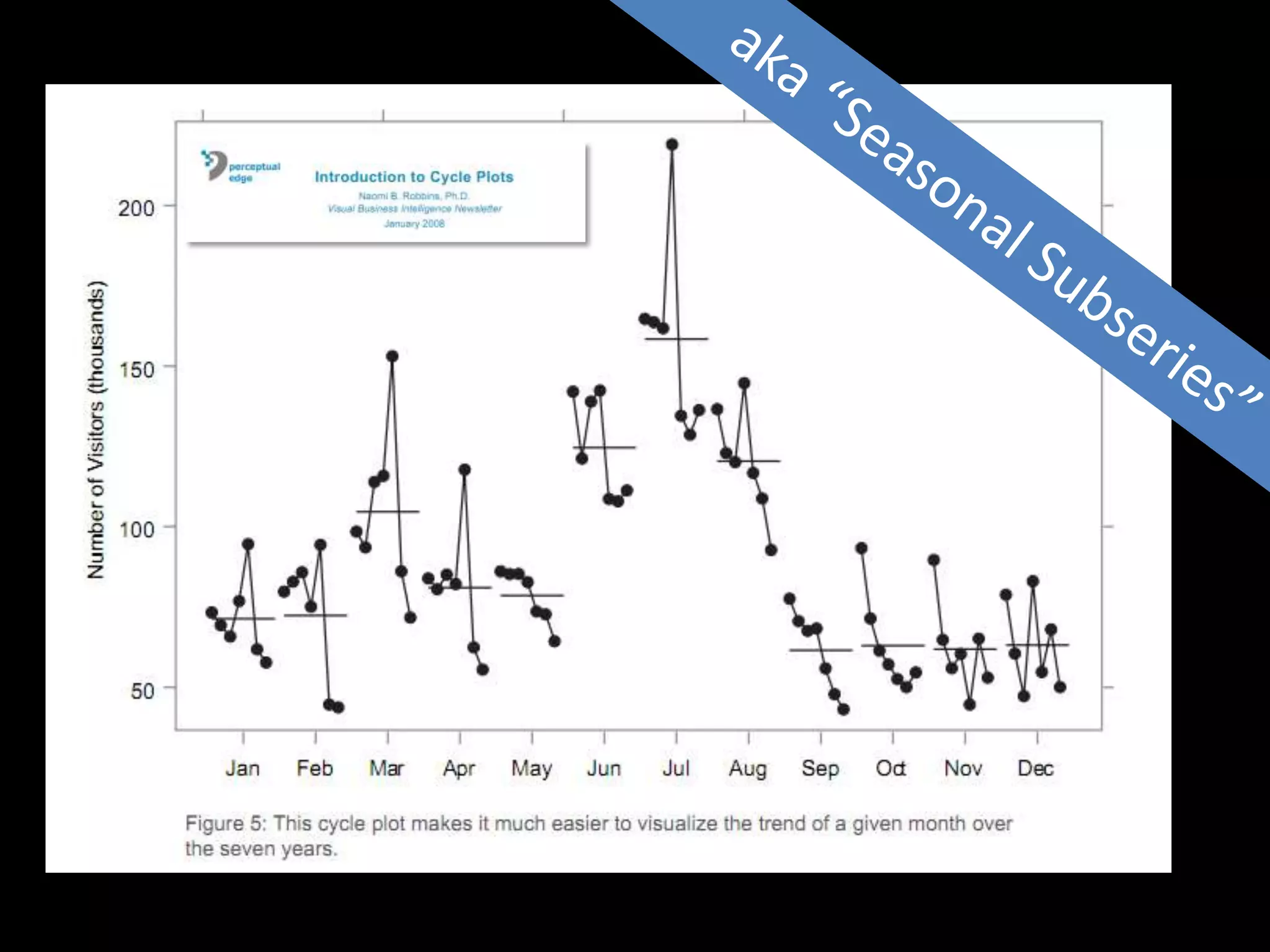
Dynamics
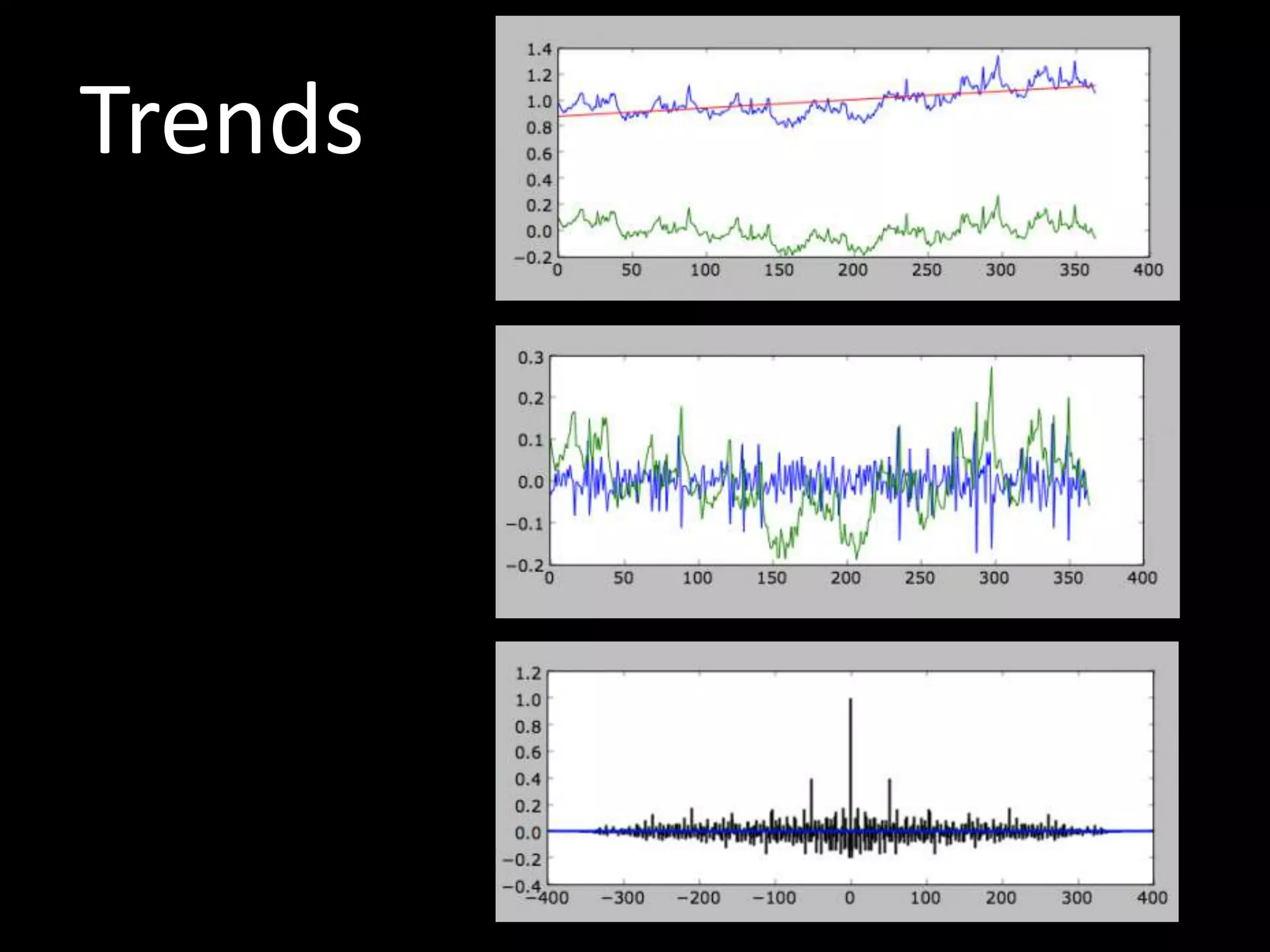
Trends


Autocorrelation
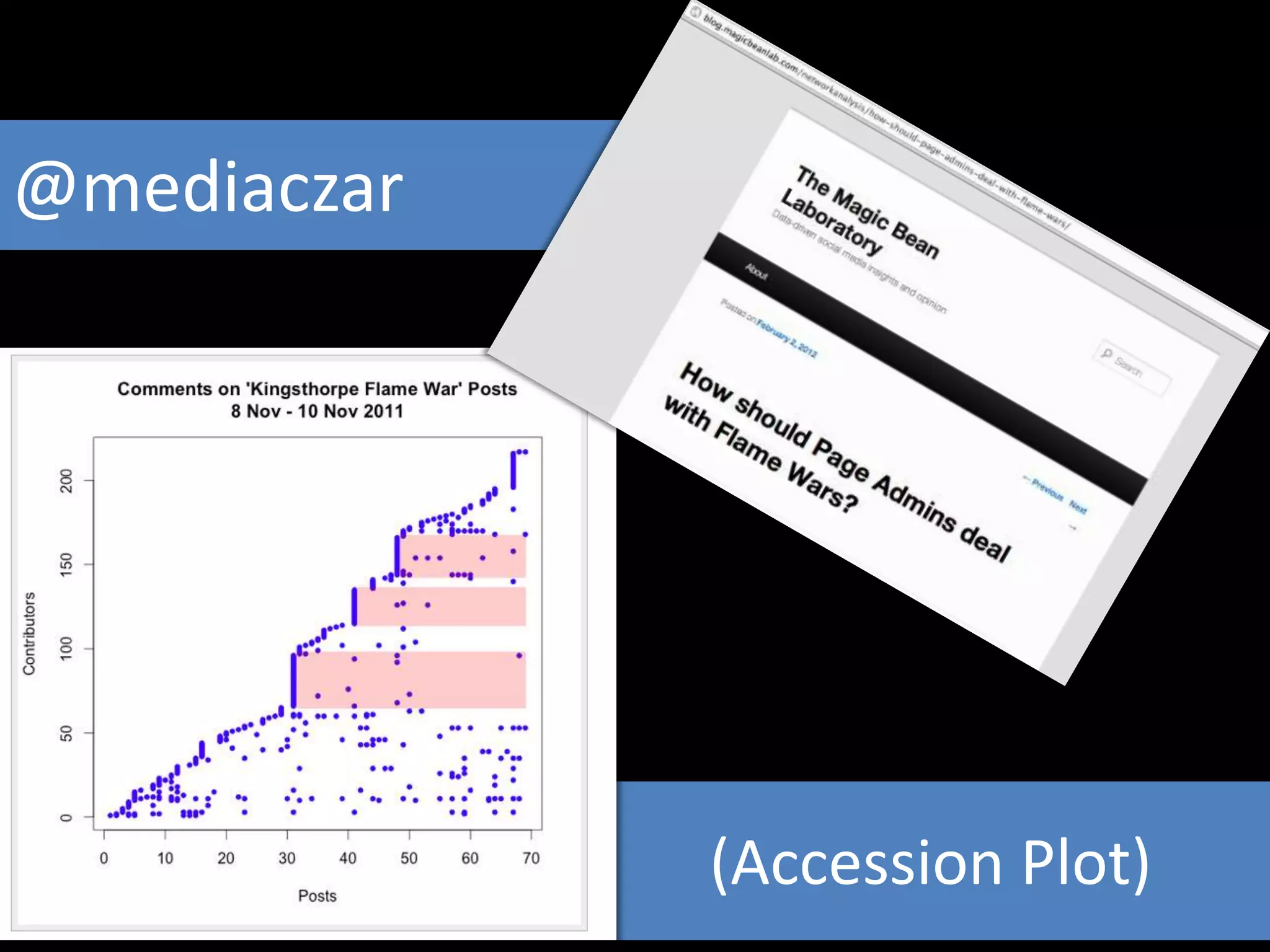
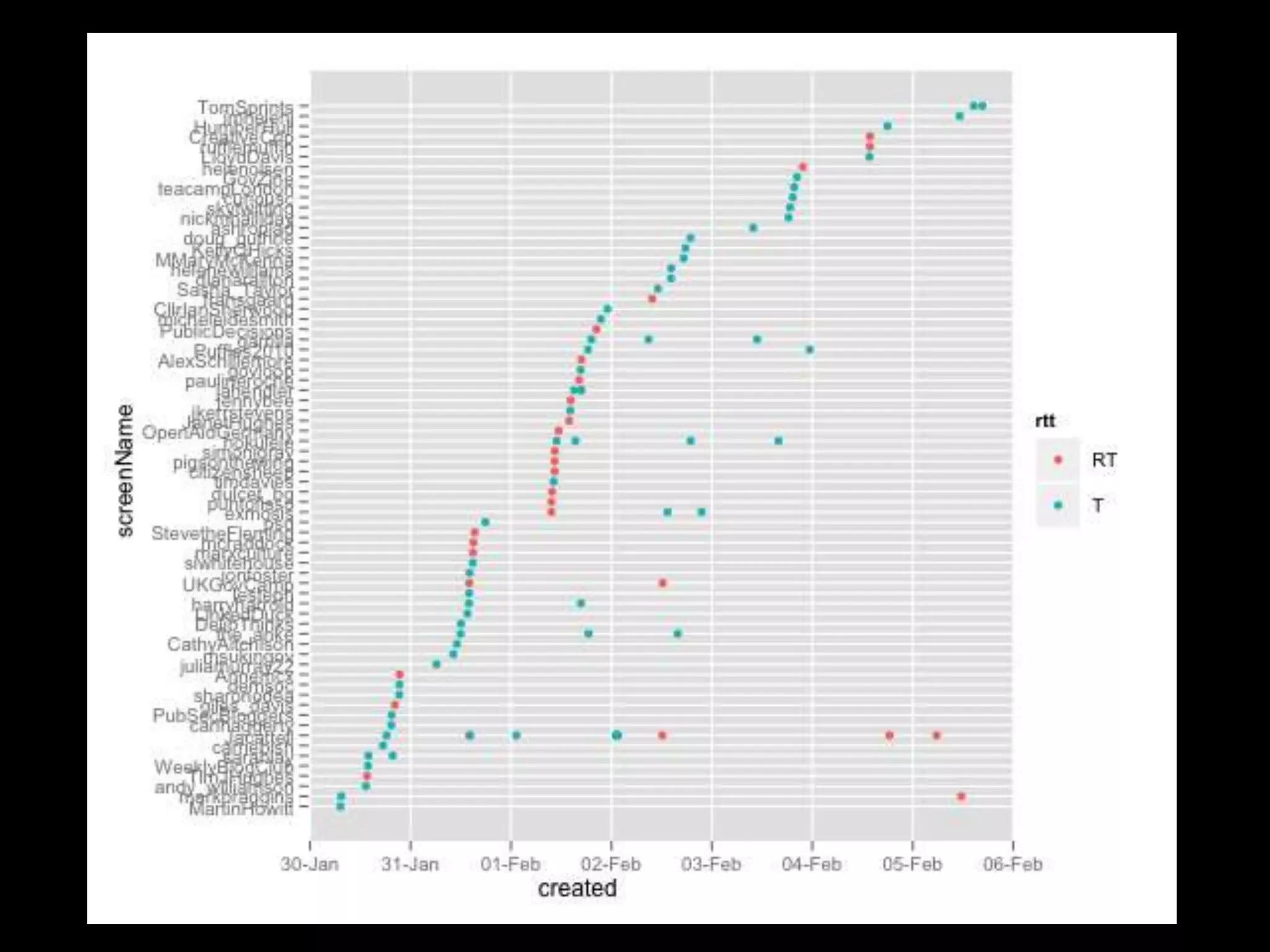
@mediaczar


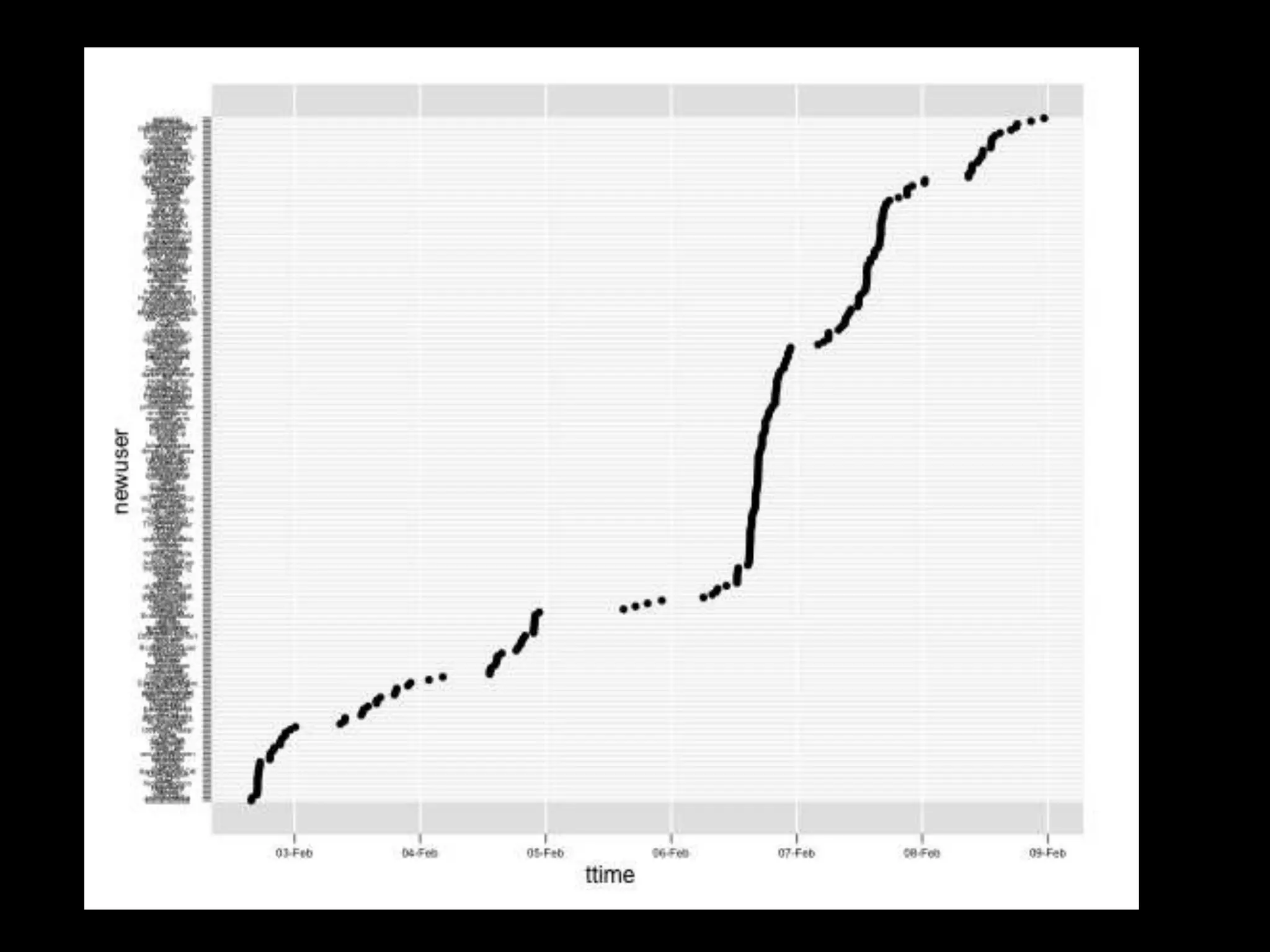
             (Accession Plot)
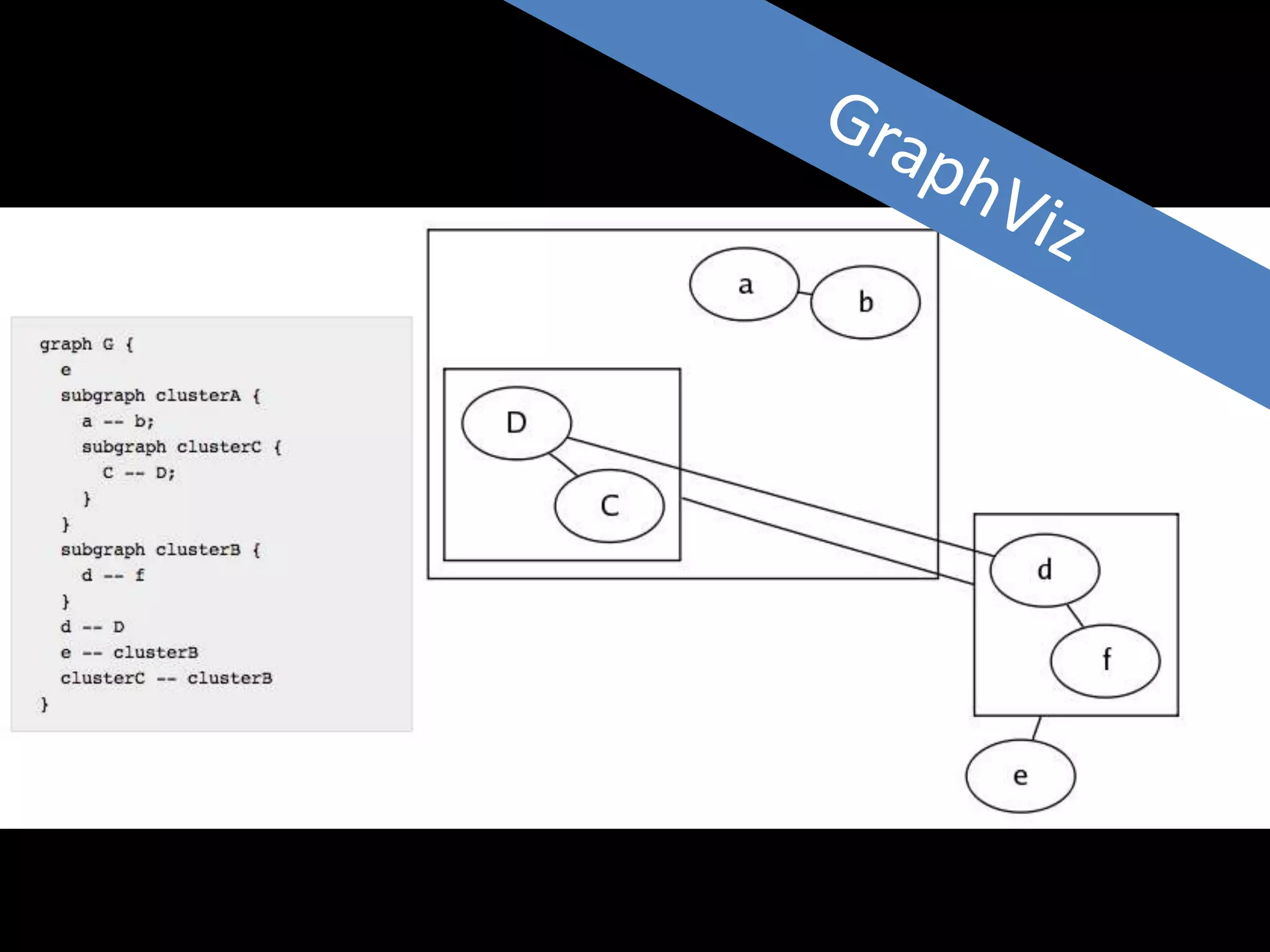
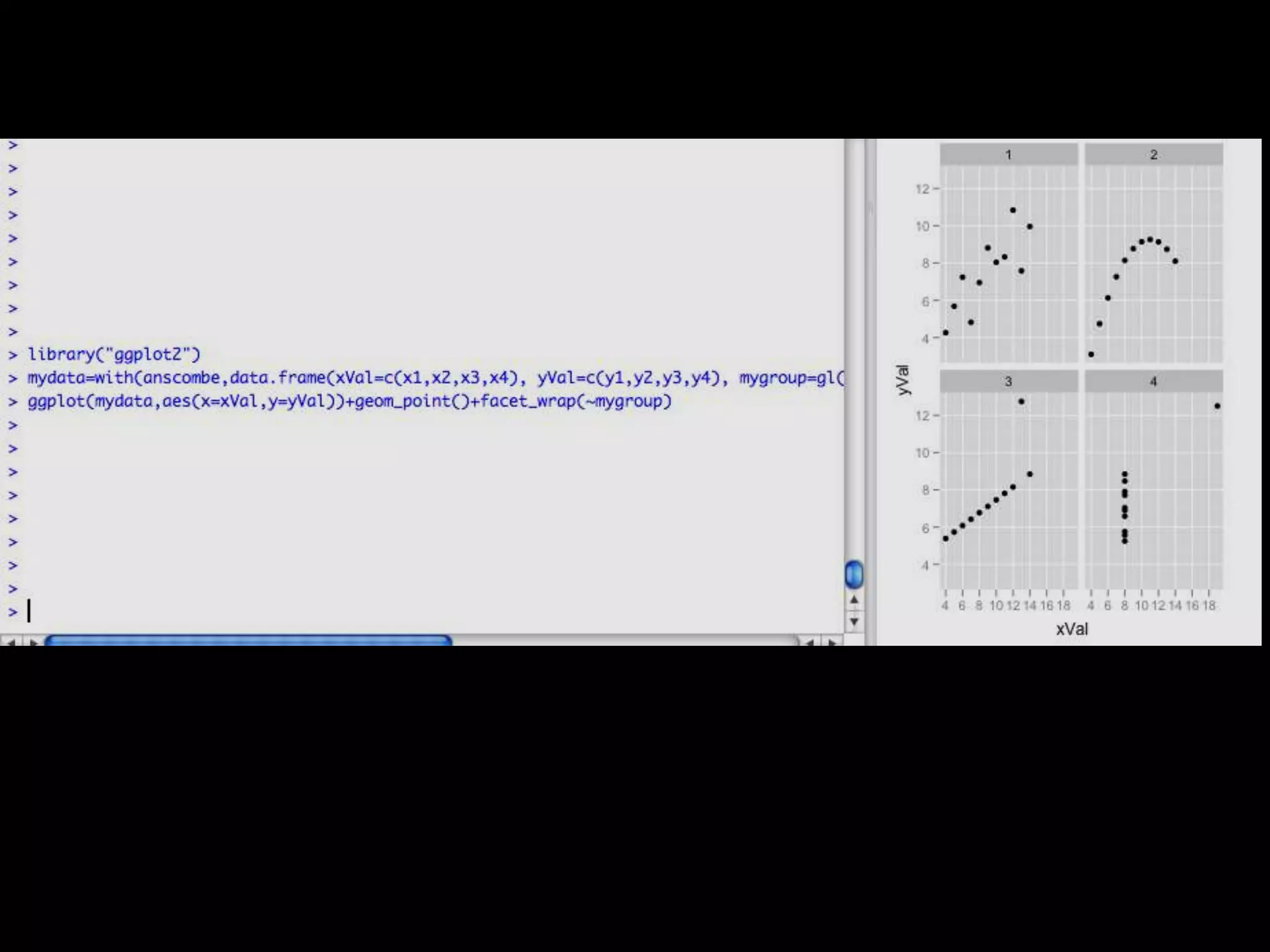
“Literate visualisation”
  (writing diagrams)
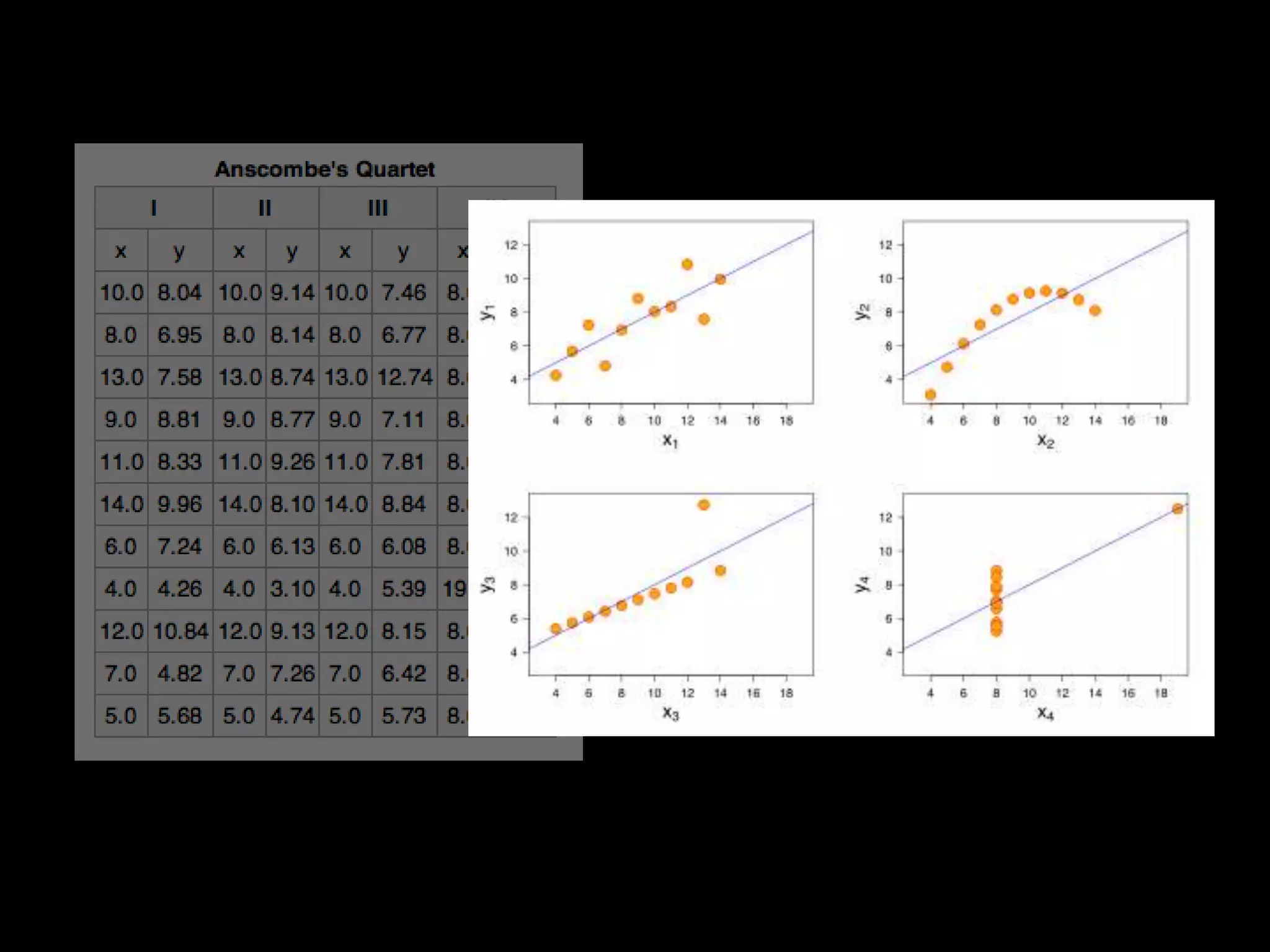
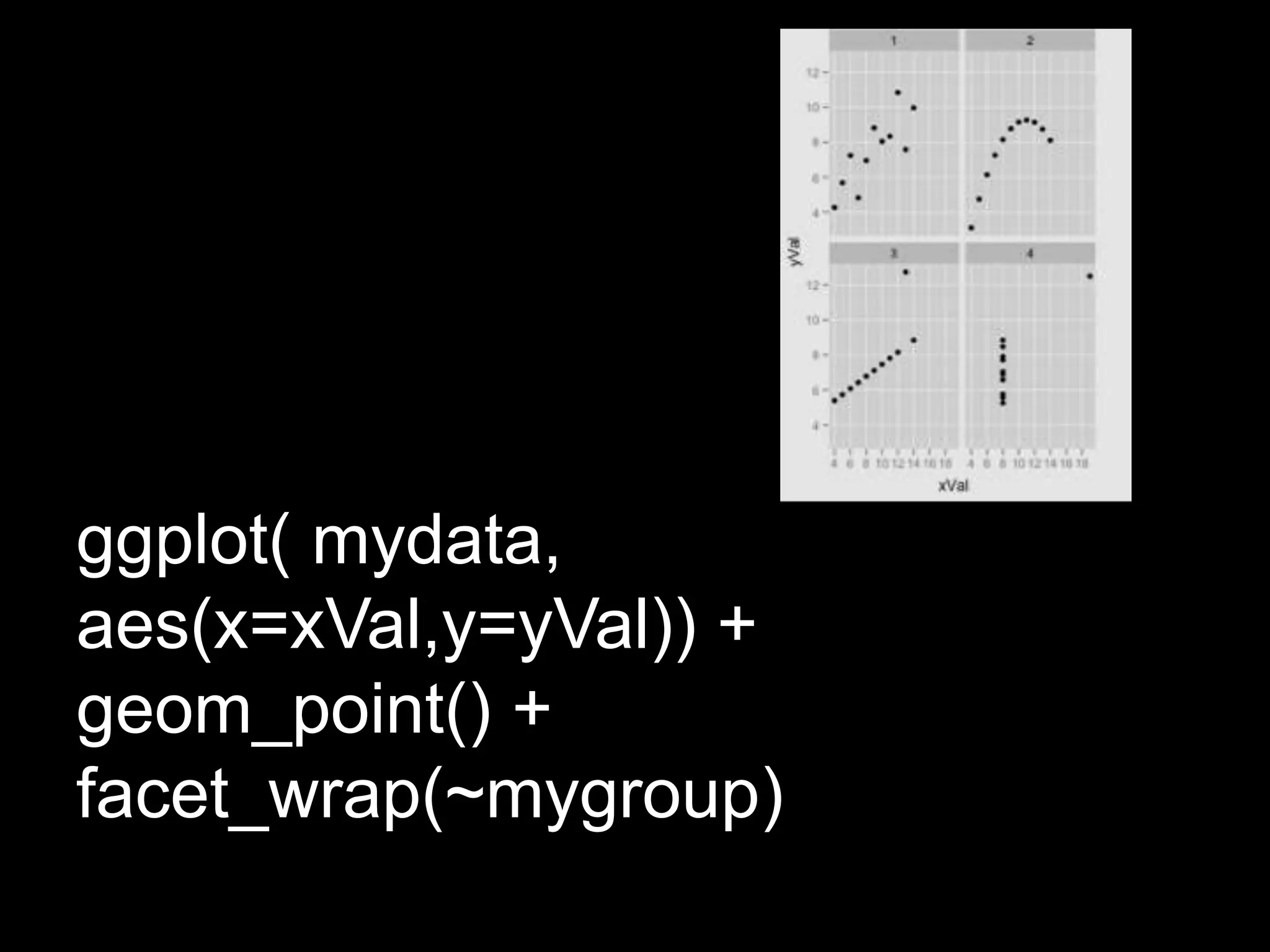
ggplot( mydata,
aes(x=xVal,y=yVal)) +
geom_point() +
facet_wrap(~mygroup)
Data   Application   Output


Data     [Code]      Output

Iwmw12 data viz taster

Editor's Notes

  • #19 Collaborative commentary
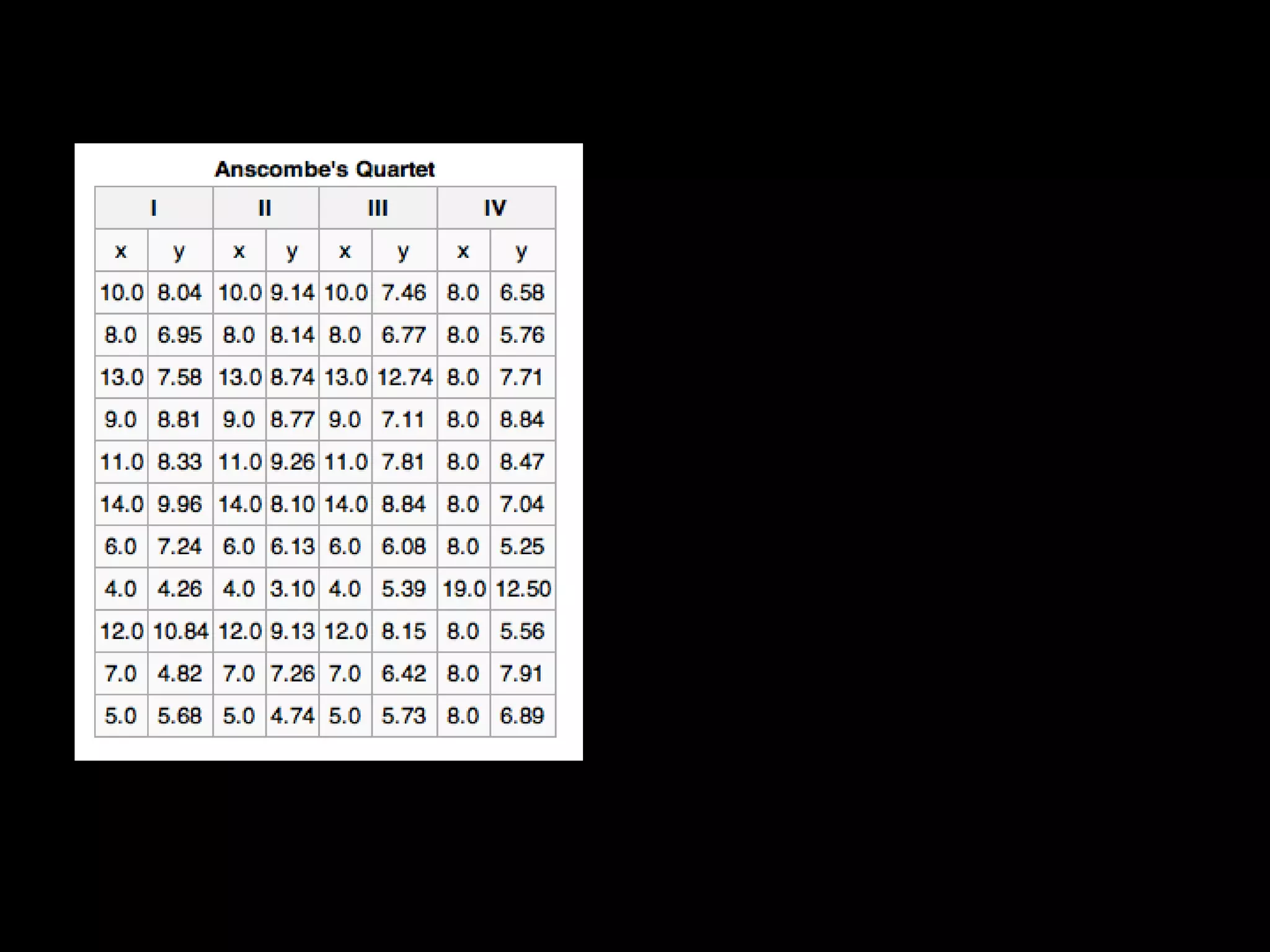
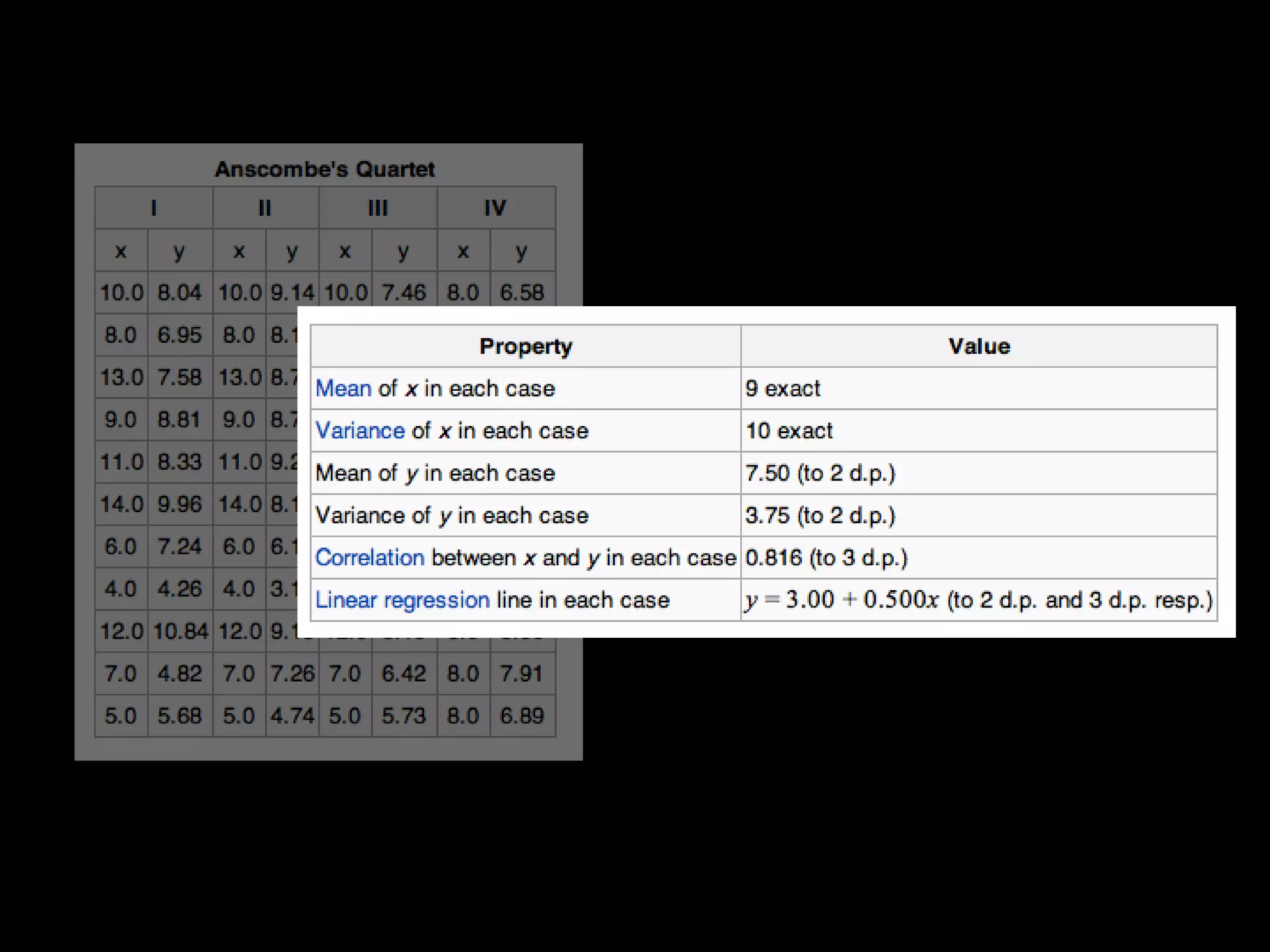
  • #36 library(ggplot2)mydata=with(anscombe,data.frame(xVal=c(x1,x2,x3,x4), yVal=c(y1,y2,y3,y4), mygroup=gl(4,nrow(anscombe))))