Biology

Chemistry
Informatics

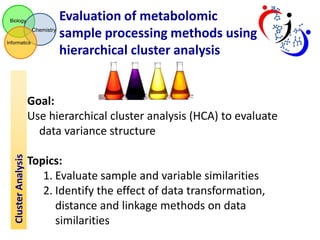
Evaluation of metabolomic
sample processing methods using
hierarchical cluster analysis

Cluster Analysis

Goal:
Use hierarchical cluster analysis (HCA) to evaluate
data variance structure
Topics:
1. Evaluate sample and variable similarities
2. Identify the effect of data transformation,
distance and linkage methods on data
similarities
Clustering data
Biology

Chemistry
Informatics

Cluster Analysis

Goal:

Use HCA to cluster samples (Use DATA: Pumpkin data 1.csv)

Visualize:
1. Sample (row) raw similarities as a heat map
2. Annotate heatmap with extraction and treatment type
3. Select cluster distance and linkage method to cluster the samples
4. Determine the effect of data transformations on the cluster structure
(view as a dendrogram)
Exercises:
1. What factor, extraction or treatment, has the greatest contribution to
the data variance structure?
2. Describe the effect of clustering raw data or sample correlations
Biology

Chemistry

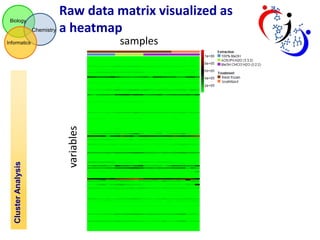
Raw data matrix visualized as
a heatmap
samples

variables

Cluster Analysis

Informatics
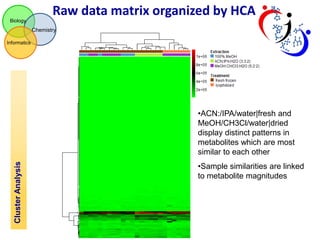
Raw data matrix organized by HCA
Biology

Chemistry
Informatics

Cluster Analysis

•ACN:/IPA/water|fresh and
MeOH/CH3Cl/water|dried
display distinct patterns in
metabolites which are most
similar to each other
•Sample similarities are linked
to metabolite magnitudes
Biology

Chemistry

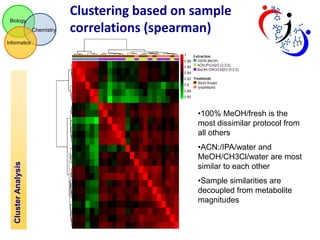
Clustering based on sample
correlations (spearman)

Informatics

Cluster Analysis

•100% MeOH/fresh is the
most dissimilar protocol from
all others
•ACN:/IPA/water and
MeOH/CH3Cl/water are most
similar to each other
•Sample similarities are
decoupled from metabolite
magnitudes
Clustering metabolites
Biology

Chemistry
Informatics

Goal 2: Use HCA to evaluate metabolite similarities

Cluster Analysis

Visualize:
1.Z-scaled and correlation based variable clustering
2.Use a dendrogram to extract variable clusters
3.Select two variables from the same cluster and visualize their
correlation
Exercise:
1.Do the clustered variables share biological functions?
2.Which type of correlation is most robust to outliers?
3.Are the correlations for the visualized variable independent of
extraction/treatment?
Z-scaled variable clusters
Biology

Chemistry

Cluster Analysis

Informatics
Correlation based variable clusters
Biology

Chemistry

Cluster Analysis

Informatics
Biology

Chemistry

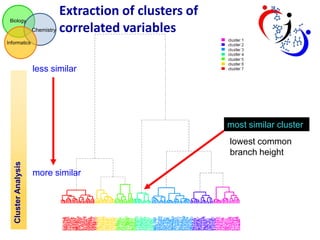
Extraction of clusters of
correlated variables

Informatics

less similar

most similar cluster

Cluster Analysis

lowest common
branch height
more similar
Biology

Chemistry

Cluster Analysis

Informatics

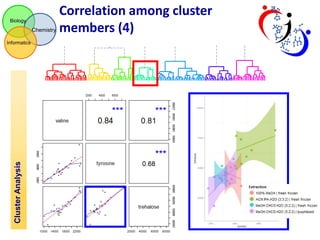
Correlation among cluster
members (4)

2 cluster analysis

  • 1.
    Biology Chemistry Informatics Evaluation of metabolomic sampleprocessing methods using hierarchical cluster analysis Cluster Analysis Goal: Use hierarchical cluster analysis (HCA) to evaluate data variance structure Topics: 1. Evaluate sample and variable similarities 2. Identify the effect of data transformation, distance and linkage methods on data similarities
  • 2.
    Clustering data Biology Chemistry Informatics Cluster Analysis Goal: UseHCA to cluster samples (Use DATA: Pumpkin data 1.csv) Visualize: 1. Sample (row) raw similarities as a heat map 2. Annotate heatmap with extraction and treatment type 3. Select cluster distance and linkage method to cluster the samples 4. Determine the effect of data transformations on the cluster structure (view as a dendrogram) Exercises: 1. What factor, extraction or treatment, has the greatest contribution to the data variance structure? 2. Describe the effect of clustering raw data or sample correlations
  • 3.
    Biology Chemistry Raw data matrixvisualized as a heatmap samples variables Cluster Analysis Informatics
  • 4.
    Raw data matrixorganized by HCA Biology Chemistry Informatics Cluster Analysis •ACN:/IPA/water|fresh and MeOH/CH3Cl/water|dried display distinct patterns in metabolites which are most similar to each other •Sample similarities are linked to metabolite magnitudes
  • 5.
    Biology Chemistry Clustering based onsample correlations (spearman) Informatics Cluster Analysis •100% MeOH/fresh is the most dissimilar protocol from all others •ACN:/IPA/water and MeOH/CH3Cl/water are most similar to each other •Sample similarities are decoupled from metabolite magnitudes
  • 6.
    Clustering metabolites Biology Chemistry Informatics Goal 2:Use HCA to evaluate metabolite similarities Cluster Analysis Visualize: 1.Z-scaled and correlation based variable clustering 2.Use a dendrogram to extract variable clusters 3.Select two variables from the same cluster and visualize their correlation Exercise: 1.Do the clustered variables share biological functions? 2.Which type of correlation is most robust to outliers? 3.Are the correlations for the visualized variable independent of extraction/treatment?
  • 7.
  • 8.
    Correlation based variableclusters Biology Chemistry Cluster Analysis Informatics
  • 9.
    Biology Chemistry Extraction of clustersof correlated variables Informatics less similar most similar cluster Cluster Analysis lowest common branch height more similar
  • 10.