
Visualization in the Digital Humanities A survey Cornelius Puschmann English Department Heinrich-Heine-Universität  Düsseldorf
all sources, tools and methods described in this presentation can be googled and wikipediad!
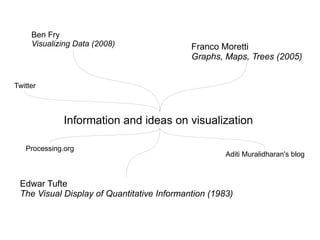
Franco Moretti Graphs, Maps, Trees (2005) Information and ideas on visualization  Edwar Tufte The Visual Display of Quantitative Informantion (1983) Ben Fry Visualizing Data (2008) Aditi Muralidharan's blog Twitter Processing.org
why visualization?
 
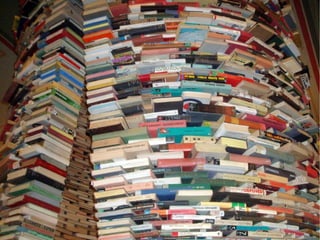
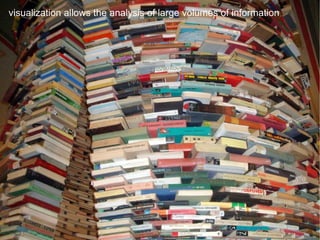
visualization allows the analysis of large volumes of information
 
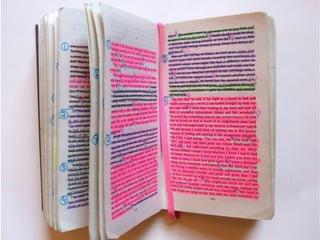
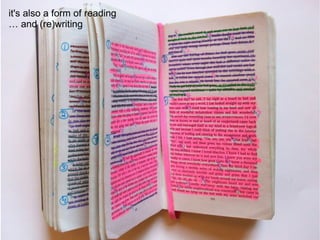
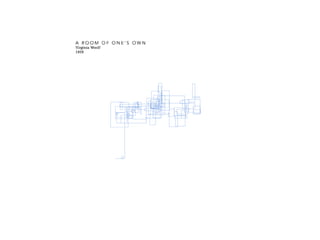
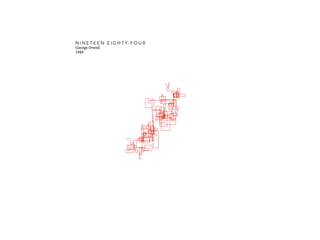
it's also a form of reading …  and (re)writing
 
and increasingly a pop culture phenomenon
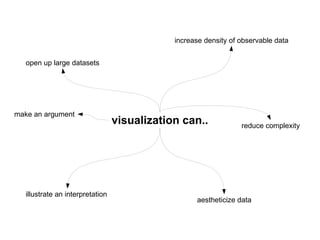
is visualization... …  a tool for research („cultural analytics“)? …  a means of aestheticizing data? …  a form of info-democratization? …  just a fad? should we as digital humanists care? what forms of visualizations are being used and for what communicative purposes?
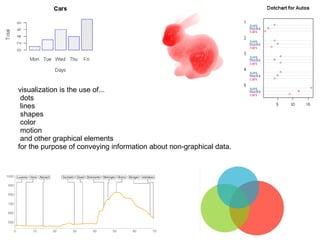
visualization is the use of... dots
lines
shapes color
motion
and other graphical elements for the purpose of conveying information about non-graphical data.
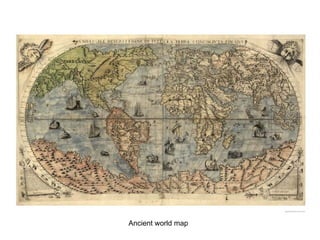
Ancient world map
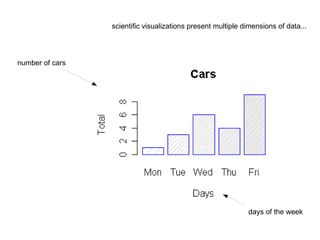
scientific visualizations present multiple dimensions of data... days of the week number of cars
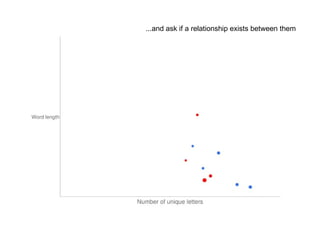
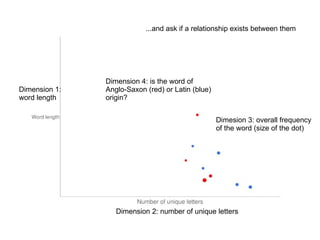
...and ask if a relationship exists between them
Dimension 1: word length Dimension 2: number of unique letters Dimesion 3: overall frequency of the word (size of the dot) Dimension 4: is the word of Anglo-Saxon (red) or Latin (blue) origin? ...and ask if a relationship exists between them
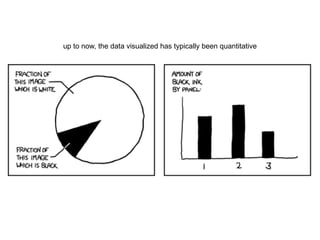
up to now, the data visualized has typically been quantitative
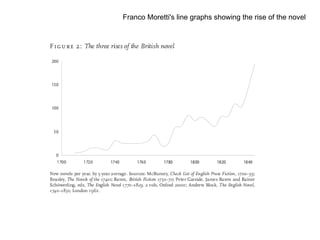
Franco Moretti's line graphs showing the rise of the novel
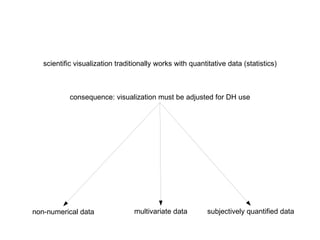
scientific visualization traditionally works with quantitative data (statistics) consequence: visualization must be adjusted for DH use non-numerical data multivariate data subjectively quantified data
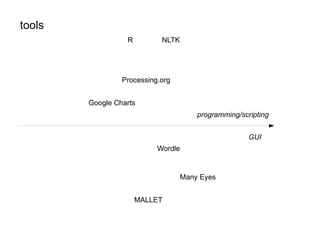
R NLTK Processing.org programming/scripting GUI Many Eyes MALLET Wordle Google Charts tools
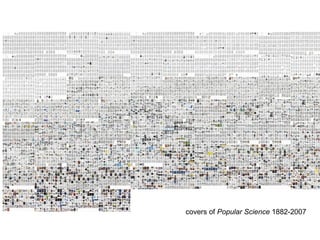
covers of  Popular Science  1882-2007
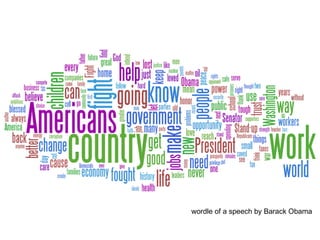
wordle of a speech by Barack Obama
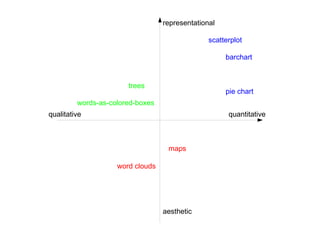
qualitative quantitative aesthetic representational scatterplot barchart pie chart words-as-colored-boxes word clouds trees maps
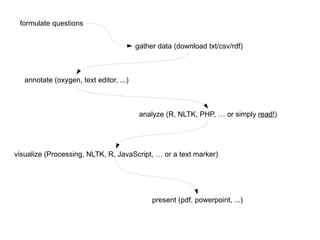
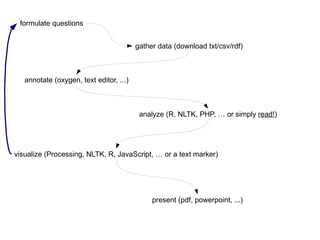
formulate questions gather data (download txt/csv/rdf) analyze (R, NLTK, PHP, … or simply  read! ) annotate (oxygen, text editor, ...) visualize (Processing, NLTK, R, JavaScript, … or a text marker) present (pdf, powerpoint, ...)
what can we visualize?
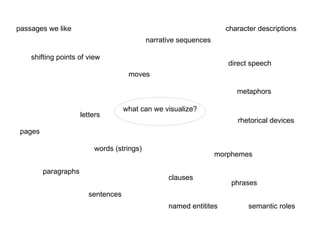
what can we visualize? letters words (strings) morphemes phrases clauses narrative sequences named entitites direct speech paragraphs sentences semantic roles rhetorical devices metaphors moves character descriptions pages passages we like shifting points of view
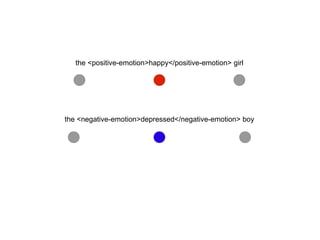
the <positive-emotion>happy</positive-emotion> girl the <negative-emotion>depressed</negative-emotion> boy
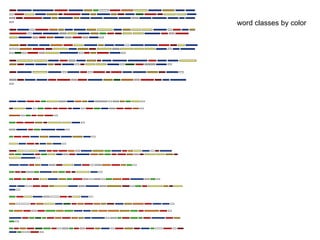
word classes by color


Visualization in the Digital Humanities

  • 1.
    Visualization in theDigital Humanities A survey Cornelius Puschmann English Department Heinrich-Heine-Universität Düsseldorf
  • 2.
    all sources, toolsand methods described in this presentation can be googled and wikipediad!
  • 3.
    Franco Moretti Graphs,Maps, Trees (2005) Information and ideas on visualization Edwar Tufte The Visual Display of Quantitative Informantion (1983) Ben Fry Visualizing Data (2008) Aditi Muralidharan's blog Twitter Processing.org
  • 4.
  • 5.
  • 6.
    visualization allows theanalysis of large volumes of information
  • 7.
  • 8.
    it's also aform of reading … and (re)writing
  • 9.
  • 10.
    and increasingly apop culture phenomenon
  • 11.
    is visualization... … a tool for research („cultural analytics“)? … a means of aestheticizing data? … a form of info-democratization? … just a fad? should we as digital humanists care? what forms of visualizations are being used and for what communicative purposes?
  • 12.
    visualization is theuse of... dots
  • 13.
  • 14.
  • 15.
  • 16.
    and other graphicalelements for the purpose of conveying information about non-graphical data.
  • 17.
  • 18.
    scientific visualizations presentmultiple dimensions of data... days of the week number of cars
  • 19.
    ...and ask ifa relationship exists between them
  • 20.
    Dimension 1: wordlength Dimension 2: number of unique letters Dimesion 3: overall frequency of the word (size of the dot) Dimension 4: is the word of Anglo-Saxon (red) or Latin (blue) origin? ...and ask if a relationship exists between them
  • 21.
    up to now,the data visualized has typically been quantitative
  • 22.
    Franco Moretti's linegraphs showing the rise of the novel
  • 23.
    scientific visualization traditionallyworks with quantitative data (statistics) consequence: visualization must be adjusted for DH use non-numerical data multivariate data subjectively quantified data
  • 24.
    R NLTK Processing.orgprogramming/scripting GUI Many Eyes MALLET Wordle Google Charts tools
  • 25.
    covers of Popular Science 1882-2007
  • 26.
    wordle of aspeech by Barack Obama
  • 27.
    qualitative quantitative aestheticrepresentational scatterplot barchart pie chart words-as-colored-boxes word clouds trees maps
  • 28.
    formulate questions gatherdata (download txt/csv/rdf) analyze (R, NLTK, PHP, … or simply read! ) annotate (oxygen, text editor, ...) visualize (Processing, NLTK, R, JavaScript, … or a text marker) present (pdf, powerpoint, ...)
  • 29.
    formulate questions gatherdata (download txt/csv/rdf) analyze (R, NLTK, PHP, … or simply read! ) annotate (oxygen, text editor, ...) visualize (Processing, NLTK, R, JavaScript, … or a text marker) present (pdf, powerpoint, ...)
  • 30.
    what can wevisualize?
  • 31.
    what can wevisualize? letters words (strings) morphemes phrases clauses narrative sequences named entitites direct speech paragraphs sentences semantic roles rhetorical devices metaphors moves character descriptions pages passages we like shifting points of view
  • 32.
    the <positive-emotion>happy</positive-emotion> girlthe <negative-emotion>depressed</negative-emotion> boy
  • 33.
  • 34.
  • 35.
  • 36.

Editor's Notes

  • #7 difference forms of reading: - close reading - distance reading - not-reading or scanning (Matt Kirschenbaum “The Remaking of Reading: Data Mining and the Digital Humanities“)