VIOLENCE TOWARDS HOSPITALS & DOCTORS Medicolegal Aspects & Prevention Dr. AVINASH BHONDWE PRESIDENT, IMA, PUNE
 
 
VIOLENCE TOWARDS HOSPITALS & DOCTORS VIOLENCE: Rough or injurious physical force, action, or treatment An unjust or unwarranted exertion of force or power, as against rights or laws
VIOLENCE TOWARDS HOSPITALS & DOCTORS WORKPLACE VIOLENCE : Violence often takes place during times of high activity  interaction with patients, such as ADMISSION IN EMERGENCY WARD Patient transportation.  Patient is involuntarily admitted,  Billing Hospital Rules
VIOLENCE TOWARDS HOSPITALS & DOCTORS DURING ADMISSIONS :- EXPLAININIG GRAVE SITUATIONS BAD PROGNOSIS,  COSTLY SURGERIES OR TREATMENT ANAPHYLACTIC REACTIONS UNEXPECTED CONSEQUENCES OF THE TREATMENT,  COMPICATIONS OF THE CONDITIONS  DEATH
VIOLENCE TOWARDS HOSPITALS & DOCTORS Patient transportation OR Shifting Assaults may occur when service is denied May be a Doctor is not accompanying during shifting Patient dies before or during shifting Patient dies at tertiary centre on or after shifting
VIOLENCE TOWARDS HOSPITALS & DOCTORS Billing- Not understanding the billing procedures Claiming overcharging Claiming Unexplained or/ and unwarranted charging Inability to pay charges Denial by hospital for treating the patient or giving the deadbody for nonpaymant
VIOLENCE TOWARDS HOSPITALS & DOCTORS Hospital Rules- Advance Payment ‘ Office Permission’ Prescribing Medicines, Appliances & Materials to be purchased from Hospitals only A health care worker attempts to set limits on eating, drinking, or tobacco or alcohol use.
VIOLENCE TOWARDS HOSPITALS & DOCTORS What is workplace violence? Offensive language & Abuses Threats of assaults  Physical assaults  Destruction of Building, Property & Medical Equipments  Disrupting the hospital routine & treatment of other patients- emergency or non-emergency Homicidal Attacks
VIOLENCE TOWARDS HOSPITALS & DOCTORS Some Examples of violence   Threats:  Expressions of intent to cause harm, including verbal threats, threatening body language, and written threats. Physical assaults:   Non-Harmful Attacks-  slapping, Blackening the face, Spitting, Pulling Hair, Shoving Harmful  -From beating to rape, homicide, and the use of weapons such as firearms, bombs, or knives. Muggings:  Aggravated assaults, usually conducted by surprise and with intent to rob.
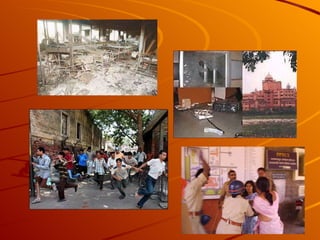
VIOLENCE TOWARDS HOSPITALS & DOCTORS Case Reports: An elderly patient verbally abused a nurse and pulled her hair when she prevented him from leaving the hospital to go home in the middle of the night.  An agitated psychotic patient attacked a nurse, broke her arm, and scratched and bruised her.  A disturbed family member whose father had died in surgery at the Civil Hospital walked into the emergency department and fired a small-caliber handgun, injuring a nurse and an emergency medical technician and wounding the emergency physician
VIOLENCE TOWARDS HOSPITALS & DOCTORS Difference Other Workplaces Vs Hospitals These circumstances of hospital violence differ from the circumstances of workplace violence in general.  In other workplaces such as Banks, Malls, General Stores and Taxi-Rikshaw, violence most often relates to robbery. Violence in hospitals usually results from patients and from their family members who feel frustrated, vulnerable, and out of control.
VIOLENCE TOWARDS HOSPITALS & DOCTORS Who is at risk? Doctors-from duty doctors, housemen, C.M.O.s to consultants & Super Specialists Pathologist, Radiologists, Sonologists Sisters Ward-boys & Ayahs Reception & Office Staff  Security Guards & Watchmen Any Health care provider
VIOLENCE TOWARDS HOSPITALS & DOCTORS Where may violence occur?  Violence may occur anywhere in the hospital, but it is most frequent in the following areas:  Emergency rooms Surgical Wards Psychiatric wards  Consulting Rooms Waiting rooms  Geriatric units  Billing Counters Reception Counters
VIOLENCE TOWARDS HOSPITALS & DOCTORS The effects of violence May range in intensity and include the following:   Minor physical injuries  Serious physical injuries  Temporary and permanent physical disability  Psychological trauma  Death  Negative organizational outcomes such as Low worker morale,  Increased job stress,  Increased worker turnover,  Reduced trust of management and coworkers,  Hostile working environment .
VIOLENCE TOWARDS HOSPITALS & DOCTORS The risk factors for violence  vary from hospital to hospital depending on location, size, and type of care. Common risk factors  Working directly with volatile people, especially, if they are under the influence of drugs or alcohol or have a history of violence or certain psychotic diagnoses  Working when understaffed-especially during meal times and visiting hours  Transporting patients  Long waits for service  Overcrowded, uncomfortable waiting rooms  Working alone
VIOLENCE TOWARDS HOSPITALS & DOCTORS The risk factors for violence( contd..) Poor environmental design  Inadequate security  Lack of staff training and policies for preventing and managing crises with potentially volatile patients  Drug and alcohol abuse  Access to firearms  Unrestricted movement of the public  Poorly lit corridors, rooms, parking lots, and other areas
VIOLENCE TOWARDS HOSPITALS & DOCTORS MEDICOLEGAL ASPECTS IN PROPOSED ORDINANCE DOCTORS- PRACTISING, FULL-TIMERS,PARTTIMERS,RESIDENTS, INTERNS,STUDENTS 2. NURSES- On duty Staff Nurses, Student Nurses, Ayaas, Wardboys, Helpers
VIOLENCE TOWARDS HOSPITALS & DOCTORS 3. Paramedical Staff: Lab. Assts., Lab & Radiology staff, Hospital Social Workers, Physiotherapist, Dietician, Counselers etc. 4. HOSPITAL STAFF- Reception, Billing, Administration, Security, Maintenance Dept.
VIOLENCE TOWARDS HOSPITALS & DOCTORS Violence: Verbal Physical but non- injurious Causing Injury – Simple & Grievous Any violence will be termed as Cognizable including simple & verbal -Offense will be Non-Bailable
VIOLENCE TOWARDS HOSPITALS & DOCTORS Destruction- Hospital Equipment Hospital Furniture Premises & Building Fine + Purchase Cost
VIOLENCE TOWARDS HOSPITALS & DOCTORS The conviction-  FINE- up to 5 Lakh + Cost SENTENCE- Up to 5 years Or Both This will be in addition to other offences proved under IPC The cost will be recovered as per Revenue Recovery- By auctioning the property of the convict
VIOLENCE TOWARDS HOSPITALS & DOCTORS Prevention Strategies for Employers Develop a safety and health program that includes  Management commitment, Employee participation, Hazard identification,  Safety and health training With knowledge of Medico-legal implications of the behavior  Hazard prevention, control, and reporting. Employers should evaluate this program periodically. Although risk factors for violence are specific for each hospital and its work scenarios, employers can follow general prevention strategies.
VIOLENCE TOWARDS HOSPITALS & DOCTORS Environmental Designs Develop emergency signaling, alarms, and monitoring systems.  Install security devices such as metal detectors to prevent armed persons from entering the hospital.  Install other security devices such as cameras and good lighting in hallways.  Provide security escorts to the parking lots at night.
VIOLENCE TOWARDS HOSPITALS & DOCTORS Design waiting areas to accommodate and assist visitors and patients who may have a delay in service.  Design the triage area and other public areas to minimize the risk of assault:  Provide staff restrooms and emergency exits.  Install enclosed nurses' stations.  Install deep service counters or bullet-resistant and shatterproof glass enclosures in reception areas.  Arrange furniture and other objects to minimize their use as weapons
VIOLENCE TOWARDS HOSPITALS & DOCTORS Administrative Controls Design staffing patterns to prevent personnel from working alone and to minimize patient waiting time.  Restrict the movement of the public in hospitals by card-controlled access.  Develop a system for alerting security personnel when violence is threatened.
VIOLENCE TOWARDS HOSPITALS & DOCTORS Behavior Modifications Provide all workers with training in recognizing and managing assaults, resolving conflicts, and maintaining hazard awareness and understanding the practical & legal consequences of the behaviour
VIOLENCE TOWARDS HOSPITALS & DOCTORS Dealing With the Consequences of Violence Violence may occur in the workplace in spite of preventive measures.  Employers should be prepared to deal with the consequences of this violence by providing an environment that promotes open communication and by developing written procedures for reporting and responding to violence.  Employers should offer and encourage counseling whenever a worker is threatened or assaulted
VIOLENCE TOWARDS HOSPITALS & DOCTORS Safety Tips for Hospital Workers Watch for signals that may be associated with impending violence: Verbally expressed anger and frustration  Body language such as threatening gestures  Signs of drug or alcohol use  Presence of a weapon
VIOLENCE TOWARDS HOSPITALS & DOCTORS Maintain behavior that helps diffuse anger: Present a calm, caring attitude.  Don't match the threats.  Don't give orders.  Acknowledge the person's feelings (for example, "I know you are under stress").  Avoid any behavior that may be interpreted as aggressive (for example, moving rapidly, getting too close, touching, or speaking loudly
VIOLENCE TOWARDS HOSPITALS & DOCTORS Be alert: Evaluate each situation for potential violence when you enter a room or begin to relate to a patient or visitor.  Be vigilant throughout the encounter.  Don't isolate yourself with a potentially violent person.  Always keep an open path for exiting-don't let the potentially violent person stand between you and the door
VIOLENCE TOWARDS HOSPITALS & DOCTORS Steps to take, if you can't defuse the situation quickly: Remove yourself from the situation.  Call security for help.  Report any violent incidents to your management.  Call for Police help with the permission of Management
VIOLENCE TOWARDS HOSPITALS & DOCTORS Prevention Strategies That Have Worked in U.S.A.  A security screening system in a Detroit hospital included stationary metal detectors supplemented by hand-held units. The system prevented the entry of 33 handguns, 1,324 knives, and 97 mace-type sprays during a 6-month period.
VIOLENCE TOWARDS HOSPITALS & DOCTORS Prevention Strategies That Have Worked in U.S.A. A violence reporting program in the Portland, Oregon, VA Medical Center identified patients with a history of violence in a computerized database.* The program helped reduce the number of all violent attacks by 91.6% by alerting staff to take additional safety measures when serving these patients.
VIOLENCE TOWARDS HOSPITALS & DOCTORS Prevention Strategies That Have Worked in U.S.A. A system restricting movement of visitors in a New York City hospital used identification badges and color-coded passes to limit each visitor to a specific floor. The hospital also enforced the limit of two visitors at a time per patient. Over 18 months, these actions reduced the number of reported violent crimes by 65%.
VIOLENCE TOWARDS HOSPITALS & DOCTORS All hospitals should develop a comprehensive violence prevention program.  No universal strategy exists to prevent violence.  The risk factors vary from hospital to hospital and from unit to unit.  Hospitals should form multidisciplinary committees that include direct-care staff as well as union representatives (if available) to identify risk factors in specific work scenarios and to develop strategies for reducing them.
VIOLENCE TOWARDS HOSPITALS & DOCTORS All hospital workers should be alert and cautious when interacting with patients and visitors.  They should actively participate in safety training programs and be familiar with their employers' policies, procedures, and materials on violence prevention
THANK YOU

Hospital violence

  • 1.
    VIOLENCE TOWARDS HOSPITALS& DOCTORS Medicolegal Aspects & Prevention Dr. AVINASH BHONDWE PRESIDENT, IMA, PUNE
  • 2.
  • 3.
  • 4.
    VIOLENCE TOWARDS HOSPITALS& DOCTORS VIOLENCE: Rough or injurious physical force, action, or treatment An unjust or unwarranted exertion of force or power, as against rights or laws
  • 5.
    VIOLENCE TOWARDS HOSPITALS& DOCTORS WORKPLACE VIOLENCE : Violence often takes place during times of high activity interaction with patients, such as ADMISSION IN EMERGENCY WARD Patient transportation. Patient is involuntarily admitted, Billing Hospital Rules
  • 6.
    VIOLENCE TOWARDS HOSPITALS& DOCTORS DURING ADMISSIONS :- EXPLAININIG GRAVE SITUATIONS BAD PROGNOSIS, COSTLY SURGERIES OR TREATMENT ANAPHYLACTIC REACTIONS UNEXPECTED CONSEQUENCES OF THE TREATMENT, COMPICATIONS OF THE CONDITIONS DEATH
  • 7.
    VIOLENCE TOWARDS HOSPITALS& DOCTORS Patient transportation OR Shifting Assaults may occur when service is denied May be a Doctor is not accompanying during shifting Patient dies before or during shifting Patient dies at tertiary centre on or after shifting
  • 8.
    VIOLENCE TOWARDS HOSPITALS& DOCTORS Billing- Not understanding the billing procedures Claiming overcharging Claiming Unexplained or/ and unwarranted charging Inability to pay charges Denial by hospital for treating the patient or giving the deadbody for nonpaymant
  • 9.
    VIOLENCE TOWARDS HOSPITALS& DOCTORS Hospital Rules- Advance Payment ‘ Office Permission’ Prescribing Medicines, Appliances & Materials to be purchased from Hospitals only A health care worker attempts to set limits on eating, drinking, or tobacco or alcohol use.
  • 10.
    VIOLENCE TOWARDS HOSPITALS& DOCTORS What is workplace violence? Offensive language & Abuses Threats of assaults Physical assaults Destruction of Building, Property & Medical Equipments Disrupting the hospital routine & treatment of other patients- emergency or non-emergency Homicidal Attacks
  • 11.
    VIOLENCE TOWARDS HOSPITALS& DOCTORS Some Examples of violence Threats: Expressions of intent to cause harm, including verbal threats, threatening body language, and written threats. Physical assaults: Non-Harmful Attacks- slapping, Blackening the face, Spitting, Pulling Hair, Shoving Harmful -From beating to rape, homicide, and the use of weapons such as firearms, bombs, or knives. Muggings: Aggravated assaults, usually conducted by surprise and with intent to rob.
  • 12.
    VIOLENCE TOWARDS HOSPITALS& DOCTORS Case Reports: An elderly patient verbally abused a nurse and pulled her hair when she prevented him from leaving the hospital to go home in the middle of the night. An agitated psychotic patient attacked a nurse, broke her arm, and scratched and bruised her. A disturbed family member whose father had died in surgery at the Civil Hospital walked into the emergency department and fired a small-caliber handgun, injuring a nurse and an emergency medical technician and wounding the emergency physician
  • 13.
    VIOLENCE TOWARDS HOSPITALS& DOCTORS Difference Other Workplaces Vs Hospitals These circumstances of hospital violence differ from the circumstances of workplace violence in general. In other workplaces such as Banks, Malls, General Stores and Taxi-Rikshaw, violence most often relates to robbery. Violence in hospitals usually results from patients and from their family members who feel frustrated, vulnerable, and out of control.
  • 14.
    VIOLENCE TOWARDS HOSPITALS& DOCTORS Who is at risk? Doctors-from duty doctors, housemen, C.M.O.s to consultants & Super Specialists Pathologist, Radiologists, Sonologists Sisters Ward-boys & Ayahs Reception & Office Staff Security Guards & Watchmen Any Health care provider
  • 15.
    VIOLENCE TOWARDS HOSPITALS& DOCTORS Where may violence occur? Violence may occur anywhere in the hospital, but it is most frequent in the following areas: Emergency rooms Surgical Wards Psychiatric wards Consulting Rooms Waiting rooms Geriatric units Billing Counters Reception Counters
  • 16.
    VIOLENCE TOWARDS HOSPITALS& DOCTORS The effects of violence May range in intensity and include the following: Minor physical injuries Serious physical injuries Temporary and permanent physical disability Psychological trauma Death Negative organizational outcomes such as Low worker morale, Increased job stress, Increased worker turnover, Reduced trust of management and coworkers, Hostile working environment .
  • 17.
    VIOLENCE TOWARDS HOSPITALS& DOCTORS The risk factors for violence vary from hospital to hospital depending on location, size, and type of care. Common risk factors Working directly with volatile people, especially, if they are under the influence of drugs or alcohol or have a history of violence or certain psychotic diagnoses Working when understaffed-especially during meal times and visiting hours Transporting patients Long waits for service Overcrowded, uncomfortable waiting rooms Working alone
  • 18.
    VIOLENCE TOWARDS HOSPITALS& DOCTORS The risk factors for violence( contd..) Poor environmental design Inadequate security Lack of staff training and policies for preventing and managing crises with potentially volatile patients Drug and alcohol abuse Access to firearms Unrestricted movement of the public Poorly lit corridors, rooms, parking lots, and other areas
  • 19.
    VIOLENCE TOWARDS HOSPITALS& DOCTORS MEDICOLEGAL ASPECTS IN PROPOSED ORDINANCE DOCTORS- PRACTISING, FULL-TIMERS,PARTTIMERS,RESIDENTS, INTERNS,STUDENTS 2. NURSES- On duty Staff Nurses, Student Nurses, Ayaas, Wardboys, Helpers
  • 20.
    VIOLENCE TOWARDS HOSPITALS& DOCTORS 3. Paramedical Staff: Lab. Assts., Lab & Radiology staff, Hospital Social Workers, Physiotherapist, Dietician, Counselers etc. 4. HOSPITAL STAFF- Reception, Billing, Administration, Security, Maintenance Dept.
  • 21.
    VIOLENCE TOWARDS HOSPITALS& DOCTORS Violence: Verbal Physical but non- injurious Causing Injury – Simple & Grievous Any violence will be termed as Cognizable including simple & verbal -Offense will be Non-Bailable
  • 22.
    VIOLENCE TOWARDS HOSPITALS& DOCTORS Destruction- Hospital Equipment Hospital Furniture Premises & Building Fine + Purchase Cost
  • 23.
    VIOLENCE TOWARDS HOSPITALS& DOCTORS The conviction- FINE- up to 5 Lakh + Cost SENTENCE- Up to 5 years Or Both This will be in addition to other offences proved under IPC The cost will be recovered as per Revenue Recovery- By auctioning the property of the convict
  • 24.
    VIOLENCE TOWARDS HOSPITALS& DOCTORS Prevention Strategies for Employers Develop a safety and health program that includes Management commitment, Employee participation, Hazard identification, Safety and health training With knowledge of Medico-legal implications of the behavior Hazard prevention, control, and reporting. Employers should evaluate this program periodically. Although risk factors for violence are specific for each hospital and its work scenarios, employers can follow general prevention strategies.
  • 25.
    VIOLENCE TOWARDS HOSPITALS& DOCTORS Environmental Designs Develop emergency signaling, alarms, and monitoring systems. Install security devices such as metal detectors to prevent armed persons from entering the hospital. Install other security devices such as cameras and good lighting in hallways. Provide security escorts to the parking lots at night.
  • 26.
    VIOLENCE TOWARDS HOSPITALS& DOCTORS Design waiting areas to accommodate and assist visitors and patients who may have a delay in service. Design the triage area and other public areas to minimize the risk of assault: Provide staff restrooms and emergency exits. Install enclosed nurses' stations. Install deep service counters or bullet-resistant and shatterproof glass enclosures in reception areas. Arrange furniture and other objects to minimize their use as weapons
  • 27.
    VIOLENCE TOWARDS HOSPITALS& DOCTORS Administrative Controls Design staffing patterns to prevent personnel from working alone and to minimize patient waiting time. Restrict the movement of the public in hospitals by card-controlled access. Develop a system for alerting security personnel when violence is threatened.
  • 28.
    VIOLENCE TOWARDS HOSPITALS& DOCTORS Behavior Modifications Provide all workers with training in recognizing and managing assaults, resolving conflicts, and maintaining hazard awareness and understanding the practical & legal consequences of the behaviour
  • 29.
    VIOLENCE TOWARDS HOSPITALS& DOCTORS Dealing With the Consequences of Violence Violence may occur in the workplace in spite of preventive measures. Employers should be prepared to deal with the consequences of this violence by providing an environment that promotes open communication and by developing written procedures for reporting and responding to violence. Employers should offer and encourage counseling whenever a worker is threatened or assaulted
  • 30.
    VIOLENCE TOWARDS HOSPITALS& DOCTORS Safety Tips for Hospital Workers Watch for signals that may be associated with impending violence: Verbally expressed anger and frustration Body language such as threatening gestures Signs of drug or alcohol use Presence of a weapon
  • 31.
    VIOLENCE TOWARDS HOSPITALS& DOCTORS Maintain behavior that helps diffuse anger: Present a calm, caring attitude. Don't match the threats. Don't give orders. Acknowledge the person's feelings (for example, "I know you are under stress"). Avoid any behavior that may be interpreted as aggressive (for example, moving rapidly, getting too close, touching, or speaking loudly
  • 32.
    VIOLENCE TOWARDS HOSPITALS& DOCTORS Be alert: Evaluate each situation for potential violence when you enter a room or begin to relate to a patient or visitor. Be vigilant throughout the encounter. Don't isolate yourself with a potentially violent person. Always keep an open path for exiting-don't let the potentially violent person stand between you and the door
  • 33.
    VIOLENCE TOWARDS HOSPITALS& DOCTORS Steps to take, if you can't defuse the situation quickly: Remove yourself from the situation. Call security for help. Report any violent incidents to your management. Call for Police help with the permission of Management
  • 34.
    VIOLENCE TOWARDS HOSPITALS& DOCTORS Prevention Strategies That Have Worked in U.S.A. A security screening system in a Detroit hospital included stationary metal detectors supplemented by hand-held units. The system prevented the entry of 33 handguns, 1,324 knives, and 97 mace-type sprays during a 6-month period.
  • 35.
    VIOLENCE TOWARDS HOSPITALS& DOCTORS Prevention Strategies That Have Worked in U.S.A. A violence reporting program in the Portland, Oregon, VA Medical Center identified patients with a history of violence in a computerized database.* The program helped reduce the number of all violent attacks by 91.6% by alerting staff to take additional safety measures when serving these patients.
  • 36.
    VIOLENCE TOWARDS HOSPITALS& DOCTORS Prevention Strategies That Have Worked in U.S.A. A system restricting movement of visitors in a New York City hospital used identification badges and color-coded passes to limit each visitor to a specific floor. The hospital also enforced the limit of two visitors at a time per patient. Over 18 months, these actions reduced the number of reported violent crimes by 65%.
  • 37.
    VIOLENCE TOWARDS HOSPITALS& DOCTORS All hospitals should develop a comprehensive violence prevention program. No universal strategy exists to prevent violence. The risk factors vary from hospital to hospital and from unit to unit. Hospitals should form multidisciplinary committees that include direct-care staff as well as union representatives (if available) to identify risk factors in specific work scenarios and to develop strategies for reducing them.
  • 38.
    VIOLENCE TOWARDS HOSPITALS& DOCTORS All hospital workers should be alert and cautious when interacting with patients and visitors. They should actively participate in safety training programs and be familiar with their employers' policies, procedures, and materials on violence prevention
  • 39.