Implementing Research into
Practice
Vicky Scott, RN, PhD
Clinical Professor, Faculty of Medicine, School of
Population and Public Health, University of British
Columbia
Implementation Science
Implementation Science: is the scientific study of variables and
conditions that impact changes at practice, organization and
systems levels; changes that are required to promote the
systematic uptake, sustainability and effectiveness of
evidence-based programs and practices in typical service and
social settings. (Blase and Fixsen, 2010, NIRN )
The goal of this presentation is to help you to incorporate
interventions to reduce injuries into your organizations in a
way that is both effective and sustainable
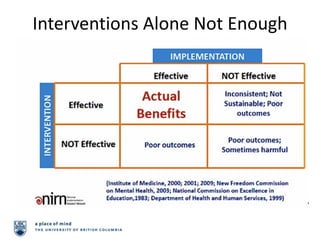
Interventions Alone Not Enough
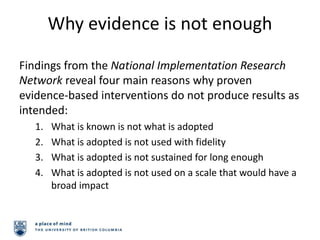
Why evidence is not enough
Findings from the National Implementation Research
Network reveal four main reasons why proven
evidence-based interventions do not produce results as
intended:
1. What is known is not what is adopted
2. What is adopted is not used with fidelity
3. What is adopted is not sustained for long enough
4. What is adopted is not used on a scale that would have a
broad impact
Practitioners do not use
“experimental rigor”, they use
programs.
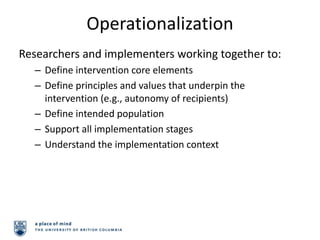
Operationalization
Researchers and implementers working together to:
– Define intervention core elements
– Define principles and values that underpin the
intervention (e.g., autonomy of recipients)
– Define intended population
– Support all implementation stages
– Understand the implementation context
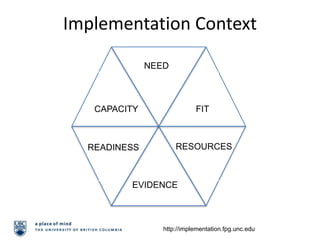
NEED
CAPACITY FIT
READINESS RESOURCES
EVIDENCE
Implementation Context
http://implementation.fpg.unc.edu
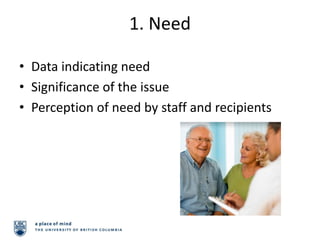
1. Need
• Data indicating need
• Significance of the issue
• Perception of need by staff and recipients
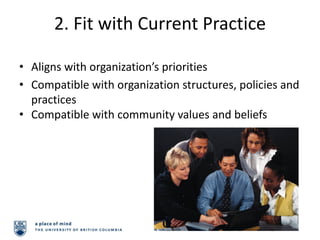
2. Fit with Current Practice
• Aligns with organization’s priorities
• Compatible with organization structures, policies and
practices
• Compatible with community values and beliefs
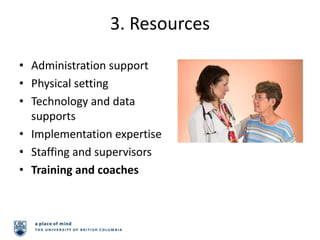
3. Resources
• Administration support
• Physical setting
• Technology and data
supports
• Implementation expertise
• Staffing and supervisors
• Training and coaches
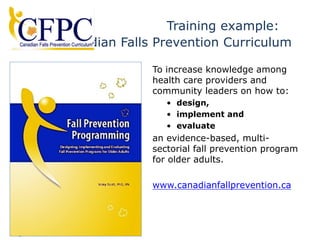
Training example:
Canadian Falls Prevention Curriculum
To increase knowledge among
health care providers and
community leaders on how to:
• design,
• implement and
• evaluate
an evidence-based, multi-
sectorial fall prevention program
for older adults.
www.canadianfallprevention.ca
4. Evidence
• Outcome – is it worth it?
• Fidelity of data
• Population similarities, e.g.,
age, health and culture
• Cost effectiveness
• Efficacy or effectiveness
• Number/quality of studies
5. Readiness
• Expert trainers
• Qualifications of implementers and evaluators
• Mature site to observe
• Operational definitions of core functions
• Usability pilot (Plan, Do, Study, Act)
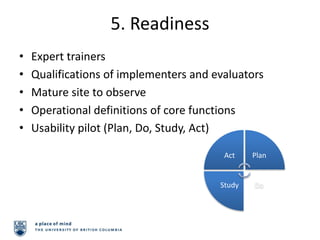
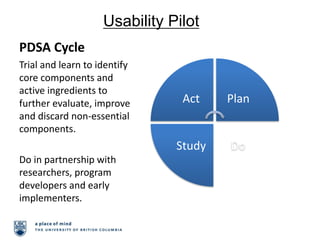
PDSA Cycle
Trial and learn to identify
core components and
active ingredients to
further evaluate, improve
and discard non-essential
components.
Do in partnership with
researchers, program
developers and early
implementers.
Usability Pilot
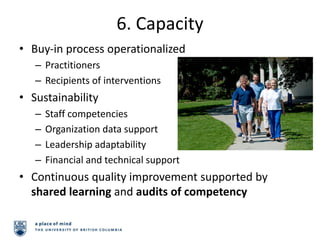
6. Capacity
• Buy-in process operationalized
– Practitioners
– Recipients of interventions
• Sustainability
– Staff competencies
– Organization data support
– Leadership adaptability
– Financial and technical support
• Continuous quality improvement supported by
shared learning and audits of competency
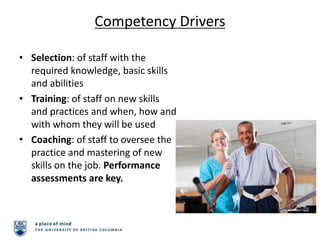
Competency Drivers
• Selection: of staff with the
required knowledge, basic skills
and abilities
• Training: of staff on new skills
and practices and when, how and
with whom they will be used
• Coaching: of staff to oversee the
practice and mastering of new
skills on the job. Performance
assessments are key.
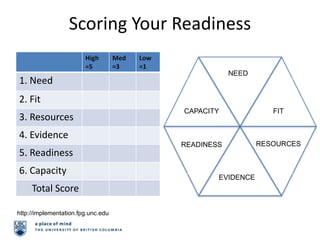
NEED
CAPACITY FIT
READINESS RESOURCES
EVIDENCE
Scoring Your Readiness
High
=5
Med
=3
Low
=1
1. Need
2. Fit
3. Resources
4. Evidence
5. Readiness
6. Capacity
Total Score
http://implementation.fpg.unc.edu
Thank you!
Kiitos to our Finnish hosts for inviting
us to their beautiful country!

Vicky Scott: Implementing research into practice

  • 1.
    Implementing Research into Practice VickyScott, RN, PhD Clinical Professor, Faculty of Medicine, School of Population and Public Health, University of British Columbia
  • 2.
    Implementation Science Implementation Science:is the scientific study of variables and conditions that impact changes at practice, organization and systems levels; changes that are required to promote the systematic uptake, sustainability and effectiveness of evidence-based programs and practices in typical service and social settings. (Blase and Fixsen, 2010, NIRN ) The goal of this presentation is to help you to incorporate interventions to reduce injuries into your organizations in a way that is both effective and sustainable
  • 3.
  • 4.
    Why evidence isnot enough Findings from the National Implementation Research Network reveal four main reasons why proven evidence-based interventions do not produce results as intended: 1. What is known is not what is adopted 2. What is adopted is not used with fidelity 3. What is adopted is not sustained for long enough 4. What is adopted is not used on a scale that would have a broad impact
  • 5.
    Practitioners do notuse “experimental rigor”, they use programs.
  • 6.
    Operationalization Researchers and implementersworking together to: – Define intervention core elements – Define principles and values that underpin the intervention (e.g., autonomy of recipients) – Define intended population – Support all implementation stages – Understand the implementation context
  • 8.
    NEED CAPACITY FIT READINESS RESOURCES EVIDENCE ImplementationContext http://implementation.fpg.unc.edu
  • 9.
    1. Need • Dataindicating need • Significance of the issue • Perception of need by staff and recipients
  • 10.
    2. Fit withCurrent Practice • Aligns with organization’s priorities • Compatible with organization structures, policies and practices • Compatible with community values and beliefs
  • 11.
    3. Resources • Administrationsupport • Physical setting • Technology and data supports • Implementation expertise • Staffing and supervisors • Training and coaches
  • 12.
    Training example: Canadian FallsPrevention Curriculum To increase knowledge among health care providers and community leaders on how to: • design, • implement and • evaluate an evidence-based, multi- sectorial fall prevention program for older adults. www.canadianfallprevention.ca
  • 13.
    4. Evidence • Outcome– is it worth it? • Fidelity of data • Population similarities, e.g., age, health and culture • Cost effectiveness • Efficacy or effectiveness • Number/quality of studies
  • 15.
    5. Readiness • Experttrainers • Qualifications of implementers and evaluators • Mature site to observe • Operational definitions of core functions • Usability pilot (Plan, Do, Study, Act)
  • 16.
    PDSA Cycle Trial andlearn to identify core components and active ingredients to further evaluate, improve and discard non-essential components. Do in partnership with researchers, program developers and early implementers. Usability Pilot
  • 17.
    6. Capacity • Buy-inprocess operationalized – Practitioners – Recipients of interventions • Sustainability – Staff competencies – Organization data support – Leadership adaptability – Financial and technical support • Continuous quality improvement supported by shared learning and audits of competency
  • 18.
    Competency Drivers • Selection:of staff with the required knowledge, basic skills and abilities • Training: of staff on new skills and practices and when, how and with whom they will be used • Coaching: of staff to oversee the practice and mastering of new skills on the job. Performance assessments are key.
  • 19.
    NEED CAPACITY FIT READINESS RESOURCES EVIDENCE ScoringYour Readiness High =5 Med =3 Low =1 1. Need 2. Fit 3. Resources 4. Evidence 5. Readiness 6. Capacity Total Score http://implementation.fpg.unc.edu
  • 20.
    Thank you! Kiitos toour Finnish hosts for inviting us to their beautiful country!

Editor's Notes

  • #4 Implementation = The HOW Intervention = The WHAT
  • #6 To address this issues we need to realize…
  • #7 Autonomy: capacity of a rational individual to make an informed, un-coerced decision
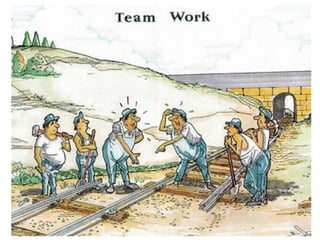
  • #8 In other words, researchers and implementers need to work as one team for effective implementation
  • #9 For effective operationalization it is recommended to understand the implementation context – these six areas illuminate how this is done
  • #13 This course is designed to provide you with a solid theoretical foundation in the science of falls prevention as well as the art of program planning for falls prevention. The course participants are typically health professionals, community leaders, or persons involved in fall and injury prevention policy.
  • #16 Implementation components operationalized: Organizational support – of leaders, staff administration and affiliated systems Leadership – systems expert/coaches Staff competency – performance assessments/auditing tools