Research for Patient Benefit    Professor Celia Davies Programme Director
National Institute for Health Research  Infrastructure Clinical Research  Facilities & Centres Clinical Research Networks Research Research Projects & Programmes Research Governance Systems Research Information Systems Systems Patients & Public Universities Investigators & Senior Investigators Associates Faculty Trainees Research Units & Schools NHS Trusts
NIHR Research Programmes  Translating research evidence into NHS practice Basic Research  (Biomedical, population, Social Science&  engineering & technology) Experimental Medicine Effectiveness and cost- effectiveness Adoption  into the service Proof of concept Efficacy Knowledge transfer for NHS NICE Research Centres   Programme Grants Healthcare Technology  Cooperatives  Health Technology Assessment Service Delivery  and Organisation Research for Innovation, Speculation and Creativity New & Emerging Applications of Tech.   Health Technology Devices Research for Patient Benefit
Research for Patient Benefit response-mode  funding programme  supports  high quality  health services and public health research  relevant to the NHS administered by the NIHR Central Commissioning Facility  ten Regional Funding Committees
Nicholas Tarrier Research for Patient Benefit   Regional Committee Chairs Senga Bond Paul Johnstone Hywel Williams Ian Harvey Charles Wolfe Helen Smith Christina Victor Stuart Logan Steve Cropper
Research for Patient Benefit - the  programme funding building to £25 million per year after three years grants may be up to  36 months duration  with a  maximum cost of £250k
Aims study the way that NHS services are provided and used  evaluate whether interventions are effective and provide value for money  examine whether alternative means for providing healthcare would be more effective in terms of cost and effectiveness  formally assess innovations and developments in healthcare supporting projects in health services and  public health research that could:
RfPB - A vision of research…. arising from daily practice in  the NHS developed between NHS and other partners open as to topic and as to method generating tangible benefits in health  and health care - a responsive programme with a strategic scope  - both regionally delivered and centrally led
The first competition: the process… 651 ROIs 279 full proposals 141 peer reviewed 25 funded an overall success rate of  9% - but varying by region and changing as the programme builds up
The first competition:  the outcomes…   25 projects based in a diversity of settings and care groups concerned with clinical and non-clinical topics  using a diversity of methods and research techniques building partnerships between the NHS, academia and patient groups not the usual suspects, not the established priorities
Preparing a proposal ... early stages Build the right team for the task Use the PPI grid  not just at the end but at an early stage as a design aid Partnerships are possible and often preferable
Preparing a Proposal ... developing the application The usual rules for sound research apply  Address the scope criteria explicitly Use critical readers not only inside but outside the specialist area
Preparing a Proposal … before you submit Scan all guidance and web resources again  (include FAQs, Director’s Message  &c. ) Familiarise yourself with the submission rules If in doubt … contact CCF
RfPB RDSUs INVOLVE Improving Quality and Relevance
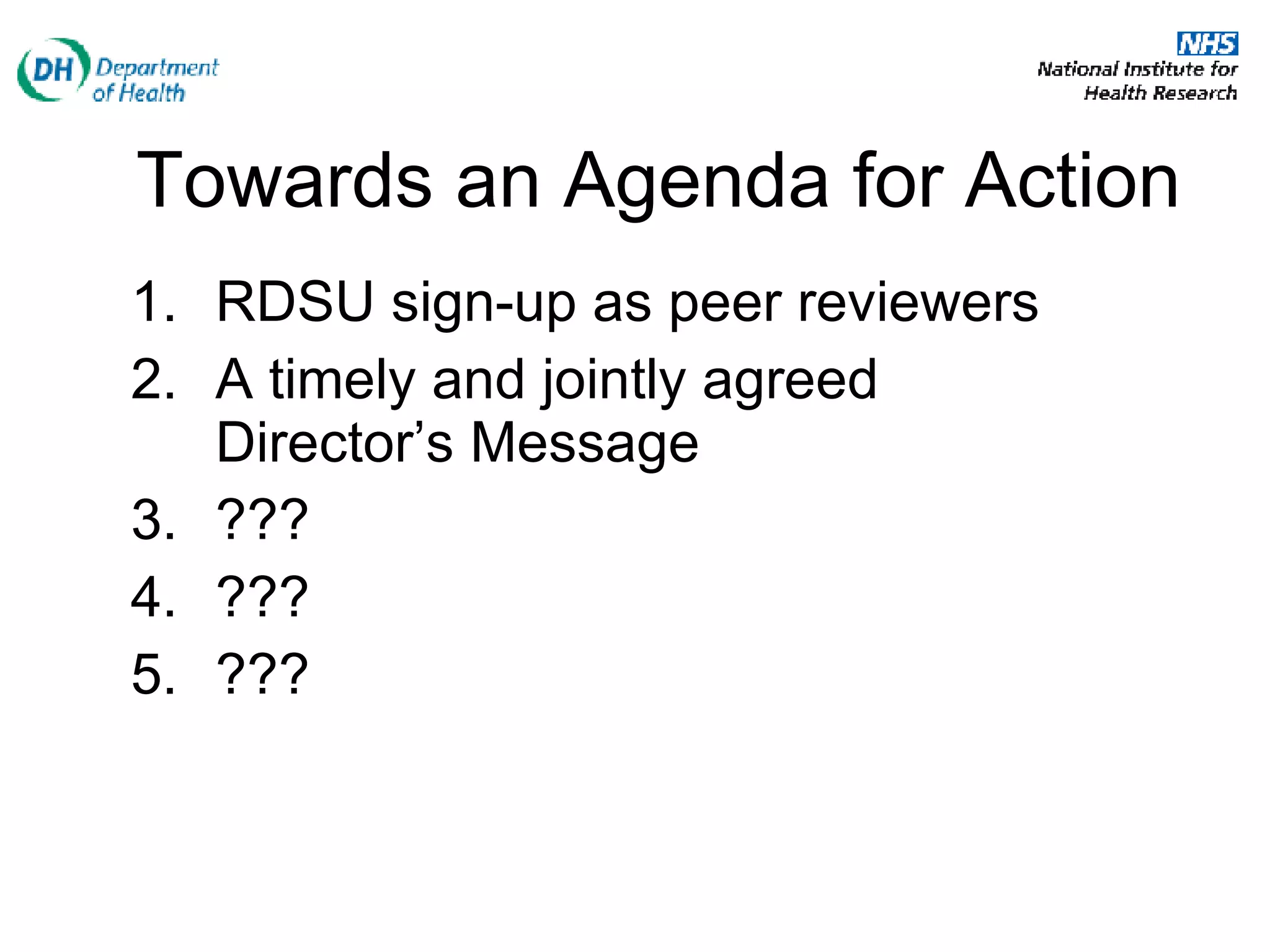
Towards an Agenda for Action RDSU sign-up as peer reviewers A timely and jointly agreed Director’s Message ??? ??? ???
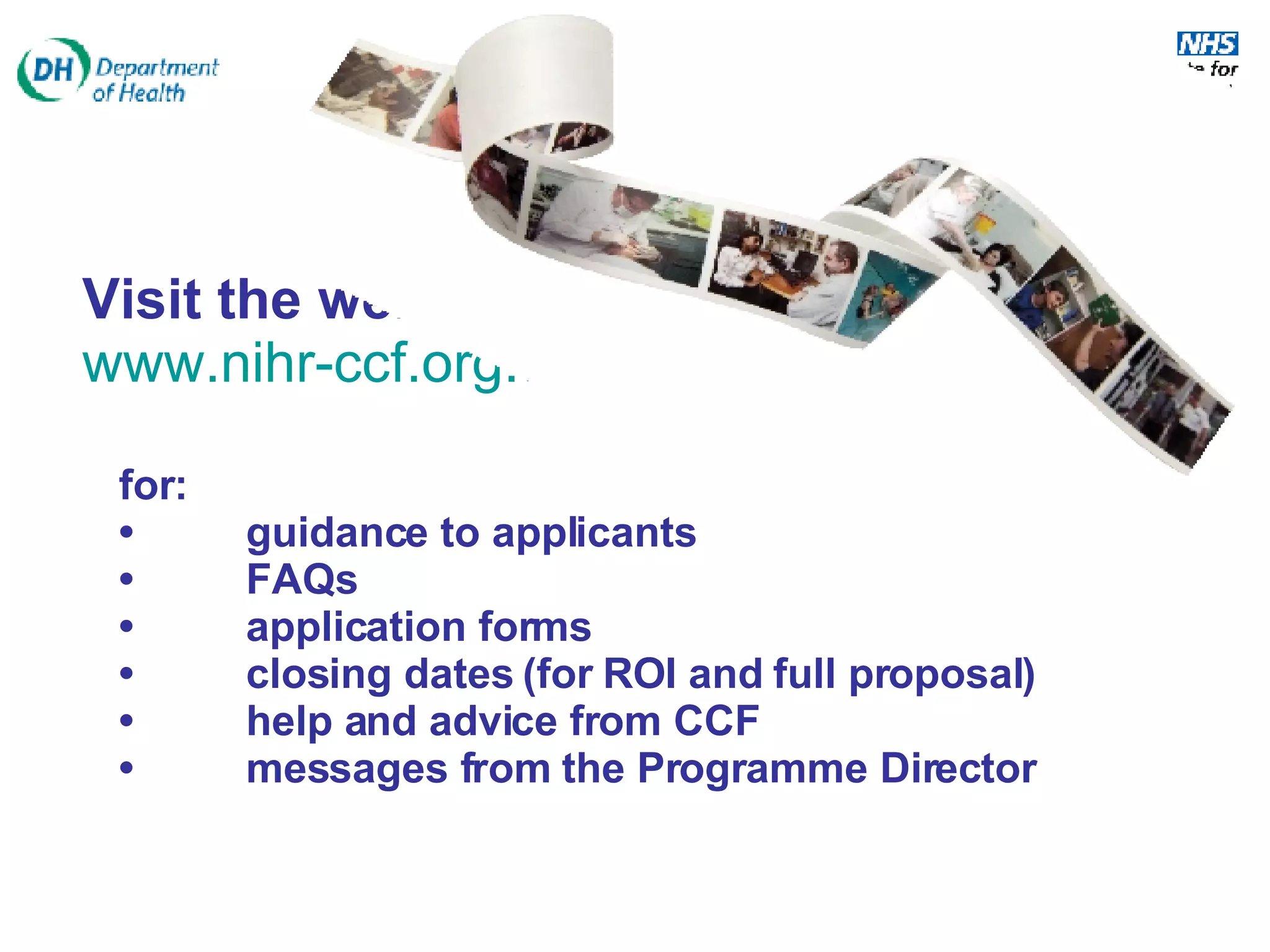
Visit the website …  www.nihr-ccf.org.uk   for: • guidance to applicants • FAQs • application forms • closing dates (for ROI and full proposal)  • help and advice from CCF • messages from the Programme Director

香港六合彩

  • 1.
    Research for PatientBenefit Professor Celia Davies Programme Director
  • 2.
    National Institute forHealth Research Infrastructure Clinical Research Facilities & Centres Clinical Research Networks Research Research Projects & Programmes Research Governance Systems Research Information Systems Systems Patients & Public Universities Investigators & Senior Investigators Associates Faculty Trainees Research Units & Schools NHS Trusts
  • 3.
    NIHR Research Programmes Translating research evidence into NHS practice Basic Research (Biomedical, population, Social Science& engineering & technology) Experimental Medicine Effectiveness and cost- effectiveness Adoption into the service Proof of concept Efficacy Knowledge transfer for NHS NICE Research Centres Programme Grants Healthcare Technology Cooperatives Health Technology Assessment Service Delivery and Organisation Research for Innovation, Speculation and Creativity New & Emerging Applications of Tech. Health Technology Devices Research for Patient Benefit
  • 4.
    Research for PatientBenefit response-mode funding programme supports high quality health services and public health research relevant to the NHS administered by the NIHR Central Commissioning Facility ten Regional Funding Committees
  • 5.
    Nicholas Tarrier Researchfor Patient Benefit Regional Committee Chairs Senga Bond Paul Johnstone Hywel Williams Ian Harvey Charles Wolfe Helen Smith Christina Victor Stuart Logan Steve Cropper
  • 6.
    Research for PatientBenefit - the programme funding building to £25 million per year after three years grants may be up to 36 months duration with a maximum cost of £250k
  • 7.
    Aims study theway that NHS services are provided and used evaluate whether interventions are effective and provide value for money examine whether alternative means for providing healthcare would be more effective in terms of cost and effectiveness formally assess innovations and developments in healthcare supporting projects in health services and public health research that could:
  • 8.
    RfPB - Avision of research…. arising from daily practice in the NHS developed between NHS and other partners open as to topic and as to method generating tangible benefits in health and health care - a responsive programme with a strategic scope - both regionally delivered and centrally led
  • 9.
    The first competition:the process… 651 ROIs 279 full proposals 141 peer reviewed 25 funded an overall success rate of 9% - but varying by region and changing as the programme builds up
  • 10.
    The first competition: the outcomes… 25 projects based in a diversity of settings and care groups concerned with clinical and non-clinical topics using a diversity of methods and research techniques building partnerships between the NHS, academia and patient groups not the usual suspects, not the established priorities
  • 11.
    Preparing a proposal... early stages Build the right team for the task Use the PPI grid not just at the end but at an early stage as a design aid Partnerships are possible and often preferable
  • 12.
    Preparing a Proposal... developing the application The usual rules for sound research apply Address the scope criteria explicitly Use critical readers not only inside but outside the specialist area
  • 13.
    Preparing a Proposal… before you submit Scan all guidance and web resources again (include FAQs, Director’s Message &c. ) Familiarise yourself with the submission rules If in doubt … contact CCF
  • 14.
    RfPB RDSUs INVOLVEImproving Quality and Relevance
  • 15.
    Towards an Agendafor Action RDSU sign-up as peer reviewers A timely and jointly agreed Director’s Message ??? ??? ???
  • 16.
    Visit the website… www.nihr-ccf.org.uk for: • guidance to applicants • FAQs • application forms • closing dates (for ROI and full proposal) • help and advice from CCF • messages from the Programme Director

Editor's Notes

  • #2 Research for Patient Benefit – ppt presentation vs. 1 (December 2006) This presentation should not be altered in any way without the permission of the Programme Director. Please click into the bottom text box and type in name of person giving the presentation. NOTES: The Department of Health has established a new Research for Patient Benefit programme. This national response-mode funding programme: supports high-quality, investigator-led research that is relevant to the NHS and its patients. funds research related to daily practice in areas identified by health service staff themselves and developed by them, with appropriate high-quality academic input.