TECHNOLOGY FOR MUSIC
     EDUCATOR
  Vestavia Music Educators 2013
IT USED TO BE SO EASY
teachers
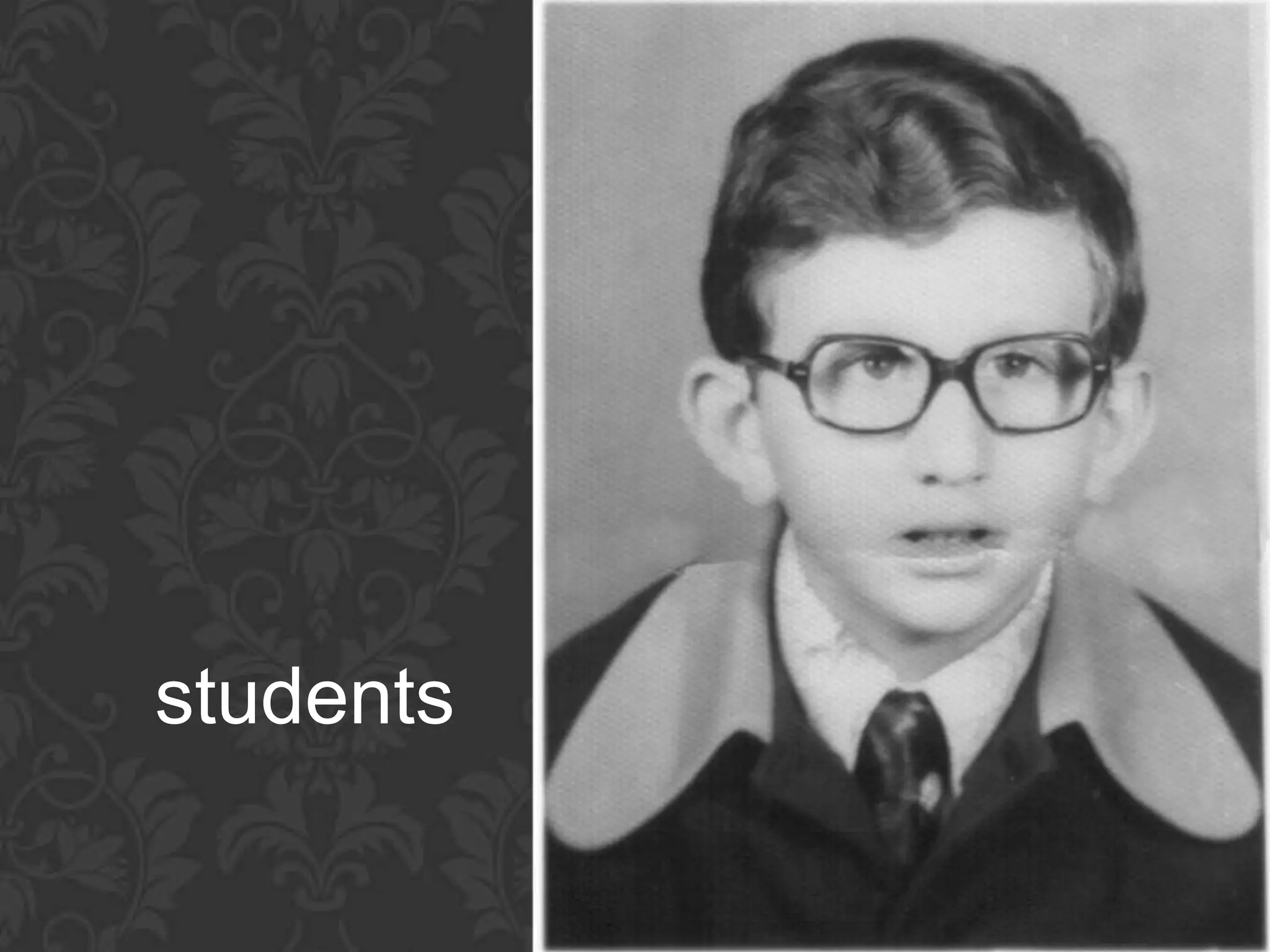
students
KNOWLEDGE
CANDLE
something happened
GOOGLE
today’s students are no longer
the people our educational
system was designed to teach
                   -mark prensky
digital
native
digital
immigran
t
do you know
more than your
students about
technology?
opt out
isolation
ignoranc
e
irrelevan
ce
opt out
     irrelevan
ignoranc
     ce
e     isolation
failure
behold, i bring you good news
they aren’t that smart
they just know more than you
what they know is only skin dee
texting
tunes
expert consumers
expert consumers


          novice creators
technology entertains


doesn’t instruct
informs them of events

doesn’t keep them organized
computer
accompani
es them to
class
computer
distracts
them from
professor
they only look smart


until you ask them a question
or ask them to actually DO
something with technology.
they still need you
they still need your:
wisdom
they still need your:
wisdommaturity
they still need your:
wisdommaturity guidance
Purpose of this presentation
1. Understand the change that is
   going on in education with
   technology.
2. Educate Yourself. Be better at
   what you do.
3. Work smarter and more
   efficiently.
EMERGING
 TRUTHS
  The NMC (New Media Consortium) is an
  international community of experts in
  educational technology
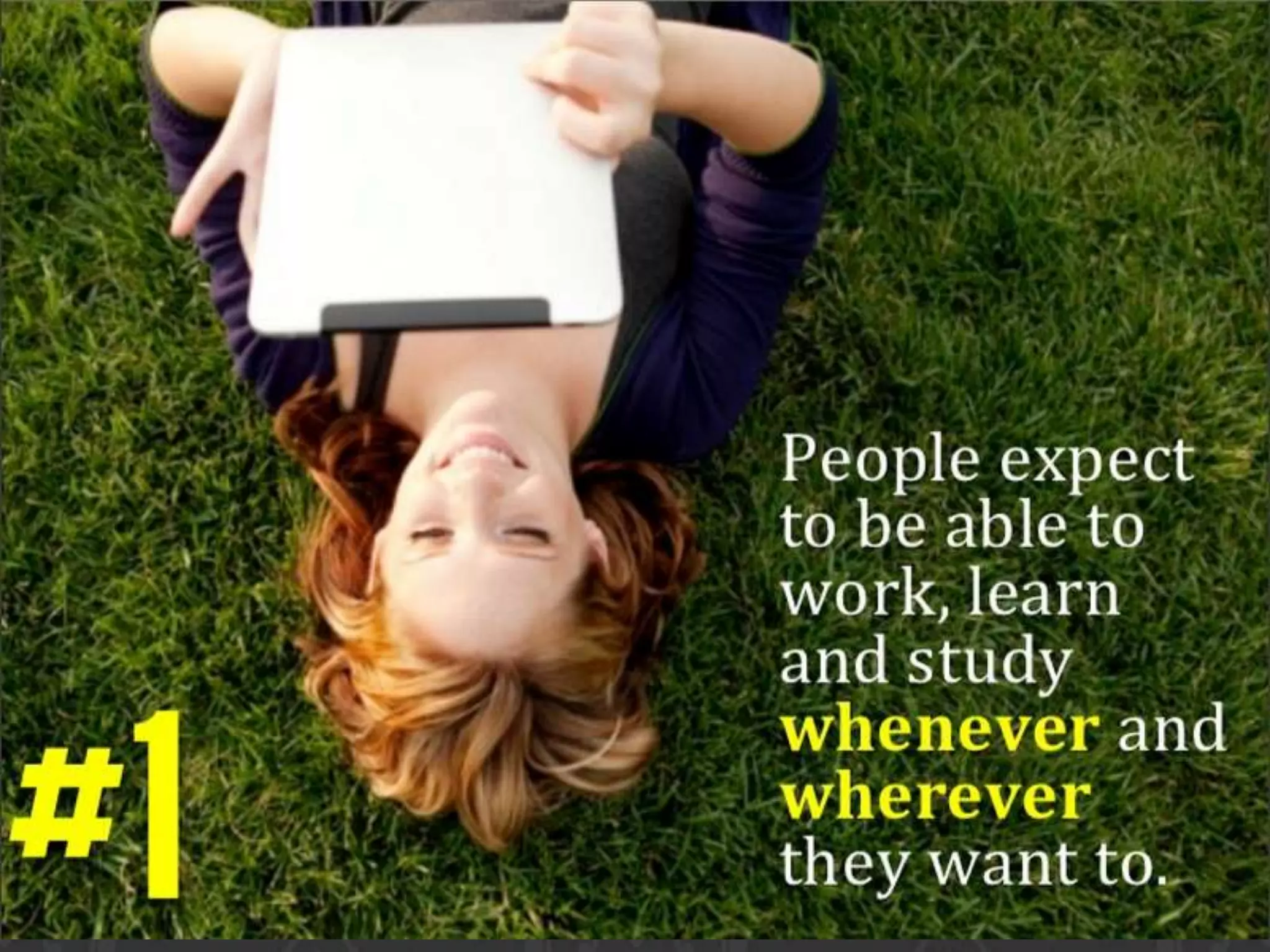
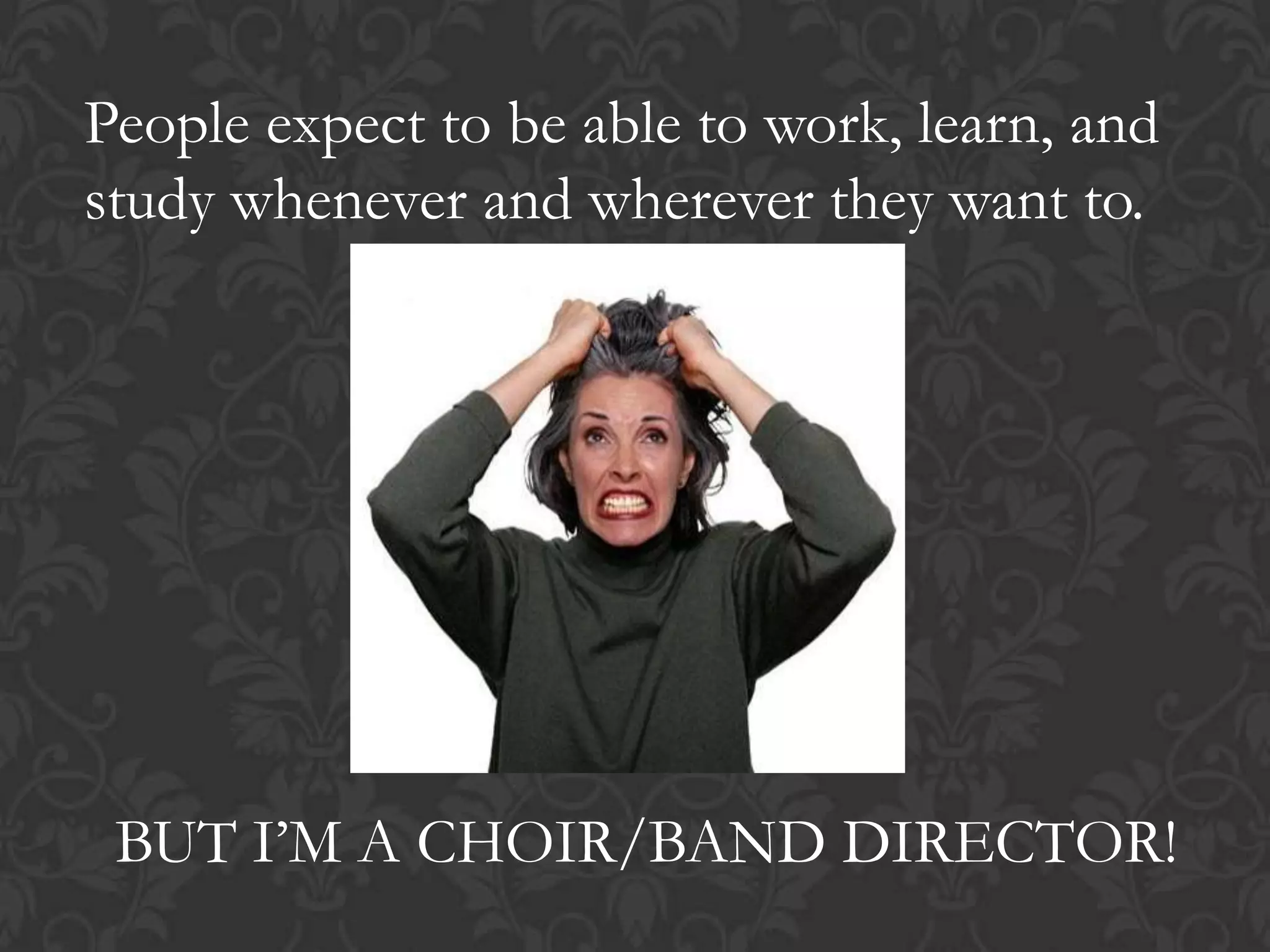
People expect to be able to work, learn, and
study whenever and wherever they want to.
People expect to be able to work, learn, and
study whenever and wherever they want to.


 BUT I’M A CHOIR/BAND DIRECTOR!
So, does this emerging truth
  hurt our case or help it?
Emerging truth #2:

We will want our information
to be accessible in any device
Emerging truth #3:
The world is increasingly
collaborative, driving changes
in the way students projects
are structured.
Why is this good news?
Collaboration is a specialty of
         musicians.

We teach collaboration every
            day.
Purpose of this presentation
1. Understand the change that is
   going on in education with
   technology.
2. Educate Yourself. Be better at
   what you do.
3. Work smarter and more
   efficiently.
Personal Learning
Network
Personal Learning
Network
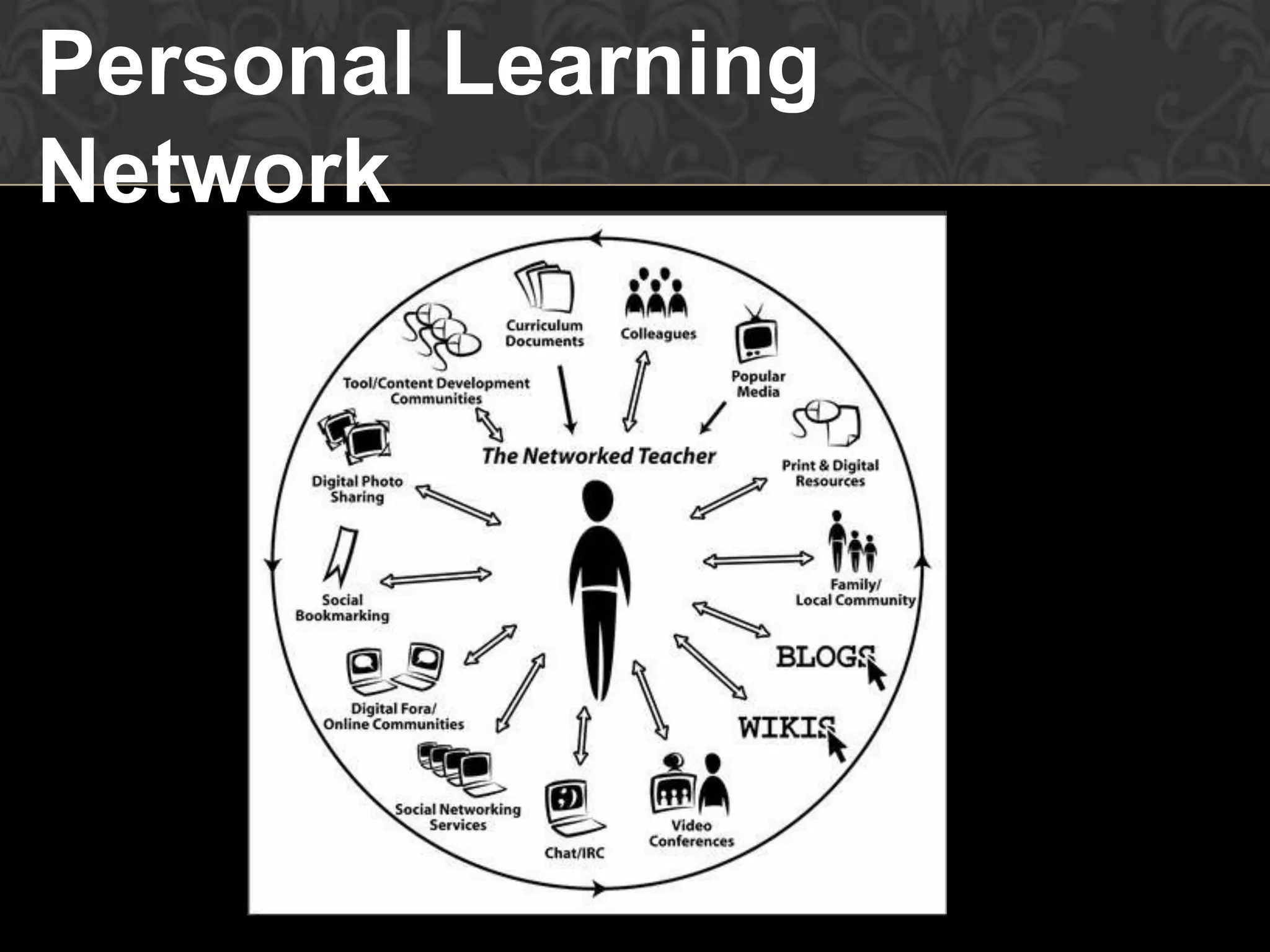
 a personalized program of professional
              development
Personal Learning
Network
  You are responsible for your own
     professional development.
Personal Learning
Network
Technology
Education
Design
how many of you follow
      twitter?
Leaders of today’s movements
are tweeting
  Cultivators of knowledge:

  They point their followers
   to relevant information
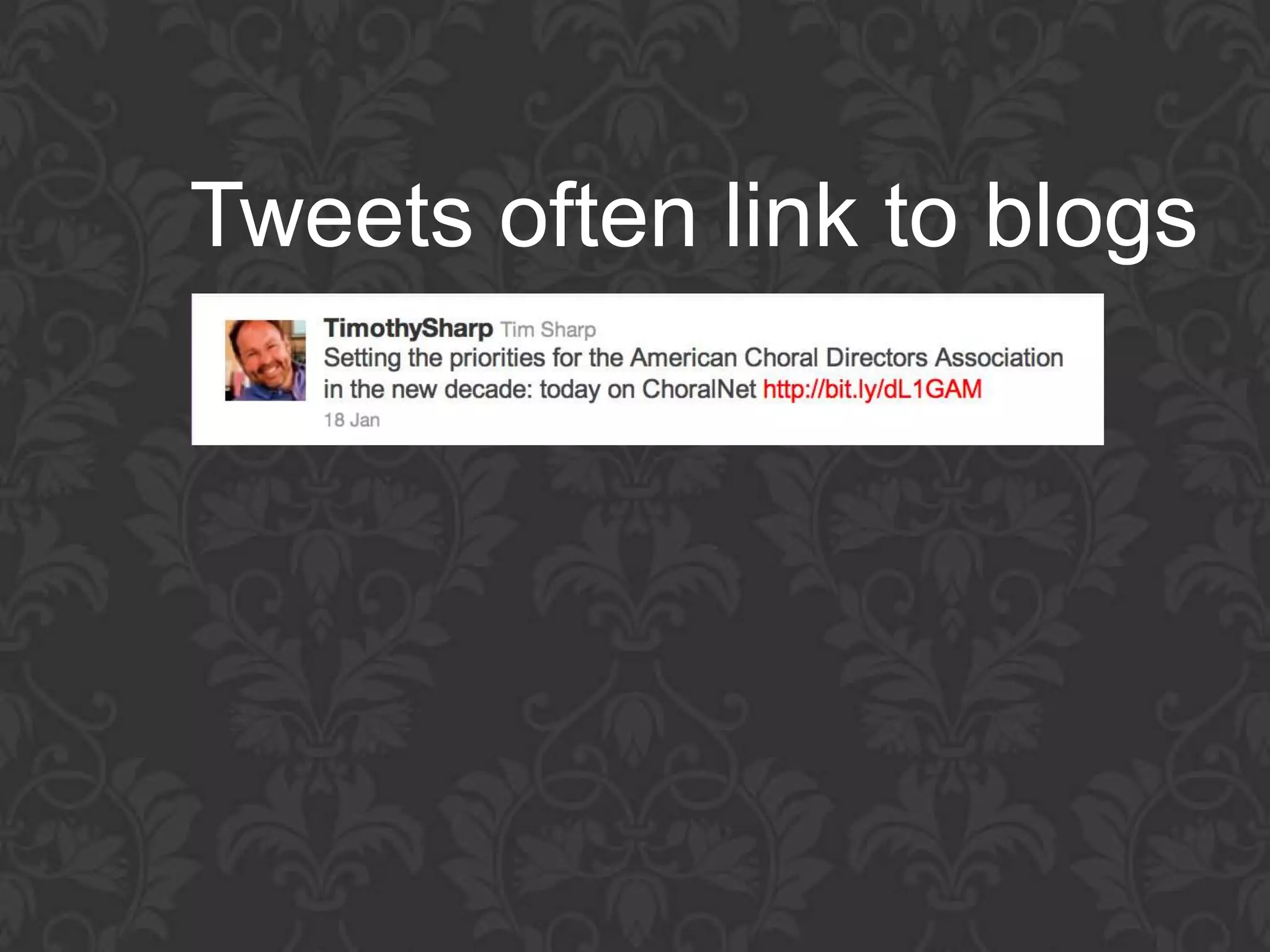
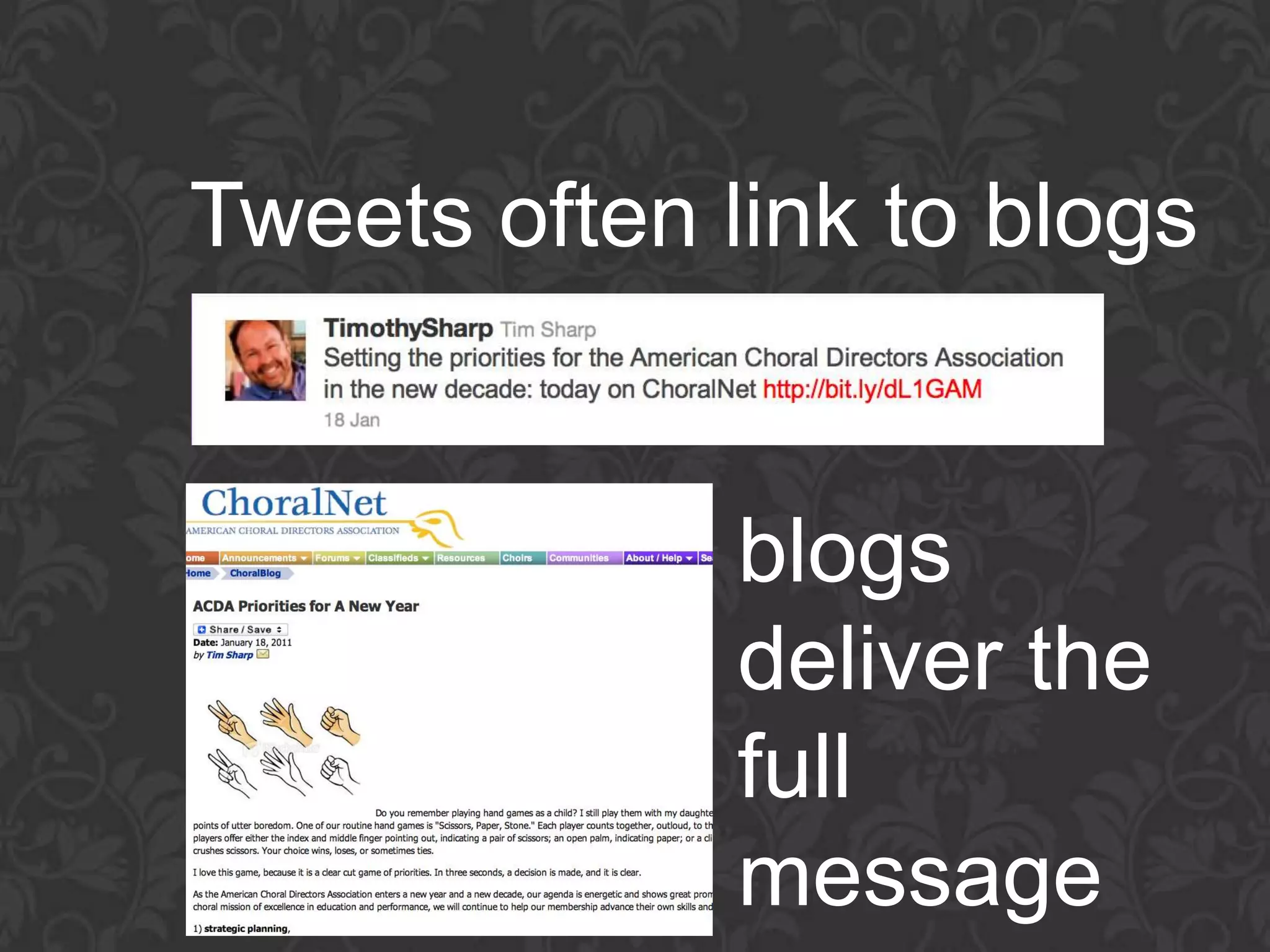
Tweets often link to blogs


              blogs
              deliver the
              full
              message
Tweets


Facebook posts
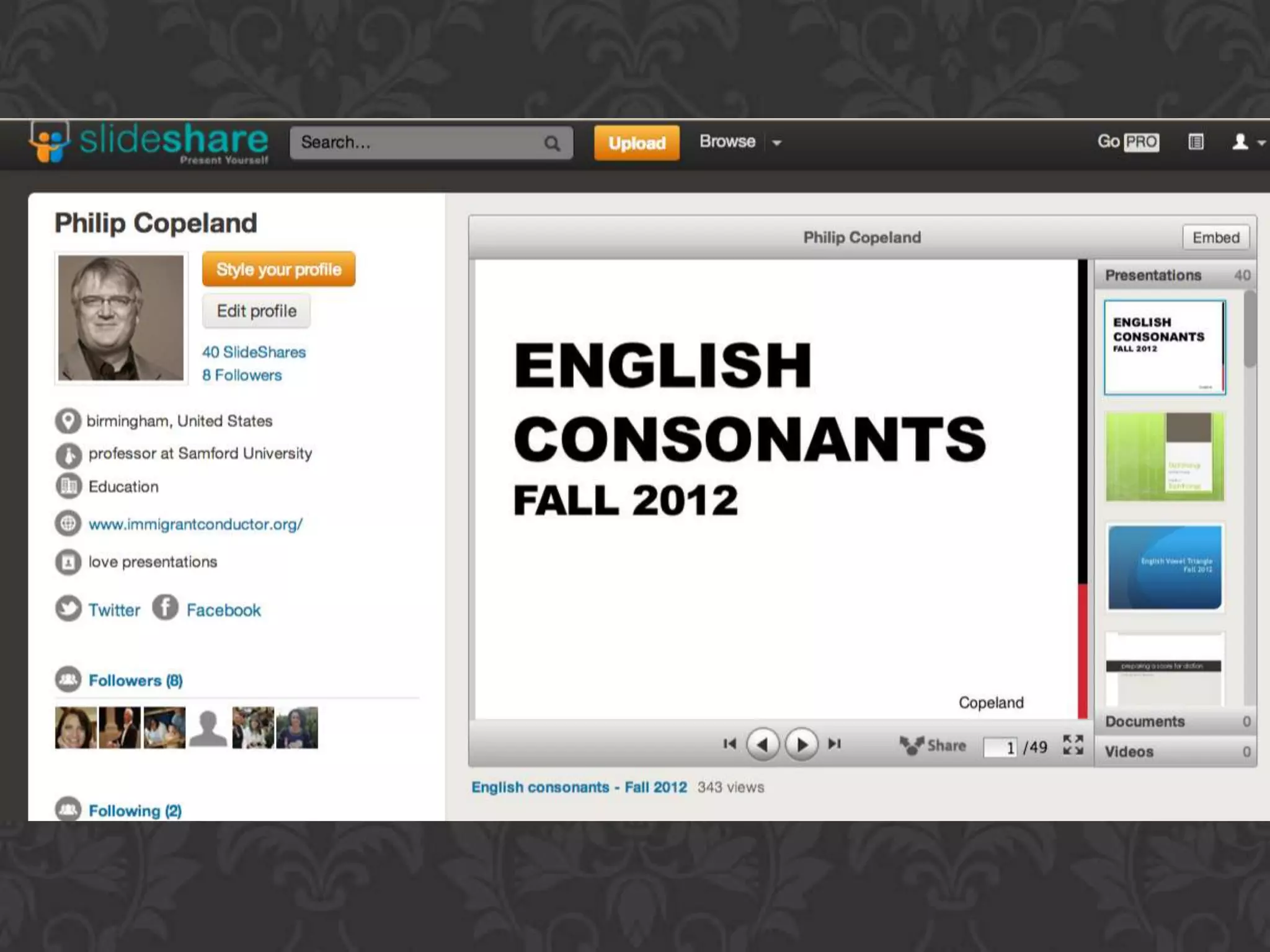
Building your PLN: slideshare
slideshare
Core Principles:
Share what you do with others.
Do you remember this point?
The world is increasingly
     collaborative,
 and you need to be a
collaborating part of the
      community
So many ways to share:
         Blog
        Twitter
      YouTube
     Newsletter?
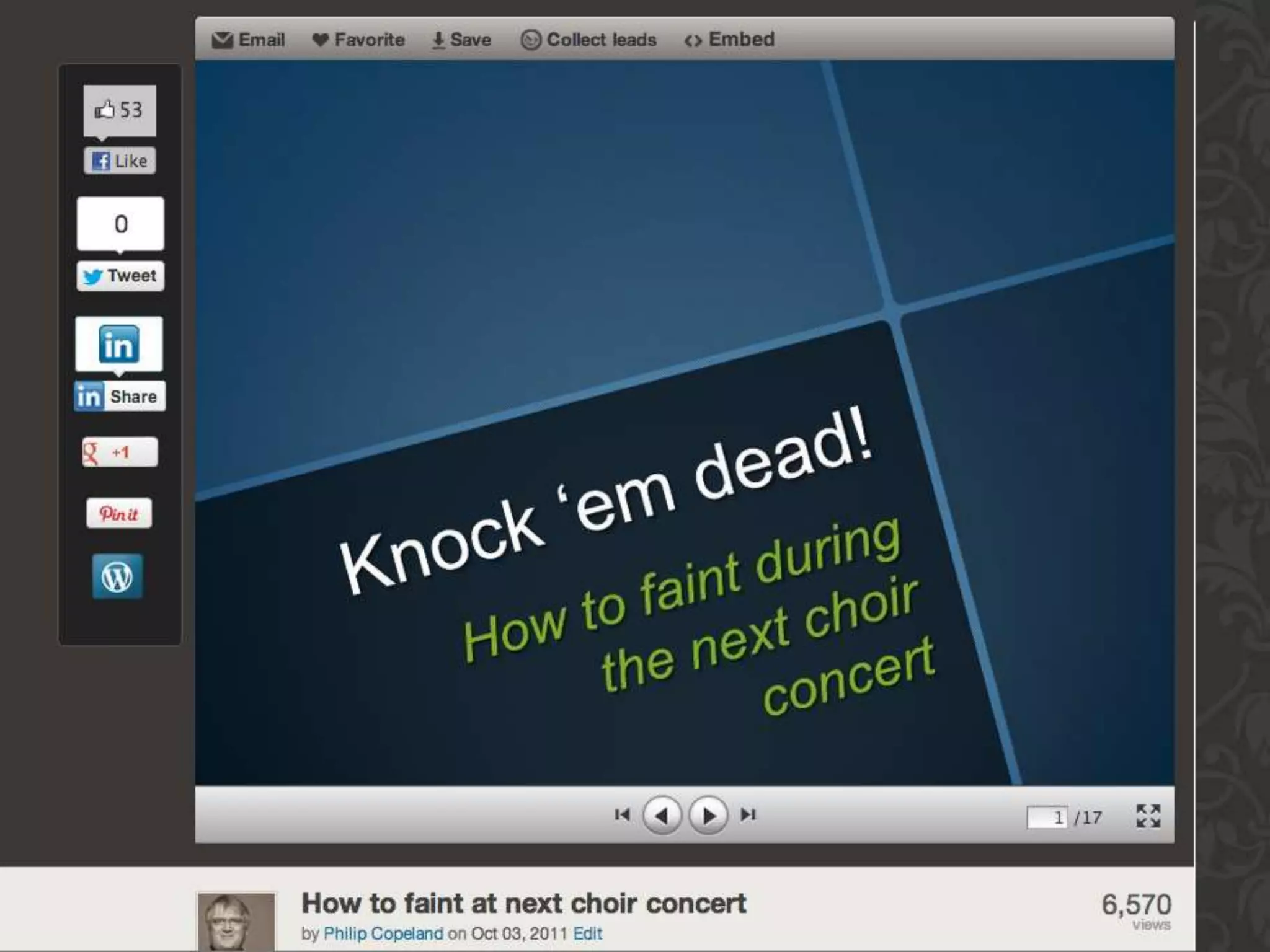
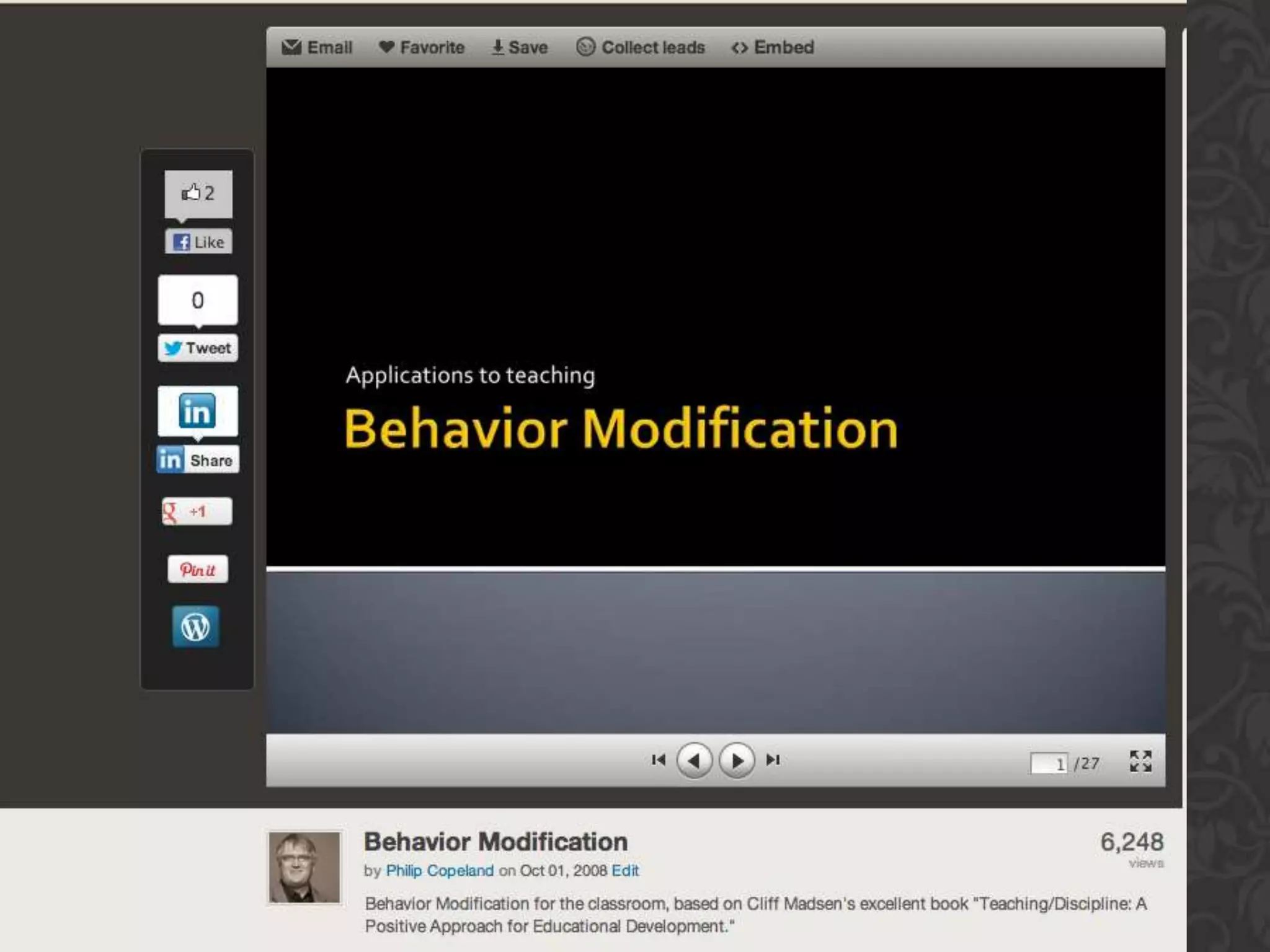
     Slideshare!
Purpose of this presentation
1. Understand the change that is
   going on in education with
   technology.
2. Educate Yourself. Be better at
   what you do.
3. Work smarter and more
   efficiently.
This is the
 part of the presentation
where I throw things at you
      in a somewhat
    disorganized way.
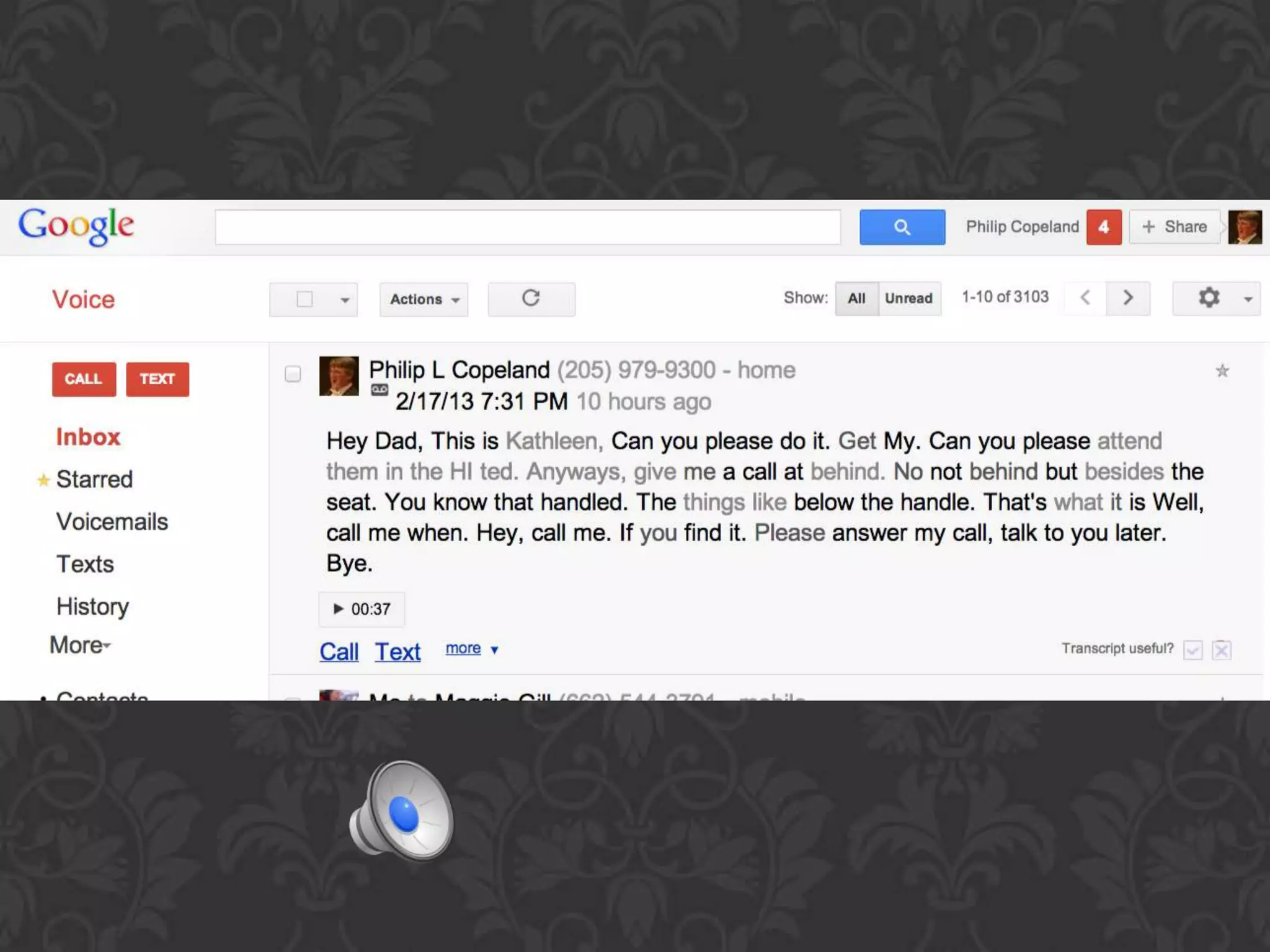
Google
    Voice – Texting
(soon to become part of
   Google Contacts)
synchronize your life:
    “cloud computing”
      and “dropbox”
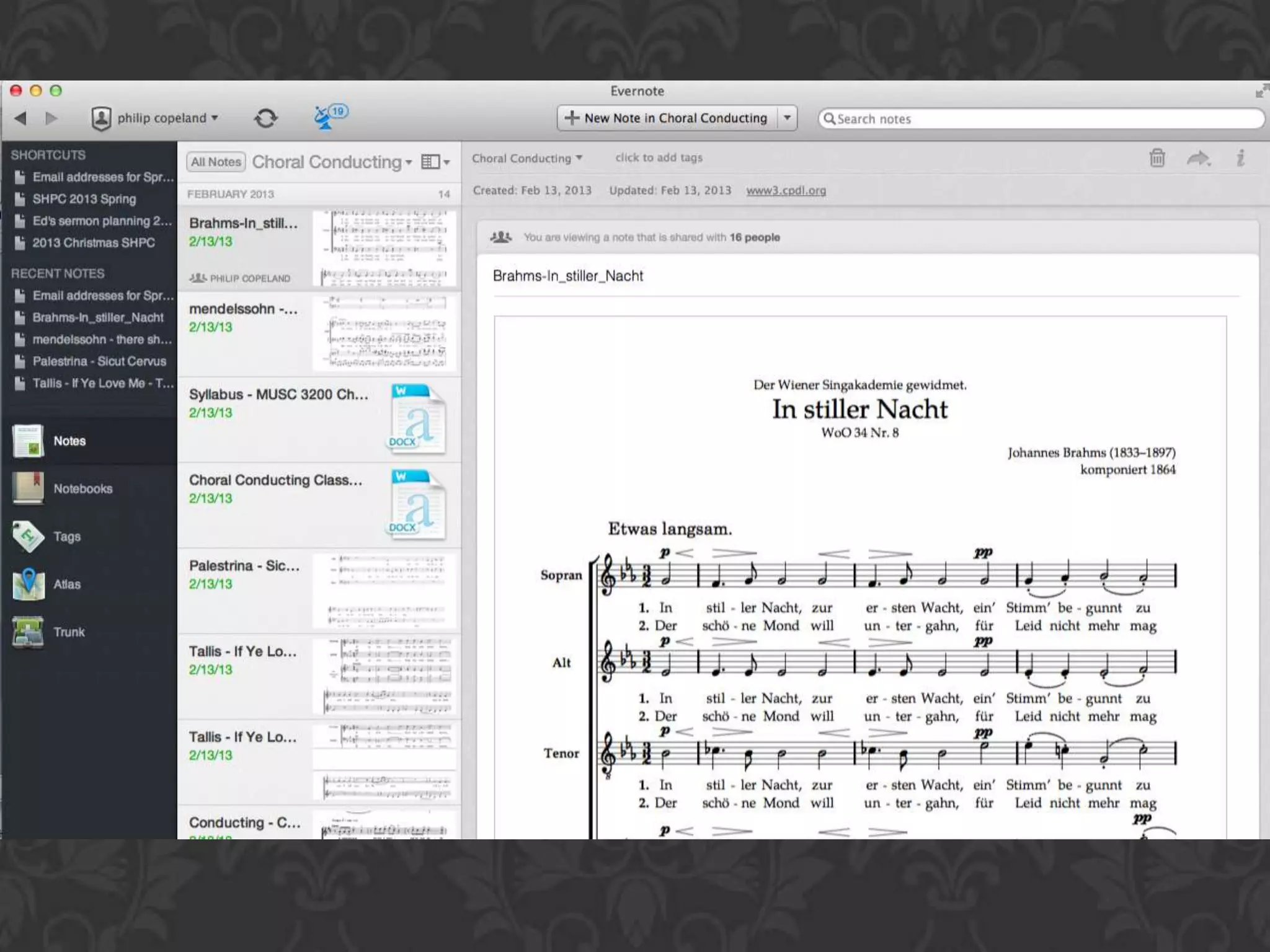
        “evernote”

choose the right tool for the jo
Using Twitter to Communicate
        with anyone
i tweet
i tweet
student gets text message
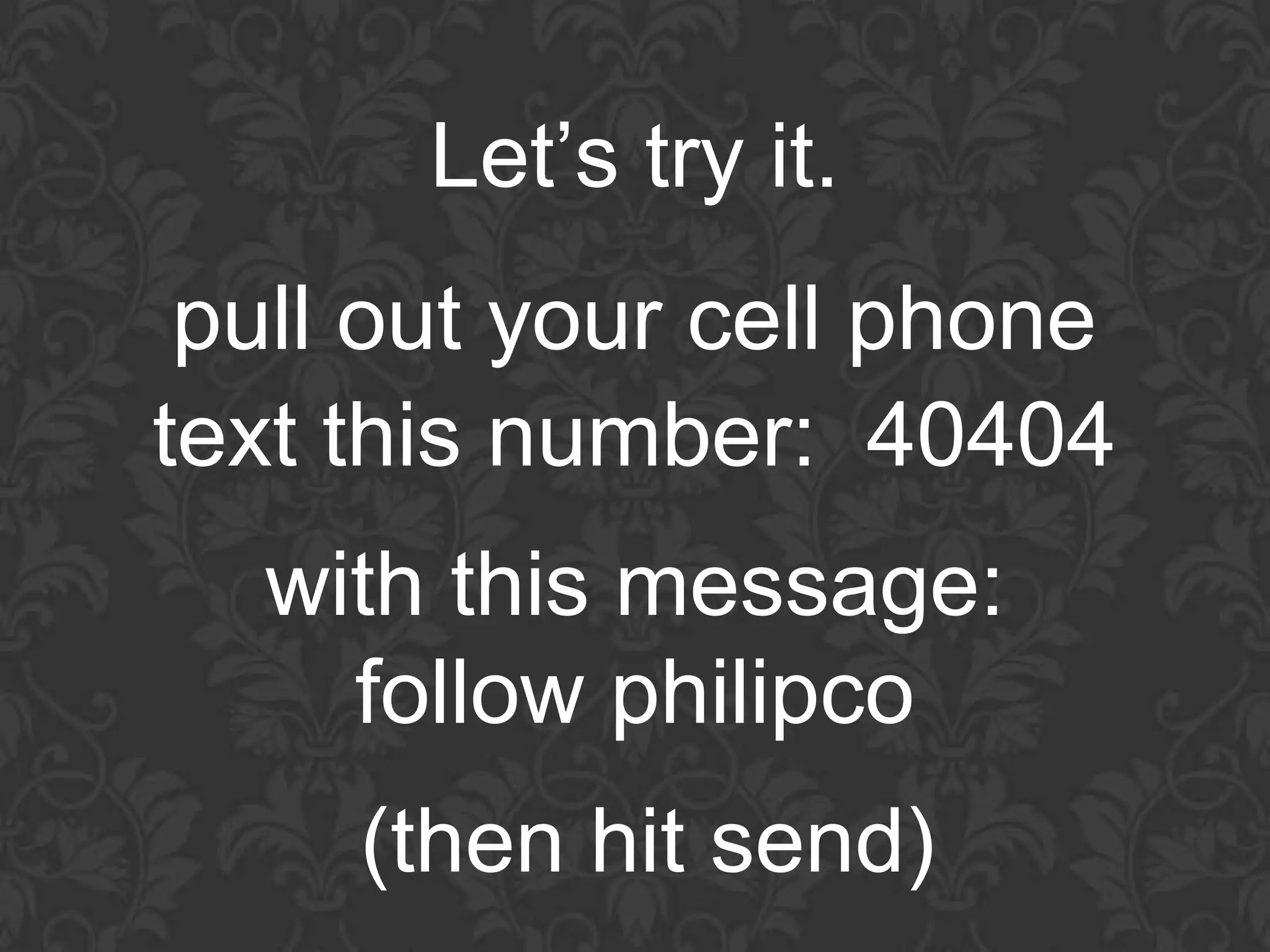
Let’s try it.
 pull out your cell phone
text this number: 40404
  with this message:
    follow philipco
     (then hit send)
scanning
Questions?

Vestavia presentation

Editor's Notes

  • #50 People expect to be able to work, learn, and study whenever and wherever they want to. Life in anincreasingly busy world where learners must balancedemands from home, work, school, and family posesa host of logistical challenges with which today’s evermore mobile students must cope. Work and learningare often two sides of the same coin, and people wanteasy and timely access not only to the information onthe network, but also to tools, resources, and up-to-themoment analysis and commentary. These needs, as wellas the increasingly essential access to social media andnetworks, have risen to the level of expectations. Theopportunitiesfor informal learning in the modern worldare abundant and diverse, and greatly expand on earliernotions like “just-in-time”or“found”learning.
  • #51 We will want our information to be accessible in any device. It does not matter where our work isstored; what mattersisthat our information is accessibleno matter where we are or what device we chooseto use. Globally, in huge numbers, we are growingaccustomed to a model of browser-based softwarethat is device independent. While some challengesstill remain, specifically with notions of privacy andsovereignty, the promise ofsignificantcostsavingsis animportant driver in the search for solutions.
  • #52 The world is increasingly collaborative, driving changes in the way students projects are structured.Because employers value collaboration asa critical skill, silos both in the workplace and at schoolare being abandoned in favor of collective intelligence.To facilitate more teamwork and group communication,projects rely on tools such as wikis, Google Docs, Skype,and easily shared file-storage sites including Dropbox.Students are increasingly evaluated not just on theoverall outcome, but also on the success of the groupdynamic. In many cases, the way an online collaborationtool is used is an equally important outcome. Like thewiki used to create this report, such sites preserve theprocess and the multiple perspectives that lead to theend results
  • #53 The abundance of resources and relationships made easily accessible via the Internet is increasingly challenging us to revisit our roles as educators. Institutions must consider the uniquevalue that each adds to a world in which informationis everywhere. In such a world, sense-making andthe ability to assess the credibility of information areparamount. Mentoring and preparing students forthe world in which they will live and work is again atthe forefront. Universities have always been seen asthe gold standard for educational credentialing, butemerging certification programs from other sources areeroding the value of that mission daily.
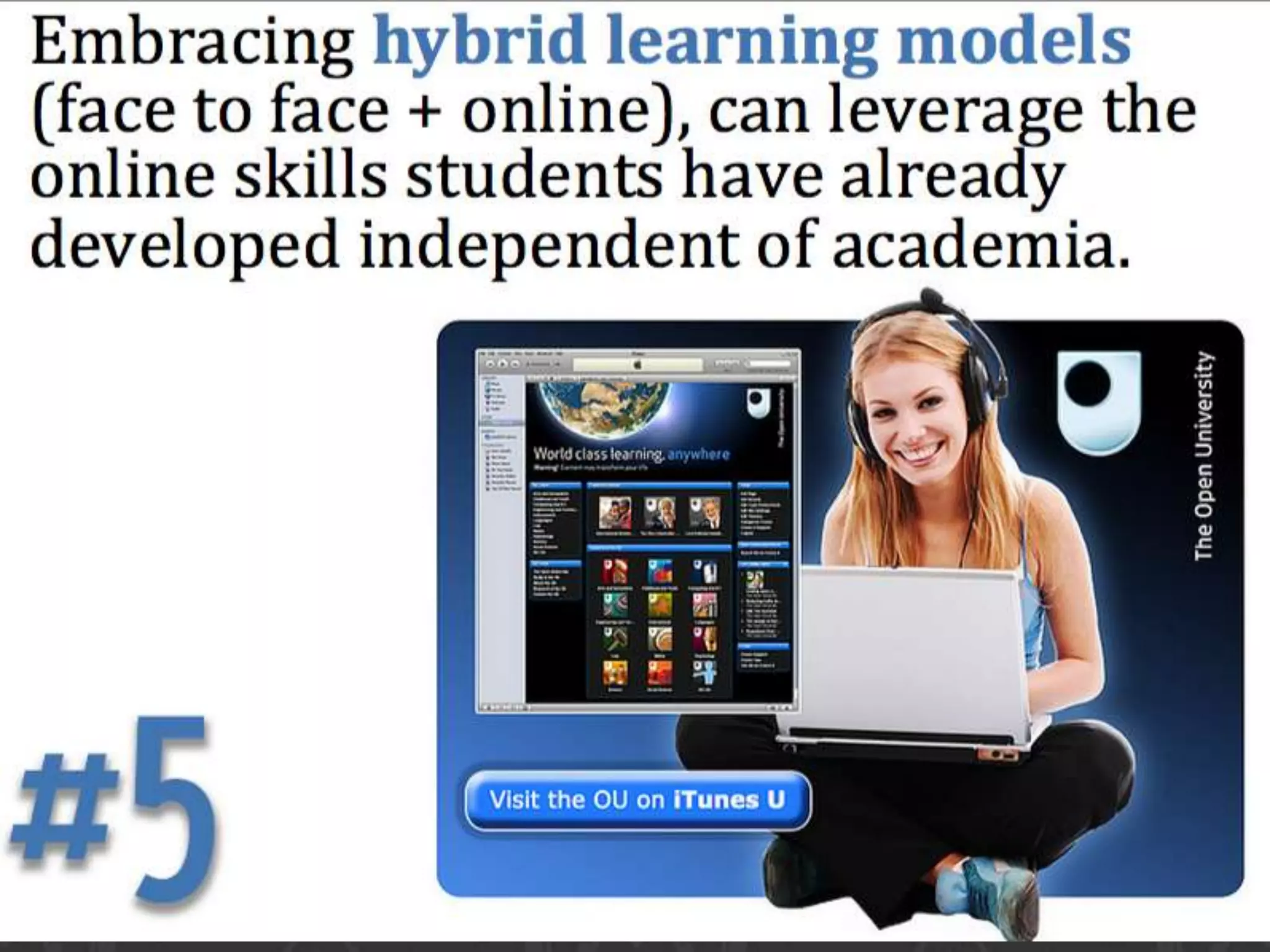
  • #54 Education paradigms are shifting to include online learning, hybrid learning and collaborative models. Budget cuts have forced institutions to re-4 NMC Horizon Report: 2012 Higher Education Editionevaluate their education strategies and find alternativesto the exclusive face-to-face learning models. Studentsalready spend much of their free time on the Internet,learning and exchanging new information — often viatheir social networks. Institutions that embrace face-toface/online hybrid learning models have the potentialto leverage the online skills learners have alreadydeveloped independent of academia.We are beginningto see developments in online learning that offerdifferent affordancesthan physical campuses, includingopportunities for increased collaboration whileequipping students with stronger digital skills. Hybridmodels, when designed and implemented successfully,enable students to travel to campus for some activities,while using the network for others, taking advantage ofthe best of both environments.6There is a new emphasis in the
  • #55 There is a new emphasis in the classroom on more challenge-based and active learning.Challenge-based learning and similar methods fostermore active learning experiences, both inside andoutside the classroom. As technologies such as tabletsand smartphones now have proven applications inhigher education institutions, educators are leveragingthese tools, which students already use, to connectthe curriculum with real life issues. The active learningapproaches are decidedly more student-centered,allowing them to take control of how they engage witha subject and to brainstorm and implementsolutionstopressing local and global problems. The hope is that iflearners can connect the course material with their ownlives, theirsurrounding communities, and the world as awhole, then they will become more excited to learn andimmerse themselves in the subject matter.
  • #86 The world is increasingly collaborative, driving changes in the way students projects are structured.Because employers value collaboration asa critical skill, silos both in the workplace and at schoolare being abandoned in favor of collective intelligence.To facilitate more teamwork and group communication,projects rely on tools such as wikis, Google Docs, Skype,and easily shared file-storage sites including Dropbox.Students are increasingly evaluated not just on theoverall outcome, but also on the success of the groupdynamic. In many cases, the way an online collaborationtool is used is an equally important outcome. Like thewiki used to create this report, such sites preserve theprocess and the multiple perspectives that lead to theend results
  • #99 We will want our information to be accessible in any device. It does not matter where our work isstored; what mattersisthat our information is accessibleno matter where we are or what device we chooseto use. Globally, in huge numbers, we are growingaccustomed to a model of browser-based softwarethat is device independent. While some challengesstill remain, specifically with notions of privacy andsovereignty, the promise ofsignificantcostsavingsis animportant driver in the search for solutions.