

CPPA Conference, Addington Raceway, 12-13 June, 2013
Learning
2033
TECHNOLOGY IN 2033
•  Biotechnology – reprogramming biology as an
information process – will be in a mature phase
•  We will be online all the time in virtual / augmented
reality. 
•  Search engines won’t wait for you to ask for
information.
•  Artificially intelligent entities will be operating at
human levels.
Ray Kurzweil
http://www.forbes.com/
GLOBAL CONFLICT 2033
•  Global conflict will be widespread and chaotic, but not
necessarily more violent
•  In short, the next few decades will see the erosion of
central authority in the former colonial world
Robert D.Kaplan
http://www.forbes.com/
GLOBAL WORKFORCE IN 2033
•  A “born-mobile” workforce will be constantly
connected to both work and home life, using devices
that are wearable – or even implantable
•  Leadership structures will become increasingly flat, as
roles shift based on each individual’s strengths and
capabilities.
Oliver Bussmann,CIO for SAP
http://www.forbes.com/
EDUCATION IN 2033
•  Global Access
•  Personalized learning
•  Interactive classrooms
•  Competency-based credentials
Shantanu Sinha,President and COO of Khan Academy
http://www.forbes.com/
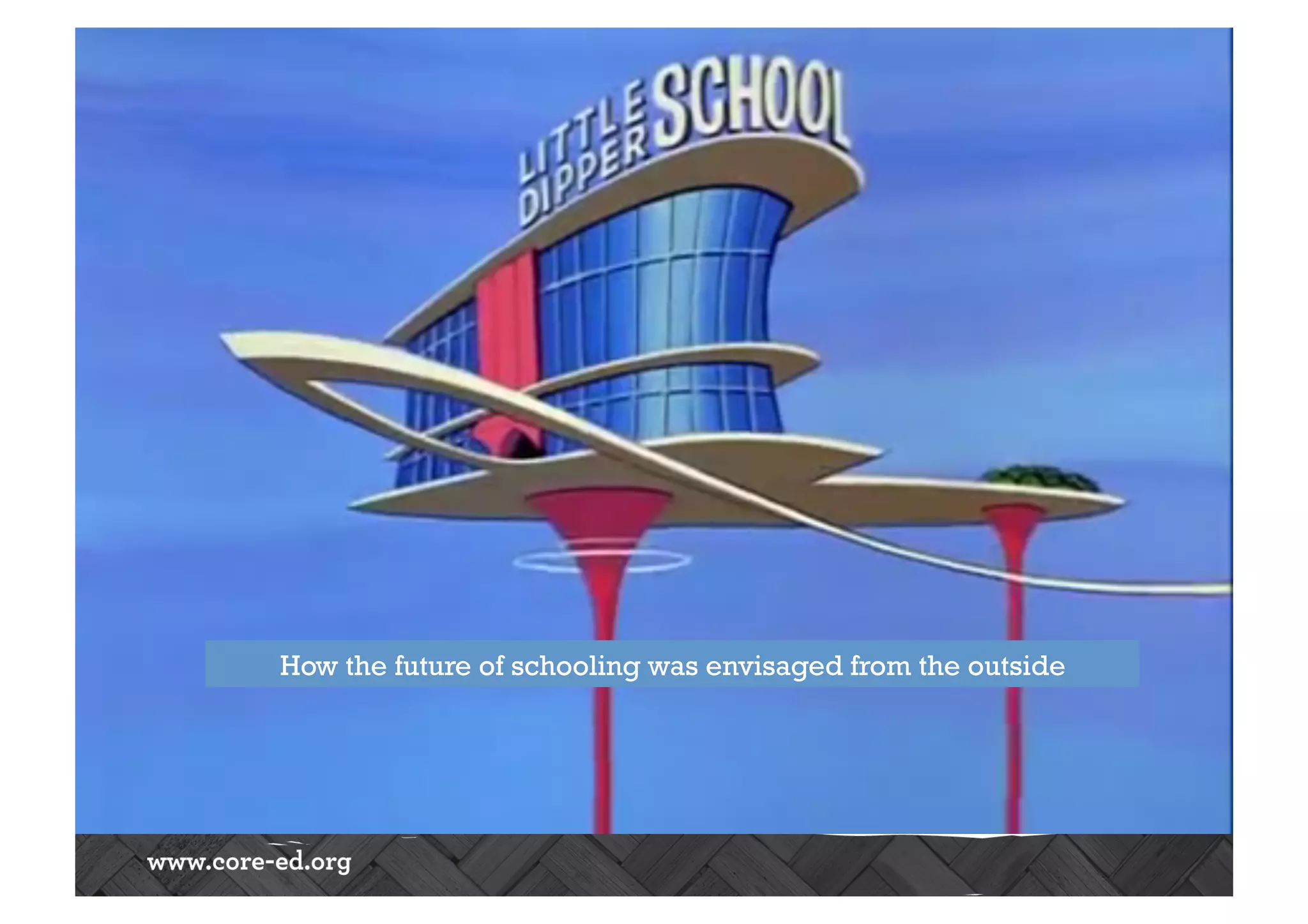
How the future of schooling was envisaged from the outside
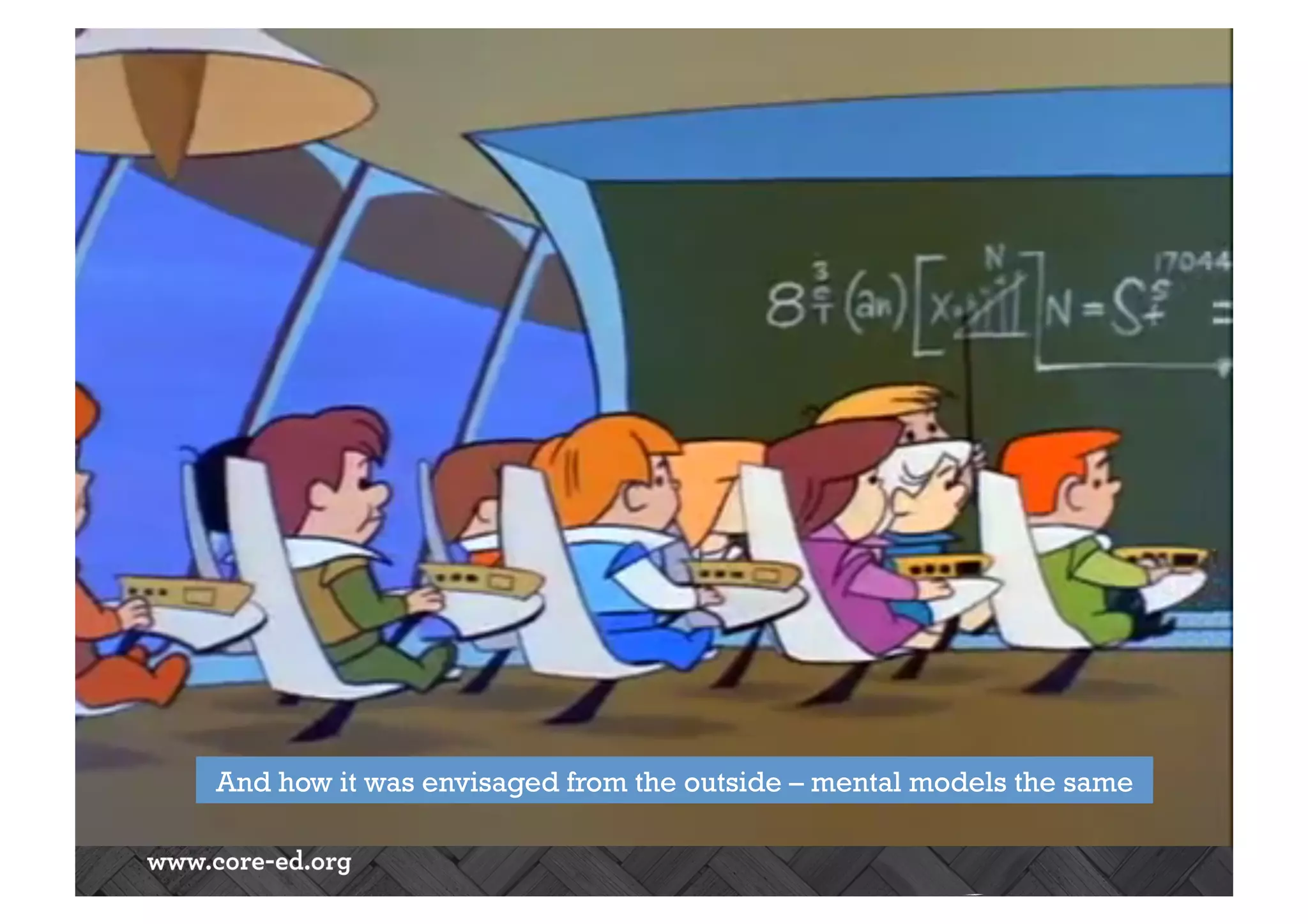
And how it was envisaged from the outside – mental models the same
The future…?
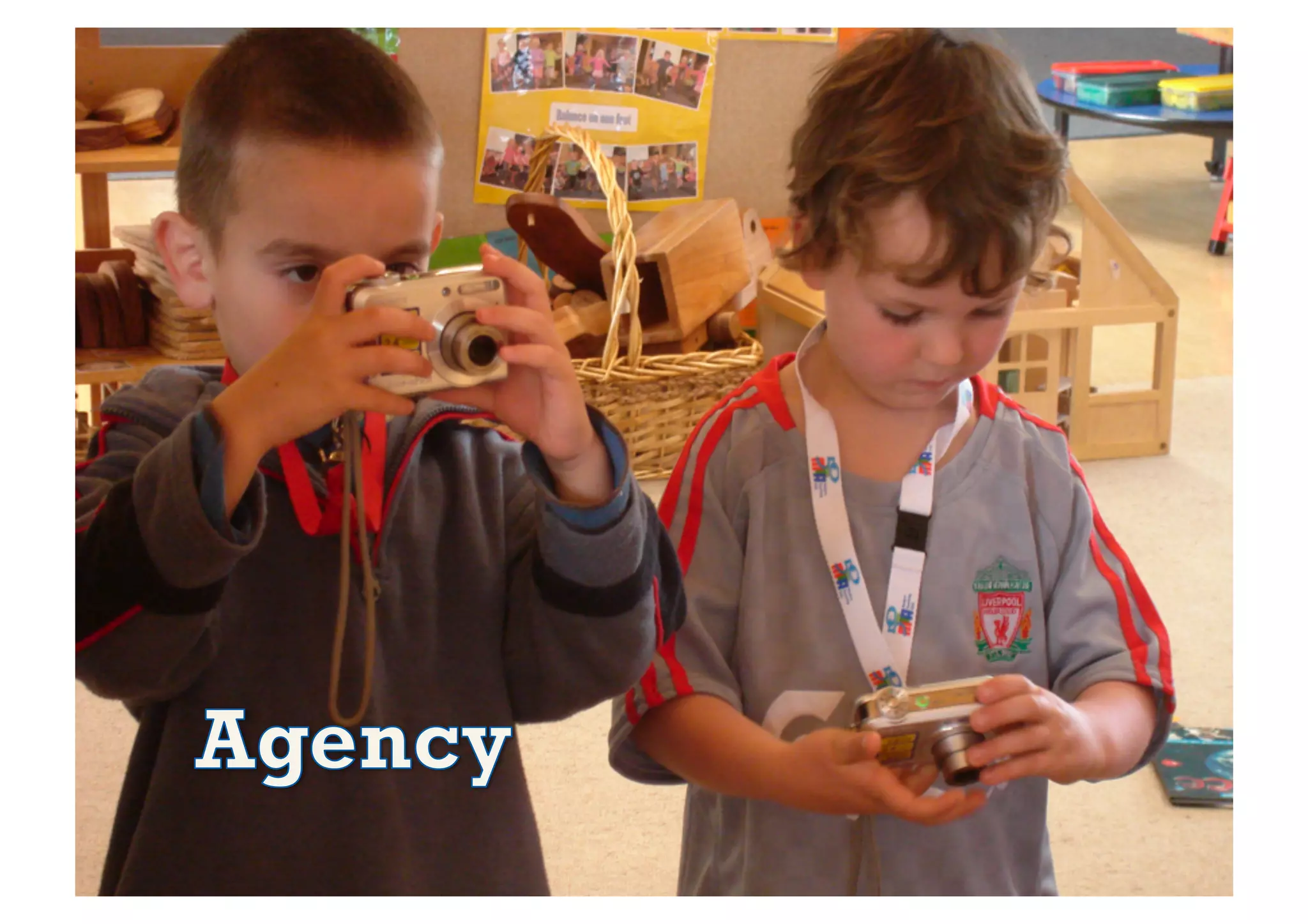
CHALLENGE
Have we grasped how significantly
student access to technology has
changed their expectations as
learners?
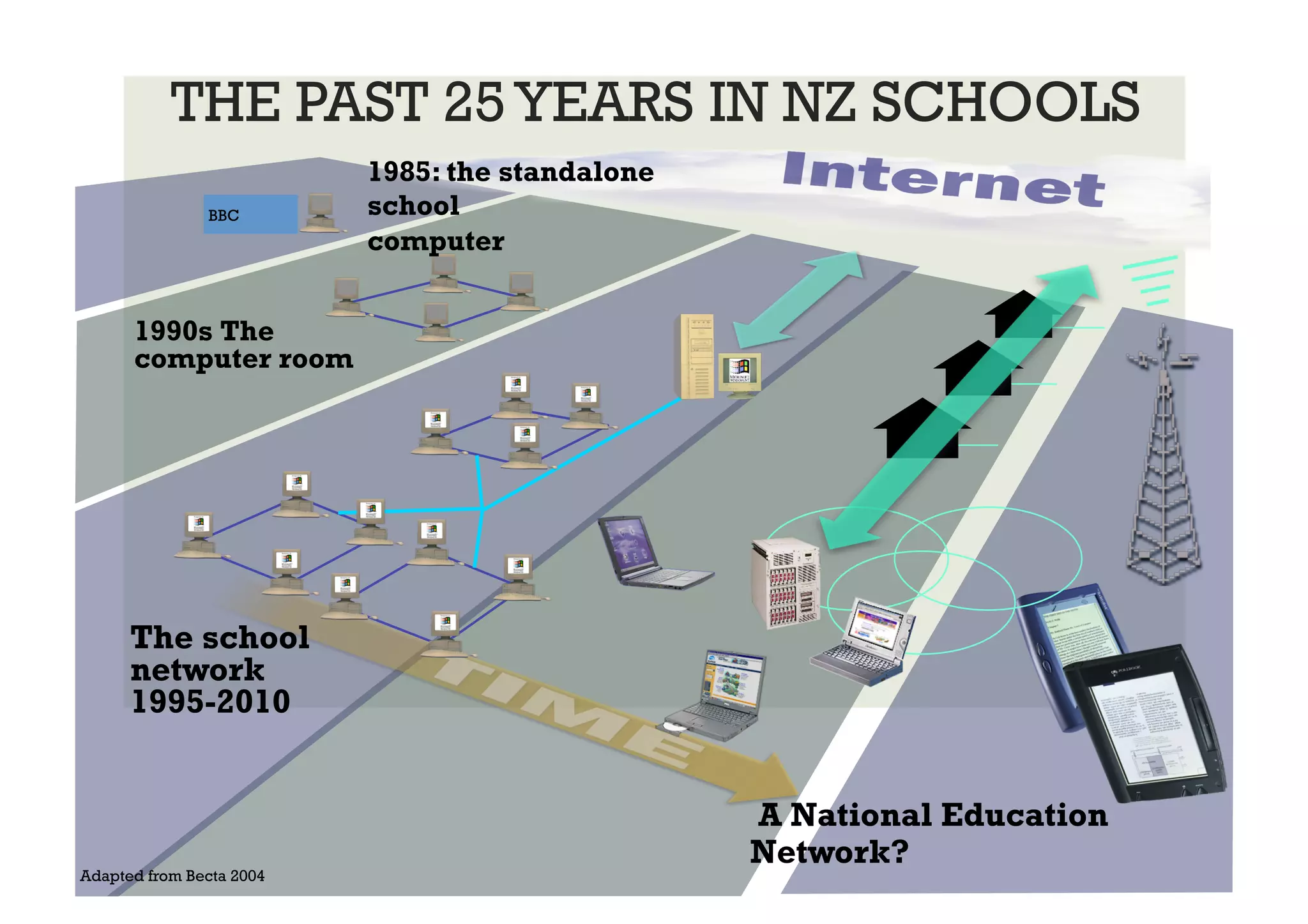
1990s The 

computer room
BBC
1985: the standalone
school

computer


A National Education
Network?
The school 

network
1995-2010
THE PAST 25YEARS IN NZ SCHOOLS
Adapted from Becta 2004
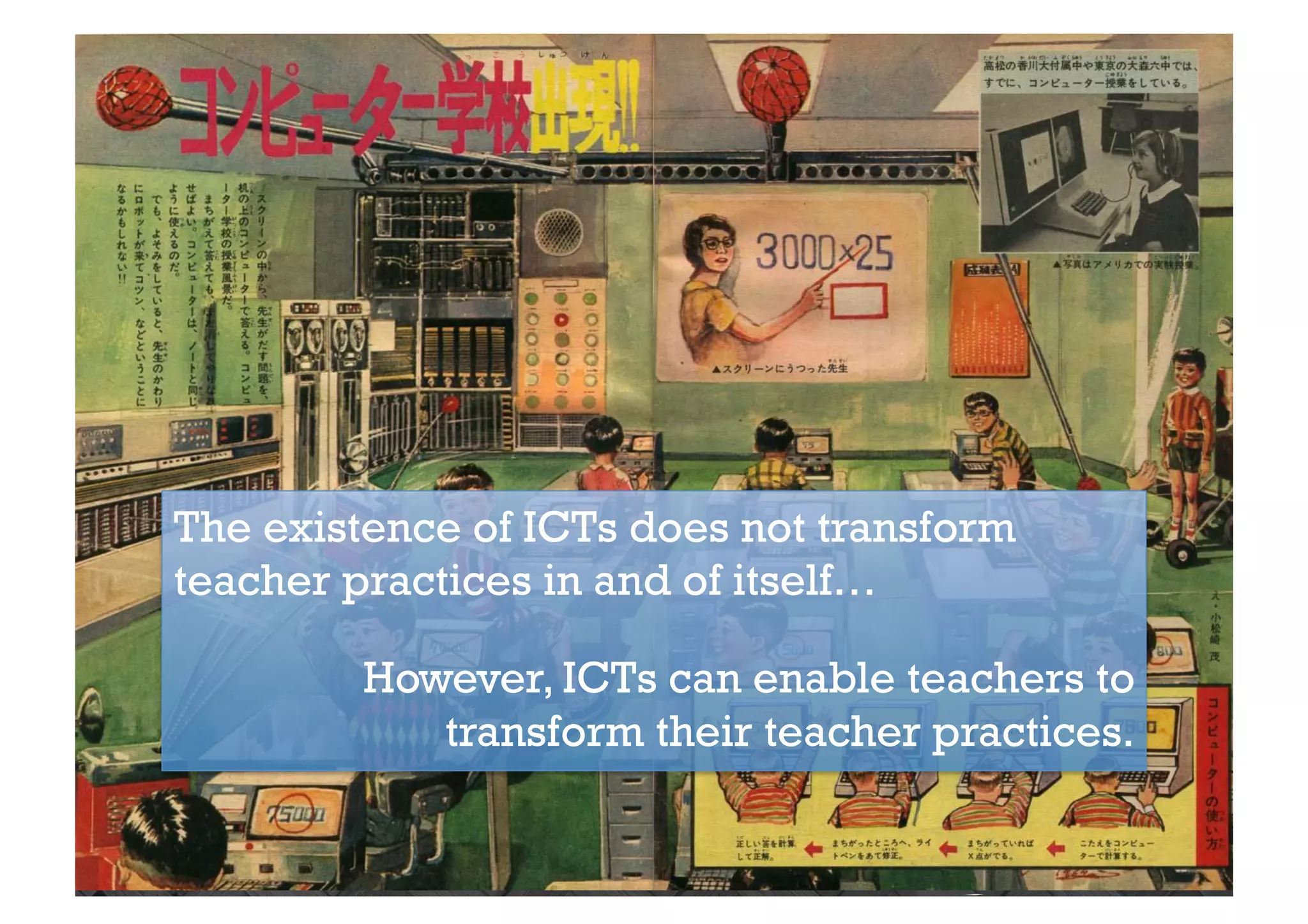
The existence of ICTs does not transform
teacher practices in and of itself…
However, ICTs can enable teachers to
transform their teacher practices.
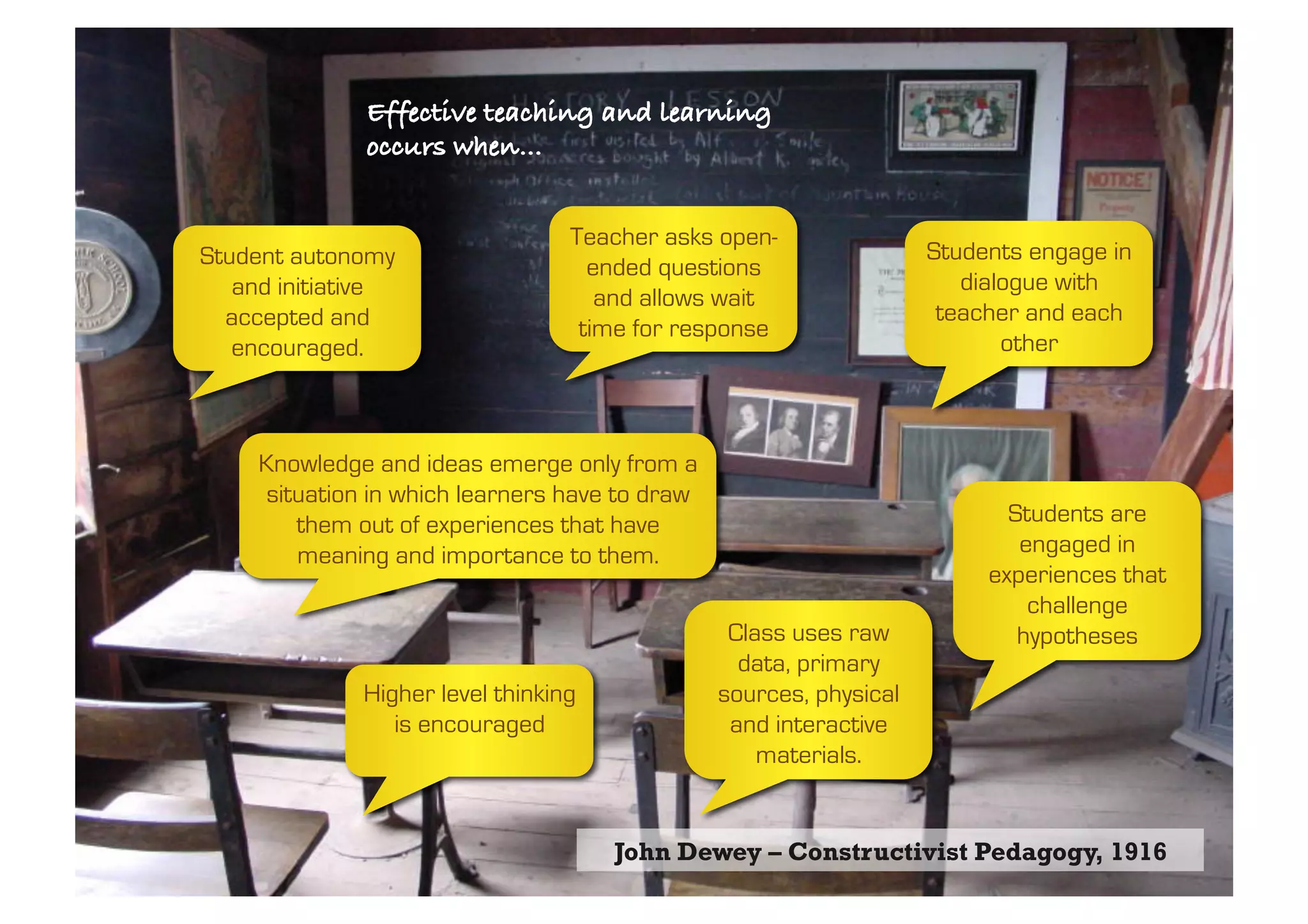
EFFECTIVE TEACHING AND LEARNING…Effective teaching and learning
occurs when…
Student autonomy
and initiative
accepted and
encouraged.
Students engage in
dialogue with
teacher and each
other
Higher level thinking
is encouraged
Class uses raw
data, primary
sources, physical
and interactive
materials.
Knowledge and ideas emerge only from a
situation in which learners have to draw
them out of experiences that have
meaning and importance to them.
Teacher asks open-
ended questions
and allows wait
time for response
Students are
engaged in
experiences that
challenge
hypotheses
John Dewey – Constructivist Pedagogy, 1916
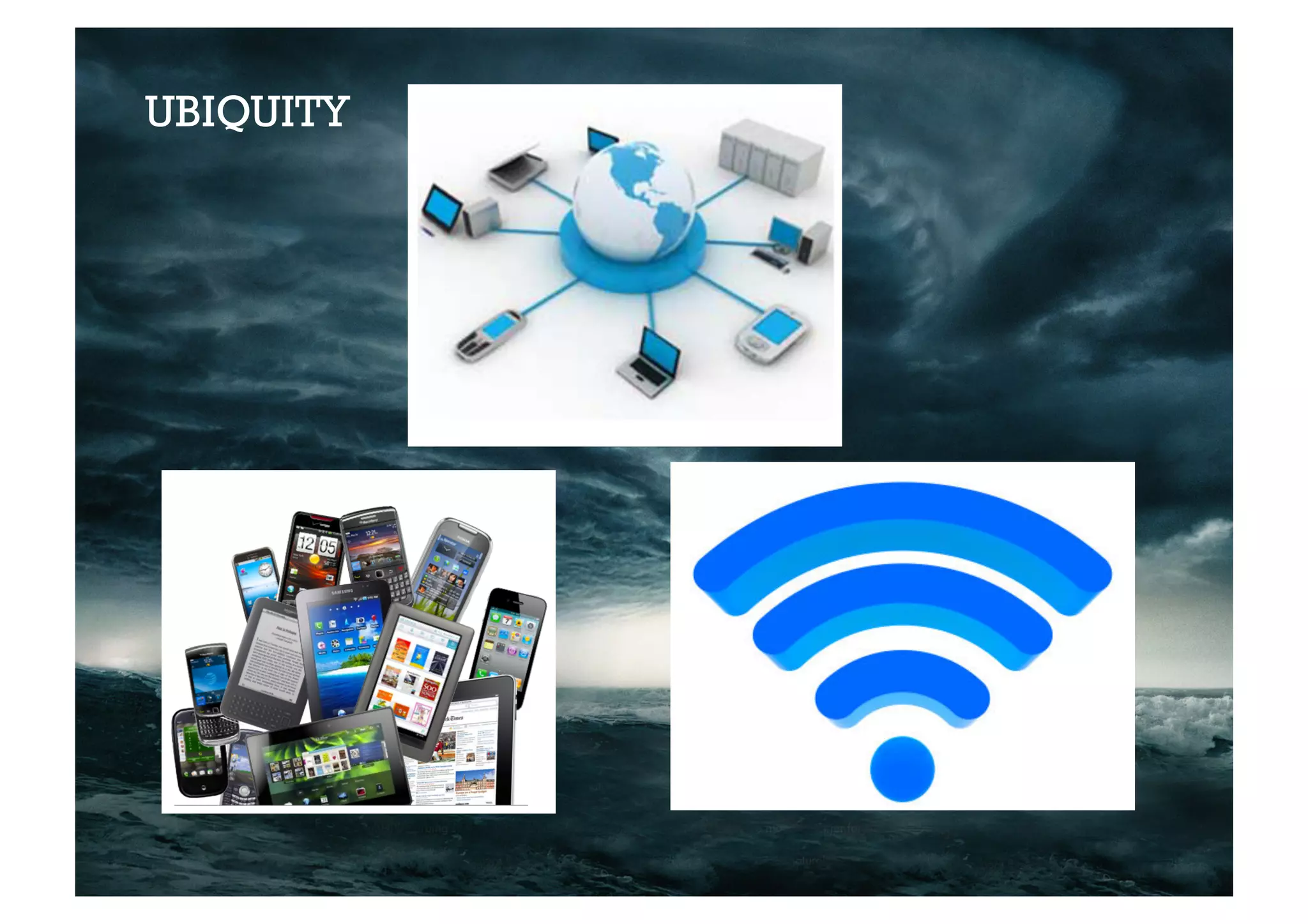
UBIQUITY
•  Picture here of iphone dispenser at the airport
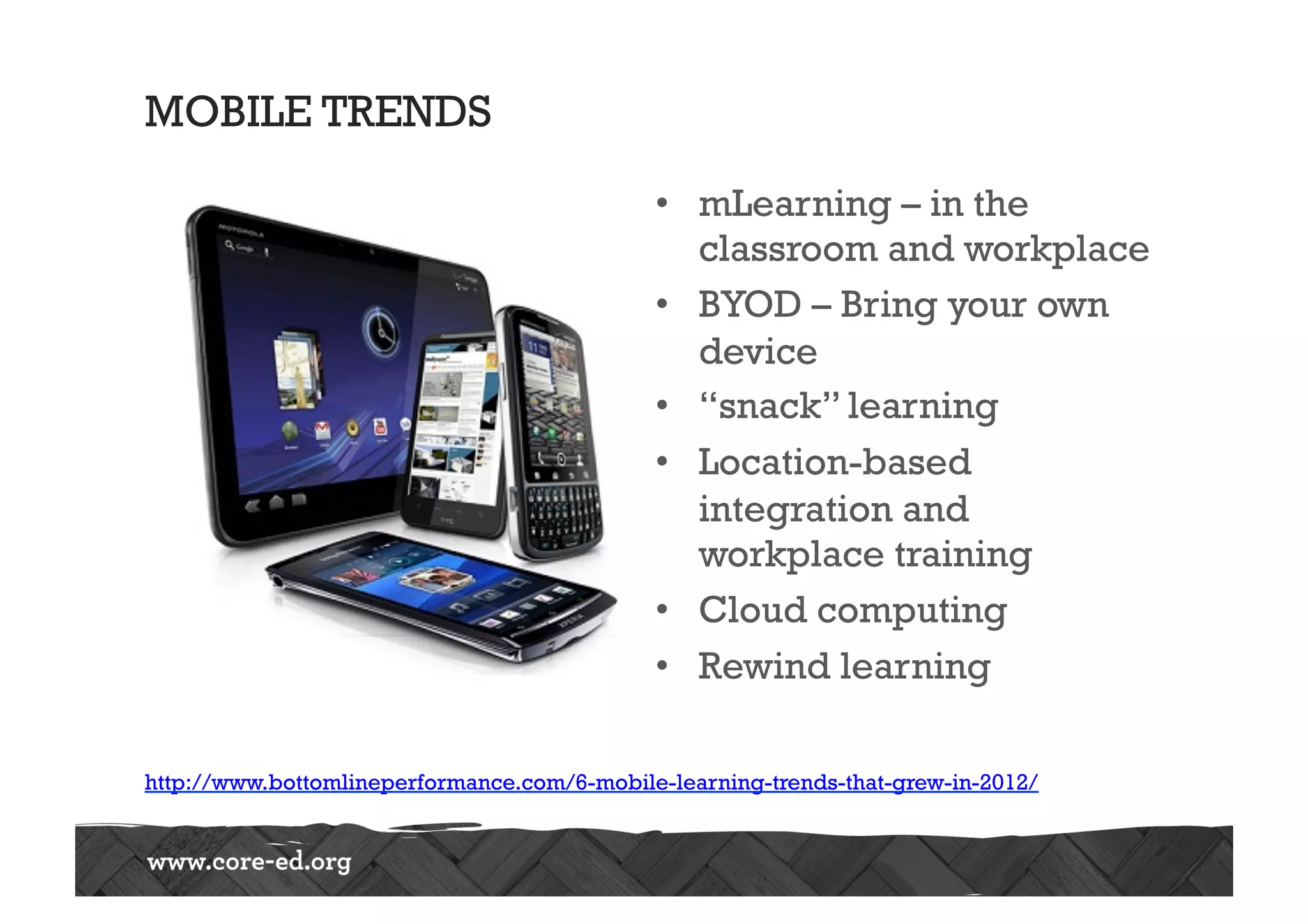
MOBILE TRENDS
•  mLearning – in the
classroom and workplace
•  BYOD – Bring your own
device
•  “snack” learning
•  Location-based
integration and
workplace training
•  Cloud computing
•  Rewind learning
http://www.bottomlineperformance.com/6-mobile-learning-trends-that-grew-in-2012/
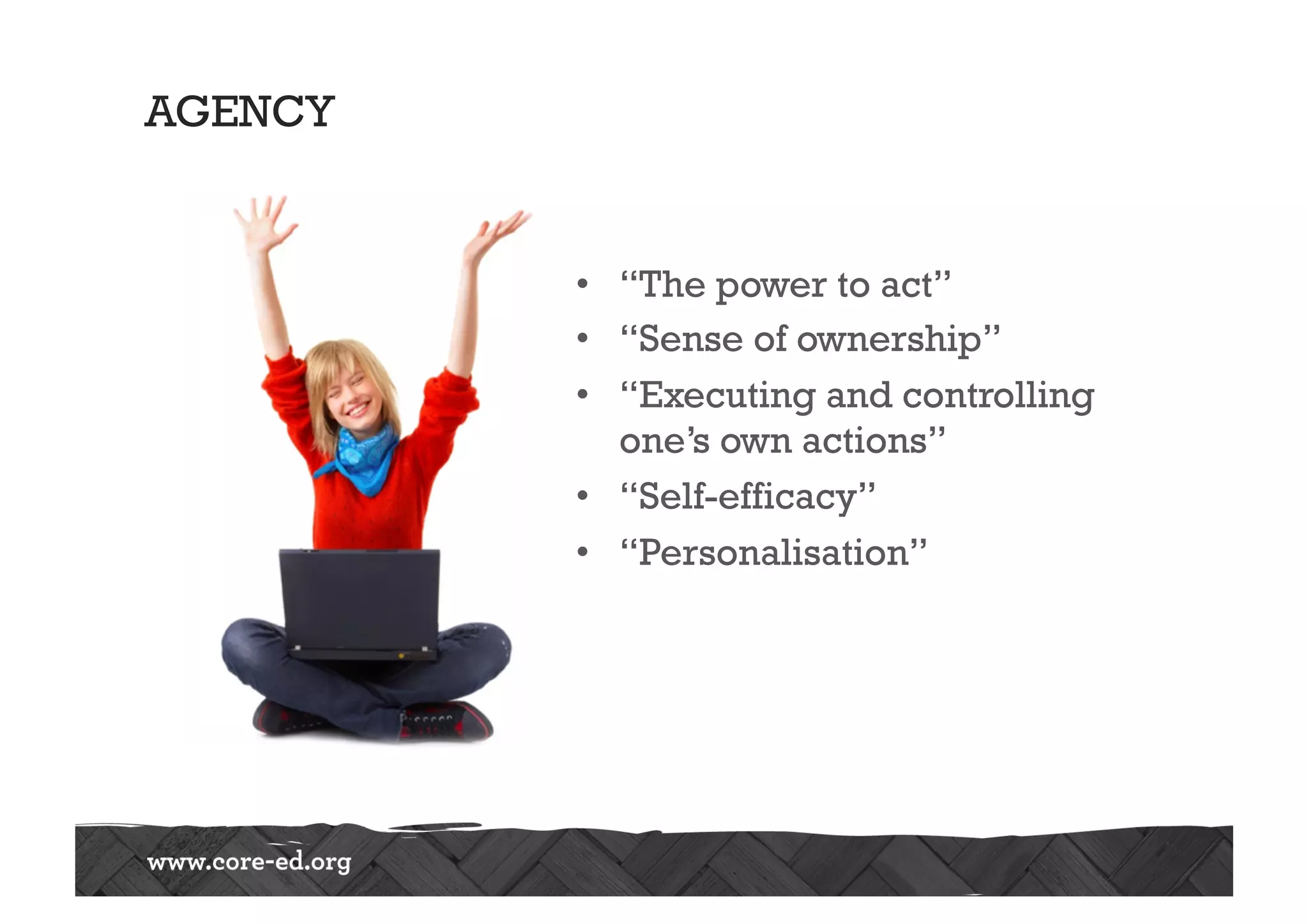
AGENCY
•  “The power to act”
•  “Sense of ownership”
•  “Executing and controlling
one’s own actions”
•  “Self-efficacy”
•  “Personalisation”
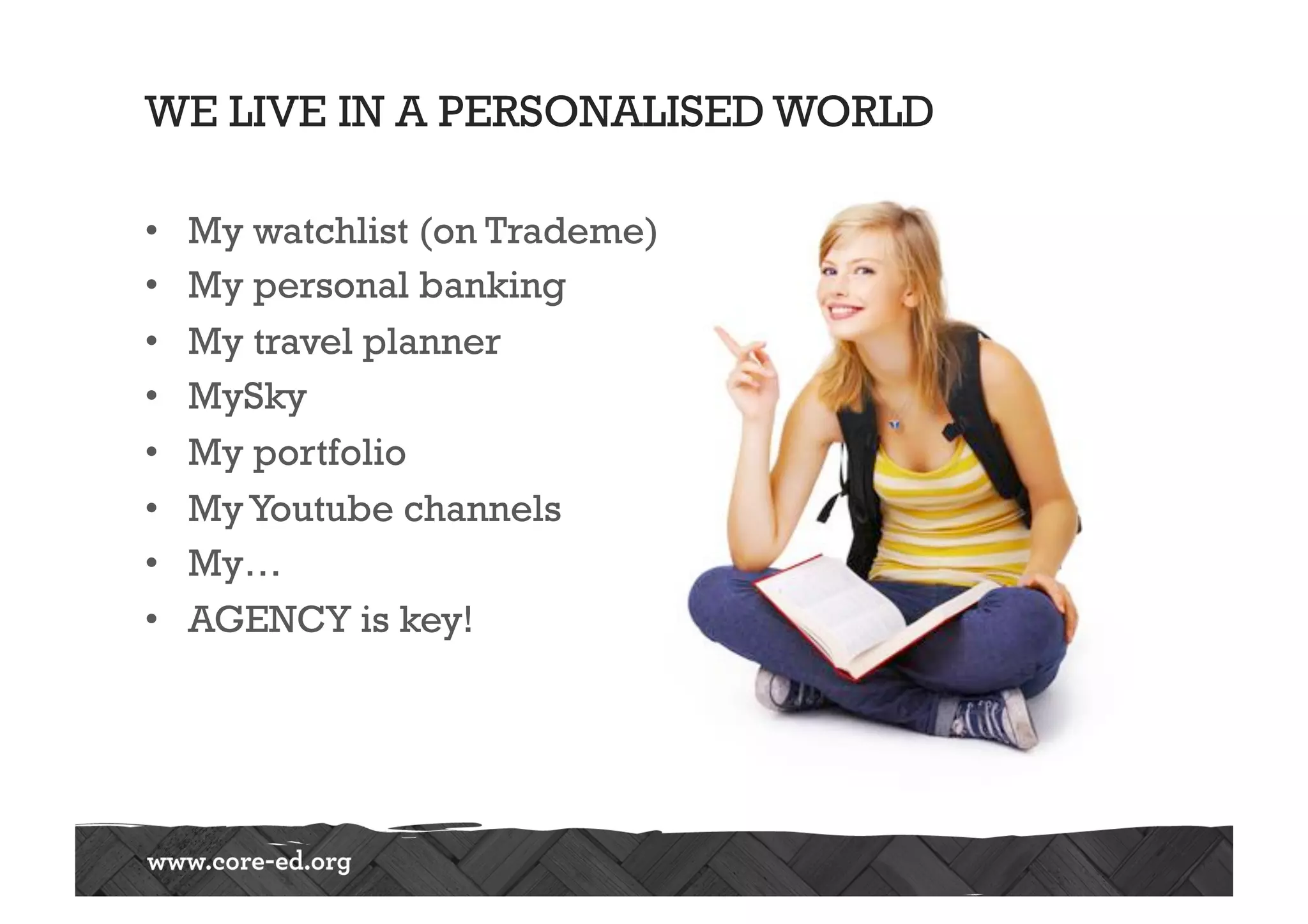
WE LIVE IN A PERSONALISED WORLD
•  My watchlist (on Trademe)
•  My personal banking
•  My travel planner
•  MySky
•  My portfolio
•  MyYoutube channels
•  My…
•  AGENCY is key!
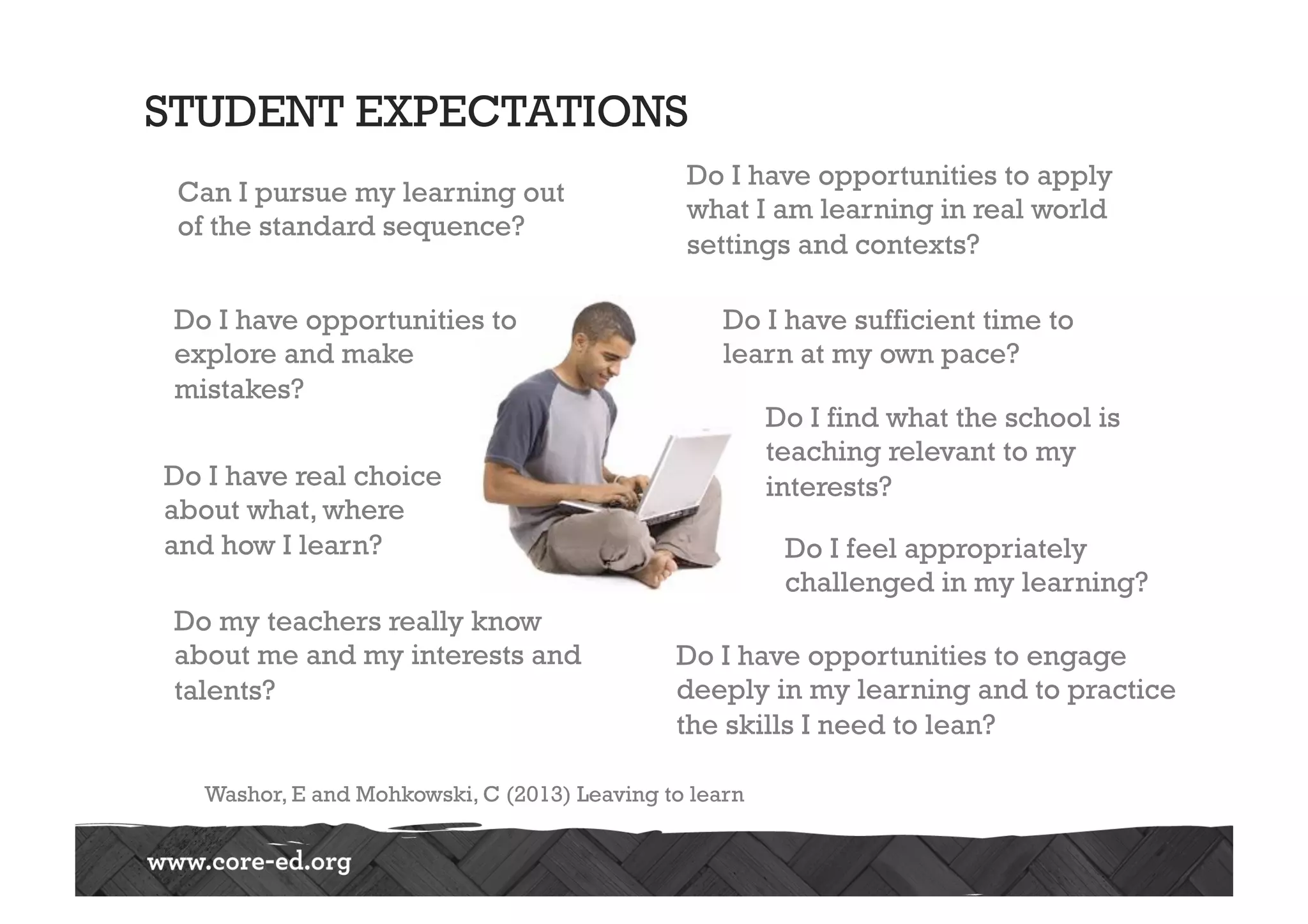
STUDENT EXPECTATIONS
Washor, E and Mohkowski, C (2013) Leaving to learn
Do my teachers really know
about me and my interests and
talents?
Do I find what the school is
teaching relevant to my
interests?
Do I have opportunities to apply
what I am learning in real world
settings and contexts?
Do I feel appropriately
challenged in my learning?
Can I pursue my learning out
of the standard sequence?
Do I have sufficient time to
learn at my own pace?
Do I have real choice
about what, where
and how I learn?
Do I have opportunities to
explore and make
mistakes?
Do I have opportunities to engage
deeply in my learning and to practice
the skills I need to lean?
School A
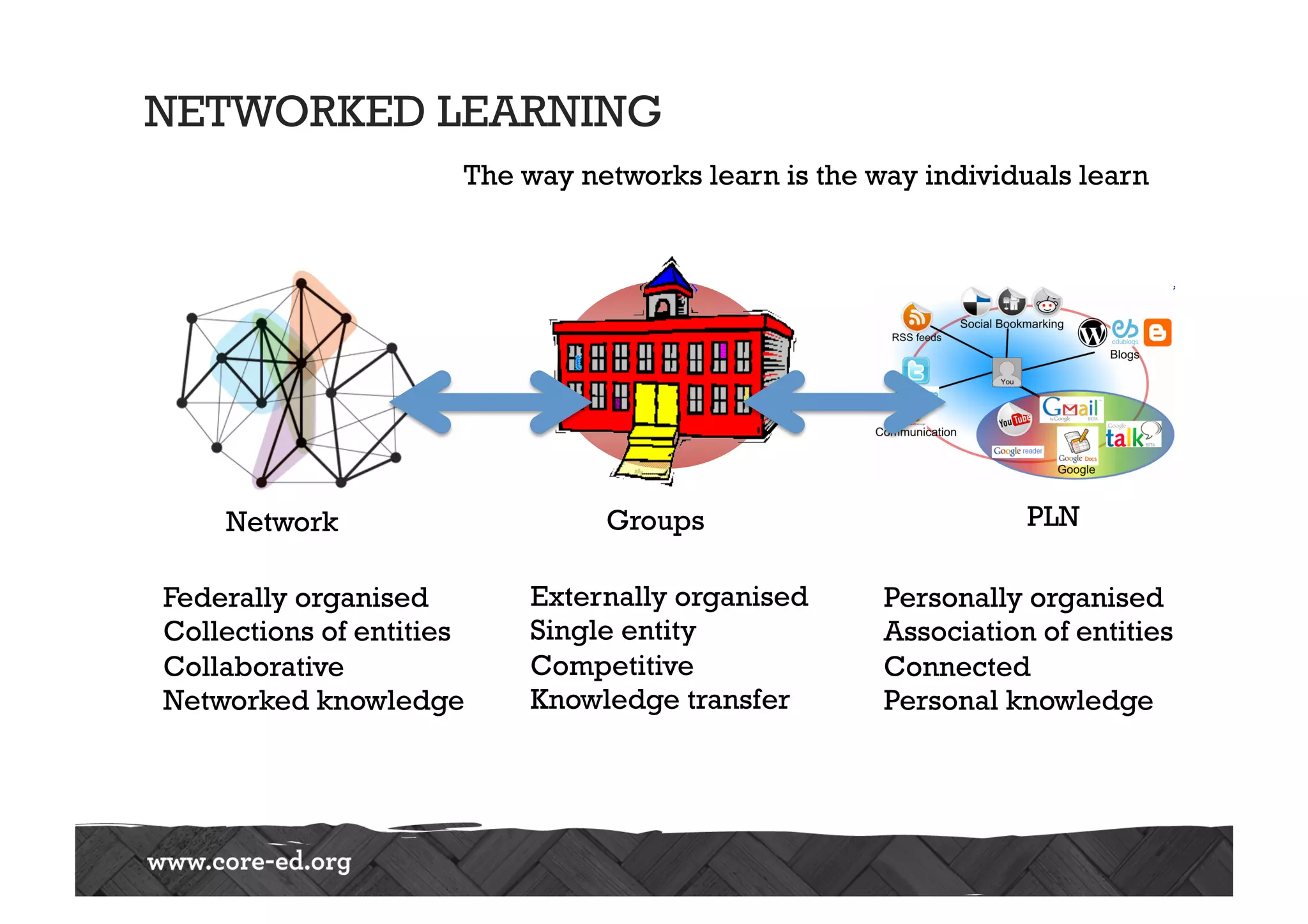
Groups
NETWORKED LEARNING
Network PLN
Federally organised
Collections of entities
Collaborative
Networked knowledge
Externally organised
Single entity
Competitive
Knowledge transfer
Personally organised
Association of entities
Connected
Personal knowledge
The way networks learn is the way individuals learn
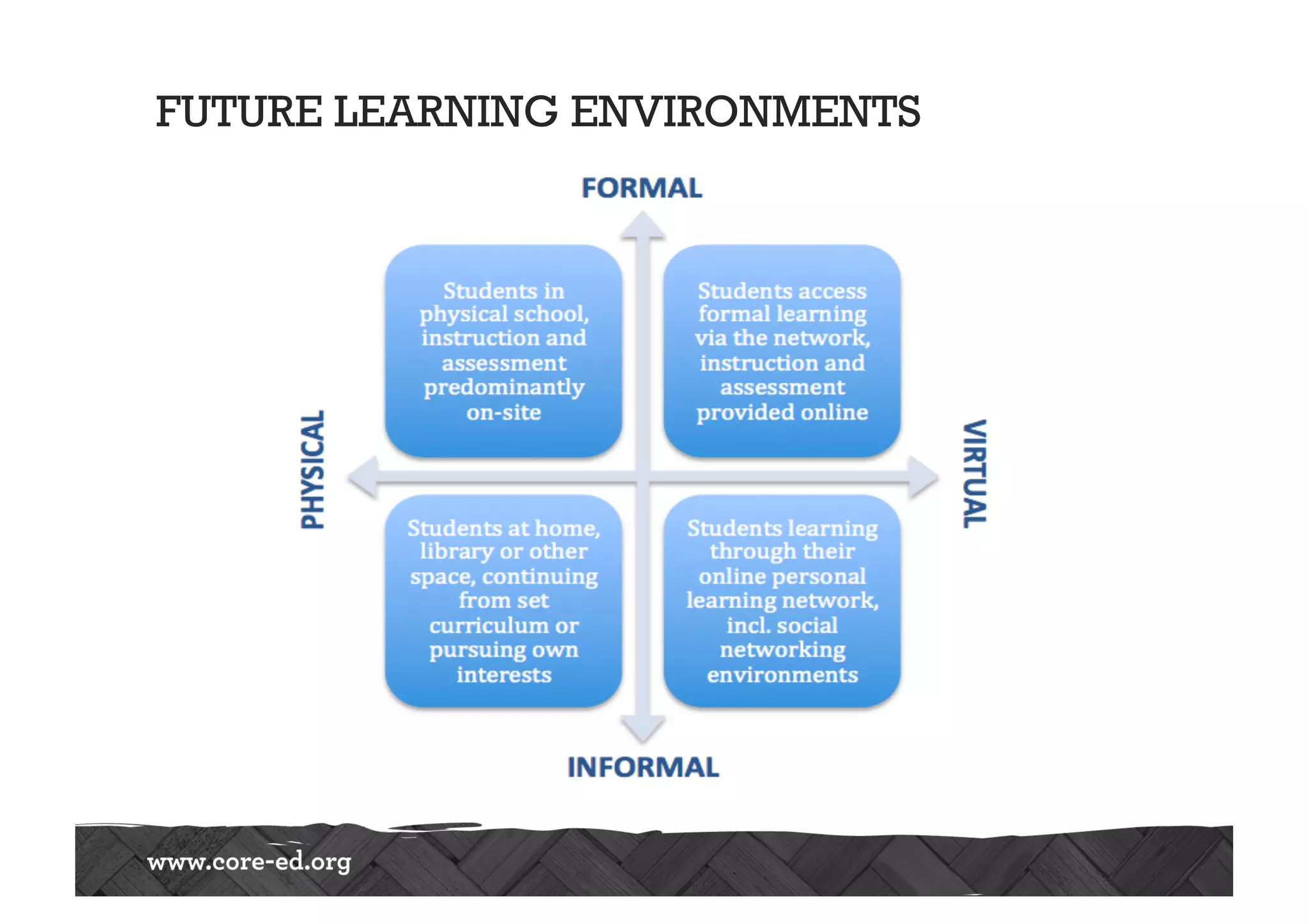
FUTURE LEARNING ENVIRONMENTS
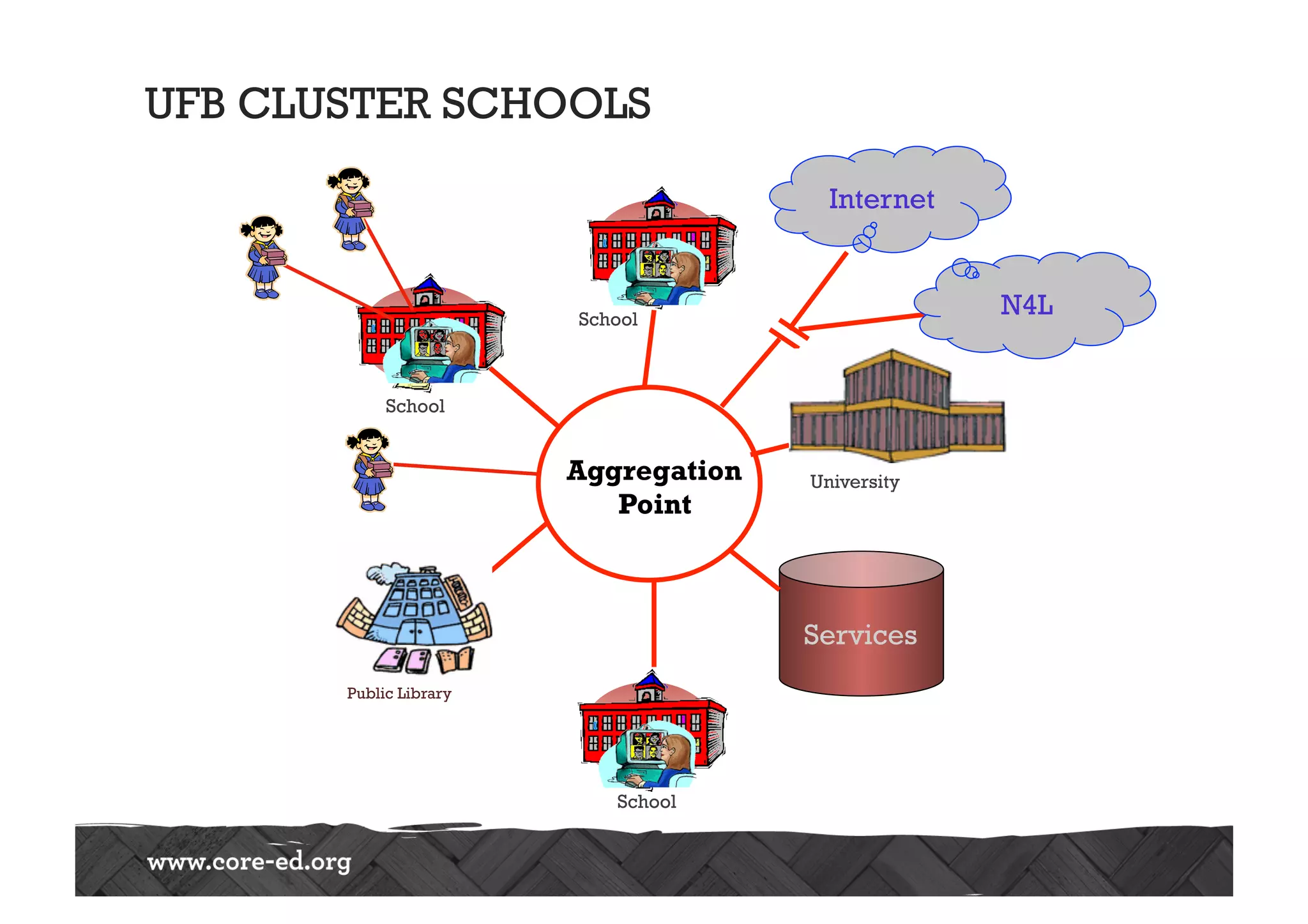
UFB CLUSTER SCHOOLS
School A
School A
School A
Services	

Internet	

School	

School	

School	

Public Library	

University	

N4L	

Aggregation
Point
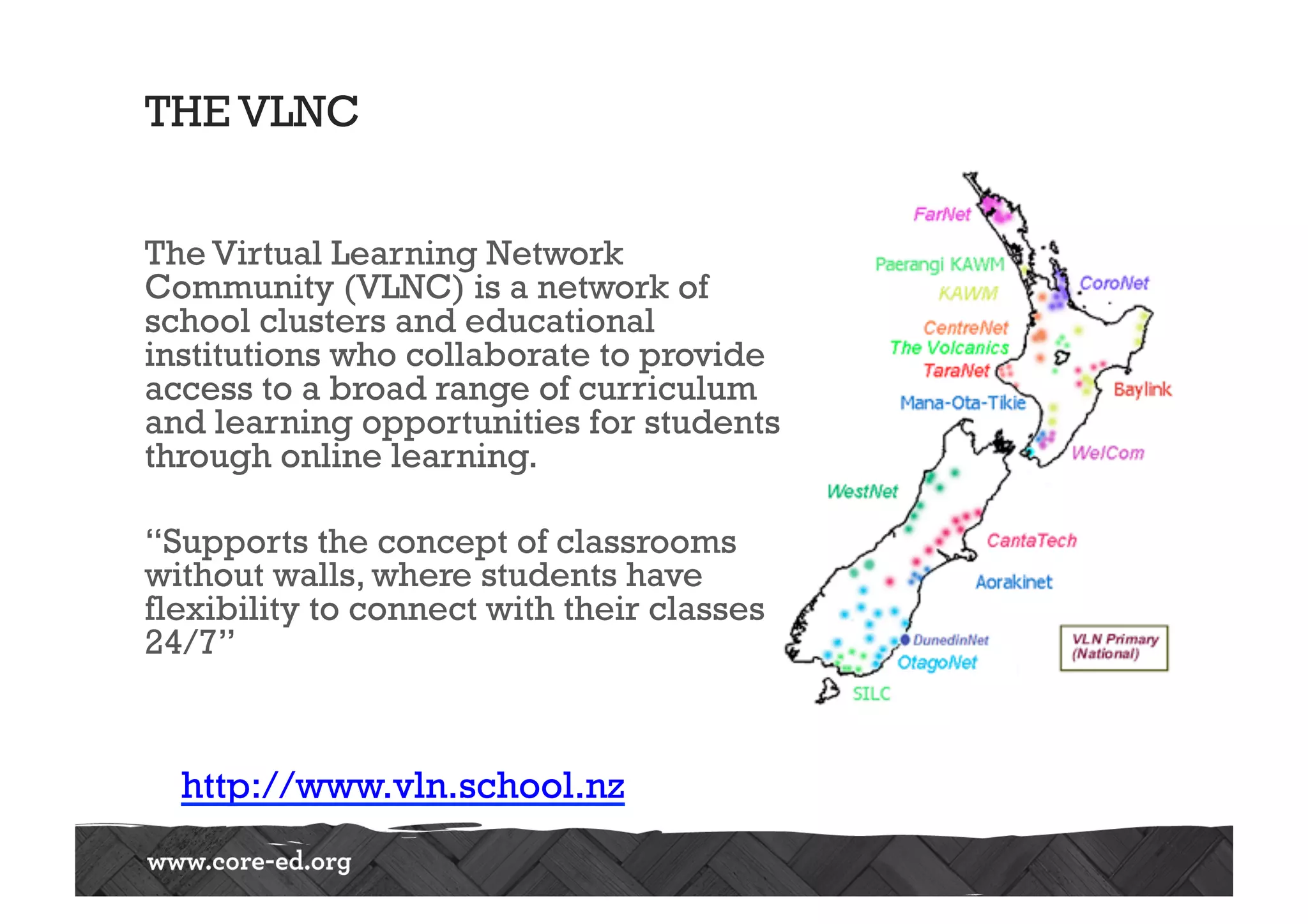
THE VLNC
The Virtual Learning Network
Community (VLNC) is a network of
school clusters and educational
institutions who collaborate to provide 
access to a broad range of curriculum
and learning opportunities for students
through online learning.
“Supports the concept of classrooms
without walls, where students have
flexibility to connect with their classes
24/7”
http://www.vln.school.nz
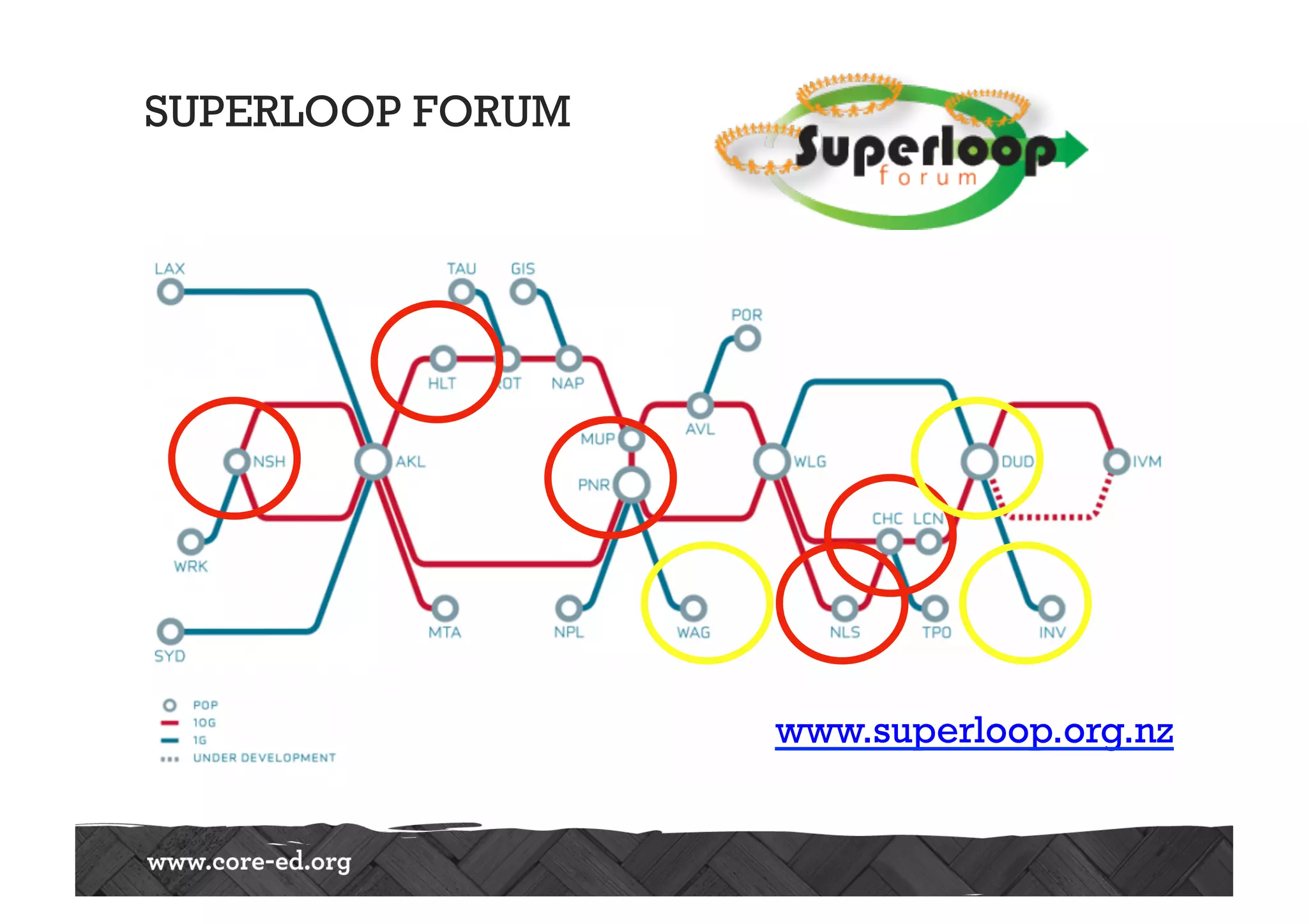
SUPERLOOP FORUM
www.superloop.org.nz
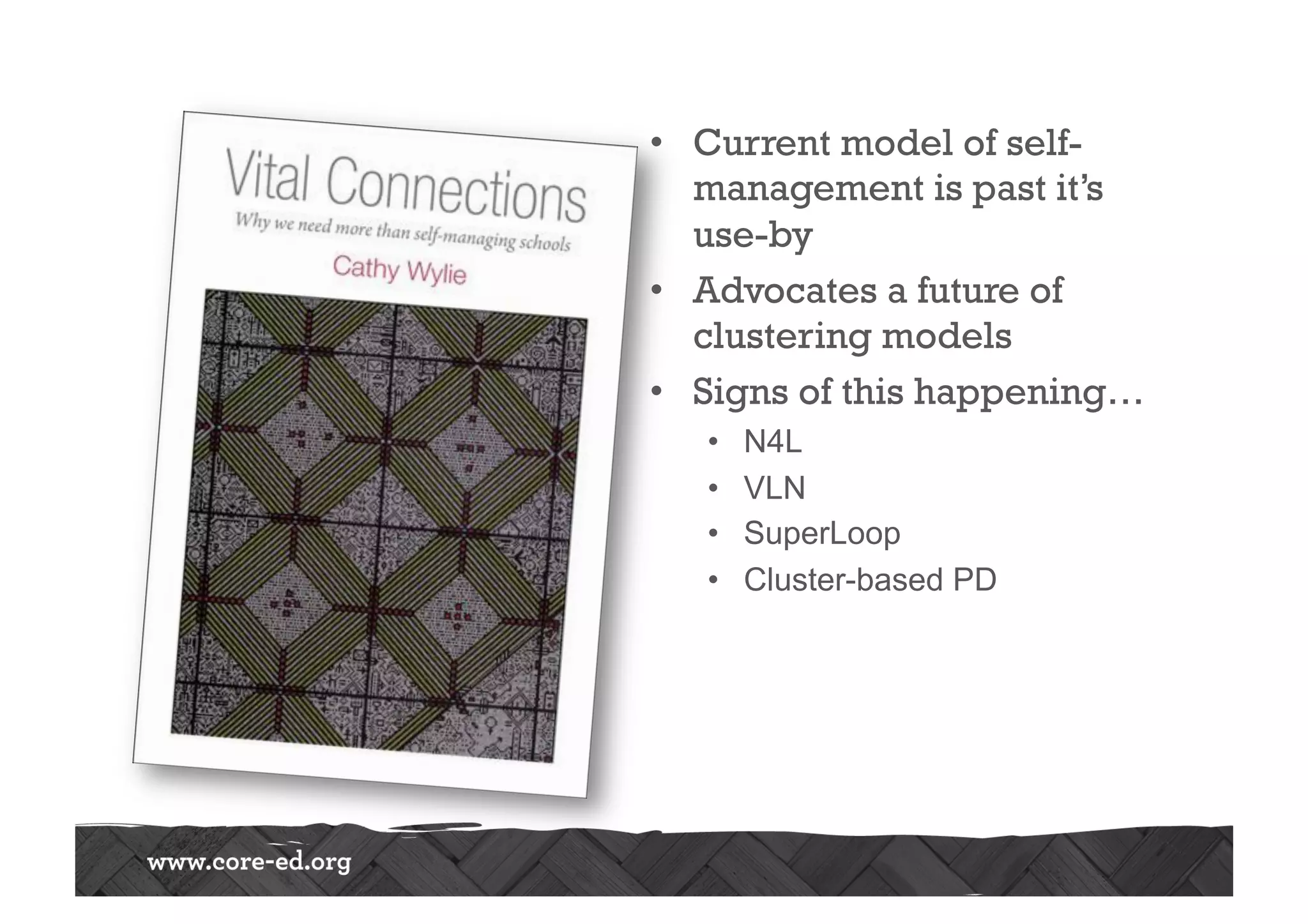
•  Current model of self-
management is past it’s
use-by
•  Advocates a future of
clustering models
•  Signs of this happening…
•  N4L
•  VLN
•  SuperLoop
•  Cluster-based PD
CHALLENGE
Have we grasped how significantly
student access to technology has
changed their expectations as
learners?
NETWORKS
•  redefine communities,
friends, citizenship,
identity, presence,
privacy, publics,
geography.
•  enable learning,
communication,
sharing, collaboration,
community.
•  networks form around
shared interests &
objects
CHALLENGES
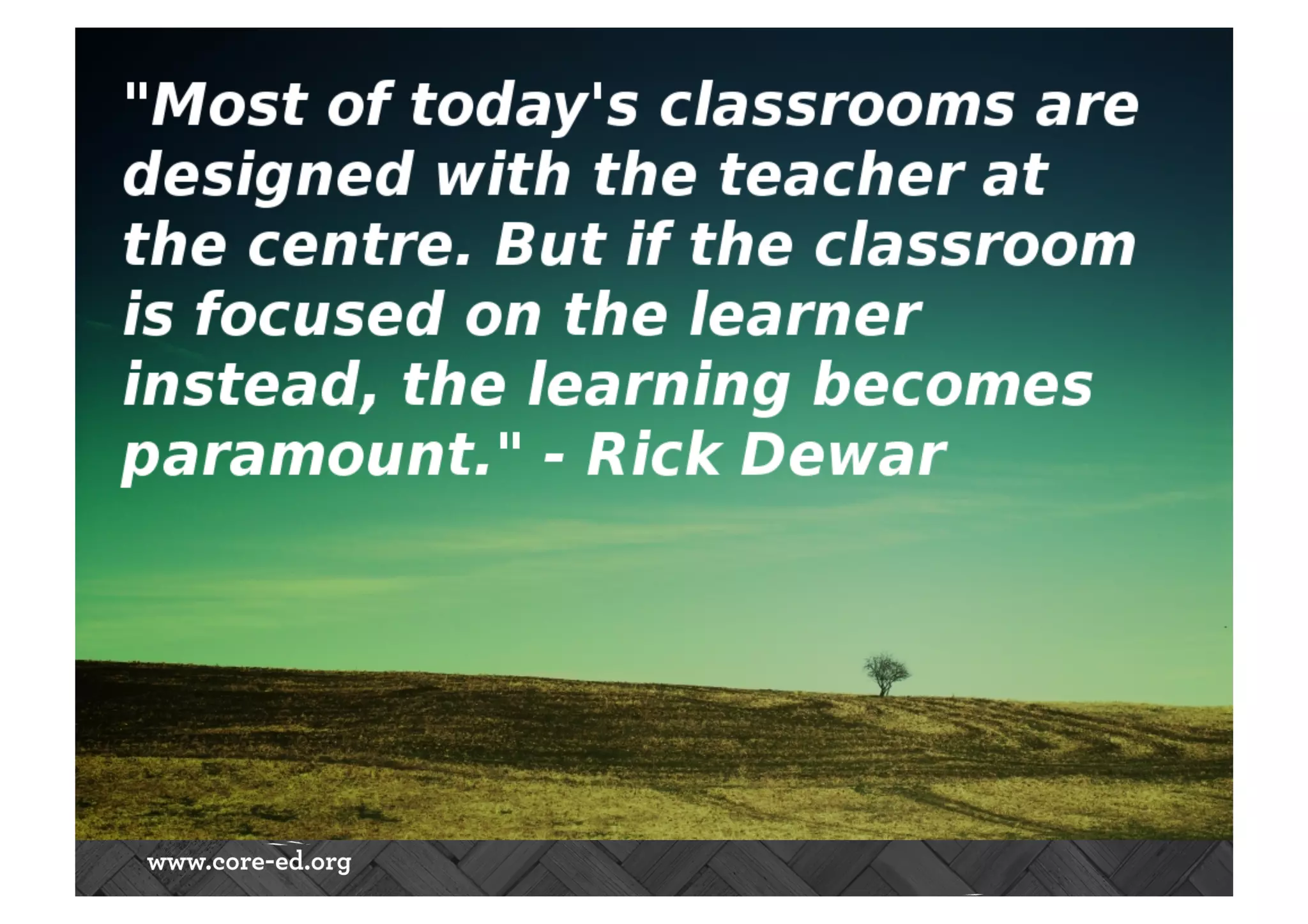
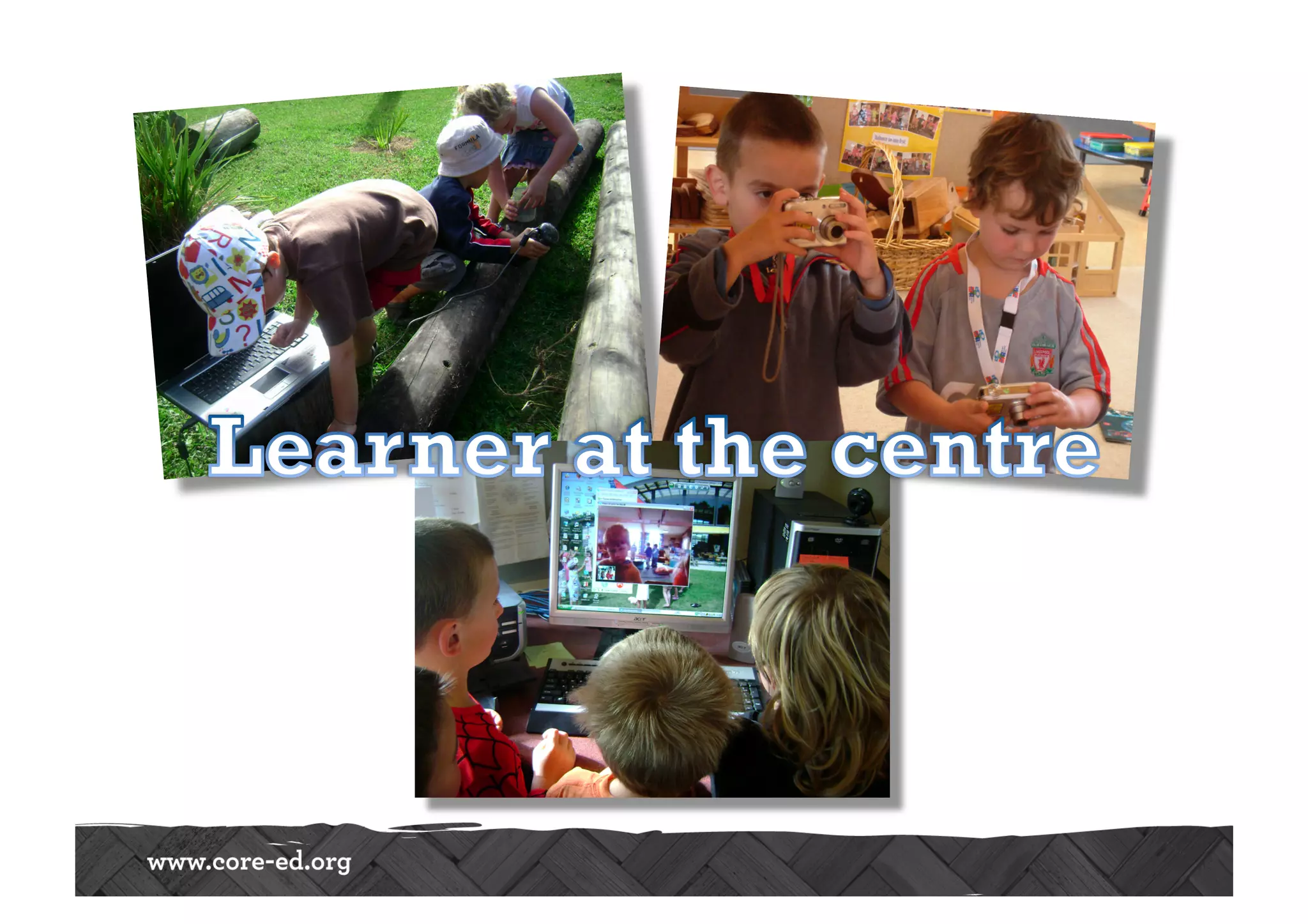
•  Do our learners have to adapt to
our way of doing things, or do
we adapt to theirs?
•  Are we focused on delivery – or
learning experience?
Education is a complicated
business…
… if it were so simple, we’d
have fixed it already.
Derek Wenmoth
Email: derek@core-ed.org
Blog: http://blog.core-ed.org/derek
Skype: <dwenmoth>

Cpp apptx

  • 1.
    CPPA Conference, AddingtonRaceway, 12-13 June, 2013 Learning 2033
  • 2.
    TECHNOLOGY IN 2033 • Biotechnology – reprogramming biology as an information process – will be in a mature phase •  We will be online all the time in virtual / augmented reality.  •  Search engines won’t wait for you to ask for information. •  Artificially intelligent entities will be operating at human levels. Ray Kurzweil http://www.forbes.com/
  • 3.
    GLOBAL CONFLICT 2033 • Global conflict will be widespread and chaotic, but not necessarily more violent •  In short, the next few decades will see the erosion of central authority in the former colonial world Robert D.Kaplan http://www.forbes.com/
  • 4.
    GLOBAL WORKFORCE IN2033 •  A “born-mobile” workforce will be constantly connected to both work and home life, using devices that are wearable – or even implantable •  Leadership structures will become increasingly flat, as roles shift based on each individual’s strengths and capabilities. Oliver Bussmann,CIO for SAP http://www.forbes.com/
  • 5.
    EDUCATION IN 2033 • Global Access •  Personalized learning •  Interactive classrooms •  Competency-based credentials Shantanu Sinha,President and COO of Khan Academy http://www.forbes.com/
  • 6.
    How the futureof schooling was envisaged from the outside
  • 7.
    And how itwas envisaged from the outside – mental models the same
  • 8.
  • 9.
    CHALLENGE Have we graspedhow significantly student access to technology has changed their expectations as learners?
  • 10.
    1990s The 
 computerroom BBC 1985: the standalone school
 computer
 
 A National Education Network? The school 
 network 1995-2010 THE PAST 25YEARS IN NZ SCHOOLS Adapted from Becta 2004
  • 11.
    The existence ofICTs does not transform teacher practices in and of itself… However, ICTs can enable teachers to transform their teacher practices.
  • 12.
    EFFECTIVE TEACHING ANDLEARNING…Effective teaching and learning occurs when… Student autonomy and initiative accepted and encouraged. Students engage in dialogue with teacher and each other Higher level thinking is encouraged Class uses raw data, primary sources, physical and interactive materials. Knowledge and ideas emerge only from a situation in which learners have to draw them out of experiences that have meaning and importance to them. Teacher asks open- ended questions and allows wait time for response Students are engaged in experiences that challenge hypotheses John Dewey – Constructivist Pedagogy, 1916
  • 16.
  • 17.
    •  Picture hereof iphone dispenser at the airport
  • 18.
    MOBILE TRENDS •  mLearning– in the classroom and workplace •  BYOD – Bring your own device •  “snack” learning •  Location-based integration and workplace training •  Cloud computing •  Rewind learning http://www.bottomlineperformance.com/6-mobile-learning-trends-that-grew-in-2012/
  • 21.
    AGENCY •  “The powerto act” •  “Sense of ownership” •  “Executing and controlling one’s own actions” •  “Self-efficacy” •  “Personalisation”
  • 22.
    WE LIVE INA PERSONALISED WORLD •  My watchlist (on Trademe) •  My personal banking •  My travel planner •  MySky •  My portfolio •  MyYoutube channels •  My… •  AGENCY is key!
  • 23.
    STUDENT EXPECTATIONS Washor, Eand Mohkowski, C (2013) Leaving to learn Do my teachers really know about me and my interests and talents? Do I find what the school is teaching relevant to my interests? Do I have opportunities to apply what I am learning in real world settings and contexts? Do I feel appropriately challenged in my learning? Can I pursue my learning out of the standard sequence? Do I have sufficient time to learn at my own pace? Do I have real choice about what, where and how I learn? Do I have opportunities to explore and make mistakes? Do I have opportunities to engage deeply in my learning and to practice the skills I need to lean?
  • 25.
    School A Groups NETWORKED LEARNING NetworkPLN Federally organised Collections of entities Collaborative Networked knowledge Externally organised Single entity Competitive Knowledge transfer Personally organised Association of entities Connected Personal knowledge The way networks learn is the way individuals learn
  • 26.
  • 27.
    UFB CLUSTER SCHOOLS SchoolA School A School A Services Internet School School School Public Library University N4L Aggregation Point
  • 28.
    THE VLNC The VirtualLearning Network Community (VLNC) is a network of school clusters and educational institutions who collaborate to provide  access to a broad range of curriculum and learning opportunities for students through online learning. “Supports the concept of classrooms without walls, where students have flexibility to connect with their classes 24/7” http://www.vln.school.nz
  • 29.
  • 30.
    •  Current modelof self- management is past it’s use-by •  Advocates a future of clustering models •  Signs of this happening… •  N4L •  VLN •  SuperLoop •  Cluster-based PD
  • 31.
    CHALLENGE Have we graspedhow significantly student access to technology has changed their expectations as learners?
  • 32.
    NETWORKS •  redefine communities, friends,citizenship, identity, presence, privacy, publics, geography. •  enable learning, communication, sharing, collaboration, community. •  networks form around shared interests & objects
  • 34.
    CHALLENGES •  Do ourlearners have to adapt to our way of doing things, or do we adapt to theirs? •  Are we focused on delivery – or learning experience?
  • 35.
    Education is acomplicated business… … if it were so simple, we’d have fixed it already.
  • 36.
    Derek Wenmoth Email: derek@core-ed.org Blog:http://blog.core-ed.org/derek Skype: <dwenmoth>