Medieval era
  Presentation II
Non-liturgical
            compositions

• lauda - composed for use in private devotional

• mainly simple syllabic change set in verse/refrain
  format to Italian texts

• good example: Gloria in cielo e pace in terra
Gloria in cielo e pace in terra


    http://www.youtube.com/watch?v=yRBkXnZoBOg
church dramas
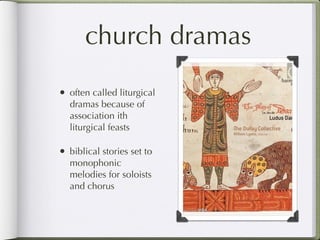
• often called liturgical
  dramas because of
  association ith
  liturgical feasts

• biblical stories set to
  monophonic
  melodies for soloists
  and chorus
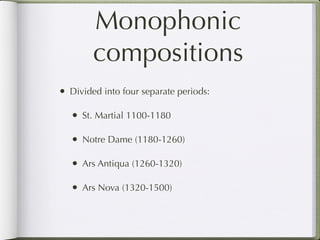
Monophonic
        compositions
• Divided into four separate periods:

   • St. Martial 1100-1180

   • Notre Dame (1180-1260)

   • Ars Antiqua (1260-1320)

   • Ars Nova (1320-1500)
St. Martial
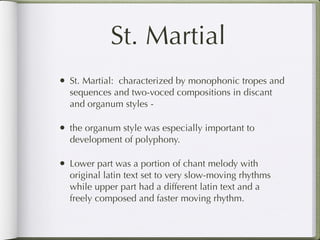
• St. Martial: characterized by monophonic tropes and
  sequences and two-voced compositions in discant
  and organum styles -

• the organum style was especially important to
  development of polyphony.

• Lower part was a portion of chant melody with
  original latin text set to very slow-moving rhythms
  while upper part had a different latin text and a
  freely composed and faster moving rhythm.
Notre Dame

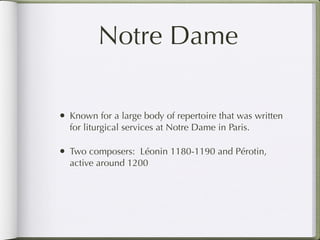
• Known for a large body of repertoire that was written
  for liturgical services at Notre Dame in Paris.

• Two composers: Léonin 1180-1190 and Pérotin,
  active around 1200
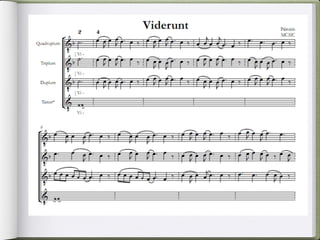
Pérotin’s Viderunt omnes


http://www.youtube.com/watch?v=wOgLiD-NKPk
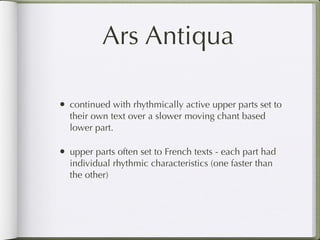
Ars Antiqua

• continued with rhythmically active upper parts set to
  their own text over a slower moving chant based
  lower part.

• upper parts often set to French texts - each part had
  individual rhythmic characteristics (one faster than
  the other)

Medieval 2

  • 1.
    Medieval era Presentation II
  • 2.
    Non-liturgical compositions • lauda - composed for use in private devotional • mainly simple syllabic change set in verse/refrain format to Italian texts • good example: Gloria in cielo e pace in terra
  • 3.
    Gloria in cieloe pace in terra http://www.youtube.com/watch?v=yRBkXnZoBOg
  • 4.
    church dramas • oftencalled liturgical dramas because of association ith liturgical feasts • biblical stories set to monophonic melodies for soloists and chorus
  • 5.
    Monophonic compositions • Divided into four separate periods: • St. Martial 1100-1180 • Notre Dame (1180-1260) • Ars Antiqua (1260-1320) • Ars Nova (1320-1500)
  • 6.
    St. Martial • St.Martial: characterized by monophonic tropes and sequences and two-voced compositions in discant and organum styles - • the organum style was especially important to development of polyphony. • Lower part was a portion of chant melody with original latin text set to very slow-moving rhythms while upper part had a different latin text and a freely composed and faster moving rhythm.
  • 7.
    Notre Dame • Knownfor a large body of repertoire that was written for liturgical services at Notre Dame in Paris. • Two composers: Léonin 1180-1190 and Pérotin, active around 1200
  • 9.
  • 10.
    Ars Antiqua • continuedwith rhythmically active upper parts set to their own text over a slower moving chant based lower part. • upper parts often set to French texts - each part had individual rhythmic characteristics (one faster than the other)

Editor's Notes