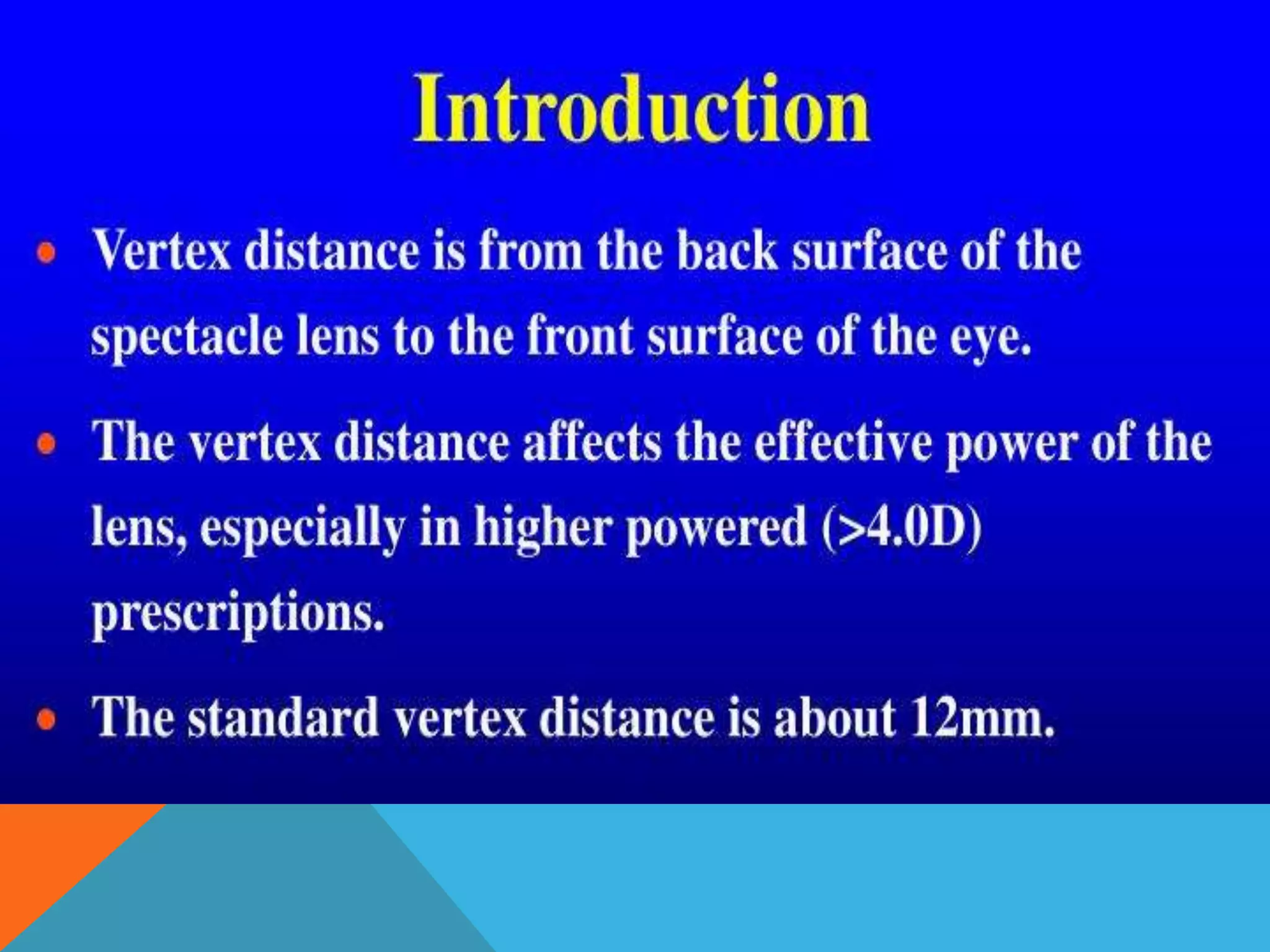
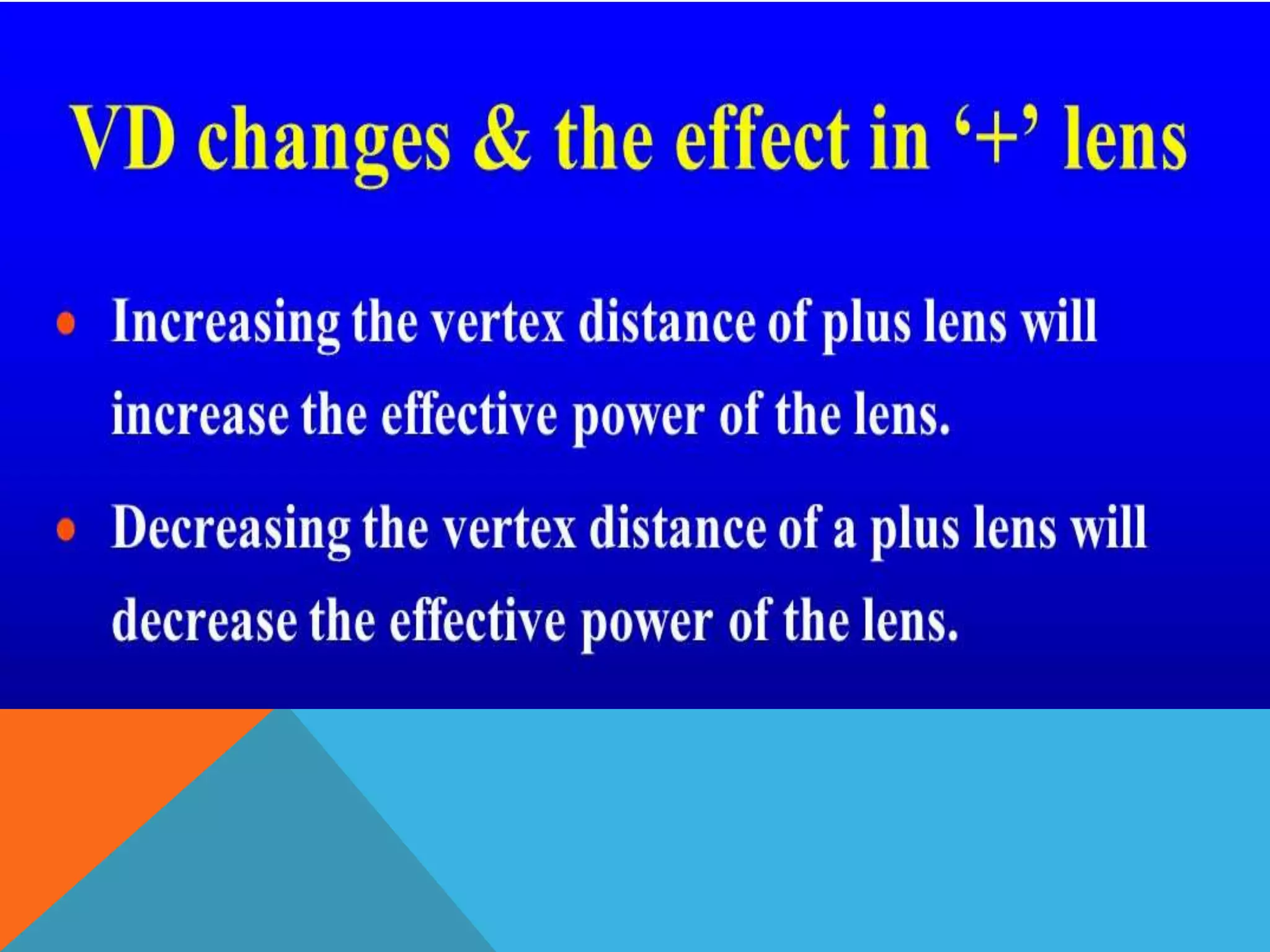
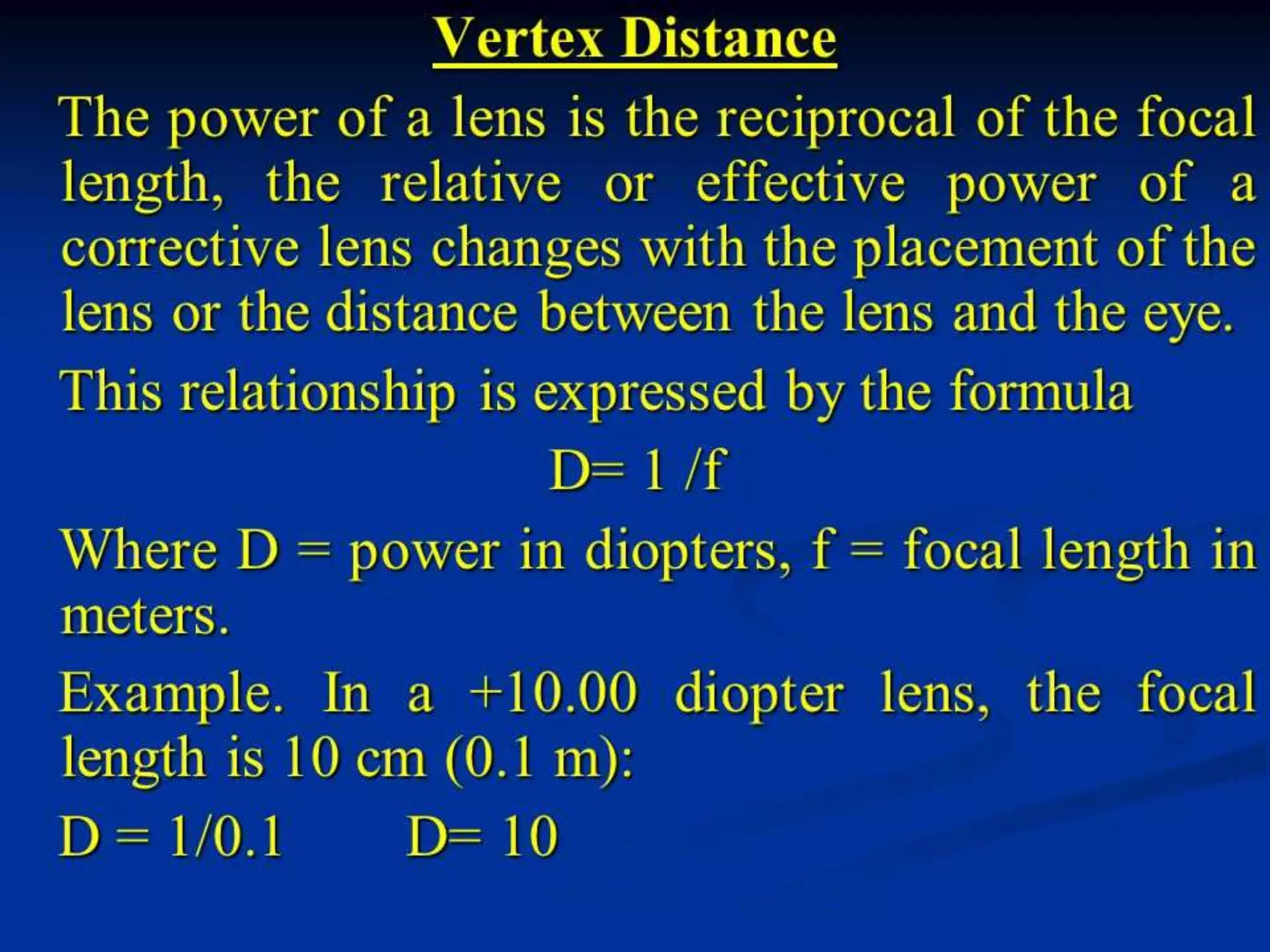
In case of minus lens ,become weaker while it moving
from the eye and become stronger while moving
closure to the eye
• Magnification & minification can affected
significantly by the VD
• Greater the VD, greater the degree of Magnification
& minification
• Image size changes are minimized when VD is zero
VERTEX COMPENSATION FORMULA
Compensation /mm of displacement per diopter of lens power,
is
D²/ 1000
The result is added or substracted from the power according to
following set of condition:
 Add when
• Plus lens moving closer
• Minus lens moving farther
 Substract when
 Plus lens moving farther
 Minus lens moving closer
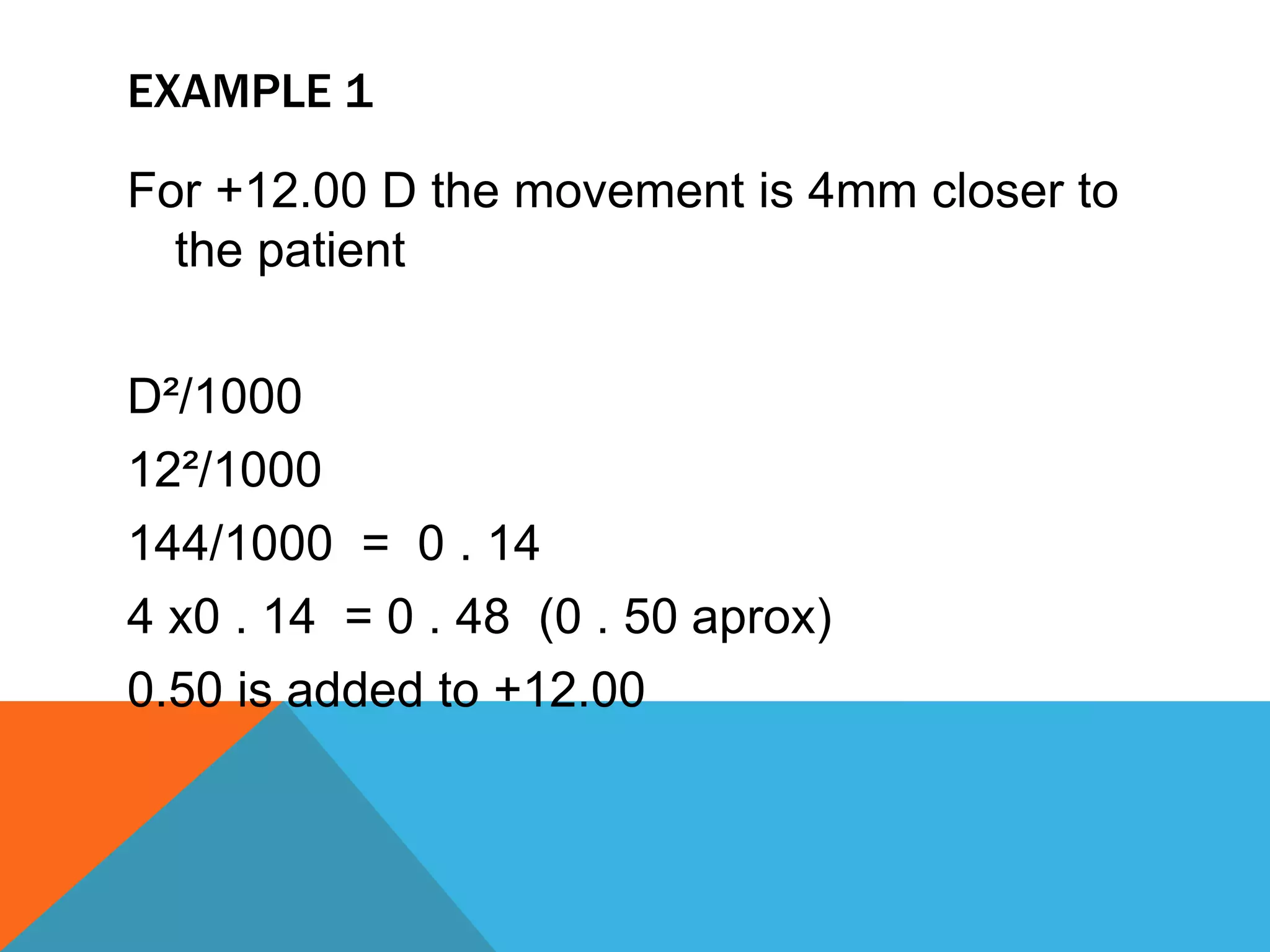
EXAMPLE 1
For +12.00 D the movement is 4mm closer to
the patient
D²/1000
12²/1000
144/1000 = 0 . 14
4 x0 . 14 = 0 . 48 (0 . 50 aprox)
0.50 is added to +12.00
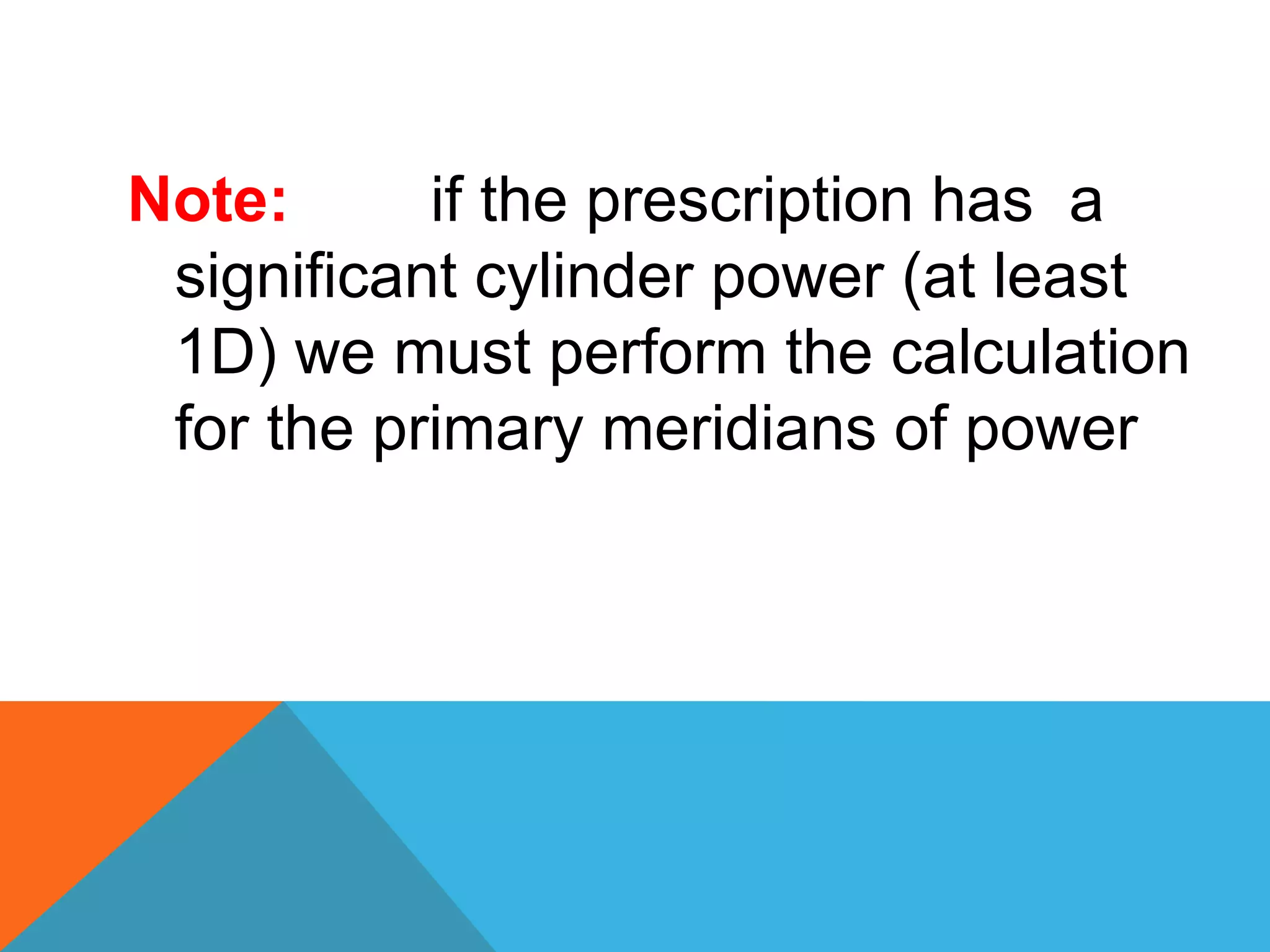
Note: if the prescription has a
significant cylinder power (at least
1D) we must perform the calculation
for the primary meridians of power
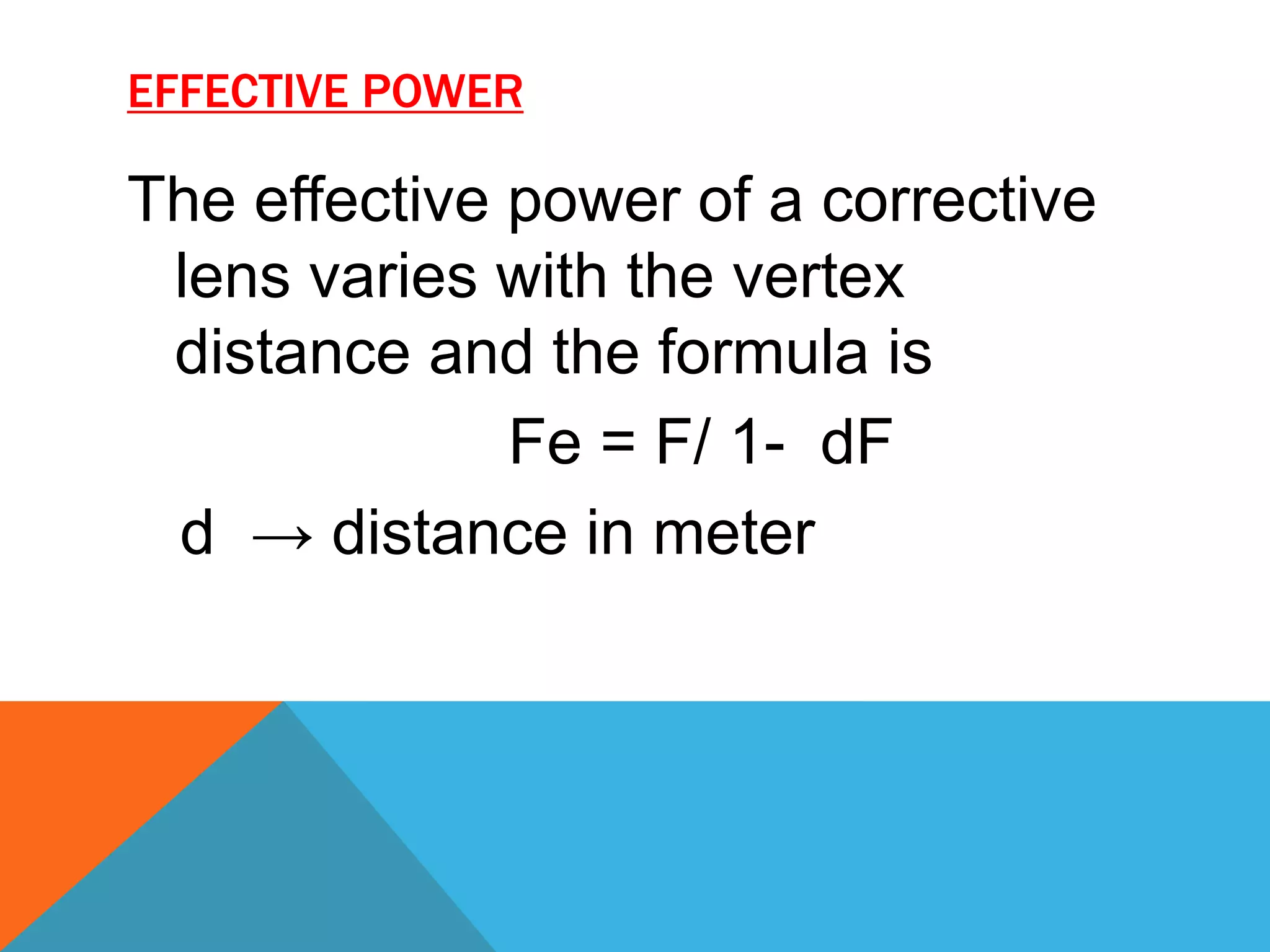
EFFECTIVE POWER
The effective power of a corrective
lens varies with the vertex
distance and the formula is
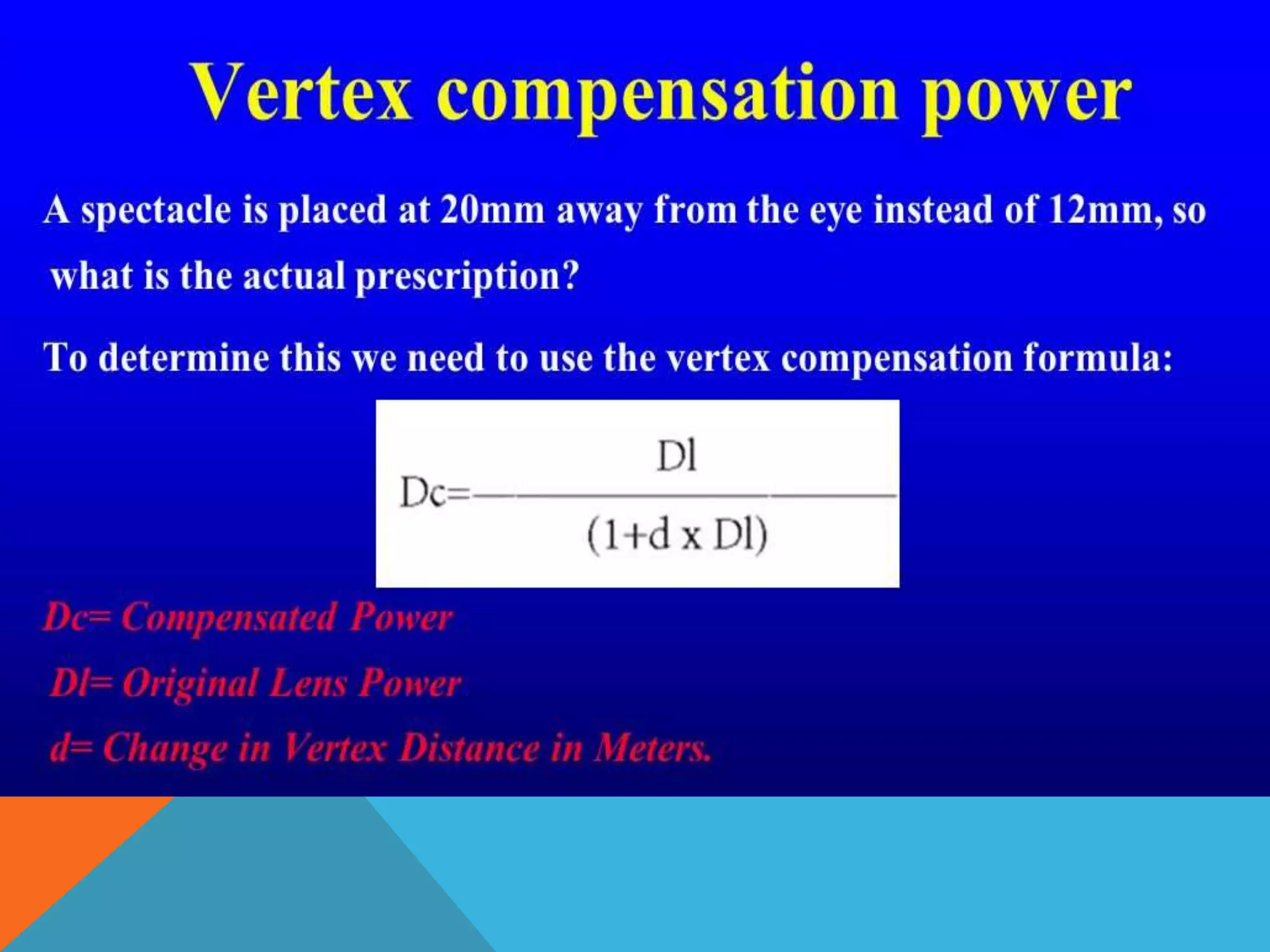
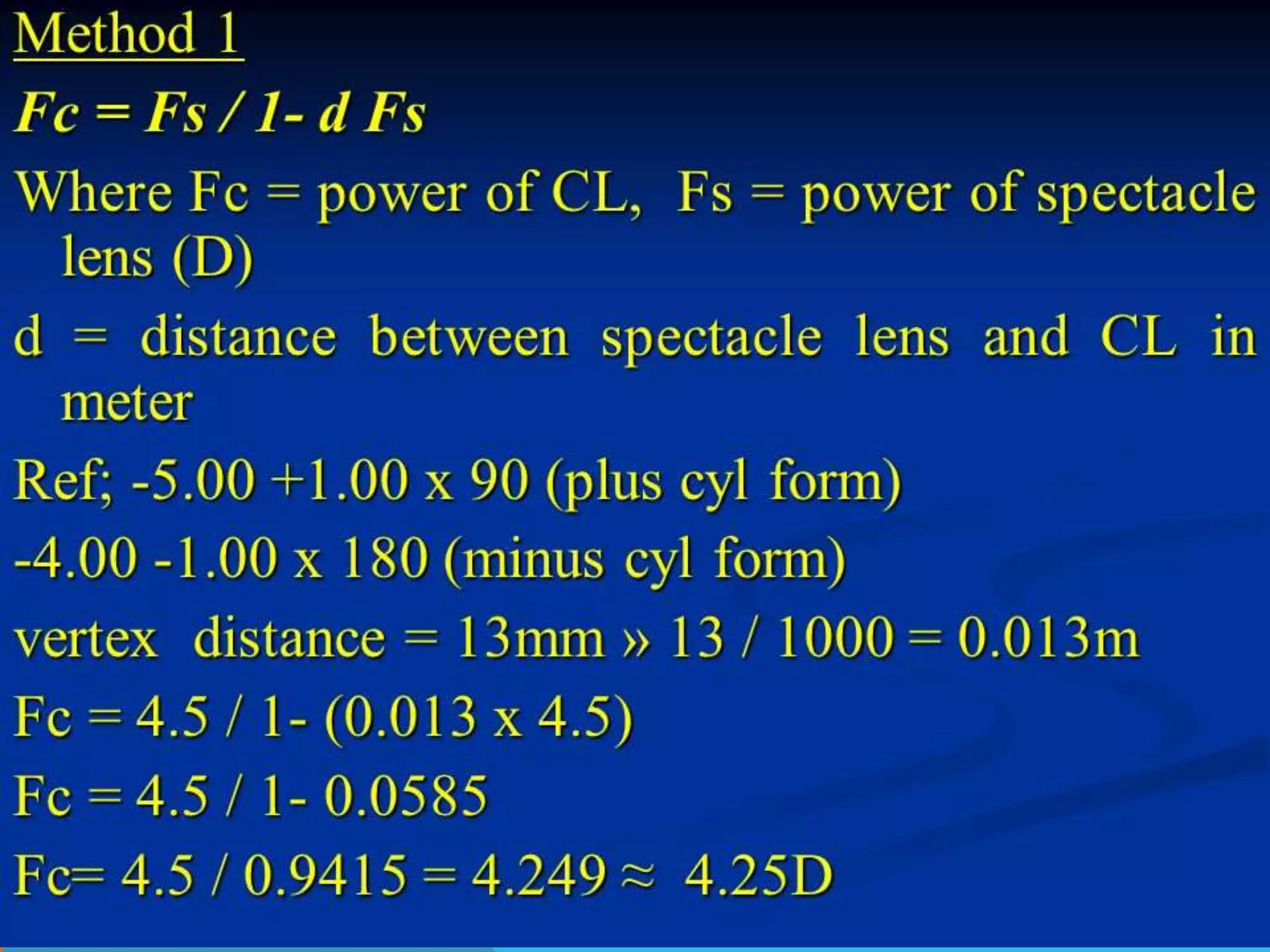
Fe = F/ 1- dF
d → distance in meter
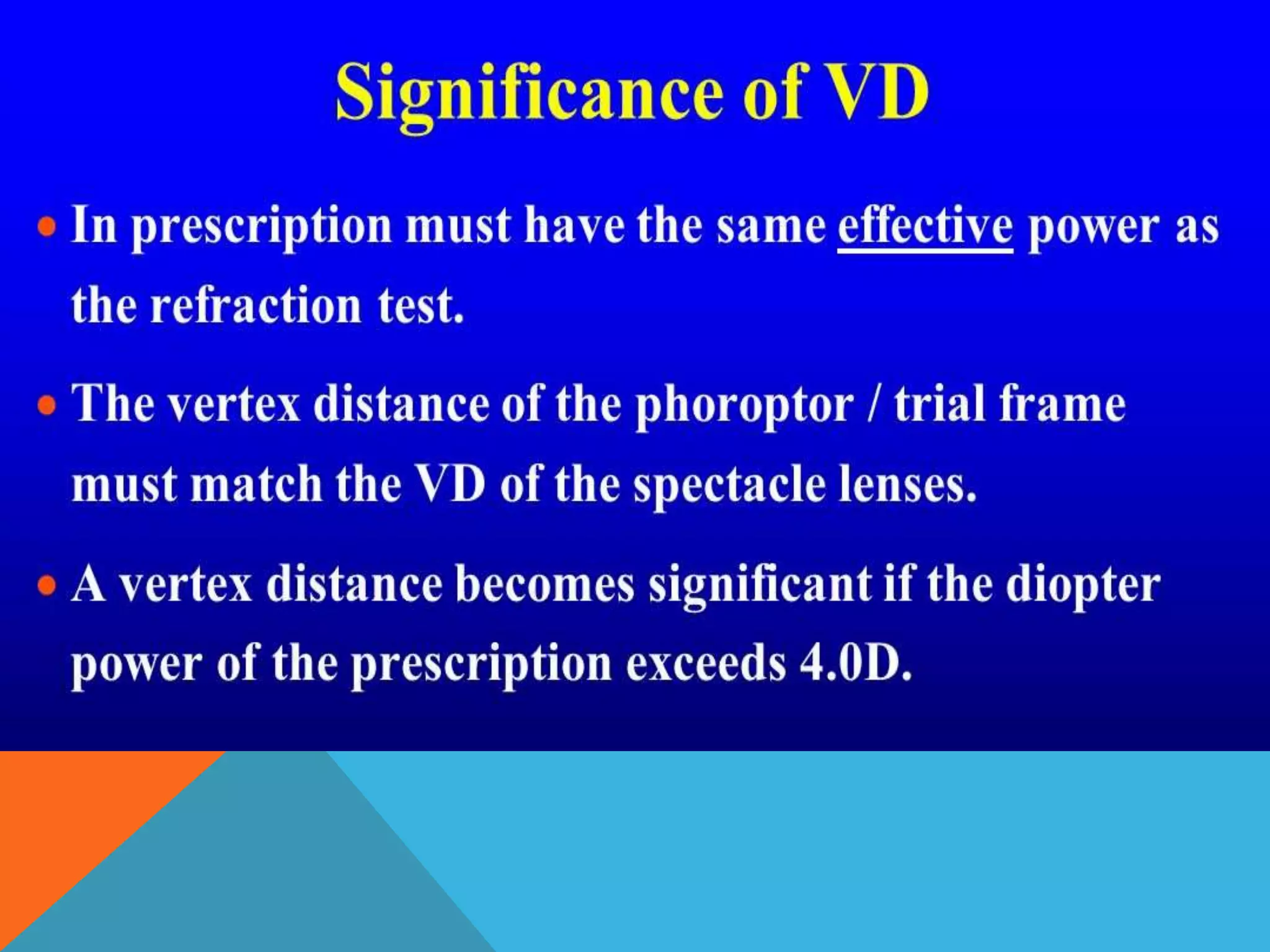
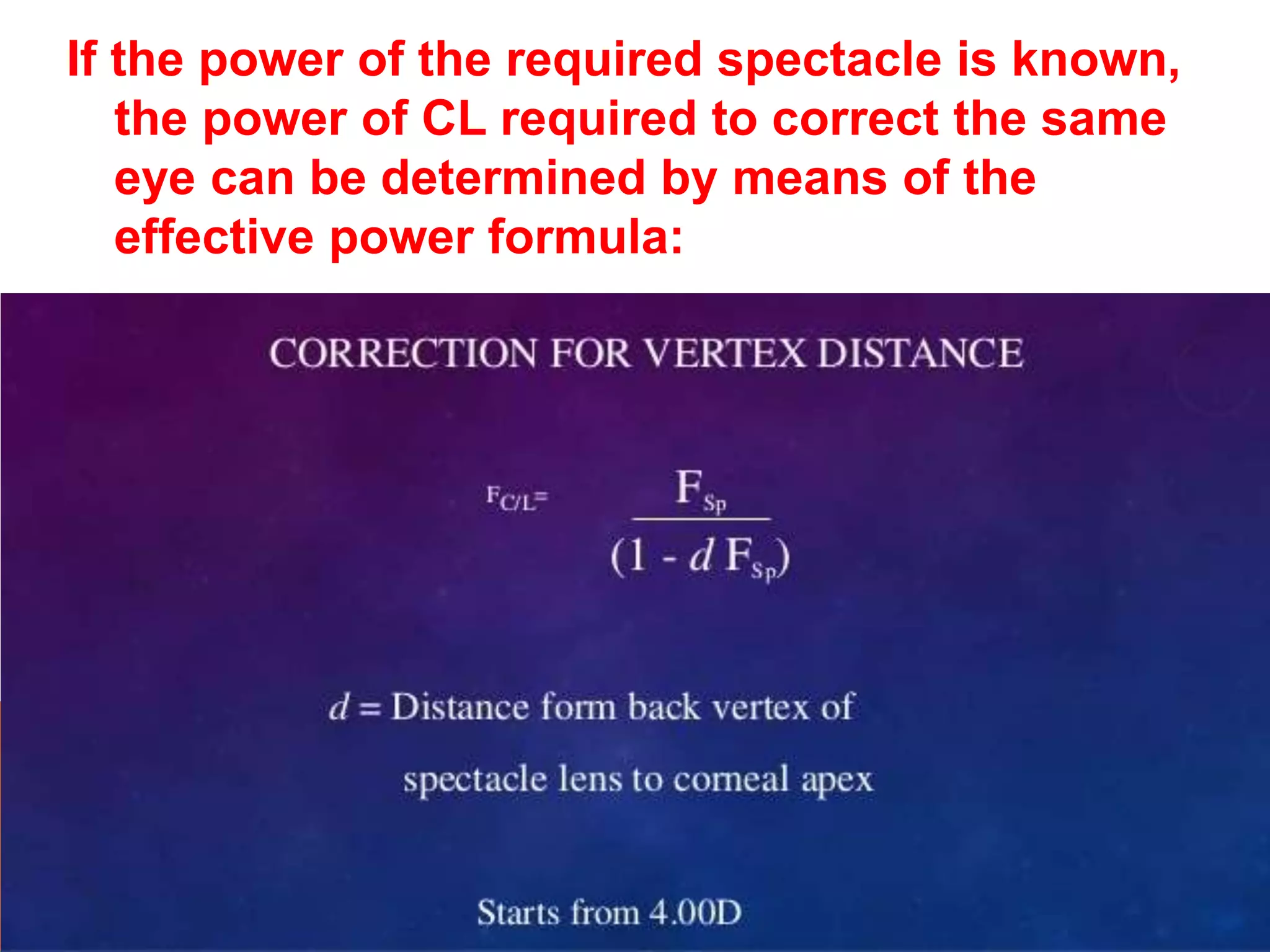
If the power of the required spectacle is known,
the power of CL required to correct the same
eye can be determined by means of the
effective power formula:
TO BE CONTINUE…………….
THANK YOU….

vertex distance PART 1.pptx

  • 5.
    In case ofminus lens ,become weaker while it moving from the eye and become stronger while moving closure to the eye • Magnification & minification can affected significantly by the VD • Greater the VD, greater the degree of Magnification & minification • Image size changes are minimized when VD is zero
  • 8.
    VERTEX COMPENSATION FORMULA Compensation/mm of displacement per diopter of lens power, is D²/ 1000 The result is added or substracted from the power according to following set of condition:  Add when • Plus lens moving closer • Minus lens moving farther  Substract when  Plus lens moving farther  Minus lens moving closer
  • 9.
    EXAMPLE 1 For +12.00D the movement is 4mm closer to the patient D²/1000 12²/1000 144/1000 = 0 . 14 4 x0 . 14 = 0 . 48 (0 . 50 aprox) 0.50 is added to +12.00
  • 10.
    Note: if theprescription has a significant cylinder power (at least 1D) we must perform the calculation for the primary meridians of power
  • 13.
    EFFECTIVE POWER The effectivepower of a corrective lens varies with the vertex distance and the formula is Fe = F/ 1- dF d → distance in meter
  • 14.
    If the powerof the required spectacle is known, the power of CL required to correct the same eye can be determined by means of the effective power formula:
  • 16.
  • 17.