Vernacular architecture  is a term used to categorize methods of construction which use locally available resources to address local needs. Vernacular architecture tends to evolve over time to reflect the environmental, cultural and historical context in which it exists. It has often been dismissed as crude and unrefined, but also has proponents who highlight its importance in current design. It is architecture which is indigenous to a specific time or place (not imported or copied from elsewhere). It is most often used to apply to residential buildings
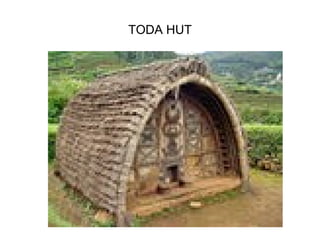
TODA HUT
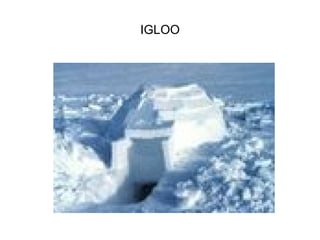
IGLOO
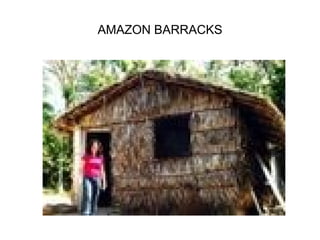
AMAZON BARRACKS
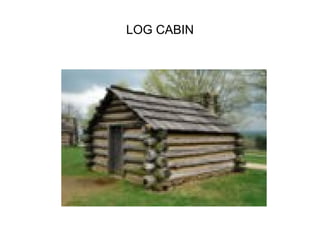
LOG CABIN
CABINS ON STILTS
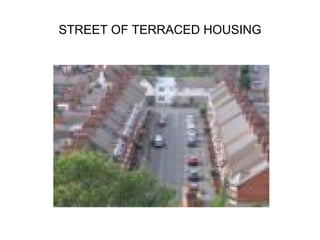
STREET OF TERRACED HOUSING
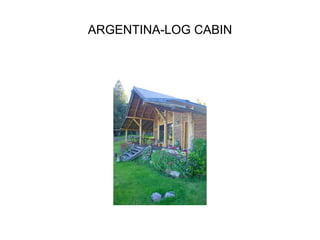
ARGENTINA-LOG CABIN
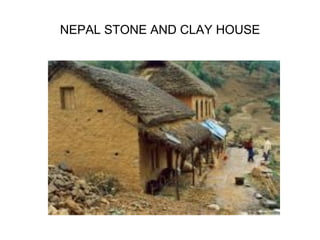
NEPAL STONE AND CLAY HOUSE
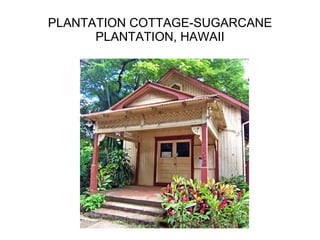
PLANTATION COTTAGE-SUGARCANE PLANTATION, HAWAII
In contrast to planned architecture by architects, the building knowledge in vernacular architecture is often transported by local traditions and is thus more - but not only - based on knowledge achieved by trial and error and often handed down through the generations rather than calculated on knowledge of geometry and physics. This of course does not exclude architects from using vernacular architecture in their designs or being firmly based in their regional vernacular architecture.
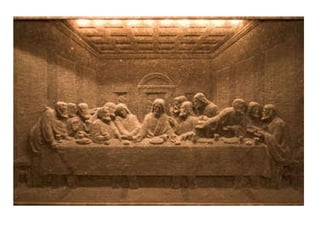
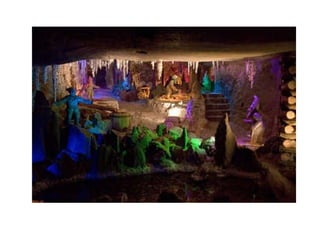
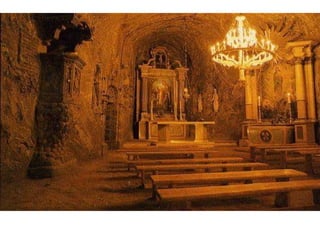
An early work in the defense of vernacular was  Bernard Rudofsky's  1964 book  Architecture Without Architects: a short introduction to non-pedigreed architecture , based on his MoMA exhibition. The book was a reminder of the legitimacy and "hard-won knowledge" inherent in vernacular buildings, from Polish salt-caves to gigantic Syrian water wheels to Moroccan desert fortresses, and was considered iconoclastic at the time. Rudofsky was, however, very much a Romantic who viewed native populations in a historical bubble of contentment. Rudofsky's book was also based largely on photographs and not on on-site study.
A more serious work is the  Encyclopedia of Vernacular Architecture of the World  published in 1997 by  Paul Oliver  of the Oxford Institute for Sustainable Development. Oliver has argued that vernacular architecture, given the insights it gives into issue of environmental adaptation, will be necessary in the future to "ensure sustainability in both cultural and economic terms beyond the short term."  Christopher Alexander, in  his book   A Pattern Language , attempted to identify adaptive features of traditional architecture that apply across cultures.  Howard Davis's  book   The Culture of Building  details the culture that enabled several vernacular traditions.
Robert venturi- Las vegas -commercial vernacular Industrial vernacular-shops, garages, factories. A lot of social aspects linked to this type of architecture An architect whose work that exemplifies the modern take on vernacular architecture would be  Samuel Mockbee , whose pioneering work with  Rural Studio  is well-regarded and widely discussed amongst practicing architects and academics alike.
INDIAN VERNACULAR Reflects the rich diversity of India's climate, locally available building materials, and the intricate variations in local social customs and craftsmanship
Despite the diversity, this architecture can be broadly divided into three categories.  Kuchcha Semi Pukka Pukka
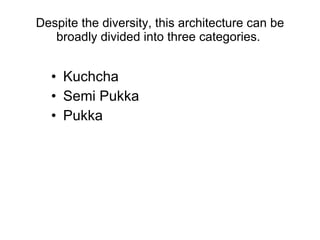
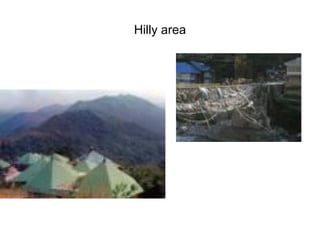
Hilly area
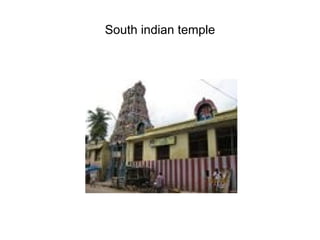
South indian temple
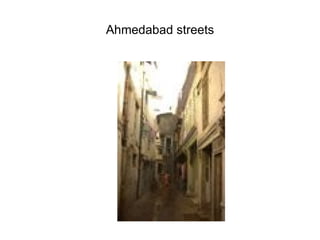
Ahmedabad streets
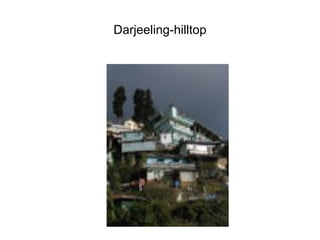
Darjeeling-hilltop
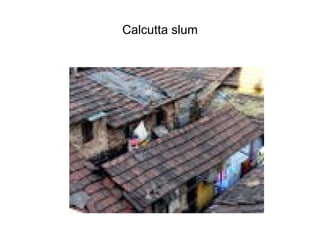
Calcutta slum
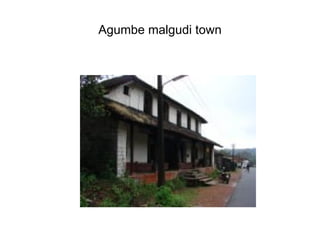
Agumbe malgudi town
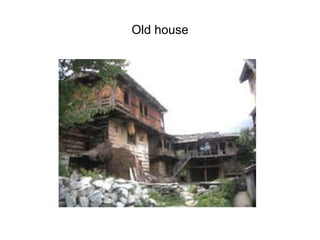
Old house
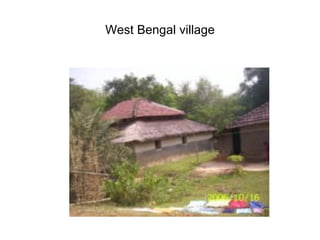
West Bengal village
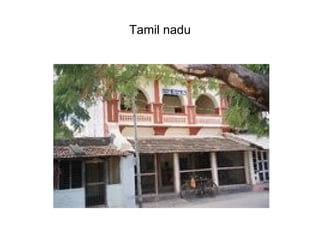
Tamil nadu
 

Vernacular

  • 1.
  • 2.
  • 3.
  • 4.
    Vernacular architecture is a term used to categorize methods of construction which use locally available resources to address local needs. Vernacular architecture tends to evolve over time to reflect the environmental, cultural and historical context in which it exists. It has often been dismissed as crude and unrefined, but also has proponents who highlight its importance in current design. It is architecture which is indigenous to a specific time or place (not imported or copied from elsewhere). It is most often used to apply to residential buildings
  • 5.
  • 6.
  • 7.
  • 8.
  • 9.
  • 10.
  • 11.
  • 12.
    NEPAL STONE ANDCLAY HOUSE
  • 13.
  • 14.
    In contrast toplanned architecture by architects, the building knowledge in vernacular architecture is often transported by local traditions and is thus more - but not only - based on knowledge achieved by trial and error and often handed down through the generations rather than calculated on knowledge of geometry and physics. This of course does not exclude architects from using vernacular architecture in their designs or being firmly based in their regional vernacular architecture.
  • 15.
    An early workin the defense of vernacular was Bernard Rudofsky's 1964 book Architecture Without Architects: a short introduction to non-pedigreed architecture , based on his MoMA exhibition. The book was a reminder of the legitimacy and "hard-won knowledge" inherent in vernacular buildings, from Polish salt-caves to gigantic Syrian water wheels to Moroccan desert fortresses, and was considered iconoclastic at the time. Rudofsky was, however, very much a Romantic who viewed native populations in a historical bubble of contentment. Rudofsky's book was also based largely on photographs and not on on-site study.
  • 16.
    A more seriouswork is the Encyclopedia of Vernacular Architecture of the World published in 1997 by Paul Oliver of the Oxford Institute for Sustainable Development. Oliver has argued that vernacular architecture, given the insights it gives into issue of environmental adaptation, will be necessary in the future to "ensure sustainability in both cultural and economic terms beyond the short term." Christopher Alexander, in his book A Pattern Language , attempted to identify adaptive features of traditional architecture that apply across cultures. Howard Davis's book The Culture of Building details the culture that enabled several vernacular traditions.
  • 17.
    Robert venturi- Lasvegas -commercial vernacular Industrial vernacular-shops, garages, factories. A lot of social aspects linked to this type of architecture An architect whose work that exemplifies the modern take on vernacular architecture would be Samuel Mockbee , whose pioneering work with Rural Studio is well-regarded and widely discussed amongst practicing architects and academics alike.
  • 18.
    INDIAN VERNACULAR Reflectsthe rich diversity of India's climate, locally available building materials, and the intricate variations in local social customs and craftsmanship
  • 19.
    Despite the diversity,this architecture can be broadly divided into three categories. Kuchcha Semi Pukka Pukka
  • 20.
  • 21.
  • 22.
  • 23.
  • 24.
  • 25.
  • 26.
  • 27.
  • 28.
  • 29.