
Verbs with ‘-ing’ Clauses
Many verbs are followed by and ‘-ing’ clause.
The subject of the verb is also the subject of
the ‘-ing’ clause. The ‘-ing’ clause begins with
an ‘-ing’ form.
Verbs with ‘-ing’ Clauses
  The most common of these verbs are:

• verbs of saying and thinking


  admit          deny            imagine
  recall         consider        describe
  mention        suggest
Verbs with ‘-ing’ Clauses
He denied taking drugs.
I suggested meeting her for a coffee.

Note: all of these verbs except for ‘describe’
can also be followed by a ‘that’-clause.

He denied that he was involved.
Verbs with ‘-ing’ Clauses
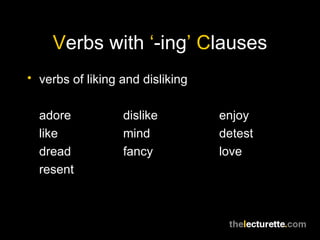
• verbs of liking and disliking


  adore           dislike         enjoy
  like            mind            detest
  dread           fancy           love
  resent
Verbs with ‘-ing’ Clauses
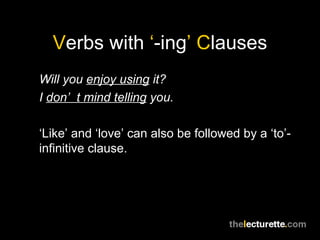
Will you enjoy using it?
I don’ t mind telling you.

‘Like’ and ‘love’ can also be followed by a ‘to’-
infinitive clause.
Verbs with ‘-ing’ Clauses
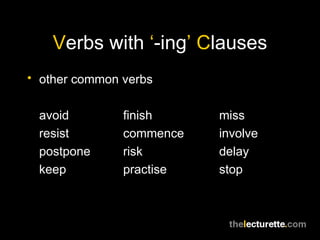
• other common verbs


 avoid         finish     miss
 resist        commence   involve
 postpone      risk       delay
 keep          practise   stop
Verbs with ‘-ing’ Clauses
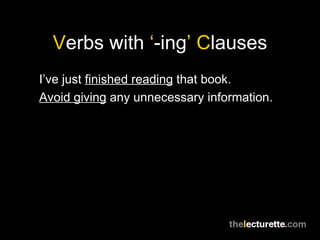
I’ve just finished reading that book.
Avoid giving any unnecessary information.
Verbs with ‘-ing’ Clauses
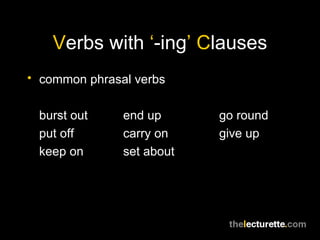
• common phrasal verbs


 burst out     end up      go round
 put off       carry on    give up
 keep on       set about
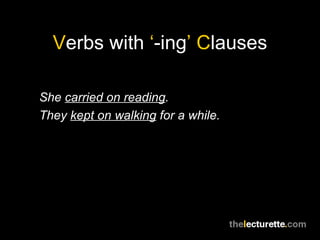
Verbs with ‘-ing’ Clauses

She carried on reading.
They kept on walking for a while.
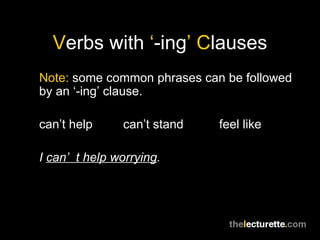
Verbs with ‘-ing’ Clauses
Note: some common phrases can be followed
by an ‘-ing’ clause.

can’t help     can’t stand   feel like

I can’ t help worrying.
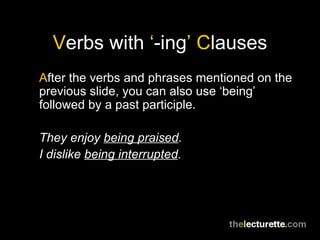
Verbs with ‘-ing’ Clauses
After the verbs and phrases mentioned on the
previous slide, you can also use ‘being’
followed by a past participle.

They enjoy being praised.
I dislike being interrupted.
Verbs with ‘-ing’ Clauses
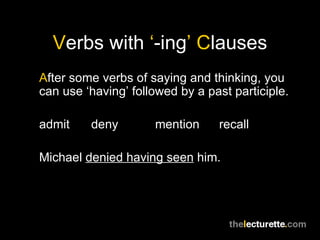
After some verbs of saying and thinking, you
can use ‘having’ followed by a past participle.

admit    deny        mention     recall

Michael denied having seen him.
Verbs with ‘-ing’ Clauses
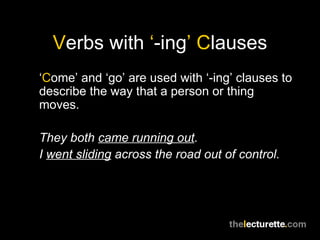
‘Come’ and ‘go’ are used with ‘-ing’ clauses to
describe the way that a person or thing
moves.

They both came running out.
I went sliding across the road out of control.
Verbs with ‘-ing’ Clauses
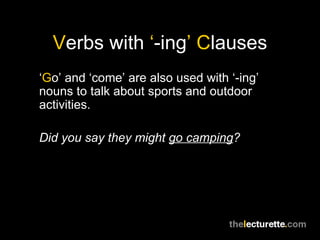
‘Go’ and ‘come’ are also used with ‘-ing’
nouns to talk about sports and outdoor
activities.

Did you say they might go camping?
Verbs with ‘-ing’ Clauses
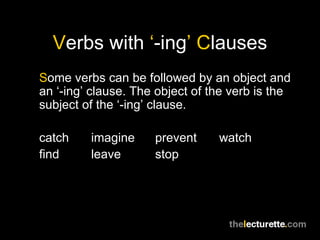
Some verbs can be followed by an object and
an ‘-ing’ clause. The object of the verb is the
subject of the ‘-ing’ clause.

catch    imagine     prevent     watch
find     leave       stop
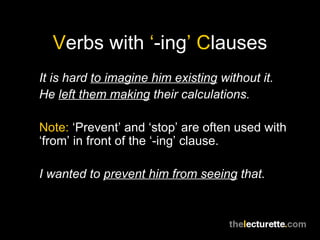
Verbs with ‘-ing’ Clauses
It is hard to imagine him existing without it.
He left them making their calculations.

Note: ‘Prevent’ and ‘stop’ are often used with
‘from’ in front of the ‘-ing’ clause.

I wanted to prevent him from seeing that.
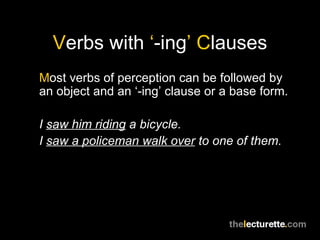
Verbs with ‘-ing’ Clauses
Most verbs of perception can be followed by
an object and an ‘-ing’ clause or a base form.

I saw him riding a bicycle.
I saw a policeman walk over to one of them.
Questions?
For more slide presentations visit:

Verbs with '-ing' Clauses

  • 1.
  • 2.
    Verbs with ‘-ing’Clauses Many verbs are followed by and ‘-ing’ clause. The subject of the verb is also the subject of the ‘-ing’ clause. The ‘-ing’ clause begins with an ‘-ing’ form.
  • 3.
    Verbs with ‘-ing’Clauses The most common of these verbs are: • verbs of saying and thinking admit deny imagine recall consider describe mention suggest
  • 4.
    Verbs with ‘-ing’Clauses He denied taking drugs. I suggested meeting her for a coffee. Note: all of these verbs except for ‘describe’ can also be followed by a ‘that’-clause. He denied that he was involved.
  • 5.
    Verbs with ‘-ing’Clauses • verbs of liking and disliking adore dislike enjoy like mind detest dread fancy love resent
  • 6.
    Verbs with ‘-ing’Clauses Will you enjoy using it? I don’ t mind telling you. ‘Like’ and ‘love’ can also be followed by a ‘to’- infinitive clause.
  • 7.
    Verbs with ‘-ing’Clauses • other common verbs avoid finish miss resist commence involve postpone risk delay keep practise stop
  • 8.
    Verbs with ‘-ing’Clauses I’ve just finished reading that book. Avoid giving any unnecessary information.
  • 9.
    Verbs with ‘-ing’Clauses • common phrasal verbs burst out end up go round put off carry on give up keep on set about
  • 10.
    Verbs with ‘-ing’Clauses She carried on reading. They kept on walking for a while.
  • 11.
    Verbs with ‘-ing’Clauses Note: some common phrases can be followed by an ‘-ing’ clause. can’t help can’t stand feel like I can’ t help worrying.
  • 12.
    Verbs with ‘-ing’Clauses After the verbs and phrases mentioned on the previous slide, you can also use ‘being’ followed by a past participle. They enjoy being praised. I dislike being interrupted.
  • 13.
    Verbs with ‘-ing’Clauses After some verbs of saying and thinking, you can use ‘having’ followed by a past participle. admit deny mention recall Michael denied having seen him.
  • 14.
    Verbs with ‘-ing’Clauses ‘Come’ and ‘go’ are used with ‘-ing’ clauses to describe the way that a person or thing moves. They both came running out. I went sliding across the road out of control.
  • 15.
    Verbs with ‘-ing’Clauses ‘Go’ and ‘come’ are also used with ‘-ing’ nouns to talk about sports and outdoor activities. Did you say they might go camping?
  • 16.
    Verbs with ‘-ing’Clauses Some verbs can be followed by an object and an ‘-ing’ clause. The object of the verb is the subject of the ‘-ing’ clause. catch imagine prevent watch find leave stop
  • 17.
    Verbs with ‘-ing’Clauses It is hard to imagine him existing without it. He left them making their calculations. Note: ‘Prevent’ and ‘stop’ are often used with ‘from’ in front of the ‘-ing’ clause. I wanted to prevent him from seeing that.
  • 18.
    Verbs with ‘-ing’Clauses Most verbs of perception can be followed by an object and an ‘-ing’ clause or a base form. I saw him riding a bicycle. I saw a policeman walk over to one of them.
  • 19.
    Questions? For more slidepresentations visit: